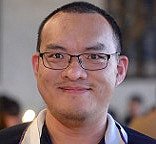
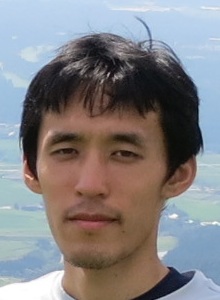
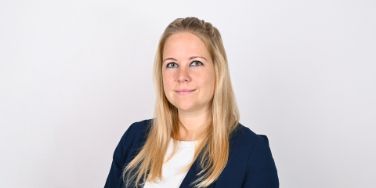
Farrell Ackerman is a Professor in the Department of Linguistics at UC San Diego and serves as Director of the Human Development Program. His research focuses on lexical semantics, morphology, and syntax, with a particular emphasis on cross-linguistic typology within the Uralic family and the revitalization of Word & Paradigm models. His work on morphology as a complex adaptive system integrates insights from ecological developmental biology, utilizing information-theoretic measures to analyze cross-linguistic paradigm organization. He has conducted extensive fieldwork on the underdocumented Moro language in Sudan, supported by an NSF grant (BCS-0745973), collaborating with Sharon Rose and students. Recent research trends include entropy-based morphological analysis, correspondence-based mapping theory, and experimental approaches to morphological learnability. Key publications span topics like Finnish nominal inflection, Mandarin resultative compounds, and the low entropy conjecture in morphological systems. Awarded grants and collaborative workshops, including the 1st Language as a Complex Adaptive System Workshop, highlight his interdisciplinary approach combining linguistics with computational and biological models.
Richard Wicentowski is a Professor of Computer Science at Swarthmore College. His research focuses on computational linguistics, including computational morphology, semantic disambiguation, and sentiment analysis. He teaches courses like CS 65 (Natural Language Processing) and CS 21 (Introduction to Computer Science). Ph.D. , Computer Science, Johns Hopkins University, 2002 M.S. , Computer Science, University of Pittsburgh, 1995 B.S. , Computer Science, Rutgers University, 1993 Wicentowski’s research spans Natural Language Processing , Computational Linguistics , Medical Informatics , and Computer Science Education . He has developed systems for sentiment classification using Twitter data, emotion detection in clinical texts, and cross-lingual lexical substitution. His work bridges machine learning with linguistics and health informatics. Recent publications highlight trends in sentiment analysis (2015–2025), medical text mining (2006–2012), and educational innovation (2005–2015). He has collaborated with students on NLP projects and explored diversity in computing education in 2025. Wicentowski advises students through co-authorship in projects like SWATCS65 and SWATAC. Notable collaborations include courses on machine learning and image processing (2005).
Dr Chris Norton is a Lecturer in Linguistics and English for Academic Purposes at the School of Languages, Cultures and Societies, University of Leeds, within the Faculty of Arts, Humanities and Cultures. He teaches psycholinguistics at the undergraduate level and provides English for Academic Purposes instruction to international postgraduate students through the Language Centre. His interdisciplinary work bridges linguistics, cognitive science, and data science. Educational Background: PhD in Psycholinguistics, University of Leeds MA in Linguistics and English Language Teaching, University of Leeds BA in English and Related Literature, University of York His primary research interests include visual word recognition , processing of information structure during reading , and eye-tracking methodologies . He also promotes data science literacy in academia, focusing on tools like Python, R, Git, and Unix shell scripting. His work often centers on child language acquisition, reading development, and family-based literacy interventions. Dr Norton is actively involved in several research projects related to early language exposure and cognitive processing, employing advanced psycholinguistic techniques. Though no specific publications are listed, his methodological focus suggests contributions in experimental psycholinguistics and developmental language science. Scientific Awards: No awards mentioned in the provided text. He supervises undergraduate dissertations in linguistics and contributes to academic programming support across the university as a Technical Research Assistant for Language at Leeds. He also supports postgraduate students and staff in language-related research involving computational tools. Dr Norton is affiliated with the Language at Leeds research initiative and the Linguistics and Phonetics group, contributing to interdisciplinary collaboration in language sciences.
Dr. Stephanie Merritt is a Professor in the Global Leadership and Management Department at the Ed G. Smith College of Business, University of Missouri–St. Louis. With a Ph.D. in Industrial-Organizational Psychology from Michigan State University (2007), her research bridges workplace behavior, human-automation interaction, and student retention. She has held prior faculty roles in the Department of Psychological Sciences and continues to lead interdisciplinary research projects. Ph.D. in Industrial-Organizational Psychology, Michigan State University (2007) M.A. in Industrial-Organizational Psychology, Michigan State University (2005) B.S. and B.A. in Psychology, Truman State University (2002) Dr. Merritt’s research focuses on implicit attitudes and their impact on organizational behavior, including employee turnover , trust in automation , and college student retention . Her methodological expertise spans structural equation modeling , multilevel analysis , and survey development , emphasizing rigorous measurement and data analysis. Her work often explores diversity and inclusion in organizational contexts. Her recent publications (2023–2025) highlight trends in gender bias in evaluation , automation-induced complacency , and social pain as a driver of turnover . These articles emphasize cross-disciplinary applications of psychology to business and technology challenges. Global Leadership and Management Research Impact Award (2024) Anheuser-Busch Teaching Award - Graduate Track (2022) Finalist - Human Factors and Ergonomics Society Annual Prize (2014) Best Paper Published in Human Factors (2008) Dr. Merritt chairs doctoral committees and has supervised 8 completed PhDs in Industrial-Organizational Psychology. Her professional activities include human-automation trust research and consulting roles. She teaches courses such as Organizational Behavior (MGMT 3600) and Qualitative Methods I (BUS AD 7102).
Yu-Fang Chen is a research professor at Academia Sinica, Taiwan, active across premier programming-languages venues such as PLDI, POPL, OOPSLA, SAS, APLAS and VMCAI. His work sits at the intersection of program verification , automata theory and constraint solving , with recent emphasis on quantum-circuit verification and string-number constraint solving . Research interests revolve around rigorous methods to ensure software reliability: developing novel automata models (level-synchronized tree automata, position-constrained string automata), building practical solvers that blend length, substring and numeric constraints, and extending automated reasoning to the quantum domain. His papers consistently introduce new decision procedures, learning algorithms and tool-chains that improve the scalability of static analysis and formal verification. Between 2017 and 2025 he (co-)authored more than a dozen peer-reviewed papers and served on over thirty program committees, including steering and organization chair roles for VMCAI 2026 and SAS 2023 . No doctoral students or funded-grant details are disclosed in the supplied sources.
Qiang Liu is an Associate Professor in the Department of Computer Science at the University of Texas at Austin. He leads the Statistical Learning & AI Group, focusing on probabilistic graphical models, variational and Monte Carlo inference, deep reinforcement learning, and kernel methods with applications in crowdsourcing, computer vision, and bioinformatics. NSF CAREER Award recipient Co-organized workshops at ICML 2019 and NIPS 2013 Specializes in rectified flow for generative modeling and optimal transport His recent work includes fast inference via straight trajectories in ODE models and certifiable robustness in neural architectures. Publications span conferences like NeurIPS, ICML, ICLR, and JMLR.
Tomohiro I is an Associate Professor in the Department of Artificial Intelligence at Kyushu Institute of Technology, Japan. He has been in this position since January 2019, following a research associate role at the same institution from 2015 to 2018. Prior to that, he held postdoctoral positions at Kyushu University and TU Dortmund, Germany. His academic foundation includes a Ph.D. in Science from Kyushu University, awarded in 2012. His research primarily centers on string algorithms , with a strong emphasis on compressed data structures , pattern matching , indexing , and algorithmic efficiency . Key interests include Lyndon factorization, Lempel-Ziv compression, palindrome matching, and reverse engineering of string data structures. He frequently collaborates with prominent researchers like Hideo Bannai and Shunsuke Inenaga, producing high-impact work in theoretical computer science. His recent publications demonstrate a consistent focus on improving algorithms for string processing in compressed formats. Work on Re-Pair , RLBWT , and SLP encoding highlights his expertise in space-efficient computation. The 2022 Best Paper Award at IWOCA for work on Lyndon subsequences underscores the quality and recognition of his contributions. His research bridges theoretical analysis with practical algorithm design. Best Paper Award, International Workshop on Combinatorial Algorithms (IWOCA) 2022 Tomohiro I advises graduate students in his laboratory, although he currently notes that the lab is not accepting new research students. His work involves significant algorithmic research, often supported by theoretical grants or institutional funding, leading to numerous publications in peer-reviewed journals and conferences. He has also presented his work in invited talks, such as at CompressedAI2025 and WCTA 2024, indicating active engagement with the research community. He leads a research laboratory at Kyushu Institute of Technology, focused on advanced string processing and compressed data structures. His team collaborates extensively on algorithm design and analysis, contributing to the broader field of combinatorial pattern matching.
Dr. Haewoon Kwak is an Associate Professor at the Luddy School of Informatics, Computing, and Engineering at Indiana University Bloomington. He co-directs the Soda Lab research group with Prof. An, focusing on investigating social phenomena through large-scale data and computational tools to address significant societal challenges. His research spans multiple interdisciplinary fields including network science, machine learning, and computational social science. His work examines online social networks, social media dynamics, game analytics, computational journalism, and human-computer interaction. His research has been widely recognized, most notably for the highly cited paper 'What is Twitter, a social network or news media?' (WWW 2010) which has received over 9,500 citations. Dr. Kwak's research portfolio demonstrates consistent innovation across multiple domains. His recent publications show a strong focus on computational journalism, deep learning applications for media analysis, and understanding toxic behavior in online spaces. His work often bridges theoretical insights with practical applications for understanding information flow and social dynamics in digital environments. Outstanding PhD thesis award in Computer Science Department, KAIST Best paper award at IMC '07 for 'I Tube, You Tube, Everybody Tubes' Best paper award at SocInfo 2019 for 'Gender and Racial Diversity in Commercial Brands' Advertising Images on Social Media' Highly cited paper 'What is Twitter, a social network or news media?' (WWW 2010) with over 9,500 citations Dr. Kwak has served on program committees for major computer science and computational social science conferences. His work has been featured in prominent media outlets including Nature News, ACM Tech News, BBC, The Times, The Economist, Slate, and Scientific American. His Soda Lab at Indiana University continues to produce influential research at the intersection of computing and social science.
John McCoy is an Assistant Professor of Marketing at the Wharton School of the University of Pennsylvania. He is also affiliated with the Wharton Neuroscience Initiative and Penn's MindCORE hub. His academic work bridges marketing, cognitive science, and computational modeling. Dr. McCoy's research focuses on mathematical models of judgment and decision making , computational cognitive science , crowd wisdom , and forecasting . Methodologically, he uses a combination of behavioral experiments and computational modeling, drawing on ideas and techniques from psychology, economics, marketing, Bayesian statistics, and computer science. Much of his current work centers on better ways to aggregate judgments from multiple individuals, including in situations where the majority may be wrong and the truth may be unverifiable. His research has gained significant attention, with popular accounts appearing in the Wall Street Journal , NPR , and the New Yorker . A key contribution is the "surprisingly popular answer" method for extracting wisdom from crowds, which selects not the "most popular" answer but the "surprisingly popular" one by eliciting both answers and predictions about others' answers. Dr. McCoy teaches graduate courses including Consumer Research Topics and Marketing Management. His teaching focuses on contemporary topics in consumer research, drawing from marketing, psychology, and economics literature to help students develop research ideas and understand theoretical and methodological approaches to consumer behavior. His scholarly work spans multiple domains including crowd wisdom, individual-level decision making, semantic cognition, and graph theory. His research has important applications in marketing, healthcare communication, and forecasting methodologies.
Andrea Bruera is a Researcher at the Max Planck Institute for Human Cognitive and Brain Sciences in Leipzig, Germany, affiliated with the Cognition and Plasticity research group. His work bridges cognitive neuroscience, computational linguistics, and machine learning to investigate how the brain processes semantic information. Research Focus: Bruera's interdisciplinary research examines: Neural mechanisms of semantic processing using EEG/fMRI Applications of language models to decode brain activity Causal effects of brain stimulation on cognition Neuroplasticity in conceptual and executive control systems Computational modeling of semantic memory and entity representation Publication Trends: His 15 most recent articles (2019-2025) demonstrate consistent focus on: Brain-language interactions through multimodal neuroimaging Integration of AI models (GPT-2, distributional semantics) with neuroscience Experimental paradigms involving semantic control, entity recognition, and plasticity Methodological innovations in data generation and privacy-preserving techniques No awards, grants, or student mentorship details are available in the provided sources. Laboratory Affiliation: Bruera conducts research within the Cognition and Plasticity group, which employs interdisciplinary approaches to study adaptive neural mechanisms in cognitive processing.
Inés Vega Mateos is a collaborating researcher at the Institute of Galician Language (ILG) at the University of Santiago de Compostela since late 2022. She is also attached to the Galician Terminology Service (TERMIGAL), where she manages the TERGAL database and develops terminographic products. Her educational background includes: Degree in Translation and Interpreting, specializing in scientific-technical and audiovisual translation Master's in Terminology from Universitat Pompeu Fabra (Barcelona) Master's in Lexicography from UNED (Madrid) Vega Mateos specializes in terminology, lexicography, and translation studies, with particular interest in gender-related linguistic concepts and social prejudices reflected in language. Her research bridges traditional linguistic analysis with computational approaches through her work on linguistic resources for natural language processing tools. Her recent publications demonstrate a strong focus on semantic analysis of gender-related concepts and terminology standardization. She has made significant contributions to understanding how dictionaries represent concepts related to marriage structures and gender. Her scientific contributions include: "Between prejudices and stereotypes: the words monogamy, bigamy, polygamy, polyandry and polygyny in dictionaries" (2024) "Semantic delimitation of the anthropological concept of gender" (2019) "Terminology: the need for collaboration" (2018, as editor) Throughout her career, Vega Mateos has combined academic research with practical applications, having worked as a freelance translator and proofreader specializing in software localization and translation quality assurance. Her internship experience at the European Union Translation Service and with the Spanish Presidency of the EU provided foundational professional experience. At TERMIGAL, she leads database design and maintenance efforts while developing terminological resources that support both academic research and practical language applications in Galician.
Mathias Géry is a Lecturer in Computer Science at Jean Monnet University, affiliated with the Computer Science Department within the Faculty of Science and Technology. He conducts research as a member of the Data Intelligence Group at the H. Curien Laboratory (UMR CNRS 5516) in Saint-Étienne, France. Research Focus: His work centers on advanced Information Retrieval systems, with four core pillars: Structured IR (specializing in textual IR, XML, hypertexts, and structured documents), Social IR (analyzing social networks and relationships), Multimedia IR (developing text-image fusion models and representation frameworks), and Web Mining (including usage analysis, corpus collection, and web analytics). His methodologies consistently integrate user profiles and social context to enhance personalized information access. Publication Trends: Recent publications (2015-2024) reveal a strong trajectory in personalized and social IR, with significant contributions to query expansion, language modeling, and social bookmarking systems. His interdisciplinary reach extends to health informatics (2024 RCT on sedentary adults), sports science (2023 gender-based endurance analysis), quantum physics (2021 turbulence study), and literary analysis (2019 Russian literature), demonstrating exceptional versatility across computational and humanities domains. Collaborative Environment: As an active researcher within the CNRS-affiliated H. Curien Laboratory, he contributes to the Data Intelligence Group's mission of advancing data-driven methodologies through structured, social, and multimodal approaches.
Prof. Dr. Mascha Kurpicz-Briki is a computer science professor at the Bern University of Applied Sciences, leading the Applied Machine Intelligence research group within the Institute for Data Applications and Security (IDAS). Her work focuses on human-centered applications of natural language processing in mental health and societal challenges, particularly addressing bias mitigation in AI systems. Education: PhD in energy-efficient cloud computing from University of Neuchâtel Expertise: Applied NLP, fairness in AI, augmented intelligence for health Leadership: Deputy lead of Applied Machine Intelligence Research Group Her research emphasizes augmented intelligence - creating AI systems that support rather than replace humans. Current projects investigate NLP applications for: Burnout and depression detection in clinical psychology Fairness measurement in word embeddings and language models Human augmentation through AI in industrial and healthcare settings Recent publications highlight her contributions to: Bias detection frameworks for European languages Machine learning in eating disorder diagnostics Generative AI integration in art therapy She maintains active memberships in IEEE, ACM, ACL, and the Swiss Center for Augmented Intelligence, with expertise in German, English, and French language technologies.
Frédéric BOSSARD is a Senior Lecturer at SKEMA Business School in Sophia Antipolis, France, serving as Scientific Director for the Master of Science in Digital Marketing and Artificial Intelligence (since 2023), Master of Science in Digital Business and Artificial Intelligence (since 2021), and Master of Science in Digital Marketing (since 2019), with prior leadership of the Business Consulting and Digital Transformation program (2020-2021). His academic foundation includes a Master's in Sociology and Communication from Côte d'Azur University (1995) and ongoing Sustainable Development and CSR Training at SKEMA Business School (2025). Research centers on Digital Marketing and Artificial Intelligence integration in business contexts, extending to Digital Transformation , Project Management , and Sustainable Development , with emphasis on practical applications in mobile technologies and tourism sectors. Publications from 2008-2013 reveal an evolution from foundational project management and buzz marketing toward specialized mobile applications for tourism and business, demonstrating consistent adaptation to emerging digital paradigms. Academic leadership extends to board roles including Administrator and VP for Partnerships at PMI France (2023-present), UPE 06 Board Member as digital advisor (2022-present), and former leadership positions at French Tech Côte d’Azur (2021-2023) and Telecom Valley (2019-2022).
Prof. Dr. Katharina Spalek serves as Professor of Psycho- and Neurolinguistics at Heinrich Heine University Düsseldorf's Faculty of Arts and Humanities within the Institute of Linguistics since her appointment in August 2021. Her research examines human language processing across multiple linguistic levels—from phonetics to narrative discourse—with particular emphasis on focus alternatives and memory mechanisms. Current affiliations include leadership of ERC-funded projects and active participation in international research collaborations. Her educational background spans German linguistics and psychology studies at Heidelberg University, University of Oxford, and Humboldt University Berlin, culminating in a doctoral degree from Radboud University Nijmegen (2005). Postdoctoral research followed in the USA and UK before her 2007 appointment as junior professor at Humboldt University Berlin. Spalek's research trajectory evolved from language production in monolingual/bilingual speakers toward language comprehension, investigating how humans process sounds, words, phrases, and narrative discourse. Recent work integrates electrophysiological (ERP), behavioral, and computational methods to explore focus alternatives, cross-linguistic variation (including Vietnamese tonal systems), and the interplay between linguistic and visual information. Her experimental paradigms frequently employ picture-word interference, recall tasks, and discourse analysis to uncover cognitive mechanisms underlying alternative set representation. Analysis of her 15 most recent publications (2019-2024) reveals three dominant trends: (1) neurocognitive investigation of focus alternatives using ERP methodology, (2) cross-linguistic studies of intonation and tonal processing, and (3) computational modeling of human performance in language tasks. These works consistently bridge theoretical linguistics with experimental validation, emphasizing memory encoding for contextual alternatives and individual differences in processing. ERC Starter Grant for 'focus alternatives in the human mind' (2016) Posterpreis at 17th Herbsttreffen Patholinguistik (2023) Her ERC-funded research program examines how focus particles and pitch accents modulate alternative set representation in production and comprehension. Current projects investigate neural correlates of discourse memory, Vietnamese intonation patterns, and computational models of human language processing limitations. Collaborative work spans institutions in Germany, Netherlands, and Vietnam, with methodological emphasis on controlled experiments and cross-linguistic comparison. Spalek leads the Psycho- and Neurolinguistics research group within the Institute of Linguistics, utilizing facilities for ERP recording, eye-tracking, and behavioral experimentation. Her team conducts interdisciplinary research at the intersection of linguistics, cognitive science, and neuroscience, with particular focus on how information structure shapes language processing and memory.