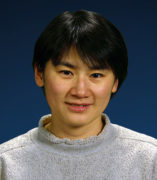
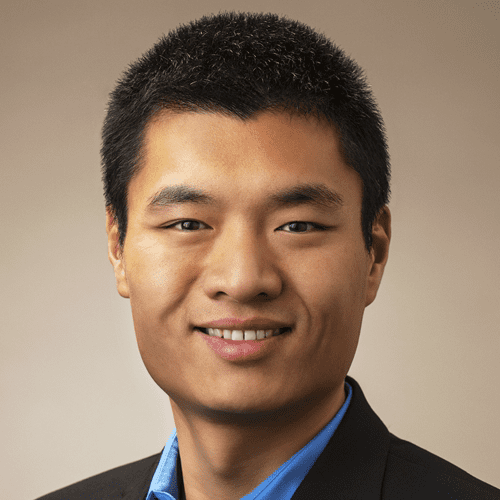
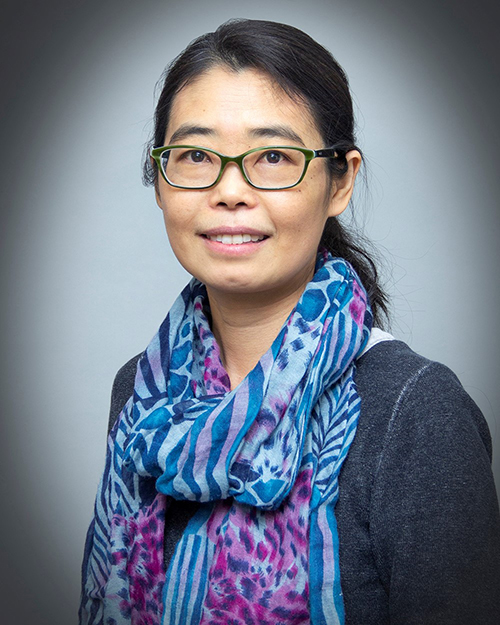
Wenjing Rao is an Associate Professor at the Department of Electrical and Computer Engineering, College of Engineering, University of Illinois at Chicago (UIC). Her research focuses on VLSI test, fault-tolerance, reliability, and hardware security in emerging nanoelectronic systems. Education: Ph.D. in Computer Science from University of California, San Diego (2008) B.S. in Computer Science from Peking University (2001) Her work explores novel computation paradigms through physical unclonable functions (PUFs), defect-tolerant logic implementation, and scalable fault tolerance in many-processor arrays. Publications emphasize hardware security, reconfiguration strategies, and reliability challenges in nanoscale architectures. Notable honors include the 2017 Harold A. Simon Award for Excellence in Teaching and the 2012 NSF CAREER Award. She has contributed to key journals like IEEE Transactions on Computer-Aided Design and conferences including DATE, ASPDAC, and NANOARCH.
Dr. Richard Y. Zhao is a tenured Professor in the Department of Pathology and Microbiology-Immunology at the University of Maryland School of Medicine. His research combines molecular biology, fission yeast genetics, mammalian biology, and virology to study virus-host interactions, particularly for HIV and Zika virus. He previously held academic positions at Northwestern University and Columbia University and has contributed to over 120 peer-reviewed articles. B.S., China Oceanography University (1981) M.S., Oregon State University (1995) Ph.D., Oregon State University (1991) Postdoctoral Training, Columbia University (1991-1992) Dr. Zhao's research focuses on: Virus-host interactions and pathogenicity High-throughput drug screening for antivirals Role of viral proteins in neuroinflammation and cancer Translational genomics in precision medicine His recent publications highlight SARS-CoV-2 ORF3a, Zika envelope proteins, and HIV protease inhibitors, emphasizing host-pathogen mechanisms across species. He has served on NIH panels and editorial boards for journals like Cell Research and Retrovirology . Scientific awards include: Fellow, American Academy of Microbiology (2019) Bernard L Mirkin Endowed Chair (2001-2004) Honorary Director, Shandong Gallo Institute (2009) Distinguished Service from SCBA (2015) Outstanding Service from CBA-USA (2016) Dr. Zhao also contributes to clinical diagnostics and personalized medicine through molecular testing and pharmacogenetics programs.
Fengqi You is the Roxanne E. and Michael J. Zak Professor in Energy Systems Engineering at Cornell University. He holds affiliations with multiple departments and graduate fields, including Chemical Engineering, Computer Science, and Sustainability. His research focuses on systems engineering, artificial intelligence, and their applications in energy systems, digital agriculture, and sustainability. You serves as Chair of Ph.D. Studies in Systems Engineering and leads initiatives like the Cornell AI for Sustainability Initiative (CAISI) and the Cornell Institute for Digital Agriculture (CIDA). Education: B.Eng. from Tsinghua University (2005), Ph.D. from Carnegie Mellon University (2009). Before Cornell, he worked at Argonne National Laboratory and Northwestern University. Research Interests Decarbonization of energy systems (e.g., photovoltaics, battery tech) Material informatics and computer-aided molecular design AI-driven solutions for agriculture and climate resilience Supply chain optimization and smart manufacturing Awards & Recognition Fellow of AAAS, AIChE, and Royal Society of Chemistry Over 25 major awards including NSF CAREER (2016), AIChE Research Excellence (2017), and the 2024 Cecil Award Grants & Leadership Recipient of NSF NRT Award for AI in Sustainability Sciences Amazon Research Award for LCA transparency using LLMs Labs & Initiatives Cornell AI for Science Institute (CUAISci) Cornell Institute for Digital Agriculture (CIDA)
Meeyoung Cha is a Professor at KAIST and Scientific Director of the Max Planck Institute for Security and Privacy (MPI-SP) in Bochum, Germany. Her research focuses on Data Science for Humanity, encompassing computational social science, misinformation dynamics, and human-machine interaction. She holds a PhD in Computer Science from KAIST (2008) and previously served as Chief Investigator at the Institute for Basic Science and Visiting Professor at Facebook. Her work addresses societal challenges such as poverty mapping, fraud detection, and AI ethics. Key achievements include best paper awards and recognition like the Hong Jin-Ki Creator Award (2024) and Test-of-Time Awards (ACM IMC 2022, AAAI ICWSM 2020). Research interests span AI ethics, social media analysis, and interdisciplinary applications of machine learning. Notable projects include modeling climate risks via satellite imagery and analyzing chatbot interactions' societal impacts. She leads the MPI-SP's Data Science for Humanity Group, mentoring over 20 students across PhD and postdoc programs. Education: PhD in Computer Science (KAIST, 2008) Affiliations: MPI-SP (Germany), KAIST Key Awards: Hong Jin-Ki Creator Award, Korean Young Information Scientist Award, Test-of-Time Awards Her publications bridge computational methods with societal issues, including climate modeling, protein engineering, and algorithmic fairness. Current projects explore geospatial AI for economic development and ethical AI design frameworks.
Yang Zhang is a Visiting Assistant Professor in the Department of Mathematics at the University of California, Irvine (UCI), working under Prof. Katya Krupchyk. His research focuses on inverse problems in imaging sciences, nonlinear hyperbolic equations, and medical imaging applications. He previously held a postdoctoral position at the University of Washington, Seattle, under Prof. Gunther Uhlmann. His work integrates microlocal analysis and partial differential equations to address challenges in wave propagation, nonlinear acoustics, and elasticity. Education & Career: PhD from Purdue University (advisor: Prof. Plamen Stefanov) Postdoc: University of Washington, Seattle (2020–2024) Research Interests: Dr. Zhang's work spans inverse problems for nonlinear hyperbolic equations, acoustic imaging, and integral transforms in medical contexts. He develops novel methodologies using multi-fold linearization, wave interactions, and advanced calculus techniques. His studies on Rayleigh and Stoneley waves in elasticity further demonstrate his expertise in microlocal analysis. Key Contributions: His research bridges theoretical mathematics and applied imaging, with notable publications on inverse scattering, damping effects in wave equations, and Compton camera imaging. He is an active member of the Inverse Problems International Association (IPIA). Grants & Collaborations: Collaborations with prominent figures like Prof. Gunther Uhlmann and Prof. Katya Krupchyk highlight his network in inverse problems. His work often involves both analytical and computational approaches, with applications in medical diagnostics and geophysics.
Professor Washington Yotto Ochieng serves as Head of the Department of Civil and Environmental Engineering and Chair Professor in Positioning and Navigation Systems at Imperial College London. He directs the Centre for Active Resilience and Security (CARS) and maintains key affiliations with the Centre for Systems Engineering and Innovation, Centre for Transport Engineering and Modelling, Institute for Molecular Science and Engineering, and Space Lab. His extensive advisory roles include the Science Museum Group Board of Trustees, Royal Institute of Navigation Presidency, and Royal Academy of Engineering Africa Steering Committee. His educational background includes a BSc (First Class) in Engineering from the University of Nairobi and MSc (Distinction) and PhD in Civil Engineering from the University of Nottingham. He received an honorary DSc from Technical University of Kenya in 2023. Ochieng's research pioneers critical infrastructure resilience, user-centric mobility, and positioning/navigation/timing (PNT) systems. He has designed satellite navigation systems (including Europe's EGNOS and GALILEO) for multi-domain applications and advanced Air Traffic Management and Intelligent Transport Systems. His work integrates geomatics, transportation engineering, and sustainable mobility to solve global urban infrastructure challenges, with recent emphasis on decarbonization and AI-driven solutions. His 2024-2025 publications reveal strong trends in sustainable transportation decarbonization, AI-optimized traffic management, and resilient urban positioning systems. Research focuses on hydrogen fuel cell trains, carbon-efficient aviation, and deep reinforcement learning applications for emission reduction, demonstrating interdisciplinary integration of engineering, environmental science, and artificial intelligence to address climate challenges. Fellow of the Royal Academy of Engineering (2013) Harold Spencer-Jones Gold Medal from Royal Institute of Navigation (2019) Doctor of Science (honoris causa) from Technical University of Kenya (2023) Elder of the Order of the Burning Spear (EBS) from Kenya (2023) Commander of the Order of the British Empire (CBE) (2024) Ochieng provides strategic guidance to UK Government bodies (Government Office for Science, Department for Transport, FCDO), European Parliament, and European Court of Auditors. His advisory work shaped the Blackett Review on Satellite-derived Time/Position, UK Space Strategy, and Future of Mobility report. He chairs the Science Museum London Advisory Board and leads FCDO's Sustainable Urban Economic Development program in Africa, with significant grant influence through UK National Physical Laboratory and Department for International Development. He directs the Centre for Active Resilience and Security (CARS) and leads Space Lab initiatives, focusing on mission-critical PNT systems and infrastructure resilience. His teams collaborate with international consortia including RTCM Special Committee 134 and US Institute of Navigation, developing next-generation navigation solutions for safety-critical applications across transport, aviation, and urban environments.
Prof David Harrison is a Professor at the University of St Andrews' School of Medicine, affiliated with the Sir James Mackenzie Institute for Early Diagnosis and the Cellular Medicine Division. His research focuses on oncology, pharmacology, molecular biology, and AI-driven medical diagnostics. Key projects include the NuCana Biomed research agreement and the ICECAP initiative investigating immunopathology in severe COVID-19 cases. He supervises multiple PhD students and has contributed to advancements in drug development, cancer biology, and AI applications in pathology. His work spans clinical trials (e.g., RAMPART, NUC-3373 studies) and innovative imaging techniques (e.g., DESI-MSI for cancer metabolomics). Education: PhD (not explicitly stated in texts, inferred from academic rank). Research Interests: Prof Harrison’s expertise includes cancer drug mechanisms, molecular enzymology (e.g., 4-oxo-L-proline reductase), AI-driven pathology automation (e.g., cervical biopsy analysis), and immunological responses in critical illnesses. His lab develops tools for high-resolution histopathological imaging and explores metabolic-phenotypic links in tumors. Publications: Recent work includes studies on enzyme catalysis, clinical trial adaptations, and AI applications in diagnostics. These highlight his interdisciplinary approach to bridging basic science with translational medicine. Awards: None explicitly listed in the provided texts. Grants & Advising: Leads projects funded by NuCana Biomed (£171k) and Medical Research Scotland (£8k). Supervises eight PhD students focusing on drug mechanisms, imaging, and molecular biology. Labs/Teams: Collaborates within the Sir James Mackenzie Institute and cellular medicine teams, contributing to multidisciplinary research in early diagnosis and treatment strategies.
Professor Thierry Langer is a Full Professor of Pharmaceutical Chemistry at the University of Vienna’s Faculty of Life Sciences (Department of Pharmaceutical Sciences). He leads research in computational drug design, with a focus on pharmacophore modeling, 3D-QSAR analysis, and AI-driven molecular design. His work bridges theoretical and experimental chemistry, addressing targets like viral proteases (e.g., SARS-CoV-2), GABA receptors, and dopamine transporters. Research interests include: Pharmacophore-guided drug discovery for anti-viral and CNS therapies Development of next-generation computational tools (e.g., PharmacoMatch, QPhAR) Protein-ligand interaction modeling using neural networks and graph-based algorithms Recent studies focus on: Inhibitors for herpesvirus nuclear egress complexes, AI-optimized antivirals, and dopamine transporter inhibitors for cognitive enhancement. His lab collaborates on projects like the NeuroDeRisk initiative to de-risk neurotoxic compounds. Publications emphasize drug repurposing, metabolic pathway analysis, and scalable synthesis methods for promising drug candidates.
Renny Edwin Fernandez is an Associate Professor in the Department of Engineering at Norfolk State University's College of Science, Engineering and Technology. His multidisciplinary research focuses on microsensing platforms for healthcare, pollution control, and agriculture applications. Education: PhD in Electrical Engineering (2010) from Indian Institute of Technology Madras His research integrates microfabrication, microfluidics, and machine learning to develop wearable biosensors, disposable electrodes, and IoT-enabled soil monitoring systems. Key trends in his recent publications include: Real-time health monitoring via flexible nanosensors Machine learning integration in agricultural IoT Plasma-aided printing of conductive nanomaterials Smart PPE systems with NFC technology Scientific Awards: Research Initiation Award (2020) for cognitive monitoring systems in extreme environments Dr. Fernandez mentors graduate and undergraduate researchers at NSU, with prior teaching experience at University of Indianapolis and Florida International University. He holds a patent for biosensor technology and has developed innovative solutions for: Salivary cortisol detection Soil nutrient analysis Cell viability assessment Smart irrigation systems
Kai Leonhard is an Adjunct Professor at the Chair of Technical Thermodynamics , RWTH Aachen University. His research focuses on computational chemistry, thermodynamics, and molecular modeling, particularly in solvent design and reactive chemical processes. Department: Chair of Technical Thermodynamics Email: kai.leonhard@ltt.rwth-aachen.de Prof. Leonhard's work integrates quantum chemistry with computer-aided molecular and process design (CAMD/CAPD), emphasizing solvation thermodynamics, reaction kinetics, and machine learning applications. His projects span biofuel combustion, microgel synthesis, and sustainable solvent development. Recent publications highlight advancements in COSMO-RS-based solvent screening, reaction network exploration via ChemTraYzer-TAD, and multi-fidelity modeling for partition coefficients. He employs machine learning to enhance predictive thermodynamic models and optimize chemical processes.
Dr. Yongjie Jessica Zhang is a Professor at Carnegie Mellon University, holding appointments in both the Department of Mechanical Engineering and the Department of Biomedical Engineering . She received her B.S. and M.S. in Engineering Mechanics from Tsinghua University, followed by an M.S. in Aerospace Engineering and a Ph.D. in Computational Engineering and Sciences from the University of Texas at Austin. After a postdoctoral fellowship at ICES, she joined CMU in 2007, advancing from assistant to full professor by 2016. Research Interests : Image-based geometric modeling, mesh generation, finite element analysis (FEA), isogeometric analysis, and applications in computational biomedicine, materials science, and computer-assisted surgery. Leadership Roles : Chair of Solid Modeling Association (2019-2020), USACM Executive Committee Member-at-Large (2017-2021), and ELATE Fellow (2017-2018). Her work addresses the critical challenge of automating high-fidelity geometric modeling and mesh generation for complex domains (e.g., human anatomy), which traditionally consumes ~80% of FEA time. Her group develops AI-driven methods for multiscale modeling (molecular to organ), with applications in neuroscience , biomechanics , and 4D printing . Notable awards include the Presidential Early Career Award (PECASE) , NSF CAREER Award , and ASME Van C. Mow Medal (2025) . Dr. Zhang’s publications span over 170 peer-reviewed articles, focusing on truncated hierarchical B-splines , polycube meshing , and neurite transport modeling . She has advised more than 40 students, including PhD candidates and postdoctoral fellows. Her editorial roles include Associate Editor of Computer Aided Geometric Design and editorial board memberships in Computer-Aided Design and Engineering with Computers .
Jiangwen Sun is an Assistant Professor in the Department of Computer Science at Old Dominion University (ODU), within the College of Science. He directs the ODU Computational Systems Medicine Lab and focuses on machine learning approaches for analyzing multi-dimensional biological data (phenome, genome, transcriptome, etc.) to advance precision medicine and its automation. His research is supported by ODU and federal agencies like NIH and NSF. Education: Ph.D., University of Connecticut M.E., Nanjing University, China B.M., Secondary Military Medical University, China Research Interests: Machine learning/data mining for medicine, health, drug discovery, and bioinformatics Multi-view bi-clustering and integrative analysis of genomic/phenotypic data Phenotype refinement and genetic association studies for complex diseases Applications in addiction medicine, cardiovascular biology, and bovine development Publications: Over 40 peer-reviewed articles in top venues like NIPS, ICML, Bioinformatics, and BMC Genomics. Recent work focuses on cryo-EM protein structure analysis, single-cell multiomics, and epigenetic modeling. Awards/Grants: NIH/NSF funding pending; previously supported by UConn's Health Informatics Lab and collaborations with University of Pennsylvania. Teaching: Courses include Machine Learning (CS722/822), Data Structures (CS361), and Deep Learning in Medicine (CS795/895). Labs/Teams: Leads the ODU Computational Systems Medicine Lab and collaborates with UConn Health Informatics Lab, Penn Medicine, and others.
Garrett M. Morris is an Associate Professor in Systems Approaches to Biomedicine at the University of Oxford, affiliated with the Department of Statistics and Green Templeton College. He holds roles as Deputy Director of Graduate Studies, Co-Director of the SABS R³ Centre for Doctoral Training, and Research Fellow at Green Templeton College. His research focuses on computational chemistry, drug discovery, and AI integration in biomedicine. He earned his DPhil from Oxford under Prof. W. Graham Richards, with subsequent work at The Scripps Research Institute and Oxford spinouts like InhibOx and Crysalin. Research interests include protein-ligand docking, virtual screening, and machine learning applications in cheminformatics. Notable contributions include the AutoDock software and the FightAIDS@Home project. He co-organizes conferences like the Royal Society of Chemistry’s 'AI in Chemistry' and founded Comp Chem Kitchen. His lab, Oxford Protein Informatics Group (OPIG), develops novel methods for drug discovery and evaluates AI-based docking methods' validity (e.g., PoseBusters). Recent work critiques AI docking methods' physical plausibility and generalizability. He advises numerous graduate students in statistics and drug discovery, with alumni in academia, pharma, and venture capital. Publications span molecular generation, scoring functions, and computational tools for drug design. Collaborations emphasize reproducibility, responsible research, and cloud computing in biomedicine.
Dr. Xuesen Dong is an Associate Professor in the Department of Urologic Sciences at the University of British Columbia and a senior scientist at the Vancouver Prostate Centre. His research focuses on prostate cancer therapy resistance mechanisms and developing novel therapeutics. His educational background: Medical training in China MSc in Molecular and Cellular Biology, Laval University PhD in Physiology, University of Toronto Postdoctoral training: Samuel Lunenfeld Research Institute (Mount Sinai Hospital, University of Toronto) and Vancouver Prostate Centre Research interests include prostate cancer, therapy resistance, RNA splicing, gene regulation, drug development, hormone-dependent cancers, endocrine regulation, and biomarker discovery. His lab uses RNA sequencing and computer-aided drug design to identify new targets and diagnostics for prostate cancer. Scientific awards and funding: Rising Star Award from Prostate Cancer Canada Continuously funded by Canadian Institutes of Health Research (CIHR) grants since 2005 Dr. Dong supervises graduate students in UBC's Cell and Developmental Biology, Experimental Medicine, and Interdisciplinary Oncology programs. His laboratory at the Vancouver Prostate Centre is dedicated to overcoming treatment resistance in prostate cancer.
Shadi Dalili is an Associate Professor, Teaching Stream at the University of Toronto's Scarborough (UTSC) campus. He specializes in Chemistry Education and Organic Chemistry research. His roles include teaching undergraduate courses like Organic Chemistry I and mentoring students in directed research projects. Education: BSc, University of Tehran, Iran (1999) MSc, University of Toronto (2001) PhD, University of Toronto (2005) Research Interests: His work focuses on synthesizing biologically active isatin derivatives, developing hole transport materials (HTMs) for Perovskite solar cells, and advancing chemistry education through technologies like augmented reality (AR). Collaborations with Dr. Kagan Kerman and Dr. Meissam Norouzifar address renewable energy materials, while his work with Dr. Maryam Abdinejad led to the ARchemy app, supported by grants from the Centre for Teaching and Learning and ITIF. Publications: Key contributions span AR-based educational tools, organic synthesis methodologies, and drug discovery. Recent work highlights include studies on student perceptions of AR in chemistry and lab skills seminars. Grants & Collaboration: Received $20,000 in grants for ARchemy development and partnered with UofT’s MADlab. Research emphasizes bridging technology and education, with applications in molecular visualization and renewable energy materials. Labs/Teams: Lead the ARchemy project team and collaborates on Perovskite solar cell research, fostering interdisciplinary innovation.