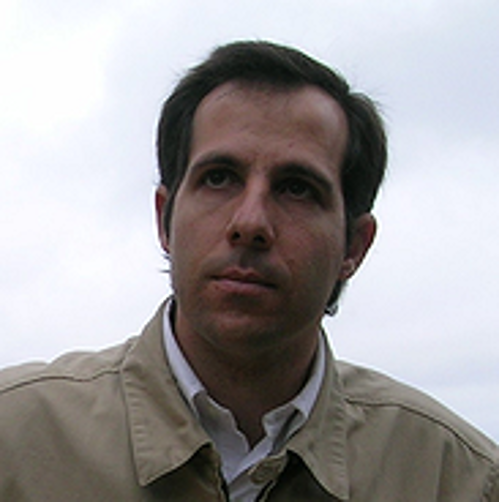
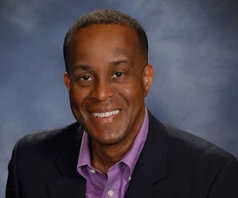
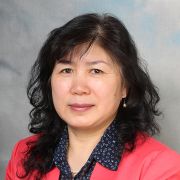
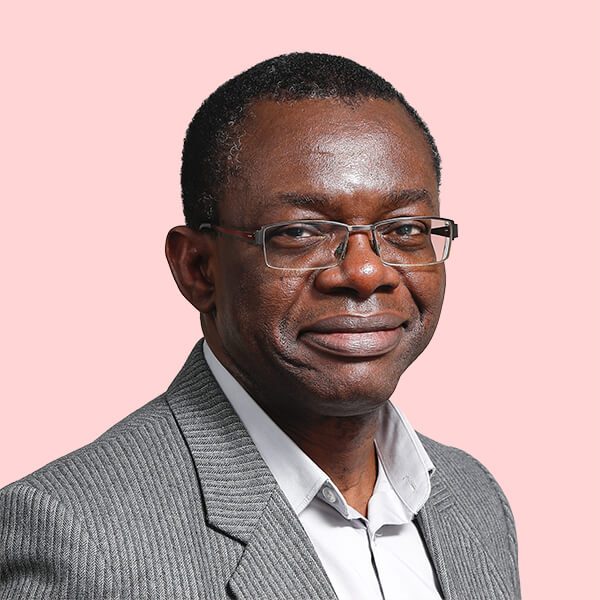
Keywan Sohrabi is a Professor at Technische Hochschule Mittelhessen (THM) , specializing in Biomedical Engineering and Medical Informatics . His work bridges Pulmonology , Sleep Medicine , and Digital Health through innovative applications of 3D Imaging , Acoustic Analysis , and Machine Learning . Contact: keywan.sohrabi@ges.thm.de
Juan Ignacio Arribas is a Full Professor in the Department of Signal and Communications Theory and Telematic Engineering at the School of Telecommunications Engineering, University of Valladolid. He is affiliated with the Center of Artificial Intelligence (Valladolid), Castilla-Leon Institute of Neuroscience (INCyL), and serves on the Section Board of Agriculture (MDPI) and Editorial Board of Scientific Data (Nature). His educational background includes: PhD in Electrical Engineering, University of Valladolid (2001) MSc in Electrical Engineering, University of Valladolid (1996) Dr. Arribas's research focuses on Machine Learning, Pattern Recognition, and Expert Systems applied to Cybersecurity, Computer Aided Diagnosis, Computer Vision, Bioinformatics, and Food Science. He pioneers computer vision and hyperspectral imaging for agricultural applications including weed detection, fruit quality assessment, and plant health monitoring, while also advancing medical diagnostics through EEG-based schizophrenia analysis. Analysis of his 15 most recent publications (2021-2024) reveals dominant themes in agricultural technology (70% of output), particularly non-destructive testing using hyperspectral imaging for crop monitoring and food quality. Cybersecurity applications (20%) feature network intrusion detection via novel neural architectures, with biomedical engineering (10%) represented by EEG analysis for psychiatric diagnosis. His work consistently integrates machine learning with domain-specific sensor data. Dr. Arribas supervises research through the Image Processing Laboratory (LPI) and collaborates with the Center of Artificial Intelligence. His international engagements include Visiting Research Associate roles at the University of Maryland (1998-2009) and Barrow Neurological Institute (2010). He leads the Image Processing Laboratory (LPI) research group and maintains active collaborations with the Castilla-Leon Institute of Neuroscience, driving interdisciplinary projects that bridge agricultural technology, medical diagnostics, and cybersecurity through advanced computational methods.
Miguel Angel Fernandez Granero is a Professor at the University of Cádiz, specializing in Systems Engineering and Automation within the Department of Automation, Electronics, Architecture and Computer Networks Engineering. As a member of the TIC212 Bioengineering, Automation and Robotics research group under the Institute for Research and Innovation in Biomedical Sciences (INiBICA), he bridges biomedical applications with technological innovation. His research focuses on predictive modeling for respiratory diseases , particularly COPD exacerbations, using telemonitoring and machine learning . Key areas include intelligent oxygen therapy systems , medical image analysis , and wearable sensor development . His 2016 PhD thesis on COPD exacerbation detection established a foundation for subsequent work in AI-driven healthcare technologies . Recent publications highlight his expertise in deep learning for histopathology , activity recognition in portable oxygen devices , and automated retinal imaging diagnostics . While no formal awards are documented, his interdisciplinary approach integrates educational technology in biomedical engineering curricula. He leads projects like AMICA, focusing on wearable sensors , and collaborates on Spanish-Portuguese cultural studies, demonstrating broad academic engagement.
Michael Theobald is a researcher at D. E. Shaw Research, focusing on the design and verification of specialized supercomputers for protein simulations. He has previously held postdoctoral and academic positions at Carnegie Mellon University (CMU) and Columbia University. Education: Ph.D. in Computer Science from Columbia University (2002), Postdoctoral Fellow at CMU (2002-2004), and Diplom in Computer Science from Johann Wolfgang Goethe-Universitaet (1994). His research interests span formal verification of software and hardware systems, asynchronous (“clock-less”) circuits, and efficient algorithms for combinatorial optimization. He has contributed to advancements in BDD and SAT techniques, logic synthesis, and hybrid systems verification, with applications in systems biology and robotics. Michael's publications emphasize formal methods, including model checking, abstraction refinement, and SAT-based algorithms applied to hybrid and asynchronous systems. These works align with his broader expertise in embedded systems and computer-aided design.
Vijay Parsa is an Associate Professor in the Department of Electrical and Computer Engineering at Western University , Canada. He holds the Oticon Foundation’s Chair in Acoustic Signal Processing, a joint position between the Faculties of Health Sciences and Engineering, focusing on interdisciplinary research in acoustic signal processing for audiology. Education: Ph.D. in Biomedical Engineering, University of New Brunswick M.E.Sc. in Electrical Engineering, University of New Brunswick B.Eng. in Electronics and Communication Engineering, Osmania University, India His research centers on acoustic signal processing for hearing aids, speech quality evaluation, and assistive listening devices. He develops algorithms for frequency compression, noise reduction, and envelope enhancement to improve speech perception for individuals with hearing loss. Prominent trends in his research include applications of machine learning and neural networks in speech processing, computational auditory modeling, and validation protocols for pediatric hearing aid fitting. His work bridges engineering and clinical audiology. Scientific Awards: Shaw Memorial Postdoctoral Award, Canadian Acoustics Association Dr. Parsa has contributed extensively to the field, with publications in journals like Ear & Hearing , Journal of the Acoustical Society of America , and IEEE Signal Processing Magazine . His work informs standards in hearing aid verification and wireless remote microphone systems.
Prof. Dr. Yusuf Tansel İç is a Professor in the Industrial Engineering Program at Başkent University, Turkey. His research focuses on manufacturing systems optimization, fuzzy logic applications, and multi-criteria decision-making methodologies. With over 155 publications and extensive collaboration with scholars like Prof. Dr. Mustafa Yurdakul, he contributes to advanced manufacturing technologies and engineering education assessment tools. Fields of Expertise: Financial Engineering, Fuzzy Logic, Computer-Aided Design, Multi-Criteria Decision Making Research Trends in his recent articles (2023-2025) emphasize: Numerical simulations for ballistic impact resistance Fuzzy logic integration in manufacturing process optimization Decision support systems for material selection and facility layout Mechanical modeling of springback minimization in metal forming Applications of neural networks in machining center selection His scientific contributions span 15 years of collaborative studies with institutions across Turkey.
Dr. Amer Dawoud serves as an Associate Professor at the University of Southern Mississippi, where he bridges computer engineering with defense technology and medical diagnostics through innovative hardware-software integration. His research program spans electrochemical sensing systems, drone-based surveillance, and advanced image processing algorithms with real-world deployment focus. His educational foundation includes: PhD in Engineering from University of Waterloo (2003) MS from Kuwait University (1998) BS from Yarmouk University (1988) Dr. Dawoud's research centers on defense-oriented electrochemical sensing and hardware security for IoT infrastructure . Recent work (2022-2024) pioneers drone-mounted potentiostats for remote chemical warfare agent detection, while his hardware security research develops FPGA-based PUF designs resistant to machine learning attacks. His longstanding expertise in medical image processing features Markov Random Fields and Type-2 fuzzy logic techniques for lung segmentation in radiographs and dermoscopic analysis, demonstrating methodological continuity across domains. Current projects emphasize field-deployable systems that merge drone mobility with embedded electrochemistry for battlefield applications. Analysis of his publication trajectory reveals strategic evolution from foundational image processing (2009-2015) toward defense technology (2021-2024), with consistent focus on robust, real-world implementations . The integration of Markov Random Fields across medical imaging and document analysis demonstrates cross-domain applicability of his core methodologies. His recent shift to chemical threat detection represents both technological advancement and response to contemporary security challenges.
Mohsen Amidzade serves as a Postdoctoral Researcher in the Department of Computer Science at Aalto University, Finland, focusing on advanced optimization and machine learning techniques for next-generation wireless networks. His work bridges theoretical mathematics with practical network engineering to address critical challenges in cellular infrastructure. Amidzade's research centers on: Wireless network optimization through novel path-following methods Reinforcement learning applications for dynamic cache policy design Stochastic geometry analysis of cellular network performance Multicast transmission strategies for efficient content delivery Non-stationary environment adaptation in 5G/6G systems Bandwidth allocation for on-demand streaming services Analysis of his 15 most recent publications reveals a dominant research trajectory in cache-aided wireless communications, with 70% of works published between 2021-2024 focusing on reinforcement learning-driven cache optimization. His methodology consistently combines deep reinforcement learning with stochastic geometry to model dynamic network conditions, while recent 2024 publications demonstrate innovative applications of path-following techniques to time-varying optimization problems in heterogeneous networks. Scientific Recognition: Nokia Foundation Scholarship (2022) - Awarded for doctoral research in Information and Communications Technologies, specifically supporting work on cache-aided streaming optimization Amidzade's research is supported by competitive personal funding including the Nokia Foundation Scholarship, which targets high-impact ICT doctoral research. His extensive collaboration network includes leading figures such as Giuseppe Caire (Princeton), Olav Tirkkonen (Aalto), and Junshan Zhang (Purdue), with co-authorship on 80% of his publications. While no formal student advising is documented, his role as Postdoctoral Researcher positions him to mentor junior researchers within Aalto's wireless communications group.
Emilio Jesús Gallego Arias is a non-tenured Research Fellow at the French National Center for Scientific Research (CNRS), hosted at the Institute of Fundamental Computer Research (IRIF) of CNRS and University of Paris Cité. He is also a member of the PiCube Inria team. Previously, he held postdoctoral positions at the University of Pennsylvania (2012–2014) and MINES ParisTech (2014–2019). His research spans mechanically-verified functional and logic programming , with a focus on the Coq proof assistant and the Mathematical Components Library . He develops tools like coq-lsp (language-server for Coq IDEs) and jsCoq (web interface), replacing earlier projects like SerAPI . His work bridges programming language theory , digital signal processing , and formal verification , particularly in the ANR FEEVER project for verifying Faust programs. His 15 most recent works (2014–2024) address type systems , differential privacy , and formal verification in domains like audio processing and mechanism design . Publications span journals (e.g., Journal of Privacy and Confidentiality), conferences (ICML, POPL, FARM), and workshops (CoqPL, UITP). He contributes to open-source projects (GitHub), including DFuzz (linear dependent types), DualQuery (privacy algorithms), and RAM (relational machine). He uses formal methods in collaborative development platforms (Gitter, GitLab) and advocates for free software and accessible audio technology .
Ana Cristina Marques Daniel serves as an active Associate Professor at the Higher School of Technology and Management (Escola Superior de Tecnologia e Gestão - ESTG) within Portugal's Instituto Politécnico da Guarda (IPG), where she bridges engineering principles with healthcare innovation through teaching and research activities. Her research program demonstrates exceptional interdisciplinary breadth: Biomechanics : Advanced studies on human balance control, gait dynamics, and plantar pressure distribution inform orthotic design and rehabilitation protocols for mobility impairments. Visual System Engineering : Pioneering work on eye movement simulation, visual stress diagnostics, and orthokeratology contact lenses enhances vision correction methodologies and low-vision assistance. Rehabilitation Technology : Development of mechatronic systems for motor recovery and smart-city-integrated assistive devices represents significant translational impact in assistive technology. Biomedical Modeling : Computational frameworks for human vibration response and corneal mechanics enable predictive healthcare solutions for occupational health and refractive therapy. Examination of her 15 most recent publications reveals an evolutionary trajectory from foundational biomechanical modeling toward integrated smart-city applications, with 2023-2024 works emphasizing predictive analytics for motor dysfunction and innovative visual aid systems. This progression demonstrates movement from laboratory research to real-world implementation, highlighting growing emphasis on user-centered design in healthcare technology development. No scientific awards or major professional honors were documented in the source materials. While specific doctoral advisees aren't listed, her frequent co-authorship on student-involved projects (e.g., 3D printing applications, ocular training apps) suggests active mentorship in engineering education. The absence of dedicated laboratory descriptions indicates collaborative research within institutional frameworks rather than standalone facilities.
Stefan Huber is Professor and Head of Research at the Department for Information Technologies and Digitalisation at Salzburg University of Applied Sciences. He also serves as Research Group Leader and Head of the Josef Ressel Center for Intelligent and Secure Industrial Automation, a €2.5M research center established in 2022 focusing on digital assistants for industrial machines with research fields in system architectures, artificial intelligence, and cybersecurity for operational technology. His research spans multiple domains including Machine Learning , Industrial Automation , Cyber Security , Computational Geometry , and Algorithm Theory . Huber's work has evolved chronologically from theoretical computational geometry to practical applications in industrial automation systems. His current research focuses on AI applications in industrial settings, particularly in Industry 4.0 contexts, with significant contributions to OPC UA security, reinforcement learning for control systems, and time series forecasting for industrial processes. Analysis of his recent publications (2023-2025) reveals a strong focus on practical AI applications in industrial automation, with particular emphasis on security aspects of operational technology, predictive modeling for manufacturing processes, and integration of machine learning techniques into industrial control systems. His work bridges theoretical computer science with real-world industrial applications. Excellence rating for Josef Ressel Centre evaluation (2024) Recognition for successful high-tech research (2024) Huber leads multiple significant research projects including AI4GREEN (Data Science for Sustainability, 2024-2027), JRZ ISIA (Josef Ressel Centre for Intelligent Industry Automation, 2022-2027), and IAI (Industrial Artificial Intelligence, 2023-2024). His research group at the Josef Ressel Centre comprises numerous researchers working on system architectures, AI, and cybersecurity for industrial automation. The center has received positive evaluations and media coverage for its high-tech research contributions to the field.
Prof. Tobias Seidl serves as Vice Dean at the Westphalian Institute for Bionics within the Department of Mechanical Engineering at the Westphalian University of Applied Sciences in Bocholt, Germany. He has been with the university since January 2011, teaching bionics and sensor technology while leading research in biomimetic applications for robotics and engineering. Education: Bionics studies at Saarbrücken PhD on desert ant navigation systems under Rüdiger Wehner at the University of Zurich with fieldwork in Tunisia Professional experience at the European Space Agency (ESA) in Noordwijk, Netherlands Research Focus: Prof. Seidl's work centers on bionics , translating biological principles into engineering solutions. His expertise spans neuroethology (neural basis of natural behavior), functional morphology (structure-function relationships), and biomechanics . Key application areas include biomimetic robotics inspired by ants and spiders, sensor development, and bio-inspired materials. His research consistently bridges entomology with robotics, aerospace, and materials science to solve complex engineering challenges. Publication Trends: Recent publications (2025-2016) reveal a strong focus on biomimetic applications in robotics, 3D printing, and aerospace. Dominant themes include adaptive biomimetic valves for automotive cooling, force-based path integration in walking robots, hydrophobic surface replication, and satellite deployable structures inspired by insect wings. His work consistently leverages biological observations—particularly from desert ants and spiders—to advance robotic locomotion, adhesion mechanisms, and space technology. Research Infrastructure: As head of the Westphalian Institute for Bionics, Prof. Seidl leads R&D projects such as developing force sensors in ant legs for robotic applications. His institute serves as a hub for interdisciplinary collaboration between biologists and engineers, focusing on translating biological insights into technical innovations for automotive, aerospace, and medical applications.
Jose E Schutt-Aine is a Professor in the Department of Electrical and Computer Engineering at the University of Illinois Urbana-Champaign's Grainger College of Engineering. With an office in the Electrical & Computer Engineering Building and contactable at jesa@illinois.edu, he has established himself as a leading researcher in high-speed digital systems and signal integrity. His research focuses on critical challenges in modern high-speed communication systems, particularly addressing the bottleneck created by limited physical interconnect resources against growing data throughput demands. Dr. Schutt-Aine's work spans machine learning applications for system modeling, signal integrity CAD tools, high-performance electromagnetic modeling, X-parameter simulation, and mixed-signal design. The trajectory of his recent publications demonstrates a clear evolution toward machine learning applications for high-speed link modeling and signal integrity analysis, while maintaining strong foundations in electromagnetic modeling and circuit simulation techniques. His work consistently addresses the critical challenge of increasing data throughput requirements against physical limitations of interconnect systems. IEEE Fellow (2007) for contributions to modeling and simulation of distributed circuits with applications to signal integrity Multiple Best Paper Awards at IEEE conferences (EPEPS-2014, EDAPS-2013, EPEPS-2013, EPEPS-2011) CPMT-IEEE Education Award (1998) NSF MRI Award (1991) NASA Faculty Award for Research (1992) Dr. Schutt-Aine has advised over 50 graduate students through their PhD and MS theses, covering topics from latency insertion methods to machine learning applications in signal integrity. His research has been supported by various grants focusing on power delivery for AI systems, heterogeneous integration, and advanced circuit simulation techniques. He leads research in the Electromagnetics Laboratory at UIUC, where his team develops innovative solutions for next-generation high-speed communication challenges.
Prof. Beining Chen is a Professor of Medicinal Chemistry at the School of Mathematical and Physical Sciences , University of Sheffield. Holding a PhD in Chemistry from the University of Glasgow (1991), she has pioneered research in computer-aided molecular design and combinatorial chemistry for drug discovery targeting prion diseases (TSEs) and neurodegenerative disorders like Alzheimer’s. Education: BSc (1984), MSc (1987) - China; PhD (1991) - University of Glasgow Appointments: Research Fellow (Oxford), Lecturer (Cranfield), Lecturer (Sheffield), Professor (Sheffield, 2014) Her research focuses on stabilizing prion protein conformations and targeting amyloid pathways , securing over £1.15M in Department of Health funding. She also explores natural product chemistry for lead compounds in cardiovascular, CNS, and antiviral research. Recent publications emphasize de novo drug design , computational proteomics , and structure-activity relationship studies for neurodegenerative diseases. Teaching areas include Medicinal Chemistry , Chemical Biology , and molecular modeling across undergraduate and postgraduate levels.
OKONGWU Uche is a Professor at the Toulouse Business School within the Department of Information, Operations and Decision Sciences . His academic work focuses on the intersection of supply chain management, decision science, and operational optimization, with a particular emphasis on sustainability and responsiveness in complex systems. Supply Chain Management Operations Research Decision Support Systems Humanitarian Logistics Genetic Algorithms Order Fulfillment His research explores advanced methodologies like heuristic-based genetic algorithms for multi-project scheduling, robust humanitarian facility location models, and sustainable supply chain planning frameworks. He has contributed to empirical studies on how supply chain practices impact organizational performance and tactical planning determinants. Recent publications highlight trends in humanitarian logistics , emergency response systems , and supply chain sustainability . His work includes tools for optimizing order fulfillment in stock-out situations and improving the maturity of sustainability disclosures in supply chains. For detailed publications, refer to the articles section. Contact: u.okongwu@tbs-education.fr .