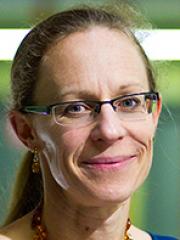
Prof. Maja Mataric´ is the Chan Soon-Shiong Distinguished Professor of Computer Science, Neuroscience, and Pediatrics at the University of Southern California (USC), founding director of the USC Robotics and Autonomous Systems Center, and current Interim Vice President of Research. She previously served as Vice Dean of Research for the Viterbi School of Engineering (2006-2019) and President of the USC Academic Senate (2006-2007). Her educational background includes a PhD and MS in Computer Science and Artificial Intelligence from MIT and a BS in Computer Science from the University of Kansas. Mataric´ pioneered socially assistive robotics, evolving from foundational work in robot navigation/mapping to multi-robot coordination and robot learning from demonstration. Her current research develops human-robot interaction algorithms for behavior change in rehabilitation, education, and healthcare, with deployments in homes, hospitals, and classrooms for autism therapy, stroke recovery, and dementia care. Her work integrates robotics, AI, and personalized health interventions through extensive real-world testing. Her major honors include: Fellow of AAAS, IEEE, AAAI, and ACM Anita Borg Women of Vision Award for Innovation NSF Career Award and MIT TR35 Innovation Award IEEE Robotics Early Career Award Presidential Award for Excellence in Mentoring (2011) She leads USC's K-12 STEM Center, developing open-source robotics curricula and equity-focused outreach programs. Her $10M+ grant portfolio includes NSF, NIH, and foundation funding for socially assistive robotics research and STEM education initiatives. Mataric´ co-founded Embodied, Inc. (2016-2018), launching the Moxie robot for child therapy, and directs the USC Robotics and Autonomous Systems Center where her lab conducts longitudinal human-robot interaction studies.
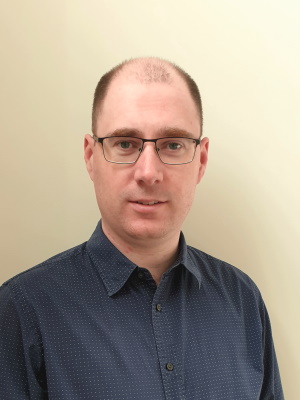
Ajmal Saeed Mian is a Professor of Computer Science at The University of Western Australia, where he leads the Machine Intelligence Group. This group is renowned for its work in Artificial Intelligence, Deep Learning, and Computer Vision. His research spans adversarial attacks and defenses on deep learning models, 3D shape analysis, point cloud analysis, facial recognition, human action recognition, and video understanding. Early Career WA Scientist of the Year 2012 Australian Research Council (ARC) Fellowships Australian Academy of Science ARC Award Excellence in Research Supervision Award EH Thompson Award ASPIRE Professional Development Award Vice-Chancellor's Mid-Career Research Award Outstanding Young Investigator Award Australasian Distinguished Doctoral Dissertation Award Various Best Paper Awards He has secured over $40 million in research grants from the Australian Research Council, the National Health and Medical Research Council of Australia, and the US Department of Defense DARPA. Mian serves as an Associate Editor for IEEE Transactions on Neural Networks & Learning Systems, IEEE Transactions on Image Processing, and Pattern Recognition. He has held leadership roles in conferences such as DICTA 2019, ACCV 2018, CVPR 2022, and others. He has supervised 18 PhD students and 7 postdoctoral fellows and is Vice-President of the Australian Pattern Recognition Society.
Vanya Valindria is an Assistant Professor at Monash University specializing in Artificial Intelligence applications for medical diagnostics, with active supervision of PhD students in machine learning for medical image analysis. Her academic foundation includes a Doctoral degree in Artificial Intelligence from Imperial College London (2015–2019), where her thesis investigated machine learning approaches for whole-body scan analysis. Her research centers on AI-driven medical image interpretation , particularly tuberculosis detection from chest radiographs using advanced neural architectures. She extends this work into generative AI for marketing applications and critically examines ethical frameworks for global healthcare AI , with strong emphasis on feminist perspectives and data politics in algorithmic systems. Publication trends reveal a strategic shift from pure technical innovation toward socio-technical integration, combining hybrid deep learning models (Vision Transformers with CNNs) with ethical implementation studies in resource-limited settings like Indonesia. She actively mentors PhD candidates while contributing extensively to academic service through peer review for Medical Image Computing conferences and leadership in the 'Advancing AI Capacity in Indonesian Universities' initiative, which trains faculty across 15+ institutions in AI curriculum development.
Dr. Mitko Aleksandrov serves as a Casual Academic and Research Associate at the University of New South Wales (UNSW), working with Geospatial Research Innovations and Development (GRID) within the School of Built Environment under the Faculty of Arts, Design & Architecture. With specialized expertise in geospatial information systems and three-dimensional modeling, Dr. Aleksandrov contributes to cutting-edge research in indoor navigation, spatial analysis, and building information modeling applications for urban planning and safety. Dr. Aleksandrov holds a Master's degree in GIS (Geographic Information Systems), though specific details about his educational institutions and timeline are not provided in the available information. His academic background has positioned him at the forefront of geospatial research with practical applications in built environments. Specializing in three-dimensional modeling and navigation systems for indoor environments, Dr. Aleksandrov's research spans geospatial analysis, building information modeling, and spatial data structures. His work focuses on evacuation planning, crowd simulation, and hazard detection through voxel-based representations of 3D spaces, visibility analysis, and the integration of BIM with geospatial data. His research bridges computer science, civil engineering, and urban design to create innovative solutions for complex spatial problems in built environments, particularly addressing safety and navigation challenges in complex buildings. Dr. Aleksandrov's publication record demonstrates a clear progression from foundational research on voxelization algorithms toward practical applications in evacuation planning and pedestrian safety. His recent work shows increasing interdisciplinary collaboration, integrating computer vision techniques with geospatial analysis to address urban challenges. He has made significant contributions to indoor navigation systems, 3D modeling for evacuation scenarios, and the application of voxel-based representations in building information modeling, with publications appearing in high-impact journals across geospatial science, computer science, and civil engineering domains. While specific awards are not mentioned in the available information, Dr. Aleksandrov's research impact is evidenced by his consistent publication record in reputable journals including Transactions in GIS, Journal of Spatial Science, and ISPRS Annals. His work has contributed to advancing methodologies in 3D geoinformation and spatial analysis for practical urban applications. Dr. Aleksandrov actively collaborates with researchers across UNSW and internationally, particularly with Sisi Zlatanova, Jennifer Barton, and other members of the geospatial research community. His publications indicate involvement in significant research projects, potentially including the CRC-LCL project referenced in his 2020 work. While specific student supervision details aren't provided, his research program suggests engagement with graduate students in the geospatial and built environment fields. Working with Geospatial Research Innovations and Development (GRID) at UNSW, Dr. Aleksandrov is part of a dynamic research team focused on advancing geospatial technologies for urban applications. His involvement in organizing academic conferences such as the 3D Geoinfo Conference and GEOINFORMATION for DISASTER MANAGEMENT demonstrates his leadership within the research community. His work with voxel-based modeling in UNITY3D suggests engagement with visualization technologies that bridge academic research and practical applications in urban planning and emergency response.
Professor Monika Janda is a NHMRC Leadership Fellow (2025-2029) and serves as the Director of the Centre for Health Services Research at the University of Queensland's Faculty of Health, Medicine and Behavioural Sciences. She is also an Affiliate of the Queensland Digital Health Centre and the Dermatology Research Centre. As a Professor in Behavioural Science, she leads the NHMRC Centre for Research Excellence in Skin Imaging and Precision Diagnosis (2021-2025) and the NHMRC funded Synergy Roadmap Towards Melanoma Screening (2022-2026). Professor Janda trained as a health psychologist and has established herself as a leading behavioural scientist with expertise in cancer prevention and quality of life research. Her work focuses on applied health and clinical research problems, with particular emphasis on making a difference to cancer prevention, early detection and treatment outcomes. She has strong clinical collaborations and a passion for consumer-centered digital interventions that make self-management of health-related issues easier for people. Her research portfolio demonstrates remarkable consistency in three interconnected areas: prevention and early detection of cancer (particularly melanoma), improving clinical and supportive care for cancer patients (particularly gynaecological cancers), and innovative methods of health services delivery through digital interventions. Recent publications show a strong focus on leveraging digital technologies like 3D total-body photography, artificial intelligence, and mobile health applications to improve melanoma detection and patient outcomes. Professor Janda has received significant recognition through multiple NHMRC fellowships including a Leadership Fellowship (2025-2029), Translating Research into Practice Fellowship (2018-2020), Career Development Fellowship Level II (2013-2017), Career Development Fellowship I (2009-2012), and Early Career Fellowship (2004-2008). With extensive supervision experience having guided 24 postgraduate students to completion, she remains actively engaged in mentoring the next generation of researchers. Her substantial grant portfolio includes current funding for projects such as the Centre of Research Excellence to Improve the QuALIty of SurVival in Gynaecological Cancer PatiEnts (ALIVE WELL), Evidence generation for a national melanoma prevention strategy, and 3D total skin imaging for melanoma early detection in regional Australia. Professor Janda previously led the Health Determinants and Health Systems Theme at The Institute of Health and Biomedical Innovation at Queensland University of Technology until 2017, establishing a strong foundation for her current impactful work in digital health and cancer prevention.
Associate Professor Sridhar Ravi is Deputy Head of the School of Engineering and Technology at UNSW Canberra and leads the Bio-Engineering Research Group . He holds a Bachelors of Engineering (Aerospace) and PhD from RMIT University (2007 & 2011), where his doctoral research focused on wind turbulence effects on wing aerodynamics. Postdoctoral stints at Harvard University (2012-2014), Chiba University (JSPS Fellowship), and University of Bielefeld (Alexander von Humboldt Fellowship) expanded his expertise in insect/bird flight and bio-inspired design. Research Interests span Bioinspired Robotics Biomechanics of Flight Fluid-Structure Interactions Neuroethology of Navigation Unsteady Aerodynamics Autonomous Systems His work integrates biological principles into engineering solutions, particularly for miniature aerial/underwater vehicles. Recent Publications emphasize fluid dynamics in bio-inspired propulsion, obstacle avoidance, and swarm robotics. Key trends include passive wing rotation mechanisms, ground effect optimization, and sensory integration for autonomous control. Scientific Honors include JSPS Fellowship (Chiba University) Alexander von Humboldt Fellowship (University of Bielefeld) His teaching at UNSW Canberra includes Rotorcraft Engineering and Fundamentals of Flight , reflecting his technical depth.
Scott Tyo is an accomplished electrical engineering professor currently serving as an Adjunct Professor at UNSW Canberra's School of Engineering and Technology. He joined UNSW Canberra in 2015 as Head of the School and Professor of Electrical Engineering, following previous appointments as a professor at the University of Arizona's College of Optical Sciences (2006-2015) and the University of New Mexico (2001-2006). His academic journey began with a PhD from the University of Pennsylvania in 1997, after which he served in the US Air Force working on High Power Microwave Systems and Space-Based Remote Sensing, including military faculty service at the US Naval Postgraduate School from 1999-2001. Professor Tyo's research spans polarimetry, antenna design, and remote sensing applications. His work began with underwater imaging systems based on differential polarimetry, where he established foundational research in polarimeter optimization. His career evolved to include significant contributions to ultra wideband and high-power microwave antennas, particularly through collaborations with Dr. Carl Baum at AFRL and later with Prof. Rick Ziolkowski at Arizona on metamaterial-inspired electrically small antennas. More recently, his research has expanded into tropical cyclone analysis using satellite remote sensing techniques. His work demonstrates remarkable interdisciplinary reach, connecting optical engineering with atmospheric science. Analysis of his recent publications (2020-2025) reveals three primary research thrusts: 1) Advanced polarimetry techniques including scene-adaptive imaging systems and multi-harmonic reconstruction methods; 2) High-power microwave engineering with focus on cascaded oscillators and electrically small antenna arrays; and 3) Tropical cyclone analysis through satellite remote sensing of cloud radiative effects. These areas reflect his ability to bridge fundamental optical engineering with practical applications in defense and climate science. Professor Tyo has maintained an exceptionally active publication record spanning over 25 years, with continuous contributions through 2025. His work shows strong international collaboration, with co-authors from multiple countries and institutions. His research has practical applications in defense systems, remote sensing technologies, and climate monitoring, demonstrating both theoretical depth and real-world impact.
Dr Mark Whitty is a Senior Lecturer in Mechatronics within the School of Mechanical and Manufacturing Engineering at the University of New South Wales (UNSW). His research focuses on digital agriculture and digital viticulture, with expertise in image processing, autonomous systems, and 3D mapping. While no longer a full-time academic, he remains active in industry collaborations and research supervision. PhD, Mechatronic Engineering (2012), UNSW Graduate Certificate in University Learning and Teaching (2015), UNSW BE (Mechanical)/BSc (Computer Science) (2007), UNSW His research spans agricultural robotics, including yield estimation via computer vision, smartphone app development for viticulture, and 3D point cloud processing. Key projects involve autonomous ground vehicles, vineyard geospatial analysis, and UAV-based image processing. Equal second place, MBZIRC2020 Challenge 3 Best Student Poster, AWITC2019 and AWITC2016 Faculty of Engineering Staff Excellence Award for Research Excellence (2016) Dr Whitty has supervised over 98 students, including PhD candidates like Mengying Hu (canopy detection for apple spraying) and Annie Xu Wang (flower detection for apple spraying). His grants include partnerships with Plant and Food Research New Zealand, Wine Australia, and industry entities like Dematic and NXTGen Industries. He leads UNSW's robotics research group (www.robotics.unsw.edu.au/srv) and has contributed to conferences like AGRICONTROL 2019 and the Australasian Conference on Robotics and Automation. His work emphasizes practical applications in viticulture and horticulture.
Dr. Vineetha is an Associate Professor at Monash University's School of Engineering, leading the Intelligent Lighting Laboratory . Her research focuses on Solid State Lighting , Color Science , and Circadian Lighting , with industry-driven applications for energy-efficient human-centric lighting systems. Key Projects : Smart Edge Computing Vision Solution using AI (2025-2028) Shaping Global Human Light Behaviour (2023-2025) Enhancing Rosmarinic Acid Production via LEDs (2020-2022) Circadian System Impact Assessment (2020-2024) Light Quality Research (2015-2018) Teaching Innovations : Flipped classrooms Interactive teaching via audience response systems Virtual reality lab training (SLED Project) Scientific Recognition : Best Paper Award (2023) Her work contributes to UN Sustainable Development Goals including Clean Energy , Good Health , and Industry Innovation . She serves as Course Coordinator for Electrical and Computer Systems Engineering, emphasizing rigorous course management improvements.
Nguyen Thanh Kien is a prominent researcher affiliated with Queensland University of Technology , School of Electrical Engineering and Computer Science , focusing on Computer Vision , Deep Learning , and Biometrics . His work spans interdisciplinary domains, including Urban Climate Analysis , Cybersecurity , and Medical Image Analysis . Recent publications (2025) highlight his leadership in Physics-Informed Reinforcement Learning , Urban Microclimate Risk Monitoring , and Heat Vulnerability Mapping using Machine Learning and Remote Sensing . He has pioneered benchmarks like AG-VPReID for aerial-ground person re-identification, advancing Surveillance Systems and Environmental Modeling . His research trends (2020–2024) emphasize Iris Recognition , 3D Hand Pose Estimation , and Epileptic Seizure Analysis . Collaborations with experts like Clinton Fookes and Sridha Sridharan underscore his role in shaping large-scale studies in AI-enabled Urban Governance and Cybersecurity Frameworks .
César Herrera Acosta is a Research Fellow at Griffith University's School of Environment and Science, specializing in eco-informatics and techno-ecology. His work focuses on developing advanced monitoring technologies for coastal and marine environments, including computer vision and deep learning tools for analyzing high-throughput ecological data. He holds a PhD from James Cook University (2021) and a Licentiate in Biology from Simón Bolívar University (2007). His research integrates technology to address environmental challenges, such as assessing oil and gas project impacts, studying coastal biodiversity, and creating systems like CrabSpy to monitor intertidal crabs. Key affiliations include the Australian Rivers Institute and Coastal and Marine Research Centre. He leads projects funded by organizations like Australia’s Economic Accelerator ($669k grant) and the National Philanthropic Trust ($403k grant), focusing on AI-driven marine monitoring, fisheries management, and seagrass habitat preservation. His expertise spans coastal wetlands, mangroves, and estuaries, with collaborations across Latin America, the Caribbean, and Australia. Education: PhD in Coastal Ecosystems (James Cook U), Licentiate in Biology (Simón Bolívar U) Research Themes: Computer vision, marine conservation, AI in environmental science Labs/Teams: Australian Rivers Institute, Global Wetlands Project Recent grants include AI for autonomous underwater vehicles (2025), Gold Coast coastal monitoring (2024), and fisheries-independent surveys (2024). His work emphasizes actionable insights for stakeholders, bridging technology and ecological conservation.
Assoc Prof Shahla Hosseini-Bai is an Associate Professor in Agricultural Ecology and Technology at Griffith University's School of Environment and Science. She leads transdisciplinary research in agroforestry, biochar, hyperspectral imaging, and post-harvest technologies. Her work focuses on reducing farm inputs, food loss, and environmental footprints through innovative technologies. She holds editorial roles for Journal of Soils and Sediments and Remote Sensing . Education: PhD in Environmental Science from Griffith University (2012). Research Interests: Biochar-based fertilizers, hyperspectral imaging for soil/food analysis, climate-smart agriculture, and agroforestry systems in the Pacific and Bangladesh. Her projects include developing carbon-negative fertilizers and enhancing nut industry efficiency. Grants & Projects: Over 30 funded projects, including a $1.1M Advance Queensland Fellowship for machine vision in nut quality, and ACIAR grants for PNG and Bangladesh initiatives. Recent grants include a $400K forest conservation project and a $730K Livelihoods in Forest Ecosystem Recovery program. Awards: 2022 Biochar Industry Researcher of the Year, 2021 Advance Queensland Fellowship, 2018 John Dillon Fellowship. Recognized for teaching excellence and research impact. Supervision: Leads over 20 HDR and Masters students in areas like hyperspectral imaging, biochar, and climate change. Notable supervisees include Marcela Martinez (Macadamia kernel chemistry) and Negar Omidvar (soil nitrogen dynamics). Labs & Teams: Theme Leader at the Centre for Planetary Health and Food Security. Collaborates with industry partners like Pyrocal Pty Ltd and Macadamia Farm Management.
Alan Freeman is an Honorary Senior Lecturer affiliated with the Save Sight Institute and the Faculty of Medicine and Health at the University of Sydney. His work focuses on signal processing in the visual system, including neurophysiological mechanisms underlying binocular rivalry, motion perception, and visual cortex function. He holds a position that emphasizes research and academic contributions in neuroscience and vision science. Research interests span binocular vision, neural modelling of visual pathways, and perceptual stabilization. His studies investigate how ON/OFF visual channels interact, how motion direction selectivity emerges in the cortex, and the development of quantitative methods to assess visual processing without relying on subjective reports. Key themes include neurosciences and mental health, with a strong emphasis on interdisciplinary approaches linking physiology and psychology. Publications highlight a sustained focus on binocular rivalry suppression, visual cortex architecture, and retinal ganglion cell function. Recent work explores midget ganglion cell receptive fields in primates and the origins of motion direction selectivity. Earlier studies modelled orientation selectivity and examined cross-orientation interactions in human vision. Grants: 2006: Functional model of primary visual cortex 2004: The where and how of binocular rivalry He currently advises Shuzheng HUANG on a project involving circadian misalignment during jetlag. Freeman collaborates with institutions like the Save Sight Institute and has presented at major conferences including the Society for Neuroscience Annual Meeting and the Australian Neuroscience Society Annual Meeting. His research group contributes to understanding visual system signal processing through computational models and psychophysical experiments. The Save Sight Institute provides a platform for translating this work into clinical applications for vision health.
Dr. Vivienne Guan is a Researcher at the Westmead Applied Research Centre within the Faculty of Medicine and Health at the University of Sydney. Her work focuses on nutrition science, public health, and the application of mobile health technologies to improve dietary management in chronic conditions such as multiple sclerosis and cardiovascular diseases. She leads interdisciplinary projects combining clinical nutrition with technological innovation, including developing mobile apps for personalized dietary guidance using computer vision and persuasive technology. Her research interests span dietary interventions, food choice analysis, and the validation of dietary assessment tools. Notable areas include the impact of avocado and walnut consumption on cardiometabolic health, as well as the role of nutrition in managing neurological conditions. Dr. Guan’s work emphasizes translating research into practical solutions for patient self-management and primary care. Her publications highlight expertise in systematic reviews, meta-analyses, and mixed-methods studies. Key contributions include evaluating food-based interventions, analyzing dietary reporting biases in clinical trials, and designing digital health tools for chronic disease support. Dr. Guan collaborates with the Westmead Applied Research Centre to bridge gaps between nutritional science and healthcare innovation, focusing on scalable solutions for population health challenges.
Dr. Jin Huang is a Lecturer in the Discipline of Physiology at the University of Sydney's School of Medical Sciences. Her research focuses on glaucoma pathophysiology, particularly the effects of elevated intraocular pressure on retinal ganglion cells. She employs mouse models with advanced techniques like patch-clamp recordings and confocal microscopy to study neural signaling changes. Collaborating with Dr. Dario Protti, her work aims to elucidate mechanisms underlying glaucomatous vision loss. In teaching, she instructs neuroanatomy, neurophysiology, and anatomy to diverse health science students across various programs. Her pedagogical methods include lectures, practical sessions, and distance education. She actively contributes to academic governance as a subject coordinator and member of the Learning and Teaching Committee. Huang's outreach efforts include promoting neuroscience literacy through school programs and public events, scoring highly in student evaluations. She also volunteers with Glaucoma Australia and the Australian Museum's science education initiatives. Her research has been supported by grants such as the Rebecca L Cooper Medical Research Foundation's 2013 equipment grant. Key collaborations extend to institutions like the University of Sydney and international partners in optogenetic research.