معرفی
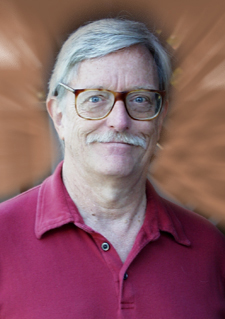
Alan Freeman is an Honorary Senior Lecturer affiliated with the Save Sight Institute and the Faculty of Medicine and Health at the University of Sydney. His work focuses on signal processing in the visual system, including neurophysiological mechanisms underlying binocular rivalry, motion perception, and visual cortex function. He holds a position that emphasizes research and academic contributions in neuroscience and vision science.
Research interests span binocular vision, neural modelling of visual pathways, and perceptual stabilization. His studies investigate how ON/OFF visual channels interact, how motion direction selectivity emerges in the cortex, and the development of quantitative methods to assess visual processing without relying on subjective reports. Key themes include neurosciences and mental health, with a strong emphasis on interdisciplinary approaches linking physiology and psychology.
Publications highlight a sustained focus on binocular rivalry suppression, visual cortex architecture, and retinal ganglion cell function. Recent work explores midget ganglion cell receptive fields in primates and the origins of motion direction selectivity. Earlier studies modelled orientation selectivity and examined cross-orientation interactions in human vision.
- Grants:
- 2006: Functional model of primary visual cortex
- 2004: The where and how of binocular rivalry
He currently advises Shuzheng HUANG on a project involving circadian misalignment during jetlag. Freeman collaborates with institutions like the Save Sight Institute and has presented at major conferences including the Society for Neuroscience Annual Meeting and the Australian Neuroscience Society Annual Meeting.
His research group contributes to understanding visual system signal processing through computational models and psychophysical experiments. The Save Sight Institute provides a platform for translating this work into clinical applications for vision health.