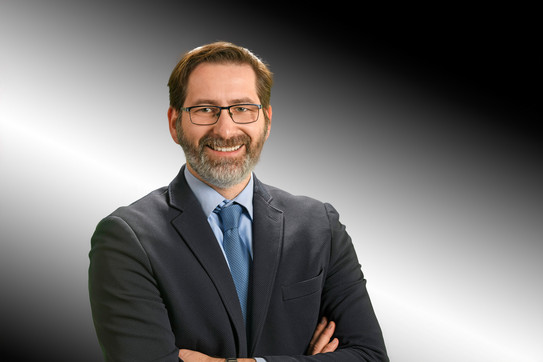
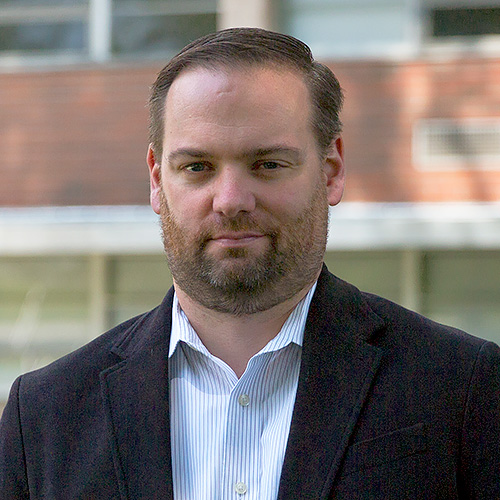
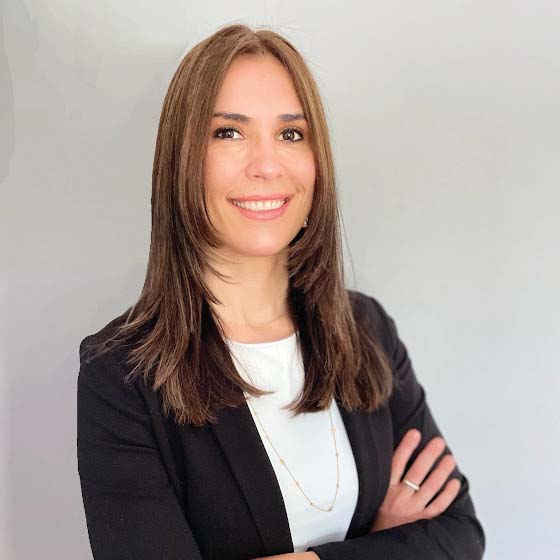
Dr. Alexis Kuerbis is Professor at Silberman School of Social Work, Hunter College (CUNY) and the Graduate Center's Social Welfare and Psychology Doctoral Programs. Her research develops interventions for substance use across the lifespan, particularly technology-enhanced treatments for older adults. Current work includes adaptive mobile messaging interventions, ecological momentary assessment of drinking contexts, and mechanisms of Motivational Interviewing. She co-leads trials testing tai chi/CBT for older adults with HIV/chronic pain/substance use. Publications examine daily factors in substance use, DSM-5 AUD criteria functioning in older adults, and text message interventions. Honors include NIH Loan Repayment Program and SAMHSA TIP 26 consensus panel membership. Teaches Alcoholism/Substance Abuse and advanced statistics in doctoral programs.
Kiemute Oyibo is an Assistant Professor of Computer Science at York University's Department of Electrical Engineering and Computer Science, affiliated with the Interactive Systems Research Group. He joined York in 2022 after completing a postdoctoral fellowship at the University of Waterloo and Carnegie Mellon University. He holds a Ph.D. in Computer Science from the University of Saskatchewan (2020). His research focuses on Persuasive Design , Personalization , User Modeling , and Digital Health , with an emphasis on using machine learning to bridge health inequities across income levels globally. Notable achievements include a Gold Award at HCI International 2019 for a culture-tailored fitness app and a Banting Fellowship nomination (2022). Recent work explores persuasive systems for contact tracing apps, algorithmic fairness in UI design, and mnemonics serious games. His teaching includes Human-Computer Interaction , Interface Design , and Human Factors in Design . Education : PhD in Computer Science (University of Saskatchewan, 2020) Key Research Areas : Digital health equity, personalized persuasive systems, and cross-cultural design Future Work : Leveraging AI to address global health disparities and optimizing persuasive technologies for marginalized populations
Thomas Hartmann is Professor of Land Policy, Land Management and Municipal Surveying at TU Dortmund University, appointed in 2021. His research examines land policy instruments for addressing land scarcity in urban development and climate adaptation contexts. Education includes: Ph.D. in Spatial Planning, TU Dortmund University (2009) Spatial Planning degree, TU Dortmund University Prior academic positions include Associate Professorship at Wageningen University, Assistant Professorship at Utrecht University (Netherlands), and visiting professorships in Vienna, Ústí nad Labem, and Bonn. Research focuses on land valuation in densification, flood risk management through land policy, and participatory approaches to urban development. Recent work analyzes European land ownership transparency and property-level flood adaptation.
Professor Kenneth A. Lachlan serves as Professor and Department Head in the Department of Communication at the University of Connecticut, a position he assumed in 2015 after founding the Communication Department at the University of Massachusetts Boston. He previously served as Editor in Chief of Communication Studies (2016-2018) and currently holds a seat on the Executive Board of the National Communication Association. His educational background includes: Ph.D. in Communication, Michigan State University (2003) Dr. Lachlan's research centers on crisis and risk communication , with specialized focus on media dependencies during disasters, community-level risk mitigation, and cognitive processing styles in emergency responses. His work examines psychological media effects , information seeking behavior , and uncertainty reduction in high-stakes contexts, particularly exploring how demographic factors influence crisis response. This research directly informs public safety protocols and emergency management systems through evidence-based communication strategies. Analysis of his recent publications reveals consistent emphasis on natural disaster communication (hurricanes, wildfires), public health emergencies (COVID-19), and emerging technological influences (AI, social media). His work increasingly integrates demographic analysis—particularly race, gender, and socioeconomic status—into crisis communication models, while expanding into AI-mediated messaging and climate change risk perception. His scholarly impact is evidenced by publication records ranking in the top 1% of communication scholars for two consecutive periods (2007-2011, 2012-2016) and third place in crisis communication publications (2000-2018). While specific advising details are unavailable, his leadership roles and editorial work demonstrate significant academic mentorship. He directs research through the UConn Video Game and Media Effects Lab, which investigates experimental media effects and crisis communication dynamics using advanced simulation techniques.
Dr. Saskia Wilson-Barnes is a Research Fellow in Nutritional Sciences at the University of Surrey's School of Biosciences, specializing in the Department of Nutrition, Food and Exercise Sciences. She leads research on personalized nutrition interventions using artificial intelligence, particularly through the EU-funded PROTEIN project developing a mobile application for tailored dietary and physical activity advice. Her work focuses on vitamin D's role in bone health, exercise performance, and healthy aging, with emphasis on translating research into practical digital tools. Her research interests intersect computational nutrition, bone metabolism, and the application of AI in healthcare. She investigates how technology can bridge gaps between scientific knowledge and public health outcomes, with a focus on vulnerable populations such as athletes, older adults, and those with metabolic conditions like type 2 diabetes. Key affiliations include the Nutrition Society, British Dietetic Association, and European College of Sport Sciences. Her publications emphasize validating AI-driven nutritional tools, evaluating user engagement with health apps, and exploring modifiable risk factors for bone health. The PROTEIN project's mobile application has been tested in pilot studies demonstrating feasibility and preliminary effectiveness, with ongoing work refining expert knowledge frameworks and user-centered design principles.
Deya Roy , Ph.D., is an Assistant Professor at the Department of Communication & Media Studies, California State University San Marcos. Her research focuses on organizational communication, examining how online communities influence health decision-making in diverse populations across gender, socioeconomic status, and race. She explores behavioral change theories to design effective health interventions, particularly targeting early adolescents through mHealth technologies. Ph.D. in Communication from University of Connecticut (2017) Post-Doctoral Fellow at Northeastern University Research Trends: Her work bridges communication studies with public health, emphasizing tailored messaging, usability testing, and theoretical frameworks like Self-Determination Theory and Priming Theory. She has contributed to journals including the Journal of Broadcasting and Electronic Media . Recipient of Top Paper Awards from National Communication Association Collaborates with interdisciplinary teams (health sciences, computer engineering)
David Akopian is a Professor in the Department of Electrical and Computer Engineering at the Klesse College of Engineering and Integrated Design , University of Texas at San Antonio. He is a Fellow of the National Academy of Inventors (2016) and specializes in interdisciplinary research at the intersection of mobile health technologies, wireless localization, and artificial intelligence. Current academic rank: Professor Institution: University of Texas at San Antonio School: Klesse College of Engineering and Integrated Design Department: Electrical and Computer Engineering Email: David.Akopian@utsa.edu His research focuses on mHealth interventions for chronic disease management, GPS/GNSS spoofing detection , and AI-driven healthcare chatbots . He develops culturally tailored mobile applications for medication adherence among minority populations and innovative wireless localization techniques using software-defined radio and machine learning. Recent publications demonstrate expertise in cybersecurity for navigation systems , AI integration in healthcare , and community-centric digital solutions . Key applications include smoking cessation programs for South Texas populations and robust positioning systems for urban environments. Scientific award: Fellow, National Academy of Inventors (2016)
Gamze Yilmaz is an Associate Professor in the Communication Department at the University of Massachusetts Boston. She earned her PhD in Communication Studies from the University of Texas at Austin and has been a faculty member for 13 years. Academic Rank: Associate Professor Department: Communication University: University of Massachusetts Boston Her research focuses on cognitive and behavioral processes in language use on social media and pedagogical innovations , including flipped classroom techniques and design thinking. She has implemented AI-enhanced pedagogy through the AI for Higher Ed Project , which supports professors in experimenting with AI tools. Recent publications analyze virtual team dynamics, social media health communication, and pedagogical methods. She received the Article of the Year Award (2023) for her work on flipped classrooms. She has presented at conferences like the National Communication Association and International Communication Association. Scientific Awards: Article of the Year Award (2023) She offers consulting services for AI-driven learning experiences and maintains a LinkedIn profile for professional networking.
Gi Woong Yun is Dean, Professor, and Fred W. Smith Chair at the University of Nevada, Reno's Reynolds School of Journalism, where he directs the Center for Advanced Media Studies. His research examines social psychological dimensions of media, including computational methods for social media analysis, health communication, and agenda-setting. Funded projects include NSF CyberCorps® Scholarship ($3.3M) and USDA farmers market initiatives ($500K). Research explores: Media trust and bias perception dynamics Sociotechnical challenges in computer vision systems Health communication efficacy Social media sentiment propagation Article trends show consistent focus on healthcare advertising ethics, marijuana risk perception, and political communication. Methodological innovations include social network analysis and experimental designs for media effects measurement.
Leigh Mutchler is an Associate Professor in the Department of Computer Information Systems and Business Analytics at James Madison University's College of Business. She holds a Ph.D. and MSIS from Mississippi State University (2012), with prior teaching roles as Lecturer at the University of Tennessee (2012-2018) and Instructor at Mississippi State University (2010-2012). Her research focuses on behavioral information security, including security policy compliance, efficacy of instructional programs, and user behavior in mobile/Web systems. Teaching emphasizes experiential learning through cases, group projects, and IT skills development in information systems courses. Her work bridges behavioral psychology and cybersecurity, exploring how direct/vicarious experiences influence secure actions and how tailored messaging can improve compliance. Recent publications highlight agile frameworks in education, pandemic-era course design, and socio-cultural learning techniques. She has extensively studied self-efficacy in security training and trust dynamics in social commerce. Though no specific grants or awards are noted, her research demonstrates a strong focus on applied cybersecurity education and user-centric security strategies. No advising roles or lab affiliations are explicitly mentioned in the provided materials.
Sandra Carberry is a Professor in the Department of Computer and Information Sciences at the University of Delaware with a joint appointment in Linguistics. Her research integrates artificial intelligence, natural language processing, and user modeling to develop intelligent systems for digital libraries, medical decision support, and educational applications. She leads the NLP/AI laboratory and teaches core AI and data mining courses. Her primary research focuses include: Intelligent Interfaces : Developing systems that recognize user goals and generate tailored responses through advanced user modeling Digital Libraries : Pioneering methods to extract meaning from information graphics using perceptual effort analysis and Bayesian reasoning Medical Informatics : Creating TraumaCASE for generating clinical training scenarios and improving trauma care decision support Educational Systems : Building adaptive medical tutoring systems that dynamically adjust case complexity Dialogue Systems : Advancing transformation-based learning for dialogue act recognition and cooperative response generation Her publication trend (2002-2007) reveals a strategic shift toward information graphics understanding, where she established that 61% of graphics convey unique information not present in text. This work combines cognitive psychology with machine learning to recognize graphic intentions through perceptual effort metrics and communicative signals, significantly advancing digital library capabilities. Key recognitions include: James Chen 2006 Award for Best Paper (UMUAI Journal) Best Paper Award at Diagrams Conference (2006) Springer Best Paper Award at User Modeling Conference (2007) Funded by NSF grant IIS-0534948, her digital libraries project demonstrates strong grant acquisition capability. Her extensive co-authorship with junior researchers indicates active mentorship, though formal student lists aren't published. University service includes departmental committees and professional activities documented in her vita. She directs the NLP/AI laboratory, which maintains active research in natural language processing, artificial intelligence applications, and multimodal information systems, with current work extending graphic understanding to complex visual representations.
Emily Breza is the Frederic E. Abbe Professor of Economics at Harvard University's Department of Economics. Previously, she held positions at Columbia Business School. She earned a PhD in Economics from MIT and a BA from Yale University. Her research focuses on development economics, social networks, household finance, and labor markets, with emphasis on how individuals interact with credit and labor markets through a behavioral lens. Education: PhD in Economics, Massachusetts Institute of Technology BA, Yale University Her research explores topics such as the impact of formal credit markets on social structures, experimental evidence on information delivery during crises like the 2020 pandemic, and the role of messaging in public health outcomes. Recent work includes studies on vaccine uptake via social media campaigns, the dynamics of trust in information transmission, and behavioral responses to economic policies. Scientific Awards: None explicitly mentioned in the provided text. Advising & Grants: No specific advisees or grants listed. Her work often involves collaborative experimental research funded by grants addressing global health and development challenges. Emily’s research integrates field experiments with network analysis, contributing to both economic theory and practical policy design in development contexts. She has no listed affiliations with specific labs or research teams beyond her academic position.
Dr. Thomas K Houston is an Adjunct Professor at UMass Chan Medical School in the Department of Population and Quantitative Health Sciences. He holds dual appointments within the T.H. Chan School of Medicine (Division of Health Informatics And Implementation Science) and UMass Chan Programs, Centers and Institutes (Department of Bioinformatics and Integrative Biology). His research program focuses on the intersection of health informatics, communication, and behavioral science, with particular emphasis on developing and evaluating digital health interventions for smoking cessation and chronic disease management. Dr. Houston received his BS in Biology from Wake Forest University and his MD from Bowman Gray School of Medicine, both in Winston-Salem, NC. His academic trajectory has positioned him as a leading researcher in health informatics, with a focus on leveraging technology to improve health outcomes and reduce disparities. Dr. Houston's research primarily centers on developing innovative digital health solutions including web-based platforms, mobile applications, and machine learning algorithms to personalize health interventions. His work spans multiple domains including public health, medical informatics, and behavioral science, with a particular focus on: Smoking cessation interventions using digital platforms Machine learning applications for personalized health messaging Implementation science for health technology adoption Health communication and patient engagement Addressing the digital divide in healthcare Global health applications of mHealth technologies His publication record shows consistent productivity with over 50 publications spanning from 1998 to 2025, with particular emphasis on randomized controlled trials testing technology-assisted interventions. His work frequently addresses health disparities and aims to develop interventions accessible to diverse populations, including socioeconomically disadvantaged groups and rural communities. Recent research includes machine learning-based adaptive systems for smoking cessation and digital divide risk assessment tools. Dr. Houston has established extensive collaborations, particularly with Dr. Rajani Sadasivam and other colleagues at UMass Chan Medical School. His research has been supported by various grants focused on developing and testing innovative digital health solutions. He has conducted international research in Vietnam on peer texting for smoking cessation and has developed multiple digital tools including the 'Share2Quit' peer marketing system and 'Crave-Out' mobile application for smoking cessation support. His laboratory work focuses on interdisciplinary collaboration between computer scientists, clinicians, behavioral scientists, and public health researchers to develop and implement effective health technologies. Dr. Houston continues to be actively engaged in cutting-edge research at the intersection of technology and healthcare delivery.
Eric D. Vidoni is an Associate Professor in the Department of Neurology at the University of Kansas Medical Center and serves as the Associate Director of the Clinical Core for the University of Kansas Alzheimer's Disease Research Center. He also co-directs the Brain Health Training Program and holds leadership positions as Core Leader for Outreach and Recruitment and Research Education at the School of Medicine-Kansas City, where he co-directs the Kansas Dementia and Aging Research Training Pipeline. Dr. Vidoni earned his Bachelor's of Science in Kinesiology from the University of Illinois, Urbana-Champaign in 2001. He completed both his Master of Science in Physical Therapy and PhD in Rehabilitation Sciences through a joint curriculum at the University of Kansas Medical Center in 2008, followed by a Post Doctoral Fellowship in Neurology at the same institution. He maintains active licensure as a Physical Therapist through the Kansas State Board of Healing Arts. Dr. Vidoni's research program centers on exercise benefits for the brain and community-engaged dementia research , with particular emphasis on how physical activity influences cognitive function and brain health in aging populations. Through the IGNITE study (Investigating Gains in Neurocognition in an Intervention Trial of Exercise), he has made significant contributions to understanding the relationship between cardiorespiratory fitness, cerebrovascular function, and cognitive performance. His work spans multiple domains including socioeconomic status effects on cognitive aging, arterial stiffness interactions with neurofilament light, white matter microstructure changes related to fitness, and sleep patterns' impact on cognitive outcomes. As a clinician-scientist with dual expertise in physical therapy and neuroscience, Dr. Vidoni brings a unique translational perspective to dementia prevention research. His leadership extends to developing culturally tailored interventions for diverse populations, including the MIND+ SOUL brain healthy diet for older African Americans and the CuidaTEXT text messaging intervention for Latino dementia family caregivers. He is actively involved in the Risk Reduction for Alzheimer's Disease (rrAD) trial and the MyAlliance for Brain Health initiative, which connects community members with research opportunities and brain health resources.