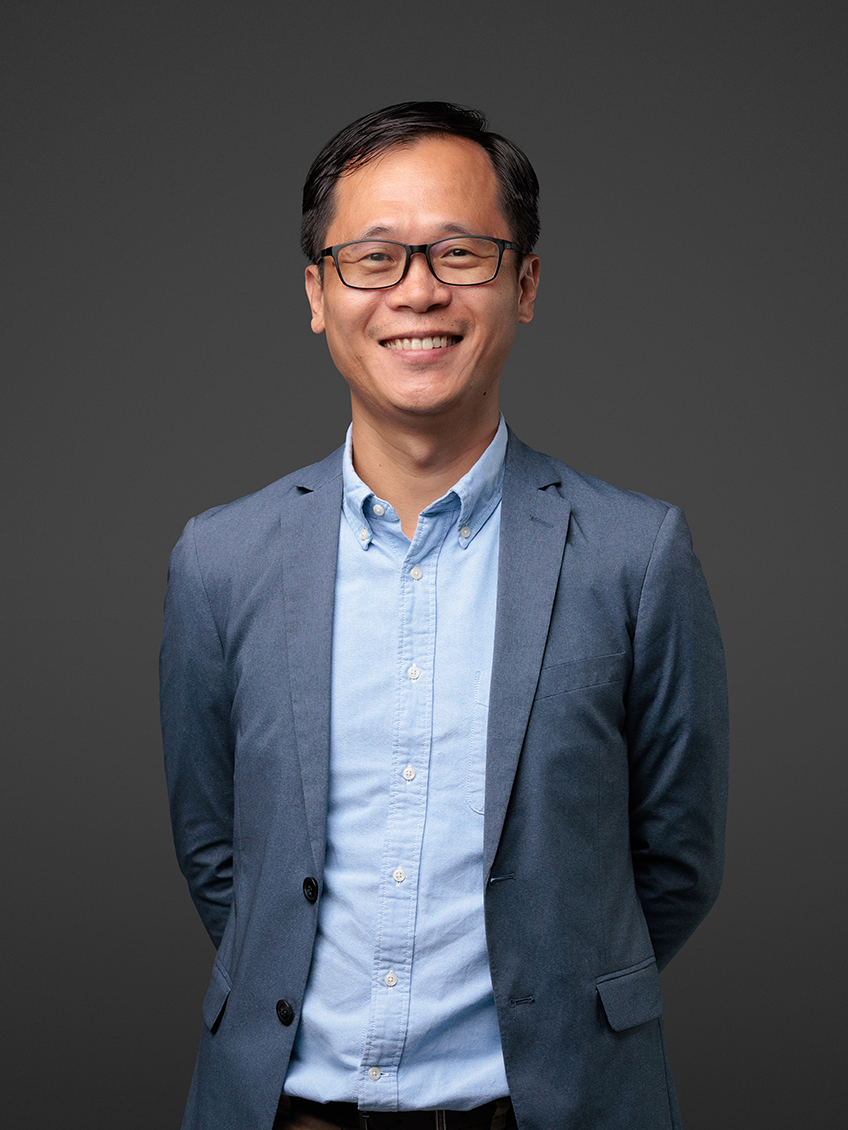
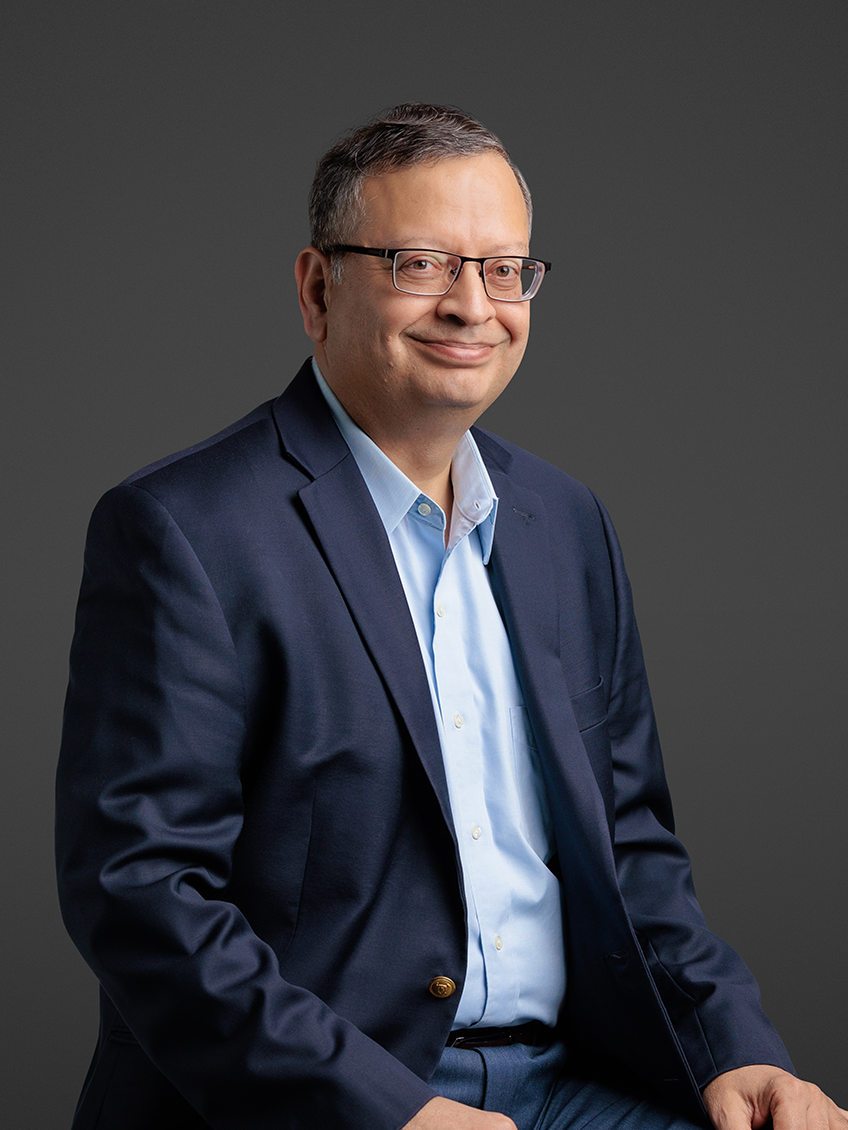
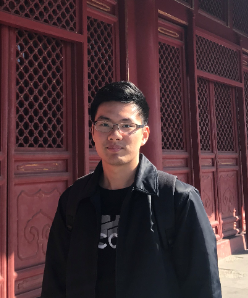
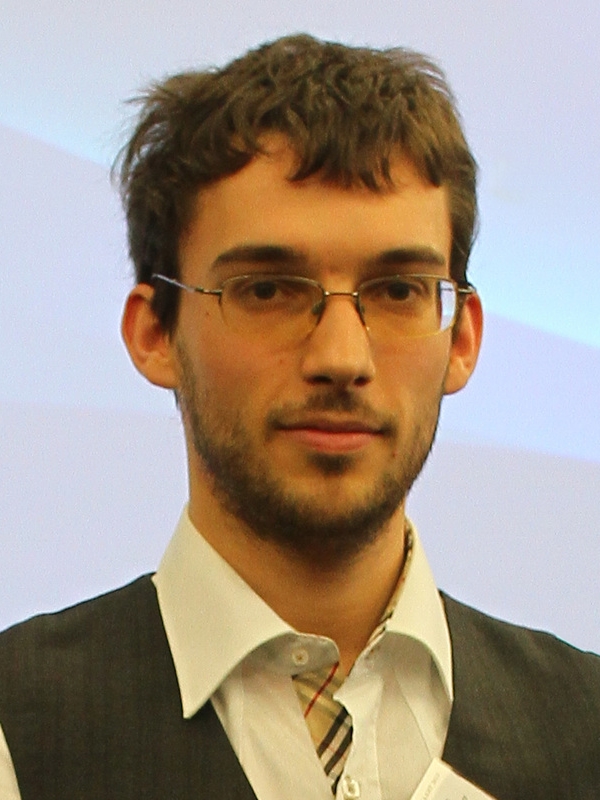
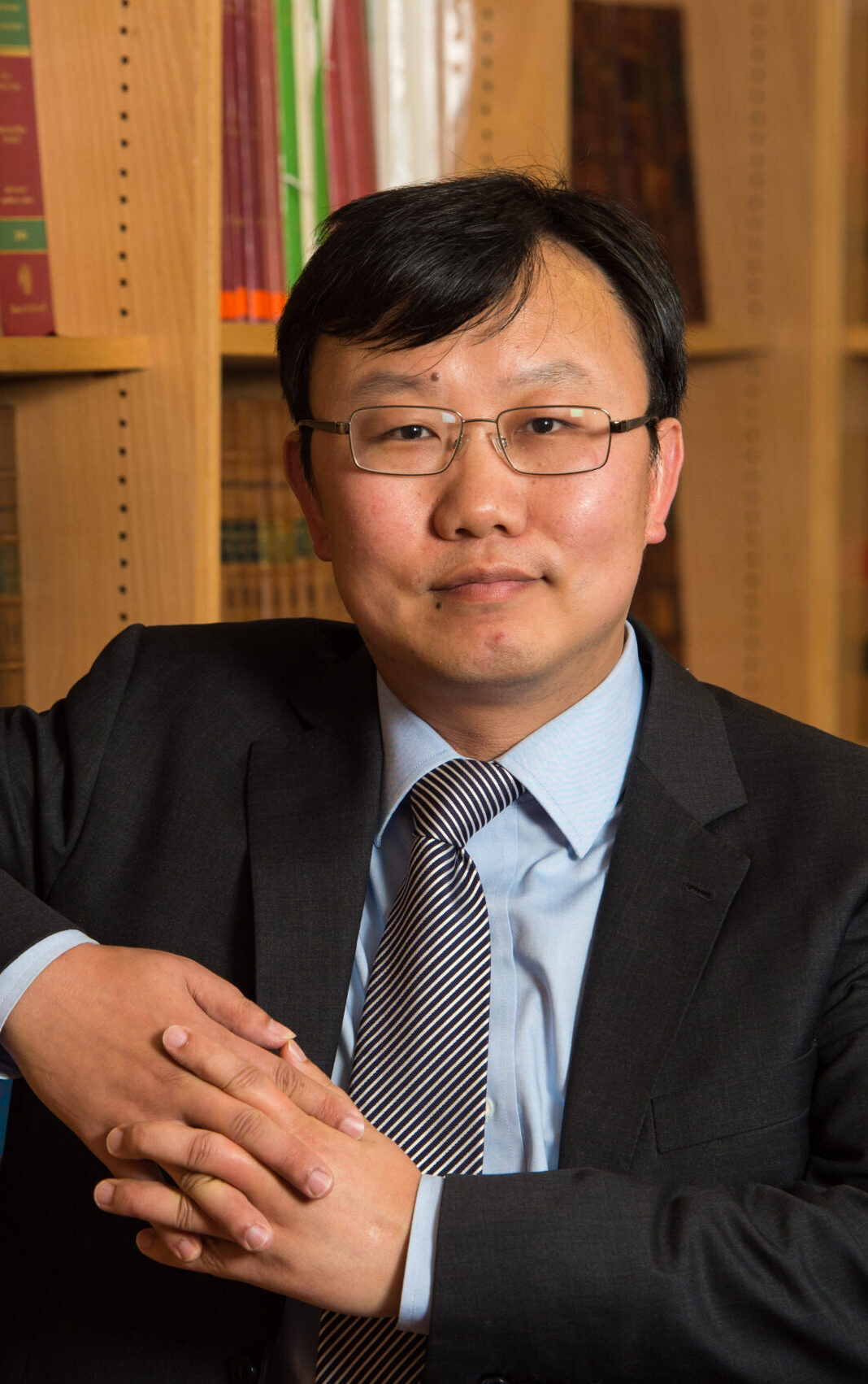
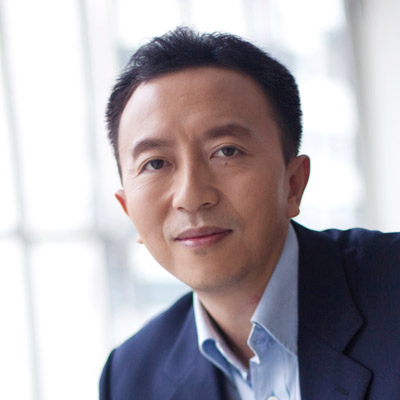
Dr. YANG Guomin is an Associate Professor of Computer Science at Singapore Management University's School of Computing and Information Systems, where he coordinates the BSc Cybersecurity Track. His research focuses on privacy-preserving cryptography, authentication systems, and secure IoT frameworks. Research spans cryptographic protocols for cloud security, blockchain applications, and federated learning with emphases on efficiency and practical implementation. Recent publications demonstrate innovations in threshold authentication, redactable blockchains, and privacy-aware communication protocols. Advisees include LI Huilin and WANG Jiaheng, with research projects examining hardware-enhanced encryption, biometric authentication policies, and space network security. Work consistently addresses tension between security guarantees and computational efficiency in distributed systems.
Chen Binbin is an Associate Professor and Associate Head of Pillar (Innovation and Enterprise) in the Information Systems Technology and Design (ISTD) pillar at Singapore University of Technology and Design (SUTD). He serves as Deputy Director for the Future Communications Research and Development Programme (FCP), Singapore. Previously, he was a Principal Research Scientist at the Advanced Digital Sciences Center (now Illinois ARCS), affiliated with the University of Illinois. Education: PhD in Computer Science from National University of Singapore, and Bachelor's from Peking University. Research focuses on wireless networking, distributed systems, and cyber security for critical infrastructures like smart grids and industrial control systems. His work addresses secure communications, intrusion detection, and resilience against cyber-physical threats. Notable contributions include error-estimating coding, provenance verification in ICS, and AI-driven network security solutions. Key awards include the 2010 ACM SIGCOMM Best Paper Award for error-estimating coding research. His grants span agencies like Singapore's National Research Foundation (NRF), Cyber Security Agency (CSA), and Energy Market Authority (EMA). He leads projects on secure smart grid communication, industrial control system defense, and AI-enhanced cybersecurity tools. Technical leadership involves developing frameworks like CyberSAGE for security assessment and CMD for IoT malware detection. Active in collaborations with industry and government, his work bridges theory and practice in securing critical infrastructure systems.
Professor TAN Ah Hwee is a Full-time Faculty member and Lee Kong Chian Professor of Computer Science at the School of Computing and Information Systems (SCIS) at Singapore Management University (SMU). He serves as the Associate Dean (Research) in SCIS and leads research in Artificial Intelligence, Machine Learning, and Health Informatics. His work spans neural networks, multi-agent systems, and healthcare applications such as Mild Cognitive Impairment prediction. He holds a PhD from Boston University (1994). Research Focus: His research integrates adaptive resonance theory, federated learning, and spatial-temporal modeling. Key areas include knowledge graph refinement, episodic memory systems for Activity of Daily Living (ADL) prediction, and explainable AI in multi-agent reinforcement learning. He also develops technologies for aging-in-place support and social media analytics. Recent Contributions: Recent work emphasizes hierarchical multi-agent models (HiSOMA), federated learning frameworks (FedART), and AI-driven health monitoring systems. His publications address challenges in self-organizing neural networks, context-aware reinforcement learning, and medical diagnostics through ambient sensing. Advising & Impact: Advises students like TEH Seng Khoon and Cassandra TAN Hui Ming. His projects include the eHealthPortal for elderly support and Silver Assistants for aging-in-place solutions. Research outputs bridge theoretical advancements in AI with real-world applications in healthcare and smart environments.
Professor Lingxiao Jiang is a full-time faculty member at the School of Computing and Information Systems (SCIS), Singapore Management University (SMU) , where he serves as Director of the Centre for Research on Intelligent Software Engineering (RISE) . His research and teaching focus on software engineering , program analysis , code search & reuse , and deep learning of code to enhance software quality, development productivity, and security. PhD, University of California, Davis (2009) Professor Jiang's research explores context-aware software deep learning , code clone detection , and security & privacy through tools like DECKARD (code clone detection), EqMiner (functionally equivalent code), and SmartEmbed (smart contract security). His work leverages distributed computing , symbolic execution , and neural program models for large-scale code analysis. Recent publications highlight trends in deep learning-based code analysis , smart contract vulnerabilities , and automated program transformation . Key themes include code clone detection , semantic patches , and cross-language API mappings . Scientific Awards ACM SIGSOFT Impact Paper Award (2018) for scalable code clone detection As advisor, Professor Jiang has mentored 14 graduate students, including Lucia (Ph.D. 2014) , Shaowei Wang (Ph.D. 2015) , and current advisees in intelligent software engineering. He leads multiple grants on code mining , security of digital platforms , and AI systems governance . RISE Lab at SMU develops tools like MANDO (smart contract analysis), iTiger (issue title generation), and TreeCaps (code processing with capsule networks). The lab actively recruits researchers in software engineering and AI.
Rakesh Nagi is a Professor and Head of the Engineering Systems and Design Pillar at Singapore University of Technology and Design (SUTD), where he joined in August 2023. He concurrently holds the Donald Biggar Willett Professorship at the University of Illinois, Urbana-Champaign (UIUC), on leave. His academic leadership includes serving as Department Head of Industrial and Enterprise Systems Engineering at UIUC (2013–2019) and as Interim Director of the Illinois Applied Research Institute (2016–2018). Previously, he was Chair of Industrial and Systems Engineering at the University at Buffalo (SUNY) from 2006 to 2012. Education: PhD (1991) and MS (1989) in Mechanical Engineering from the University of Maryland, College Park, with work at the Institute for Systems Research and INRIA, France. BE (1987) in Mechanical Engineering from the University of Roorkee (now IIT Roorkee), India. Research focuses on Data Science, Machine Learning, Operations Research, GPU-accelerated computing, and military applications. Key areas include Big Graphs, High-level Information Fusion, Production Systems, and Multi-Agent Systems. His work often leverages parallel computing and optimization techniques. Recipient of prestigious awards: IISE David F. Baker Award (2022), INFORMS Koopman Award (2021, 2018), and multiple DARPA Graph Challenge recognitions. Contributions span over 100 peer-reviewed articles in top journals (e.g., Operations Research, IEEE Transactions) and conferences. Research projects include Hybrid AI/ML-Optimization for cloud workflows, GPU-accelerated algorithms for multi-target tracking, and interventions against illicit supply chains. Active collaborations with IBM-Illinois and NSF-funded initiatives address strategic resource allocation and network analysis. Labs/Teams: Leads the Engineering Systems and Design Pillar at SUTD and coordinates interdisciplinary projects at UIUC’s Coordinated Science Laboratory.
Rahul Jain is a Professor in the Department of Computer Science at the National University of Singapore (NUS), School of Computing. He was promoted to full Professor from January 2020, having previously served as Associate Professor (July 2013-July 2013) and Assistant Professor (November 2008-July 2013). He is also a Principal Investigator at the Centre for Quantum Technologies (CQT), Singapore since November 2008. Dr. Jain earned his Ph.D. in Computer Science from Tata Institute of Fundamental Research, Mumbai (2003) and B.Tech. in Electrical & Electronics Engineering from Indian Institute of Technology, Mumbai (1997). Prior to joining NUS, he conducted postdoctoral research at UC Berkeley (2004-2006) and at the Institute for Quantum Computing, University of Waterloo, Canada (2006-2008). His research spans quantum computation, information theory, complexity theory, communication complexity, and cryptography. Dr. Jain has made significant contributions to quantum information theory, particularly in quantum communication complexity, quantum key distribution, and quantum algorithms. His work bridges theoretical computer science with quantum information processing, exploring fundamental limits of quantum computation and communication. His research demonstrates strong expertise in both theoretical proofs and practical applications of quantum information principles. Analysis of Dr. Jain's recent publications (2022-2025) reveals a consistent focus on quantum cryptography foundations, quantum communication protocols, and quantum information theory. His work frequently appears in top theoretical computer science venues including FOCS, STOC, and QIP, as well as leading journals like IEEE Transactions on Information Theory. Key themes include non-malleable quantum codes, quantum state redistribution, quantum communication complexity, and quantum cryptographic protocols with rigorous security proofs. Award under the VISITING ADVANCED JOINT RESEARCH FACULTY SCHEME (VAJRA) 2017-18 by Department of Science and Technology, Government of India BEST of 2016 by ACM Computing Reviews Young Researcher Award, National University of Singapore, 2012 Best paper award at STOC 2010 IBM Distinguished Dissertation Award, 2005 TAA-Sasken Best Thesis Award, 2005-2006 Dr. Jain has supervised numerous graduate students who have secured positions at Harvard University, IBM, JPMorgan Chase, University of Waterloo, and other prestigious institutions. His research is supported by significant grants including the VAJRA Faculty Scheme award. He serves as Associate Editor for the Journal of Computer and System Sciences and on program committees for major conferences including ITCS 2025, FOCS 2022, and QIP 2022-2014. At CQT, he leads research in quantum information theory and quantum algorithms, contributing to Singapore's position as a regional hub for quantum computing research.
Heyuan Shi is an Associate Professor at the School of Electronic Information, Central South University since 2023. He earned his B.S. (2015) and Ph.D. (2020) from Central South University and Tsinghua University respectively. His research focuses on software quality assurance with emphasis on kernel fuzz testing , open source software security , and AI application security . Presided over 10+ projects including NSFC General Program (No.62472448) and National Key R&D Sub-Project Published 30+ CCF-A/B papers across software security, machine learning, and quantum testing Supervised 15+ graduate students in software quality assurance areas His recent 2024-2025 publications demonstrate expertise in: LLM-enhanced patch classification Quantum neural network verification Hypergraph adversarial attacks RTOS fuzzing techniques Scientific recognition includes: 2024 Beijing Science & Technology Progress Award (First Prize) Hunan Province Xiaohe Sci-Tech Talent (2023) China Association for Science & Technology Young Talent (2025-2027) Active in academic service as PC member for FM2024 and reviewer for IEEE Transactions journals. Leads industry collaborations with Alibaba and Beijing Institute of Aerospace Metrology.
Guillaume A SARTORETTI is an Assistant Professor in the Mechanical Engineering Department at the National University of Singapore (NUS), part of the College of Design and Engineering. He specializes in distributed/decentralized coordination of multi-agent systems, with a focus on robotics, stochastic modeling, and reinforcement learning. His work spans applications in multi-robot systems, articulated robots, and swarm intelligence. Joined NUS in 2019 after a postdoctoral fellowship at Carnegie Mellon University (CMU) and a PhD from EPFL. Education: PhD in Robotics (EPFL, 2016); MSc and BSc in Mathematics/Computer Science (University of Geneva). Research interests include: Multi-agent pathfinding Decentralized control policies Swarm intelligence Reinforcement learning applications in robotics Recent publications emphasize scalable solutions for multi-agent systems, traffic signal control, and safe robotic exploration. His 2018 MFI postdoctoral fellowship recognized work on distributed reinforcement learning for pathfinding. Current projects involve bio-inspired locomotion and collaborative learning frameworks for heterogeneous robots.
Roles & Affiliations: Professor and President's Chair Professor in Computer Science and Engineering at Nanyang Technological University (NTU), Singapore. Member of the IEEE and IET, with roles in editorial boards of major journals like IEEE Transactions on Network Science and Engineering and IEEE Communications Surveys & Tutorials. Current positions: Editor-in-Chief of IEEE Transactions on Network Science and Engineering, Area Editor in multiple journals including IEEE Communications Surveys and Tutorials. Education: Ph.D. (2008) and M.Sc. (2005) in Electrical and Computer Engineering from the University of Manitoba, Canada. B.Eng. (1999) in Computer Engineering from King Mongkut's Institute of Technology Ladkrabang, Thailand. Research Interests: Focuses on mobile generative AI, edge general intelligence, quantum networking, incentive mechanisms, and wireless communication systems. Explores applications in 6G, IoT, UAV networks, and secure communication. Recent Articles & Trends: 15 most recent articles highlight advancements in generative AI for wireless networks, quantum computing integration, secure communication protocols, and AI-driven network optimization. Key themes include semantic communication frameworks, RIS-aided systems, and federated learning in edge networks. Awards: Over 20+ prestigious awards including IEEE Fellow (2017), IET Fellow (2022), Stuart Meyer Memorial Award (2024), and multiple best paper awards at top conferences like IEEE WCNC and IEEE ICC. Advising & Grants: Advisor to numerous students (not listed explicitly). Active in funding initiatives for AI in wireless systems, quantum networks, and low-altitude economy networking. Leads projects on GenAI for networking and 6G innovations. Labs & Teams: Research focuses on CCDS labs at NTU, collaborating on projects like GenAI for ISAC, mobile edge computing, and secure federated learning systems.
Professor DU Ming is a Visiting Professor in Chinese Law and Co-Director of the Global Policy Institute at Durham University. He holds an LLM from Harvard Law School and a DPhil from the University of Oxford. His research focuses on global economic governance, China's approach to international law, and the development of legal frameworks in contemporary China. He advises on complex international disputes and sits on editorial boards of leading law journals. **Education:** Tsinghua University School of Law (China) LLM, Harvard Law School (Victor and William Fung Fellow) DPhil, University of Oxford (Clarendon Scholar) **Research Interests:** His work bridges legal theory and practice, particularly in cross-border trade/investment law, corporate governance, and the ethical implications of emerging technologies. Recent publications explore federated learning governance, model licensing, and AI ethics within legal systems. **Awards:** Victor and William Fung Fellowship (Harvard) Clarendon Scholarship (Oxford) His advisory roles and legal practice in New York and Beijing inform his research on transnational legal challenges. Collaborations span technical and legal domains, addressing issues like data privacy in federated learning systems.
Professor Yan Jie is a distinguished academic at the National University of Singapore, holding faculty positions at the Mechanobiology Institute and the Department of Physics. He also maintains an affiliation with the Centre for BioImaging Sciences under the Department of Biological Sciences. Professor, Mechanobiology Institute (MBI), NUS Professor, Department of Physics, NUS Professor, Centre for BioImaging Sciences, NUS Dr. Yan's research lies at the intersection of biophysics, molecular biology, and mechanobiology. His work focuses on understanding how mechanical constraints influence biomolecular stability, including: Force-dependent conformations and interactions of nucleic acids and proteins Mechanosensing at cell-ECM adhesion and cell-cell junctions Chaperone-mediated protein folding mechanisms Chromosome packaging and DNA damage repair dynamics His recent publications highlight advancements in: Mechanical stabilization of biomolecular complexes via energy landscape modeling Multi-domain interactions in cytoskeletal proteins Force-transducing mechanisms in bacterial membranes Calcium signaling in stem cell mechanical properties Dr. Yan has mentored a diverse team including PhD students Kayo Kumadaki, Lin Yueying, Guo Yanyu, Sun Yuze, Liu Jingzhun, Dasvit Shetty, and former student Pang Si Ming. His lab integrates single-molecule biophysical methods with theoretical modeling to explore mechanical regulation at the molecular and cellular level.
ZHOU Yu Xuan, Sophia serves as an Adjunct Lecturer at the School of Computing and Information Systems (SCIS) within Singapore Management University (SMU), contributing to the institution's academic mission in technology education. Her educational background includes: PhD in Electrical and Computer Engineering from National University of Singapore, Singapore Her research trajectory centers on Cloud Computing infrastructure, with specialized expertise in Cloud Management and Engineering. This encompasses resource orchestration, service deployment frameworks, and operational optimization of distributed cloud environments, addressing critical industry challenges in scalability and system reliability. Her professional activities align with SCIS's focus on cutting-edge information systems development and practical technology implementation.
Professor Michelle Cheong Lee Fong is a full-time faculty member at the School of Information Systems, Singapore Management University. She holds leadership roles as Associate Dean for Post-Graduate Professional Education and Director of the Doctor of Engineering program, and is actively involved in designing educational frameworks for technology-driven learning. Current affiliations: Singapore Management University (School of Information Systems) Research focus: Supply chain coordination, spreadsheet modeling, and educational technology Key courses taught: Computer as an Analysis Tool, Financial Modeling, Process Modeling Her research interests in supply chain coordination span strategic hub location optimization, tactical supplier coordination, and operational transportation planning. She also specializes in spreadsheet modeling for business decision-making, having developed textbook resources and case studies for logistics networks and financial planning. Recent work explores AI's role in digital education, including ChatGPT's impact on assessment design and ethical considerations in AI-driven pedagogy. The articles she has written or co-authored demonstrate expertise in operations research, educational technology, and AI applications. Topics include optimization theory, heuristic algorithms for scheduling, and digital assessment frameworks that integrate learning analytics. Her work bridges spreadsheet modeling's pedagogical value with modern challenges like ChatGPT's influence on student learning. Her teaching portfolio includes courses such as IS102 (Computer as an Analysis Tool), IS304 (Process Modeling), and FNCE645 (Financial Modeling). These courses emphasize practical skills in translating business requirements into technology solutions through spreadsheet-based analytical frameworks.
Rakesh Nandi is a Research Fellow at the Aviation Studies Institute (ASI) of Singapore University of Technology and Design (SUTD). He previously held a research fellowship under Dr. Shrutivandana Sharma at the Engineering Systems and Design (ESD) school at SUTD. His work focuses on optimizing and analyzing air traffic networks, with projects such as Network Capacity and Network Collaboration under Professor Peter Jackson. Rakesh earned his Ph.D. in Mathematics from National Institute of Technology Raipur (2020) and an M.Sc. in Applied Mathematics from Guru Ghasidas University (2013). His research interests span queueing systems , stochastic modeling , numerical optimization , and network modeling/scheduling . He collaborates on projects requiring advanced computational and analytical methods for discrete-time queueing systems. His recent publications (2018–2022) emphasize queueing theory applications, stochastic processes, and optimization in discrete-time systems. Key topics include D-BMAP/G/1 queues, GI/D-MSP queue analysis, and N-policy control strategies. While no scientific awards are listed, Rakesh demonstrates active research in operations research and applied mathematics. He has no documented advisees or grants mentioned. He contributes to interdisciplinary teams at ASI and ESD, focusing on aviation systems and network efficiency.
Seth Gilbert is the Dean's Chair Associate Professor and Head of the Department of Computer Science at the National University of Singapore. His research focuses on designing robust, scalable algorithms for large-scale distributed systems, particularly in the domains of Byzantine agreement, dynamic networks, and contention resolution. He holds a PhD from MIT (advised by Nancy Lynch) and completed a postdoc at EPFL under Rachid Guerraoui. His work emphasizes three core techniques: accountability (identifying network failures), work-sharing (task distribution in asynchronous environments), and contention resolution (efficient resource allocation). Notable contributions include the DConstructor (PODC 2020) and Polygraph (ICDCS 2021) protocols for accountable Byzantine agreement. He has received multiple awards, including the Edsger W. Dijkstra Prize (2021) and Best Paper Awards at DISC, ICDCS, and IPDPS. Prof. Gilbert has served as program chair for DISC 2021, OPODIS 2019, and SPAA 2016, and currently chairs the DISC Steering Committee. His career includes industry experience at Microsoft (Visual Studio team) and early work on solar car engineering at Yale University.