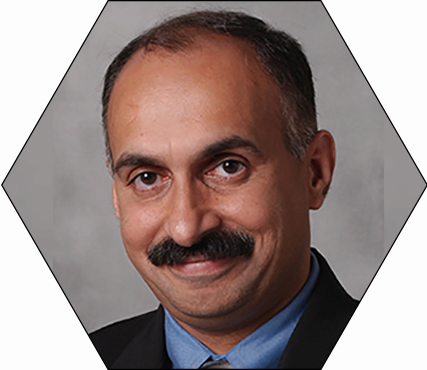
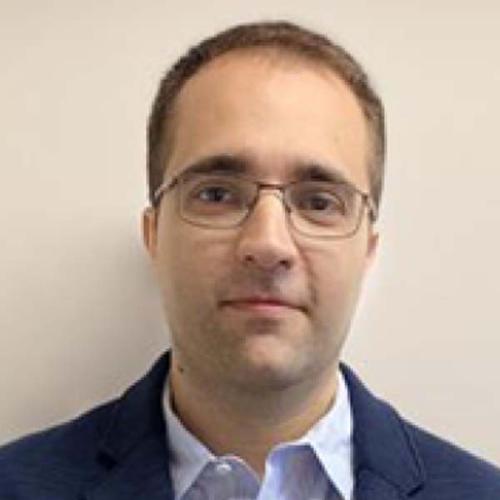
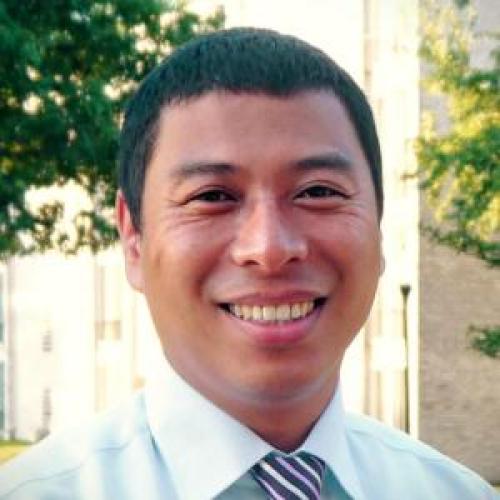
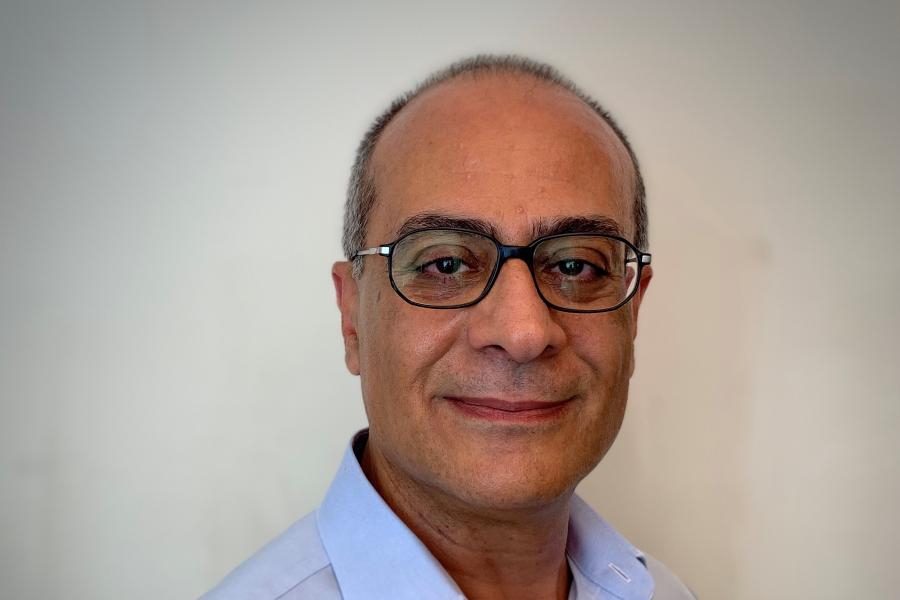
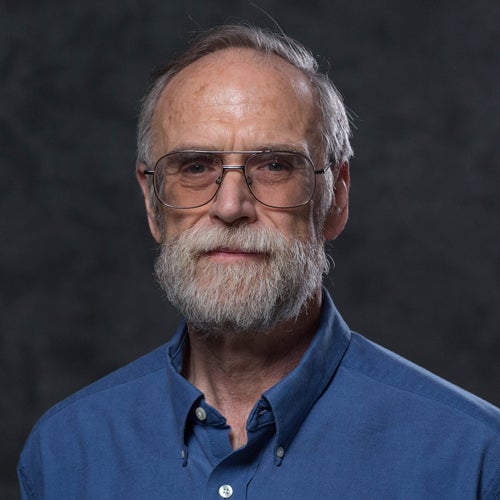
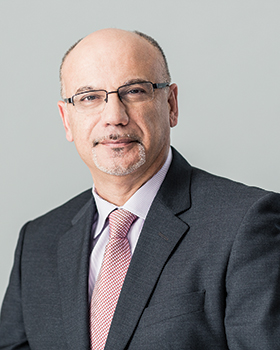
Declan Nolan is a Senior Lecturer in the School of Mechanical and Aerospace Engineering at Queen's University Belfast. He holds a PhD (2013) on 'Defining Simulation Intent,' focusing on automating simulation workflows. Before academia, he worked at Michelin, Williams F1 (as a Stress Engineer), and B/E Aerospace (Senior Structural Engineer), specializing in composite structures and structural integrity. He currently serves as Postgraduate Research Director (since 2022) and is a member of the EPSRC Early Career Forum in Manufacturing and the Circular Economy, and UKACM board member. His research spans design-to-simulation automation, bio-inspired design, and structural impact analysis. Key projects include PROTEUS (reimagining engineering design), COLIBRI (composite research), and Biohaviour (biological development analogies). He teaches Mechanics of Materials and Computer-Aided Engineering courses. Education: PhD in Mechanical and Aerospace Engineering (2013) Affiliations: Chartered Engineer, IMechE Member Grants/Projects: 4 active research grants, including EPSRC-funded initiatives Research outputs include 45+ publications, with recent focus on propulsion system integration, parametric nacelle modeling, and CAD-based machine learning. He has received two Best Paper Awards (2019) for manufacturing research contributions.
Suresh K. Sitaraman is a Regents' Professor and Morris M. Bryan, Jr. Professor in Mechanical Engineering at the Georgia Institute of Technology's George W. Woodruff School of Mechanical Engineering. His primary research focuses on Computer-Aided Engineering (CAE) and Design, manufacturing processes, micro/nano engineering, and mechanics of materials. He leads the Computer-Aided Simulation of Packaging Reliability (CASPaR) Lab and is involved in flexible hybrid electronics research through the Flexible Electronics Center . Dr. Sitaraman holds a Ph.D. from The Ohio State University (1989), M.A.Sc. from the University of Ottawa (1985), and B.E. from the University of Madras (1982). His research includes developing novel techniques like fixtureless magnetic actuation for interfacial fracture testing, compliant micro-scale interconnects for stress mitigation, and synchrotron X-ray diffraction analysis for through-silicon vias (TSVs). He has pioneered studies on carbon nanotube forests' mechanical properties and reliability challenges in 3D microsystems. His awards include the NSF CAREER Award (1997-2002), ASME Fellow designation (2004), and Sigma Xi Sustained Research Award (2008). He has authored over 150 publications and holds multiple patents on compliant interconnect technologies and packaging reliability solutions. Key Research Themes: Micro/nano-scale material characterization, physics-based predictive modeling, flexible electronics, 3D integration, and thermal management. Labs/Initiatives: CASPaR Lab ( caspar.gatech.edu ), Flexible Hybrid Electronics Center. Industry Impact: Contributions to semiconductor packaging, wearable electronics, and advanced manufacturing techniques.
Jorge Camba is an Associate Professor at the School of Engineering Technology and holds a courtesy appointment in the Department of Computer Graphics Technology at Purdue University . He also serves as a Senior Research Scientist (by courtesy) in the Department of Industrial Engineering at the University of Naples Federico II , Italy. PhD in Systems and Engineering Management (Universidad Politécnica de Valencia, Spain) MSc in Digital Media (East Tennessee State University) MSc in Computer Science (Universidad de Vigo, Spain) His research explores intelligent CAD systems , digital manufacturing , and mixed reality environments , focusing on model quality assurance , design intent communication , and collaborative design tools . Recent work investigates spatial cognition in CAD education , geometric variability analysis , and annotation-driven knowledge management . Key trends in his publications include parametric modeling strategies , 3D annotation systems , and XR applications in design evaluation. Awards include the Purdue Faculty Scholar (2021) and I3B Fellow (2021). He has presented at conferences on topics like Industry 4.0 , space habitat design , and digital product quality .
Luigi De Napoli is an Assistant Professor in the Department of Mechanical, Energy and Management Engineering at the University of Calabria's Engineering Faculty. He has been serving in this position since March 1, 2006, and achieved National Scientific qualification as associate in the Italian higher education system for the disciplinary field of 09/A3 - Industrial design, machine construction, and metallurgy, starting from December 20, 2019. His educational background includes a Bachelor Degree in Mechanical Engineering from the University of Calabria in 1993, followed by qualification as an Engineer in 1994. He completed his Ph.D. degree in Design and Methods in Industrial Engineering at the University of Bologna in 2003, with a thesis focused on the reconstruction of archaeological artifacts using CAD systems. High school: Liceo Scientifico Statale E. Fermi di Cosenza (1986) Bachelor Degree: Mechanical Engineering, University of Calabria (1993) Engineer Qualification (1994) Scholarship: ITIA-CNR in Milan on advanced FEM and BEM systems (1995/96) Ph.D.: Design and Methods in Industrial Engineering, University of Bologna (2003) Dr. De Napoli's research primarily focuses on Reverse Engineering applications in Mechanical Engineering, Product Design and Development, and Virtual Prototyping. His work spans various applications including the reconstruction of archaeological artifacts, geometry inspection, hull and prosthesis reconstruction, and sustainable product design methodologies. His recent publications demonstrate a strong emphasis on biomedical applications, particularly in cranial prosthetics, tissue engineering, and ovarian tissue culture systems. His teaching portfolio is extensive, covering courses such as Computer-Aided Design, Sustainable Product Design, Engineering Drawing/CAD, and Modeling and Prototyping for Bioengineering across both Mechanical and Management Engineering programs. He has been teaching CAD courses since 2010 and Sustainable Product Design since 2011 at the University of Calabria. Dr. De Napoli is actively involved in the Research Group for Industrial Engineering Design and Methods (ING-IND/15), which focuses on methodologies and tools for product development processes, industrial product design and development (with particular attention to parametric and sustainable aspects), prototyping (virtual and mixed), and manufacturing using 3D printers. His work also encompasses Reverse Engineering techniques, User Centered Design methodologies for ergonomic analysis, and Virtual and Augmented Reality applications for industrial product design.
Dr. Hyung D. Bae is an Assistant Professor in the Department of Mechanical Engineering at Howard University, affiliated with the College of Engineering and Architecture (CEA). He holds a Ph.D. from the University of Maryland (2013) and prior degrees from Yonsei University. His research focuses on polymer-based fiber optic sensors, bioinspired sensor systems, and 3D printed structures. He leads funded projects involving chemical detection, biological sensing, and 3D printed pressure vessels. **Education**: Ph.D., Mechanical Engineering, University of Maryland (2013) M.S., Mechanical Engineering, Yonsei University (2006) B.S., Mechanical Engineering, Yonsei University (2004) **Research Interests**: Dr. Bae specializes in micro/nano fabrication, optofluidics, and multi-functional sensors for biomedical applications. His work integrates optical systems with mechanical engineering to develop innovative sensing technologies. Recent projects include graphene-diaphragm-based acoustic sensors and diamond-based pressure sensors with advanced adhesives. **Awards & Recognition**: 2018 DARPA Young Faculty Award 2017 IEEE/OSA Top Reviewer Award 2012 Invention Disclosure Finalist (University of Maryland) **Teaching & Advising**: He teaches courses on MEMS, computer-aided engineering, and CAD design. Current funded research partners include DARPA, NSF, and DOE. His lab emphasizes collaborative projects using advanced simulation tools like Fusion 360 and Simscale. **Labs/Teams**: His lab focuses on interdisciplinary sensor development at the intersection of optics, mechanics, and materials science.
Prof. Dr. Jörg Hoffmann is a Professor in the School of Engineering at Saarland University of Applied Sciences, affiliated with the Department of Automotive Engineering. He serves as the Subject Coordinator for the Automotive Engineering program at the Sino-German University of Applied Sciences (CDHAW) and is a member of the Examination Board for Automotive Engineering at htw saar. Research Interests: His work focuses on Lightweight vehicle construction Passive vehicle safety Driver assistance systems CAE (Computer-Aided Engineering) and modern calculation methods Vehicle testing and development University Activities: He manages the Laboratory for Lightweight Vehicle Construction and Vehicle Safety, and is involved in curriculum development and administrative coordination for Automotive Engineering programs.
Dr. Nariman Sepehri is a Professor in the Department of Mechanical Engineering at the Price Faculty of Engineering, University of Manitoba, Canada. He has held significant administrative roles including Department Associate Head (Graduate Studies), Associate Dean of Engineering (Undergraduate Programs), and Acting Dean of Engineering. His research focuses on fluid power systems, robotics, and control with applications in rehabilitation and heavy machinery. Education: Post-Doctorate, Electrical & Computer Engineering, University of British Columbia, Canada (Tele-Robotics, Mechatronics) PhD, Mechanical Engineering, University of British Columbia, Canada (Control, Fluid Power Systems, Robotics) MSc, Mechanical Engineering, University of British Columbia, Canada (Computer-Aided Manufacturing Planning) BSc, Mechanical Engineering, Sharif University of Technology, Iran (Machine Design) Dr. Sepehri's research interests span Fluid Power Systems and Technology , Robotics and Teleoperation , Control Systems , Condition Monitoring , and Mechatronics of Rehabilitation Devices . His work integrates advanced control theory with practical applications in hydraulic and pneumatic systems, aiming to improve energy efficiency and reliability in robotics, manufacturing, aerospace, and healthcare. Notably, he has developed innovative rehabilitation devices using game-based interfaces for stroke and cerebral palsy patients. His recent publications (2022-2025) demonstrate a strong trend towards energy-efficient hydraulic systems, fault detection using machine learning, and the development of soft robotic actuators for rehabilitation. Key areas include electro-hydrostatic actuators, pump-controlled circuits, and the application of advanced algorithms for condition monitoring and control. Scientific Awards: Dean of Engineering’s Award for Superior Academic Performance University of Manitoba Rh Award for outstanding contributions to scholarships and research in Applied Sciences Fellow of the Canadian Academy of Engineering (CAE) Fellow of the American Society of Mechanical Engineers (ASME) Fellow of the Canadian Society for Mechanical Engineering (CSME) Dr. Sepehri has supervised over 100 graduate and postdoctoral students, contributing significantly to the field of fluid power and robotics. His research has been supported by major grants from the Natural Sciences and Engineering Research Council of Canada (NSERC) and other sources, enabling the establishment of the Fluid Power Research Laboratory. This lab features state-of-the-art equipment including a human-robot-in-the-loop simulator and hardware-in-the-loop test facilities for condition monitoring. The Fluid Power Research Laboratory at the University of Manitoba, under Dr. Sepehri's leadership, is a hub for innovation in fluid power technology. The lab collaborates internationally with researchers in USA, Brazil, China, Hungary, Romania, Denmark, Sweden and France, and has developed interdisciplinary projects bridging engineering with healthcare applications.
Gerd Vandersteen is a Professor at the Vrije Universiteit Brussel (VUB) in the Department of Electronics and Informatics within the Faculty of Engineering. He serves as part-time Director (30%) of the Doctoral School of Natural Science and (Bio)Engineering (NSE) at VUB. His career spans academic research and industry collaboration, with significant contributions to nonlinear systems analysis and RF circuit design. His research interests focus on Nonlinear Systems Analysis , RF Circuit Design , System Identification , and Microwave Engineering . Vandersteen combines theoretical expertise in modeling nonlinear systems with practical experience in analog and RF design. His work emphasizes simulation-based analysis techniques, particularly using the Best-Linear-Approximation method for nonlinear system characterization. Vandersteen's publication record shows consistent output with 363 research outputs, including 103 articles and 164 conference papers. His recent work spans diverse areas from Arabic language processing to advanced RF measurement techniques, demonstrating interdisciplinary reach while maintaining core expertise in electronic systems. Key trends include nonlinear distortion analysis, frequency response characterization, and system identification methodologies. Best Paper Award (2002) Best Paper Award for 'Synchronizing modulated NVNA measurements on a dense spectral grid' (2012) IEEE Senior Member (2007) IEEE Instrumentation and Measurement Society Outstanding Reviewer (2014) As an educator, Vandersteen teaches CAE tools for electronic design, microwave design, and telecommunication techniques at VUB. He mentors PhD students through the international spring school on system identification and modeling techniques. His research is supported by multiple active projects including SRP78 (Center for Model-Based Systems Improvement), HERC61 (110 GHz real-time oscilloscope development), and VLOV106 (Flemish AI Academy establishment).
Howard T. Russell, Jr. is an Associate Professor in the Department of Electrical Engineering at the University of Texas at Arlington. With a PhD from Santa Clara University (1976) and prior academic experience as an Adjunct Lecturer there (1973-2001), his expertise lies in analog circuit design, semiconductor device modeling, and feedback amplifier analysis. He founded OPAL Engineering, Inc. (1983-2000) to provide industry-focused analog design training. PhD, Electrical Engineering, Santa Clara University (1976) MSEE, BSEE, Texas A&M University (1967, 1966) Research focuses on precision analog circuits, including current mirrors, feedback amplifiers, and SPICE modeling. His work addresses thermal effects in dielectrically isolated bipolar technology and advanced translinear element applications. Publications span from 1970 to 2014, reflecting sustained contributions to analog electronics. Recent articles emphasize feedback circuit simulation methods, high-speed analog design, and thermally compensated architectures. His 2014 publication on VCVS-terminated subnetworks demonstrates modern analysis approaches. Adjunct Lecturer of the Year, Santa Clara University (1990) Recognized Professor, Phi Kappa Phi (2009) United States Patent: All-NPN Precision Current Mirror (2009) Teaching spans circuit theory, analog electronics, and semiconductor physics across 28 years. Courses include undergraduate and graduate levels with emphasis on hands-on lab work and simulation tools (MatLab, SPICE).
Rafik Goubran is a Professor in the Department of Systems and Computer Engineering at the Faculty of Engineering and Design, Carleton University. He holds the distinguished title of Chancellor’s Professor and currently serves as the Vice-President (Research and International). He earned his Ph.D. from Carleton University and is a licensed Professional Engineer (P.Eng.). His research expertise spans digital signal processing, biomedical engineering, audio processing, and the development of smart environments for senior independent living, with applications in patient monitoring, sensor systems, and real-time analytics. Dr. Goubran's recent publications highlight a strong focus on applying machine learning and sensor technologies to healthcare challenges, particularly in gerontechnology. His work involves non-invasive monitoring of sleep apnea, cognitive decline, driving behavior in older adults, and ambient health monitoring using smart homes and IoT systems. He explores innovative methods such as using pressure mats, audio analysis, and video magnification for vital sign detection and behavioral assessment. Life Fellow, IEEE Fellow, Canadian Academy of Engineering (CAE) Chancellor’s Professor, Carleton University Dr. Goubran has co-supervised 24 Ph.D. and 72 Master’s students and has secured significant research funding from NSERC, CIHR, NCE, and OCE for projects related to aging, health monitoring, and smart technologies. He is the co-leader of the TAFETA project and was the founding Director of the Ottawa-Carleton Institute for Biomedical Engineering. His work involves extensive collaboration with institutions like the Bruyère Research Institute and industry partners such as QNX and BlackBerry. He leads a research lab focused on technology-assisted environments, developing systems for patient monitoring, fall detection, and cognitive assessment, contributing significantly to the field of assistive and ambient intelligence for healthcare.
Mark S. Shephard is the Samuel A. Johnson '37 and Elizabeth C. Johnson Professor of Engineering and Director of the Scientific Computation Research Center (SCOREC) at Rensselaer Polytechnic Institute, with joint appointments in Mechanical, Aerospace and Nuclear Engineering and Computer Science departments. His research pioneers Scientific Computing and High-Performance Simulation , driving innovations in automatic mesh generation , adaptive analysis methods , and parallel adaptive simulation technologies . SCOREC's work spans five core areas: High-Performance Simulation Methods - advanced mathematical models and discretization Simulation Reliability – uncertainty quantification and adaptive techniques Massively Parallel Computations – scalable solutions for real-world engineering problems Multiscale Computations - cross-scale modeling frameworks Construction of Simulation Systems – collaborative workflow development Applications include fusion plasma, soft tissue modeling, additive manufacturing, and microelectronics. Recent publications (2022-2025) reveal intense focus on GPU-accelerated unstructured mesh methods for fusion energy research and multiscale material science, with growing emphasis on exascale computing and cyberinfrastructure for plasma physics. His work increasingly bridges computational theory with industrial applications in CAE and medical device evaluation. Professor Shephard has graduated 24 Ph.D. students and secured over 65 research grants from 13 government agencies including DOE (SciDAC Institutes, Exascale Computing Program), NSF, NIH, DoD, and NASA, plus funding from 44 industry partners. His leadership extends to SCOREC's collaborations with ten+ universities and commercial impact through medical simulation software used in arterial stent evaluation. As SCOREC's founder and director for 32 years, he integrates faculty from seven departments across Rensselaer to advance simulation technologies. His Simmetrix Inc. co-founding role demonstrates commitment to translating research into engineering solutions, with current work targeting fusion plasma systems and heterogeneous supercomputing environments.
Johan Persson is an Associate Professor and Head of Unit at Linköping University's Department of Management and Engineering (IEI). He leads the Product Realisation (PROD) division, focusing on advancing Computer Aided Product Development (CAD) and optimization techniques. His research emphasizes computationally efficient surrogate models to enhance FEM/CFD analyses and streamline product development processes. Key areas of interest include design automation frameworks, additive manufacturing integration, and multidisciplinary optimization strategies. He teaches courses such as Machine Elements (TMKT39), Design Optimization (TMKT48), and Collaborative Multidisciplinary Optimization (TMKT79). His work bridges academic research and industry applications, with notable contributions to frameworks supporting Additive Manufacturing (AM) and OpenMDAO-based optimization. Research trends in his publications highlight advancements in AM applications, design automation tools, and collaborative optimization methods. Notable projects include a framework for AM design integration and studies on hydraulic pump design using additive techniques. Johan supervises PhD students including Erik Gustafsson and Javier Villena Toro. His research is supported by collaborations with colleagues like Anton Wiberg and Johan Ölvander. The Automation Lab, a key platform for his work, pioneers innovations in CAD automation and digital design processes.
Farid N. Najm is a Professor in the Edward S. Rogers Sr. Department of Electrical and Computer Engineering at the University of Toronto . He previously served as Department Chair (2009–2019) and Vice-Chair (2004–2007) . Dr. Najm earned his B.E. in Electrical Engineering from the American University of Beirut (AUB) in 1983, followed by M.S. and Ph.D. degrees in Electrical and Computer Engineering from the University of Illinois at Urbana-Champaign (UIUC) in 1986 and 1989, respectively. Former Assistant Professor and Associate Professor at UIUC (1989–1999) Research focus: Computer-Aided Design (CAD) for Integrated Circuits , emphasizing power dissipation, timing, and reliability His work addresses critical challenges in semiconductor design, including power grid verification and reliability checking . Dr. Najm has authored a widely recognized textbook Circuit Simulation (2010), which provides rigorous foundations for developing circuit simulators. Scientific Contributions & Awards Recipient of multiple Best Paper Awards at IEEE/ACM ICCAD (2020, 2019, 2016) Named IEEE Fellow (2003) and CAE Fellow (2010) Honored with the DAC Prolific Author Award (2013) and SRC Inventor Recognition Awards (2003, 2005)
Miodrag Hadžistević is a Full Professor at the Department of Production Engineering within the Faculty of Technical Sciences at the University of Novi Sad. His career spans over two decades, including roles as Assistant Professor (2005-2010) and Associate Professor (2010-2015) in the same department. Academic Timeline Full Professor (2015-present) Associate Professor (2010-2015) Assistant Professor (2005-2010) Administrative Roles Head of Department of Production Engineering (2012-2018) Head of Chair of Metrology, Quality, Equipment, Tools, and Ecological-Engineering Aspects (2018-2024) His research focuses on precision engineering, quality management, and manufacturing technologies. Key contributions include innovations in coordinate measuring machine accuracy, flatness error evaluation, and dental engineering applications. Publications span journals like Precision Engineering , Metalurgija , and Journal of Craniofacial Surgery . While no explicit awards are mentioned, his work demonstrates expertise in metrology, tool design, and ecological-engineering aspects. Recent articles reveal a strong emphasis on dimensional accuracy analysis, dental prosthetics fabrication, and advanced manufacturing methods. His work integrates CAD/CAE systems, Monte Carlo simulations for uncertainty evaluation, and rapid prototyping technologies. The research also explores material behavior in machining processes and corrosion protection techniques.
Rinaldo Garziera is a Full Professor at the Department of Systems Engineering and Industrial Technologies (DISTI) within the Faculty of Engineering at the University of Parma, Italy. He has served the university since 1991 and currently holds the position of Department Director until 2027. His teaching portfolio includes Functional Mechanical Design for Mechanical Engineering Master's programs and Fundamentals of Mechanics for Management Engineering Bachelor's degrees across multiple academic cohorts from 2015/2016 to 2025/2026. His academic journey began with a competitive placement at Scuola Normale Superiore of Pisa (Physics) in 1980, followed by a Mechanical Engineering degree from Polytechnic of Milan in 1987. He completed PhD studies at Polytechnic of Milan's Institute of Mechanical Drives starting in 1989, joined University of Parma as University Researcher in 1991, and achieved Full Professorship in Mechanics Applied to Machines (SSD ING-IND/13) in 2001. Born: Como, May 1, 1962 Scuola Normale Superiore di Pisa: Class of Science (Physics), 1980 Polytechnic of Milan: Mechanical Engineering degree, July 19, 1987 Polytechnic of Milan: PhD candidate, Institute of Mechanical Drives (Nov 1989) Garziera's research centers on robotics kinematics, vibration analysis, and motion dynamics. He developed an original recursive equation for inverse kinematics of redundant robots and extended the Rayleigh-Ritz method for vibration analysis of continuous bodies with complicating effects. His work addresses practical engineering challenges including tape unwinding dynamics, cylindrical shell vibrations with fluid interactions, and motion law development for controlled drives. Current investigations focus on metamaterials for noise control and sustainable design methodologies. His 2024-2025 publications demonstrate interdisciplinary convergence across robotics, sustainable engineering, and computational mechanics. Key trends include dual-gantry motion optimization, NURBS-based path planning, sustainable CAE tool integration, advanced joint mechanics, and machine learning-driven acoustic metamaterials. These works bridge theoretical mechanics with industrial applications in energy systems and manufacturing. Scientific Awards No awards mentioned in source material Garziera serves as reference professor for Management Engineering programs and directs DISTI department operations. While student advising history isn't detailed, his decades-long teaching record across 10+ academic years indicates extensive mentorship. No specific grant information appears in the provided text. No dedicated laboratory or research team structures are described in the available documentation, though his departmental leadership role suggests oversight of DISTI's research infrastructure.