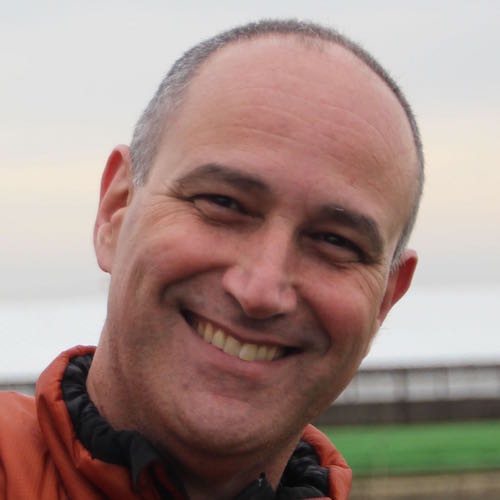
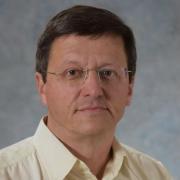
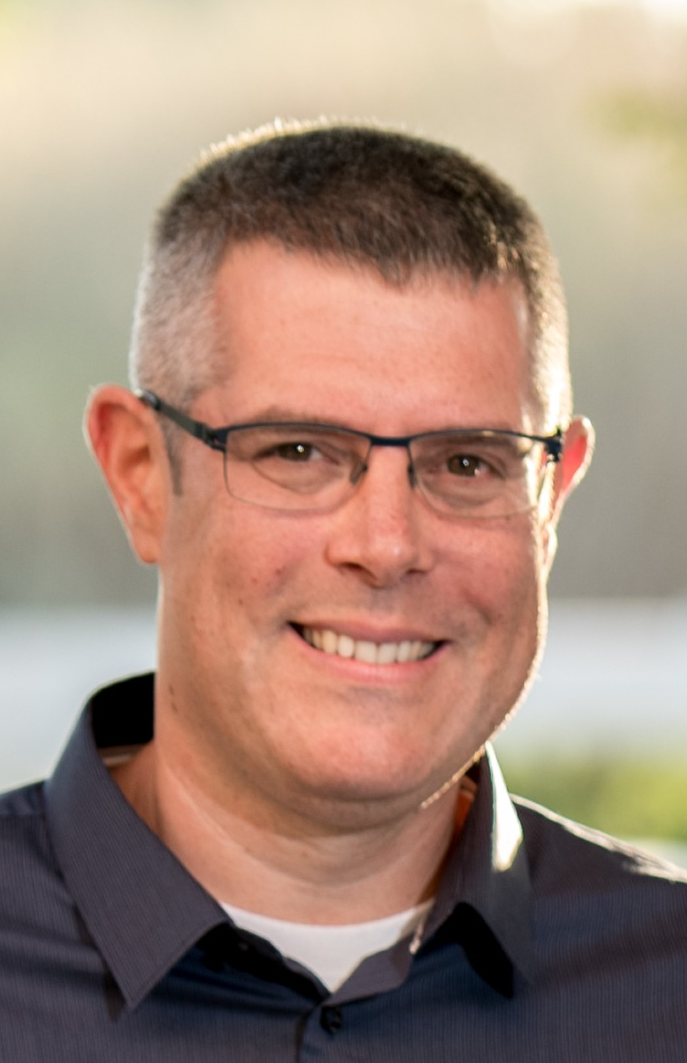
Erez Petrank is a Professor at the Department of Computer Science , Technion - Israel Institute of Technology , where he holds the Andrew and Erna Viterbi Chair. His research focuses on concurrent computing , programming languages , and systems with an emphasis on memory management . Additional interests include parallelism , cryptography , data structures , approximation algorithms , and distributed computing . Research Trends Recent publications highlight his work on safe memory reclamation (ERA Theorem, VBR), lock-free data structures (queues, stacks, B+ Trees), and persistent memory algorithms (NVTraverse, Mirror). These works span concurrent computing , distributed systems , and memory efficiency in multi-threaded environments. Scientific Awards Distinguished Paper Award at Euro-Par 2015 Contact Information Email: erez@cs.technion.ac.il Office: Taub 528, Technion Phone: +972-73-378-4942
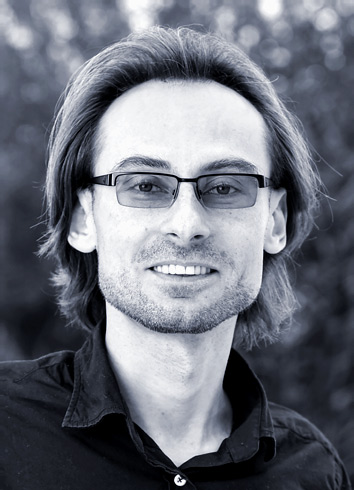
Prof. Alex Bronstein is a Professor at the Henry and Marilyn Taub Department of Computer Science, Technion – Israel Institute of Technology, where he holds the Dan Broida Academic Chair and heads the VISTA Lab and the Center for Intelligent Systems. He concurrently serves as a Visiting Professor at the Austrian Institute of Science and Technology. His research spans computer vision, machine learning, computational geometry, signal processing, and bioinformatics, with a focus on geometric data analysis and AI applications in science. He has held significant industry roles including Principal Engineer at Intel Corporation, co-founding startups such as Invision (acquired by Intel), VideoCites, and Sibylla. His work bridges academia and industry, emphasizing practical applications of theoretical insights. Research interests include foundational AI models for molecular biology, robust machine learning systems, and interdisciplinary applications in healthcare and robotics. Notable projects include protein structure prediction using AlphaFold integration, adversarial robustness frameworks, and medical imaging innovations like T1-PILOT for MRI acceleration. He actively collaborates with global institutions, maintaining labs in Haifa, Vienna, and Sardinia. Recent publications highlight advancements in quantum computing simulations, wearable health monitoring systems, and AI-driven biomedical solutions. While no explicit awards are listed, his leadership roles and industry impact underscore significant contributions to computational science. He mentors graduate students in his VISTA Lab, focusing on cutting-edge projects in AI, computer vision, and computational chemistry.
Prof. Yonatan Sivan is a Professor at the School of Electrical & Computer Engineering, Ben-Gurion University. His research focuses on nanophotonics, plasmonics, and electromagnetism, with particular emphasis on thermal and non-thermal effects in metallic systems. Key areas include plasmon-assisted photocatalysis, electron non-equilibrium dynamics, and numerical methods for nanophotonic systems. He advises multiple PhD and MSc students, including current candidates like Tamir Grossinger and Ben Spiegel, and collaborates internationally (e.g., with South China Normal University and UC Berkeley). Education details are not explicitly stated, but his work spans theoretical and experimental domains, integrating advanced numerical techniques with experimental validation. Notable contributions include redefining plasmonic photocatalytic mechanisms through thermal/non-thermal analysis and pioneering modal expansion methods for open optical systems. Research interests are organized into thematic clusters: Thermo-plasmonics, Drude materials, metal luminescence, thermal emission, and numerical methods. His work often involves interdisciplinary collaborations, addressing both fundamental physics and applied nanotechnology challenges. Publications span high-impact journals like ACS Catalysis , Nano Letters , and Physical Review Applied , with a focus on experimental validation and theoretical modeling. He also contributes to teaching courses on plasmonics, metamaterials, and wave propagation. Current group members include Dr. Imon Kalyan and Sravya Rao, while past members hold positions at institutions like UC Berkeley and KLA Tencor. His lab focuses on advancing nanophotonic technologies through rigorous computational and experimental frameworks.
Oren Tsur is an Assistant Professor in the Department of Software & Information Systems Engineering (SISE) at Ben Gurion University of the Negev, where he heads the NLP and Social Dynamics Lab (NAS-LAB) and directs the Center for the Study of Digital Politics and Strategy (DPS@BGU). He joined the university in September 2017 and teaches core courses including Natural Language Processing, Social Network Analysis, and Introduction to NLP at both undergraduate and graduate levels. His research focuses on computational modeling of social dynamics through language and network analysis. Key interests include social contagion, language evolution, political network analysis, and sentiment analysis. He employs methodologies from exponential random graph models (ERGM), machine learning, and natural language processing to study how language shapes and is shaped by social interactions, particularly in political contexts and online communities. His publication trends reveal strong interdisciplinary work spanning computational linguistics, political science, and social network analysis. Recent research emphasizes hate speech detection in platforms like Parler, suicide risk identification in counseling services, and modeling semantic drift in emoji usage. His work consistently bridges technical NLP innovations with real-world social applications, particularly in political discourse and community dynamics. NSF Political Network Fellowship (2014, 2015, 2016) TIME Magazine's 50 Best Inventions of 2010 for sarcasm detection research Work featured in Science Magazine, BBC, The Atlantic, CNET, and Politico Best Paper award at HICSS 2020 Tsur actively mentors prospective students through his lab, emphasizing excellence in candidates through academic transcripts and research interest statements. His grants include multiple NSF Political Network Fellowships supporting computational social science research. He serves as Director of BGU's Cyber Politics and Policy Research Center and organizes major NLP workshops including the Natural Language Processing and Computational Social Science series at top conferences. His NAS-LAB focuses on data-driven modeling of social coordination and influence, with applications in sentiment analysis, dialogue systems, and digital forensics. The lab maintains strong industry connections through past collaborations with IBM Research (Watson Debater project), Yahoo! Research, and startup consulting.
Associate Professor Tamir Hazan is a faculty member at Technion - Israel Institute of Technology, where he joined in 2015. His research focuses on theoretical and practical aspects of machine learning, with applications spanning computer vision, natural language processing, and computational biology. His work bridges mathematical foundations with real-world problem solving in complex systems. Professor Hazan received his Ph.D. from the Hebrew University in 2009. His academic trajectory has established him as a leading researcher in machine learning theory and its applications, with a particular emphasis on developing mathematically rigorous approaches to modern AI challenges. Professor Hazan's research centers on mathematically founded solutions to problems demonstrating non-traditional statistical behavior. His work encompasses perturbation models for efficient learning of high-dimensional statistics, deep learning of infinite networks, and primal-dual optimization for high-dimensional inference problems. His research program spans three major interconnected areas: attention models that improve prediction interpretability, perturbation frameworks that integrate optimization and sampling through extreme value statistics, and convex duality approaches to message-passing in graphical models. His work demonstrates both theoretical depth and practical relevance across multiple domains. Analysis of Professor Hazan's recent publications reveals an evolving research trajectory with increasing emphasis on interpretable machine learning, causal modeling, and applications in medical imaging and behavioral science. His work consistently bridges theoretical foundations with practical implementations, with recent publications showing strong connections between perturbation theory, attention mechanisms, and optimization frameworks. The interdisciplinary nature of his research is evident in applications ranging from pedestrian navigation using smartphone sensors to video-text matching systems and medical image analysis. Professor Hazan has mentored numerous students throughout his career, including: Alex Schwing, now Assistant Professor at UIUC Alon Cohen, now Associate Professor at Tel Aviv University Idan Schwartz, currently Postdoc at Tel Aviv University Current Ph.D. students: Guy Lorberbom, Itai Gat, and Hedda Cohen Multiple M.Sc. students including Adi Manos, Ram Yazdi, and others Professor Hazan's research group maintains an active program with several key focus areas: Attention models for interpretable and improved prediction processes in visual question answering and multimodal applications Perturbation models that enable efficient statistical reasoning in complex systems with exponential configuration spaces Markov random fields, convex duality, and message-passing algorithms for structured prediction and distributed computing
Yoav Goldberg is a Professor in the Department of Computer Science at Bar Ilan University and serves as the Research Director of the Israeli branch of the Allen Institute for Artificial Intelligence. Previously, he was a Research Scientist at Google Research New York. He completed his PhD at Ben-Gurion University in 2011 under the supervision of Prof. Michael Elhadad. His research focuses on Natural Language Processing and Machine Learning, with specific expertise in: Syntactic parsing and structural analysis Development of structured-prediction models Algorithms for greedy decoding optimization Cross-lingual and multilingual understanding Domain adaptation techniques Neural network architectures for NLP tasks He has authored a book on neural network methods for NLP and maintains active contributions through publications, open-source software, and curated datasets.
Ely Porat is an Associate Professor at the Department of Computer Science, Bar-Ilan University, where he has been since 2000. He holds visiting professorships at the University of Michigan and Tel Aviv University, and has worked at Google (Mountain View in 2007 and Tel Aviv in 2011). His academic contributions include redefining the BSc degree in Computer Science at Bar-Ilan University and significant involvement in teaching committees. Research Interests: Algorithms and Data Structures Streaming Algorithms Pattern Matching Coding Theory Compressed Sensing His work focuses on advancing efficient algorithms for data processing, with applications in information retrieval, signal processing, and bioinformatics. He has organized multiple conferences including Stringology (2009–2011), ICALP2011GT, and UM Coding. He has served on program committees for CPM, SPIRE, and ESA. Advising & Collaboration: Current advisees include Ariel Shiftan, Guy Feigenblat, and others. Former students include Ohad Lipsky and Klim Efremenko. He hosts short-term researchers from abroad and collaborates with institutions like Google and Weizmann Institute. Publications span FOCS , STOC , ICALP , and other top venues, emphasizing theoretical foundations and practical algorithmic solutions.
Prof. Isaiah (Shy) Arkin is a Professor in the Department of Biological Chemistry at the Hebrew University of Jerusalem's Silberman Institute of Life Sciences. His research focuses on the structural biology of membrane proteins, particularly viral ion channels and pumps, and the development of antiviral therapies targeting SARS-CoV-2 and influenza viruses. He employs advanced techniques including FTIR spectroscopy, molecular dynamics simulations, and statistical analysis. Research Interests: Computational and experimental structural biology of membrane proteins Structure-function relationships in viral ion channels Antiviral drug discovery Development of novel experimental/computational methodologies Prof. Arkin has been recognized with the Klachky Prize for advancing scientific frontiers and the 2015-16 Excelling Teacher award. His work bridges biophysics, virology, and drug design, with a focus on pathogen-related membrane proteins. Lab Activities: The Arkin Lab investigates antiviral mechanisms and structural dynamics of transmembrane proteins using interdisciplinary approaches. Collaborations include molecular biology, computational modeling, and advanced spectroscopic techniques.
Dr. Eden Amir is a Professor at the Department of Cell & Developmental Biology, Hebrew University of Jerusalem. His research focuses on epigenetic regulation in cancer, particularly DNA methylation and chromatin dynamics. He leads a lab studying epigenetic silencing of tumor suppressor genes and its implications for cancer therapy. Amir collaborates with Prof. Yuval Dor on cell proliferation markers and develops transgenic mouse models for cancer research. He teaches advanced cell biology and chromatin structure courses. His work bridges epigenetics, chromatin biology, and cancer mechanisms, with contributions to understanding genomic instability in tumors. Key research areas include: epigenetic silencing mechanisms, cancer epigenetics, chromatin remodeling in malignant rhabdoid tumors, and direct reprogramming of epigenetic defects. His lab employs mouse models, high-throughput genomic techniques, and computational analysis. Major findings include the role of macroH2A in gene silencing and the impact of DNA hypomethylation on tumor development. Amir’s contributions to the field are evident in over 50 peer-reviewed publications, including studies in Nature and Science . He is affiliated with the Institute of Life Sciences and collaborates internationally. His research also explores therapeutic strategies targeting aberrant epigenetic states in cancer cells.
Prof. Yonatan Loewenstein is a Professor in the Department of Neurobiology at the Hebrew University of Jerusalem. His research focuses on computational neuroscience and cognition, particularly the neural mechanisms underlying decision-making, reinforcement learning, and sensory processing. He leads an interdisciplinary laboratory exploring how learning principles govern behaviors in both biological and artificial systems. Key contributions include studies on somatosensory cortex organization, neuronal homeostasis, and human-machine synergy in decision-making. He co-authored the book Computational Models in Cognition , blending theoretical frameworks with empirical findings. Education details are not explicitly provided in the text, but his affiliations suggest advanced training in neurobiology and computational sciences. Research interests span decision-making biases, reinforcement learning dynamics, and the interplay between brain structure and function. His recent work addresses topics like idiosyncratic choice stability, value modulation in impulsivity, and abstract reasoning in neural networks. Publications highlight collaborations in fields ranging from cognitive dissonance to schizophrenia diagnostics. While no specific awards are listed, his involvement in high-impact journals and interdisciplinary projects underscores his academic contributions. The lab’s work is housed in the Goodman Faculty building, with active group members and experimental facilities.
Prof. Amir Boag is a Professor in the Physical Electronics Department of the School of Electrical Engineering at Tel Aviv University. He received his B.Sc. and B.A. degrees Summa Cum Laude in 1983, M.Sc. in 1985, and Ph.D. in 1991, all from the Technion - Israel Institute of Technology. His academic journey includes faculty positions at the Technion (1991-1992), a Visiting Assistant Professorship at the University of Illinois at Urbana-Champaign (1992-1994), and industry experience at Israel Aircraft Industries (1994-1999) before joining Tel Aviv University in 1999. Prof. Boag's research focuses on computational electromagnetics and acoustics, specializing in numerically efficient algorithms, beam representations of fields, radar imaging techniques including Synthetic Aperture Radar, quantum-electromagnetic simulations, and antenna/nano-antenna design. His work bridges theoretical developments with practical applications in electromagnetic and acoustic systems. His research group comprises over ten graduate students working on cutting-edge problems in wave physics. Prof. Boag has published more than 130 journal articles and presented over 300 conference papers. He has been instrumental in organizing the Tel Aviv University Antenna Symposium and Underwater Acoustics Symposium, with the 13th Underwater Acoustics Symposium scheduled for October 23, 2025. IEEE Fellow (2008) for contributions to integral equation based analysis, design, and imaging techniques Fellow of the Electromagnetics Academy Former Associate Editor for IEEE Transactions on Antennas and Propagation Holder of approximately ten patents in electromagnetics and antenna design Prof. Boag's research demonstrates strong continuity in developing efficient numerical methods for electromagnetic and acoustic problems, with increasing focus on quantum-electromagnetic interactions and nano-scale applications in recent years. His work maintains strong connections between fundamental theory and practical engineering applications, particularly in radar and imaging systems.
Prof. Eran Rabani is a distinguished researcher and professor holding dual appointments at Tel Aviv University's School of Chemistry and the University of California, Berkeley's Department of Chemistry. At UC Berkeley, he holds the prestigious Glenn T. Seaborg Chair in Physical Chemistry and serves as a Faculty Scientist at Lawrence Berkeley National Laboratory. His research bridges theoretical chemistry, computational physics, and nanomaterials science, with significant contributions to understanding quantum phenomena at the nanoscale. Prof. Rabani earned his Ph.D. in Theoretical Chemistry from The Hebrew University in 1996, followed by postdoctoral research at Columbia University. His academic career progressed from Senior Lecturer to full Professor at Tel Aviv University, where he has maintained a continuous appointment since 1993. His educational background includes a summa cum laude B.Sc. from the Special Program "Amirim" at The Hebrew University. Rabani's research program centers on three interconnected pillars: Optoelectronic Properties of Nanomaterials , where his group develops computational models to describe exciton fine structure and phonon interactions in nanocrystals; Quasiparticle Dynamics , investigating electron transfer processes in nanoscale systems; and Stochastic Electronic Structure Methods , pioneering computational approaches that dramatically reduce the complexity of quantum simulations. His work combines theoretical innovation with practical applications in renewable energy, sensing technologies, and quantum information processing. Analysis of Rabani's recent publications reveals a strong emphasis on quantum confinement effects, exciton dynamics, and the development of stochastic computational methods that enable simulations of previously intractable systems. His research demonstrates increasing interdisciplinary collaboration, particularly with experimental groups working on quantum dots, perovskites, and other nanomaterials, with a clear trajectory toward solving real-world problems in energy conversion and quantum technologies. Prof. Rabani's contributions have been recognized with numerous prestigious awards: International Association of Advanced Materials Fellow (2023) Humboldt Research Award (2022) Vebleo Fellow for Prominence and Leadership in Science (2021) Glenn T. Seaborg Chair in Physical Chemistry (2017) Baker Symposium Speaker at Cornell University (2016) Kavli Frontiers of Science Alumni (2015) Marko & Lucie Chaoul Chair for Theoretical and Computational Nanoscience (2013) His research program is supported by substantial funding from major agencies including the National Science Foundation, Department of Energy, and Israel Science Foundation. Current grants (2021-2025) total over $2.5 million, focusing on semiconductor nanowires, computational materials science, and optoelectronic materials. As Director of The Sackler Center for Computational Molecular and Materials Science at Tel Aviv University, he leads a vibrant research group that bridges theoretical innovation with experimental validation. Prof. Rabani directs The Sackler Center for Computational Molecular and Materials Science at Tel Aviv University and has served in various administrative roles including Vice President for Research and Development. His research group maintains strong collaborations with experimentalists worldwide, creating an intellectual community focused on advancing fundamental understanding of nanoscale phenomena while exploring practical applications in energy, sensing, and quantum technologies.
Ami Wiesel is a Professor at The Rachel and Selim Benin School of Computer Science and Engineering at The Hebrew University of Jerusalem. His research focuses on statistical signal processing, machine learning, and covariance estimation. Previously, he completed his postdoctoral studies at the University of Michigan with Professor Alfred Hero, earned his PhD in Electrical Engineering from Technion under Professors Yonina Eldar and Shlomo Shamai, and obtained his MSc and BSc in Electrical Engineering from Tel Aviv University. His research interests include robust covariance estimation , statistical learning , signal detection , and MIMO communications . Wiesel has made significant contributions to the field of structured covariance estimation, particularly in elliptical distributions and Tyler's estimator. His work bridges theoretical statistics with practical applications in radar systems, wireless communications, and hyperspectral imaging. Wiesel's publications show a clear trend toward integrating deep learning with traditional statistical signal processing methods. His recent work explores unbiased estimation using neural networks, fair principal component analysis, and deep learning applications for target detection with constant false alarm rate. His research spans theoretical foundations in covariance estimation to practical implementations in radar and communications systems. Among his notable scientific achievements are: Young Author Best Paper Award (2019) for 'Learning to Detect' Young Author Best Paper Award (2006) for 'Linear precoding via conic optimization for fixed MIMO receivers' Student Paper Award (2017) for 'Deep MIMO detection' Wiesel has advised numerous graduate students who have gone on to publish significant work in the field. His research has been supported by various grants focusing on statistical signal processing, machine learning applications, and radar systems. His monograph 'Structured Robust Covariance Estimation' (2015) has become a reference in the field. He maintains an active research group focusing on the intersection of statistical learning and signal processing, with applications in communications, radar, and medical imaging.