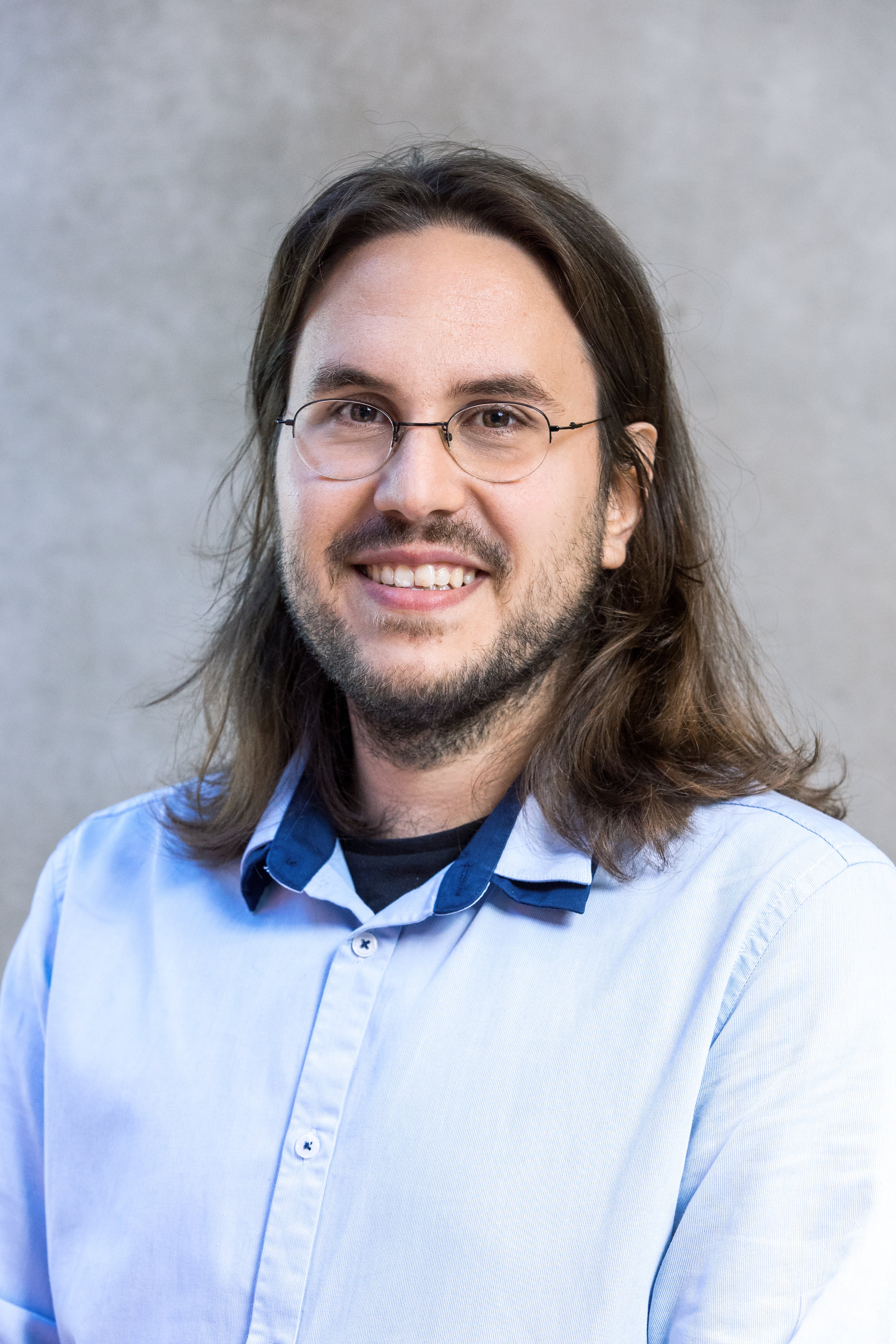
Sebastijan Dumancic is an Assistant Professor at Delft University of Technology, focusing on neuro-symbolic AI through program synthesis and probabilistic programming. He leads the RAIL lab and collaborates with institutions like Harvard, MIT, and CNRS. His research bridges symbolic AI and machine learning, applying program synthesis to scientific discovery, transportation, and robotics. He holds an FWO-funded PhD from KU Leuven and has participated in initiatives like ELLIS and the Symbolic Computation and Machine Learning Initiative. Program synthesis Probabilistic programming Neuro-symbolic AI Constraint-based learning His recent articles highlight advancements in program synthesis, neuro-symbolic integration, and constraint satisfaction. Projects like Find2Fix and Intelligent Greenhouse Horticulture (funded by NWO) demonstrate practical applications. ELLIS Membership University Teaching Qualification He supervises numerous MSc and PhD students in projects involving logic programming, program synthesis, and probabilistic modeling. Active in workshops and symposia, he contributes to neuro-symbolic AI and scientific discovery.
Denise Esserman is a Professor of Biostatistics at the Yale School of Public Health, where she joined the faculty in 2014. She is a member of the Yale Center for Analytical Sciences and collaborates with multiple departments at the Yale School of Medicine, including the Clinical and Translational Science Award Program, Patient-Centered Outcomes Research Institute, and the Cancer Center. Her research focuses on methodological aspects of clustered randomized trials and sample size calculations. Education: PhD in Biostatistics from Columbia University (2006) MS in Statistics from University of Georgia (2001) Dr. Esserman's research interests span several critical areas in biostatistics and public health methodology. She specializes in clustered randomized trials, with particular expertise in understanding how intraclass correlation coefficients (ICC) and other factors impact sample size calculations. Her work extends to longitudinal studies methodology, randomized controlled trial design, and sampling techniques. She has contributed significantly to statistical methods for clinical trials, healthcare data analysis, and public health research. Her interdisciplinary approach bridges theoretical statistics with practical applications in healthcare settings. Analysis of Dr. Esserman's recent publications reveals a strong focus on methodological innovations in clinical trial design and analysis, particularly for cluster-randomized trials. Her work spans healthcare applications including fall injury prevention in elderly populations, opioid use disorder treatment in international settings, pain management for hemodialysis patients, and validation of medical coding algorithms. She frequently employs advanced statistical techniques including Bayesian methods, mediation analysis, and methods for handling clustered data. Her research demonstrates a consistent commitment to improving the rigor and applicability of statistical methods in public health and clinical research. Dr. Esserman serves as a reviewer for several prestigious journals including the American Journal of Epidemiology, Arteriosclerosis, Thrombosis and Vascular Biology; Statistics in Biopharmaceutical Research; Clinical Trials; and Obesity. As a member of the Yale Center for Analytical Sciences, Dr. Esserman collaborates with numerous researchers across Yale University. Her current projects include the EQuIP trial (HIC ID 2000033355), where she serves as Sub Investigator with primary completion date of 08/31/2027, focusing on mental health and behavioral research for sexual minority women.
Prof. Dr. Ralf Merz serves as Head of the Department of Catchment Hydrology at the Helmholtz Centre for Environmental Research (UFZ) and holds a Full Professorship in Catchment Hydrology at Martin-Luther University Halle-Wittenberg since 2011. His career bridges hydrological modeling, flood risk assessment, and water quality analysis across diverse climates from Central Asia to Europe. MSc in Civil Engineering (Technical University of Karlsruhe, 1997) PhD in Hydrology (Vienna University of Technology, 2002) Habilitation in Hydrology (Vienna University of Technology, 2009) Research Interests span comparative hydrology, flood generation mechanisms, climate change impacts on water resources, and nitrate dynamics in river systems. His work emphasizes process-based understanding of runoff events and regional flood modeling through innovative approaches like the PHEV distribution framework. Scientific Contributions include over 100 publications (2003-2025) on: Flood frequency analysis in changing climates Groundwater recharge in arid regions Hydrochemical response to droughts Remote sensing applications for groundwater studies Multi-response calibration of hydrological models Key projects involve MOSES observatory development, TRACER research school, and Pamir Mountains glaciological studies. Recognitions : APART research grant (Austrian Academy of Sciences, 2006) Leadership extends to directing the Catchment Hydrology department and participating in European hydrological networks like the Bode Hydrological Observatory and TERENO infrastructure. His methodological advancements include flood time-scale analysis and event runoff coefficient regionalization.
Ueli Grossniklaus is an Ordinary Professor at the University of Zurich within the Faculty of Mathematical and Natural Sciences , affiliated with the Department of Plant and Microbiology . His work focuses on plant developmental biology, particularly epigenetic and genetic mechanisms governing reproduction and adaptation. Key Courses: Epigenetics, Plant Biology Workshop, Group Seminars on Current Research Laboratory Techniques: Advanced methods in plant cell mechanics, transcriptomics, and genome editing Research Interests span plant epigenetics, reproductive biology, and the interplay between environmental stress and genetic regulation. He investigates: Mechanistic control of gametogenesis and fertilization Epigenetic contributions to plant adaptation Evolutionary implications of asexual reproduction Biophysical forces in plant cell growth Publication Trends (2025–2018) reveal expertise in: Arabidopsis and fern model systems Epigenetic regulation (DNA methylation, histone dynamics) Apomixis and hybrid seed failure mechanisms Biomechanics of pollen tubes and carnivorous plants Genome editing tools (CRISPR) and long-read sequencing Scientific Collaborations include interdisciplinary projects on: Microfluidic devices for plant cell analysis Gene drive ecology and ethics 3D imaging of plant reproductive structures Advising and Grants focus on mentoring through research internships in developmental biology, genetics, and systems biology. His lab engages in: Epigenetic response to environmental stress Cell wall mechanics in reproduction Computational modeling of plant growth Laboratory Teams integrate plant biologists, bioengineers, and computational scientists to study: Mechanistic gene regulation Evolutionary developmental biology Microrobotics for cellular force measurement
Professor Valentyn Panchenko is a leading academic in Economics at the UNSW Business School, specializing in advanced econometric methodologies and financial modeling. Holding a PhD from the University of Amsterdam and an MPhil from the Tinbergen Institute, his research bridges theoretical econometrics with real-world financial applications, emphasizing big data analysis, network structures, and dependence modeling in economic systems. His expertise spans financial econometrics, time series analysis, non-parametric statistics, and agent-based economic simulations. He focuses on Granger causality, model evaluation, structural economic modeling, and bounded rationality with heterogeneous agents. His work has secured significant grants including ARC Discovery Projects and DECRA fellowships, enabling cutting-edge research on market dynamics and economic interactions. Professor Panchenko's publications appear in top-tier journals like the Journal of Econometric Theory, AEJ: Micro, Journal of Economic Dynamics & Control, and Journal of Banking & Finance. His methodological contributions include novel approaches to copula-based forecasting, nonlinear causality testing, and evolutionary learning models in strategic economic environments. While specific student advising details aren't provided, his research leadership demonstrates sustained impact across econometric theory, financial markets, and experimental economics.
Jim Luedtke is a Professor in the Department of Industrial and Systems Engineering at the University of Wisconsin-Madison. His research focuses on operations research, integer programming, and stochastic optimization methods for solving discrete and uncertain decision problems. Educational Background: BS in Industrial Engineering from University of Wisconsin-Madison MS in Operations Research from Georgia Institute of Technology PhD in Industrial and Systems Engineering from Georgia Institute of Technology Postdoctoral Research at IBM T.J. Watson Research Center His work spans applications in power systems optimization, healthcare analytics, and network design, with particular emphasis on developing cutting-edge algorithms for chance-constrained and multistage stochastic programming problems. Recent publications demonstrate strong focus on Benders decomposition techniques, Lagrangian dual methods, and distributionally robust optimization frameworks. Scientific Awards: NSF CAREER Award (2010) for "Risk Management via Stochastic Programming: Models, Computation, and Applications"
Biyun Xie is an Assistant Professor in the Department of Electrical and Computer Engineering at the University of Kentucky's Stanley and Karen Pigman College of Engineering. Her research focuses on kinematically redundant robots, fault-tolerant robotics, and human-robot interaction, with applications in dangerous environments and collaborative systems. Education : Ph.D. in Electrical Engineering from Colorado State University (2019), Ph.D. in Mechanical Engineering from Beijing University of Technology (2015), and B.S. in Mechanical Engineering and Automation from Beijing University of Technology (2009). Research Interests : Kinematically Redundant Robots Fault Tolerant Robots Collaborative Robots Human-Robot Interaction Publications (2025–2023) highlight advancements in real-time fault-tolerant motion planning for redundant robots, neural network-based motor health monitoring, human-like motion algorithms, and collision-free trajectory optimization. These works intersect robotics, artificial intelligence, and mechanical/electrical engineering. Contact : Biyun.Xie@uky.edu | 859-562-2557
Philipp Schlatter is a Professor in the Department of Mechanics at KTH Royal Institute of Technology. His research focuses on fluid mechanics, turbulence, and computational fluid dynamics (CFD), with expertise in high-performance computing and direct numerical simulations (DNS). He leads projects involving scalable CFD frameworks like Neko and Nek5000, and investigates turbulent boundary layers, flow control, and coherent flow structures. His work includes experimental and numerical studies of wing profiles, rotating systems, and transition dynamics. Schlatter teaches courses on computational fluid dynamics and turbulence, emphasizing both theoretical and practical aspects of fluid mechanics. Key research interests include developing numerical methods for high-fidelity simulations, understanding turbulence mechanisms, and optimizing flow control strategies. His contributions span aerodynamics, heat transfer, and the application of machine learning to fluid dynamics problems. Schlatter collaborates extensively on interdisciplinary projects, leveraging advanced computing resources to address complex fluid flow phenomena. Publications highlight advancements in DNS frameworks, Bayesian optimization for flow control, and analysis of turbulent structures in pipe and boundary layer flows. His research also addresses challenges in measurement techniques and uncertainty quantification in CFD simulations.
Joerg Sander is a Professor and Chair of the Department of Computing Science at the University of Alberta's Faculty of Science. His research focuses on knowledge discovery in databases, particularly density-based clustering (e.g., DBSCAN, OPTICS, HDBSCAN*) and outlier detection (e.g., LOF). He is a leading contributor to foundational algorithms in data mining, including the DBSCAN paper which received the 2014 SIGKDD Test-of-Time Award. Education: M.A., Philosophy of Science (University of Munich, 1989) Diploma in Computer Science (University of Munich, 1996) Ph.D., Computer Science (University of Munich, 1998) Research Interests: Design and theoretical analysis of clustering algorithms Outlier detection methodologies Spatial and high-dimensional data mining Algorithm scalability and visualization Key Contributions: DBSCAN (density-based spatial clustering of applications with noise) OPTICS (ordering points to identify the clustering structure) LOF (local outlier factor) Awards: SIGKDD Test-of-Time Award (2014)
Chee-Ming Ting is an Associate Professor in the School of Information Technology at Monash University Malaysia. His expertise lies in machine learning, data science, and biomedical engineering, with a focus on signal processing, computational neuroimaging, and computer-aided detection. Previously, he held positions at King Abdullah University of Science and Technology (Research Scientist) and Universiti Teknologi Malaysia (Senior Lecturer). He has authored over 26 journal papers and 43 conference papers, and has secured research grants totaling RM2.5 million as PI/Co-PI. Education: PhD in Mathematics - Statistics, Master of Engineering in Electrical Engineering, and Bachelor of Engineering (Hons.) in Electrical & Electronics Engineering. Research interests include biomedical signal/image analysis, deep learning, spatio-temporal modeling, and neuroimaging applications for disease prediction and patient monitoring. He has supervised 9 graduate students (4 PhD, 5 Masters) and currently oversees 10 PhD candidates. Awards include the IEEE Signal Processing Society Malaysia's Research Excellence Award (2019, 2022) and several national/international innovation awards. His work contributes to UN Sustainable Development Goals related to health and technological advancement. Key projects include frameworks for neurological disease prediction using brain networks and generative adversarial networks for medical imaging enhancement.
Professor Steffen Dereich is a leading researcher in mathematical stochastics at the University of Münster's Faculty of Mathematics and Computer Science, where he serves as Professor at the Institute of Mathematical Stochastics. He is an active investigator in the Mathematics Münster cluster of excellence, contributing significantly to the fields of stochastic processes and machine learning theory. His primary research interests span Stochastic Processes , Machine Learning , Deep Learning , Complex Networks , and Stochastic Analysis . Dereich has developed a unique research program that bridges classical probability theory with modern machine learning challenges, particularly focusing on the mathematical foundations of optimization algorithms used in deep learning. His work on stochastic gradient descent methods, especially the Adam optimizer, has provided crucial theoretical insights into convergence properties and optimization landscapes. The 15 most recent publications reveal a strong trend toward mathematical analysis of deep learning, with approximately 70% of his work focusing on neural network optimization, convergence analysis, and theoretical foundations of machine learning algorithms. The remaining publications continue his earlier work on complex networks, stochastic processes, and branching structures, demonstrating how he has successfully connected his foundational work in probability with cutting-edge machine learning research. Professor Dereich actively supervises PhD students and maintains productive collaborations, particularly with Arnulf Jentzen and Sebastian Kassing. His research group at Münster has secured significant funding through the Mathematics Münster cluster, supporting multiple projects including T8: Random discrete structures and their limits, and T10: Deep learning and surrogate methods. His teaching portfolio includes advanced courses on Probability Theory, Stochastic Analysis, Markov Chains, and specialized seminars on Machine Learning and Financial Mathematics, reflecting his dual expertise in theoretical mathematics and applied data science.
Associate Professor Tongliang Liu is affiliated with the School of Computer Science at the University of Sydney, serving as Director of the Sydney Artificial Intelligence Centre and Trustworthy Machine Learning Lab. He holds a BEng and PhD, and is an ARC Future Fellow. His research focuses on trustworthy machine learning, including adversarial defense, causal representation learning, and robust AI systems. He has authored over 200 papers in top venues like NeurIPS and ICML, and serves as co-Editor-in-Chief of Neural Networks. Research Interests: Developing reliable algorithms for machine learning, emphasizing generalizability and safety. Specific areas include learning with noisy labels, causal inference, and foundational model ethics. He aims to bridge theoretical guarantees and practical applications in computer vision and data mining. Awards: 2024 CORE Award, 2023 IEEE AI's 10 to Watch, 2022 ARC Future Fellowship. Notable recognitions include Eureka Prize shortlist and DECRA. Advising & Grants: Supervises 12 PhD/Master’s students on topics like trustworthy AI, causal discovery, and quantum machine learning. Leads grants on robust learning and AI safety. Labs: Sydney AI Centre and Trustworthy Machine Learning Lab.
Julia Camps is a postdoctoral research associate at the University of Oxford, Department of Computer Science. Her work bridges Computational Biology and Health Informatics, focusing on cardiac digital twin development for precision medicine applications. She specializes in combining data-driven and mechanistic approaches for in silico clinical trials, particularly through Purkinje network modeling and ECG-based calibration. Education: Informatics Engineer (2014) and Master's in Artificial Intelligence (2015-2017) from Universitat Politècnica de Catalunya PhD in Computer Science (2017-2021) at Oxford, completed within the Computational Cardiovascular Science research group under Prof Blanca Rodriguez Current role: postdoc in Prof Rodriguez's group since 2021, focusing on post-myocardial infarction disease progression Software development: open-source cardiac digital twin tools available on GitHub Her research interests center on creating patient-specific cardiac digital twins using multimodal clinical data. This work enables virtual therapy evaluation and in silico clinical trials through: Integration of statistical inference and machine learning techniques Development of Purkinje network models from clinical ECG data Electrophysiological and repolarization sequence modeling Gait detection algorithms for Parkinson's disease applications Recent publications (2024-2025) demonstrate trends in: GPU-accelerated cardiac electrophysiology simulations (MonoAlg3D) Topology-informed ECG electrode localization Sex-specific electromechanical cardiac modeling Multi-modal characterisation of diabetic cardiac deterioration Pro-arrhythmic risk assessment for stem cell therapies
Patrick Präg serves as an Associate Professor of Sociology at CREST/ENSAE (part of the Institut Polytechnique de Paris) and holds an associate faculty position at Oxford University’s Nuffield College. His research integrates quantitative methods and survey data to address social stratification, demography, health, and work-family dynamics. He earned his PhD in Sociology from the ICS/University of Groningen in 2015. His work has been recognized with the Aage B. Sørensen Award (2014). Education: PhD in Sociology, ICS/University of Groningen (2015) Master’s Thesis: Nonresponse to Items on Self-Reported Delinquency, University of Hamburg Research Interests: Patrick’s work explores the interplay between social structure and individual wellbeing. Key topics include: Intergenerational mobility and health outcomes Work-life balance and gender inequalities Pandemic-driven societal changes Algorithmic bias in social science Subjective socioeconomic status measurement Grants & Collaborations: He contributed to the EU-funded ‘Families and Societies’ project, producing deliverables on assisted reproduction and demographic consequences. His research often involves cross-national datasets and methodological innovation, with replication materials shared via Open Science Framework (OSF). Labs & Teams: He is affiliated with CREST (Center for Research in Economics and Statistics) and collaborates with institutions like the Max Planck Institute for Demographic Research (MPIDR) and the Nuffield College. His work frequently intersects with interdisciplinary teams addressing health, education, and labor market policies.
Dr. Shirley Coleman is a distinguished Professor at Newcastle University Business School, specializing in the application of statistical methods to business and industrial problems. With over two decades of academic contributions, she has established herself as a leading expert in statistics, data science, and quality management within industrial contexts. Her research interests span several interconnected domains: Statistics, Data Science, Business Analytics, Quality Management, Six Sigma methodologies, Kansei Engineering (which integrates emotional design with product development), Industrial Statistics, Design of Experiments, Predictive Maintenance, and Customer Lifetime Value analysis. Coleman's work consistently bridges theoretical statistical concepts with practical business applications across diverse sectors including healthcare, manufacturing, facilities management, and digital marketing. Analysis of her recent publications reveals a strong focus on the evolving role of statistics in the digital age, particularly examining how statistical expertise contributes to AI development, Industry 4.0 initiatives, and data-driven business transformation. Her work demonstrates increasing emphasis on customer analytics, predictive maintenance modeling, and the strategic implementation of data science in small and medium enterprises. Coleman's publications frequently address methodological challenges while maintaining strong practical relevance for industry practitioners. Throughout her career, Coleman has been actively involved with the European Network for Business and Industrial Statistics (ENBIS), contributing to the development and dissemination of statistical methods in business contexts. Her collaborative approach is evident in numerous co-authored publications across disciplines, demonstrating her ability to work effectively with researchers from diverse fields including engineering, healthcare, and business management. Her advisory work appears focused on helping organizations implement statistical thinking in business processes, with particular attention to small and medium enterprises seeking to leverage data analytics for competitive advantage. Though specific grant information isn't detailed in the available publications, her extensive industry-focused research suggests significant engagement with practical business problems and industry partnerships. Dr. Coleman has made substantial contributions to the field through her leadership in professional organizations, particularly ENBIS, where she has helped shape the discourse around industrial statistics and their business applications. Her work on Kansei Engineering demonstrates innovative approaches to integrating human factors with statistical methods for product development.