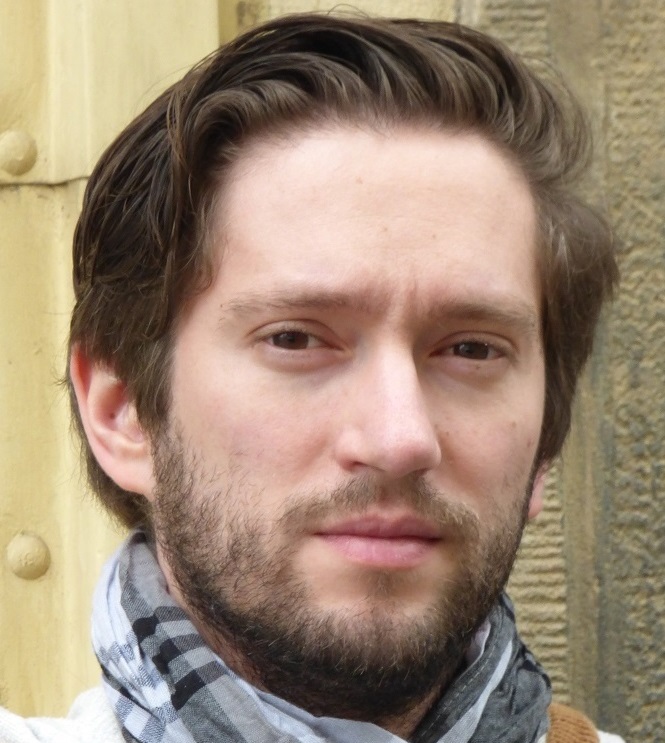
Mathieu Chollet is a Lecturer in Healthcare Technologies at the University of Glasgow's School of Computing Science. His research explores social virtual agents, social signal processing, and human-agent interaction, with applications in social skills training, healthcare, and remote collaboration. He employs multimodal machine learning to assess user performance and virtual reality for public speaking pedagogy. His work spans experimental studies on psychosocial stress in virtual interactions and the design of AI-driven training systems. Recent publications focus on VR-based collaboration frameworks, fairness in AI, and persuasive communication analysis, reflecting a cross-disciplinary approach integrating computer science, psychology, and education. Dr. Chollet collaborates internationally with institutions in France, Japan, and the UK. He mentors students in healthcare technology innovation and leads projects funded by EU and national grants. His lab investigates affective computing and human-centered AI, aiming to enhance digital literacy and accessibility in virtual environments.
Justin Gross is an Associate Professor of Political Science and Director of Data Analytics and Computational Social Science at the University of Massachusetts Amherst. He holds a Ph.D. in Statistics and Public Policy from Carnegie Mellon University. His research examines: U.S. and comparative ideologies Political communication in mass/social media Intersections of identity and political beliefs Epistemic stance detection in rhetoric Recent publications analyze linguistic influences on public opinion and methodological advances in computational text analysis. Work bridges statistical methods with qualitative political theory. No awards, students, or grant activities are documented.
Leighton Evans is an Associate Professor in Media Theory at Swansea University, affiliated with the School of Culture and Communication within the Faculty of Humanities and Social Sciences. He holds a PhD from Swansea University (2013) and previously served as Senior Lecturer at the University of Brighton. His research focuses on digital media, virtual/augmented realities, and the philosophical underpinnings of technology's societal impact. Key areas include virtual worldliness, smart cities, and the transformation of natural phenomena into data. Evans has received the 2023 Dillwyn Medal in Social Sciences and a teaching award from Swansea University. His work bridges Continental philosophy (e.g., Heidegger, Marcuse) with emerging digital technologies. Current collaborations include the £120,000 'Augmented City' project with Adam Mickiewicz University. He edits the Digital War Journal and teaches modules on media communication, social media cultures, and critical game studies. Education: PhD in Media Theory (Swansea University, 2013) Grants: Rising Stars Initiative (£10k, Brighton), National Science Institute (£120k, Poland) Publications: Authored 8 books, including The Re-Emergence of Virtual Reality , and over 40 peer-reviewed articles. Research explores virtual embodiment, presence in gaming, and AR/VR's role in museums. He advises doctoral candidates on digital media and computational culture, emphasizing interdisciplinary approaches.
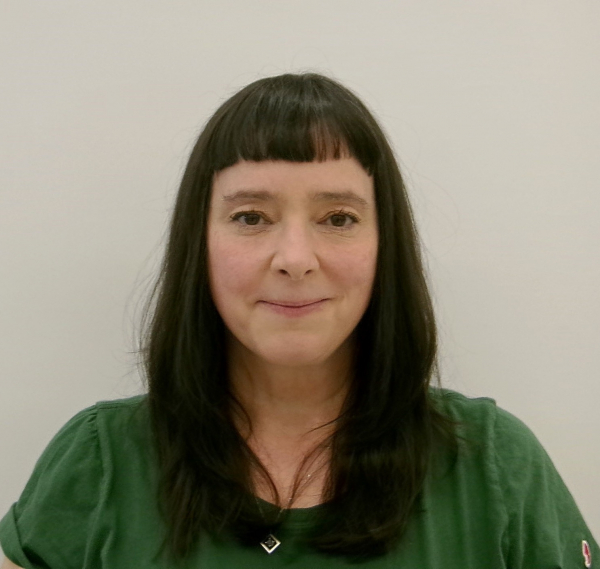
Rachael Cate is a Senior Lecturer in the Department of Electrical Engineering and Computer Science at Oregon State University's College of Engineering. She joined the professional faculty in 2016 and focuses on engineering communication instruction, particularly supporting students through senior capstone projects and industry stakeholder engagement. Her role also involves program development, research, and implementation in engineering communication. Education: Ph.D. in Higher Education Leadership and Research, Oregon State University (2016) M.A. in Composition and Rhetoric, Oregon State University (2011) B.A. in English and University Honors Studies, Portland State University (2007) Research interests include social justice pedagogies, diversity/equity/inclusion initiatives in higher education, service learning, program leadership, and qualitative research. She collaborates on studies about leadership skill development and tools for integrated engineering-communication courses. Awards: STEM Research Fellow (2018-2019) Inclusive Excellence Fellow (2022-2023) Teaching: Leads ECE 443: ENGINEERING DESIGN PROJECT, emphasizing communication skills for engineering students.
María Elena Serrano Moya is a Lecturer in the Department of Modern Philology at the University of Alcalá (UAH). She specializes in bilingual education, particularly in Content and Language Integrated Learning (CLIL), and teaches courses such as Integrated Learning Content and English (AICLE/CLIL), American Fiction, and Foreign Language Education for Childhood and Primary Education programs. Her research focuses on language teaching methodologies, intercultural competence development, and the application of new technologies in education, including e-learning and digital tools for language instruction. She participates in the research group 'Investigación en Enseñanza de Lenguas: Destrezas, contenido, ordenadores y evaluación' (Research on English Language Teaching: Skills, Content, Computers, and Assessment), exploring topics like CLIL teacher training, assessment practices, and the use of multimedia resources in cultural education. Her work emphasizes the integration of Indigenous cultures in educational contexts through film and literature analysis. Notable recent contributions include publications on intercultural competence frameworks in CLIL teacher education (2024), challenges in bilingual assessment (2023), and multimodal approaches to Native American cultural representation (2020). She actively contributes to international conferences on bilingual education, cultural pedagogy, and film studies.
Nicholas Beauchamp is an Associate Professor of Political Science at Northeastern University's College of Social Sciences and Humanities (CSSH), affiliated with the Network Science Institute and NULab for Digital Humanities. His research focuses on computational methods applied to political opinion formation, including text analysis, network science, and AI. He explores topics like media bias, social media discourse, and deliberative processes in legislatures. Beauchamp holds a PhD in Political Science from New York University (2012) and prior degrees from Johns Hopkins and Yale. His work bridges philosophy, literature, and quantitative methods, evident in courses like 'Bayesian and Network Statistics' and 'Social Networks.' Key projects include analyzing partisan media reporting, developing AI tools for political text analysis (e.g., MOKA framework), and studying the impact of social media on political engagement. Awards include NYU's Henry McCracken and Bradley Fellowships. His labs and collaborations involve the NULab and Network Science Institute, emphasizing interdisciplinary approaches to political science challenges. Beauchamp's research also addresses ethical questions in AI and the moral dimensions of political expression.
Sir Timothy O’Shea is a distinguished academic and educational leader, currently serving as Master of Birkbeck College within the University of London. He holds a Personal Chair in Information Technology and Education from the Open University (1987) and was recognized with the CAPIRE Prize (1992) for his innovative contributions to science education. His career began with foundational work in computer-mediated learning, virtual learning environments, and the integration of technology into education. He has authored seminal works including Learning and Teaching with Computers and The Computer Revolution in Education . Academically, he earned a BSc in Mathematics and Experimental Psychology from the University of Sussex, followed by a PhD in Computer Science from the University of Leeds. His leadership roles include Pro-Vice-Chancellor for Quality Assurance and Research at the Open University, and later Master of Birkbeck (1997–present). Under his stewardship, Birkbeck underwent significant growth in student enrollment, staff recruitment, and research standing, including a notable initiative to appoint distinguished Professors and Readers for its 175th anniversary. O’Shea is known for his strategic vision, blending analytical rigor with a commitment to educational democratization. His tenure emphasized ceremony’s role in institutional identity while fostering innovation. He concurrently served as Provost of Gresham College, appointing Professors in Divinity, Physic, and Rhetoric. His management style combines geniality with unyielding resolve, exemplified by his “buccaneering” approaches to institutional development and his legendary annual Christmas mince pie deliveries to staff.
Rosa Mikeal Martey is a Professor at Colorado State University's College of Liberal Arts, serving as Director of Faculty Retention and Success within the Department of Journalism & Media Communication. She is currently a 2025-2026 Fulbright Fellow conducting research at the University of Bergen, Norway. Education: Ph.D. in Communication, Annenberg School for Communication, University of Pennsylvania Master of Arts in Regional Science, University of Pennsylvania Her research investigates social interaction and identity formation in digital environments including virtual worlds, multiplayer games, social media, and generative AI. She examines gender, racial, and sexual identity emergence through critical-cultural analysis, qualitative interviews, observational studies, and quantitative surveys. Current work focuses on generative AI's role in educational contexts and cognitive bias mitigation through game-based interventions. Analysis of her recent publications reveals dominant themes in digital identity construction, cognitive bias applications in cybersecurity, and representation in media. Her work consistently bridges game design with psychological frameworks, showing increasing emphasis on generative AI's sociotechnical implications. Awards: Fulbright Fellow (2025-2026) Dr. Martey has secured federal funding for research including studies on virtual world communication in Second Life and World of Warcraft, cybersecurity decision-making games developed with computer science collaborators, and educational tools for cognitive bias reduction. She teaches graduate courses in digital technologies and data collection methods, and undergraduate courses in technology and society. Her interdisciplinary collaborations span computer science and psychology departments, focusing on serious game design for complex problem-solving. Current projects explore generative AI's impact on identity formation in educational settings through experimental game design.
M. Z. Mashreque is a full-time Lecturer of English at South Carolina State University (SCSU), affiliated with the Department of English and Communications. He coordinates the Composition Computer Classroom as part of the Freshman Writing Success Project, focusing on retaining freshmen through enhanced writing skills. He also serves as a committee member of the Intersectional Studies Conference and contributes to the departmental newsletter. Education: B.A. (Honors) in English from Dhaka University (1978), followed by two M.A. degrees in English Language and Literature from Dhaka University (1979) and Truman State University (1984), and a TESOL certification from Oxford Seminars (2010). Research focuses on Islam's portrayal in literature, creative writing projects including poetry and short stories, and English language pedagogy. He has presented papers on topics ranging from ancient epics like Mahabharata to modern Muslim community dynamics. His published works span poetry, literary analyses, and educational materials. Mashreque has been at SCSU since 2015, actively involved in student advising and professional development initiatives such as organizing educational conferences. His Freshman Writing Success Project emphasizes technology integration in composition classrooms to elevate academic standards.
Ted Carden is a Senior Lecturer in Graphic Design at Northumbria University's School of Design . With a career spanning both academia and industry, he studied at Glasgow School of Art and worked for award-winning design consultancies and as Design Manager/Art Director at HarperCollins Publishers for a decade. Current academic role: Year Tutor and co-author of the Publishing Design pathway External Examiner at Staffordshire University (2008–present) His research focuses on visual communication and design theory, particularly through publications exploring: Cultural identity in traditional craft practices Generative principles in digital typography Visual rhetoric as a tool for social identity analysis Key themes include pattern configuration, design ethics, and the intersection of cultural heritage with modern design practices.
Lisa Sugiura is an Associate Professor in Cybercrime and Gender at the School of Criminology and Criminal Justice, University of Portsmouth, within the Faculty of Humanities & Social Sciences. She leads research on online gender-based violence, technology-facilitated sexual violence, incel communities, and the intersection of gender and cybercrime. Her work is supported by major funders including the UK National Cyber Security Centre (NCSC), the Home Office, and Ofcom. PhD in Web Science - Health Sciences, University of Southampton (2016) Masters in Criminology and Criminal Justice, Web Science Undergraduate Law degree Her research interests include online gender-based violence, domestic abuse facilitated by technology, incel and manosphere communities, online harassment, and the ethical challenges of digital research. She employs an interdisciplinary socio-technical approach with a strong feminist lens to examine how misogyny, sexism, transphobia, and homophobia manifest online. Her recent publications focus on the technification of domestic abuse, incel radicalisation, TikTok’s role in spreading misogynistic ideologies, and ethical dilemmas in researching online extremism. These works highlight trends in understanding how digital technologies enable and amplify gendered violence, while also addressing methodological and ethical challenges in studying such phenomena. Scientific awards include: Excellence in Teaching Award (student nomination, 2015) TRIF Fellowship (awarded competitively, 2019) Lisa Sugiura supervises PhD students and has advised on projects involving cybercrime, domestic abuse, and online ethics. She has led funded research projects with institutions including the Home Office and Ministry of Justice. She is an active member of the academic community, serving as Editor for the International Journal of Police Science and Management , Associate Editor for Criminology and Criminal Justice , and member of the editorial board for the Crime and Justice in Digital Society book series. She is Chair of the Board and a Fellow of the Institute for Research on Male Supremacism and currently serves as vice-chair of the Force Strategic Independent Advisory Group (FSIAG) for Hampshire and Isle of Wight Constabulary. She frequently contributes expert commentary to national and international media, including the BBC, The Guardian, and The Conversation.
Hannah Ringler is an Assistant Teaching Professor of Humanities at Illinois Institute of Technology, affiliated with the Lewis College of Science and Letters. She serves as Director of the Communication Across the Curriculum program, overseeing communication curriculum development and disciplinary writing instruction. Her research focuses on hermeneutics in computational text analysis and STEM communication education. She holds a Ph.D. and M.A. in Rhetoric from Carnegie Mellon University and a B.A. in English from Texas A&M University. Ringler’s work bridges rhetoric and digital humanities, emphasizing interpretive frameworks for computational models and strategies for teaching writing to STEM students. Her projects include analyzing large-scale textual data, rethinking communication pedagogy in the AI era, and supporting faculty in integrating communication into technical disciplines.
Gudrun Reijnierse is an Assistant Professor of Language & Communication at the Department of Language, Literature and Communication, Vrije Universiteit Amsterdam. She holds affiliate roles in the Network Institute. Her primary research focuses on science communication, metaphor analysis, and linguistic methods. Current affiliations include teaching in BA/MA Communication programs and supervising three PhD projects on climate tech metaphors, primary education metaphor competencies, and quantum science communication. Research Themes: Language of science communication across journalism, education, and healthcare Metaphor use/effects in expert-public discourse Development of computational tools for metaphor analysis (e.g., MSDIP method) Key Projects: NWO-funded metaphor in science reporting project Network Institute research on climate tech communication EU Horizon 2020 postdoc collaboration with Nynke Bos Teaching includes courses on communication & cognition, genre design, and document design. She has developed influential methods like MSDIP for metaphor coding and contributed to Dutch fact-checking corpora. Lab/Team Affiliations: Active in interdisciplinary collaborations through the Network Institute and EU/NWO projects. Leads metaphor analysis initiatives with global academic partners.
Jasbeer Musthafa Mamalipurath is a Lecturer at the School of Arts, English and Languages, Queen’s University Belfast. His research focuses on the intersection of media, culture, and society with emphases on misinformation, digital media’s role in marginalized communities, and critical studies of race, religion, and global inequality. He holds a PhD in Media and Cultural Studies from Western Sydney University (2021), complemented by a Master’s in Communication Studies and a B.Sc. in Computer Science. Key research areas include socio-cultural impacts of misinformation, media’s role in diasporic communities (especially Indian-Australian contexts), and decolonial approaches to media studies. He has led projects funded by the Australian Research Council (ARC), including studies on digital inclusion among low-income families and heritage practices among migrants in Parramatta. Teaching includes modules like Media & Misinformation and Media Audiences at Queen’s University. Previously, he taught at Western Sydney University, University of Technology Sydney, and AMC Institute in India. He collaborates with civil society and policymakers to address digital exclusion and media literacy challenges, co-leading the Platform for Civic Media Literacy at Western Sydney’s Institute for Culture and Society. His work bridges academia and activism, emphasizing culturally specific interventions against harmful narratives. Notable contributions include analyzing TED Talks’ portrayal of Islam and studying transnational Shia Muslim discourses in India.
Chandrika Rathee is an Assistant Professor at the Rotterdam School of Management (RSM), Erasmus University, affiliated with the Department of Technology and Operations Management. She holds a PhD in Business Studies from IE University, Spain, awarded cum laude, and has earned the University Teaching Qualification (UTQ/BKO) from Erasmus University Rotterdam. PhD in Business Studies (Cum Laude), IE University, 2023 Master’s in Research, IE University, 2018 Bachelor of Engineering (Electrical), Delhi Technological University, 2006 University Teaching Qualification (UTQ/BKO), Erasmus University, 2024 Her research lies at the intersection of innovation, creativity, and information disclosure, with applications in digital platforms like YouTube, Bollywood, and clinical research. She employs text-based and computational methods to study organizational innovation and the societal impacts of digitalization and AI. Her work contributes to Sustainable Development Goals, particularly in education and technological innovation. Her recent publications appear in top journals such as Strategic Management Journal and Research Policy , focusing on topics like gatekeeping in digital cultural markets, competitive dynamics in R&D disclosures, and the evaluation of creativity. These works reflect a strong trend toward interdisciplinary research combining management, technology, and cultural studies using innovative methodological approaches. She has received several academic honors: Winner, Best PhD Paper (KI Group), Strategic Management Society (SMS) 2021 Finalist, Best PhD Paper (Technology and Innovation Management), Academy of Management (AOM) 2020 Chandrika is actively involved in research, presentations, and national initiatives, including participation in the Dutch national funding plan on the societal effects of digitalization. She has presented her work at major academic conferences and continues to contribute to the advancement of innovation and technology management. While no formal advisees are listed, her collaborative research indicates strong mentorship and team engagement. She has delivered oral presentations at international conferences including SMS 2021, AOM 2020, and JASEIN 2024, focusing on nepotism in Bollywood, digital gatekeeping, and R&D disclosure strategies, showcasing her active role in academic discourse.