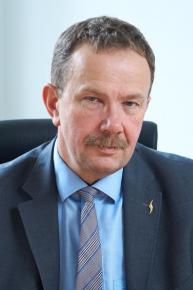
Marc HOFFMANN is a Professor at Université Paris Dauphine-PSL and holds the Fundamental Chair at the Institut Universitaire de France since 2024. His academic journey includes roles at institutions such as INRIA (2020-2022), École Polytechnique (2007-2015), and Université Gustave Eiffel (2003-2012). Research Focus: Statistics of random processes, nonparametric statistics, and applications in financial modeling and population biology. Key Contributions: Adaptive estimation, confidence bands, inverse problems, rough volatility modeling, and growth-fragmentation processes. Advising: Supervised 19 PhD students with topics spanning statistical inference, Hawkes processes, and stochastic volatility. Collaborations include CIFRE grants with EDF, SCOR, and Banque de France. Scientific Awards : Fundamental Chair at Institut Universitaire de France (2024).
Michaël Unser is a Full Professor at École Polytechnique Fédérale de Lausanne (EPFL) in the School of Engineering , leading the Biomedical Imaging Laboratory . He serves as Academic Director for Imaging at EPFL and contributes to cross-departmental teaching in Microengineering , Mathematics , and Life Sciences Engineering . His research spans Image Processing , Medical Imaging , Wavelets , and Spline-based Modeling , with a focus on multiresolution analysis and single-molecule localization microscopy . He has mentored over 30 PhD students and supervised numerous research projects. Recent publications highlight advancements in super-resolution microscopy , deep learning integration , and inverse problem solving for biomedical imaging. His work emphasizes mathematical rigor and open-source software development for accessible bioimaging tools. IEEE Technical Achievement Award (2008) IEEE EMBS Career Achievement Award (2020) Three ERC Advanced Grants (FUNSP, GlobalBioIm, FunLearn) As Academic Director for Imaging , he leads EPFL's cross-disciplinary imaging initiatives. His teaching includes Fundamentals of Image Analysis and Signals and Systems courses.
Eileen R. Martin is an Associate Professor at Colorado School of Mines, jointly appointed in Geophysics and Applied Math and Statistics with a 60/40 split. She collaborates with two industry-aligned consortia: the Center for Wave Phenomena (CWP) and the Center to Advance the Science of Exploration to Reclamation in Mining (CASERM). PhD, Institute for Computational and Mathematical Engineering, Stanford University (2018) MS, Geophysics, Stanford University BS, Mathematics and Computational Physics, University of Texas at Austin Her research bridges computational science and geophysics with applications to subsurface characterization using advanced sensing technologies. She focuses on distributed acoustic sensing (DAS) , seismic imaging , inverse problems , and machine learning for geoscientific data analysis. Recent work explores permafrost thaw monitoring , glacier hydrology , and mine seismicity through scalable algorithms. Selected 2024-2025 Publications : Modeling permafrost thermodynamics with differentiable computing DAS applications in cryoseismic cataloging and glacier monitoring Urban traffic monitoring via multicomponent seismic data Open-source DASCore Python library development Lossy compression effects on seismic data integrity Scientific Awards : NSF CAREER grant SIAM Geosciences Early Career Prize SEG J. Clarence Karcher Award Presidential Early Career Award for Science and Engineering (PECASE) Academic Leadership : Advising 13 graduate students (MS/PhD) across Geophysics, Applied Math, and Hydrologic Engineering Teaching courses in Parallel Scientific Computing, Digital Signal Processing, and Mathematical Geophysics Co-leading weekly group meetings with industry consortia integration Labs & Collaborations : Center for Wave Phenomena (CWP) at Mines CASERM: Mining Exploration to Reclamation Consortium Stanford Exploration Project (alumni) Lawrence Berkeley National Lab affiliate
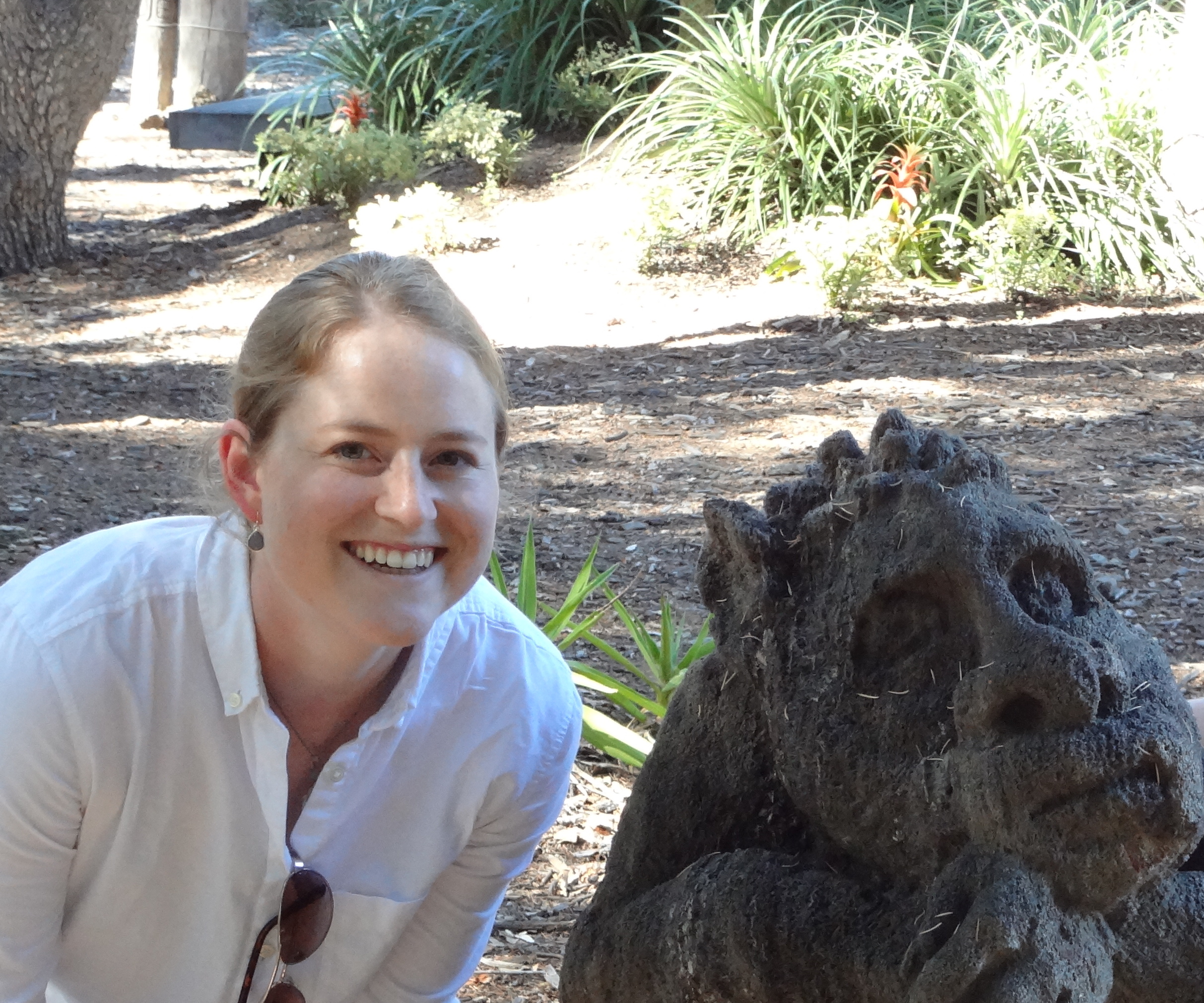
Qian Tao is an Assistant Professor in the Department of Imaging Physics at the Faculty of Applied Sciences, Delft University of Technology, where she leads research on trustworthy AI methodologies for critical healthcare applications including medical imaging for patient diagnosis and clinical intervention. Education: BSc in Electrical Engineering (with Distinction), Fudan University, Shanghai MSc in Biomedical Engineering (with Distinction), Fudan University, Shanghai PhD, University of Twente, Netherlands (Thesis: "Face Verification for Mobile Personal Devices") Her research integrates artificial intelligence with medical imaging, focusing on cardiac MRI analysis, motion correction, image reconstruction, and AI-driven clinical applications. She develops robust methodologies for medical image processing that address challenges in noise reduction, parameter extraction, and physiological motion artifacts, with emphasis on clinical reliability and diagnostic accuracy. Recent publications demonstrate a cohesive trajectory applying advanced machine learning to cardiac imaging problems, particularly in MRI reconstruction, motion correction, and medical device characterization. Her work bridges deep learning innovation with practical clinical requirements, emphasizing physics-informed AI approaches for healthcare-critical systems. Scientific Awards: 2023 Amazon Research Award for Φ-Generative Medical Imaging by Physics and AI (PhAI) Dr. Tao's research is supported through competitive awards including the Amazon Research Award, and she actively collaborates with clinical partners to translate AI methodologies into medical practice. While specific grant details are limited in the source material, her work demonstrates strong industry-academia partnerships for healthcare technology development. She leads a dedicated research laboratory within the Department of Imaging Physics focused on trustworthy AI for medical imaging, with current projects spanning cardiac MRI reconstruction, motion correction techniques, and AI applications for medical device characterization and clinical diagnostics.
Dr Yuhang Liu is a Researcher at the Australian Institute for Machine Learning, affiliated with the Faculty of Sciences, Engineering and Technology at the University of Adelaide. His research focuses on bridging causality and machine learning , including topics like causal representation learning and multi-domain/modal learning , as well as integrating Bayesian learning with deep learning through techniques such as Bayesian deep learning . Additionally, he explores inverse problems in computer vision and signal processing.
Marco Gherlone is a Full Professor at the Department of Mechanical and Aerospace Engineering (DIMEAS) at Politecnico di Torino. He obtained his M.S. degree in Aerospace Engineering at POLITO in 1999 and his Ph.D. in 2003. He became assistant professor in Aircraft Structures in 2005, associate professor in 2014, and full professor in 2020. From 2018 to 2024, he served as coordinator of the Ph.D. program in Aerospace Engineering at POLITO. He has been a visiting researcher at the National Institute of Aerospace (USA) in 2007, 2011, and 2012. His educational background includes: M.S. in Aerospace Engineering, Politecnico di Torino (1999) Ph.D., Politecnico di Torino (2003) Professor Gherlone's research focuses on composite materials and structural analysis, with particular emphasis on: Higher-order theories for multilayered composite and sandwich structures Structural optimization Impact problems Inverse methods for structural health monitoring Analysis of damaged composite structures and damage detection His recent publications reveal a strong focus on shape sensing, structural health monitoring, and advanced finite element methods for composite structures. He has developed expertise in the Refined Zigzag Theory for analyzing complex composite structures, with applications ranging from aerospace to hydrogen storage systems. Professor Gherlone has received notable recognition including: The Composite Structures Award 2007 conferred by Elsevier, Netherlands He serves on the editorial boards of Sensors (since 2021) and Shock & Vibration (since 2018). As an educator, Professor Gherlone has supervised 4 Ph.D. students and co-supervised 2 others, along with 134 M.S. theses and 203 B.S. theses. He currently supervises 3 Ph.D. students and co-supervises 1. His teaching includes "Aircraft structures" and "Aerospace structures dynamics" for the M.S. degree program, and previously taught "Fundamentals of structural mechanics" for the B.S. degree program. He leads the AESDO (Aircraft and Engine Structural Design and Optimization) research group and has been involved in numerous research projects funded by the Piedmont Region, Italian Ministry of University and Research, European Commission, and industry contracts with aerospace and automotive companies.
Dr. Jan Bartsch is a Lecturer at the Institute of Mathematics, University of Würzburg, Germany. He has been working as a Scientific Employee at the Institute of Mathematics since 2024. Prior to this, he was a Postdoc at the University of Konstanz from 2021 to 2024 in the Collaborative Research Center 1432 "Fluctuations and Nonlinearities in Classical and Quantum Matter Beyond Equilibrium." Dr. Bartsch's educational background includes: PhD in Scientific Computing from the University of Würzburg (2018-2021), dissertation title: "Theoretical and numerical investigation of optimal control problems governed by kinetic models" Master's degree in Mathematics from the University of Würzburg (2016-2018), thesis title: "Optimal control problems governed by Liouville models - Mathematical analysis and implementation" Bachelor's degree in Computational Mathematics from the University of Würzburg (2013-2016), thesis title: "Optimal Control of Androgen Suppression of Prostate Cancer" His research focuses on optimal control theory, numerical methods for partial differential equations, and kinetic models. Dr. Bartsch specializes in Monte Carlo methods for solving kinetic models, optimal control of stochastic differential equations, and numerical methods for hyperbolic differential equations. His work bridges theoretical mathematics with practical computational approaches, particularly in the context of control problems governed by complex physical models. Dr. Bartsch's recent publications show a strong focus on applying adjoint-based methods to optimal control problems, particularly involving stochastic processes and kinetic models. His research demonstrates expertise in developing numerical frameworks that combine Monte Carlo approaches with control theory to solve complex mathematical problems arising in physics and engineering applications. Contact Information: Email: jan.bartsch@uni-wuerzburg.de Phone: +49 931 31-80733 Office: Building 40 (Mathematics East), Room 00.012, Emil-Fischer-Straße 40, 97074 Würzburg
Prof. Janusz Frączek is a faculty member at Warsaw University of Technology, holding the academic rank of Professor. His research focuses on computational mechanics, kinematics and dynamics of multibody systems, robotics, and biomechanics. University: Warsaw University of Technology Academic Rank: Professor Contact: janusz.fraczek@pw.edu.pl | New Aviation Building, room 322 Research Interests: Computer methods in mechanics Kinematics and dynamics of multibody systems Robotics Biomechanics Teaching Activities: Dynamics of Multibody Systems Surveying and experimental techniques Theory of Machines and Mechanisms I Article Trends: The 15 most recent publications emphasize computational mechanics, robotics, Hamiltonian frameworks, and optimization. Topics include redundant constraints, parallel computing, nonholonomic systems, and augmented Lagrangian methods.
Prof. Tanju YELKENCİ is an academic who continues his work in electromagnetic theory and forward and inverse scattering problems within the Faculty of Engineering , Department of Electrical and Electronics Engineering . His research bridges theoretical electromagnetics with practical applications in radiation safety and computational modeling. Education Licence (1982-1986): Yıldız Technical University, Department of Electrical Engineering. Master's (1986-1989): Istanbul Technical University, Electronics and Communications Program. Doctorate (1994-1999): Technische Universitaet Wien (Vienna Technical University), Faculty of Electrotechnics. His research focuses on numerical methods in electromagnetics , including specific absorption rate (SAR) analysis for mobile phone radiation, inverse scattering problems in complex geometries, and electromagnetic safety standards . Recent publications highlight his work on computational models for iron slags and inverse scattering in waveguide structures .
Dietmar Weinmann is a Senior Researcher at the CNRS (Centre National de la Recherche Scientifique) affiliated with the IPCMS (Institut de Physique et Chimie des Matériaux de Strasbourg) and the University of Strasbourg. His work focuses on theoretical solid-state physics, particularly quantum effects in electronic properties, mesoscopic physics, and quantum transport phenomena. His research explores non-local heating in quantum thermoelectrics, scanning gate microscopy applications in graphene and semiconductor heterostructures, power dissipation asymmetry in quantum point contacts, and orbital magnetization mechanisms in mesoscopic systems. Key themes include electron correlations, spin-orbit interactions, and disorder effects in nanoscale devices. Scientific awards include the Marie Curie Fellowship during his postdoctoral work at SPEC Saclay. He teaches an elective course on Electronics for Quantum Science and Technology at the University of Strasbourg. As a member of the Mesoscopic Quantum Physics team, his research combines theoretical modeling with experimental collaborations on quantum transport imaging and inverse problem solving via machine learning.
Yu Li is a Lecturer at the University of Picardie Jules Verne (UPJV) and a member of research unit UR 4290 “Optimization and Cryptography, AI – OCIA.” His office is located in room 302, reachable by internal telephone extension 5900. Research Interests Dr. Li’s research spans several inter-related domains: Optimization & Control Theory – developing dynamic optimization algorithms for industrial processes such as continuous casting in steel manufacturing. Cryptography & Security – investigating secure and dependable models for cloud and distributed systems. Artificial Intelligence & Robotics – integrating AI perception and decision-making into cloud-connected robotic platforms, including exoskeletons for rehabilitation and autonomous ground vehicles. Cloud & Fog Computing – designing middleware and domain-specific languages that seamlessly connect robotic devices with cloud and edge resources. Publication Trends Over the past decade, Dr. Li’s publication record reveals a clear evolution from foundational work in software architecture and component-based systems (2010-2016) toward cutting-edge applications in cloud/fog-enabled robotics and AI-driven cyber-physical systems (2017-2023). His studies increasingly emphasize real-world deployment, simulation-driven resource estimation, and human-centric interaction in rehabilitation robotics. Scientific Awards & Recognition No specific awards are listed in the provided materials. Advising & Funding No explicit information about supervised students or funded grants is available in the text supplied. Laboratories & Teams He carries out his research within the UR 4290 research unit “Optimization and Cryptography, AI – OCIA” at UPJV, focusing on collaborative projects that bridge mathematics, computer science, and robotics engineering.
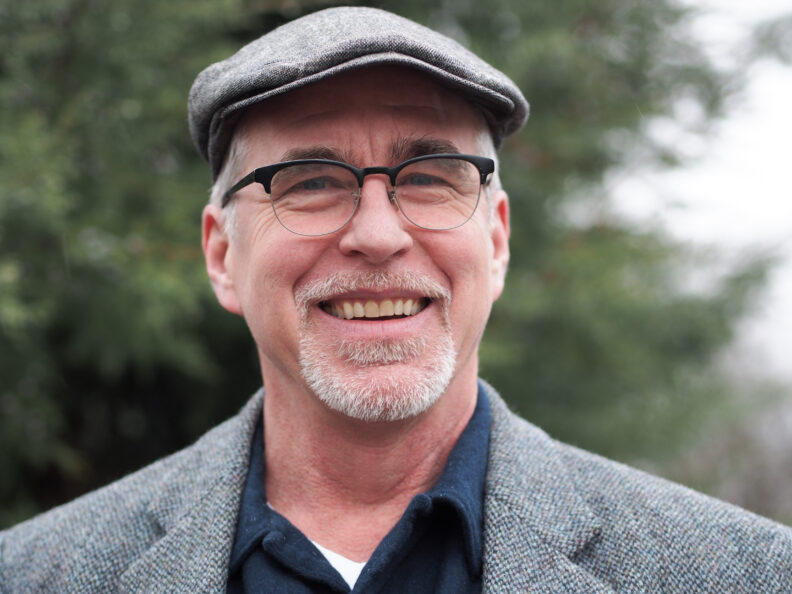
Sebastian Reich is a Professor of Numerical Analysis at the University of Potsdam and holds an honorary Visiting Professorship at Imperial College London . He leads the Chair of Numerical Mathematics and serves as Editor-in-Chief of the SIAM/ASA Journal on Uncertainty Quantification since 2021. Research Interests Numerical methods for Hamiltonian systems Data assimilation in geoscience Stochastic particle filters Bayesian inference algorithms Molecular dynamics simulation Multi-scale modeling Collaborative Projects : Principal Investigator and former Speaker (2017-2024) of SFB 1294 Data Assimilation , a DFG-funded Collaborative Research Center Active participant in SFB 1114 Scaling Cascades in Complex Systems at Freie Universität Berlin Books Authored : Probabilistic Forecasting and Bayesian Data Assimilation (Cambridge UP, 2015) Simulating Hamiltonian Mechanics (Cambridge UP, 2005) Technical Contributions : Development of symplectic integration methods Innovations in ensemble Kalman filtering Regularization approaches for geophysical models Stochastic algorithms for molecular simulations
Prof. Dr. Derviş Subası is a faculty member in the Department of Mathematics at Eastern Mediterranean University's Faculty of Arts and Sciences. His research focuses on numerical analysis, partial differential equations, and computational mathematics, with significant contributions to inverse problems and domain decomposition methods. He has supervised multiple master's and PhD students and is actively involved in academic research. Education: PhD and MS in Mathematics from Eastern Mediterranean University (1997, 1992), BS in Electrical and Electronics Engineering (1989). His research interests include numerical solutions of partial differential equations, preconditioning techniques, and iterative methods for linear systems. He has contributed to advancements in fractional calculus-based algorithms, block-grid methods for singular boundary conditions, and parallel computing for parabolic problems. Prof. Subası has co-supervised ongoing PhD research and mentored numerous master's students, with theses focusing on parabolic inverse problems, diffusion coefficient determination, and finite difference schemes. His work often intersects applied mathematics and computational modeling. Contact details: Office AS140, Phone +90 392 630 1138, Email dervis.subasi@emu.edu.tr .
Dr. Volkmar Schultze is a Researcher in the Quantum Systems Work Group Quantum Magnetometry at the Leibniz Institute of Photonic Technology (Leibniz-IPHT) in Jena, Germany. His work focuses on developing high-resolution magnetic field sensors using optically pumped magnetometers (OPMs) and superconducting quantum interference devices (SQUIDs) for applications in geomagnetic prospection (e.g., archaeometry) and biomedical investigations (e.g., magnetoencephalography). His research spans sensor design, noise reduction, and orientation error compensation. Key contributions include innovations in light-shift dispersed Mz (LSD-Mz) mode and heading error mitigation in Earth’s magnetic field. He collaborates on magnetorelaxometry imaging and quantum-limited resolution systems, with a focus on eliminating magnetic shielding requirements. Recent publications highlight advancements in portable OPM systems (2022), dead-zone-free sensors (2023), and spin-exchange relaxation suppression (2016). His work bridges quantum physics , applied instrumentation , and cross-disciplinary applications in geophysics and medicine. Labs & Teams : He collaborates with interdisciplinary teams at Leibniz-IPHT, including co-authors like Gregor Oelsner, Christian B. Schmidt, and Ronny Stolz. His work integrates theoretical modeling (e.g., density-matrix simulations) with experimental sensor development.
Timothy Ginn is Boeing Distinguished Professor of Environmental Engineering at Washington State University's College of Engineering, with a joint appointment as Affiliate Professor in the Department of Mathematics and Statistics. He holds a PhD in Civil Engineering from Purdue University (1988), MS in Civil Engineering (1985), and BS in Classics and Environmental Sciences from University of Virginia (1982). Prior to WSU, he held positions at UC Davis (1997-2015) and Battelle National Laboratories (1989-1997). His research focuses on reactive transport phenomena in environmental systems, with specialized expertise in: groundwater age modeling, scalar dissipation theory, multidomain diffusion, pre-asymptotic dispersion, and biogeochemical reactive transport. His work integrates advanced mathematical approaches with practical applications in contaminant transport, microbial processes, and water resources engineering. Analysis of his 15 most recent publications reveals strong emphasis on: 1) Development of novel transport models incorporating temporal dynamics 2) Experimental and theoretical studies of contaminant behavior in porous media 3) Hydrological process quantification through tracer methods 4) Biogeochemical interactions in engineered and natural systems. Recurring themes include residence time distributions, mixing-limited reactions, and inverse problem solutions. Scientific Awards: Crimson Spirit Award, WSU (2022) Outstanding Engineering Mid-Career Award, UC Davis (2010) Excellence in Reviewing, American Geophysical Union (1991, 2014) He teaches undergraduate courses in Fluid Mechanics (CE 315), Water Resources Engineering (CE 351), and Groundwater (CE 475), and graduate courses in Inverse Problems (CE 543) and Biogeochemical Reactive Transport (CE 543). Leads research on subsurface transport phenomena through his laboratory, focusing on experimental validation of theoretical models in hydrologic systems.