معرفی
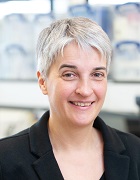
Qian Tao is an Assistant Professor in the Department of Imaging Physics at the Faculty of Applied Sciences, Delft University of Technology, where she leads research on trustworthy AI methodologies for critical healthcare applications including medical imaging for patient diagnosis and clinical intervention.
Education:
- BSc in Electrical Engineering (with Distinction), Fudan University, Shanghai
- MSc in Biomedical Engineering (with Distinction), Fudan University, Shanghai
- PhD, University of Twente, Netherlands (Thesis: "Face Verification for Mobile Personal Devices")
Her research integrates artificial intelligence with medical imaging, focusing on cardiac MRI analysis, motion correction, image reconstruction, and AI-driven clinical applications. She develops robust methodologies for medical image processing that address challenges in noise reduction, parameter extraction, and physiological motion artifacts, with emphasis on clinical reliability and diagnostic accuracy.
Recent publications demonstrate a cohesive trajectory applying advanced machine learning to cardiac imaging problems, particularly in MRI reconstruction, motion correction, and medical device characterization. Her work bridges deep learning innovation with practical clinical requirements, emphasizing physics-informed AI approaches for healthcare-critical systems.
Scientific Awards:
- 2023 Amazon Research Award for Φ-Generative Medical Imaging by Physics and AI (PhAI)
Dr. Tao's research is supported through competitive awards including the Amazon Research Award, and she actively collaborates with clinical partners to translate AI methodologies into medical practice. While specific grant details are limited in the source material, her work demonstrates strong industry-academia partnerships for healthcare technology development.
She leads a dedicated research laboratory within the Department of Imaging Physics focused on trustworthy AI for medical imaging, with current projects spanning cardiac MRI reconstruction, motion correction techniques, and AI applications for medical device characterization and clinical diagnostics.