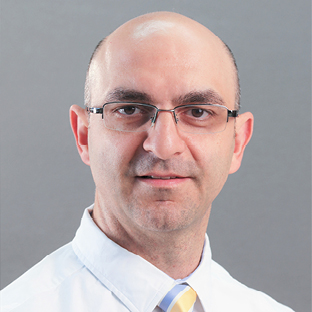
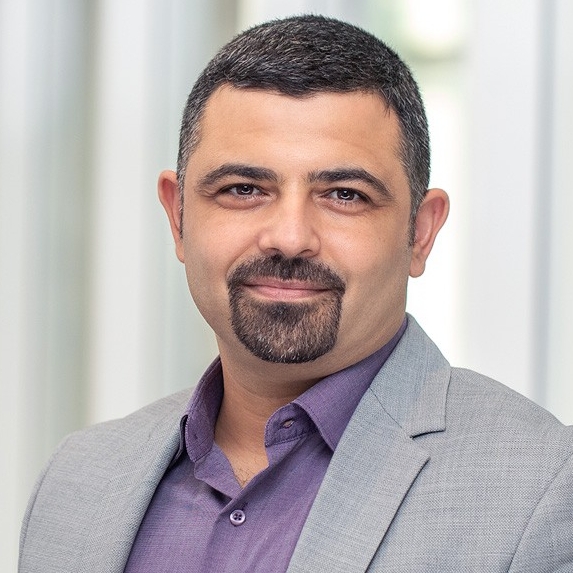
Arthur Fages is an Associate Professor of Computer Science at Université de Toulouse and a member of the ELIPSE team at IRIT. His research focuses on developing novel interaction techniques using Mixed Reality technologies to enhance collaboration in multi-display environments. Previously, he was a postdoctoral researcher at LISN and earned his PhD from Université Paris-Saclay on collaborative design in augmented reality. His investigations bridge augmented reality and desktop interfaces to support remote teamwork, exploring workspace representations and viewpoint management. He has developed frameworks like ARgus to facilitate multi-view collaboration between AR headset users and traditional desktop environments. Fages teaches courses ranging from Human-Computer Interaction to Object-Oriented Programming, covering both undergraduate and graduate levels. His technical expertise includes motion capture, 3D scanning, and tangible user interfaces for immersive applications.
Lisa R Rebenitsch is an Assistant Professor at the South Dakota School of Mines and Technology, specializing in virtual reality research and computer science education. Her work focuses on cybersickness, immersive environments, and user interface design. B.S., South Dakota School of Mines & Technology Ph.D., Michigan State University Her research explores: Cybersickness and its physiological impacts Immersive CAVE environments and usability Virtual reality applications in geology education Postural stability metrics for VR sickness detection Collaborative student projects in computer science Recent publications emphasize cybersickness prediction models, VR display usability, and educational applications. The Virtual Reality Lab under her leadership investigates low-cost consumer systems, develops testing frameworks, and examines factors like color and contrast affecting motion sickness symptoms. Labs & Teams: Virtual Reality Lab at South Dakota School of Mines & Technology Equipped with VR headsets, Kat-mini 2D treadmill, rumble platform Access to 20 VR-ready computers with Vive Cosmo Elites
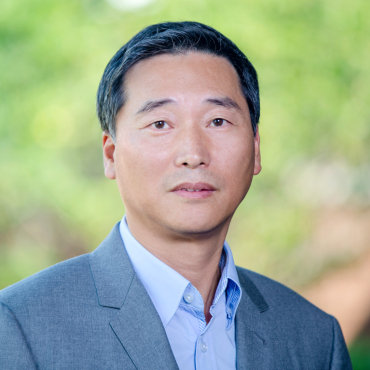
Byeong Cheol Hwang is a Teaching Professor of User Experience Design at Savannah College of Art and Design (SCAD), leading the only B.F.A. in UX Design program in the U.S. since 2016. He also served as Chair of the program from 2018 to 2024. Hwang holds a Ph.D., M.S., and B.E. in Industrial Engineering from The University of Oklahoma and Soongsil University, respectively. His expertise spans user-centered design, human factors, and mobile UX innovation. Key roles include founding Samsung’s Mobile UX Design Group (2001–2006), scaling it from 4 to over 100 designers, and later leading Samsung’s Smartphone UX Design Group during its rise to global market leadership. He also established the User Experience Design track at Samsung Art and Design Institute (2014–2015). Research interests include advanced mobile interfaces, service design, and digital assistant technologies. Notable projects include collaborations with Ford (driverless vehicle UX), Google Maps (Android app redesign), and Gulfstream Aerospace (pilot interface systems). Awards include multiple iF Communication Design Awards, the IDEA Award, and Samsung’s Designer of the Year (2007). Leadership experience includes roles such as Senior Director of Samsung’s Mobile UX Innovation Lab (2011–2014) and strategic UX planning roles across Samsung’s global markets. Current SCAD initiatives focus on experiential learning through industry partnerships.
Francine Gemperle is an Adjunct Professor at Carnegie Mellon University's Integrated Innovation Institute and a User Experience Researcher at Aurora Innovation. With over 20 years of experience, she specializes in bridging human needs with technology development through design strategy. She holds a Master of Design in Interaction Design and a Bachelor of Fine Arts in Industrial Design, both from Carnegie Mellon University. Her research focuses on: User experience research methods and frameworks Human-centered design for product innovation Anthropomorphic forms in robotics and interaction design Wearable technology and tactile interfaces Data-driven design strategies for complex industries Gemperle has led design teams at organizations including Uber, Seegrid, and MAYA Design, and co-founded the LUMA Institute. She developed the Handbook of People Research for teaching UX methodologies and holds nine patents in wearable technology and interface systems.
Cédric Foucault is a Junior Research Fellow at Christ Church College, University of Oxford, affiliated with the Department of Experimental Psychology. His research focuses on computational models of human cognition and decision-making in dynamic environments, leveraging tools from computer science, neuroscience, and machine learning. Prior to academia, he worked as a software engineer at Apple in Silicon Valley, contributing to iOS development. Education: PhD in Cognitive Computational Neuroscience (2023), University of Paris-Saclay/Sorbonne University MSc in Cognitive Neuroscience (2020), École Normale Supérieure de Paris MSc in Computer Science (2014), École Normale Supérieure Paris-Saclay His research integrates fMRI , M/EEG , and Bayesian modeling to study learning under uncertainty, probabilistic inference, and decision-making processes. Collaborations include work with Laurence Hunt’s research group at Oxford. He maintains an active GitHub profile with repositories on neural networks and computational cognitive science. Recent work emphasizes expanding research into broader decision-making domains while continuing to develop computational tools for neuroscience applications.
Yngvar Berg is a Professor at the University of Oslo's Department of Informatics, affiliated with the Faculty of Mathematics and Natural Sciences and the Nanoelectronics (NANO) research group. His work focuses on nanoelectronic systems, low-voltage CMOS circuit design, and educational technology. He holds a formal title of Professor and is based at Ole-Johan Dahls hus in Oslo. His research emphasizes analog and digital circuit design for ultra-low voltage applications, including floating-gate amplifiers, MEMS sensors, and energy-efficient systems. He has contributed to advancements in sensor front-ends, oscillator stability, and bidirectional transducer interfaces. Recent work also explores peer assessment methodologies in computer science education, emphasizing formative feedback and gamification for student engagement. Berg's publications span IEEE conferences (ICNSC, NEWCAS, ISMVL) and journals like Electronics and Sensors . His technical contributions include innovations in semi-floating gate amplifiers, Q-loading for particulate matter sensors, and curriculum design for first-year engineering students. His professional affiliations include the IEEE, and he actively collaborates with researchers like Mehdi Azadmehr and Omid Mirmotahari. Current research themes include bionanoprotonics, low-power CMOS integration, and technology-enhanced learning environments.
Michael Filimowicz is a Lecturer at Simon Fraser University's School of Interactive Arts and Technology, where he explores AI-generated media, sound design, and quantum information theory. He holds a PhD in Interdisciplinary Design from SFU, an MFA from SAIC, and a BA in Philosophy. Filimowicz is an award-winning AI artist whose work has been exhibited at SIGGRAPH and ArtTech. His research develops immersive displays ('Pixelphonics') and examines sensory interfaces across gaming and exhibitions. He has edited volumes on sound design and AI ethics. He teaches courses in game studies and digital photography, emphasizing creative applications of emerging technologies. Filimowicz's theoretical work bridges quantum physics, consciousness studies, and media poetics.
Curtis Roads is Professor of Media Arts and Technology and Associate Director of the Center for Research in Electronic Art Technology (CREATE) at the University of California, Santa Barbara. He holds a BA from University of California, San Diego (Summa Cum Laude) and a Doctorate from Université Paris 8. His research focuses on electronic and computer-generated music, specializing in microsound synthesis techniques, spatialization, and the aesthetics of electronic composition. His work explores innovative sound synthesis methods like granular and pulsar techniques, audio signal processing algorithms, and interdisciplinary approaches bridging music and technology. Research themes include: Quantum-level sound manipulation at micro-time scales Pluriphonic spatialization techniques for immersive audio Computational methods for musical signal processing Historical and aesthetic frameworks for electronic music His publications demonstrate consistent focus on materials innovation for energy applications, particularly boron-nitrogen compounds and electrochromic materials, with recent work expanding into sustainable synthesis methods and advanced optoelectronic devices. Awards include: Ars Electronica Award of Distinction (2002) SEAMUS Prize for lifetime achievement (2010) Giga-Hertz Prize for lifetime achievement (2016) He leads research at CREATE, developing applications like PulsarGenerator and EmissionControl, and maintains international collaborations in electroacoustic music research.
Mark Kahrs is an Instructor at the Swanson School of Engineering, University of Pittsburgh. His research spans diverse areas including computer history, microwave measurements, digital signal processing, and audio engineering. He has contributed to historical analyses of software systems like Project Genie, RF instrumentation, and audio hardware design. Kahrs' work bridges historical computing studies with modern engineering applications, emphasizing interdisciplinary innovation. His publications span from 1980 to 2022, reflecting long-term engagement with topics such as optoelectronics, acoustic systems, and simulation methodologies. Notable contributions include studies on optoelectronic interconnects and microwave measurement techniques. Despite his extensive publication record, no awards or grants are explicitly listed in the provided texts. He has no documented advisees or students listed here. Labs/Teams: No specific labs or collaborative teams mentioned in the available data.
Dr. Sergei V. Chekanov is a Researcher at Argonne National Laboratory specializing in high-energy particle physics. He actively contributes to the ATLAS experiment at the Large Hadron Collider (LHC) at CERN, having previously participated in the ZEUS experiment at DESY (1998-2009) and the L3 experiment at CERN (1995-1998). His work bridges experimental particle physics and advanced computational methodologies. His research centers on Quantum Chromodynamics data analysis, searches for physics beyond the Standard Model, and optimizing physics performance for future high-energy experiments. He pioneered the application of artificial intelligence and deep neural networks in LHC particle searches, led measurements of photons at record-breaking accelerator energies, and developed critical software frameworks for experimental analysis. His expertise spans jet physics, calorimeter operations, and event display systems. Dr. Chekanov has held key roles including QCD Group Convener for ZEUS/HERA (2001-2008), HEP Computing Group Leader (2008-2014), and ATLAS Event Display Coordinator. He maintains active collaborations with CERN and DESY while managing U.S. Midwest analysis support centers. His community initiatives include jWork.ORG, HepSim, and HandWiki, fostering open science in computational physics.
Dr. Dawn Sarno is an Assistant Professor in the Department of Psychology at Clemson University, serving as Director of the AVANT Lab. She holds a PhD in Human Factors and Cognitive Psychology from the University of Central Florida (2020), an MA from the same institution (2018), and a BS from Bridgewater State University (2015). Her research focuses on applied visual cognition, cybersecurity, aging, and training interventions. She teaches courses such as Cognitive Psychology (PSYC 3330) and Advanced Human Factors (PSYC 8350). The AVANT Lab specializes in visual attention techniques (e.g., eye tracking) to study human performance in cybersecurity, radiology, and baggage screening. Current projects include developing the IMPAWSTER game for phishing resilience and investigating 3D displays' impact on visual cognition. The lab is equipped with an SR Research Eyelink Portable Duo for high-precision eye-tracking studies. Research Themes: Cybersecurity deception detection, aging populations' cognitive resilience, and visualization technology applications Lab Team: Supervises undergraduate and graduate students in multi-disciplinary projects Key Collaborations: Partnerships with cybersecurity organizations and healthcare institutions Her work addresses real-world challenges like improving phishing defenses and enhancing radiological scan interpretation through cutting-edge human factors research.
Thirimachos Bourlai is a Professor in the School of Electrical and Computer Engineering at the University of Georgia. He concurrently holds adjunct roles at West Virginia University (Lane Department of Computer Science and Engineering and School of Medicine, Department of Ophthalmology) and the Savannah River National Labs. As founder and director of the Multi-Spectral Imagery Lab, his research focuses on biometric systems, multispectral imaging, and human authentication in challenging conditions. He has published extensively and serves on editorial boards and professional organizations like the IEEE Biometrics Council. His academic journey includes a Ph.D. from the University of Surrey’s CVSSP Group and postdoctoral work at Methodist Hospital/University of Houston (thermal imaging) and WVU. He has held various academic ranks, including Associate Professor at UGA (2020–2024) and WVU (2017–2020). His research spans facial recognition across spectral bands (UV, visible, IR), liveness detection, and forensic algorithms for law enforcement. Key contributions include datasets like MycorrhiSEE and systems like FaceSensor-ID for sensor origin identification. Awards include the Distinguished Faculty Fellow title and Student Career Success Influencer Award from UGA. His work bridges academia and industry, addressing real-world security challenges through AI and computer vision. Bourlai has presented globally and reviews for top journals like TPAMI and IEEE Transactions. Recent articles emphasize thermal imaging, GAN-based image synthesis, and cross-spectral authentication. His labs collaborate with national labs and agencies, addressing issues like occlusion-resistant face recognition and concealed object detection in surveillance systems.
James C. Sturm is the Stephen R. Forrest Professor of Electrical Engineering and Associated Faculty at the Princeton Materials Institute. He leads the Sturm Lab, focusing on materials, processing, and devices for microelectronics and macroelectronics. His work spans silicon-based heterojunctions, three-dimensional integration, and large-area electronics for flexible displays and biomedical applications. He holds a B.S.E. from Princeton University and a Ph.D. from Stanford University. His research bridges nanoscale device scaling and low-cost, large-area manufacturing technologies for organic semiconductors and TFTs. Key research areas include VLSI scaling, optoelectronics, and applications of zinc-oxide thin-film transistors (ZnO TFTs) for GHz circuits. He has pioneered methods for microfluidic cell processing and structural health monitoring using sensing sheets. His lab develops soft robotics and hybrid LAE-CMOS systems for tactile sensing skins. Education: Ph.D., Stanford University, 1985 M.S.E.E., Stanford University, 1981 B.S.E., Electrical Engineering (Engineering Physics), Princeton University, 1979 His publications highlight breakthroughs in GHz-frequency electronics, piezoelectric robotics, and large-area RFID systems. Awards include the IEEE Fellowship and Princeton’s President’s Distinguished Teaching Award. He advises students in microelectronics, macroelectronics, and biomedical engineering. Recent work integrates AI with large-area electronics for smart spaces and explores drug gradient effects on cancer cell evolution. The Sturm Lab collaborates on projects like the 'evolution accelerator' for real-time cancer cell observation and 3D semiconductor integration with industrial FDSOI platforms.
Mohamad Eid is an Associate Professor of Electrical and Computer Engineering at New York University Abu Dhabi (NYUAD), with a Global Network Associate Professor appointment at NYU Tandon School of Engineering. He leads the Applied Interactive Multimedia Laboratory (AIMLab), focusing on cutting-edge research in haptics and multimodal interaction. His research interests include haptics, affective haptics, EEG-based neurohaptics, soft haptics, biofeedback technologies, and human-computer interaction. He explores how tactile feedback can enhance virtual and augmented reality, assistive technologies, and medical simulation. His recent publications demonstrate strong activity in IEEE Transactions on Haptics, ACM TOMM, and other top venues, with work spanning vibrotactile alarms, mid-air haptics, emotion communication via touch, and haptic dental simulation. His research integrates engineering, neuroscience, and multimedia to create immersive and affective user experiences. Best Paper Award, ICBAE 2016 Best Paper Award, DS-RT 2008 ACM Multimedia 2009 Grand Challenge Most Entertaining Award Mohamad Eid advises students through capstone projects in computer science and biology and has contributed to educational initiatives such as robotic handwriting assistance for Arabic script. He holds multiple patents in haptic feedback systems and is an active editor for IEEE Transactions on Haptics. His work is supported by grants and has been featured in media outlets like Wired and The National. He leads the Applied Interactive Multimedia Laboratory (AIMLab), a multidisciplinary research group developing innovative haptic and interactive systems for healthcare, education, and entertainment.
Dr. Clifford De Raffaele is a Senior Lecturer in Computer Science and Programme Leader for the Computer Science programme at Middlesex University. He holds a PhD in Computer Science from Middlesex University, an MSc in ICT from the University of Malta, and a degree in Electrical Engineering from the same institution. He has previously held senior academic leadership roles, including Associate Director for Academia and Research at Middlesex University Malta and Director for Research and Innovation at MCAST. PhD in Computer Science, Middlesex University (2019) MSc in ICT, University of Malta BSc in Electrical Engineering, University of Malta His research focuses on innovative applications of technology in education, particularly through Tangible User Interfaces (TUIs), knowledge management in micro-enterprises, AI in learning, and biomedical devices. He explores how physical interaction can enhance the understanding of abstract computing concepts such as multi-threading, robotics, and network principles. His work bridges human-computer interaction with pedagogical innovation. His recent publications (2016–2024) demonstrate a consistent focus on educational technology, with recurring themes in TUIs, student engagement, knowledge systems, and adaptive learning. His research often involves collaboration with colleagues such as S. Smith, O. Gemikonakli, and G. Attard, and is published in IEEE, ACM, and Springer venues. A notable achievement includes winning the Best Technical Paper award at the 2020 SGAI International Conference on Artificial Intelligence. Best Technical Paper, 2020 SGAI International Conference on Artificial Intelligence Dr. De Raffaele actively supervises PhD researchers, including Stephen Hall and Antony Kruger, and has led multiple national and EU-funded research projects as principal investigator or lead researcher. He contributes to strategic research policy at the national level and is an executive member of the IEEE Malta Section, indicating strong engagement in both academic and professional communities. He is involved in the development of toolkits like TangiBoard to lower the barrier for TUI implementation in education and continues to innovate in the space of active learning frameworks. His work is centered on making complex computer science topics more accessible through physical and interactive means.



.jpg)