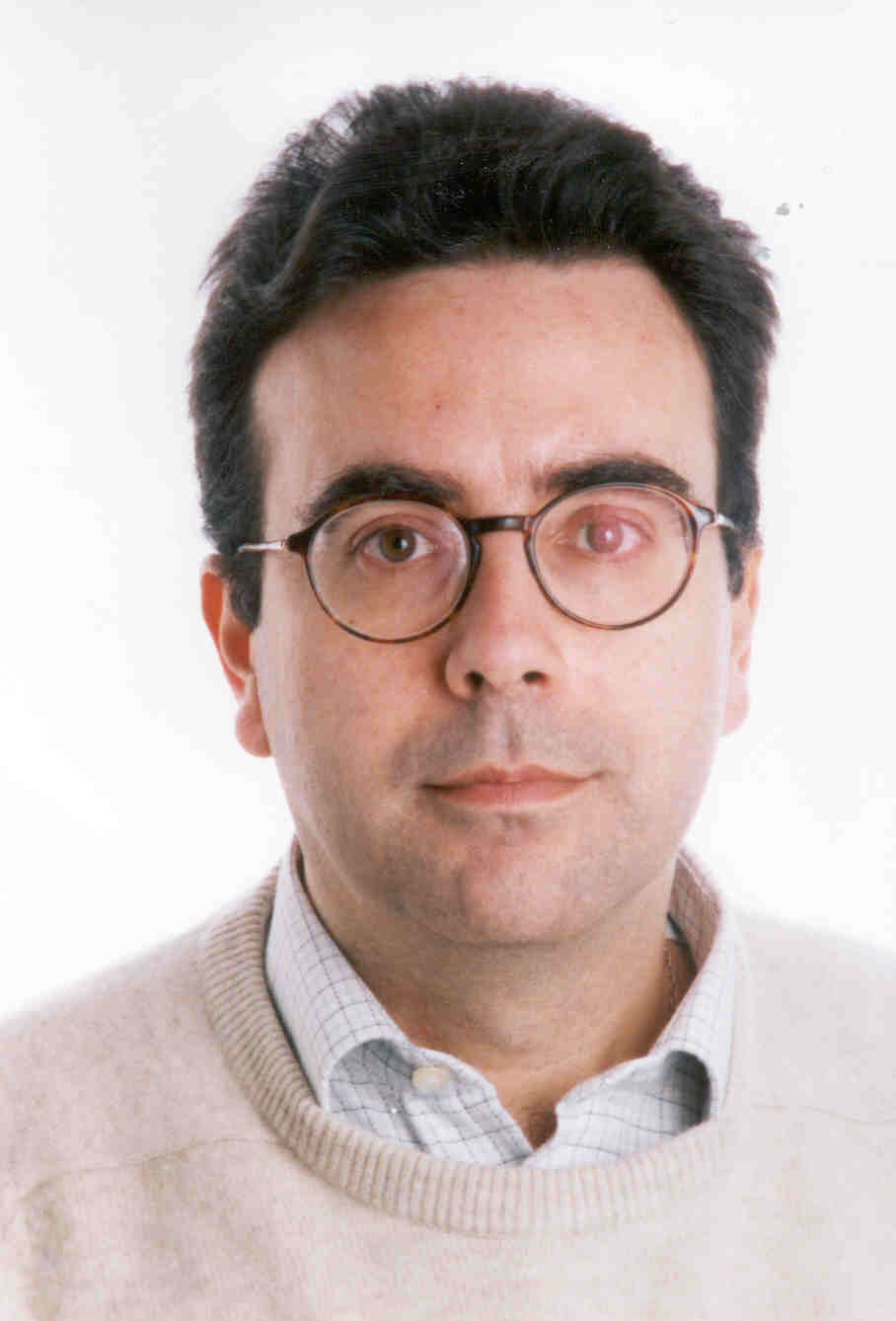
Joseph Sifakis is a CNRS Research Director and founder of Verimag Laboratory in Grenoble, France. He holds the INRIA-Schneider endowed industrial chair since 2008 and has been instrumental in advancing concurrent systems specification and verification. Education: Electrical Engineering (Technical University of Athens), Computer Science (University of Grenoble) Research interests focus on component-based design , real-time systems , and correct-by-construction techniques . He pioneered the development of the BIP framework and contributed to model checking, a cornerstone of industrial system verification. Recent publications emphasize component-based modeling, formal verification, and distributed system design, reflecting his work's impact on embedded systems and critical applications like aerospace and telecommunications. Scientific awards include: Turing Award (2007) CNRS Silver Medal (2001) Test-of-Time Award (2012) Multiple honorary doctorates (2008-2011) Member of prestigious academies Industry collaborations span Airbus, ST Microelectronics, and the European Space Agency, with applications in aeronautics, telecommunications, and industrial software standards. He leads the ARTIST2 Network of Excellence and directs the CARNOT Institute 'Intelligent Software and Systems'.
Mei Hong is a Professor and Vice President for HR and International Collaboration at Beijing Institute of Technology since 2016. Previously, she held leadership roles including Vice President for Research at Shanghai Jiao Tong University (2013-2016) and Dean of the School of Electronics Engineering and Computer Science at Peking University (2006-2014). She has made groundbreaking contributions to software engineering and system software fields. BSc and MSc in Computer Science & Engineering from Nanjing University of Aeronautics & Astronautics (1984, 1987) PhD in Computer Science and Technology from Shanghai Jiao Tong University (1992) Her research focuses on software architecture , component-based software engineering , and cloud computing/big data systems . She has led over 40 grants totaling 200+ million CNY and holds 20+ patents. Her work addresses critical challenges in software lifecycle modeling, interoperability, and standardization. As a leading authority in software engineering, she has received China's highest honors including State Awards for Science and Technology Progress (2006), Technology Invention (2008), and Natural Science (2012). She was elected Member of the Chinese Academy of Sciences in 2011 and IEEE Fellow in 2014. Executive Editor-in-Chief of Science China-Information Sciences (2012-2017) Editor-in-Chief of Science China-Information Sciences (2018-present) Advisory Board Member of Alibaba DAMO Academy (2017-present)
Roman Obermaisser is a Professor at the Vienna University of Technology (TU Wien), affiliated with the Cyber-Physical Systems department. His research focuses on real-time systems, system architectures, communication protocols, safety-critical systems, distributed algorithms, and fault-tolerance. He holds a PhD in Computer Science from TU Wien, awarded in 2003 for his work on integrated architectures for control paradigms. His academic contributions span over two decades, with publications in top-tier conferences and journals. Key research themes include time-triggered architectures (TTA), fault containment in embedded systems, and integration of heterogeneous communication protocols like CAN and Ethernet. He has supervised numerous graduate students, contributing to advancements in system-on-chip (SoC) design, transient-resilient architectures, and diagnostic frameworks for real-time systems. Obermaisser’s work emphasizes practical applications in automotive and industrial systems, addressing challenges such as scalability, reliability, and composability. His involvement in projects like GENESYS and DECOS highlights his role in developing cross-domain reference architectures for embedded systems. Recent efforts include evaluating ontology-based reconfiguration and COTS-based Ethernet solutions for safety-critical networks. His articles reflect a focus on real-time communication protocols, fault-tolerant design, and system integration, with applications ranging from automotive networks to smart transducers. Advising over 20 students underscores his commitment to nurturing the next generation of embedded systems researchers.
Johannes Brandstetter is an Associate Professor at the Institute for Machine Learning at Johannes Kepler University Linz (JKU) where he leads the "AI for data-driven simulations" research group. He is also Co-founder and Chief Scientist at Emmi AI, bridging academic research with industrial applications in AI-driven physics simulation. Brandstetter earned his PhD after working at CERN's CMS experiment on Higgs boson physics. In 2018, he transitioned to machine learning, joining Sepp Hochreiter's research group in Linz. From 2021-2023, he worked at the Amsterdam Machine Learning Lab under Max Welling and Microsoft Research, developing expertise in Geometric Deep Learning and neural surrogates for partial differential equations. He returned to JKU in October 2023 to establish his own research group. His research spans Machine Learning, Deep Learning, and Physics-Informed Machine Learning with focus areas including Neural PDE solvers, Computational Fluid Dynamics, and Climate Modeling. Brandstetter believes AI is poised to revolutionize industrial-scale simulations, potentially saving thousands of compute hours across engineering domains. His work integrates computer vision, numerical simulation, and engineering components to advance data-driven approaches. Recent publications reveal a strong trend toward foundation models for scientific applications, particularly in atmospheric modeling (Aurora), geometric deep learning, and neural surrogates for complex physical systems. His interdisciplinary work spans computer vision, climate science, computational physics, and engineering, demonstrating the versatility of his research approach. Principal Investigator for "AlKa-DL: Alpine karst spring discharge prediction" (FWF-funded, 2024-2027) Principal Investigator for Cluster of Excellence "Bilateral Artificial Intelligence" (FWF-funded, 2024-2029) Co-PI for "Fast, efficient and flexible CFD simulation through generative AI" (FFG-funded, 2025-2026) As an educator and researcher, Brandstetter actively engages with the scientific community through invited talks at major conferences including presentations on "Closing the Gap Between Scientific Foundation Models and Real-World Applications" (March 2025) and "Scientific Machine Learning for Science and Engineering" (February 2025).
Dr. Alexander Engelmann is an Assistant Professor at the Institute for Strategy and Innovation Management (ISM) at WU Vienna University of Economics and Business. His research focuses on firm adaptation to environmental dynamics, particularly in mature industries transitioning to digital ecosystems. He examines strategy processes (dynamic capabilities, business model adaptation) and practices (framing, communication) to understand organizational resilience. Before academia, he worked in management consulting and as a certified Work & Organization psychologist. Education: PhD in Strategy and Innovation Management from WU Vienna University of Economics and Business Mag. rer. nat. (Master of Science equivalent) in Psychology from the University of Vienna Research Interests: Dynamic capabilities and SME innovation Ecosystem governance and platform strategies Sustainability-oriented business models Strategic framing in mature industries Recent work explores how automotive firms navigate platform-based transitions and how high-status OEMs maintain competitive edges. His 2025 Journal of Management Studies paper addresses innovation in politicized ecosystems, while 2024 Research Policy research introduced the 'slipstream strategy' concept. Team affiliations include collaboration with Prof. Werner H. Hoffmann, Dr. Georg Reischauer, and others in the ISM research group. Current projects focus on ecosystem resilience and stakeholder integration in sustainability innovation.
Wolfgang Bösch is a Professor at Graz University of Technology's Institute of Microwave and Photonic Engineering, specializing in advanced RF components and measurement techniques. His research advances high-frequency systems through innovations in antenna technology and electromagnetic theory. Research domains include: metamaterial-based antennas, precision measurement calibration, microwave filter optimization, and 3D-printed RF components. Recent work demonstrates strong focus on millimeter-wave systems and reconfigurable antenna arrays. Publications highlight expertise in: machine learning for filter design, metasurface applications, PCB transitions for high-frequency systems, and uncertainty quantification in RF engineering. Research consistently addresses miniaturization and performance optimization challenges. Awards recognize contributions to measurement science and antenna design: Fellow of IET, Houska Prize, and best paper awards. Current laboratories investigate liquid crystal antenna systems and error calibration methodologies for next-generation wireless systems.
Hannes Hick is a Professor at Graz University of Technology , affiliated with the Institute of Machine Elements and Development Methodology . His research focuses on mechanical development, tribology, and systems engineering for automotive and industrial applications. He actively contributes to engineering education and methodology standardization. Research Interests Hydrogen internal combustion engines System modeling and digital twins Tribology in electric drivetrains Sustainable engineering practices MBSE (Model-Based Systems Engineering) Friction and wear analysis Article Trends His recent work emphasizes hydrogen propulsion systems, model-based approaches for interdisciplinary engineering challenges, tribological optimization for sustainable mobility, and integrating AI with mechanical design workflows. Labs and Teams He leads research at the Institute of Machine Elements, focusing on mechanical validation and development methodologies for advanced powertrain systems.
Mohamed-Slim Alouini is a Professor of Electrical Engineering and Associate Dean of the Computer, Electrical and Mathematical Science and Engineering (CEMSE) Division at King Abdullah University of Science and Technology (KAUST) in Saudi Arabia. He also serves as the Associate Vice President for Research and holds the UNESCO Chair in Education to Connect the Unconnected. With over 500 journal publications and more than 46,000 citations, he is a world-renowned expert in wireless communications who was elected IEEE Fellow in 2009 at the age of 39. Education: PhD in Electrical Engineering, California Institute of Technology (Caltech), 1998 MS in Electrical Engineering, Georgia Institute of Technology (Georgia Tech), 1995 Diplôme d'Etudes Approfondies (DEA) in Electronics, Université Pierre & Marie Curie (Sorbonne University), 1993 Diplôme d'Ingénieur, École Nationale Supérieure des Télécommunications (Télécom Paris Tech), 1993 Habilitation, Université Pierre & Marie Curie (Sorbonne University), 2003 Dr. Alouini is a world-renowned expert in wireless communication and networking with research interests spanning diversity combining techniques, MIMO systems, multi-hop/cooperative communications, optical wireless systems, cognitive radio, UAV communications, and advanced modulation schemes. His current focus addresses the technical challenges of uneven information and communication technology distribution, particularly targeting rural, low-income, disaster-prone, and hard-to-reach areas through integrated ground-airborne-space networks. His work bridges theoretical foundations with practical implementations to solve real-world connectivity problems. His recent publications (2020-2024) demonstrate a clear research trajectory toward integrated communication networks combining terrestrial, aerial, and space components. There's growing emphasis on UAV communications, satellite systems, optical wireless technologies, and rural connectivity solutions, with increasing integration of machine learning techniques for network optimization. His work shows consistent focus on addressing the digital divide, with several publications specifically targeting 6G challenges for connecting underserved populations and recycling existing infrastructure for enhanced rural connectivity. Scientific Awards: Member of the European Academy of Sciences and Arts (2019) Fellow of the African Academy of Sciences (2018) IEEE Fellow (2009) Abdul Hameed Shoman Award for Arab Researchers (2016) OIC Science & Technology Achievement Award (2017) Multiple recognitions as Highly Cited Researcher NSF CAREER Award (1999) Dr. Alouini has mentored numerous successful students and post-doctoral fellows who have secured positions at top institutions worldwide including Harvard, Caltech, Imperial College, and faculty positions at Korea University, Hanyang University, and universities across the Middle East. His December 2018 PhD graduate Qurrat-Ul-Ain Nadeem received the prestigious Marconi Society Paul Baran Young Scholars award, while post-doctoral fellows have won IEEE ComSoc Young Professionals Best Innovation Award and attended the Lindau Nobel Meeting. His Communication Theory Lab at KAUST drives significant research in wireless communications with funding supporting extensive publication output and innovative projects. Dr. Alouini leads the Communication Theory Lab at KAUST and holds the UNESCO Chair in Education to Connect the Unconnected, focusing specifically on technical solutions for connecting underserved communities. His lab works on integrated ground-airborne-space networks to bridge the digital divide, with particular emphasis on rural, low-income, and hard-to-reach areas. The team develops practical solutions using UAVs, satellite communications, and recycled infrastructure to provide cost-effective connectivity where traditional approaches fail.
Karl-Heinz Wagner is Full Professor of Nutrition and Food Quality at the University of Vienna, Faculty of Life Sciences, Department of Nutritional Sciences. He directs an experimental research group investigating how lifestyle factors—diet, specific food components, phytochemicals, physical activity and bioactive non-food compounds—modulate oxidative stress and DNA stability in humans, with emphasis on aging and sarcopenia. He initiated the university-wide “Active Ageing” research platform and coordinates EU projects such as SHIFT2HEALTH. Education & Affiliations: University of Vienna, Faculty of Life Sciences, Department of Nutritional Sciences – Professor and Chair of Nutrition and Food Quality Principal investigator of the Emerging Field “Oxidative Stress and DNA Stability” Head of the “Active Ageing” research platform activeageing.univie.ac.at Research Focus: Prof. Wagner’s group applies state-of-the-art biochemical and molecular techniques to quantify antioxidant compounds, ROS-induced DNA and chromosomal damage, DNA repair capacity and transcriptional regulation of antioxidant defenses. Human intervention trials, cross-sectional cohorts and in-vitro models are used to examine: Impact of plant-based vs. animal-based diets on multimorbidity risk Nitrate-rich beetroot juice effects on microbiome, vascular function and oxidative stress Bilirubin biology and metabolic health in Gilbert’s syndrome High-protein nutrition and resistance training on DNA damage and muscle quality in older adults Microbiota-derived metabolites that enhance CD8 T-cell antitumor immunity after exercise Publication Trends 2023-2025: Recent output demonstrates a strategic shift toward multi-omics integration (metabolomics, lipidomics, proteomics) to dissect diet–microbiome–immune crosstalk and to identify predictive biomarkers of healthy ageing. Papers consistently appear in top-tier journals (Cell, Lancet Healthy Longev, Redox Biol, Mol Nutr Food Res) and embrace large multinational cohorts, randomized controlled trials and mechanistic animal/cellular work. Funding & Networks: Research is mainly funded by the Austrian Science Fund (FWF), National Bank, European Commission (Horizon 2020, Horizon Europe), EU Cross-Border Co-operation and the University of Vienna. A dense national and international partner network ensures continuous biomarker development and knowledge transfer. Student Training & Citizen Science: Prof. Wagner actively involves MSc/PhD students and post-docs in externally funded projects and advertises internships via ERASMUS+. Study participant recruitment portals for projects like SHIFT2HEALTH, NUTRIAGING and bilirubin clinical studies are maintained to engage the public and foster translational impact.
Anna Beer is a researcher in the Faculty of Computer Science, specializing in data mining and machine learning with a focus on density-based clustering, spectral clustering, and interactive clustering frameworks. She holds a BSc and MSc in computer science and maintains an ORCID profile (https://orcid.org/0000-0002-6890-997X) for her research contributions. Research Themes: Development of clustering algorithms (e.g., DISCO, Scar, LUCKe), fairness in density-based clustering (FairDen), and applications to molecular dynamics and climate research (DROPP). Collaborations: Works with colleagues like Ira Assent, Christian Plant, and Lars Krieger, with recent contributions to conferences like ICLR 2025. Activities: Presented research on density-connectivity distance at a 2023 oral contribution. Publications: 9 publications since 2019, including 3 in 2025 and 6 in 2024, covering topics from cluster evaluation to deep active learning strategies.
Enrique Sentana is a Professor of Economics at CEMFI (Centro de Estudios Monetarios y Financieros) in Madrid, Spain. He is also a Research Fellow at the CEPR Financial Economics Programme and a Senior Research Associate at the LSE Financial Markets Group. His academic career spans prestigious institutions including the London School of Economics and the University of Alicante. Degrees: PhD in Economics (LSE, 1991), MSc in Econometrics and Mathematical Economics (LSE, 1987), Licenciado en Ciencias Económicas y Empresariales (University of Alicante, 1985) Dr. Sentana specializes in Econometrics , with a focus on Asset Pricing , Financial Economics , and VIX Derivatives . His methodological contributions include work on ARCH models, indirect estimation, and identification issues in econometrics, advancing volatility modeling and financial risk assessment. His research trends highlight innovations in empirical asset pricing , nonlinear time series , and financial market linkages . Notable achievements include the Rey Jaime I Prize in Economics (2014) , Fellowships at the Econometric Society and Journal of Econometrics , and prestigious prizes from the University of London and LSE. Scientific Awards: Rey Jaime I Prize in Economics (2014) Fellow of the Econometric Society (2012) Fellow of the Journal of Econometrics (2010) Sayers Prize, University of London (1992) Ely Devons Prize, London School of Economics (1987) Dr. Sentana has advised 10 PhD students at CEMFI and held editorial roles including Managing Editor of the Review of Economic Studies and Co-Editor of the Journal of Financial Econometrics . He has also served as Executive Vice-President of the Econometric Society and Treasurer of its European Standing Committee.
Tobias Ofner-Graff is a researcher at the Institute of Forest Growth within the Department of Ecosystem Management, Climate and Biodiversity at the University of Natural Resources and Life Sciences, Vienna (BOKU). Based at Peter-Jordan-Straße 82, 1190 Wien, his work focuses on advanced forest monitoring technologies. His research interests include: LiDAR and remote sensing applications in forestry Automated forest inventory systems Forest regeneration quantification Airborne Laser Scanning (ALS) data analysis Sustainable forest harvesting planning Recent project contributions include: Leading lidar-based forest monitoring systems development Developing spatial forest growth models Implementing digital inventory workflows His publications demonstrate expertise in: Quantifying forest resources through 3D point clouds Advanced timber stack measurement techniques ALS data integration for forest modeling Mobile laser scanning applications Forest climate adaptation strategies
Patrick Holzmann is a Postdoctoral Research Associate at the Institute for Strategy and Competitiveness (ISM) at Vienna University of Economics and Business (WU). Previously, he served as Deputy Head of the Department of Innovation Management and Entrepreneurship at the University of Klagenfurt, where he also earned his Doctorate. His research focuses on the intersection of digitalization and sustainability, exploring how digital technologies can drive sustainable business model innovation. He combines quantitative, qualitative, and systematic literature review methods, with interdisciplinary influences from business, economics, sociology, and psychology. Key research areas include: Technology adoption antecedents Environmental entrepreneurship Institutional logics in business models Platform ventures and sustainability His work has been published in leading journals such as Journal of Cleaner Production , Business Strategy and the Environment , and International Journal of Information Management . Notable contributions include frameworks for measuring sustainability-related product satisfaction and systematic reviews of digital sustainable entrepreneurship. Professional experience includes a Visiting Scholar position at RWTH Aachen University. His research agenda emphasizes bridging digital innovation and environmental sustainability through actionable business strategies.
Ulrich Schmid is a Full Professor and Head of the Research Unit for Embedded Computing Systems at TU Wien. He holds a position in the Faculty of Informatics and leads the department of Embedded Computing Systems (E191-02). His roles include Curriculum Coordinator for the Bachelor and Master programs in Computer Engineering, as well as the Excellence Program Bachelor with Honors. He is also the Chair of the Curriculum Commission for Computer Engineering and a Substitute Member of the Informatics Commission. His research focuses on fault-tolerant distributed algorithms, digital integrated circuits, and topology-based approaches to distributed systems. He coordinates major projects such as the FWF-funded DMAC (2019–2024) and ByzDEL (2020–2025), which integrate topological semantics and hybrid delay models for robust hardware design and distributed system analysis. Schmid has contributed to groundbreaking work in Byzantine fault tolerance, epistemic logic for system recovery, and real-time scheduling through collaborations with researchers like Chatterjee, Függer, and Rajsbaum. Notable awards include the 2018 Edsger W. Dijkstra Prize and the 2021 Principles of Distributed Computing Doctoral Dissertation Award. His research also bridges formal verification techniques with physical hardware implementations, exemplified by projects like HEX (a Byzantine-tolerant clock distribution system) and the Involution tool for timing analysis. Schmid actively contributes to academic governance, advancing rigorous education and research standards in computer engineering. His advising and grant work involve mentoring on fault-tolerant architectures and securing funding from agencies like FWF and the European Commission. Labs and teams under his leadership include the Embedded Computing Systems group, specializing in hardware-software co-design for dependable systems-on-chip, and collaborations with institutions like GSI Helmholtzzentrum and the University of Amsterdam.
Roman Franz Froschauer is a Professor of Production Informatics at the Upper Austria University of Applied Sciences, Research Center Wels. Since 2018, he has served as Director of Studies for the Master's program in Robotic Systems Engineering and leads the Smart Automation & Robotics research group. His career spans academic and industrial roles, including senior software development and project management at AlpinaTec Technical Products GmbH (2010-2016). Education: Ph.D. in Computer Science (2010) from Johannes Kepler University Linz; Master's in Industrial Informatics (2005) from Upper Austria University of Applied Sciences. Research Areas: Software engineering for intelligent automation systems, human-robot interaction (HRI), control systems, and applications of IEC 61499 standards. His work focuses on proactive collaboration, trajectory planning, and user-centered design for assistive robots in office and industrial settings. Scientific Activities: Active in peer-review, conference organization, and technology development. Projects include VRoboCoop (human-robot trust), MARIE (office robotics), and Autility (automated utility vehicles). Key Contributions: Frameworks for modular manufacturing (PlugBot), skill-based engineering, and intralogistics automation (ATLAS).