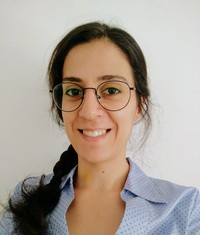
Ani Movsisyan is a postdoctoral researcher at the Institute for Medical Information Processing, Biometry and Epidemiology (IBE), Ludwig Maximilian University of Munich (LMU), affiliated with the Pettenkofer School of Public Health. She holds a Master of Public Health (MPH) from the American University of Armenia, a Master of Science (MSc), and a DPhil (PhD) in Social Intervention from the University of Oxford. Her work focuses on adapting and evaluating complex population health interventions, integrating complexity perspectives into guideline development, and advancing the GRADE methodology for public health applications. Pettenkofer School of Public Health, LMU Munich GRADE Working Group WHO Collaborating Center for Evidence-based Public Health BITSS Catalyst Global Implementation Society Movsisyan's research emphasizes complex systems thinking and evidence-based practices in public health. She contributes to the World Health Organization (WHO) through guideline development for parenting interventions, postnatal care, and complex health measures. Her recent projects include the CEO-sys initiative on the COVID-19 evidence ecosystem and frameworks for adapting interventions to new contexts. She teaches qualitative research methods at the American University of Armenia and lectures on qualitative methods at LMU Munich’s Center for International Health. Movsisyan’s publications include systematic reviews and frameworks addressing pandemic responses, health equity, and methodological advancements in evidence synthesis.
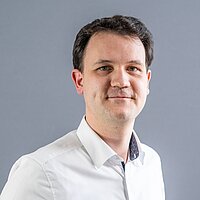
Frank Reinhold serves as Professor of Mathematics Education at the University of Education Freiburg (Pädagogische Hochschule Freiburg), where he leads the Institute for Mathematical Education. His academic career spans research, teaching, and leadership roles focused on mathematics education and digital learning environments. Previously, he held postdoctoral positions at both the University of Education Freiburg and Technical University of Munich, where he completed his PhD in Mathematics Education in 2018. His educational background includes a PhD from Technical University of Munich (2018), State Examination for Gymnasium Teaching in Mathematics and Physics from University of Regensburg (2012), and undergraduate studies in Mathematics and Physics Education at University of Regensburg (2007-2012). Before his academic career, he worked as a high school teacher at Wilhelm-Hausenstein-Gymnasium Munich (2014-2017). Reinhold's research centers on mathematics education with emphasis on digital tools, fraction learning, cognitive processes, and teacher training. His work explores how technology-enhanced learning environments impact mathematical understanding, particularly in fraction concepts and statistical reasoning. He investigates cognitive processes through methods like eye-tracking and process data analysis from digital learning environments, examining how students develop conceptual understanding and how teachers can effectively diagnose and address misconceptions. His research portfolio includes significant projects such as Di.ge.LL2 (Digital teaching-learning settings for cognitive activation), eye-teach-stats (teacher training with eye-tracking vignettes), frACTIONs (learning fractions with digital tools), and MINT-ProNeD (professional networks for adaptive innovations in STEM teacher education). These projects collectively address how digital tools can enhance mathematical understanding while considering individual differences among learners. Scholarship for postdoctoral researchers 2021 from Daimler and Benz Foundation GDM Dissertation Award 2020 for outstanding mathematics education dissertation Nomination for Polytechnik-Preis 2019: Dealing with Diversity in MINT Education As a mentor, Reinhold guides doctoral students and emerging researchers in mathematics education. His research is supported by substantial funding from organizations including the German Federal Ministry of Education and Research (BMBF), Baden-Württemberg Ministry of Science, Research and Art, and Erasmus+. He serves as scientific advisor to the State Institute for School Quality and Educational Research (ISB) Munich and participates in expert panels for educational initiatives in Baden-Württemberg. Reinhold co-leads the working group 'Mathematics Education and Digital Tools (AK MdW)' of the Society for Didactics of Mathematics (GDM) and contributes to the development of educational standards for digital mathematics instruction. His collaborative work spans international partnerships with institutions in Germany, the Netherlands, Belgium, and Colombia, reflecting a commitment to advancing mathematics education through both theoretical insight and practical classroom applications.
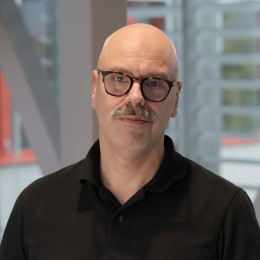
Prof. Dr. Mustafa Şahin BÜLBÜL, Kafkas University's Dede Korkut Faculty of Education, Department of Special Education, is a leading scholar in inclusive science education, particularly for visually impaired students. With a PhD in Secondary School Science and Mathematics Education from Middle East Technical University (2014) and an MSc in Physics from Kafkas University (2004), he has focused on universal design, drama-based learning, and technology integration in education. His career spans roles from Research Assistant (2007-2014) to Professor (2023-). PhD: Middle East Technical University (2014) MSc: Kafkas University (2004) BSc: Kafkas University (2002) His research bridges physics education and special education, emphasizing accessible laboratories, tactile learning materials, and AI applications. Recent publications analyze Google Trends for educational equity, universal design in STEM, and science fiction's role in fostering creativity. He has pioneered 3D electric circuits for blind learners and adaptive smartphone apps for physics. Notable awards include the 2017 Bağımsız Eğitim Çalışanları Sendikası Onur Ödülü and 2009 METU Fen Bilimleri Enstitüsü Ders Ödülü. He has collaborated with researchers like Belkıs Garip and Ali Eryılmaz on 14 projects, including hospital-based science curricula and AI-generated data challenges.
Prof Alison O'Mara-Eves is a Professor of Evidence Synthesis and Social Research at the Social Research Institute, University College London . She is the Deputy Director of the EPPI Centre and Co-Director of the London Alliance for Co-Production and Evidence Synthesis (LACES), a UK-wide Evidence Synthesis Group funded by the NIHR. Current roles: Deputy Director, EPPI Centre; Co-Director, LACES Academic appointments: Professor (2010-present), Associate Professor (2010-2025), Researcher (2010-2014) Her research focuses on: Developing and testing evidence synthesis methods, particularly quantitative/statistical meta-analysis Evaluating digital technologies for evidence synthesis production Co-production in evidence synthesis projects Secondary data analysis with complex/multilevel modeling Her work spans public health, education, and social psychology , aiming to improve evidence usability for policymakers. Recent methodological innovations include systems perspectives in synthesis, recalibration approaches to contextual analysis, and AI integration in systematic reviews. Professional activities include: Leading Approaches to Systematic Review Synthesis course (2024) Supervising MSc and PhD students Peer reviewing for: BMJ Open, Educational Psychology Journal, Preventive Medicine , and others Her teaching covers systematic review methods and quantitative research, with a focus on practical applications.
Beatrice Crona is a Professor and Science Director at the Stockholm Resilience Centre, a collaboration between Stockholm University and the Beijer Institute of Ecological Economics at the Royal Swedish Academy of Sciences. She represents the Centre as a knowledge partner to the Taskforce on Nature-related Financial Disclosures (TNFD) and serves as a member of the Nature Action 100 Science Council. Crona co-leads the Mistra FinBio program focused on developing research to support the financial sector's contribution to a nature-positive economy. Dr. Crona received her PhD in Systems Ecology in 2006. Her academic career began with research on fisheries governance in small-scale fisheries in developing countries, spanning regions from East Africa to the Philippines. She has since expanded her research focus to integrate sustainability requirements into traditional financial services and explore food systems transformation, with particular emphasis on aquatic foods. Professor Crona's research spans two key areas of transdisciplinary research: corporate and financial system sustainability and food systems transformation. Her work in sustainable finance emphasizes integrating sustainability requirements into traditional financial services and investigating how private capital can be leveraged to promote sustainability through various investment mechanisms. She has developed the "Earth System Impact" (ESI) score that captures corporate and investment impacts on the earth system beyond carbon emissions. In food systems, she has contributed to the EAT-Lancet report and co-led the Blue Food Assessment with Professor Roz Naylor at Stanford, examining the role of aquatic foods in achieving sustainable and healthy diets. Her recent publications demonstrate a strong focus on developing scientifically robust sustainability impact assessment methodologies, translating planetary boundaries into actionable frameworks for cities and businesses, and analyzing the role of blue foods in global food systems. Crona's work consistently applies a systems lens to identify key levers for change across multiple scales, bridging scientific insights with practical applications in finance and food systems. Ranked among top 2% most cited scientists globally (2024) according to Elsevier Data Repository Contributor to EAT-Lancet Commission on healthy diets from sustainable food systems Co-leader of the Blue Food Assessment Professor Crona leads the Mistra FinBio program, which develops research to support the financial sector's capacity to contribute to a nature-positive economy. She was part of the initial secretariat of the SeaBOS initiative, aiming to bridge the gap between science and seafood business for improved corporate practice, and led the initial SeaBOS Taskforce on Transparency and Traceability. Her work often involves collaborations with international organizations, academic institutions, and industry partners to translate scientific insights into practical applications. Through the Mistra FinBio program and her leadership roles in initiatives like TNFD and Nature Action 100, Crona has established research teams focused on sustainable finance and biosphere stewardship. Her work with the Blue Food Assessment has created a global network of researchers examining the role of aquatic foods in sustainable and healthy diets. These teams bring together expertise from ecology, economics, political science, and finance to address complex sustainability challenges.
Mattias Björklund is a Senior Lecturer at Stockholm University's Department of Teaching and Learning, specializing in social science education. With extensive upper secondary school teaching experience, his research focuses on financial literacy integration into citizenship education, curriculum adaptation, and pedagogical strategies for analyzing societal issues. Specialization in Didaktik (educational theory) Active in research groups for Social Studies Education and teaching development Prominent work on financial literacy's role in citizenship education Leading the Social Science Network under Stockholm Teaching and Learning Studies His research explores how teachers without formal financial training develop contextual knowledge to deliver effective financial literacy education. He investigates differences between experienced and novice teacher approaches, emphasizing life-world relevance and systemic economic understanding. Developed teaching frameworks for economic value comprehension Studied student analytical capabilities regarding migration crises Advocates for curriculum designs that connect personal financial decisions with broader societal systems Publications demonstrate expertise in phenomenographic methods, variation theory, and learning study approaches for analyzing student conceptual understanding across educational stages. He actively collaborates with international researchers while maintaining strong ties to Swedish educational practices.
Lisen Schultz is Deputy Director, Director of Education, and Programme Director for the Executive Programme in Resilience Thinking at the Stockholm Resilience Centre (SRC), Stockholm University . She holds a PhD in Natural Resource Management (2009) and was awarded the title of Docent (Associate Professor) in 2023. Her work bridges science and society through participatory resilience assessments, adaptive co-management studies, and sustainability education initiatives. Her research focuses on adaptive governance , social-ecological systems , and knowledge-action networks . She has led international projects like GLEAN (Swedish Research Council, 2011-2017) and BiosACM (Swedish Research Council, 2013-2017), examining how biosphere reserves function as learning sites and bridging organizations. Her work spans case studies in Sweden, South Africa, and global UNESCO reserves, with applications in municipal planning and IPBES negotiations . Her recent publications analyze supply chain resilience through social-ecological lenses, grain legume consumption for sustainable food systems, and the evolution of the PECS research network . She serves on the Swedish National Commission for UNESCO (since 2018) and co-founded the Pontus Schultz Foundation (2012) to connect business leaders with sustainability science. Her teaching includes Sustainability Science I & II , emphasizing participatory methods and ecosystem services.
Daniel Ruth is a Pulitzer Prize-winning journalist and visiting professor of professional practice at the University of South Florida's Judy Genshaft Honors College. With a four-decade career spanning newspapers like the Tampa Tribune, Chicago Sun-Times, and Tampa Bay Times, he brings extensive media experience to his academic role. He has served as an adjunct professor at USF, the University of Tampa, and Columbia College in Chicago. Ruth earned his undergraduate degree from Gannon University in Erie, Pennsylvania, and holds a master's degree in mass communications from the University of South Florida. His academic journey reflects his deep commitment to journalism and communication. Professor Ruth's work focuses on critical analysis of current events, politics, and modern culture through multiple media formats. His expertise spans journalism, editorial writing, and media commentary, with particular emphasis on political analysis, film criticism, and investigative reporting. He approaches complex societal issues through the lens of a seasoned journalist while maintaining an educator's commitment to fostering critical thinking among students. His eclectic background allows him to connect historical contexts with contemporary challenges, making his insights particularly valuable in today's rapidly changing media landscape. The podcast episodes reveal consistent themes in Ruth's work: sharp political commentary, media analysis, cultural criticism, and exploration of current events. His content demonstrates expertise across journalism, political science, media studies, and cultural analysis. Rather than focusing on narrow academic specialties, Ruth's work spans multiple disciplines, reflecting his career as a generalist journalist who can analyze diverse topics with depth and insight. Pulitzer Prize for editorial writing (2013) - shared with Tim Nickens for columns holding Pinellas County Commission accountable for removing fluoride from water supply The Peter Lisagor Award for columns in Chicago The Irene Miller Vigilance in Journalism Award from Pinellas County ACLU The Clearwater Bar Association's Liberty Bell Award The Green Eyeshade First Place Award for commentary (2014) Induction into USF's Kappa Tau Alpha journalism hall of fame As an educator, Ruth mentors honors students at USF, including conducting interviews with students like Kelly Wenzel for his podcast. His teaching emphasizes critical thinking, communication, and advocacy skills. Through his podcast and classroom instruction, he creates opportunities for students to engage with real-world issues. His approach combines practical journalism experience with academic rigor, providing students with unique insights into media, politics, and cultural analysis. Through his podcast 'The Daniel Ruth Show,' he maintains an active media presence that complements his academic work. The show serves as both a professional platform and an extension of his educational mission, featuring discussions on current events, politics, and culture that reflect his journalistic background and academic interests. His work bridges the gap between professional journalism and academic inquiry, creating a dynamic learning environment for students.
Stefan Popov is a Professor of Philosophy and Sociology at New Bulgarian University (NBU), holding a Ph.D. from the New School for Social Research and a Doctor of Science from Sofia University. He has held leadership roles, including Chairman of the Board of Trustees of the Open Society Institute in Sofia (2000–2006) and Executive Chairman of RiskMonitor, a think tank since 2007. Education: Ph.D. in Philosophy and Social Science, New School for Social Research (1996); Doctor of Science, Sofia University (year unspecified). His research spans political philosophy, phenomenology, and sociology, with a focus on topics like: Cartesian philosophy and mathematization of the world (2017 book) Wittgenstein’s analytic of mysticism (2008 book) International security regimes and NATO’s global mission (2000 book) Organized crime and policy analysis Recent publications highlight interdisciplinary analysis of political transitions, security frameworks, and philosophical foundations. Popov also authored a 2019 sports book on modern ski technique. As a faculty member, he teaches courses such as LEAB300 Project Management and LEAB302 Projects: Concept, Proposal, Management , reflecting his engagement with practical and theoretical education.
Oliver Jones is a Senior Lecturer at Leeds Business School , part of Leeds Beckett University, since 2004. His academic focus spans Operations Management , Supply Chain Strategy , and SME Productivity , with a specialization in Action and Intervention Research . He leads teaching initiatives in Lean and Six Sigma methodologies and drives research impact programs for REF 2029. Education: Manufacturing and Business from University of Cambridge His research explores how organizational routines evolve through process improvement practices, emphasizing coaching frameworks and AI adoption in SMEs. Recent publications highlight performance management trends, with a focus on AI integration and value proposition development . Oliver has been recognized as a Teacher Fellow for his contributions to pedagogy. Scientific Awards: Teacher Fellow Ollie’s work includes grants for regional SME productivity programs. He collaborates with the Sustainable Business Research Institute and the Futures Research Group , addressing challenges in absorptive capacity and strategic growth .
Christine LAMBEY CHECCHIN is a Professor at IAE Clermont Auvergne - School of Management, University Clermont Auvergne, where she holds significant responsibilities. She serves as Head of the Point of Sale Management and Marketing (MMPV) course at IUT Clermont Auvergne Department of Marketing Techniques in Montluçon, and is Co-head of the Territorial Strategy and Actor Networks (STeRA) Axis within the Clermont Recherche Management research team. Her academic standing is reinforced by her 2023 Habilitation à diriger des recherches (HDR) titled 'Du prix « juste » à la valeur « durable » : complémentarité des approches dans la relation « prix-demande ».' Professor LAMBEY CHECCHIN's research spans several interconnected domains with a strong emphasis on sustainable business practices. Her work examines the complex relationship between pricing strategies and consumer value perception, particularly within sustainability contexts. She investigates how cultural factors influence retail loyalty, with special attention to social proximity as a determining factor. Her research on brand activism explores why consumers sometimes respond negatively to corporate social initiatives, focusing on perceived corporate motives. Additional research areas include sustainable innovation development processes, the integration of lifecycle thinking into business models, and the strategic use of pricing during crisis situations. Analysis of her publication record reveals a clear trajectory toward increasingly sophisticated examination of sustainability within marketing frameworks. Her recent work demonstrates a shift from traditional pricing and retail studies toward more complex investigations of sustainable innovation, circular economy principles, and the integration of environmental considerations into business models. She frequently employs collaborative approaches and multicriteria decision-making frameworks in her research methodology, often examining how multiple stakeholders interact in sustainable innovation processes. Professor LAMBEY CHECCHIN maintains an extensive collaborative network, with frequent co-authorship relationships with Khaled Medini, Gilles Neubert, Joseph Kaswengi, Martha Orellano, and Mbaye Fall Diallo. Her work appears in reputable journals such as International Journal of Retail and Distribution Management, Sustainability, and International Journal of Physical Distribution and Logistics Management, demonstrating the interdisciplinary nature of her research that bridges marketing theory with practical business applications. Within the academic community, she actively participates in specialized conferences, particularly the Price & Value Conference series, where she has presented multiple papers examining the evolving relationship between pricing strategies and sustainable value creation. Her research on luxury brands and private sales demonstrates her ability to apply theoretical frameworks to specific industry contexts while maintaining academic rigor.
Sarah Hopkins is an Associate Professor in the Faculty of Education at Monash University , dedicated to reducing educational inequalities through interdisciplinary research in Mathematical Cognition and inclusive education. Her work integrates cognitive psychology and mathematics education to address learning difficulties, particularly among students from disadvantaged backgrounds and those with intellectual disability. Developed the Keyboard , a visual-spatial tool to enhance arithmetic strategy development Coordinated the Keep on Learning (KoL) Program for adults with intellectual disability Current ARC Discovery Project examines classroom applications of the Keyboard for lower primary students Research Interests span mathematical cognition, retrieval strategies, procedural flexibility, and inclusive pedagogy. Her projects often involve collaborations with the Spencer Foundation , ARC , and Ecstra Foundation , focusing on tool development, assessment design, and teacher training. Methodological Expertise includes Rasch analysis, microgenetic approaches, and mixed-methods research. She works with interdisciplinary teams to validate measurement scales and analyze longitudinal learning outcomes, particularly for marginalized groups.
Zachariah Berry is an Assistant Professor of Management & Organization at the University of Southern California's Marshall School of Business. His research focuses on morality at work, exploring how people think about moral character, ascribe morality to their work and relationships, and navigate conflicts between their values. He also conducts research related to diversity, equity, and inclusion, with particular emphasis on career transitions and passion pursuits. Dr. Berry received his PhD in Organizational Behavior from Cornell University, MA in Psychology from the University of Chicago, and dual BA in Psychology and Philosophy from Bethel University. His scholarly work has been published in leading academic journals including Organization Science, Journal of Personality and Social Psychology, Management Science, and Nature Human Behaviour. He has also authored influential articles for Harvard Business Review on topics ranging from career transitions to workplace morality. His research on career passion has gained significant attention, particularly his work showing that people overestimate how harshly they will be judged for disengaging from passion pursuits at work. This counterintuitive finding challenges conventional wisdom about career transitions and has important implications for workplace well-being and professional development. Areas of Expertise: Ethics, Identity, Loyalty, Morality, Organizational Behavior Contact: zberry@marshall.usc.edu | USC Marshall School of Business, Hoffman Hall 513, Los Angeles, CA 90089 Dr. Berry's research employs diverse methodologies including experimental designs, field studies, and meta-analyses to investigate fundamental questions about morality in organizational contexts. His work has practical implications for managers, HR professionals, and individuals navigating complex ethical dilemmas in the workplace.
Mary Smith serves as an Assistant Professor in the College of Business and Management at Lynn University, bringing 31 years of industry experience from her retirement as AT&T Area Manager in Construction and Engineering. She champions innovative education that bridges academic theory with practical business leadership development through real-world applications. Her academic qualifications include: Doctor of Management in Organizational Leadership, University of Phoenix M.B.A., Nova Southeastern University B.S., Nova Southeastern University Dr. Smith's research centers on artificial intelligence integration in higher education, management leadership systems, and organizational behavior dynamics. Her transformative teaching philosophy emphasizes critical thinking, ethical leadership development, and practical problem-solving through collaborative classroom environments that leverage diverse student perspectives to prepare professionals for complex business challenges. Her 2025 publications analyze AI adoption in faculty teaching methodologies at private institutions, revealing significant trends in educational technology implementation, faculty development frameworks, and the evolving landscape of instructional innovation within business education contexts. Professional recognition includes: AT&T Service Excellence Award (2010, 2016) Delta Mu Delta Honors Society Award (2016) Community Service Award (2009, 2010) As an active faculty member, Dr. Smith mentors students in management disciplines while collaborating with interdisciplinary research teams across the College of Business and Management. Her industry-academic transition fuels grant-seeking initiatives focused on leadership development programs and technological innovation in business education, though specific funded projects aren't detailed in available materials. She contributes to Lynn University's research ecosystem through the International Business Center and participates in sustainable development initiatives aligned with UN educational goals, particularly through her work on AI-driven pedagogical advancements.
Louise Boronyak serves as an Industry Fellow and Senior Research Consultant at the Institute for Sustainable Futures (ISF) at the University of Technology Sydney. She also holds the position of General Manager at the Centre for Compassionate Conservation at UTS, where she leads initiatives focused on conserving biodiversity without compromising the welfare of individual wild animals. Previously, she managed THINKK, the think tank for kangaroos, which conducted independent research on kangaroo welfare, ecology, law, and economics in Australia. Boronyak's research spans environmental sustainability, natural resource management, and the intersection of animal welfare with conservation biology. Her work emphasizes stakeholder engagement and community-based approaches to climate change adaptation. She has developed expertise in human-wildlife coexistence, particularly regarding large carnivores like dingoes, and advocates for compassionate conservation approaches that recognize animal personhood. Her research integrates social-ecological systems perspectives, focusing on how communities can adapt to climate change while protecting biodiversity. Analysis of Boronyak's publication record reveals a clear trajectory from climate adaptation and natural resource management toward compassionate conservation and human-wildlife coexistence. Her early work focused on climate adaptation in Pacific Island nations and Australian communities, while her more recent publications center on ethical approaches to wildlife management, particularly regarding dingoes and kangaroos. A unifying theme across her work is the emphasis on participatory processes, community engagement, and the integration of multiple knowledge systems to address complex environmental challenges. Scientific Recognition: Received a highly commended award in the Resilient Australia Awards 2013 for her work on the Bushfire Partnership project, which engaged Sydney communities in bushfire preparedness while protecting local biodiversity Boronyak has managed significant research projects including the Bushfire Partnership, work with the North East Greenhouse Alliance (NEGHA) to strengthen community capacity for climate change adaptation in Northern Victoria, and the CSIRO Intelligent Grid Research Cluster promoting distributed energy technologies. Her project management experience spans both Australian and international contexts, with a focus on green technology and community-based adaptation initiatives. She has secured funding from various sources including NSW Environmental Protection Agency and the NSW Office of Environment and Heritage. As General Manager of the Centre for Compassionate Conservation and former manager of THINKK, Boronyak leads research teams focused on innovative approaches to wildlife management that prioritize animal welfare. Her work with the Centre for Compassionate Conservation represents a dedicated team effort to develop conservation strategies that avoid harming individual animals while protecting biodiversity. Her research often involves collaboration with government agencies, community organizations, and academic partners across multiple disciplines.