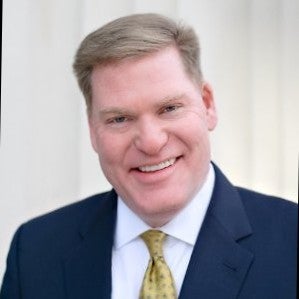
John Nauright is a Professor and Karen Wax Schmitt & Family Endowed Professor at Louisiana State University's College of Human Sciences & Education, School of Kinesiology. With academic roots in the University of South Carolina (BA, MA) and Queen's University in Canada (PhD), he has lived and worked across six continents, contributing to global sport studies and management. Education: PhD in History, Queen's University, Canada Positions: Director, School of Kinesiology; Endowed Professor His research spans international sport management, political economy of sports, gender dynamics in elite sports, and the socio-cultural impacts of sports events. Recent projects include Clarkonomics: Women’s Elite Sport in the 2020s and a cultural biography of Sam Kerr and the Matildas. His work on women’s sports, mega-events, and global sport economics is complemented by leadership in the LSU Women’s Sport and Health Initiative, which mobilizes 20 researchers. Articles highlight trends in globalization, inclusivity, and crisis management in sports. 2025: Advisory Board, Durban University of Technology 2024: Global Experts Group, Gender Equality in Sport 2015: Best Authored/Edited Book Prizes, World Rugby Museum Nauright has advised on international sport governance, co-authored over 150 articles, and secured grants for research on sports' societal impact. He actively explores the interplay between sports and integral ecology as well as post-COVID recovery strategies.
Dr Liana Minkova serves as a Junior Research Fellow in Law at Newnham College, Cambridge, with primary affiliation to the Lauterpacht Centre for International Law within the University of Cambridge's Faculty of Law. She holds a PhD and MPhil in Politics and International Studies from Cambridge, complemented by a BA in International Politics from King’s College London. Education PhD in Politics and International Studies, University of Cambridge MPhil in International Relations, University of Cambridge BA in International Politics, King’s College London Her research centers on the criminalization of environmental destruction (ecocide) in international law, individual criminal responsibility for mass atrocities, and the expressive function of international criminal justice. Current work examines ecocide definition-building processes, institutional enforcement challenges, and law-justice dynamics in environmental harm cases, while prior research analyzed culpability boundaries and gender dimensions at the ICC. Publications reveal evolving expertise from foundational liability standards (2023 monograph) toward contemporary debates on ecocide (2021) and institutional interests in the Ongwen case (2021), with consistent engagement in gender justice (2022) and theoretical frameworks for commission liability (2022). Scientific Recognition Arts and Humanities Research Council Doctoral Training Partnership full funding award She has delivered lectures at Sofia University and the American University in Bulgaria while maintaining research assistant roles at Cambridge and King’s College London, demonstrating active integration into international legal scholarship communities without documented grant leadership or student supervision.
Dr Nisha Nixon is a Fellow at St Catharine's College, University of Cambridge, holding an academic appointment in the School of Clinical Medicine with specialization in the Department of Ophthalmology. Appointed as an Academic Clinical Fellow in Ophthalmology in 2020 and admitted to the Fellowship in 2022, she serves as chief investigator for innovative clinical studies leveraging virtual reality technology. Her educational background includes preclinical and clinical medical training at St Catharine's College with first-class honors, complemented by intercalated studies in Physiology, Development and Neuroscience. Key distinctions include the Moses Holway Scholarship, John Addenbrooke Medical Prize, Thomas Hobbes Scholarship, and Robert Comline Prize in Systems Physiology. Dr Nixon's research focuses on revolutionizing oculomotor assessment through virtual reality applications , particularly for strabismus diagnosis and eye movement analysis outside traditional clinical settings. Her work bridges ophthalmology , medical technology development , and automated diagnostic systems , emphasizing cost-effective solutions using accessible hardware like VR headsets. Her publication portfolio demonstrates consistent advancement in diagnostic innovation, with recent work (2021-2023) centering on augmented reality strabismus screening and virtual reality ocular misalignment testing. Earlier research (2015-2017) established foundations in dry eye therapy, lacrimal surgery, and color vision adaptation for clinicians. Moses Holway Scholarship John Addenbrooke Medical Prize Thomas Hobbes Scholarship Robert Comline Prize in Systems Physiology As an educator, Dr Nixon has supervised Neurobiology and Human Behaviour for second-year medical students since 2012 and holds a Postgraduate Certificate in Medical Education (2016). Her current VR-based clinical study represents significant grant-funded research exploring automated diagnosis systems, with potential to transform community-based eye care delivery through low-cost technology.
Kay L. Hegarty is a Professor of Practice in the Department of Accounting at the University of Iowa's Tippie College of Business. With a BBA in Accounting from the University of Iowa and a Certified Public Accountant (CPA) license since 1981, she brings extensive professional experience from her 35-year tenure as Partner at RSM US LLP (1980–2015). Education: BBA in Accounting, University of Iowa Certifications: Certified Public Accountant (CPA), State of Iowa Her expertise focuses on tax planning and accounting education, demonstrated through presentations on topics like 'Tax Planning in Tumultuous Times' and 'Life Lessons: Tax Considerations for Life's Milestones' at the University of Iowa. She has received multiple teaching awards, including the Innovations in Teaching Award (2022) and Collegiate Teaching Award (2020). Professional affiliations include the American Institute of Certified Public Accountants (AICPA) and Iowa Society of Certified Public Accountants. She currently serves as Adjunct Lecturer in Accounting at the University of Iowa since 2018, complementing her primary role as Professor of Practice.
Professor Jacek Witkoś is affiliated with the Faculty of English at Adam Mickiewicz University (AMU), Poznań, Poland. Holding a Full Professor position since 2010, he contributes to syntactic theory, contrastive linguistics, and formal comparative analysis of English and Polish. MA in political science (1986) and English (1987), Ph.D. (1993) and D.Litt. (1998) in English Linguistics from AMU Headed significant research grants including OPUS projects on dative structures, complementizers, and Polish pronouns Former Vice Chancellor of AMU for Research and Foreign Affairs (2008-16) His research focuses on generative syntax, minimalism, and diachronic syntax, with applications to English-Polish contrastive linguistics. He has organized numerous international conferences like the Generative Syntax Section at Poznań Linguistic Meetings and the Workshop on Clausal Architecture. Scientific recognition includes: 1997 Minister of National Education's Award for outstanding research 1999 Rector of UAM 2nd prize 2019 Order of Polonia Restituta from the President of Poland Active in guest lectures at institutions like University of Vienna and University of Maryland, Witkoś maintains leadership roles in linguistic societies and editorial contributions to academic publications.
Cherubino Leonardi serves as Full Professor of Horticulture and Floriculture at the Department of Agriculture, Food, and Environment, University of Catania, maintaining active office hours and research operations as of 2025. His contact includes dual institutional and personal email addresses alongside direct phone access. Education: Graduated in Agricultural Sciences (110/110 with honors) in 1988 PhD obtained in 1994 Conducted research at INRA Avignon (France) in 1992, 1997, and 1998 Research Focus: Dr. Leonardi's work targets sustainable production systems through four interconnected pillars. Crop diversification assesses innovative species adaptation across environments while identifying optimal cultivars. His stress physiology research analyzes Mediterranean-specific challenges like salinity and thermal extremes. Specialized nursery science investigates graft-rootstock dynamics in vegetable propagation, complemented by soilless cultivation innovations in substrate selection and closed-loop nutrient management. These efforts collectively enhance product quality while minimizing ecological impact. Research Leadership: He coordinates nationally and internationally funded projects (EU, Ministry of Agricultural Policies), having directed the International PhD program (2013-2021) and currently serving on the Experimental Agricultural Farm's Management Board. His ORCID profile (0000-0002-9486-3231) documents 180+ publications with H-index 30 and 3,600+ citations. Professional Engagement: Active in SOI, ISHS, SIA, and Accademia dei Georgofili, he chairs the Di3A Teacher-Student Commission while serving on CORFILAC's Board. His conference leadership includes the 2024 Morocco ISHS symposium and 2021 SOI Scientific Days.
Marta Botiková serves as Professor at the Department of Archaeology and Cultural Anthropology, Faculty of Arts, Comenius University Bratislava since 2009, with continuous faculty service since 1991. Her academic trajectory includes Associate Professor (2001-2009) and Assistant Professor (1991-2000) positions within the same institution. Her educational foundation comprises three Ethnology degrees from Comenius University (1978 BA/MA, 1984 PhD), complemented by professional development in English language (British Council 1992), digital tools (Atlas.ti 2014, Moodle 2009), and specialized software training. She maintains active international collaborations through Fulbright and CEEPUS programs with institutions across Europe and North America. Professor Botiková's research centers on Cultural Anthropology and Ethnology with emphases on gender dynamics, family structures, and historical transformations in Central Europe. Her work critically examines women's experiences across the 20th century, particularly analyzing socialist-era gender policies, reproductive behavior, and medicalization of life-cycle events. She employs biographical narratives and historical-ethnographic methods to explore tradition-modernity tensions in Slovak society. Her recent publications (2019-2023) demonstrate consistent focus on historical-ethnographic analysis of family and gender in Central Europe, with growing emphasis on Slovak-Hungarian comparative frameworks. These works reveal methodological sophistication in combining oral histories with archival materials to investigate reproduction, childcare, and identity formation under socialism. International Prize for Ethnological Studies Guiseppe Pitré (1996) Slovak Ethnographic Society Awards (1982, 1984, 2008) Commemorative Medals from Comenius University (2019) and Faculty of Arts (2022, 2024) Gold Medal for Merits (2024) Slovak Academy of Sciences Award (1995) She has supervised 83 defended theses (25 Bachelor's, 53 Master's, 5 PhD) and currently guides 4 Bachelor's candidates. Her research is funded through multiple VEGA projects including leadership in 'From Family Ecotype to Sociotype' (2017-2020) and participation in 'Moral assessment of national groups' (2023-2025). International mobility includes Fulbright scholarships at The Evergreen State College (1995-1996, 2011) and Cambridge Group research. Professor Botiková maintains significant departmental engagement as Editor-in-Chief of Ethnologia Slovaca et Slavica (since 2017), former Head of Department (2003-2015), and active membership in Slovak Ethnographic Society (since 1975) and Hungarian Ethnographic Society (Honorary Member since 2005).
Tania Bosak is a Master TaKeTiNa Rhythm facilitator and educator with over 34 years of professional experience spanning performance, rhythm education, and therapeutic applications of rhythm. She currently teaches TaKeTiNa in the Bachelor of Rhythm and Rhythmics program at the Royal Conservatory of Brussels and serves as a guest TaKeTiNa/Rhythm and Movement tutor at Melbourne University's Bachelor of Fine Arts (Theatre) program. Her extensive teaching portfolio includes engagements with Theatre de la Parole, Melbourne Polytechnic, Victoria University, and the Melbourne Theatre Company's educational programs. Bosak holds a BA in Performing Arts, Contemporary Dance, and Education, complemented by specialized training at the John Bolton Theatre School. Her educational journey includes extensive study in Odissi and Bharatanatyam Indian Classical dance (1989-1997), acting and physical theatre training, certification as a Master TaKeTiNa Rhythm facilitator in 2018, a Diploma in Solution-Focused Counselling, training in Generative Trance therapy, and a leader training certificate with Musicians without Borders. Her research and practice focus on the transformative power of rhythm processes for personal evolution and creative expression. Bosak has developed the ACTIVE RHYTHM MUSIC MEDITATION (ARMM™) programs that integrate Generative Trance practice with theatre, voice, movement, and the TaKeTiNa Rhythm process. Her work explores rhythm's applications in therapeutic settings, community building, and artistic development, with particular emphasis on how rhythmic practices can facilitate altered states of consciousness and enhance creative flow. Bosak received the Churchill Fellowship in 2004 to study Korean drum and dance in South Korea, and she maintains membership in The International Association of Generative Change (IAGC). Her recent writings explore intersections between rhythm, psychology, and consciousness, reflecting her integrative approach to rhythm education. As founder of Pulse Rhythm Events since 2004, Bosak has organized numerous international workshops and events focused on rhythm, movement, and personal evolution. She leads specialized master classes for actors, dancers, and musicians across Australia and Europe, while maintaining an active performance career with ensembles including The Barefoot Orchestra, Rektango, and The Beijao. Her collaborative work includes performances with renowned rhythm specialists such as Graeme Leak, Greg Sheehan, and David Jones, as well as the internationally acclaimed STOMP percussion group.
Prof. Aldo Romani is a Professor leading the Materials for Artworks' Conservation research group within an academic department offering degrees in Chemistry, Biological Sciences, and Biotechnology. His work focuses on applying chemical and physical methodologies to cultural heritage conservation, with emphasis on non-destructive analysis and development of portable instrumentation for in-situ studies without artwork sampling or movement. Research interests center on chemical and physical behavior of materials in artworks, including structure/composition analysis for conservation diagnosis, degradation mechanisms of heterogeneous materials, and protection of porous heritage objects. The group utilizes synchrotron radiation, micro-FT-IR, micro-Raman, XRF, XRD, UV-VIS-NIR spectroscopy, GC-MS, and other advanced techniques. Key specialties include micro-spectroscopy for cross-sectional material distribution, contemporary art materials analysis, and emergency conservation protocols. Recent publications reveal strong focus on pigment analysis, varnish degradation, and non-invasive imaging of paintings/manuscripts using hyperspectral techniques. The research demonstrates integration of art historical context with materials science, particularly in Modernist paintings, medieval manuscripts, and street art preservation. The group actively contributes to European heritage science initiatives through the SMAArt Center of Excellence. Prof. Romani's laboratory develops portable instrumentation within MOLAB programs and participates in major European infrastructures including IPERION-HS and E-RIHS. Theoretical modeling complements experimental work for spectral assignments, while collaborations span conservation science and particle physics applications for detector development relevant to cultural heritage analysis.
Mohammad Abdollahi Azgomi is a Professor of Computer Engineering at the School of Computer Engineering, Iran University of Science and Technology (IUST), where he has been serving since 2005, progressing from Assistant Professor to Associate Professor and finally to Professor in 2022. He holds multiple significant roles including Director of the Trustworthy Computing Laboratory (TwCL) since 2006, and previously served as Research Deputy of the School of Computer Engineering from 2020-2023. His academic career is complemented by extensive service on editorial boards, scientific committees, and as a PC member for numerous international conferences in security, cryptography, and computer science. Dr. Azgomi earned his Ph.D. in Computer Engineering (Software) from Sharif University of Technology in 2005 with a dissertation on 'High-Level Extensions for Stochastic Activity Networks: Theories, Tools and Applications,' supervised by Prof. Ali Movaghar. He also completed his M.S. (1996, with honors) and B.S. (1991) in Computer Engineering (Software) from the same institution, with his master's thesis focusing on 'Design and Implementation of Security Services for Computer Networks.' His research spans several interconnected domains centered around dependable and secure computing systems. Dr. Azgomi specializes in modeling and simulation techniques, particularly Petri Nets and Stochastic Activity Networks, for quantitative evaluation of system properties. His work significantly contributes to security and privacy frameworks, trust models, and dependable software design. He has pioneered approaches for evaluating cyber-physical systems security through game-theoretic models and developed frameworks for assessing software architecture quality attributes under uncertainty. Analysis of his recent publications reveals a strong research trajectory focusing on computational trust models, malware propagation dynamics in heterogeneous networks, and security evaluation of cyber-physical systems. His work demonstrates consistent application of formal methods like stochastic activity networks and Petri nets to solve complex security and dependability problems. There's a clear progression from foundational modeling techniques to sophisticated applications in cloud computing, web services security, and intrusion-tolerant systems. Best Researcher of the Year, School of Computer Engineering, IUST (2013, 2014, 2016, 2017) Best Paper Award at CSICC'12 for work on symbolic state space generation Best Paper Award at Innovations'09 for security protocol modeling Best Bachelor Thesis Supervisor (2009) Best Lecturer, IT Group, E-Learning Center (2008) Distinguished M.S. Graduate, Sharif University (1996) Dr. Azgomi has supervised an impressive number of doctoral students, with 14 Ph.D. graduates from IUST and 6 from other universities. His current teaching includes graduate courses on Dependable Software Systems and undergraduate Research Methods and Presentation. He serves on the editorial board of the CSI Journal on Computing Science and Information Technology and has been actively involved in numerous international conferences as program committee member and chair. The Trustworthy Computing Laboratory (TwCL), which Dr. Azgomi directs, focuses on rigorous engineering methodologies for evaluating dependability and security in information and communication technologies. The lab conducts research in formal methods, security modeling, dependable systems, and network security, with particular emphasis on Petri nets, stochastic activity networks, and quantitative evaluation techniques for security, privacy, and trust.
Brian Toohey is an Adjunct Professor at Georgetown University’s Walsh School of Foreign Service, where he has taught since 2007. His academic role complements his professional career as Vice President of Global Government Affairs and Public Policy at Illumina, where he leads international engagement and regulatory strategy. Prior to Illumina, he held executive roles at PhRMA, DEKA Research, and the Semiconductor Industry Association, focusing on healthcare, biotechnology, and technology innovation policy. Research Interests: His work spans Public Policy Government Affairs Healthcare Policy Biotechnology Policy Technology Innovation Professional Affiliations: Current: Vice President at Illumina Former: Executive roles at PhRMA, DEKA Research, Semiconductor Industry Association
Prof Emma Tobin serves as Professor of Philosophy of Science in the Department of Science and Technology Studies at University College London (UCL), within the Faculty of Mathematical and Physical Sciences. Appointed in October 2020 following promotions from Lecturer (2010) to Associate Professor (2016), she has held significant administrative roles including Undergraduate Tutor (2013-2016), Deputy Head of Department (2018-2019), and co-Head of Department (2019-2024). Currently on research sabbatical for 2024/25, she maintains active scholarly engagement. Her academic formation includes a B.A. from University College Dublin and Ph.D. from Trinity College Dublin (awarded 2006), funded by the Irish Research Council. Her doctoral work 'On the Disunity of the Sciences and Ceteris Paribus Laws' was examined by Prof. Stephen Mumford, with supplementary research conducted at Cambridge's Department of History and Philosophy of Science under Peter Lipton in 2005. Tobin's research program centers on the metaphysics of science, particularly natural kinds and laws, extending to philosophy of science in practice through classification studies in chemistry, biology, and astronomy. Her integrated history and philosophy of chemistry work examines chemical practices and theory choice, complemented by broader investigations into causation, explanation, scientific realism, and epistemological challenges in big data classification. This interdisciplinary approach bridges metaphysical inquiry with empirical scientific practice. Publication analysis reveals sustained focus on natural kinds across disciplines, with recent work examining conceptual evolution in physics (e.g., 'lattice' terminology) and historical studies of chemical practices. Her scholarship demonstrates consistent engagement with classification systems and theoretical frameworks from 2008 through 2021 publications. As a dedicated supervisor, Tobin has guided five PhD candidates to completion: Stephanie Ratcliffe (2014), Yafeng Shan (2015), Toby Friend (2017), Rory Jubber (2020), and current Windsor BAME Fellow Ryan Francis. Her research contributions include participation in the AHRC-sponsored Metaphysics of Science Project (2006-2010) and ongoing exploration of scientific classification systems. Within UCL's Department of Science and Technology Studies, Tobin contributes to an interdisciplinary environment examining science-society interactions, maintaining active collaboration through her sabbatical period and continuing leadership in philosophy of science discourse.
Iivo Vehviläinen serves as Professor of Practice in the Department of Economics at Aalto University, specializing in applied microeconomics with emphasis on energy markets, market structures, and regulatory frameworks. His expertise stems from a PhD in mathematical finance applied to Nordic electricity markets, complemented by extensive industry experience in the energy sector. Current research focuses on renewable energy impacts on hydro-dominated markets, utility strategic responses to energy transitions, and demand-side technology economics. His research program centers on three interconnected themes: (1) wind power integration effects in Nordic hydro systems, (2) incumbent utility adaptation strategies (particularly nuclear power in Sweden), and (3) economic viability and distributional consequences of demand response and battery storage technologies. These investigations address critical challenges in electricity market design during the energy transition, emphasizing equilibrium impacts, regulatory effectiveness, and societal distributional effects. Analysis of recent publications (2020-2025) reveals consistent focus on electricity market design challenges, renewable integration dynamics, and policy responses to energy crises. His work demonstrates strong empirical grounding in Nordic and European contexts, with recurring themes of market equilibrium analysis, regulatory intervention effectiveness, and distributional consequences across households and industries. Scientific recognition includes: AEI Award (Department of Economics, January 2023) The Societal Influencer of the Year 2022 for contributions during the Energy Crisis (Department of Economics, January 2023) While the source material indicates active research leadership and industry engagement, specific details regarding academic advising, research grants, laboratory facilities, or formal research teams were not provided. His industry background informs practical policy applications, particularly regarding market design solutions for contemporary energy challenges.
Natalia Vuori serves as Assistant Professor in the Department of Industrial Engineering and Management at Aalto University, where her research bridges strategic management, organizational behavior, and innovation science. Her current work examines emotional dynamics in organizational processes, heuristic applications in strategic decision-making, and the transformative impact of generative AI on firm performance and strategizing. Dr. Vuori's research program investigates how emotional structuring influences innovation activities and post-acquisition integration, while her recent publications explore the dual effects of emotional and cognitive trust in AI adoption contexts. She examines how heuristics interact with causal knowledge during infrequent organizational processes like mergers, and analyzes how professional expertise diversity either enhances or constrains creative engagement. Her work consistently reveals the psychological underpinnings of strategic phenomena through rigorous empirical analysis. Analysis of her publication trajectory (2019-2025) shows increasing focus on artificial intelligence's organizational implications, particularly generative AI's social-psychological dynamics in strategy work. This evolution complements her foundational work on emotional practices in innovation and multi-speed integration approaches in mergers and acquisitions, demonstrating consistent theoretical advancement in understanding human cognition within strategic processes. Her scientific recognition includes: Winner of the 2025 SAP Best Paper Award for generative AI research Finalist for the 2020 SAP Best Paper Award Robert J. Litschert Best Doctoral Student Paper Award (2011) Multiple Academy of Management conference awards including Newman Award (2014) and Best Dissertation Paper Award (2014) Strategic Management Society Best PhD Paper Prize (2010) While specific grant details aren't provided in source materials, her award-winning publications in Journal of Management Studies, Academy of Management Annals, and Strategic Management Journal suggest substantial research funding. Her work demonstrates consistent collaboration with scholars like Timo Vuori, Quy N. Huy, and Tomi Laamanen across multiple projects. Current research directions indicate deepening exploration of human-AI interaction frameworks, particularly examining trust dynamics and performance implications in organizational settings, while maintaining her signature focus on emotional and cognitive aspects of strategic processes.
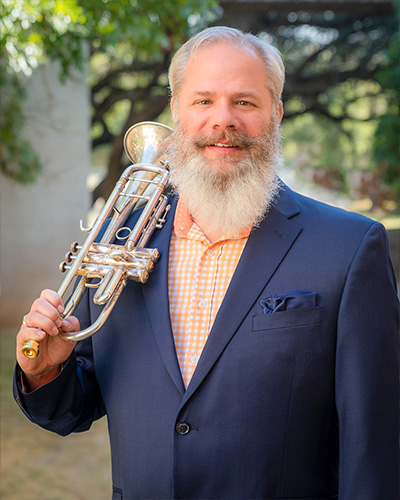
Jeff Castle serves as a Lecturer in Trumpet at the Department of Music within the College of Liberal and Fine Arts at the University of Texas at San Antonio (UTSA), where he contributes to music education and performance training. He maintains an active profile as a freelance musician throughout Central Texas. His academic credentials include: Bachelor of Music in Music Education/Trumpet Performance from the University of Massachusetts, Amherst Master of Music in Trumpet Performance from William Marsh Rice University Castle's professional expertise centers on trumpet performance across diverse settings including military bands, orchestral work, and brass ensemble direction. His career spans significant service in United States Air Force Bands—The Air Force Band in Washington D.C., Band of the Pacific-Alaska, and Band of the West at Lackland AFB—complemented by ongoing performances as an extra/substitute musician with the San Antonio Symphony. His pedagogical approach integrates performance practice with educational outreach. As co-founder and director of Castle Brass, he leads a specialized brass ensemble dedicated to performance excellence and community engagement in Central Texas. This initiative serves as both a creative outlet and educational platform for brass musicians in the region.