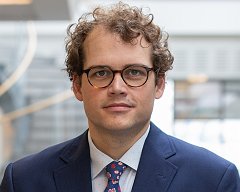
Max S. New is an Assistant Professor in Computer Science & Engineering at the University of Michigan, affiliated with the MPLSE research community . He works on the mathematical foundations of programming languages, focusing on Gradual Typing , Category Theory , Secure Compilation , and Effect Handlers . His research bridges formal methods with practical language design. Educational background : PhD in Computer Science, Northeastern University (2020) Postdoctoral Research, Wesleyan University (with Dan Licata) Max's recent work explores the intersection of Dependent Lambek Calculus and parsing verification, Synthetic Guarded Domain Theory for gradual typing semantics, and Relative Monads in computational models. His publications span top venues like PLDI , POPL , and ICFP , emphasizing formal verification and category-theoretic abstractions. He has served as Committee Member in OOPSLA and POPL, Session Chair for type systems tracks, and Program Co-Chair for HOPE workshops. His PhD students include Eric Giovannini, Steven Schaefer, and Jesse Slater (co-advised with Xinyu Wang).
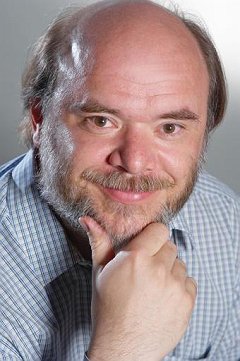
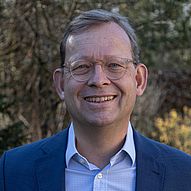
Elena Zucca is an Associate Professor in the Department of Computer Science, Bioengineering, Robotics and Systems Engineering (DIBRIS) at the University of Genoa, Italy. She has a strong research focus on programming languages, particularly in the areas of type systems, formal semantics, and coinduction. Her work bridges theoretical foundations with practical implementations, as evidenced by her publications on topics like Featherweight Java, corecursion, and soundness proofs for programming language features. Her research interests span the theoretical and practical aspects of programming languages. She investigates the formal semantics of programming constructs, particularly focusing on the boundaries between finite and infinite computations. Her work on coinduction and corecursion explores how to safely handle infinite data structures and computations. She has made significant contributions to understanding soundness in programming language features, especially in relation to resource-aware semantics. Her research often combines theoretical foundations with practical implementations, as seen in her work on Featherweight Java extensions and effect systems. Analysis of her recent publications reveals a consistent focus on advanced type systems and semantics. Her work explores the theoretical boundaries of programming language features while maintaining practical relevance. A recurring theme is the relationship between finite and infinite computations, with particular attention to soundness guarantees. Her research has evolved from foundational work on lambda calculus and object-oriented programming toward more specialized topics like graded types, coeffects, and resource-aware semantics. Elena Zucca has been actively involved in the programming languages research community, serving on program committees for major conferences including SPLASH, ECOOP, and POPL. She has mentored students through doctoral courses on Declarative Programming and (Co)Induction. Her research has been supported through participation in various academic programs, including the SEPL research program mentioned in her course materials. She teaches a diverse range of courses at the University of Genoa, from undergraduate to doctoral levels. Her teaching portfolio includes Automata Theory and Computability, Algorithms Analysis and Design, Principles and Paradigms of Programming Languages, and specialized doctoral courses on Declarative Programming and (Co)Induction. Her courses often reflect her research interests, covering theoretical foundations of programming languages, formal methods, and advanced programming paradigms.
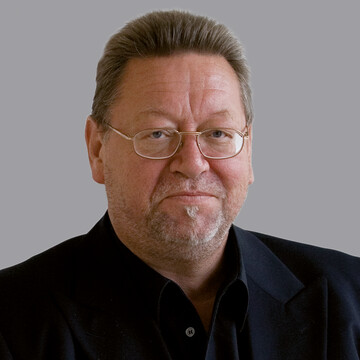
Prof. Dr. Wolfgang Kemp is a distinguished Professor of Art History at Leuphana Universität Lüneburg, where he is affiliated with the Institute of Philosophy and Art History. With a career spanning over four decades since his first major publication in 1983 on John Ruskin, Professor Kemp has established himself as a leading scholar in art historical methodology, photographic history, and architectural theory. His work bridges traditional art historical approaches with contemporary theoretical frameworks, contributing significantly to our understanding of visual culture across multiple historical periods. Professor Kemp's research interests encompass a wide range of topics within art history and visual studies. His primary areas of focus include the history and theory of photography, architectural analysis, reception aesthetics, and the interplay between language and visual representation. He has made significant contributions to the study of early photography, particularly author photography and studio practices, as well as to the understanding of architectural representation from medieval times to the modern era. His work on John Ruskin's Stones of Venice demonstrates his ability to connect historical architectural documentation with contemporary theoretical concerns. Kemp's research also extends to the social history of aesthetic reception, the development of art historical methodology, and cross-cultural artistic exchanges, particularly between Britain and Germany in the 20th century. Examining Professor Kemp's extensive publication record reveals consistent engagement with theoretical questions about form, perception, and representation. His work demonstrates remarkable breadth, moving seamlessly between medieval stained glass, 19th-century photography, modern architectural theory, and contemporary visual culture. A notable trend in his scholarship is the application of system theory and reception aesthetics to traditional art historical questions, creating innovative frameworks for understanding visual phenomena. His publications often bridge disciplinary boundaries, connecting art history with literary theory, philosophy, and cultural studies. Professor Kemp has made significant contributions to the field through his editorial work, including the compilation of the influential "Kemp-Reader" which gathers his selected writings, and his work on specialized journal issues exploring gender, literature, and culture. His monograph "Architektur analysieren: Eine Einführung in acht Kapiteln" has become a standard reference for architectural analysis methodology. His 2016 collaborative work "Die Steine von Venedig" represents an important contribution to Ruskin scholarship, incorporating previously undiscovered daguerreotypes.
Philipp Slusallek is a Professor for Computer Graphics at Saarland University since 1999 and Scientific Director at the German Research Center for Artificial Intelligence (DFKI), leading the "Agents and Simulated Reality" research area since 2008. He has held leadership roles such as Director for Research at the Intel Visual Computing Institute (2009-2017) and Dean of the Faculty of Computer Science and Mathematics (2002-2004). His affiliations include being a Principal Investigator in the German Excellence Cluster "Multimodal Computing and Interaction" (2007-2019) and a Visiting Professor at NVIDIA Research (2007-2008). PhD in Computer Science from Erlangen University Diploma in Physics from Frankfurt and Tübingen University His research spans computer graphics, artificial intelligence, and high-performance computing, with contributions to real-time ray tracing, digital reality, motion synthesis, and domain-specific languages (DSLs). Recent work includes visual programming tools for image processing (2022), DSL frameworks for high-performance libraries (2018), and compiler optimizations for vectorized code (2018). Key themes include simulation technologies, programming models, and computational sciences. Scientific honors include Fellow of Eurographics, Associate Editor of Computer Graphics Forum , membership in acatech (German National Academy of Science and Engineering), and advisory roles in AI policy. He has led research groups at institutions like Stanford University (Visiting Assistant Professor, 1998-1999) and the University of Tübingen (Researcher, 1990-1992).
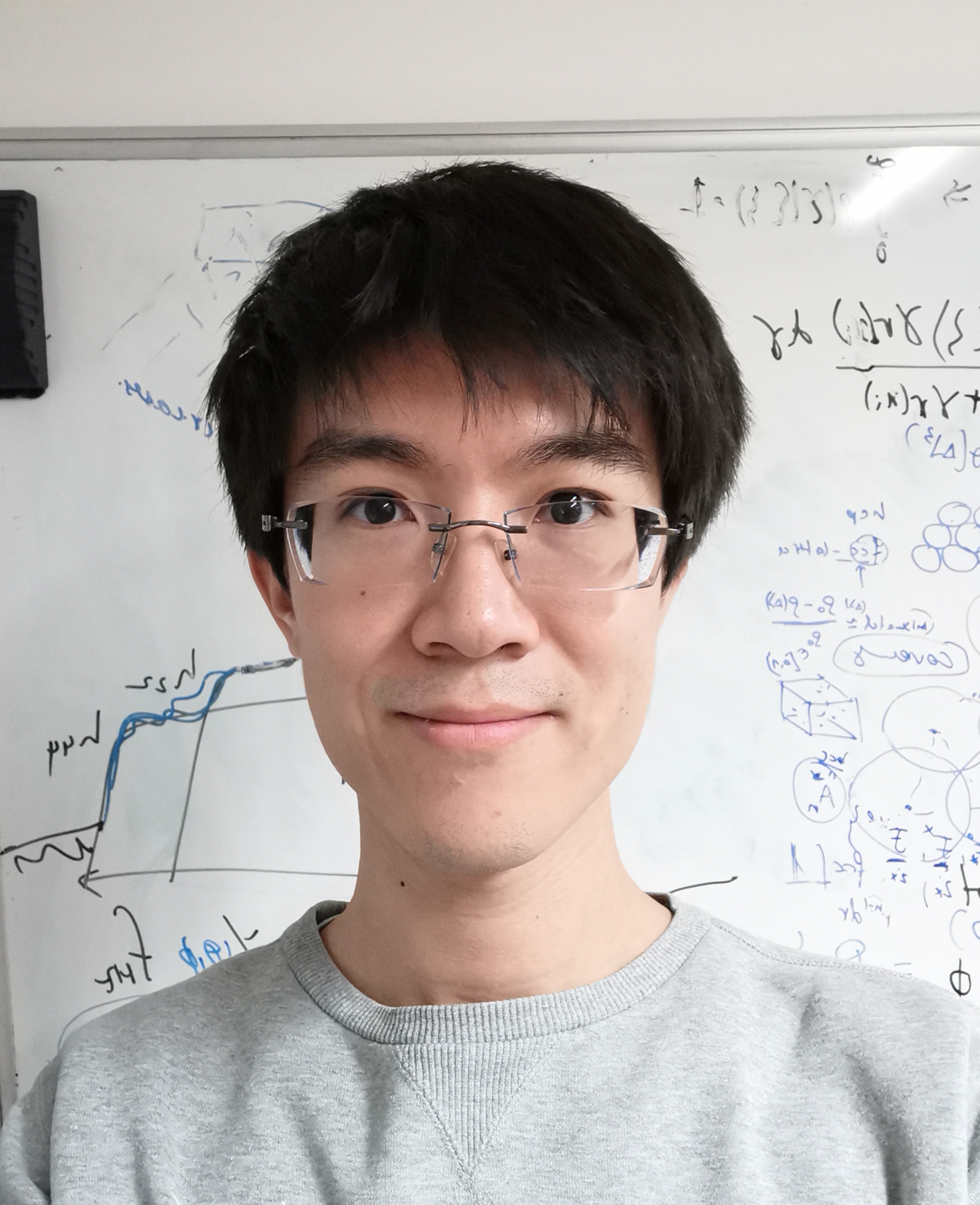
Yifan Wang is a Postdoc/Research Fellow at the Department of Astrophysical and Cosmological Relativity , Max Planck Institute for Gravitational Physics (Albert Einstein Institute) in Potsdam, Germany. He obtained his B.S. (2015) from the University of Science and Technology of China and his Ph.D. (2019) from the Chinese University of Hong Kong. From 2019-2023, he worked at the Observational Relativity and Cosmology department in AEI Hannover. Research Focus : Data analysis of gravitational waves from compact binary coalescence, multi-messenger astronomy, testing general relativity, and black hole ringdown phenomena. Publications : His recent work (2025-2019) spans gravitational wave detection, compact binary systems (black holes/neutron stars), waveform modeling, multi-messenger correlations (gamma-ray bursts, FRBs), and tests of general relativity using open catalogs. Key subfields include eccentric binary black holes, quasi-normal modes, parity symmetry, and subsolar mass binaries. He collaborates with Alexander H. Nitz, Collin D. Capano, and others, contributing to LIGO/Virgo collaborations and catalogs like 4-OGC. Tools & Collaborations : Actively develops Python-based gravitational wave analysis tools (e.g., pycbc, pycbc-plugin-seobnr) and contributes to open-source projects. His GitHub activity reflects commits, pull requests, and code reviews in gravitational wave software repositories.
Johannes Geier is a Researcher at the Chair of Design Automation at the Technical University of Munich (TUM). His work focuses on electronic design automation, fault injection simulations, and security countermeasures for RISC-V processors. University: Technical University of Munich Department: Chair of Design Automation Email: johannes.geier@tum.de Research Interests Electronic Design Automation (EDA) for analog and digital circuits Fault tolerance and reliability in RISC-V architectures Security analysis of post-quantum cryptographic systems Timing analysis and microfabrication techniques Optical Networks-on-Chip (NoC) and emerging technologies Compiler-assisted hardware security implementations Recent Research Trends Specializes in fault injection methodologies for hardware security validation Develops open-source tools like vRTLmod for RTL simulation acceleration Explores RISC-V vector extensions for post-quantum cryptography Investigates differential fault effect equivalence checks for efficiency Designs compiler-based security countermeasures against instruction skip attacks Works on concurrent multi-node XCP proxy server architectures
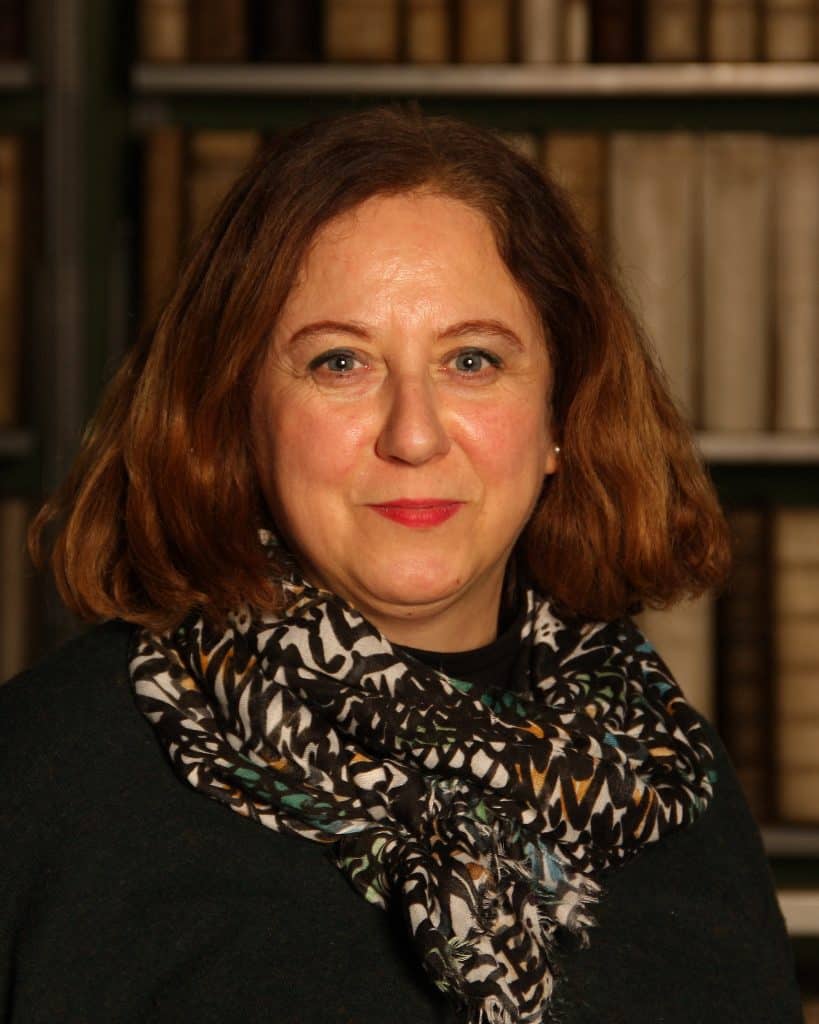
Dr. Patrizia Carmassi is a researcher specializing in medieval liturgy, church history, and manuscript studies. She works at the Herzog August Library, contributing to cataloging projects like the Catalogue of Western Medieval Manuscripts of the Göttingen State and University Library . Her habilitation in book science and ecclesiastical history (2014, extended 2020) and Marie Curie Fellowship (2018-2019) highlight her academic credentials. Liturgy and Church History of the Middle Ages Latin Philology Text and Image Research Palaeography Codicology Library History Her research focuses on manuscript materiality, liturgical traditions, and cultural knowledge transfer, particularly in German and Italian medieval contexts. Recent projects include analyzing time-related medieval texts and the Marquard Gude manuscript collection. Marie Skłodowska-Curie Fellowship (2018-2019): Studied early medieval time concepts. Abilitazione scientifica nazionale (2014, extended 2020): Qualified for Italian professor W2 positions in book science and religious history.
Dr. Robin Schulze Waltrup is a Researcher in the Department of Politics and Society at Bielefeld University's Faculty of Sociology. He holds a PhD in Sociology from Bielefeld University (2023) and specializes in German and transnational social policy, with a focus on climate change responses, global challenges, and eco-social policy frameworks. His research explores the intersections of environmental sustainability, social equity, and global governance structures. He currently serves as a Research Associate in the 'German and Transnational Social Policy' working group led by Prof. Kaasch, following roles in the RTG 'World Politics' and a visiting research stint at the University of Leeds' Sustainability Research Institute (2022-2023). Education: MA in Sociology, Bielefeld University (2018-2020), supported by the Deutschlandstipendium Scholarship BA in Political Science and Sociology, Bielefeld University (2015-2018) Exchange programs: Erasmus+ at Ghent University (Belgium, 2019-2020) and Umeå University (Sweden, 2017-2018) Research Interests: His work addresses eco-social policy transformations, global challenge framing, and contestations of the growth paradigm. Key areas include transnational social policy responses to climate change, OECD policy dynamics, and the construction of global challenges within world politics. Grants & Awards: Deutschlandstipendium Scholarship (MA, 2018–2020) Erasmus+ Scholarships for international exchanges Professional Roles: Beyond his current position, he has held research roles in Bielefeld's 'Transnational Social Policy' working group and contributed to the RTG 'World Politics'. He is affiliated with the BiSEd (Bielefeld Social Science Education) network. Labs/Teams: Active within the Kaasch Group and collaborating with international institutions like the University of Leeds' Sustainability Research Institute.
Gerhard Wellein is a Professor for High Performance Computing at the Department of Computer Science of Friedrich-Alexander-Universität Erlangen-Nürnberg (FAU). He is the head of NHR@FAU (Erlangen National Center for High Performance Computing) and a member of the board of directors of the German NHR-Alliance. Since 2024, he has also served as a Visiting Professor for HPC at the Delft Institute of Applied Mathematics, Delft University of Technology. He holds a PhD in theoretical physics from the University of Bayreuth and has over two decades of experience in HPC education and research. Research Interests: His research focuses on performance modeling and engineering, architecture-specific code optimization, novel parallelization techniques, and the development of hardware-efficient building blocks for sparse linear algebra and stencil solvers. His work bridges computer science, applied mathematics, and computational physics, aiming to maximize efficiency on current and future HPC architectures, including exascale systems. Publication Trends: His recent publications emphasize analytical performance modeling (e.g., Roofline, oscillator models), energy efficiency, GPU optimization, and scalable linear algebra. They reflect a strong focus on both theoretical modeling and practical implementation, with applications in CFD, quantum physics, and molecular dynamics. Scientific Awards: 2011 Informatics Europe Curriculum Best Practices Award (shared with Jan Treibig and Georg Hager) for outstanding teaching contributions in HPC. Grants and Advising: He has led numerous third-party funded projects from the EU, BMBF, and DFG, including EoCoE-III, ESSEX, EXASTEEL, and ProPE. These projects focus on exascale software, performance engineering, fault tolerance, and multiscale simulation. He has mentored multiple researchers and students, contributing to the development of tools such as LIKWID, ClusterCockpit, and GEOPM. Labs and Teams: He leads the HPC research group at FAU and is deeply involved in national and international HPC initiatives. His team collaborates extensively on open-source HPC software and performance tools, fostering a strong community-driven approach to performance engineering.
Prof. Dr. Thorsten Kingreen is a full Professor and Chair of Public Law, Social Law, and Health Law at the Faculty of Law, University of Regensburg . He is a leading expert in German constitutional, administrative, and health law, with a strong focus on statutory health insurance, hospital financing reform, and fundamental rights. Education: Doctorate in Law (Dr. iur.), University of Regensburg Habilitation in Public Law, Social Law, and Health Law Staatsexamen (German First and Second State Law Examinations) His research interests span Public Law , Social Law , Health Law , Constitutional Law , Fundamental Rights , and Police and Regulatory Law . He is renowned for his authoritative commentaries on the German Social Code (SGB V), his co-authorship of the seminal textbook "Grundrechte. Staatsrecht II" (now in its 40th edition), and his leadership in major health law reforms. His work on the legal aspects of the COVID-19 pandemic, including co-editing the "Handbook of Infection Control Law," has been particularly influential. The recent publications reflect a sustained and dominant focus on health law reform , constitutional interpretation , and public administration . His work consistently addresses the intersection of legal doctrine, social policy, and practical governance, particularly in the areas of healthcare financing, drug pricing, and the integration of ambulatory and inpatient care. He is a prolific scholar, contributing both comprehensive legal commentaries and timely analyses of current constitutional debates. Scientific Awards and Honors: Elected as a full member of the Bavarian Academy of Sciences and Humanities (Section II: Law, Social and Economic Sciences) in 2025. Repeatedly awarded for excellence in teaching, recognized as having the "Best Teaching Course" at the Faculty of Law of the University of Regensburg on multiple occasions (e.g., Winter 2023/24, Summer 2020). Advising and Grants: Prof. Kingreen has supervised several doctoral candidates, including Edoardo D'Alfonso Masarié and Anna Käsbauer , both of whom received prestigious awards for their dissertations. He has been the principal investigator for significant research projects, including a DFG-funded project on health data protection law, which was granted an extension due to its success. His expertise is in high demand for public policy, and he has served on numerous high-level government commissions, such as the Government Commission for Modern and Needs-Based Hospital Care and the Commission for the Evaluation of the Infection Protection Act, where his work has directly informed national legislation like the Hospital Care Improvement Act (KHVVG). Labs, Teams, and Research Groups: He leads the Chair of Public Law, Social Law, and Health Law at the University of Regensburg. He has collaborated extensively with Prof. Dr. Jürgen Kühling on research projects concerning health data protection and the reform of the dual health insurance system. He also co-organizes annual seminars on constitutional, health, and European law with colleagues from the University of Erlangen.
Mario Baldi is a researcher affiliated with the Polytechnic University of Turin, Italy , with significant contributions to computer networking , distributed systems , and software-defined networking . Key research themes: network function virtualization , programmable dataplanes , time-driven scheduling , and traffic analysis . Recent work focuses on RDMA-enabled compute offloading (2023) and DNN inference in network data planes (2023). Longstanding expertise in multicast routing , voice/data packet efficiency , and XML-based protocol parsing (2000–2006). Collaboration network includes Yoram Ofek , Fulvio Risso , and Han Hee Song , with 99+ publications spanning 1994–2023.
Abdelkader Hameurlain is an active academic researcher specializing in database systems, data management, and cloud computing with a prolific publication record spanning over three decades (1990-2025). He has authored or co-authored more than 170 publications and serves as an editor for the prestigious 'Transactions on Large-Scale Data- and Knowledge-Centered Systems' series published by Springer as part of the Lecture Notes in Computer Science. His research interests focus on database systems, data management, cloud computing, query optimization, data replication, and big data analytics. Hameurlain has made significant contributions to multi-tenant database management systems, SLA-aware query optimization, data replication strategies in cloud environments, and knowledge-based systems. His work bridges theoretical foundations with practical applications in large-scale data processing environments. Analysis of his recent publications (2021-2025) reveals a continued focus on cloud database performance optimization, with particular emphasis on multi-tenant systems, SLA compliance, and cost-effective resource allocation. His research demonstrates a consistent trajectory from traditional database systems toward cloud-native and distributed data management solutions, reflecting the evolving landscape of data-intensive computing. Hameurlain has established long-term collaborations with prominent researchers including Franck Morvan (63 joint publications), Roland R. Wagner (50 joint publications), Josef Küng (40 joint publications), and A Min Tjoa (26 joint publications), indicating his central position in the database research community. As an editor of the Transactions on Large-Scale Data- and Knowledge-Centered Systems series, he has played a significant role in shaping research directions in data management through numerous special issues covering database technologies, big data analytics, cloud computing, and knowledge systems. His editorial work spans multiple volumes from TLS-DCS XIII (2014) through TLS-DCS LVI (2024), demonstrating sustained leadership in the field.
Dr. Maximilian Haars is a postdoctoral research fellow at the Institute for the History of Pharmacy and Medicine, Faculty of Pharmacy, Philipps University of Marburg. As a habilitation candidate, he specializes in ancient pharmacology, Greek lexicography, and historical botany with a focus on Galenic and Theophrastian traditions. Current DFG-funded project: Digital annotated index of medicinal plants in the Galenic Corpus (2021–2026) Key research areas: Galenic pharmacology, Dioscoridean plant identification, ancient medical terminology Recent presentations include topics on Cypriot vegetation, Egyptian botanical traditions, and Galenic text transmission Research Trends: His work bridges classical philology and pharmacological history, emphasizing plant-based therapies, taxonomic evolution from antiquity to modern times, and digital humanities approaches to ancient medical texts. Publications examine elemental qualities in Galenic pharmacology, transformation of medicinal plant knowledge, and comparative studies of ancient botanical systems. Scientific Awards: Autumn Schools (Luxor, Alexandria) - DAAD Accademia Italiana di Storia della Farmacia Poster Prize DFG Grant (2020) Dalberg Prize (2018) MARA Travel Grants (2016) Jerry Stannard Memorial Award (2016) A graduate of Marburg and Greifswald with summa cum laude distinction, Dr. Haars combines textual analysis with pharmacognostic expertise. His collaborative projects include editorial work on pharmaceutical history symposium proceedings and participation in international conferences across Europe and the Middle East.
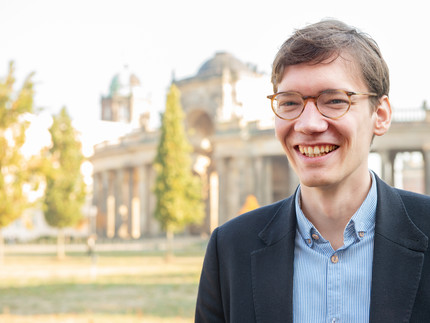
Prof. Dr. Johannes Ungelenk is Professor of General and Comparative Literature at the University of Potsdam's Faculty of Philosophy, a position he has held since April 2025. Previously, he served as Junior Professor for General and Comparative Literature at the same institution since April 2018, with his probation period determined in January 2021. His academic trajectory includes research positions at LMU Munich and doctoral studies focused on literature and weather phenomena in the works of Shakespeare, Goethe, and Zola. Ungelenk's scholarly profile is characterized by several interconnected research foci: Writing from the Between (TS Eliot, Virginia Woolf, Rainer Maria Rilke) Image/Text Interface studies Resistance theory, particularly from French theoretical perspectives Shakespeare studies with emphasis on weather and theatrical elements Philology and touch studies, examining haptic dimensions of literary experience His research demonstrates a consistent progression from weather phenomena in literature toward more nuanced investigations of sensory experience, particularly touch, and how these elements shape our understanding of literary texts. This evolution is clearly visible in his monograph Touching at a Distance. Shakespeare's Theater (2023) and his edited volume Berühren Denken (Thinking Touch, 2021), which explore the relationship between theatrical performance, literary representation, and bodily sensation. Ungelenk's scholarly output reveals a trajectory moving from textual analysis toward increasingly interdisciplinary approaches that bridge literature, philosophy, and sensory studies. His recent publications demonstrate growing engagement with intermedial perspectives and the philosophical dimensions of literary representation, particularly regarding touch and spatiality in literary texts. Doctoral scholarship from Evangelisches Studienwerk Villigst (2013-2015) As an active academic citizen, Ungelenk participates in multiple scholarly associations including the German Society for General and Comparative Literature, German Shakespeare Society, and DFG Network Touching. His collaborative projects, such as the Athens-Potsdam cooperation, reflect his commitment to international academic exchange and interdisciplinary dialogue. His public engagement, including contributions to the university magazine Portal discussing Shakespeare's relationship with weather phenomena, demonstrates his ability to translate complex literary concepts for broader audiences while maintaining scholarly rigor.
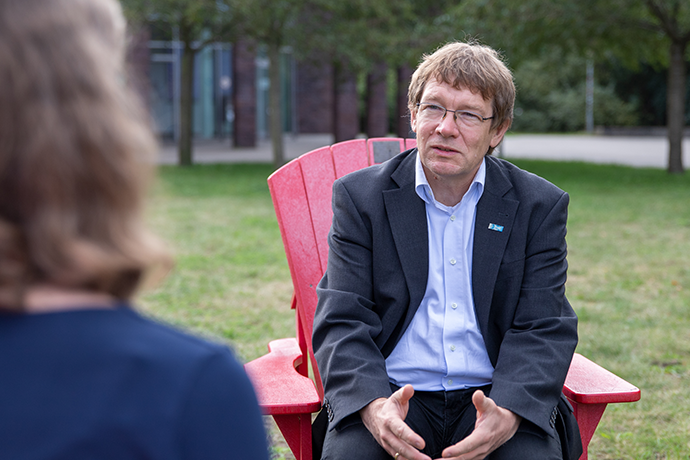
Christoph Lüth is a Professor of Computer Science at the University of Bremen and Deputy Head of the Cyber-Physical Systems research group at the German Research Center for Artificial Intelligence (DFKI) in Bremen. He has been affiliated with DFKI since 2006 and focuses on constructing provably correct software through theoretical foundations and practical tool development. Doctorate from University of Edinburgh Habilitation from University of Bremen His research spans advanced systems engineering , formal methods , and functional programming , with applications in robotics and hardware security. Recent work emphasizes open-source chip design , post-quantum cryptography , and memory protection for RISC-V architectures . Lüth contributes to projects like PROTECT (cybersecurity resilience), EASEPROFIT (post-quantum secure protocols), DI-OCDCPro (open-source chip design education), and SIGN-HEP (hardware security modules). He has authored over eighty scientific papers. At the University of Bremen, he teaches courses on functional programming , programming languages , and formal methods .