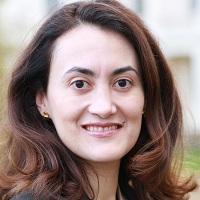
Dr. Lourdes Sosa is an Associate Professor in the Department of Management at LSE, specializing in technological discontinuities and innovation strategies. With a PhD from MIT Sloan School of Management, her research examines how firms adapt to radical technological changes, particularly in biotechnology and pharmaceuticals. Prior to academia, she managed R&D at General Electric and General Motors. Her work investigates competitive dynamics in R&D races, focusing on how de novo firms challenge incumbents during technological shifts. Recent publications analyze business model innovation in pioneering firms and structural advantages in gene therapy research. Sosa serves on the Editorial Board of the Academy of Management Journal and teaches innovation management across MBA, EMBA, and executive programs. Industry engagements include ongoing studies of pharmaceutical innovation during the biotechnology revolution. Sosa actively participates in the Academy of Management, INFORMS, and Industry Studies Association, receiving multiple research awards for contributions to strategic management literature.
Jesper Rindom Jensen is an Associate Professor in the Department of Electronic Systems at Aalborg University, Denmark, under the Technical Faculty of IT and Design. He is the Head of the Audio Analysis Lab, a leading research group in audio signal processing, since 2023. His work bridges theoretical signal processing and practical applications in artificial intelligence and audio systems. Full Name: Jesper Rindom Jensen Institution: Aalborg University School: The Technical Faculty of IT and Design Department: Department of Electronic Systems Research Lab: Audio Analysis Lab Email: jrj@es.aau.dk Office: Fredrik Bajers Vej 7B, B5-206, 9220 Aalborg Øst, Denmark Education: M.Sc. in Electronic Systems, Aalborg University (cum laude, 2009) Ph.D. in Signal Processing, Aalborg University (2012) Research Interests: Jesper Rindom Jensen's research centers on audio signal processing, with a strong emphasis on artificial intelligence, speech enhancement, noise reduction, beamforming, and multichannel systems. His work applies to diverse domains including robot and drone audition, spatial audio, and active noise control. He develops novel filtering techniques, including variable span linear filters and harmonic beamformers, to improve speech quality and intelligibility in noisy and reverberant environments. Publication Trends: His recent publications (2023–2025) show a strong trend toward integrating deep learning with classical signal processing, particularly in direction-of-arrival estimation, underwater acoustics, and robust multichannel systems. There is a clear focus on real-world applications, including sound zone control, active noise control, and limited-data scenarios using knowledge distillation. His work consistently emphasizes robustness, efficiency, and practical deployment. Scientific Awards and Recognition: AAU Talent for emerging research leaders Recipient of a competitive postdoc grant from the Danish Independent Research Council Advising and Grants: Jesper has supervised multiple PhD and master’s students, including Nørholm, Karimian-Azari, Zhang, and Wang. He has led significant research projects such as 'Sound Processing for Robots and Drones' (2018–2020) and participated in others related to joint audio-visual tracking and speech enhancement. His research has been supported by national funding bodies, reflecting its innovation and impact. Labs and Teams: He is a founding and core member of the Audio Analysis Lab at Aalborg University, which focuses on cutting-edge audio signal processing and AI-driven solutions. The lab fosters interdisciplinary collaboration and has produced numerous publications, datasets, and real-world applications. Jensen’s leadership since 2023 underscores his pivotal role in shaping the lab’s research direction.
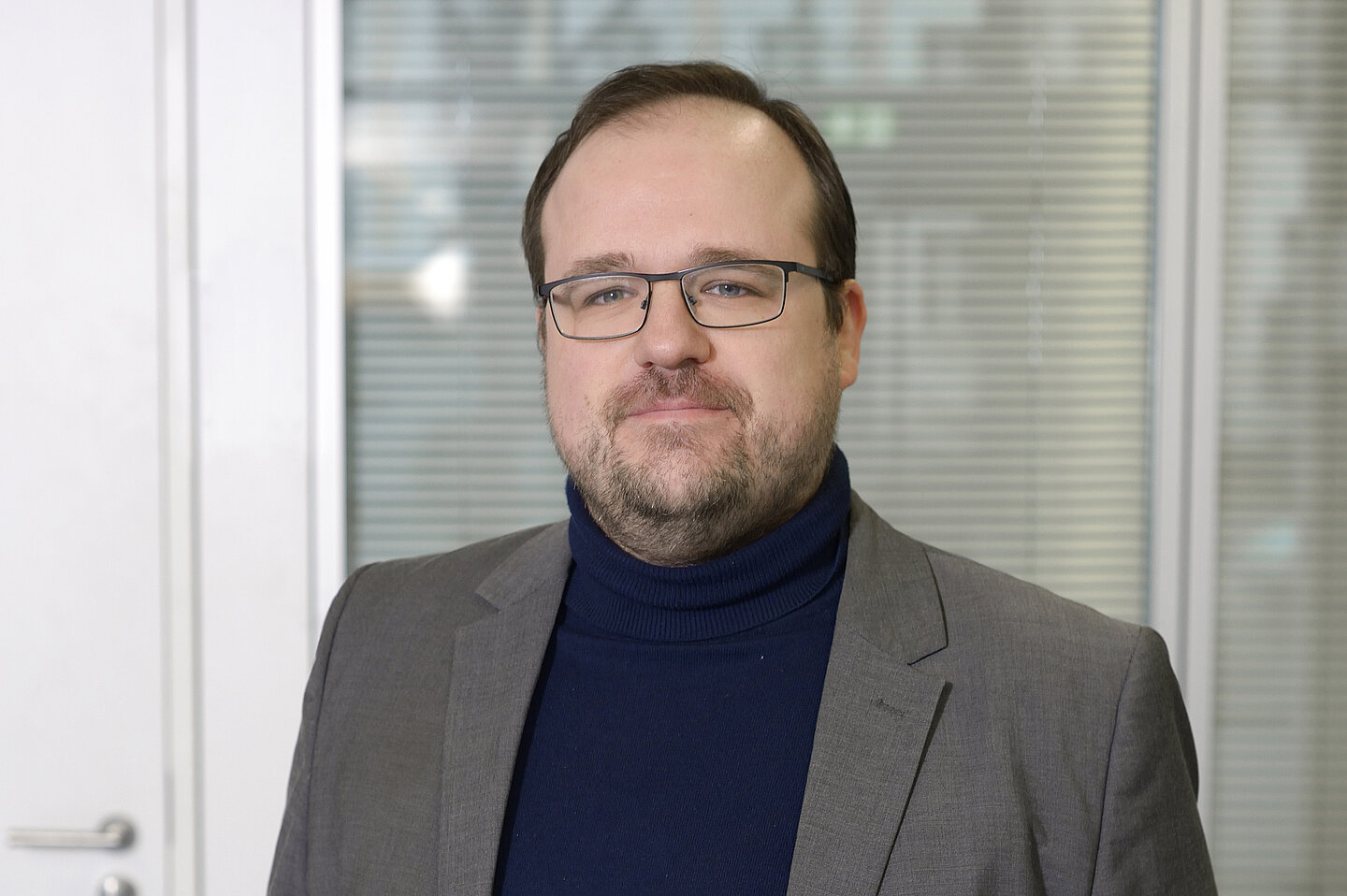
Prof. Dr. Verena Hüttl-Maack holds the Chair of Marketing and Consumer Behavior at the University of Hohenheim's Faculty of Economics and Social Sciences. Her roles include academic leadership, research, and teaching in consumer behavior, brand management, and advertising effectiveness. She has been affiliated with the university since 2012, following her habilitation in 2013. Her research explores areas like curiosity-driven marketing, sustainability perceptions, and multilingual packaging effects. Education: Studied Business Administration at the University of Augsburg and University of Wales (UK). Doctorate (2010): Thesis on brand extensions. Habilitation (2013): University of Hohenheim. Research Interests: Her work focuses on the psychological and behavioral aspects of consumer decision-making, particularly how curiosity, language use, and brand messaging influence evaluations. Key themes include the role of art in advertising, competitive advertising effects, and sustainable consumption behaviors. Publications: Over 50 peer-reviewed articles in journals like Journal of Consumer Psychology , Psychology & Marketing , and International Journal of Advertising . Recent work addresses sustainability perceptions in food marketing and the impact of augmented reality on consumer experiences. Grants & Collaborations: Led projects on short food supply chains, consumer responses to multilingual packaging, and transformative consumer journeys. Collaborates internationally with institutions in Germany, Spain, Greece, and Hungary. Labs/Teams: Active in the Marketing and Consumer Behavior research group at Hohenheim, focusing on experimental design and applied consumer research.
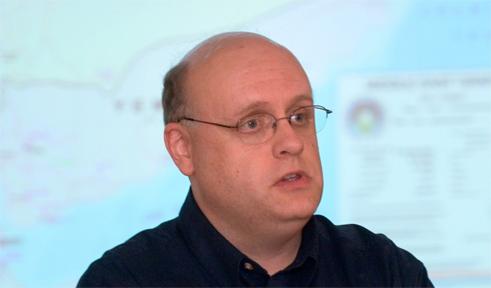
John Brobst is an Associate Professor in the Department of History and International Studies at Ohio University's College of Arts and Sciences. His academic work centers on modern imperial and strategic history, with a focus on the British Empire, maritime power, and intelligence affairs. Education: Ph.D. in History, University of Texas at Austin M.A. in History, University of Texas at Austin B.A. in History and Geography, University of Kansas His research explores the intersections of geopolitics, grand strategy, and naval history, particularly in the Indian Ocean region during the 20th century. He has published on topics including the Great Game, Cold War maritime competition, and British imperial decline. His book The Future of the Great Game examines post-colonial defense strategies in Asia, and he continues to work on a new project analyzing great power rivalry and maritime strategy during the Cold War. His recent publications reflect a consistent focus on strategic geography, naval limitations, and international security dynamics, especially in South and Southwest Asia. These works span journals such as Geopolitics , Middle Eastern Studies , and The Journal of Military History , demonstrating interdisciplinary engagement across history, political science, and strategic studies. Dr. Brobst teaches undergraduate courses including History of Sea Power since 1890 , Secret Intelligence: Great Game to Five Eyes , and Decline and Fall of the British Empire , reflecting his expertise in maritime empires, intelligence history, and global power transitions. He has contributed articles and reviews to several academic journals, including Commonwealth and Comparative Politics , Orbis , and edited volumes on European-American relations in the Middle East. While no formal awards or fellowships are listed, his sustained scholarly output indicates active participation in the academic community. Dr. Brobst advises students in historical research and international studies, though specific advisees are not named. He is currently working on a book project examining Cold War maritime strategy in the Indian Ocean, signaling continued scholarly productivity. He is affiliated with no named research labs or teams, but his work aligns closely with strategic and imperial history research communities.
Prof. Dr. Oliver Crönertz serves as Dean and Professor of Business Administration and IT-Supported Business Processes at the Faculty of Digital Transformation , HTWK Leipzig. His work bridges digital transformation with business management, focusing on interdisciplinary project management, digital business models, and sustainability. Current roles: Dean, supervising professor for HTWK Robots/nao Team Research areas: Digital Transformation, Business Analytics, Industry 4.0, Stoffstrommanagement Research Trends : Recent publications emphasize digital solutions for environmental management, business process optimization, and smart urban logistics. His work connects Industry 4.0 with financial sustainability and societal impacts of digitalization. Projects : Leads Mittelstand-Digital Zentrum Leipzig-Halle, involved in EXIST-Potentiale, Future Parking, and FAssMII (Feedback-based E-Assessment in STEM).
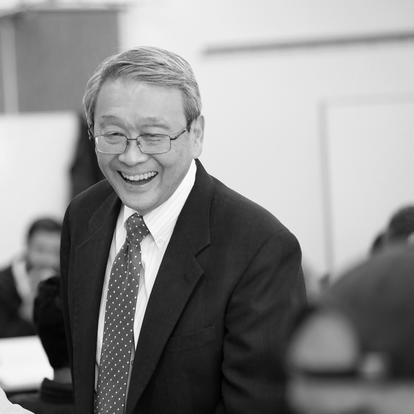
Ming-Jer Chen, Leslie E. Grayson Professor at the Darden School of Business (University of Virginia), is a global authority in Strategic Management and Competitive Dynamics . His work bridges Eastern and Western management philosophies, emphasizing Ambicultural Strategy and relational perspectives. Former President and Fellow of the Academy of Management Fellow of the Strategic Management Society Recipient of the Academy of Management's Distinguished Educator Career Award His research themes include competitive dynamics, cross-cultural management, and strategic acumen. He has authored influential works such as: Inside Chinese Business (2001) Competitive Dynamics: A Research Odyssey (2009) Selected Works of Ming-Jer Chen (2020, in Chinese) His recent articles explore multidimensional competitive frameworks, competitor acumen, and relational strategies, influencing both academic and corporate sectors. Scientific awards include: Academy of Management Distinguished Educator Career Award Academy of Management Review Best Paper Award Chen has taught at Darden , Wharton School , and Columbia Business School , advised Fortune 500 companies, and delivered keynote speeches at the World Economic Forum and US-China Executive Summit. He founded the Chinese Management Scholars Community and the Competitive Dynamics International Conference to mentor global professionals.
Lawton Robert Burns is the James Joo-Jin Kim Professor and Professor of Healthcare Management at the Wharton School, University of Pennsylvania . He serves as Co-Director of the Roy and Diana Vagelos Program in Life Sciences and Management and Chairperson of the Health Care Systems Department since 2008. His career spans academic roles at the University of Chicago, University of Arizona, and University of Wisconsin. Education: PhD in Sociology, University of Chicago (1981) MBA in Health Administration, University of Chicago (1984) MA, University of Chicago (1976) BA, Haverford College (1973) Dr. Burns specializes in healthcare organization design , strategic change , and supply chain dynamics . His work examines hospital-physician relationships , integrated delivery systems , and market forces in healthcare. His recent publications analyze Pharmacy Benefit Managers (PBMs) , Group Purchasing Organizations (GPOs) , and strategic implementation failures. Notable awards include the Arthur Anderson Distinguished Visitor (2001), Edwin Crosby Memorial Fellowship (1992-93), and Udall Fellowship (1990-91). His research has been featured in Knowledge at Wharton , LDI News , and American Political Science Review . Dr. Burns co-authors works with experts like David Dranove and Stephen Shortell , focusing on clinical integration , retail supply chains , and global healthcare models (India, China).
Marshall L. Fisher is the UPS Professor of Operations, Information and Decisions at the Wharton School, University of Pennsylvania. His research focuses on retailing and supply chain management, with notable work in dynamic pricing, omnichannel operations, and workforce optimization. Academic Affiliation: Wharton School, University of Pennsylvania Research Themes: Retail innovation, supply chain responsiveness, labor economics Recent Trends: Real-time pricing algorithms, inventory-demand interactions, digital transformation Scientific Recognition: INFORMS Kimball Medal (2007) POMS Fellow (2005) INFORMS Fellow (2002) NAE Election (1994) Academic Contributions: Pioneering work on Lagrangian relaxation in integer programming (1981), Edelman Prize-winning liquid gas optimization, and groundbreaking research on retail staffing and training effectiveness. His teaching includes courses on global supply chain management and AI in business.
Rahul Kapoor is a Professor at the Wharton School of the University of Pennsylvania, where he also serves as the Chair of the Management Department. His research focuses on innovation management, business ecosystems, and technology strategy, with a particular emphasis on how firms navigate technological and organizational challenges in dynamic industries. University: University of Pennsylvania School: Wharton School Department: Management Department Academic Rank: Professor His research explores the interplay between organizational design, external collaboration, and innovation outcomes. Recent work includes studies on forecasting strategies, ecosystem interdependencies, and the role of setbacks in technology development. He has contributed to leading journals such as Strategic Management Journal and Research Policy , with a recurring focus on technology ecosystems and modular innovation. Kapoor’s research spans both theoretical and applied dimensions. He has examined how firms can optimize value creation in business ecosystems, the impact of organizational design on invention sourcing, and the dynamics of technology emergence. His studies often integrate historical case analyses and simulation models to uncover patterns in innovation management. Scientific Awards: Inaugural Academy of Management Emerging Scholar Award Strategic Management Journal Best Paper Prize Wharton Teaching Excellence Award (multiple years) Editorial Roles: Associate Editor, Strategic Management Journal Contributing Editor, Strategy Science Teaching: Undergraduate, MBA, Executive MBA, and PhD courses on technology and innovation strategy Leadership in Wharton’s Executive Education programs He has advised firms on innovation initiatives and draws on over seven years of industry experience in high-tech, including roles at Texas Instruments and co-founding a startup, to inform his academic work.
Prof. Dr. Seyhan ÖZTÜRK is an Associate Professor at Kafkas University's Faculty of Economics and Administrative Sciences, Department of Accounting. She has held full-time academic positions since 2010, progressing from Research Assistant to Associate Professor (2019–present). She also serves as the Head of the Accounting Department. Education: PhD in Accounting and Finance, Atatürk University (2011–2015) Master's in Business Administration, Istanbul University (2005–2011) Bachelor's in Business Administration, Istanbul University (2005–2009) Research Interests: Her work centers on Accounting Ethics, Forensic Accounting, and Internal Control, with applications in sustainability, corporate governance, and digital transformation. She explores ethical dilemmas in accounting, fraud detection methodologies, and the impact of regulatory frameworks on financial transparency. Publications: Her recent articles (2020–2025) emphasize sustainability accounting, financial performance analysis, and technology's role in accounting education. Themes include ESG metrics, bibliometric studies on climate accounting, and ethical challenges in SME financial reporting. Advising & Grants: She has supervised 16+ graduate students (PhD/Master’s) in topics like accounting ethics and financial modeling. She led a research project (2019–2021) testing bankruptcy prediction models on the Borsa Istanbul exchange.
Prof. Dr. Bernd Skiera is a leading Marketing Professor at Goethe University Frankfurt since 1999 and a member of the managing board of the efl - The Data Science Institute. His work bridges information systems and marketing, with a focus on data-driven decision making and digital transformation.
Vladimir Bastidas is a Senior Lecturer in Competition Law and Head of Department at the Department of Law, Uppsala University. He has held this position since 2013 after previously serving as a Senior Lecturer in Law at Örebro University, with expertise spanning EU competition law, intellectual property, and legal economics. Education: PhD in Law, Stockholm University (2011); Thesis: EU competition law rules on technology transfer agreements His research centers on EU competition law, particularly Articles 106-108 TFEU concerning privileged undertakings, while exploring intersections with intellectual property, healthcare, and digital innovation. He examines state aid law dynamics and economic implications of competition frameworks. Recent publications (2021-2023) reveal a pronounced focus on applying competition law to emerging sectors, including digital ecosystems (Google Android), biotechnology (human genome editing), and algorithmic pricing. His work consistently bridges traditional legal principles with novel technological challenges. Scientific awards: No scientific awards mentioned Advising and grants: No information provided on graduate students advised No research grants documented No laboratory or research team affiliations are specified in available materials.
Xinjie (Cynthia) Ma is an Assistant Professor in the Department of Accounting at the University of Iowa's Tippie College of Business. Previously, she held a Visiting Assistant Professor position at the University of Iowa in 2025. Her research bridges financial accounting with advanced technologies, focusing on corporate disclosure mechanisms, human capital valuation, and AI/NLP applications in capital markets. She earned her PhD in Accounting from Temple University in 2021. Research Expertise : Financial accounting, CSR strategy alignment, human capital analytics, and machine learning applications Publications : 2023 Review of Accounting Studies paper on CSR-performance alignment, 2022 The Accounting Review article on text-based investment opportunity sets Teaching : Instructed graduate Financial Statement Analysis at National University of Singapore (2021-2025), undergraduate Managerial Accounting at Temple University (2019) Academic Affiliation : Tippie College of Business Her recent work analyzes how textual disclosures in 10-K filings inform investment decisions and explores labor demand dynamics through real-time market data. Currently, she's developing machine learning models to predict startup innovation potential and examining managerial communication patterns in earnings calls. Email: xinjie-ma@uiowa.edu
Dr. June Cao is an Associate Professor at the University of Southampton . Her research focuses on Environmental, Social, and Governance (ESG) Accounting , Corporate Social Responsibility (CSR) , and Sustainability Reporting , with a particular emphasis on Greenwashing , Carbon Emission Trading , and Accounting Education . Key research areas include ESG, CSR, and sustainability frameworks. Prominent publications analyze environmental regulation, green revenues, and digital transformation in sustainability. Her recent work explores greenwashing behaviors, peer benchmarking, and labor investment dynamics. Scientific Awards : None explicitly mentioned in the data. Notable collaborations include co-authoring papers with scholars from Curtin University , Satya Wacana Christian University , and Xiamen University . Her contributions to Systematic Literature Reviews and Bibliometric Analysis highlight her methodological expertise.
Stefano Grivet Talocia is a Full Professor in the Department of Electronics and Telecommunications at Polytechnic University of Turin. He serves as Director of the Doctoral School, is a member of the Interdepartmental Center SmartData@PoliTO - Big Data and Data Science Laboratory, and holds positions on the University Committee for Research and the Commission for the Promotion of Library, Archive and Museum Heritage. He is also President of the Doctoral School Council. His educational background includes a Laurea degree (summa cum laude) in Electronic Engineering (1994) and a Ph.D. in Electronic and Communication Engineering (1998), both from Polytechnic University of Torino. From 1994 to 1996, he worked at NASA/Goddard Space Flight Center in Greenbelt, MD, USA. Professor Grivet Talocia's research focuses on passive macro-modeling of concentrated and distributed interconnect structures for Signal/Power Integrity, order reduction techniques, and modeling and simulation of fields, circuits, and their interactions. His work spans several key areas including fast simulation of transmission lines (TOPLine technique), macromodeling and model order reduction, simulation methods for fields and circuits, passivity enforcement of lumped macromodels, waveform relaxation techniques, and wavelet applications. His research has significant applications in electromagnetic compatibility and signal integrity verification of complex electronic systems. His recent publications demonstrate strong trends in model order reduction techniques applied to power integrity verification, advanced macromodeling for electromagnetic compatibility, nonlinear circuit analysis, uncertainty quantification in PCB design, and power electronics modeling. These works consistently address practical engineering challenges in high-speed electronic design with emphasis on computational efficiency and accuracy. URSI Young Scientist Award (1999) Best symposium paper (2006) Three IBM Shared University Research Awards (2007-2009) IEEE Transactions on Advanced Packaging Best Paper Award (2007) Best EPEP conference paper awards (2007, 2008) Best Associate Editor Award - IEEE Transactions (2020) Best Conference Paper Award (2020) Three Intel SRS Grants (2022-2024) IEEE Fellow (2018) Professor Grivet Talocia actively supervises PhD students working on cutting-edge topics including machine learning applications in signal integrity, model reduction techniques, and electromagnetic compatibility. He has secured significant research funding through competitive grants including PRIN projects and multiple industry-sponsored research contracts with major technology companies such as IBM, Intel, Nokia, Hitachi, and Infineon. His technology transfer activities include co-founding the spin-off IdemWorks (acquired by CST in 2016) and maintaining active collaborations with industry partners. He leads the EMC Group (Electromagnetic Compatibility) within the Department of Electronics and Telecommunications and has developed the autoCircuits web service for automated generation of circuit theory problems. His research has been recognized by inclusion in the top 2% worldwide researcher catalog (Stanford) since 2019.