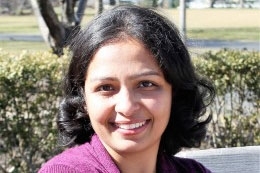
Helen Swaby is a Senior Lecturer in Counselling and Psychotherapy at the University of Derby's College of Health, Psychology and Social Care. Her research focuses on forensic psychology, sexual offender treatment, clinical ethics, and mental health policy. She has published extensively on topics including barriers to help-seeking among sex offenders, stigma management for minor-attracted persons, and pharmacological interventions for hypersexuality. Her work spans multiple disciplines, integrating clinical practice with criminological insights. Key areas of interest include: Therapeutic approaches for high-risk offenders Stigma reduction in healthcare contexts Pharmacological treatment efficacy in correctional settings Families coping with life-limiting child illnesses Psychotherapy training challenges Swaby's recent research highlights innovative interventions like Circles of Support and Accountability programs. Her studies often employ mixed-methods approaches, combining qualitative insights with quantitative analysis to address complex issues in offender rehabilitation and mental health service delivery. Her publications demonstrate a commitment to evidence-based practice, with particular attention to vulnerable populations including transgender offenders and minor-attracted persons. She has contributed to policy discussions around desistance strategies and community reintegration programs.
Lina Gyllencreutz is an Associate Professor at Umeå University's Department of Nursing in Örnsköldsvik. Her research focuses on emergency medicine, disaster preparedness, and prehospital care, with particular emphasis on mass casualty incidents, chemical incidents, and tunnel safety protocols. She actively contributes to interdisciplinary emergency training programs and has published extensively on simulation-based learning and first responder decision-making. Research Interests: Dr. Gyllencreutz specializes in Emergency medical response Disaster preparedness Mass casualty incident management Chemical incident protocols Tunnel safety training Simulation-based education Publications Trends (2023-2025): Recent work demonstrates a strong focus on improving first responder capabilities through technology-enhanced training, developing assessment tools for disaster preparedness, and analyzing multi-agency collaboration in complex emergency scenarios. Key themes include tunnel incident decision-making, chemical incident response, and mixed reality training applications. Collaborative Networks: Dr. Gyllencreutz regularly collaborates with Umeå University's Department of Diagnostics and Intervention, Center of Disaster Medicine, and international researchers from institutions like Oslo University and Australian safety organizations.
Kimberly Renk is a Professor in the Department of Psychology at the University of Central Florida and a Licensed Psychologist (PY6771). She directs the Understanding Children and Families Lab and founded the Young Children and Families Research Clinic. Specializing in Infant Mental Health, her research examines: Parent-child relationships in high-risk contexts (substance abuse, trauma) Intergenerational transmission of attachment patterns Evidence-based interventions for traumatized young children She implements trauma-informed therapies including: Circle of Security-Parenting Child-Parent Psychotherapy Community partnerships include collaborations with Florida Association of Infant Mental Health, Nemours Children's Hospital, and child welfare systems. Dr. Renk earned her PhD from University of South Florida and completed specialized Infant Mental Health fellowship training at LSU Health Sciences Center.
Swapna Gottipati is a Full-time Associate Professor of Information Systems (Education) and Associate Dean (Undergraduate Education) at the School of Computing and Information Systems , Singapore Management University . Holding a PhD from SMU (2014) , she specializes in text analytics, education technology, and digital business. Current focus areas: Artificial Intelligence, Data Science, Technology-Enhanced Learning Interdisciplinary applications: Health Informatics, Social Media Analytics Research Interests span text analytics, opinion mining, curriculum analytics, and digital transformation. She applies machine learning and data mining to educational systems, business processes, and health domains. Scientific Contributions: 2016 Best Paper Award (AIS SIG-ED) 2016 MOE TRF Grant 2017-2020 Conference Best Paper Nominations 2013 Best Paper Finalist (CIKM) Academic Leadership includes: Director of Undergraduate Education Co-developer of SMU-X pedagogy Founder of MyCompetencies mobile platform Organizer of curriculum analytics workshops Grant Projects include the Learning Analytics on Qualitative Student Feedback system (MOE TRF 2016) and ICDL-funded digital literacy studies. She has delivered 12+ invited talks on digital transformation in education and industry.
Jessie Kemmick Pintor, PhD, MPH, is an Assistant Professor in the Department of Health Management and Policy at Drexel University’s Dornsife School of Public Health. She holds a PhD in Health Services Research, Policy & Administration and an MPH in Maternal & Child Health from the University of Minnesota, followed by an AHRQ-funded postdoctoral fellowship at UC Davis. Her research focuses on immigration and healthcare policy, health disparities, and mixed-methods approaches to evaluate population health interventions. She has extensive experience working with Latino immigrant communities and studying the impacts of policy on healthcare access for children and families. Key research areas include immigrant health, maternal and child health equity, and state-level policies affecting healthcare coverage. Her work emphasizes community-based participatory research and policy analysis. Dr. Kemmick Pintor has contributed to studies on Medicaid expansion impacts, disparities in insurance coverage, and the mental health consequences of immigration enforcement on US-citizen children of undocumented parents. Publications span topics like maternal-clinician ethnic concordance, ACA implementation effects, and discrimination in healthcare. Her research has been published in high-impact journals such as JAMA Network Open and PLoS One. While no formal academic awards are listed, her work reflects strong engagement with vulnerable populations and policy advocacy. She advises no explicitly listed students, though her postdoctoral training and collaborations suggest active mentorship roles. Grants include AHRQ funding for her postdoctoral work.
Mark A. Stockman is an Associate Professor at the University of Cincinnati, specializing in cybersecurity, cloud computing, and system administration. He holds a BS in Industrial and Systems Engineering from Ohio University's Russ College of Engineering and Technology (1992) and an MBA in Management from Ohio University's College of Business (1994). His research focuses on integrating social science principles into cybersecurity education, developing cloud-based educational infrastructure, and analyzing cybercrime prevention strategies. Notable contributions include pioneering work on honeynet systems for hacker behavior analysis and organizational cybersecurity victimology frameworks. Stockman has published extensively on topics like insider threat mitigation, IT curriculum design, and virtualization technologies. His work bridges technical cybersecurity practices with organizational risk management, emphasizing interdisciplinary approaches to modern IT challenges. He has advised on multiple educational initiatives including cloud lab development and remote-access systems for computing disciplines. His publications reflect a commitment to advancing both technical and pedagogical innovations in information technology.
Professor Duncan Stewart is the Academic Head of Research at London Metropolitan University’s School of Social Sciences and Professions. He holds a professorship in Applied Health Research with a focus on substance use disorders, ageing populations, and multimorbidity. His work examines alcohol consumption patterns in older adults with chronic conditions and evaluates healthcare service delivery for individuals impacted by drug or alcohol misuse. Research Interests : Stewart’s research spans service evaluation, intervention development, and policy analysis related to alcohol and drug treatment. His current projects include the CHAMP-1 study exploring alcohol use in clinical pharmacist consultations and the integration of alcohol screening into primary care. He employs diverse methodologies such as randomized controlled trials, qualitative interviews, and systematic reviews to address gaps in healthcare provision. Teaching : Module leader for the Introduction to Epidemiology course in the Public Health MSc program. Grants & Projects : Currently leads the CHAMP-1 project funded by the National Institute of Health Research, focusing on alcohol identification during medication reviews. Past grants include studies on benzodiazepine dependence, pandemic impacts on cancer care, and barriers to pulmonary rehabilitation access. Labs/Teams : Directs research teams investigating alcohol policy innovations, clinical pharmacist roles, and geriatric health interventions. Collaborates with national institutions like NHS England and Scottish healthcare systems.
J. Peter Murmann is a Full Professor of Strategic Management and Director of the Institute of Management & Strategy at the University of St. Gallen, Switzerland (since 2018). Previously, he held roles including AGSM Fellow (UNSW, 2016–2020), Professor at UNSW Business School (2016–2018), and positions at institutions like Wharton School, Harvard Business School, and Kellogg School of Management. He holds a Ph.D. in Management from Columbia University (1998) and a B.A. in Philosophy from UC Berkeley (1990). His research focuses on strategic management, innovation, strategic forecasting, and business history. Key interests include long-term competitive advantage, China’s innovation capacity, and the coevolution of industries and institutions. He has authored influential works like Knowledge and Competitive Advantage (2003), which received the Schumpeter Prize and Stanley Reiter Award. Murmann’s awards include the 2025 Management and Organization Review Distinguished Editor Award, Gomory Award (2024), and IACMR Best Macro Conference Paper Award (2024). He has advised numerous PhD students, including Gunnar Hauptman (2019) and Jing Zhu (2017). His editorial roles include Deputy Editor-in-Chief of Management and Organization Review . He is affiliated with the Academy of Management, Society for the History of Technology, and serves on editorial boards of leading journals. Teaching expertise spans strategic management, industry evolution, and innovation policy. Languages include German (native), English (proficient), and French (satisfactory).
Dr. Enda Donlon is an Associate Professor at Dublin City University's School of STEM Education, Innovation & Global Studies, part of the DCU Institute of Education. He specializes in ICT integration in education, digital technologies for teacher training, and AI in education. As APF leader for the AI and Emerging Technologies strand of DCU's Doctor of Education Programme, he drives innovation in educational technology. His professional roles include former presidency of the Educational Studies Association of Ireland (ESAI) and governance roles in European educational research bodies like EERA. Research interests focus on digital pedagogy, teacher professional development, and the ethical implications of emerging technologies in education. He has received prestigious awards including the DCU President’s Award for Innovation (2014) and Excellence in Teaching (2021 team award). Enda contributes to academic governance through editorial roles in journals like International Journal of Educational Technology in Higher Education and Irish Educational Studies . His work bridges theory and practice, exploring topics such as cybersecurity professionals’ learning needs, pandemic-era academic collaboration, and AI’s role in reshaping educational landscapes. Ongoing projects include frameworks for computational thinking education and virtual/augmented reality applications in teacher training.
Mari Ann Graham is an Associate Professor and former MSW Program Director at St. Catherine University since 2019. She holds a PhD in Social Welfare (Case Western Reserve University, 1999), MSW (University of Nebraska-Omaha, 1983), and BSW (University of Nebraska-Omaha, 1979). Her career spans over 35 years in academia, including 25 years at the joint University of St. Thomas program. She specializes in integrating ethics, diversity, spirituality, and applied research into social work education. Education: PhD in Social Welfare, Case Western Reserve University, 1999 MSW, University of Nebraska-Omaha, 1983 BSW, University of Nebraska-Omaha, 1979 Research Interests: Graham focuses on ethical practice, diversity/inclusion pedagogy, spirituality in social work, and integrative teaching methods. She emphasizes practical application through workshops, literature-based learning, and visual media. Her work includes developing ethical frameworks for addressing systemic biases and fostering inclusive educational environments. Publications: Her scholarship bridges theory and practice, with recent works addressing ethical inclusion, race dialogues, and innovative research methods. Earlier contributions include foundational texts on teaching social work through group dynamics and spirituality integration. Awards/Grants: None explicitly mentioned in text. Labs/Teams: Co-developed the Doctor of Social Work (DSW) program at the joint University of St. Thomas program and contributed to interdisciplinary collaborations like the Arbinger Institute’s spirituality work.
Dr. Shruti Deshpande serves as an Associate Professor and Vincentian Research Fellow in the Department of Communication Sciences and Disorders at St. John's College of Liberal Arts and Sciences, St. John's University. She also holds the leadership position of Director of the Doctor of Audiology Program and was named an ASHA Innovator in 2024. Dr. Deshpande is actively involved in the American Speech-Language-Hearing Association as a board member of the Multicultural Issues Board (2023-2025) and serves as a subject matter expert for the ASHA Practice Portal in Audiology. Her research focuses at the intersection of audiology and social justice, particularly on accessible and affordable hearing health services for diverse and vulnerable populations. Dr. Deshpande has pioneered community-based research approaches, developing innovative service-learning models that address hearing health disparities. Her work emphasizes cultural competence and aims to increase awareness of audiology as a profession among ethnically diverse adolescents through educational interventions. Analysis of Dr. Deshpande's publication record reveals consistent focus on health equity in audiology, with significant attention to representation in clinical research, social media's role in health information dissemination, and innovative approaches to hearing healthcare delivery. Her work spans multiple subfields including tinnitus research, central auditory processing disorders, electrophysiology, pediatric audiology, and cross-cultural assessment tools. ASHA Innovator (2024) Vincentian Research Fellow Faculty Excellence Award in Community-Based Outcomes and Poverty Research (2022) Multiple Faculty Recognition Awards for Excellence in Research & Scholarship (2017, 2019, 2020, 2021) Values and Inclusion Program Honoree (2020-21) Excellence in Teaching Award from National Society of Leadership and Success (2018) Dr. Deshpande has successfully mentored numerous undergraduate and graduate students, with many serving as co-authors on peer-reviewed publications and presenting at conferences. Her grant portfolio demonstrates significant external funding support, including awards from the Faculty Research Consortium, ASHA's Advancing Academic-Research Careers Award, HearX Group, and multiple internal university grants totaling over $25,000. Her current projects focus on hearing health access for diverse communities, community-based hearing assessment approaches, and innovative teaching methods that integrate technology with service learning. As Director of the Doctor of Audiology Program, Dr. Deshpande oversees a robust curriculum that includes specialized courses in Central Auditory Processing Disorder, Electrophysiology, Pediatric Audiology, and Hearing Science. Her community engagement extends beyond the classroom through partnerships with Liberty Partnership Program and other initiatives aimed at increasing awareness of hearing health and audiology careers among underserved populations.
Ulrike Muench is an Associate Professor with tenure in the Department of Social and Behavioral Sciences at the UCSF School of Nursing, with affiliations at the Philip R. Lee Institute for Health Policy Studies and Healthforce Center. She specializes in nursing workforce dynamics, opioid policy, Medicare systems, and disparities in healthcare. Her research leverages large datasets like Medicare claims and the Medical Expenditure Panel Survey. Education & Training: MSN (2005) and PhD (2012) in Nursing from Yale University Postdoctoral Fellowship (2014) at Vanderbilt University School of Nursing Research Interests: Focuses on nurse practitioner roles, prescribing patterns in primary care/nursing homes, dementia care trajectories, and gender-based pay disparities in healthcare. Her work bridges health policy analysis with real-world clinical outcomes, aiming to inform equitable healthcare delivery systems. Awards: 2016 Academy Health New Investigator Award 2018 American Academy of Nursing Fellow 2019 UCSF School of Nursing Mentoring Award Grants & Advising: Leads studies funded by NIH and foundations, mentoring early-career researchers in health services research. Collaborates on projects addressing workforce distribution, rural-urban care disparities, and policy reform. Labs/Teams: Active in UCSF's Healthforce Center, focusing on healthcare workforce analytics and interdisciplinary policy development.
Professor Sok Ying Liaw is the Head of the Alice Lee Centre for Nursing Studies at the Yong Loo Lin School of Medicine, National University of Singapore (NUS). She holds a PhD in Medical Education from Maastricht University and has extensive experience in nursing education and patient safety research. Her work focuses on interprofessional collaboration, simulation-based learning, and clinical deterioration management. She has pioneered programs like the SIMulated Professional Learning Environment (SIMPLE) to bridge theory and practice in nursing. Education: Doctor of Philosophy in Medical Education, Maastricht University Master of Health Science (Education), University of Sydney Bachelor of Health Science (Nursing), University of Sydney Advanced Diploma in Nursing (Neuroscience), Nanyang Polytechnic Diploma in Nursing, Nanyang Polytechnic Research Interests: Professor Liaw’s research revolves around PRIME themes: Patient Safety: Clinical deterioration recognition and response Interprofessional Collaboration: Team training and communication Manpower Development: Nursing workforce strategies Experiential Learning: Simulation-based education She has developed programs like e-RAPIDS and CREATIVE to enhance clinical competencies. Articles Trends: Her recent work emphasizes virtual reality (VR) simulations for team training, interprofessional education in telemedicine, and AI integration in healthcare scenarios. Studies often compare VR-based interventions against traditional methods, focusing on stress reduction, skill acquisition, and clinical performance. Awards: 2024 International Nurse Researcher Hall of Fame 2023 INACSL Excellent Research Award 2021 SHBC Merit Award (Oral Presentation) Grants & Advising: Leads funded projects like ‘Virtual Escape Room Simulation-Based Education’ (2024-2027) and co-leads initiatives on nursing competency scales. Advises student Lee Shin Syuen on research teams. Labs/Teams: Her team collaborates on simulation-based education and telehealth innovations, leveraging VR and AI technologies to address gaps in clinical training and patient care.
Dr Lisa Kim is a Senior Lecturer in the School of Psychology at the University of Sydney, Australia. She holds Chartered Psychologist (CPsychol) and Fellow (FBPsS) titles from the British Psychological Society. As Director of the HEART Research Group and WELL Policy Node, her work focuses on teacher effectiveness, wellbeing, and retention. Previously at the University of York, UK, she completed a PhD in Psychology and held academic roles from Postdoctoral Research Fellow to Senior Lecturer. Her research spans educational psychology, organizational psychology, and individual differences. Notable projects include longitudinal studies on teacher experiences during the pandemic, systematic reviews of burnout interventions, and collaborations with UNESCO and UK Government bodies. Awards include recognition as a top researcher in educational psychology (2022) and best paper awards in educational journals. Key grants include the 2024 Sydney Policy Lab Node funding for WELL initiatives, and the University Research Priming Grant for small school collaborations. She advises policymakers on teacher wellbeing through platforms like the UNESCO Teacher Task Force and BBC interviews. Professional activities include teaching courses on personality and educational psychology, and supervising PhD students in related fields.
Meriam Chaal is a Visiting Professor at the Department of Energy and Mechanical Engineering and affiliated with the Marine and Arctic Technology school at Aalto University . She holds a Doctor of Technology (Tekn. toht.) in Mechanical Engineering awarded on 25 March 2024. Her research focuses on maritime safety, autonomous systems, risk assessment, and navigation engineering , with a particular emphasis on systemic hazard analysis and safety frameworks for autonomous ships. Recent work includes developing machine learning models for maritime accident prediction, frameworks for risk control options, and participatory design of automated maritime solutions. She collaborates internationally on projects addressing maritime practitioners' skill adaptations and educational needs for autonomous systems. Her research activity spans 17 publications from 2019–2025, including peer-reviewed articles, conference proceedings, and a doctoral thesis. Key themes include STPA-based safety methodologies, Bayesian network integration, and bibliometric reviews of autonomous shipping literature. Chaal’s work aligns with UN Sustainable Development Goals, particularly in advancing safe and sustainable maritime technologies. Notable contributions include a 2023 thesis on system-theoretic approaches to shipping safety and a 2025 article on autonomous navigation risk assessment. Her interdisciplinary collaborations span human factors, machine learning, and systems engineering, reflecting a commitment to bridging theoretical research with practical maritime challenges.