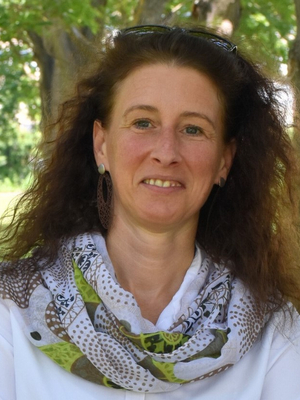
Maria Tulis-Oswald is an Assistant Professor in the Department of Psychology at the University of Salzburg's School of Education, focusing on educational psychology and pedagogy. Her work bridges psychological theory with classroom practice. Active research in error/failure learning (2010-2025) Leading multiple projects on AI integration in education (2024) and resilience-building frameworks (2023-2026) Contributor to open-access psychology didactics textbooks and peer-reviewed journals Her research spans: Educational psychology mechanisms Psychology didactics for teachers Transversal skills development AI's motivational aspects in higher education Recent publications examine error responses, AI integration, and climate crisis education. She has organized third-mission activities like the Climate:Change:Education lecture series and European Integration clusters.
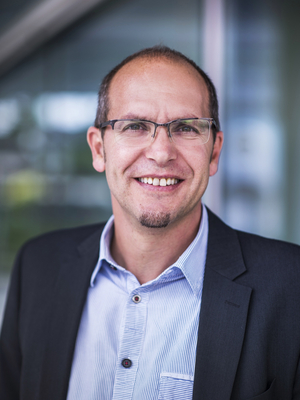
Christian Pichler is a Professor at the Carinthian University of Education , affiliated with the Institute of Social and Natural Sciences . His work focuses on History Didactics and Political Education , with a particular emphasis on teacher training, professional competence, and curriculum development in history education. Role: Deputy chair of the Austrian Society for History Didactics (GDÖ) Contact: christian.pichler@phk.ac.at | Office: Klagenfurt am Wörthersee Research interests span history pedagogy , social sciences education , and didactic methodologies . His recent publications analyze teacher identity, competency-based education, and the representation of Austrian ethnic minorities and historical memory in German-language media. As a deputy chair of the Austrian Society for History Didactics, he contributes to national discourse on historical education frameworks. His work bridges theoretical research with classroom practice, addressing tensions in curriculum reform and teacher professionalization.
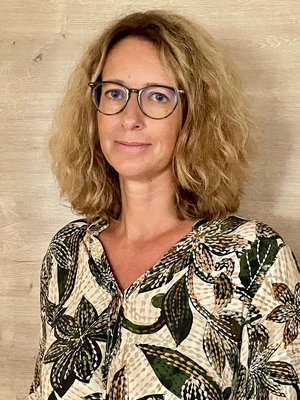
Petra Heißenberger is a Professor and currently serves as Vice Rector for Teaching and School Development Consulting at the University College of Teacher Education Lower Austria (Pädagogische Hochschule Niederösterreich). She has been with the institution since 2007 and previously worked at the Pedagogical Academy in Baden from 2005-2007. Her academic career includes leadership roles such as Head of the Department of Leadership Culture (2022-2024) and Director of the Leadership Center since 2013. Professor Heißenberger's research focuses on educational leadership, particularly examining leadership personalities including the 'Dark Triad' (narcissism, Machiavellianism, and psychopathy) in school leadership contexts. Her work spans school management, educational innovation, school autonomy, and future literacy in the Anthropocene. She has led significant research projects including NÖbegabt 5-7 (2013-2018) on identifying talents in young children, INNOVITAS (since 2017) on school autonomy across Europe, TEDCA (since 2017) on teacher career development, and the Culture Nature Literacy project (since 2022). Her recent publications demonstrate a strong focus on the intersection of leadership, school development, and educational innovation. The 15 most recent articles show particular emphasis on future literacy, diversity education, AI in education, and sustainable school development. Her work often takes the form of edited journal issues for R&E-SOURCE and #schule verantworten, where she serves as editor-in-chief, ensuring these platforms address current challenges in educational leadership. 2024 Book: 'Lehrkräfte führen, fördern und fordern. Leitfaden für Schulleitungen zum Performance-Management des Kollegiums' (Guiding, Promoting, and Challenging Teachers: A Guide for School Leaders on Performance Management) 2024 Articles on AI in education and its implications for educational equity 2023-2025 Series of publications on leadership, school culture, and innovation Professor Heißenberger actively supervises students in the Master's program in School Management and has been instrumental in developing continuing education programs for school leaders. Her practical experience as a former primary school teacher (1994-2005) informs her research and teaching approach, bridging theory and practice in educational leadership. She is recognized for her ability to translate complex leadership theories into practical applications for school administrators. She leads the Leadership Center at the University College of Teacher Education Lower Austria, which serves as a hub for research, professional development, and innovation in educational leadership. The center focuses on developing leadership competencies for current and future school leaders through evidence-based approaches and practical application, with particular attention to the challenges of leading in increasingly complex educational environments.
Professor Johannes Dammerer serves as Head of the Department of School Development at the University College of Teacher Education Lower Austria (Pädagogische Hochschule Niederösterreich), where he has been a faculty member since 2010. He also leads the Master's program in Mentoring and chairs the University Council of the institution. With a diverse background spanning 15 years as a secondary school teacher across multiple subjects (English, Business Studies, Religious Education, and IT), he brings practical classroom experience to his academic work. His department oversees critical initiatives in school development, teacher professionalization, and mentoring programs that support the implementation of Austria's PädagogInnenbildung Neu framework. Professor Dammerer's research interests focus on educational sociology, teacher professional development, mentoring, and induction programs for new teachers. His work examines how mentoring supports teachers during their critical early career years, with particular attention to teacher job satisfaction, beliefs, and the effectiveness of different mentoring approaches. He has pioneered research on blended mentoring that combines traditional face-to-face mentoring with digital communication tools, recognizing the changing landscape of teacher support. His publications consistently emphasize the dialogic nature of effective mentoring relationships and the importance of creating 'Möglichkeitsräume' (spaces of possibility) where both mentors and mentees can grow professionally. His extensive publication record demonstrates a clear trajectory of increasingly sophisticated research on teacher mentoring, moving from foundational studies on teacher satisfaction to nuanced examinations of mentoring culture and blended approaches. The articles show growing international collaboration and methodological sophistication, with recent work incorporating ecological frameworks and systems thinking to understand mentoring in its full complexity. His research has practical applications across multiple educational contexts, particularly in supporting the transition of new teachers into the profession. Professor Dammerer actively supervises students through the Master's program in Mentoring that he leads, with numerous graduates implementing his approaches in schools across Austria. His work with the Evaluation Working Group for Teacher Education in the North-East Network has established longitudinal data collection on teacher induction, providing valuable insights for policy and practice. He maintains active research collaborations with institutions in Russia, particularly St. Petersburg and Yaroslavl, examining cross-cultural perspectives on teacher mentoring. As a department head and program leader, Professor Dammerer has developed multiple practical resources for mentors, including handbooks and toolkits that translate research into actionable guidance. His approach emphasizes the unique nature of each mentoring relationship while providing structured frameworks to support effective practice. His leadership has positioned the University College of Teacher Education Lower Austria as a national leader in mentoring research and implementation.
Dr. Gregor Jöstl serves as Professor of Giftedness and Talent Development at the University College of Teacher Education Lower Austria (PH NÖ) since 2020, where he is affiliated with the Department of Educational Sciences and leads the ResearchLAB. His academic profile spans multiple institutions through his roles as lecturer at the University of Vienna and Karl Landsteiner Private University. As a trained psychologist (University of Vienna, completed 2008), he maintains a parallel career as an independent psychologist and evaluator. Dr. Jöstl's research program centers on talent and giftedness promotion, gender aspects in educational socialization, stereotype research, imposter syndrome, lifelong learning, motivation promotion, and self-regulation. His work particularly emphasizes promoting educational motivation among girls/women and boys/men across secondary and tertiary education sectors. His research integrates psychological perspectives with practical educational applications, aiming to develop evidence-based interventions for classroom settings. Notably, he has developed the REFLECT program for reflective coeducation in classrooms, addressing gender stereotypes through practical teaching approaches. Analysis of his publication record reveals a strong interdisciplinary focus spanning educational psychology, gender studies, and gifted education. Over the past decade, he has published extensively on the imposter phenomenon in academic careers, reflexive coeducation approaches to address gender stereotypes, and competencies for successful learning in higher education. His work demonstrates consistent collaboration with colleagues from the University of Vienna, particularly with Prof. Christiane Spiel's research group. Dr. Jöstl has presented his research at numerous international conferences including the International Congress of Applied Psychology and conferences of the German and Austrian Psychological Societies. His work on gender sensitivity in Austrian schools, self-regulated learning competencies, and gifted education has contributed significantly to evidence-based educational practices in Austria and beyond.
Sabine Höflich is a University Professor (HS-Prof.) at the Department for Diversity D2 at the University College of Teacher Education Lower Austria (PH NÖ), where she has been teaching since 2012. She also maintains connections with the University of Vienna, where she served as teaching staff from 2019 to 2022. Her academic work focuses on inclusive education with particular expertise in special education, diversity, and inclusion. Dr. Höflich's research interests include: Resilience in educational contexts Autism spectrum disorders in school settings "Silent" student behaviors and communication Trauma-informed pedagogy Inclusive assessment methods Diversity-sensitive diagnostics Her current research projects demonstrate her commitment to practical applications of inclusive education: "Strengthening Silent Children" (2024-2027), "Resilience - What makes us strong" (2021-2024), "Autism and School" (2019-2027), and "Focus on Practice: Development of profession-related competencies in pedagogical-practical studies" (2018-2023). These projects reflect her dedication to improving educational outcomes for diverse learners through evidence-based approaches. Dr. Höflich has published extensively in recent years, with numerous high-impact articles in 2024 and 2025 focusing on resilience, inclusive education practices, and supporting students with diverse needs. Her publication trends show a consistent focus on practical applications of educational theory, with particular attention to creating safe and supportive learning environments for all students, especially those who are neurodiverse or experience trauma. Her professional development includes specialized training in: PERMA.teach methodology and IFTE/EUPPA certification (2025) Trauma awareness and de-escalation techniques (2017) NLPaed in classroom management (2008-2010) Innovative reform pedagogy including Montessori and Waldorf methods ADHD therapy and dyslexia training Before her academic career, Dr. Höflich worked as a special education teacher (1998-2017) and leisure educator (1997-1998), giving her valuable practical experience that informs her research and teaching. She currently serves as course director for the "Autism Spectrum" university course and teaches in programs focused on inclusive pedagogy and mentor training.
Professor Simone Breit is Head of the Department of Elementary Education at the University College of Teacher Education Lower Austria (PH NÖ) in Baden near Vienna, where she was appointed to a university professorship in December 2024. With a PhD in Educational Science from the University of Salzburg (2024), she has established herself as a leading researcher in early childhood education, particularly focusing on caring culture, educational transitions, and inclusive practices. Her research interests encompass early childhood education, inclusive education practices, educational transitions between kindergarten and primary school, care ethics in educational settings, mentoring models for new educators, and the implementation of educational frameworks. Professor Breit approaches these topics through both theoretical frameworks and practical applications, often developing tools and resources for educators. Her recent publications show a strong trend toward examining educational care ethics ('Caring Culture'), inclusive practices in early childhood settings, and the practical implementation of educational frameworks. The research spans theoretical explorations of care ethics to empirical studies of kindergarten-school transitions and inclusive practices, with significant attention to practical applications for educators. Professor Breit actively mentors through multiple academic programs she leads, including the Bachelor's program 'Elementarbildung: Inclusion and Leadership' and several specialized Master's programs. She has received research funding supporting her work on educational transitions, inclusive practices, and care ethics in early childhood settings. She leads the Department of Elementary Education while coordinating multiple academic programs, serving on university committees, and developing practical educational resources including the 'Selbstfürsorge und Teamresilienz' online toolbox, children's books addressing migration and kindergarten experiences, and guidelines for values education.
Dr. Rita Elisabeth Krebs is a university lecturer at the University College of Teacher Education Lower Austria, where she holds a position at the Center for Futures Education and contributes to the UNESCO Chair in Learning and Teaching Futures Literacy in the Anthropocene. She is currently on leave but remains active in research and academic activities. Dr. Krebs also teaches at the Austrian Educational Competence Centre for Chemistry at the University of Vienna and at the Institute for Languages at the University of Applied Sciences Wiener Neustadt, focusing on sustainability education. Her educational background includes a Doctorate in Chemistry Education from the University of Vienna (2024), a teaching degree in English and Chemistry (2018), and a Bachelor of Arts in English and American Studies (2016). Prior to her current positions, she taught at various federal schools in Vienna and Lower Austria while contributing to STEM education materials development through the IMST project. Dr. Krebs' research focuses on chemistry education, particularly acid-base chemistry teaching approaches, language-sensitive science education, and Futures Literacy in the Anthropocene. Her work bridges theoretical educational frameworks with practical classroom applications, emphasizing how to effectively teach complex scientific concepts while addressing linguistic challenges. She has developed teaching materials that connect scientific concepts with real-world sustainability issues, helping students understand their role in addressing Anthropocene challenges. Her research often examines how language and conceptual understanding intersect in science learning, developing approaches that make chemistry concepts more accessible to students. Her publication record shows a progression from focused chemistry education research to broader applications in sustainability and futures literacy. Recent work demonstrates her expansion into Anthropocene education, with topics ranging from future-oriented thinking in primary education to sustainability in food systems and addressing science skepticism in post-truth societies. Dr. Krebs is actively involved in several research projects including the Erasmus+ project sensiMINT, which focuses on language-sensitive science teaching, and contributes to the development of educational frameworks that help students understand and navigate the challenges of the Anthropocene era. Her collaborative work spans multiple institutions and addresses critical challenges in contemporary science education.
Professor Christian Stary serves as Head of the Institute for Business Informatics - Communications Engineering at Johannes Kepler University Linz. With over 481 research outputs spanning conference proceedings, journal articles, book chapters, and literature reviews, he is a prominent figure in business informatics research. His research spans several key areas including Business Informatics, Communications Engineering, Knowledge Management, and Design Thinking. Professor Stary has published extensively on human-centric systems, AI applications in business processes, value network analysis, and digital process twins. His recent work focuses on integrating cognitive ergonomics with technological solutions to enhance human-computer interaction in business contexts. With 49 research projects to his name (11 currently active), Professor Stary has secured funding from various sources including EU programs and national research agencies. His current projects include 'KheepU Kommunikationsplattform' (2023-2026), continuing his long-standing research trajectory that began with projects like 'Scholion' in 2000. Professional Activities: Editor of the Journal of Interaction Science (Volumes 1-7 published 2013-2019) Head of Competence Center for Knowledge Management 384 recorded academic activities including invited talks and conference organization Professor Stary teaches doctoral seminars, dissertation colloquia, and master's thesis seminars, emphasizing practical applications of business informatics principles. His teaching approach integrates Design Thinking methodologies with AI applications, preparing students for contemporary challenges in business information systems.
Professor Georg Hans Neuweg is a distinguished University Professor at the Institute for Business and Vocational Education at Johannes Kepler University Linz (JKU), where he holds the Chair of Business and Vocational Education and serves as Board of Directors of the Institute. His academic career spans over three decades, with significant contributions to teacher education research and the theory of implicit knowledge, particularly drawing on Michael Polanyi's epistemology. Professor Neuweg completed his studies in Business Education at JKU (1984-1988), earned his doctorate in 1992 with a dissertation on business administration didactics, and completed his habilitation in 1998. His academic journey includes positions as university assistant at JKU, lecturer at LMU Munich, and visiting professorships at Innsbruck and Klagenfurt Universities before his appointment as University Professor. From 2012-2014, he chaired the Association of University Professors of Business and Vocational Education in German-speaking countries. Professor Neuweg's research primarily focuses on the complex relationship between theoretical knowledge and practical skills in educational contexts. His seminal work on implicit knowledge, particularly his book 'Könnerschaft und implizites Wissen' (now in its fourth edition), has significantly shaped educational discourse in German-speaking countries. He examines how expertise and mastery draw on tacit knowledge that exists beyond formal routines, becoming visible in social contexts, improvisation, creative work, and intuitive decision-making. His more recent book 'Lehrerbildung. Zwölf Denkfiguren im Spannungsfeld von Wissen und Können' (2022) provides a comprehensive framework for understanding the knowledge-skill relationship in teacher education. His recent publications (2024-2025) indicate continued evolution of his research interests toward contemporary educational challenges including workforce shortages in Austria, epistemic decolonization in teacher education, ordonomics in moral education, and competency-based assessment in secondary education. Professor Neuweg's work consistently bridges theoretical insights with practical applications in educational settings. Professor Neuweg has received significant scholarly recognition, with reviews describing his work as 'one of the most comprehensive presentations to date of the knowledge-skills or theory-practice problem in teacher education' and noting his 'disciplined collection, organization, systematization, and discussion of an immense wealth of historical and current positions.' His book 'Lehrerbildung' has been hailed as a standard work that will 'quickly become a standard work' in the field. As an active researcher, Professor Neuweg supervises numerous projects related to teacher education, vocational training, and school assessment practices. His work with the Federal Ministry of Education, Science and Research and his Austria-wide teacher training activities demonstrate his commitment to translating research into practical educational improvements. He maintains professional connections through various academic societies including the Association of University Professors of Business and Vocational Education, German Society for Educational Science, and the Polanyi Society, reflecting the interdisciplinary nature of his work spanning education, philosophy, and business studies.
Dr. Ali Ozkes is a Research Professor at the Institute for Public Management & Governance and an affiliated researcher at the Competence Center for Applied AI & Scientific Computing at Vienna University of Economics and Business. He also holds a part-time professorship at SKEMA Business School. His academic journey includes a habilitation from University Paris 1 Panthéon-Sorbonne, a doctorate from École Polytechnique in Paris, a master's from Istanbul Bilgi University, and bachelor's degrees from the University of London and LSE. Dr. Ozkes' research spans several interconnected fields: Collective decision-making processes and consensus building Ethics of artificial intelligence and human-AI interaction Public administration and organizational behavior Behavioral social sciences and social choice theory Strategic decision-making in public and nonprofit sectors His recent publications (2024-2025) show a strong focus on the intersection of AI ethics, public administration, and organizational decision-making. Key themes include consensus building in leadership teams, ethical frameworks for AI in public sector applications, and cognitive models of decision-making. His work frequently appears in top journals across management, public administration, and AI ethics domains. Scientific recognition includes: WU Visiting Fellowship for Japan (2019) Dr. Ozkes actively supervises graduate students and has served on numerous doctoral committees. His research is supported by multiple interdisciplinary projects, including 'Morality, social choice and artificial intelligence' (2019-2021) and 'Establishment of an international research center for experimental financial markets' (2020-2025). He has collaborated with institutions worldwide including Aix-Marseille University, Caltech, Lund University, and Waseda University. Dr. Ozkes contributes significantly to academic service as co-editor of code and data for Management Science and co-editor of a special issue of Theory and Decision. He is also a member of several prestigious academic societies including the Academy of Management, Association for Computing Machinery, and Society for Social Choice and Welfare. His expertise was instrumental in developing the Code of Conduct for General Purpose AI Models under the EU AI Regulation.
Stefan Barbara serves as a Junior Researcher at the Ilse Arlt Institute for Social Inclusion Research within the Department of Social Sciences at University of Applied Sciences St. Pölten. His academic profile reflects strong engagement in social work research with particular focus on socio-digital competencies, circular economy applications, and migration studies. 2012: Studied Cultural and Social Anthropology, University of Vienna 2008: Studied Political Science, University of Vienna 2012-2015: Scholar, Sociology, Institute for Advanced Studies 2015-2017: Fellow, Institute of Political Science, University of Vienna 2016/2017: Two-semester stay abroad, Instituto de Estudos Sociais e Políticos da Universidade do Estado do Rio de Janeiro, Brazil Since 2020: Research Associate at the Ilse Arlt Institute for Social Inclusion Research Barbara's research centers on the intersection of social work, digital transformation, and social inclusion. His work critically examines socio-digital education in professional contexts, circular economy applications through a social justice lens, and participatory methodologies in social research. He investigates how digital spaces can be designed to support apprentices' professional development while addressing inclusion challenges. His publication record (2020-2025) reveals consistent focus on socio-digital competence development in vocational training, particularly through the 'Digital Spaces' project. Recent work expands into circular economy applications within social work contexts ('Green Social Work') and critical examinations of migration experiences. His methodological approach emphasizes participatory and documentary methods that engage students and practitioners as co-researchers. Barbara actively contributes to multiple research projects including 'SOAL', 'GEMLEHÖF - Living well together in Schneebergland', 'Digital Spaces', 'Circular Economy for Everyone', and 'From Below: Single Parents in the Context of Self-Organised and Social Work Support'. These projects demonstrate his commitment to applied research addressing contemporary social challenges through collaborative approaches.
Steffen Nixdorf is a Consultant Lecturer at the Vienna University of Technology , affiliated with the Faculty of Mechanical Engineering and Operations Science and the Department of Production and Maintenance Management . His work bridges academic research and industrial applications. Ph.D. in Industrial Engineering (Mechanical Engineering specialization) Dipl.-Ing. and B.Sc. in Industrial Engineering (Mechanical Engineering) Research Interests : Knowledge Management in Production Systems Reciprocal Learning in Human-Robot Interaction Predictive Data Analytics for Maintenance Digital Twins in Cyber-Physical Systems Work-Based Learning Frameworks Recent Research Trends : Focus on adaptive learning systems for robotics training, reciprocal learning mechanisms in Industry 5.0 environments, and predictive analytics for maintenance optimization. Publications emphasize collaboration between humans and machines in smart manufacturing contexts. Scientific Recognition : Best Paper Award (2020) at IFAC Conference on Advanced Maintenance Engineering Teaching Activities : Leads courses on Production Information Management Systems at TU Wien since Wintersemester 2022.
Jana Groß Ophoff is a Professor of Educational Sciences at the Vorarlberg University of Education in Austria, where she has held a professorship since February 2021. She leads the Institute for Secondary Education and is deeply involved in multiple research initiatives focused on educational leadership, teacher development, and evidence-based educational practice. Her work spans international collaborations across Germany, Austria, and the UK, with significant contributions to school leadership monitoring and research-informed educational practice. Her primary research interests center on educational assessment, school leadership development, and the integration of research evidence into educational practice. She investigates how teachers and school leaders engage with data and research findings to improve educational outcomes, with particular focus on research literacy among educators and the development of evidence-informed school cultures. Her work bridges theoretical frameworks with practical implementation in educational settings, examining both structural and motivational factors that influence educational improvement. Analysis of her recent publications reveals a consistent focus on school leadership challenges, particularly through the Schulleitungsmonitor (school leadership monitor) projects in Germany and Austria. Her research demonstrates growing interest in data literacy among educational professionals and the practical implementation of research findings in schools. She has increasingly focused on international comparative perspectives, examining how different educational systems approach evidence-based practice and leadership development. Professor Groß Ophoff serves as Principal Investigator for multiple significant research projects, including the Schulleitungsmonitor Österreich (2022-2024), several initiatives under the "Bildungsinnovation braucht Bildungsforschung" funding program (2023-2026), and the International Research Network "Research-Informed Educational Practice" (2024-2026). Her work has received funding from the Austrian Federal Ministry for Education, Science and Research, the Wübben Foundation, and international organizations including the World Education Research Association. She is an active member of numerous professional organizations including the Austrian Society for Research and Development in Education (ÖFEB), the German Society for Empirical Educational Research (GEBF), the German Society for Educational Sciences (DGfE), the German Psychological Society (DGPs), the American Educational Research Association (AERA), and the International Congress for School Effectiveness and Improvement (ICSEI), where she serves as Network Coordinator for the Data Use Network.