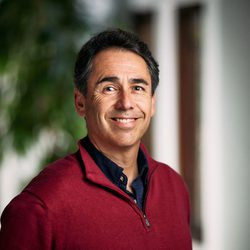
Terje Andreas Eikemo is a Professor at the Department of Sociology and Political Science , Norwegian University of Science and Technology (NTNU) , and Head of the CHAIN research center . His work focuses on the intersection of social inequality , public health , and global policy , emphasizing how socioeconomic factors like education , income , and welfare systems influence mortality , chronic diseases , and mental health . He combines theories from sociology , epidemiology , and medicine to address health disparities across diverse contexts, including pandemics , climate change , and migration . 2009: Prize for Young Researchers in the Humanities 2010: SINTEF Prize for Outstanding Research 2014: NTNU Star Program Eikemo has published extensively in top journals like The Lancet and BMJ Open , with research themes spanning social determinants of health , policy interventions , and global health equity . His work includes GBD studies , European Social Survey analyses , and refugee health assessments. He serves as Editor-in-Chief of the Scandinavian Journal of Public Health and collaborates with international bodies like WHO and UNESCO .
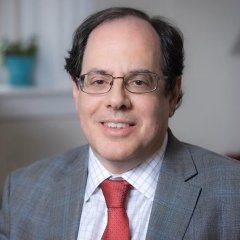
Alan Gerber serves as Acting Dean of the Faculty of Arts and Sciences Division of Social Science and Director of the Institution for Social and Policy Studies (ISPS) at Yale University. He holds the prestigious Sterling Professorship in Political Science with secondary appointments in Economics and Public Health, reflecting his interdisciplinary approach to governance and policy research. His academic home is the Department of Political Science within Yale's Faculty of Arts and Sciences. Gerber's research spans: Experimental analysis of voter turnout mechanisms Election integrity perceptions and threats Behavioral interventions in political mobilization Intersection of public health crises and electoral participation Political economy of policy feasibility His methodology emphasizes large-scale field experiments, often involving millions of voters across multiple states, to test theories of political behavior under real-world conditions. Analysis of his 2022-2025 publications reveals three dominant trends: (1) intensifying focus on electoral threats following the 2020 US election, particularly examining partisan disagreements about fraud and ballot security; (2) innovative experiments testing emotional and identity-based mobilization triggers, including anger and social identity priming; and (3) growing integration of public health perspectives, especially regarding pandemic-era voting behavior and vaccine uptake campaigns. His work consistently challenges assumptions about subtle psychological interventions in politics through rigorous replication studies. No scientific awards were specified in the source materials. Information regarding student advising, grant funding, or laboratory teams was not provided in the available text.
Professor Yvonne Rydin is Chair of Planning Environment and Public Policy at The Bartlett School of Planning, University College London (UCL), where she has been based since 2006. She currently holds a 50 % part-time appointment at UCL and previously spent 16 years at the London School of Economics in the Department of Geography and Environment. Education PhD in Urban and Regional Planning Studies, University College London (1984) BA (Hons) in Land Economy, University of Cambridge (1978) Research Interests Professor Rydin is an internationally recognised scholar in governing for sustainability. Her work spans urban green space management, community energy, retail planning, and post-growth urban futures. Conceptually, she mobilises network metaphors (including social capital) and discourse analysis to unpack governing processes, while also drawing on socio-technical studies to examine large-scale energy infrastructure. A long-standing strand of research interrogates knowledge production within planning, scrutinising classificatory systems such as BREEAM and sustainability indicators and exploring the implications of socio-materiality. Her forthcoming monograph Planning without Growth (Policy Press, 2025) extends her agenda on low-growth planning by investigating how embedded and new knowledges can support alternative local economic models. Research Outputs & Trends Since 2018 she has published extensively on post-growth planning, regulatory theory, digital tools in participation, and diverse economies. Recent articles in Planning Theory, Built Environment and Planning Practice & Research articulate critical perspectives on moving beyond pro-growth orthodoxies and re-tooling the planning profession. Scientific Awards & Recognition While no specific awards are listed, Professor Rydin has held numerous prestigious roles: member of the RAE 2014 panel, invited oral evidence to the House of Commons Environmental Audit Committee, participant in the Raynsford Review of Planning, and repeated evaluator for the Norwegian Research Council, Finnish Academy, ESRC and FORMAS. Advising & Grants She has supervised collaborative Engineering Doctorate (EngD) studentships with industrial partners BRE Global and Buro Happold (2011-2020), and co-taught on the MSc Sustainable Urban Development at Oxford University’s Department for Continuing Education (2014-2018). Labs & Teams Professor Rydin served as Director of the UCL Environment Institute (2010-2013) and leads teaching on the postgraduate module Planning for Sustainability and Inclusion alongside Dr Yasminah Beebeejaun.
Dr. Damian Mazurek, M.A., is a researcher at the Department of Rural Geography and Local Development, Institute of Geography and Spatial Organization (Polish Academy of Sciences). He holds a Master's degree in Geography from Maria Curie-Skłodowska University (2015), specializing in regional development and geoinformatics. Research Focus: Application of GIS in regional development analysis, methodological approaches to identifying regional specializations, and spatial planning for rural areas. Key Contributions: Co-author of 15+ publications (2017-2025) addressing peri-urban dynamics, small town typologies, waste management systems, and digital accessibility in rural Poland. Notable work includes mapping suburban zones using diagnostic indicators and analyzing Wi-Fi distribution patterns. Collaborative Projects: Regular contributor to cross-border initiatives like the PL-SK 2007-2013 program and co-PI on National Science Centre (NCN) grants. Active participant in international conferences (IGU, European Geographical Society).
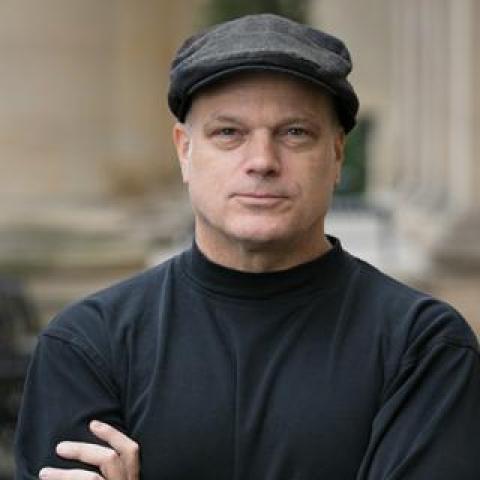
Raymond B. Craib serves as the Marie Underhill Noll Professor of History and Associate Chair at Cornell University, where he holds core faculty appointments in the Latin American and Caribbean Studies (LACS) program and serves on the LACS Steering Committee. His interdisciplinary work bridges historical scholarship with critical geography and political theory, focusing on spatial dimensions of power and resistance. His academic trajectory includes a BA in History from Eastern Michigan University (1990), an MA in Latin American Studies from the University of New Mexico (1994), and a PhD in History from Yale University (2001). Eastern Michigan University: BA History (1990) University of New Mexico: MA Latin American Studies (1994) Yale University: PhD History (2001) Craib's research interrogates the intersections of space, politics, and everyday practice through frameworks of critical geography, cartography, and radical political subjectivity. His scholarship spans Cultural History, Social History, Comparative and Transnational History, Empires and Colonialism, Historical Geography, and Political Thought, with particular emphasis on Latin America's global connections. He challenges transnational historical orthodoxy by centering the immediacy of place while maintaining global contextual awareness, especially regarding anarchist and leftist movements. His publications reveal a sustained engagement with libertarian and anarchist experiments across the 20th-21st centuries, examining how spatial imaginaries shape political projects from interwar Chile to contemporary Silicon Valley utopianism. Craib's work consistently analyzes the tension between state-centric cartographic control and fugitive landscapes of resistance, connecting historical case studies to modern phenomena like seasteading and digital colonialism. Scientific recognition includes: Global Public Voices fellow (2020-2021) Graduate and Professional Teaching Prize As an active educator and researcher, Craib mentors graduate students in historical methodology and supervises theses exploring spatial history and radical politics. His collaborative projects, such as the 2020-21 fellowship with José Ragas of Universidad Católica (Chile), demonstrate international scholarly engagement. Craib maintains deep institutional connections across Cornell's interdisciplinary landscape, contributing to the Latina/o Studies Program and Romance Studies department while leading innovative courses like 'Starting Your Own Country: From Utopia to the Network State.' His research methodology combines extensive multi-archival work across Latin America, the Caribbean, and Pacific Islands with critical theoretical frameworks.
Rafael Perera is a Professor of Medical Statistics at the Nuffield Department of Primary Care Health Sciences (NDPCHS), University of Oxford, where he has been since 2002. He holds leadership roles as Director of the Statistics Group and Director of Graduate Studies , overseeing academic leadership and methodological research. He is also a Statistical Editor of BMJ and BMJ Medicine , and a fellow at St Hugh’s College Oxford . Education : DPhil, MSc, MA Rafael’s research focuses on monitoring for managing long-term conditions (e.g., Type 2 diabetes, hypertension) and complex multimorbidity phenotypes . His work includes impact of extreme temperatures on health , meta-analysis methods , and methodology for infectious diseases . He leads large methodological groups and has been a PI on NIHR-funded infrastructure programs (BRC, ARC, MIC). Recent publications highlight his expertise in clinical prediction models , digital health interventions , and diagnostic test evaluation . His grants span applied research , global health transformation , and ageing research . Scientific Awards : National and international recognition for methodology development in clinical trials (NIHR Progress Report 2008/09) Rafael supervises DPhil and MSc students and leads a fully accredited Clinical Trials Unit . His editorial and policy influence extends to healthcare policy panels and the Centre for Evidence-Based Medicine as Director of Research Methodologies.
Mark Freeman is Professor of Social History and Education in the Department of Education, Practice and Society at the UCL Institute of Education, University College London, where he has worked since 2014. He also holds a Visiting Professorship at King's College London's Department of History. His academic focus centers on modern British history with specialized expertise in educational history and cultural studies. Freeman's research examines British adult education, youth organizations, and historical pageants through interdisciplinary lenses. His AHRC-funded project 'The Redress of the Past: Historical Pageants in Britain 1905-2016' produced the book Restaging the Past (UCL Press, 2020) and a documentary film. He co-led the 'Reading Aloud in Britain Today' project and chairs the advisory board for the 'Partitions of Identity' research on Bengali communities in Pakistan. His recent publications (2018-2023) reveal consistent thematic focus on historical pageants as cultural phenomena, St Albans' local history, and adult education evolution. These works demonstrate methodological innovation blending archival research with performance studies, highlighting pageants' role in shaping national identity and community memory across twentieth-century Britain. Scientific recognition includes: Fellow of the Royal Historical Society Major research grants demonstrate sustained funding success: Co-investigator on AHRC-funded 'The Redress of the Past' project (£750k) Co-leader of AHRC-funded 'Reading Aloud in Britain Today' initiative Advisory board chair for AHRC-funded 'Partitions of Identity' study He serves as co-editor of History of Education journal and supervises BA Education Studies dissertations at UCL. Freeman actively contributes to the International Centre for Historical Research in Education and maintains editorial roles with ECNU Review of Education and Spanish journals Tempora and Easpacio, Tempora y Educacion .
Bernardo Jesús Periñán Gómez, currently a Professor of Private Law at Universidad Pablo de Olavide (Seville, Spain) , specializes in Roman Law and its reception into modern legal systems. He leads the research group From the European Common Law to Civil Law and has established research stations at institutions like Harvard and Pavia. His work bridges historical jurisprudence with contemporary legal challenges, particularly in pandemic-related obligations and urban liability frameworks. Education: Doctorate in Roman Law from Universidad de Sevilla (1997) focusing on the Senatus Consultum Macedonianum. Research: Explores Roman legal structures, comparative law, and globalization's impact on individual juridical capacity. Publications: Over 40 articles and monographs in journals like Revista Internacional de Derecho Romano and Boletín Mexicano de Derecho Comparado , emphasizing doctrinal continuity and adaptation. Awards & Roles: Serves on international scientific committees, directs doctoral theses, and contributes to editorial boards including Persona Collection at Comares Publishing.
Eliese-Sophia Lincke is a Junior Professor at the Department of History and Cultural Studies, Freie Universität Berlin, since May 2022. Her work bridges computational methods with Egyptology, focusing on digital tools for studying ancient texts. Bachelor's and Master's in Egyptology, Humboldt-Universität zu Berlin (2007) PhD in "The Conception of Spaces in Language" (TOPOI Cluster, 2012) Research interests include: Digital Humanities : Developing machine learning models for Hieroglyphic, Demotic, and Coptic text processing Linguistic Typology : Analyzing classifier systems in Ancient Egyptian and Sign Languages Spatial Linguistics : Investigating prepositions and spatial adverbs in Egyptian-Coptic Recent publications focus on Neural Lemmatization , OCR for Coptic , and Classifier Semantics , demonstrating her commitment to computational Egyptology. Scientific awards include the Humboldt-Preis 2008 for best Master's thesis and the Prize for Good Teaching 2014 . She has co-organized workshops like "Wege zum Ägyptischen" and served as Co-Editor for Lingua Aegyptia . Her teaching contributes to the Digital Studies of Ancient Texts Master's program.
Associate Professor at the University of Lisbon's School of Economics and Management (ISEG) since 1983, João Carlos Lopes specializes in Portuguese economic analysis with emphasis on sectoral dynamics, European integration impacts, and circular economy applications. His institutional affiliation spans decades of active teaching and research within Portugal's premier economics institution. Research interests center on Input-Output Analysis , Circular Economy transitions , and Portuguese industrial history , particularly the cork sector. His work examines EU structural funds' regional impacts, migration economics through consumption patterns, and austerity policy consequences. Key thematic areas include: Macroeconomic policy evaluation in peripheral Eurozone economies Historical evolution of Portuguese industrial clusters EU migration's economic consequences via input-output modeling Rural innovation driven by young farmers in peripheral regions His 15 most recent publications (2013-2024) reveal a clear trajectory toward circular economy applications in Portuguese automotive and construction sectors, while maintaining core focus on EU integration challenges. Articles consistently employ Portuguese case studies to address broader European economic questions, with strong methodological emphasis on input-output frameworks and historical institutional analysis. Supervising over 40 Master's students since 2010, his advising portfolio shows thematic consistency with research interests: Circular Economy : 7 theses on automotive, construction, and pharmaceutical sectors EU Policy Analysis : 12 theses on migration, fiscal policy, and structural funds Portuguese Industry : 9 theses on cork, rubber, and regional specialization Teaching responsibilities include Macroeconomics I and EU Economics courses, with documented instruction from 2007-2025 across undergraduate and graduate programs.
Dr Jan Woudstra is an Honorary Professor at the University of Sheffield's School of Architecture and Landscape. With a PhD in Landscape Architecture from University College London and a background in landscape design, horticulture, and conservation, he has taught landscape architecture and history since 1995 and part-time at the Architectural Association School of Architecture from 1988-2005. Education: PhD, MA (Conservation), Dip Hort (Kew) Research Focus: History and theory of modern movement landscape architecture, planting design, hard landscape detailing, and international design trends Supervision: Claudia Leticia Martínez Velarde, Lei Gao, Kairan Li, Sang Jung Yoon, Vivienne Rose Parrott, Jijun Zhao, Manoochehr Salahi Moghadam, Hossein Donyavi, Sally O’Halloran Contact: j.woudstra@sheffield.ac.uk | Arts Tower, Floor 12, Western Bank, Sheffield, S10 2TN His research emphasizes landscape conservation, sustainability, and social equitability, with case studies on designers like Christopher Tunnard, Peter Shepheard, and Robert Marnock. He explores the tension between memory and innovation in historic landscapes. Recent publications address Buddhist pilgrimage sites, Scandinavian design, and historical planting techniques. Collaborations with Peter Blundell Jones and others analyze the interplay between architecture and landscape.
Thomas Pepinsky holds the prestigious Walter F. LaFeber Professorship of Government and Public Policy at Cornell University, where he is a faculty member in the Department of Government within the College of Arts and Sciences. He additionally serves as a Nonresident Senior Fellow at the Brookings Institution, bridging academic research with policy engagement. His academic career, which began at Cornell in 2008 after earning his Ph.D. from Yale University, has established him as a leading scholar in comparative politics with deep regional expertise in Southeast Asia. Professor Pepinsky's research examines the complex interactions between political and economic systems globally, with particular attention to democratic backsliding in Southeast Asia and Europe, the evolution of social categories like ethnicity in the Malay world, and methodological approaches to social science explanation. His work consistently connects theoretical political science with empirical analysis of real-world political phenomena, often employing innovative methodological frameworks to understand complex political dynamics across different contexts. His scholarly output demonstrates a clear trajectory from foundational work on Southeast Asian politics to increasingly comparative analyses examining democratic erosion, electoral behavior during political transitions, historical persistence of political attitudes, and the intersection of social categories with political economy. Recent publications reveal growing attention to contemporary crises including refugee flows, pandemic politics, and the challenges to democratic institutions worldwide. Among his significant professional activities, Dr. Pepinsky serves as editor of the Journal of East Asian Studies and is a co-founder and Executive Board member of the Southeast Asia Research Group (SEAREG). He also contributes to the Association for Analytical Learning about Islam and Muslim Societies (AALIMS) and the International Political Economy Society (IPES), reflecting his interdisciplinary approach. At Cornell, he actively participates in the Southeast Asia Program (SEAP) and teaches courses including Introduction to Comparative Government and Politics, Southeast Asian Politics at both undergraduate and graduate levels, and independent study opportunities. His international scholarly engagement is evident through visiting appointments at institutions including Amsterdam, the Australian National University, Freiburg, Griffith University, the Hertie School, and the National University of Singapore.
Prof. Dr. Johannes Liebrecht holds the Chair of Legal History at the University of Zurich . His work spans legal history, comparative law, and normative frameworks across medieval and modern European contexts. He has contributed extensively to the Max-Planck Encyclopedia of European Private Law and other major legal history publications. Current Position: Professor of Legal History (since 2019) Previous Roles: Senior Research Fellow at Max-Planck-Institute (2013-2019), Research Associate at Max-Planck-Institute (2007-2013) Research Interests focus on: Medieval Legal Institutions: Feudal norms, canon law, and German-Spanish legal comparisons Modern Legal Developments: Liberal law post-French Revolution, consumer rights, and legal sociology Academic Methodology: Historical realism, normative comparison, and categorial shifts in legal scholarship Publication Trends reveal a focus on: 2024: Eugen Ehrlich's sociology of law and German-Spanish medieval comparative studies 2022-2024: European consumer law, legal emancipation, and historical realism 2015-2018: Heinrich Brunner's historiography and German legal education structures Scientific Awards : Hermann Conring Award (2014) Gerda Henkel Foundation PhD Scholarship (2004-2006) German National Academic Foundation Scholarship (1994-2000) Guest Lectureship at Tokyo University (2019) Centre for Advanced Study Oslo Fellow (2021/22)
Dr Mukarrum Ahmed is a Lecturer in Business Law at the School of Law, University of Lancaster, and a barrister of Lincoln's Inn. He is a recognized expert in private international law and commercial law, with significant contributions cited by courts including the High Court of England and Wales and the European Court of Justice. His educational background includes: FHEA - PGCAP from Lancaster University PhD in Law from the University of Aberdeen Barrister qualification from Lincoln's Inn LLM from City, University of London LLB (Hons) from the University of London Dr Ahmed's research focuses on private international law (conflict of laws) , with particular emphasis on international commercial litigation and arbitration. His work explores the intersection of EU law, international legal theory, and comparative law, with recurrent themes including post-Brexit legal developments, party autonomy, methodological pluralism, and the global governance function of private international law. He approaches legal questions from theoretical, pragmatic, and comparative perspectives, contributing significantly to understanding how legal systems interact across borders. His scholarly work has been cited by prestigious courts including the High Court of England and Wales in the Etihad Airways v Flöther case and the European Court of Justice in Maersk A/S v Allianz Seguros cases. His publications reveal a consistent focus on jurisdictional issues, choice of court agreements, and the evolving landscape of private international law in the post-Brexit era, demonstrating both theoretical depth and practical relevance to international commercial disputes. Dr Ahmed has received several notable honors: University of Aberdeen's Principal's Excellence Award (2015) Fully Funded Doctoral Scholarship in Private International Law of the EU from University of Aberdeen STIP Foundation Scholarship from The Hague Academy of International Law Nomination for the Inner Temple Book Prize As an academic supervisor, Dr Ahmed oversees PhD and Master's students including Denis Carey and Shu Li, while also convening key courses such as Private International Law (LLB), International Commercial Litigation (LLM), and International Commercial Arbitration (LLM). He serves as Director of PG Recruitment and Admissions and Cluster Lead for Law, Business and the Economy in the Centre for Law and Society. His external roles include being an External Examiner at York Law School, Associate Member of research centers at Aberdeen and Stirling Universities, and Editor for prominent publications in private international law. Dr Ahmed is actively involved in the Centre for Law and Society, contributing to research clusters focused on Law, Business and the Economy. His scholarly activities span editorial work for Commentaries on Private International Law and Conflictoflaws.net, peer review for major academic publishers, and participation in international conferences addressing contemporary challenges in private international law.
Yu Lan is a Research Fellow at the Yale School of Public Health , specializing in spatial epidemiology and health geography . Her work integrates genomic data (e.g., WGS) with geographic information systems (GIS) to analyze transmission patterns of infectious diseases like COVID-19 and tuberculosis . Education: PhD in Geography, University of North Carolina at Charlotte MA in Geography, University of North Carolina at Charlotte Research Interests focus on space-time disease modeling , infectious disease transmission , and data-driven public health tools . She develops web-based systems for real-time disease surveillance and environmental risk assessment, including tools for private well contamination and urban neighborhood dynamics . Scientific Awards include the SISMID Scholarship (2024) , Student Honors Paper Competition Finalist (2023) , and David Woodward Digital Map Award (2021) . Collaborations include work with the Ted Cohen Lab and researchers like Joshua Warren and Eric Delmelle . Her publications emphasize genomic-spatial integration and cluster detection algorithms for diseases such as tuberculosis and SARS-CoV-2.