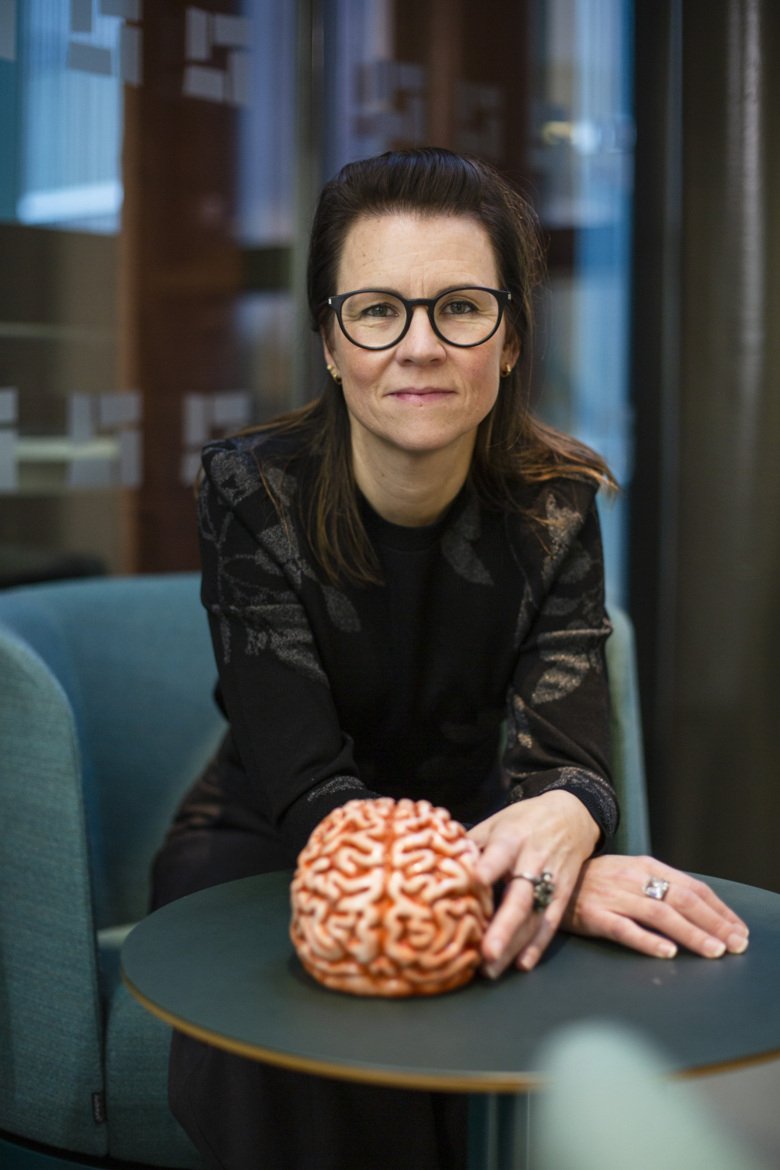
Sophie Sanchez is an Associate Professor at Uppsala University's Department of Organismal Biology, specializing in Evolution and Development. Her research focuses on vertebrate evolution, using advanced imaging techniques like synchrotron microtomography to study fossilized anatomy and developmental processes. She has contributed significantly to understanding sensory organ evolution in jawed vertebrates, early tetrapod development, and the structural adaptations of ancient fish. Key work includes studies on placoderms, osteostracans, and the molecular bases of evolutionary innovations. Her findings bridge paleontology with developmental biology, employing cutting-edge microscopy to reveal hidden biological details in fossils. Publications highlight her expertise in fossil musculature, bone histology, and genomic evolution, with high-impact contributions to journals like Nature and Science . Collaborative projects involve global teams analyzing Devonian and Permian vertebrates, emphasizing interdisciplinary approaches to evolutionary questions.
Klas Hjort is a Professor of Materials Science at Uppsala University's Ångström Laboratory , specializing in Microsystems Technology . He leads the microsystems technology program and has pioneered research in heterogeneous microsystems on stainless steel, flexible foils, and elastic substrates for biomedical applications and wireless sensor/actuator systems . Key projects: SSF robotic textiles , PERSIMMON smart patches Research themes: Microfluidic actuation , Liquid metal patterning , Stretchable electronics His recent publications focus on soft robotics , smart patches , and high-pressure microfluidic systems , with keywords spanning Microfluidics , Biomedical Engineering , and Stretchable Electronics . He collaborates extensively in robotic textiles , microvalve design , and liquid metal composites . Contact: klas.hjort@angstrom.uu.se
Anssi Laurila is a Professor in the Department of Ecology and Genetics, specializing in Animal Ecology at Uppsala University, Sweden. His research integrates evolutionary biology and ecology to explore the mechanisms underlying phenotypic and genetic variation in natural populations, particularly amphibians. His primary research interests include phenotypic plasticity , local adaptation , maternal effects , life-history evolution , and genomic responses to environmental gradients such as latitude, temperature, acidity, and predation. He investigates how populations adapt to heterogeneous environments through both plastic and genetic mechanisms, often using comparative studies across latitudinal clines and contrasting habitats. His work frequently focuses on amphibians like Rana temporaria , Rana arvalis , and Bufo bufo , as well as other ectotherms including freshwater snails and fish. The trends in his recent publications (2020–2025) show a strong emphasis on genomic and transcriptomic analyses of adaptation, host-pathogen interactions (especially with Batrachochytrium dendrobatidis ), immunogenetics (MHC diversity), conservation genetics of edge populations, and acclimation physiology . His studies often combine field observations with controlled experiments and molecular techniques, contributing to understanding evolutionary responses to climate change and anthropogenic stressors. No scientific awards are explicitly mentioned in the provided text. Dr. Laurila actively collaborates with researchers across Europe and supervises or co-supervises numerous studies, as evidenced by his consistent presence as a senior or corresponding author. While specific grant details are not listed, his extensive publication record in high-impact journals suggests sustained funding for research in evolutionary ecology and conservation. His work has implications for biodiversity conservation, particularly in the context of climate change and emerging infectious diseases. He is involved in research on amphibian microbiomes, thermal adaptation in geothermal systems, and the genetic basis of adaptive traits. His team explores how environmental stressors shape phenotypic and genetic variation, with a focus on understanding the limits and costs of plasticity and adaptation.
Santa Slokenberga, LL.D., serves as an Associate Professor in Medical Law and Senior Lecturer in Administrative Law at Uppsala University's Department of Law within the Faculty of Law. She maintains an active research profile focusing on the intersection of law, medicine, and technology, with particular expertise in biobanking, genetic privacy, and healthcare data governance. Her research interests span several critical areas in contemporary medical law, including the human genome and biobanking, AI applications in healthcare, privacy and personal data protection frameworks, quality of pediatric healthcare, and governance of rare diseases. Slokenberga's work demonstrates a strong focus on European regulatory frameworks and their implementation across different jurisdictions, particularly examining how GDPR interacts with medical research and biobanking practices. Analysis of her recent publications reveals a clear trajectory toward increasingly complex issues at the intersection of law, technology, and healthcare. Her scholarship consistently addresses regulatory challenges in genomic data sharing, European health data spaces, and the ethical implications of emerging technologies in medicine. Notably, she has contributed significantly to understanding how European data protection law applies to medical research contexts. Slokenberga holds leadership positions as a board member of EAHL and the Nordic Permed Law, reflecting her recognized expertise in health policy at both national and international levels. Her collaborative research projects often involve multinational teams, demonstrating her engagement with global health law challenges. Her academic supervision and teaching activities focus on preparing future legal professionals to navigate the complex landscape of medical law, administrative law, and data protection regulations as they apply to healthcare systems and biomedical research.
Leif Andersson is a Professor at Uppsala University's Department of Medical Biochemistry and Microbiology, leading a research group focused on functional genomics in domestic animals and fish. His work bridges genetics, ecology, and evolutionary biology to explore phenotypic variation and adaptation. His research includes comparative genomics of domesticated species, identifying mutations linked to traits like horse gaits , chicken comb morphology , and herring ecological adaptation . Recent studies highlight genetic mechanisms in species such as corn snakes , Grey horses , and Darwin's finches , emphasizing environmental interactions and molecular pathways. Key article trends include supergenes in herring adaptation, RNA-binding proteins in cancer and development, and mutation-discovery in domesticated animals. His group's work spans genetic variation , ecological pressures , and evolutionary genetics . Students in his group include Arianna Cocco Ryan Joseph Daniels Jake Goodall Zheng Li Cheng Ma Giulia Maestri Fahime Mohamadnejad Sangdehi Mats Pettersson Matteo Sebastianelli Leyi Su Dandan Wang His contact details include the email Leif.Andersson@imbim.uu.se and phone number 070-425 02 33 , with an office at BMC, Husargatan 3, Uppsala.
Staffan Bensch is a Professor at Lund University, holding roles in the Molecular Ecology and Evolution Lab, Lund Migration Group, and Immunogenetics and Infection Biology. His research focuses on evolutionary biology, particularly bird migration genetics and host-parasite interactions of avian malaria. He leads projects on migratory divides in willow warblers and chiffchaffs, and maintains the MalAvi database of bird malaria lineages. Education: PhD in 1993 from Lund University, with postdoctoral work at UC San Diego. Techniques: Molecular Ecology methods including genomics and tracking technologies. Research Interests: Genetic basis of migration Host-parasite evolution Avian malaria biodiversity Publications: Over 267 articles, including recent work on migratory genetics and parasite population structures. Awards: Rosén Linnaeus Prize (2019), Katma Award (2016), Elliott Coues Award (2014). Grants: Active projects on climate adaptation in willow warblers and comparative studies of migration genetics. Supervised 11 students including Violeta Caballero-Lopez (PhD). Labs/Teams: Molecular Ecology and Evolution Lab, Lund Migration Group.
Niklas Wahlberg is a Professor in Biological Systematics at Lund University, Sweden. He holds roles including Museum Director of the Biological Museum and Principal Investigator in the BECC biodiversity initiative. His primary affiliation is with the Department of Biology, focusing on evolutionary biology and systematics of Lepidoptera. Education & Career: PhD in Evolutionary Biology from University of Helsinki (2000) Postdoc at Stockholm University (2000–2002) Academy Research Fellowship at University of Turku (2006–2011) Professor in Genetics at Turku (2014) before moving to Lund in 2015 Research Interests: His work centers on the evolutionary history of Lepidoptera, particularly diversification patterns linked to angiosperm evolution and mass extinction events. He employs molecular systematic methods, next-gen sequencing, and museum specimens to study clade origins and biogeography. Key topics include Cretaceous diversification, post-mass extinction radiation, and genomic discordance in butterflies. Awards & Recognition: Web of Science Highly Cited Researcher (2017, 2018) Elected to Kungliga Fysiografiska Sällskapet (2016) Grants & Projects: Swedish Research Council: Testing gene-trait associations in genome modifications (2025–2029) Infrastructure leader for museum collections and holistic specimen projects Labs & Collaborations: Head of the Systematic Biology Group at Lund, managing the Biological Museum’s collections. Active in global entomology networks and co-organizes major conferences like the International Congress of Entomology.
Marie Carlén is a Professor of Neuronal Networks at the Department of Neuroscience, Karolinska Institutet, where she leads the Neural Circuits of Cognition research group. Her work focuses on the prefrontal cortex (PFC), a brain region central to cognitive functions such as attention, decision-making, working memory, and goal-directed behavior. She employs cutting-edge techniques including optogenetics, large-scale electrophysiology, calcium imaging, and circuit tracing in rodent models to unravel the cellular and circuit mechanisms underlying cognition and their disruption in psychiatric disorders. Her academic journey began with a Ph.D. in medicine from Karolinska Institutet in 2005, followed by postdoctoral training at MIT’s Picower Institute under Professor Li-Huei Tsai. She returned to Karolinska Institutet in 2010 and was promoted to full Professor in 2022. She is also a Docent (2017) and has held prestigious fellowships including ERC Starting Grant and Wallenberg Scholar (2019, 2024). Marie Carlén's research spans systems and cellular neuroscience, with a strong emphasis on inhibitory interneurons (especially parvalbumin-expressing cells), neural oscillations, and PFC-striatum interactions. Her recent publications reveal a consistent focus on decoding prefrontal circuit dynamics, the role of specific neuron types in cognition, and comparative brain architecture. She collaborates extensively with her partner, Konstantinos Meletis, also a KI researcher. She has been recognized with numerous scientific honors: Member, Nobel Assembly at Karolinska Institutet (2025–) Member, The Royal Swedish Academy of Sciences (2024–) Wallenberg Scholar (2024, 2019) ERC Starting Grant (2013) Wallenberg Academy Fellow (2012) NARSAD Young Investigator Awards (2010, 2008) She actively mentors students and researchers, with open applications welcomed to her lab. Her work is supported by major grants, including from the Knut and Alice Wallenberg Foundation, enabling high-risk, high-reward research in brain function and disease. Her lab investigates the functional definition of the prefrontal cortex across species, develops novel tools for neural recording, and explores circuit imbalances in conditions like autism and schizophrenia. She is a strong advocate for ethical animal research and promotes gender equality in science.
Tobias Andermann serves as an Assistant Professor at Uppsala University's Department of Organismal Biology, specializing in Systematic Biology. He leads the Biodiversity Data Lab, an interdisciplinary research group combining ecology, molecular biology, geomatics, and machine learning to address the biodiversity crisis through innovative computational approaches. His research focuses on quantifying biodiversity loss using AI-driven analysis of environmental DNA, remote sensing data, and fossil records. Key interests include modeling extinction rates across geological timescales, developing standardized biodiversity assessment methods, and predicting species distribution changes under anthropogenic pressures. His work demonstrates current extinction rates are 2000-10,000 times higher than natural background levels, comparable to historical mass extinction events. Methodologically, Andermann integrates machine learning with large-scale environmental DNA datasets and high-resolution remote sensing to develop predictive models of biodiversity distribution. His lab pioneers field sampling protocols for environmental DNA collection and AI frameworks that translate remote sensing data into biodiversity metrics for unsurveyed sites. The Biodiversity Data Lab maintains a dynamic, non-hierarchical research environment focused on high-impact solutions to the biodiversity crisis. Current projects include developing environmental DNA protocols for fungi and insects, analyzing land-use impacts on species communities, and creating neural network models for cross-scale biodiversity forecasting. The lab emphasizes practical applications for conservation policy, notably supporting the UN's 30% protected area target established at COP15.
Niklas Björkström is a Professor/Specialist Physician at Karolinska Institutet (KI) in Sweden, affiliated with the Department of Medicine, Huddinge. He leads the Human tissue-resident NK cells research group and is based at the Center for Infectious Medicine (CIM). His dual role combines academic leadership with clinical work at Karolinska University Hospital's Clinical Microbiology department. Education: Björkström earned his MD (2010) and PhD (2011) in Immunology from KI. He completed postdoctoral training at the National Institutes of Health (NIH), USA, before returning to KI as a Principal Investigator in 2014 and becoming a Professor in 2023. He holds an Associate Professor title (2016). Research Interests: His laboratory focuses on understanding human tissue-resident lymphocytes, particularly natural killer (NK) cells, in the liver, uterus, and other organs. Key areas include NK cell biology in liver diseases (e.g., PSC, NASH, hepatitis viruses) and pregnancy immunology. Techniques used include high-dimensional flow cytometry, CyTOF, microscopy, and computational tools (e.g., SPADE, SNE). The group collaborates with Hannover Medical School and the International PSC Study Group. Awards: Björkström has received prestigious honors such as the ERC Starting Grant (2020), Anders Jahre Award (2020), and NovoNordisk Foundation Emerging Investigator (2021). He is also a Wallenberg Academy Fellow (2017–2021). Grants & Advising: He oversees grants like the Swedish Cancer Foundation (2021–2023) and Karolinska Institutet's KID and Assistant Professor Tenure Track grants. Advised students include Christine Zimmer (PhD), Lena Berglin, and others now in postdoc roles or industry positions. Labs & Teams: The Björkström group is part of KI's Department of Medicine, Huddinge, and maintains close ties with clinical units at Karolinska University Hospital. They have open postdoctoral positions and collaborate internationally on liver and pregnancy immunology projects.
Sten Linnarsson is a Professor of Molecular Systems Biology at Karolinska Institutet, leading the Sten Linnarsson group within the Department of Medical Biochemistry and Biophysics. His research focuses on single-cell analysis of the human brain and brain cancer, leveraging molecular atlases to identify therapeutic targets. He holds a PhD from Karolinska Institutet (2001) and has served as Head of Department (2021-2023) and current Dean of KI Solna. Notable awards include the Erik K. Fernström Prize (2015) and Methusalem Lecture (2023). Education: PhD in Medical Biochemistry and Biophysics (Karolinska Institutet, 2001) Affiliations: Director of the Sten Linnarsson Lab; member of the Human Cell Atlas initiative Research interests span single-cell genomics, neurodevelopment, and cancer biology. Key projects include mapping the first-trimester human brain and identifying cell states in gliomas. Over 200+ publications span high-impact journals like Nature , Science , and Cell . Grants: Over SEK 200M for EU-funded projects (2024) Advising: Supervises PhD students (e.g., Jokubas Janusauskas, Ivana Kapustová) and postdocs Lab activities include developing EEL FISH (in situ profiling) and synthetic biology tools for cell targeting. Future goals involve programmable therapies for brain cancer and advancing spatial transcriptomics.
Rie Henriksen is an Associate Professor at Linköping University, affiliated with the Department of Physics, Chemistry and Biology (IFM), where she leads the Henriksen Group focused on the genetic and epigenetic basis of avian brain structure and behavior. She is also a key member of the AVIAN - Behavioural Genomics and Physiology research group. Research Interests: Her work centers on understanding individual variation in behavior and brain composition, particularly in chickens and red junglefowl. She investigates how prenatal stress and genetic differences contribute to stress resilience and behavioral complexity. Her research has direct applications in poultry welfare and evolutionary biology. Publication Trends: Recent publications highlight her expertise in epigenetics, domestication, brain evolution, and animal welfare. Her work combines genomics, neuroanatomy, and ethology, often using wild and domestic avian models to explore fundamental questions in behavioral genomics. Scientific Awards: Formas Research Council Grant (shared among ten researchers at LiU, including Henriksen) Advising and Grants: While specific student names are not listed, she leads an active research group and has secured competitive funding, such as from Formas, supporting research into sustainable development and animal welfare. Her team conducts mechanistic studies on maternal stress and genetic architecture. Labs and Teams: She leads the Henriksen Group , which investigates the genetic architecture of brain structure using chicken models. She is also part of the broader AVIAN - Behavioural Genomics and Physiology group at Linköping University, fostering interdisciplinary research on behavior and physiology.
Federico Sánchez Quinto is a Visiting Researcher at Uppsala University's Department of Organismal Biology, specializing in ancient DNA analysis and population genomics. His work bridges evolutionary biology, archaeology, and anthropology to investigate human prehistory through genomic evidence. His research focuses on Population Genetics, Human Evolution, and Archaeogenetics, with specific expertise in Neolithic Scandinavian populations, Denisovan ancestry in Southeast Asia, and prehistoric migration patterns. He examines how genetic adaptations, pathogen evolution, and social structures shaped ancient societies, integrating genomic data with archaeological context to reconstruct human history. Recent publications reveal trends in analyzing ancient pathogen genomes, kinship systems in megalithic tombs, and high-impact discoveries like the Philippine Ayta's exceptional Denisovan ancestry. His methodological contributions to ancient DNA imputation enhance analytical precision in population genomics, while cross-disciplinary studies on Philippine migrations and Scandinavian adaptations demonstrate his field's expanding scope. Based at Uppsala University's Evolutionary Biology Centre (EBC), he collaborates within multidisciplinary teams combining genomics, archaeology, and anthropology. His research leverages institutional resources at Norbyvägen 18 C to advance understanding of human evolution through cutting-edge ancient DNA methodologies.
Jiayao Lei is an Assistant Professor at Karolinska Institutet and a Visiting Senior Lecturer at Queen Mary University of London. Her work focuses on cancer epidemiology, particularly cervical cancer prevention through HPV vaccination and screening optimization. She is affiliated with the Department of Medical Epidemiology and Biostatistics, Department of Clinical Science, Intervention and Technology, and the Center for Cervical Cancer Elimination Modelling and simulation research group at KI. PhD in Medical Epidemiology and Biostatistics, Karolinska Institutet (2020) Master of Medical Science, Karolinska Institutet (2015) Her research spans cancer epidemiology, vaccine effectiveness, risk prediction modeling, and health economics. She leverages Swedish national registers and biobank data to evaluate HPV vaccination programs and cervical screening performance, contributing to WHO's cervical cancer elimination strategy. Her recent publications demonstrate a focus on HPV epidemiology, cervical cancer prevention, and infectious disease modeling. Key trends include population-based cohort studies, self-sampling methods, and cross-country SARS-CoV-2 transmission analyses. Scientific awards include the Dimitris N. Chorafas Prize 2020 for her thesis on cervical cancer prevention. Her work is funded by the Swedish Research Council, Forte, Swedish Cancer Society, and KI Strategic Research Area grants. As an educator, she teaches Clinical Cancer Epidemiology (KCL & KI) and Introduction to Epidemiology (Scandinavian Kiropractorhöskolan). Current team members include PhD student Eva Meglic, postdoc Yunyang Deng, and research assistants, with former advisees like Ana Martina Astorga Alsina.
Gemma Atkinson is an Associate Professor at Lund University's Faculty of Medicine, leading the Atkinson Lab. She specializes in protein evolution and bioinformatics, focusing on antibiotic resistance, bacteriophages, and toxin-antitoxin systems. She manages LU-Fold, an infrastructure for high-throughput protein structure prediction using AlphaFold. Her research integrates computational tools with experimental methods to uncover microbial defense mechanisms. Key projects include developing bioinformatics tools (e.g., LoVis4u, webFlaGs) and investigating phage defense systems. She leads grants from the Swedish Research Council and the Knut and Alice Wallenberg Foundation. Her lab collaborates internationally, contributing to UN Sustainable Development Goals on health and innovation. Publications highlight advancements in toxin-antitoxin systems, antimicrobial peptides, and ribosome function. The lab's tools are widely used globally, aiding researchers in structural and functional genomics analysis.


 grupp.webp)