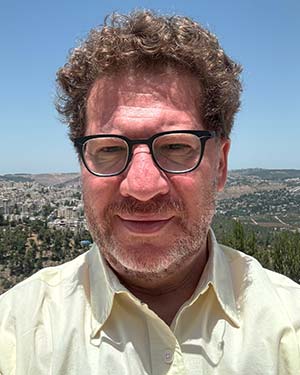
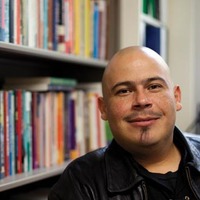
Marat Grinberg is Professor of Russian and Humanities at Reed College, specializing in Russian-Jewish literature and culture, Soviet poetry, poetics, and cinema studies. He joined Reed in 2006 after earning a Ph.D. in Comparative Literature from the University of Chicago. His research examines Jewish identity in Soviet/post-Soviet contexts, Holocaust representation, and literary responses to historical trauma. Major publications include 'The Soviet Jewish Bookshelf' (2023), 'Aleksandr Askoldov: The Commissar' (2016), and 'Woody on Rye: Jewishness in the Films of Woody Allen' (2013). Grinberg's articles explore interdisciplinary themes across literature, film, and cultural history, with recent work analyzing science fiction as Jewish intellectual space and Dostoevsky's influence on Soviet Jewish identity. He teaches courses on Russian poetry, Jewish modernisms, Soviet science fiction, and Holocaust representation.
Dr. Walter Dorn is a Professor of Defence Studies at the Royal Military College of Canada (RMC) and the Canadian Forces College (CFC). He holds a PhD in Chemistry from the University of Toronto and has served in numerous academic and operational roles, including Academic Coordinator for the National Security Programme at CFC, Chair of the RMC Master of Defence Studies Programme, and Deputy Director of Outreach and Community Development at CFC. His expertise spans arms control, peacekeeping, international law, and UN operations, with direct field experience in missions such as UN peacekeeping in East Timor and Ethiopia, and roles with the International Criminal Court and Sandia National Laboratories. Education: PhD in Chemistry from the University of Toronto Extensive postdoctoral work in arms control verification and international security Research Interests: Arms control and disarmament Technology and innovation in UN peace operations Peacekeeping strategies and human security International criminal law and UN governance Ethical dimensions of warfare in religious contexts Key Contributions: Authored Keeping Watch: Monitoring, Technology, and Innovation in UN Peace Operations (2011) and Air Power in UN Operations: Wings for Peace (2014) Developed digital simulations for peacekeeping training (e.g., PeacekeepingSim ) Consultant to the UN's Department of Peacekeeping Operations and the International Committee of the Red Cross Awards: Human Security Fellowship (2001–2012) from the Department of Foreign Affairs and International Trade Labs/Teams: Lead developer of the PeacekeepingSim project for training simulations Advisor to UN panels on technology and innovation in peacekeeping
Dr. Yorai Linenberg is an Honorary Research Fellow at the Birkbeck Institute for the Study of Antisemitism, affiliated with the Faculty of Humanities and Social Sciences at Birkbeck, University of London. His research focuses on the experiences of American and British Jewish prisoners of war (POWs) during World War II, examining German policies toward non-Soviet Jewish POWs and their efforts to maintain Jewish identity in captivity. Education: PhD (London School of Economics), MSc in Physics (Tel Aviv University), MBA (Tel Aviv University) His upcoming book Jewish Soldiers in Nazi Captivity (Oxford University Press, 2024) and journal article on segregation in German POW camps reflect his expertise in Holocaust studies, military history, and wartime identity preservation. These works analyze Nazi treatment of Jewish POWs across disciplines like history, sociology, and political science. Linenberg is currently investigating the backgrounds and motivations of German POW camp commandants who protected Jewish captives under their control. His research intersects with critical themes in Holocaust memory, military ethics, and antisemitism studies. Scientific Awards: Honorary Research Fellow at Birkbeck Institute for the Study of Antisemitism
Ewa Domanska is a full Professor of Human Sciences at the Faculty of History, Adam Mickiewicz University in Poznań, Poland. She holds visiting professor positions at Stanford University since 2002 and is affiliated with the Center for Russian, East European & Euroasian Studies (CREEES) at Stanford. She is a Corresponding Member of the Polish Academy of Sciences (2020), Head of the Section of Theory, History of Historiography and Methodology of History (2020–present), and a member of the Academic Advisory Board at the Institute for Human Sciences (IWM), Vienna (2023–present). Research Interests: Theory and History of Historiography Environmental Humanities Ecocide and Genocide Studies Human Remains as Heritage Non-Western Knowledges of the Past Comparative Theory of Humanities Emerging Fields in Social Sciences Key Contributions: 15+ recent publications (2020–2023) address posthumanist history, environmental holocaust, forensic approaches to genocide, and interdisciplinary methodologies merging humanities with life sciences. Her works span journals like History and Theory , Rethinking History , and Journal of Genocide Research , focusing on critical theory, anthropocentrism, and multispecies history. Scientific Awards: 2024 Gold Medal for Long Service from the President of Poland 2020 Corresponding Member, Polish Academy of Sciences Grants & Collaborations: 2021–2025: Principal Investigator for PRELUDIUM BIS 20 grant on Warta River case studies 2018–2021: Advisory Panel for “My Favourite Things” project, University of Iceland 2017–2021: External scholar for “Unruly Heritage” project, Arctic University of Norway 2016–2017: Research Fellow for “After Discourse” grant, Norwegian Academy of Science Professional Engagements: Member of editorial boards for journals including History and Theory , Storia della Storiografia , and Humanistyka i Przyrodoznawstwo Extensive international conference participation (e.g., 2023 Lessons & Legacies keynote, 2022 ICHS Bureau member) Guest lectures at institutions like University of California (Santa Cruz), University of Chicago (Delhi), and Charles University (Prague)
Dr. Kate Cronin-Furman is an Associate Professor in the Department of Political Science at University College London (UCL), where she directs the Human Rights MA program. Her expertise bridges academia and legal practice, with a focus on human rights, mass atrocities, and international law. Education: PhD in Political Science (Columbia, 2015), Juris Doctor (JD) Previous Affiliations: Harvard Kennedy School’s Belfer Center, Stanford’s Center for International Security and Cooperation Her research addresses the prevention and accountability for mass atrocities, ethics in fieldwork in violence-affected contexts, and transitional justice. She co-founded the Advancing Research on Conflict (ARC) Consortium, offering methodological and ethical training for researchers. Her publications in journals like World Politics and European Journal of International Relations analyze human rights hypocrisy, legal frameworks, and documentation practices by victims of forced disappearance. Scientific awards and honors are not explicitly mentioned in the provided text. Her recent articles highlight interdisciplinary research at the intersection of political science, international law, and conflict studies, with sub-fields including strategic accountability for wartime violence, genocide advocacy, and refugee policy evasion.
Kai M. Thaler is an Assistant Professor in the Department of Global Studies at the University of California, Santa Barbara, with affiliations in Political Science, Latin American and Iberian Studies, and the University of California Institute on Global Conflict and Cooperation (IGCC). He previously served as a non-resident Fellow at the Centre for the Comparative Study of Civil War at the University of York and a Postdoctoral Fellow at the Sié Chéou-Kang Center for International Security and Diplomacy, University of Denver. Ph.D. in Government, Harvard University (2018) M.A. in Government, Harvard University M.Soc.Sc. in Sociology, University of Cape Town B.A. in Political Science, Yale University Thaler's research explores how rebel groups' ideologies and organizational structures influence post-victory statebuilding, public service provision, and political violence. He analyzes historical cases in Africa, Latin America, and Southeast Asia, focusing on themes like mass killings, regime change, and development challenges. His work emphasizes qualitative and mixed methods, addressing methodological challenges in studying violent settings. His recent articles examine ideological continuity in rebel governance, ethical AI development from Black archives, and the interplay of power and temporality in armed group studies. These works span conflict resolution, state-armed group dynamics, and the ethical implications of technology in post-conflict societies. 2025 PEACE Emerging Scholar Award, International Studies Association Thaler's research has received funding from the National Science Foundation, Harry Frank Guggenheim Foundation, and Hellman Fellows Fund. He actively engages public debates through media contributions to outlets like Foreign Policy , The Washington Post , and Al Jazeera , while supporting Nicaraguan asylum seekers and analyzing authoritarian practices in Latin America.
Tracy Lemos is a Professor at the University of Toronto, cross-appointed to The Women and Gender Studies Institute. Her research focuses on the history of violence, genocide studies, masculinity, religion and violence, and kinship systems. She holds a PhD from Yale University and a BA from Brown University. Her work bridges ancient and modern contexts, examining how violence constructs social hierarchies and exploring pathways to rehumanization. She is currently writing a book on healing from dehumanizing violence, analyzing transnational and transhistorical resistance strategies. Additionally, she collaborates on a project studying queer kinship formations in contemporary North America, addressing ethical and hierarchical dimensions. Key publications include Violence and Personhood in Ancient Israel (2017) and co-editing the Cambridge World History of Genocide (2023). Her research spans interdisciplinary methodologies, integrating anthropology, biblical studies, and genocide studies.
Luc Reydams is an Associate Professor of the Practice of Political Science at the University of Notre Dame, currently holding Emeritus Faculty status. His work focuses on international criminal law, transnational social movements, and the political dynamics of the Great Lakes region of Africa, particularly Rwanda. He critically examines human rights discourse, the role of NGOs in justice processes, and the interplay between legal frameworks and political realities in post-conflict scenarios. His research interests center on accountability mechanisms for mass atrocities, the application of universal jurisdiction, and the political dimensions of international tribunals like the ICTR. He has explored themes such as the accuracy of genocide fatality counts, the geopolitical implications of justice outcomes, and the ethical challenges of victor’s justice in transitional contexts. Reydams’ recent articles reflect a sustained engagement with Rwanda’s post-genocide justice landscape, including critiques of ICTR operations and analyses of NGO influence. His work often bridges legal theory with practical governance challenges, especially in African contexts. Despite his prolific output, no scientific awards or grants are explicitly mentioned in the provided texts. He has not listed any advisees or students in the available data. His affiliation with the University of Notre Dame includes office locations at Jenkins and Nanovic Halls. While no formal labs or research teams are noted, his contributions lie in academic publications and advocacy for global justice mechanisms rooted in rigorous legal analysis.
Dr. Roberto D. Hernández is an Associate Professor of Chicana and Chicano Studies at San Diego State University (SDSU), specializing in decolonial theory, border studies, and critical ethnic studies. Born in Mexico and raised in San Ysidro near the U.S./Mexico border, his work interrogates coloniality, geopolitical violence, and epistemic disobedience. He earned a BA (Honors) in Chicana/o Studies from UC Berkeley, followed by MA and PhD in Comparative Ethnic Studies (Black, Native, and Chicana/o Studies). His research spans colonial border violence, hemispheric indigeneity, and the decolonization of knowledge systems. Dr. Hernández’ key works include Coloniality of the U-S///Mexico Border: Power, Violence, and the Decolonial Imperative (2018), which analyzes border violence as a manifestation of colonial power. He coordinates international research institutes on decolonial thought and has authored/co-edited over 20 scholarly articles/books. His recent scholarship explores global indigeneities, anti-racist urban politics, and the decolonial reimagining of education systems. His research interests coalesce around challenging modernity’s colonial frameworks through interdisciplinary methods, emphasizing practical-critical engagement with marginalized communities. He has served on the NACCS governing board and contributed to anti-Mexican American Studies bans in Arizona. His work bridges academic rigor with grassroots activism, particularly in border communities facing state violence and displacement. Dr. Hernández also leads advanced international research initiatives like Decolonizing Knowledge and Power (Barcelona), Critical Muslim Studies (Granada), and Latin American Decolonial and Feminist Thought (Mexico City). His op-eds and keynote addresses further amplify decolonial praxis, urging transformative world-making beyond colonial cartographies.
Jennifer Jenkins is an Associate Professor in the Department of History at the University of Toronto, holding a Canada Research Chair in Modern German History. Her affiliations include the Centre for European and Eurasian Studies and the Zentrum Moderner Orient in Berlin. Germany in the World Transnational and Global History Conflict, Violence and Genocide Colonialism and Informal Empire Her research explores transnational connections between Germany and the Middle East/Central Asia, focusing on imperial strategies, cultural exchange, and geopolitical conflicts from the 19th century to the present. She has contributed extensively to journals like Iranian Studies and German History. Recent publications highlight her work on German-Iranian relations during World War I, archaeology in colonial contexts, and comparative studies of empire-building. Her forthcoming projects include Germany Among the Global Empires 1840 to the Present and research on Tehran’s role in WWII. Canada Research Chair in Modern German History Alexander von Humboldt Fellowship Harvard Center for European Studies Fellowship National Endowment for the Humanities Fellowship Jenkins teaches courses on German and European history (19th and 20th centuries), transnational history, nationalism, and memory studies. She has served as a Senior Associate Member at St. Antony’s College, Oxford.
Prof Mohamed Elewa Badar is a Chair in Comparative and International Criminal Law & Islamic Law at Northumbria Law School, Newcastle, UK. Previously held positions include Senior Lecturer and Director of Undergraduate Studies at Brunel Law School (2007-2013) and teaching roles at Durham Law School (2011-2013). His career includes service as a Senior Prosecutor and Judge in Egypt (1997-2006), membership in the Bahrain Independent Commission of Inquiry (2011), and judicial reform work in Afghanistan and Iraq. He currently directs the Northumbria International Criminal Law and Practice LLM Programme and advises on international legal projects including UNITAD initiatives. Education: PhD in Law (2002), LLM (2001), Fellow of the Higher Education Academy (2010). Research focuses on intersections between international criminal law and Islamic legal traditions, hate speech regulation, and legal pluralism. His work has been cited by international tribunals and informed reports like the Nuremberg Principles Academy's hate speech study. Recent projects include legal training for Iraqi judiciary (2021) and legal consultancy roles at the ICC (2021). Research interests span cultural defenses in international law, transnational organized crime, and religious law compatibility with human rights frameworks. Supervises doctoral research on asset recovery mechanisms in Libya and Islamic-Western perspectives on dignity. His scholarship emphasizes bridging cultural and legal divides in global justice systems.
Vy-Liam Ng is a Teaching Fellow in Leadership and Management and an Academic Support Tutor at Aston Business School, Aston University, within the College of Business and Social Sciences. Since January 2024, he has held these roles while concurrently pursuing a PhD at the University of Bristol Law School. His academic journey at Aston began in 2016, previously serving as an International Student Adviser (2016-2022) and Senior Visa Compliance Officer (2022-2024). Education: PG Cert, Learning and Teaching in Higher Education, Aston University (Expected 2025) Associate Fellowship (AFHEA) - Higher Education Academy, Aston University (2020) LL.M in International Human Rights Law, Birmingham City University (2017) LL.B in Law, Birmingham City University (2010) Research Focus: Ng's scholarship examines critical intersections in human rights frameworks, particularly statelessness as a dimension of genocide. His doctoral research analyzes the Rohingya crisis through legal and socio-political lenses, investigating failures in international human rights protections. Key research domains include: Refugee law and forced migration patterns Nationality legislation as institutional violence ASEAN human rights mechanisms Corporate accountability in conflict zones Comparative genocide studies Awards: Executive Dean’s Prize for Postgraduate Achievement (Birmingham City University, 2017) Teaching Portfolio: Ng develops curriculum and delivers instruction across multiple programs: LLB International Human Rights Law module (lectures, tutorials) Aston Global Advantage Business Challenge (team coaching) Specialized sessions on genocide jurisprudence, refugee law, and regional human rights systems
Dr. Britta C. Jung is a Teaching Professor in German Studies at Mary Immaculate College (MIC), Limerick. She holds a Magistra Artium from the University of Mainz and a joint PhD from the University of Groningen and University of Limerick. Her research focuses on cultural, comparative, and transcultural literary studies, with a strong interdisciplinary emphasis on German-, Dutch-, and English-speaking contexts. Her monograph Komplexe Lebenswelten – Multidirektionale Erinnerungsdikurse (2018) was praised as a milestone in memory discourse analysis in youth literature. She has held academic positions at institutions like the University of Groningen, UCD, Maynooth University, and the Ivane Javakhishvili Tbilisi State University. Notably, she led a major Irish government project on foreign language learning impacts (2018–2020). Her research explores themes such as migration, memory, and translation, with recent works addressing Amanda Gorman’s poetry translation, Holocaust representation in youth literature, and transnational urban spaces. Upcoming engagements include conferences in Brazil, Spain, South Korea, and Germany, focusing on translation ethics, Irish identity, and interdisciplinary dialogue. She is affiliated with MIC’s Irish Centre for Transnational Studies, contributing to transnational research networks across Europe and beyond. Education: Magistra Artium (Mainz), PhD (Groningen/UL) Key Roles: Visiting Professorships at Université Polytechnique Hauts-de-France and Tbilisi State University Her work bridges literary analysis with socio-cultural critique, emphasizing interdisciplinary and global perspectives.
Mihaela Serban is an Associate Professor of Law and Society at Ramapo College of New Jersey since 2010. She leads the Law and Society program and co-founded the Ramapo Journal of Law and Society , one of the few undergraduate legal journals in the U.S. Her research focuses on Eastern European legal systems, memory studies, and Romania's transition from communism. Education : Ph.D. (2010) and S.J.D. (2000) from New York University and Central European University, respectively, with earlier studies at the University of Bucharest. Research Interests include post-communist legal regimes, property rights, transitional justice, and the interplay between law and collective memory. Recent work examines how property laws shape historical narratives in Romania, particularly during fascism, communism, and post-1989 restitution processes. Awards include editorial leadership roles for leading journals and grants advising. Her 2025 co-edited book Between the Memory and Post-Memory of Communism in Romania explores post-communist memory politics through law, archives, and cultural artifacts. Teaching spans global legal systems, human rights, and ethics in a global context. She advises pre-law students and coordinates interdisciplinary programs in human rights and genocide studies.
Stephen McLoughlin is an Assistant Professor at Coventry University's Research Centre for Peace and Security, specializing in mass atrocity prevention and UN policy analysis. His research explores why mass atrocities sometimes fail to occur despite risk factors, focusing on political leadership's role in mitigating violence. He co-founded the Asia Pacific Centre for the Responsibility to Protect (R2P) and has authored influential books including The Structural Prevention of Mass Atrocities (2014) and Rethinking Humanitarian Intervention (2018, with Alex Bellamy). Current Research Strands: Opposition party strategies against populism, localized peace education frameworks, and long-term genocide risk management Co-Investigator on the How to Regain a Democracy project (2024–2026) analyzing populism and democratic erosion in Istanbul His work bridges academic analysis with policy impact, emphasizing structural prevention mechanisms and state resilience. Over 30 peer-reviewed publications span journals like Journal of Genocide Research and International Affairs , with recent focus on authoritarian regimes in Zambia and Middle Eastern genocide legacies. His interdisciplinary approach integrates comparative genocide studies, political theory, and UN institutional analysis. Grants and Collaborations: Active in transnational research networks, collaborating on UN policy evaluations and resilience-building projects. Recent work with Iraqi Kurdish scholars examines collective memory and trauma in genocide-affected communities.