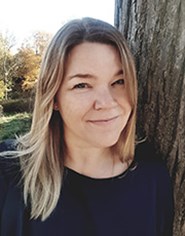
Ramsey McGlazer is an Associate Professor specializing in twentieth-century European and Latin American literature, film, and critical theory. His research engages with poetry, politics-aesthetics intersections, critical carceral studies, and feminist/queer/psychoanalytic frameworks. He holds a Ph.D. in Comparative Literature and Critical Theory from UC Berkeley (2015) and previously taught at the University of St Andrews and Brown University’s Pembroke Center. McGlazer’s work interrogates modernist critiques of progress, radical psychiatry movements, and the interplay between aesthetic practices and institutional critique. His acclaimed monograph Old Schools: Modernism, Education, and the Critique of Progress (2020) won the American Association for Italian Studies First Book Prize. Current projects include The Clinic and its Double , exploring mid-century radical psychiatry and avant-garde art. He serves as Senior Editor of Critical Times and Coeditor of Italian Culture , and has translated key works like Rita Segato’s The War Against Women . McGlazer’s writing appears in venues such as Los Angeles Review of Books and n+1 . Research interests span Surrealist provocations, Brazilian artist Lygia Clark’s propositions, and transnational feminist solidarities. His scholarship bridges literary analysis with critical engagements in carceral studies, postcolonial theory, and decolonial thought.
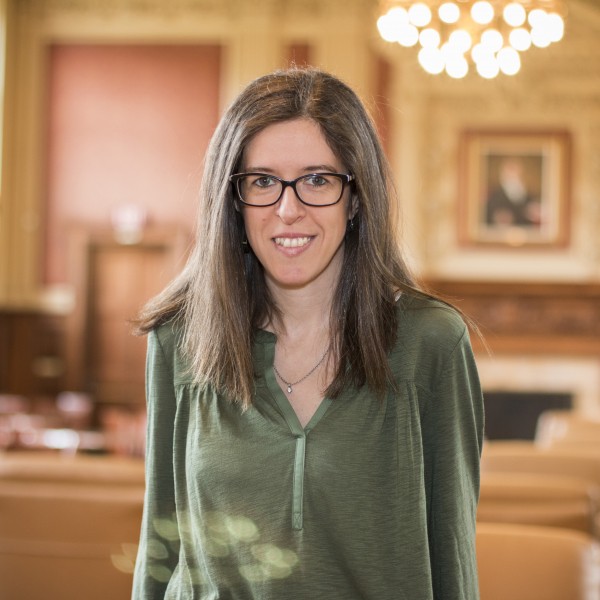
Lena Berggren serves as an Associate Professor in the Department of Historical, Philosophical and Religious Studies at Umeå University, Sweden, with her office located in Humanisthuset (HUM.H.125), Umeå. She holds the title of Docent and has been honored as a Distinguished university teacher for exceptional pedagogical contributions. Her academic qualifications include the Swedish Docent credential (a post-doctoral habilitation) and recognition as a Distinguished university teacher, reflecting dual expertise in research and education. Berggren's research centers on Swedish fascism, antisemitism, and ultra-nationalism during the interwar period, with specific focus on clerical fascism intersections with Lutheranism and völkisch thought. She simultaneously advances university pedagogy through investigations into scientific methodology development and assessment strategies for students, creating a unique bridge between historical scholarship and educational innovation. Analysis of her publication trajectory reveals persistent examination of extremist ideologies' historical roots and modern manifestations, culminating in her 2024 co-authored book '100 år av svensk nazism' which directly addresses contemporary far-right movements in Sweden. Her scientific recognition includes: Distinguished university teacher award Berggren secured research funding for the project 'Swedish fascism 1920-1950' (2007-2008), demonstrating sustained investigative focus. While no formal advisee list is documented, her pedagogical publications indicate active mentorship in historical methodology and academic writing development.
Stefan Kipfer is a Professor at the Faculty of Environmental and Urban Change , York University. He coordinates the Cities, Regions, Planning program and holds a PhD in Political Science from York University. His research focuses on the intersections of spatial organization, social order, and political rule, with particular emphasis on urban politics, racial capitalism, and anti-colonial theory. Education: PhD in Political Science, York University MES in Urban Political Economy and Ecological Politics, York University BA in Political Science and French, York University Kipfer's research spans transnational urban studies, critical theory, and radical political ecology. He explores: Urban social movements in Zurich, Toronto, and Paris State interventions in public housing, transit, and environmental policy The capitalist and racialized dimensions of urbanization Right-wing populism and neo-fascism Connections between Henri Lefebvre, Frantz Fanon, and Antonio Gramsci Recent work analyzes: Urbanization as neocolonial process Anti-racist and decolonial spatial strategies Transit justice and free public services Comparative urban governance Resistances to far-right regimes Articulation theory and political strategy He supervises graduate students in Environmental Studies, Geography, and Political Science, and has contributed to critical urban theory through publications linking Marxist, anti-colonial, and feminist frameworks.
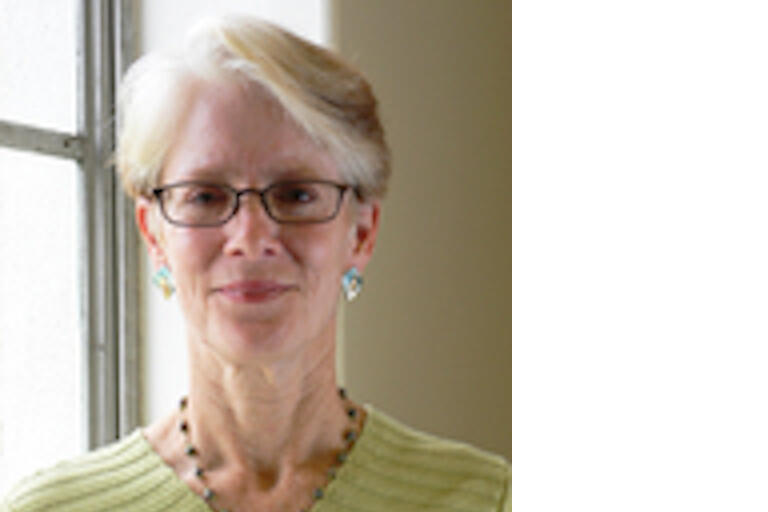
Victoria Kahn is a Professor and Katharine Bixby Hotchkis Chair in English at the University of California, Berkeley. She specializes in Renaissance and Early Modern literature, Critical Theory, and political thought. Her research explores the intersections of literature, philosophy, and political theology, with a focus on figures like Machiavelli, Hobbes, and Milton. She has held academic roles at Princeton University and UC Irvine before joining Berkeley in 1997. Her key publications include The Trouble with Literature (2020), The Future of Illusion (2014), and Wayward Contracts (2004). These works analyze early modern texts and their impact on modern political and philosophical discourse. She also contributes to comparative literature, examining continental Renaissance texts and literary theory. Education: Ph.D. in English Literature (implied by career path but not explicitly stated) Research Interests: Contract theory, political obligation, Machiavelli’s legacy, and the role of literature in shaping political thought. Her scholarly contributions include interdisciplinary analyses of early modern political theology, rhetoric, and aesthetics. Kahn’s work bridges literary studies with political philosophy, emphasizing the enduring relevance of Renaissance texts. Grants and advising details are not explicitly mentioned, but her extensive publication record reflects sustained academic engagement. She is affiliated with the Department of English and Comparative Literature programs at Berkeley.
Arthur Weststeijn is an Assistant Professor in Political History at Utrecht University, specializing in the history of the Dutch Republic and its colonial empire, the history and contemporary politics of Italy, and the history of Spain and Latin America. He is affiliated with the Department of History and Art History within the Humanities faculty and is part of the Research Institute for History and Art History, focusing on International and Political History. Dr. Weststeijn's educational background includes: PhD in History, European University Institute, Florence (2010) RMA in History, European University Institute, Florence (2006) MA in Philosophy, University of Amsterdam (2005) MA in History, University of Amsterdam (2004) Erasmus Exchange, Universidad de Sevilla (2000-2001) His research focuses on the intellectual history of power, particularly examining ideas that express and contest political authority through two main themes: colonialism (how ideas have shaped European colonialism and resistance against it) and republicanism (how resistance to autocratic rule has given rise to ideas of liberty, citizenship, and democracy). His work spans early-modern Dutch colonialism, anticolonial thought, the history of democracy, and connections between ancient and modern forms of settler colonialism. He has published extensively on early modern republicanism, the political uses of classical heritage, and the making of modern Italy. Weststeijn's scholarly output demonstrates a consistent focus on the intersections between political thought, colonial history, and republican theory. His work often examines how historical ideas continue to shape contemporary political discourse, particularly regarding democracy, citizenship, and colonial legacies. He frequently engages with both European and transatlantic intellectual traditions, showing particular expertise in Dutch and Italian political thought. His notable awards and fellowships include: Fellow, Huntington Library, San Marino, California (Summer 2022) Fellow, John Carter Brown Library, Providence, Rhode Island (Spring 2019) Director of Historical Studies, Royal Netherlands Institute in Rome (2011-2017) Dr. Weststeijn has served as a visiting researcher at prestigious institutions including the Cambridge Centre for Political Thought, University of Southern California, University of Wisconsin at Madison, and University of Padua. He frequently appears as an expert commentator on Italian culture and politics in Dutch media and maintains an active public intellectual presence. He is involved in multiple research initiatives including the IOS research themes on Contesting Governance, Futures of Democracy, and Longtermism and Institutional Change. His work often involves interdisciplinary collaboration with archaeologists, classicists, and scholars from various humanities disciplines.
Roberto Dainotto is a Professor of Italian and Literature at Duke University, specializing in modern and contemporary Italian literature, European studies, and critical theory. He is affiliated with the Bologna-Duke Summer School on Global Studies and Critical Theory, and co-founded the Transnational Decolonial Institute. His research explores intersections of meridionalismo (Southern Italy's cultural identity) with the Global South, historicism, and the novel's formal innovations. Key works include Mafia: A Cultural History (2015) and Europe (in Theory) (2007), which won the 2010 Shannon Prize. Current projects address Antonio Labriola's thought and decolonial methodologies. Teaches courses on Vico, Pirandello, the global novel, and fascism's cultural representations. Co-organizes interdisciplinary summer programs blending critical theory and global studies. His scholarship bridges literature, history, and political philosophy, emphasizing postcolonial and decolonial frameworks. Recent work examines the novel's role in mediating historical consciousness and regional/global power dynamics.
Dr Ben Gidley is a Professor of Sociology and Psychosocial Studies at Birkbeck, University of London, within the School of Social Sciences. He holds a PhD in Sociology from the University of London and has conducted interdisciplinary research on migration, urban sociology, and racialization. His work focuses on contemporary forms of racialization, intercultural encounters in urban contexts, and the sociology of British Jewry. Education: BA Anthropology, MA Urban Studies, PhD Sociology (University of London). Research Interests: Urban diversity, antisemitism and Islamophobia, diasporic belonging, Jewish-Muslim encounters, fascism studies, and East/Southeast London ethnography. His recent projects include comparative studies on Muslim-Jewish relations in Europe (ENCOUNTERS) and a study of liminal waterway countercultures (LIMINALWATER). Publications include books such as Turbulent Times (2010) and journal articles exploring urban multiculturalism, antisemitism, and diaspora spaces. He supervises doctoral students on topics like Italian migrant whiteness, Kurdish diaspora, and carceral geographies. Teaching: Modules on racism, antisemitism, and urban studies. He is Director of Research and Sociology REF lead at Birkbeck.
Erika Conti is a Senior Lecturer in Italian and Coordinator for Romance Languages in the School of Continuing and Professional Studies at Washington University in St. Louis. She holds a PhD in Comparative Literature from Washington University and a laurea in English, Spanish, and German languages/literatures from the University of Milan. Her research focuses on 20th-century Italian literature, particularly personal narratives and collective memories of Fascism and World War II. Teaching responsibilities include Italian language courses, surveys of Italian literature, and specialized courses on Italian cinema and Fascism. She developed online Italian culture courses for continuing education programs. Administrative roles include Assistant Director of Undergraduate Studies in Italian, coordinator for beginning language sequences (101/102/201), and Four-Year Advisor for Arts & Sciences since 2019. She also serves as a Progress Counselor since 2023. Professional contributions include translation support (Italian-English/English-Italian) for university communities. Office hours are Wednesday/Friday 11 AM–12 PM or by appointment at Ridgley 417A.
James McDougall is an Associate Professor of Modern History at the University of Oxford , affiliated with Trinity College . He specializes in: European and French imperial history in Africa Modern/contemporary Middle East and North Africa Global Islam since 1700 Historiography and critical theory Colonial and postcolonial studies His research explores: Colonialism's aftereffects in France and Africa Global Islam's social/political dimensions Comparative imperial histories Arab intellectual and political movements He supervises DPhil students including: Emilia Flack Sara Elizabeth Green Katharine Olson Taylor Christel Arlette Zunneberg Current projects include: "Everyday life of colonialism" studies Global Islamic history since the 18th century He has received funding from the Leverhulme Trust and is a Labour Party member.
Richard Steigmann-Gall is an Associate Professor of History at Kent State University's Department of History, within the College of Arts & Sciences. He previously served as Director of the Jewish Studies Program (2004–2010). Holding degrees from the University of Michigan (BA, MA) and the University of Toronto (PhD), his research focuses on religion and Nazi Germany, transatlantic fascism, and antisemitism. His seminal work, *The Holy Reich: Nazi Conceptions of Christianity, 1919-1945*, has been translated into Spanish, Portuguese, and Italian, earning widespread academic and public acclaim. His research has been supported by grants from institutions like the Social Science and Humanities Research Council of Canada, the Max Planck Institute, and the U.S. Holocaust Memorial Museum. Dr. Steigmann-Gall has presented globally, including at Georgetown, NYU, Cambridge University, and the University of Sydney. He is a recipient of the Distinguished Teaching Award from Kent State's College of Arts & Sciences (2004) and has been a frequent media commentator on fascism and modern political movements. Research & Education: His expertise spans Nazism’s religious dimensions, comparative fascist ideologies, and the cultural underpinnings of antisemitism. Current projects include a chapter on religion and genocide in pre-WWII American fascist thought for *American Fascism: Past and Present* (Cambridge). He has published in journals like *German History*, *Journal of Holocaust Research*, and *Totalitarian Movements and Political Religions*. Teaching & Outreach: Dr. Steigmann-Gall teaches courses on modern European history, fascism, and the Holocaust. He has mentored students in topics including Nazi Germany and transnational extremism, and his pedagogical approach has been recognized through teaching awards and nominations. He has also engaged with public discourse through media appearances in *The New York Times*, *The Daily Beast*, and documentaries on the History Channel. Awards & Grants: Distinguished Teaching Award (2004) Grants from the Max Planck Institute, SSHRC, and the U.S. Holocaust Memorial Museum Collaborations & Networks: He has collaborated on edited volumes and contributed to projects at institutions worldwide, reflecting his commitment to transnational historical inquiry.
Alan Kramer is a Professor of European History at Trinity College Dublin. His research spans post-World War II German economic history, the transnational history of violence in World War I, atrocities, prisoners of war, fascist warfare, and memory studies. He recently expanded his focus to include global histories of concentration camps and blockades, emphasizing 'slow violence' in economic warfare. Kramer retired from teaching and supervision in 2019 but continues scholarly work. He is a Humboldt Foundation Fellow and recipient of its Research Prize (2015–16). Key publications include Dynamic of Destruction (2007) and German Atrocities, 1914 (2001), as well as co-editing 1914–1918-Online . His upcoming book Concentration Camps. A Global History (OUP, 2024) explores penal institutions across global conflicts. His articles analyze naval blockades, fascist warfare transitions, and the cultural history of violence. Kramer’s work bridges regional and global perspectives, integrating economic, social, and cultural dimensions of conflict.
Vladimir Tikhonov is a Professor at the Department of Culture Studies and Oriental Languages, Faculty of Humanities, University of Oslo. Specializing in Korean history, his research focuses on Korean Buddhism, nationalism, modernity in East Asia, and labor movements. He holds a PhD from Moscow State University (1996) and has taught at KyungHee University (1997-2000). Current roles include co-leadership of the 'Militarism and Religions in Modern Asia' project and responsibility for the MA program in East Asian Culture and History. Research interests span colonial-era Korean perceptions of Japan and Russia, religious militarism, and the intersection of nationalism with Buddhist thought. Notable works include Buddhism and Violence (2012) and Modern Korea and Its Others (2015). Ongoing projects explore Korean communist movements and critical biographies of nationalist figures like Han Yongun. Teaching covers East Asian culture, history, and politics, with courses like EAST4510 and KOR4504. His publications combine historical analysis with transnational perspectives, addressing topics from colonial-era intellectual debates to contemporary South Korean military chaplaincy dynamics.
Mabel Berezin is a Professor of Sociology and Director of the Institute for European Studies at Cornell University. She holds a Ph.D. in Sociology from Harvard University (1987) . Her research focuses on extreme nationalism, fascism, and right-wing populism, particularly their impact on democratic systems in Europe and the United States. She is internationally recognized for works like Making the Fascist Self and Illiberal Politics in Neoliberal Times . Her academic roles include leadership positions such as Department Chair (2010–2014), and fellowships at institutions like the Institute for Advanced Study (Princeton) and Sciences Po (Paris). She actively engages with media, contributing to outlets like The Nation , CNN , and NPR . Berezin’s research also explores health and culture, including vaccination resistance and solidarity in healthcare. She has received prestigious awards, including the J. David Greenstone Prize and membership in the Sociological Research Association. Her teaching includes courses on Politics and Culture , Fascism, Nationalism, and Populism , and qualitative methods. She collaborates with global initiatives like the Einaudi Center and Reppy Institute for Peace and Conflict Studies.
Christopher Rundle is a Professor of Translation at the University of Bologna, Department of Interpreting and Translation , and a Honorary Research Fellow at the University of Manchester, Centre for Translation and Intercultural Studies . His career spans over 30 years in academic and research roles focused on translation history under totalitarian regimes, audiovisual translation, and interdisciplinary methodology. PhD, MA, and BA in Translation Studies Co-founder of the History and Translation Network Co-editor of the Routledge Research on Translation and Interpreting History book series Research interests include translation history in Fascist Italy and European Communism , theory of translation historiography , and subtitling practices . His publications explore censorship, ideological influence, and cultural exchange. Notable projects include the Subtitle Project and SDH Project on subtitling standards. Key publications: Publishing Translations in Fascist Italy (2010), The Routledge Handbook of Translation History (2021), and The Routledge Handbook of Translation and Methodology (2022) Editorial roles: inTRAlinea , Chronotopos , and ri.tra journal His scientific awards include an Honorary Research Fellowship at the University of Manchester. He also explores dialect and music through collaborations like the Chris Rundle Band and the album Pianura Blues .
Dr. Amanda Hsieh is an Assistant Professor of Musicology in the Department of Music at Durham University. Her research examines the intersection of music and politics, with a particular focus on global music history and transnational exchanges between East Asia and Central/Western Europe during the 19th-20th centuries. Her current book project, 'The Japanese Empire's German Art Music, 1910–1945', investigates musico-political networks connecting Germany, Japan, and Taiwan. Hsieh employs interdisciplinary approaches including global history, biography, and infrastructure theory to analyze how Western art music influenced Japanese state-building initiatives. Dr. Hsieh actively builds equitable scholarly networks as co-founder of the Asian-German Studies in Music Working Group and former co-chair of the AMS Global East Asian Music Research Study Group. She serves as Reviews Editor for the Journal of the Royal Musical Association, where she promotes linguistic and geographical diversity in music scholarship. Her recent publications explore themes of gender representation in opera, cultural diplomacy through music, and methodological challenges in global music history. She has received prestigious awards including the Kurt Weill Prize and Jerome Roche Prize for her contributions to music scholarship. Dr. Hsieh currently supervises PhD research on women opera singers in 19th-century Britain and welcomes doctoral applicants interested in music and mobility, music and politics, and global music history.