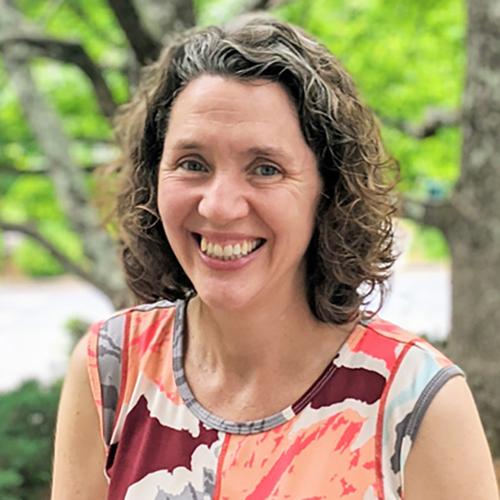
Nicole Gerardo is a Professor at Emory University and Director of the Graduate Division of Biological and Biomedical Sciences. Her lab studies evolutionary ecology in insect-microbe systems, including aphid-bacteria symbioses and fungus-growing ants. Education includes a Ph.D. from University of Texas at Austin (2004) and B.A. from Rice University (1997). Research integrates experimental evolution , genomics , and field ecology to address: Mechanisms of symbiont-mediated pathogen defense Transmission dynamics in mutualisms Host immunological trade-offs Agricultural applications of protective microbes Recent work examines priority effects in symbiont colonization, monarch butterfly microbiomes, and coevolution in ant-fungal systems. Field sites span Panama, Brazil, and agricultural ecosystems.
Per Erik Ahlberg is a Professor of Evolutionary Organismal Biology at Uppsala University since 2003. His research spans vertebrate paleontology, evolutionary developmental biology, and the origins of key morphological innovations in jawed vertebrates and tetrapods. Academic Affiliations: Uppsala University (2003-present), The Natural History Museum, London (1994-2003), University of Oxford (1989-1994) Leadership Roles: Head of Subdepartment, Director of SciLifeLab Uppsala's Zebrafish Facility Research Focus: His work investigates the evolutionary transitions from fish to tetrapods, jaw development, and the integration of fossil evidence with developmental genetics. He employs synchrotron imaging and comparative anatomy to analyze ancient vertebrate structures. Grant History: Recipient of major grants including five awards from the Swedish Research Council (2003-2019), two ERC grants (2008 and 2021), and multiple Wallenberg Scholarships (2010-2020), totaling over €6 million in direct funding. Scientific Contributions: His publications in Nature and Science have redefined understanding of early vertebrate evolution, with notable discoveries about tetrapod trackways (2010), neural crest development (2005), and placoderm jaw anatomy. Honors: Elected to Royal Swedish Academy of Sciences (2012), Linnaeus Gold Medal (2012), Wallenberg Scholarship (2010, renewed 2016)
Juliane Fürst is Professor of Modern History in the Department of Historical Studies at Central European University (CEU), Vienna, holding a joint appointment with the Center for Contemporary Historical Research (ZZF) in Potsdam, where she co-heads the department 'Communism and Society'. She has held academic positions in the UK, Germany, and Austria, with prior roles at the University of Bristol, St. John’s and Magdalen Colleges, Oxford, and visiting fellowships at Harvard and CEU. BA (First Class) in Modern History, Christ Church, University of Oxford (1997) MSc in Russian and Post-Soviet Studies, London School of Economics (1998) PhD in Government, LSE (2003), thesis: 'Stalin’s Last Generation - Youth, State and Komsomol 1945–1953' Habilitation, History Faculty, Humboldt University, Berlin (2020) Her research focuses on Soviet and post-Soviet history, particularly youth culture, dissent, non-conformism, emotions, subjectivity, and grassroots movements. She explores how individuals and communities negotiated identity and resistance under late socialism, with special attention to Soviet hippies, perestroika from below, and public memory. Her work bridges cultural, social, and emotional history, analyzing how personal experience shaped political change. The 15 most recent publications reflect a consistent focus on subcultures, emotional styles, and alternative lifestyles within the Soviet bloc. They span monographs, edited volumes, and journal articles, showing a strong engagement with transnational countercultural movements, generational identity, and the politics of memory. Her work reveals a thematic evolution from post-war youth socialization to the emotional and spatial dimensions of dissent in the Brezhnev and Gorbachev eras. Juliane Fürst leads several major research projects funded by Horizon Europe and the Leibniz Association, including Perestroika from Below , EUROPAST , and Legacies of Communism? . These initiatives involve international collaborations with institutions in Lithuania, Sweden, Luxembourg, and beyond. She has co-produced a documentary film and curated an exhibition on Soviet hippies, demonstrating a strong commitment to public history and knowledge dissemination. She mentors a team of postdoctoral researchers and temporary fellows but no individual PhD or Master’s students are named in the provided texts. Her leadership roles include coordinating interdisciplinary networks and public history initiatives aimed at strengthening democratic engagement with the past in post-dictatorial societies. She is actively involved in research labs and teams such as the 'Communism and Society' department at ZZF, the EUROPAST consortium, and the Perestroika from Below project team, which includes five core members and three temporary fellows. These collaborative structures support innovative, interdisciplinary approaches to understanding late and post-communist transformations.
Giovanni Giuseppe Vendramin is a Research Director at the Institute of Biosciences and BioResources (IBBR) within Italy's National Research Council (CNR), based in Florence. He holds a magna cum laude degree in Forest Sciences from the University of Florence (1981) and has held research fellowships at institutions including the USDA Forest Service (USA) and University of Göttingen (Germany). His career includes leadership roles as Director of IBBR and recognition as an Honorary Research Fellow at Bioversity International. Vendramin's research focuses on forest genetics, conservation genomics, and phylogeography. He investigates adaptive responses of trees to environmental change, genetic diversity patterns in glacial refugia, and conservation strategies for endangered species. His work employs genomic tools to study local adaptation, gene flow, and demographic history across Mediterranean and European tree species. Recent publications emphasize climate adaptation mechanisms, genomic signatures of selection, and conservation genetics. Articles from 2021-2023 predominantly explore genetic resilience to glacial cycles, microgeographical adaptation in conifers, and biodiversity conservation frameworks. Research integrates molecular ecology, paleoecology, and landscape genetics. Scientific Awards: Medal for distinguished Italian scientists (Accademia Nazionale delle Scienze, 2022) Honorary Doctorate (University of Zvolen, Slovakia, 2012) Vendramin has led over 35 national/international projects and advises graduate students and postdoctoral researchers. He coordinates an IUFRO unit and contributes to EU scientific commissions. His laboratory employs genomic techniques for biodiversity conservation, with collaborations across European research networks.
Marina Unger is a scientific collaborator at the Photographic Collection of the Bibliotheca Hertziana – Max Planck Institute for Art History since February 2025. She studied Classical Archaeology and Art History at Philipps University of Marburg, University of Naples ‘L'Orientale’, and Humboldt University of Berlin, earning a Magister Artium in 2010. In 2020–2021, she completed a Master’s degree in Literary Translation for Italian at Ludwig Maximilian University in Munich. Her current doctoral thesis focuses on Greek vase drawings within the archaeological apparatus of the Instituto di Corrispondenza Archeologica in Rome. Education: Magister Artium (Humboldt University, 2010), Master’s in Literary Translation (LMU Munich, 2021) Her research bridges archaeology , media history , and archival studies , emphasizing nineteenth-century documentation practices like vase drawings and early photography. She contributes to provenance research and digital humanities projects. Recent work includes the DFG-funded Gelehrte, Ausgräber und Kunsthändler project, analyzing the networks of the German Archaeological Institute through correspondence and linked data infrastructure. Collaborations span institutions like the German Archaeological Institute (DAI) and Scuola Normale Superiore in Pisa, with publications on Etruscan tomb paintings, Greek vases, and antiquities trade dynamics. Prior roles include: student assistant at Bildarchiv Foto Marburg, IT department member at Kunsthistorisches Institut in Florence, and research assistant at DAI Archives in Berlin. She has also worked as a freelance translator/editor and project manager.
Benjamin Johnson is an Associate Professor in the Department of History at the University of Massachusetts Boston. His research focuses on indigenous social and political responses to colonialism in Latin America, with primary emphasis on Nahuatl speakers in central Mexico. Specializes in post-Spanish invasion social order in 16th-century Mexico Compares colonial experiences across Maya, Andean, and Brazilian coastal populations Teaches courses on Latin American history, pre-Columbian civilizations, and historical methods His current book project, Remaking the Hinterland , examines how marginalized groups in central Mexico adapted native and Spanish institutions to create new social systems. Professor Johnson holds a PhD (2011) and MA (2005) from the University of Chicago, along with a BA (2002) from Northwestern University.
Jeri Barak is a Professor and Associate Dean for Academic Affairs at the University of Wisconsin-Madison's College of Agricultural and Life Sciences. She leads the Barak Lab, focusing on bacterial-plant interactions with implications for food safety. Education : BS in Marine Biology and English (San Jose State University, 1993); PhD in Plant Pathology (UC Davis, 2000) Research Interests center on how plant pathogens like Xanthomonas gardneri and Pseudomonas syringae pv. tomato alter host physiology to create niches for secondary microbes, particularly Salmonella enterica . Her work examines: Pathogen-induced apoplast modifications Bacterial community dynamics in infected plants Vector-mediated pathogen transmission (e.g., leafhoppers, thrips) Environmental factors affecting colonization Foodborne pathogen persistence Publication Trends reveal a focus on Salmonella and Xanthomonas interactions in tomato and lettuce systems. Keywords include microbial ecology, plant-pathogen dynamics, and agricultural safety. Student Mentorship highlights include advising Sofia Weinstein , who spearheaded the UW Organic Collaborative and Electric Food Truck initiative. Outreach & Education involves teaching Global Food Security (PP311) and leading initiatives like the Food Recovery Network. Her lab bridges plant pathology and public health through applied research.
Prof. Dr. Sabine Panzram is Professor of Ancient History at the University of Hamburg's Faculty of Humanities, affiliated with the Department of History. Her academic trajectory includes a Staatsexamen from Albert-Ludwigs-Universität Freiburg and Universitat de Barcelona (1996), and a doctorate from Westfälische Wilhelms-Universität Münster (2001) on Roman urban elites. She completed her habilitation at Universität Hamburg (2013) examining early Christian institutionalization in Hispania. Research interests center on: Urban transformations in Late Antique Iberia/North Africa Social power dynamics through historical anthropology Religious-political intersections in the Western Mediterranean Digital methodologies in ancient studies Reception of antiquity in early modern Europe Her publications demonstrate consistent focus on urban continuity/change, ecclesiastical power structures, and transregional comparisons between Hispania and North Africa, utilizing archaeological, epigraphic, and textual evidence. Awards and leadership roles include: Marie Curie Senior Fellowship (Casa de Velázquez, Madrid) Alexander von Humboldt Scouting recognition Corresponding Member of the German Archaeological Institute Director of DFG-funded centers: RomanIslam (comparative empire studies) and ATLAS (late antique urban atlas project) Extensive advising includes supervision of 8+ doctoral dissertations and 25+ master's theses on Roman urbanism, religious history, and provincial administration. Secured major grants from DFG, ANR/DFG, and Fritz Thyssen Stiftung supporting international collaborations. Leads research networks like Toletum for Iberian antiquity studies and coordinates interdisciplinary teams across European universities.
Lars Vilhelmsen is an Associate Professor and Curator at the Zoological Museum, Natural History Museum of Denmark (University of Copenhagen). He earned his M.Sc. (1995), Ph.D. (1999), and Dr. scient. (2004) from the University of Copenhagen, specializing in hymenopteran morphology and systematics. His career includes postdoctoral research at Uppsala University (2000-2002) and continuous employment at Copenhagen since 2002. His research focuses on: Higher-level phylogeny and evolutionary history of Hymenoptera Comparative anatomy and functional morphology of parasitic wasps Systematics and biogeography of the Orussidae family Cretaceous fossil insects and amber preservation He participates in the NSF-funded HymAToL project reconstructing hymenopteran phylogeny. Teaching activities include coordinating 'Entomology' (terrestrial arthropod biology) and 'Summer Course in Terrestrial Zoology' field studies. He serves as Co-Editor of Systematic Entomology and maintains international research collaborations across biogeographic regions.
John Tolan is a Professor of Medieval History at the Université de Nantes since 2002, specializing in Islamic-European cultural relations and religious minorities. He has held leadership roles at the Maison des Sciences de l'Homme Ange Guépin and the RELMIN research project. His work spans comparative religious studies, legal history, and interfaith dynamics. PhD in History, University of Chicago (1990) Habilitation, École des Hautes Études en Sciences Sociales (2001) His research focuses on Medieval Mediterranean societies, examining legal frameworks for dhimmis , Crusades , and Quranic translations . Recent projects include the European Qur’an initiative and analysis of St. Francis-Sultan encounters. Publications since 2013 include comparative studies on Abrahamic historiographies , expulsion histories , and religious cohabitation in medieval towns. His work bridges academic research with public discourse through Radio France appearances and 20+ edited volumes . Académie Europæa member Reial Acadèmia de Bones Lletres de Barcelona fellow Professional activities include editorial board memberships for Medieval Encounters and Medieval Voyaging , alongside 80+ international conference participations. Current affiliations: Academia.edu profile .
Professor Oyeronke Oyewumi is a renowned sociologist at Stony Brook University's Department of Sociology within the College of Arts and Sciences. She specializes in African gender studies, postcolonial epistemologies, and decolonial thought. A Nigerian-born scholar with degrees from the University of Ibadan and UC Berkeley, she challenges Eurocentric gender frameworks through works like The Invention of Women , which won the 1998 ASA Distinguished Book Award. Her research spans Yoruba naming practices, colonial discourses, and African feminist thought. Awards include the 2021 ASA Distinguished Africanist Award and a Rockefeller Humanities Fellowship. She has authored/co-edited influential books on gender in Africa and global systems. Her work critiques Western knowledge systems while centering African epistemologies. Education: Bachelor's/Master's: University of Ibadan, Nigeria PhD: University of California, Berkeley Key Research: Decolonizing gender theory Yoruba cultural systems Postcolonial feminist methodologies Her recent scholarship explores naming practices and epistemic decolonization, with publications spanning Portuguese and Spanish translations to global audiences. She has held fellowships from the Ford Foundation and National Council for Research on Women.
Carolina López-Ruiz is a Professor at the University of Chicago, holding joint appointments in the Divinity School, the Department of Classics, and the College. She serves as Department Chair of Classics. Her research focuses on comparative mythology and cultural exchange in the ancient Mediterranean, challenging Hellenocentric paradigms through interdisciplinary analysis of textual and archaeological evidence. Key areas include Greco-Phoenician interactions, Near Eastern and Classical mythological integration, and ancient cosmogonies. Recent work emphasizes Phoenician cultural agency through projects like the Cerro del Villar excavations in Spain, co-directed since 2022 with David Schloen and J. Suárez Padilla. Her 2021 monograph Phoenicians and the Making of the Mediterranean received three major awards, including the Mediterranean Seminar Book Prize and ASOR Frank Moore Cross Award. Publications span monographs, edited volumes, and peer-reviewed articles addressing topics like deity etymology (Aphrodite's Semitic roots), mythological hybridity (Sphinx, Aion), and disaster narratives (earthquakes/tsunamis in Mediterranean myths). She co-edited the Oxford Handbook of the Phoenician and Punic Mediterranean (2019) and authored a widely used mythological sourcebook. Her scholarly contributions bridge linguistic, religious, and archaeological methodologies, advocating for a more interconnected understanding of the ancient Mediterranean. Current research continues exploring Phoenician cultural contributions and mythological cross-pollination between Mediterranean civilizations.
Hans Harder serves as Professor of Modern South Asian Languages and Literatures at Heidelberg University's South Asia Institute, where he has held his position since 2007. His academic career spans institutions including the universities of Hamburg, Heidelberg, and Martin Luther University in Halle-Wittenberg, where he completed both his PhD and postdoctoral work. Research Interests: Professor Harder's scholarly focus encompasses modern South Asian literatures (particularly Bengali), religious movements from the nineteenth and twentieth centuries , colonial and postcolonial intellectual history , and popular literature and film across South Asia. His work consistently examines the intersections of language, culture, and power in colonial and postcolonial contexts, with special attention to vernacular expressions of identity and resistance. His recent publications reveal a deepening engagement with language ideologies and vernacular conceptualizations in South Asia, particularly evident in his 2024 co-authored work The Vernacular: Three Essays on an Ambivalent Concept and Its Uses in South Asia . Earlier works demonstrate his longstanding interest in religious movements (particularly Sufism in Bangladesh), literary satires from colonial Calcutta, and cross-cultural perceptions between colonized and colonizing societies. His scholarship bridges literary analysis, religious studies, and cultural history through meticulous textual examination and theoretical sophistication. Professor Harder has established himself as a leading scholar through numerous monographs and edited volumes that have significantly shaped South Asian literary and intellectual studies. His collaborative work with scholars like Nishat Zaidi, Torsten Tschacher, Barbara Mittler, and Charu Gupta demonstrates his commitment to interdisciplinary and international scholarly exchange. Based at Heidelberg University's South Asia Institute, Professor Harder continues to advance research on South Asian cultural production while mentoring students and contributing to the global academic community through his extensive publications and editorial work.
Jonathan T. Fingerut serves as Professor and Chair of the Department of Biology at Saint Joseph's University in Philadelphia, where he also directs the Environmental Science and Sustainability Program. His research integrates hydrodynamics and behavioral ecology to investigate spatial distribution patterns of aquatic invertebrates, with dual focus on black fly larvae in stream ecosystems and invasive spotted wing drosophila in agricultural contexts. His academic foundation includes: BA in Biology (1994) from Cornell University PhD in Biology (2003) from the University of California, Los Angeles Dr. Fingerut's research program examines how flow environments shape invertebrate ecology through two primary avenues: (1) silk-mediated dispersal mechanisms in Simulium tribulatum larvae that enable habitat selection in turbulent streams, and (2) population dynamics of Drosophila suzukii affecting soft fruit crops. His work bridges fluid mechanics, entomology, and ecological theory to address fundamental questions about larval settlement while providing applied insights for invasive species management. Laboratory exercises developed in his biomechanics research demonstrate his commitment to innovative science education. Analysis of his 14 publications (2003-2015) reveals consistent emphasis on hydrodynamic-biological interactions across freshwater and marine systems. Key contributions include elucidating silk's role in larval dispersal, quantifying flow effects on invertebrate behavior, and developing novel methods for studying aquatic ecosystems. His collaborative approach—evident in partnerships with the McRobert lab on drosophila research—produces transdisciplinary insights spanning from molecular tagging techniques to ecosystem engineering. He leads an active research laboratory investigating silk production mechanisms in black flies and overwintering strategies of invasive drosophila. Current projects combine field observations with controlled experiments to understand how climate change may alter hydrodynamic constraints on aquatic invertebrates while developing sustainable management approaches for agricultural pests through population genetics studies.
Jessica Ordaz is an Assistant Professor of Ethnic Studies at the University of Colorado Boulder, specializing in Chicanx/Latinx history, US-Mexico border studies, and carceral state analysis. Her work bridges migration politics, labor history, and food justice. Ph.D. in American History (UC Davis, 2017) Focus on radical social movements and transnational solidarity networks Her research examines migrant detention regimes and BIPOC veganism. She authored The Shadow of El Centro (2021) and contributes to critical debates on racial capitalism and border abolitionism. Recent publications analyze: HIV/AIDS in detention centers Transborder labor organizing Latinx veganism's decolonial dimensions Ordaz previously held the Andrew W. Mellon Sawyer Seminar fellowship at the University of Washington, focusing on comparative racial capitalism.