Juha Pyrhönen serves as Professor of Electrical Engineering at the School of Energy Systems, Lappeenranta-Lahti University of Technology (LUT University) in Lappeenranta, Finland. His research focuses on advanced electric machine design for high-performance applications, with particular expertise in traction motors, synchronous reluctance machines, and thermal management systems. Contact information includes email Juha.Pyrhonen@lut.fi and phone +358 40 571 1645. Professor Pyrhönen's research spans critical areas in electric machine development including high-speed motor design for aerospace and automotive applications, mitigation of parasitic effects like bearing currents, and innovative cooling techniques such as direct liquid cooling. His work addresses electromagnetic design challenges in drum-winding machines, variable reluctance resolvers for position sensing, and material selection for rotors operating under extreme conditions. Recent investigations examine agricultural tractor electrification and compact energy conversion systems for onboard machinery. Analysis of his 2025 publications reveals strong emphasis on improving power density through multidisciplinary approaches that integrate electromagnetic, thermal, and mechanical considerations. Key trends include advanced bearing current mitigation strategies, optimization of axially-laminated rotors, and precision measurement techniques under magnetic saturation. His research consistently targets sustainable solutions for electric propulsion across transportation sectors. No scientific awards were documented in the provided information. Details regarding student supervision, research grants, or collaborative projects were not specified in the available materials. The absence of such information suggests either non-disclosure in the source materials or potential focus on independent research activities. While specific laboratory facilities weren't mentioned, his research scope implies access to advanced testing infrastructure for high-speed machinery, electromagnetic characterization equipment, and thermal validation systems at LUT University's energy research facilities.
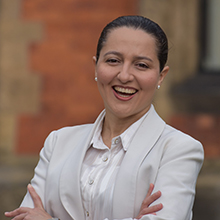
Colleen Bailey is an Assistant Professor in the Department of Electrical Engineering at the University of North Texas. Her research focuses on the intersection of machine learning, signal processing, and energy systems, with applications spanning biomedical imaging, environmental monitoring, and edge computing. Research Interests: Machine learning optimization for edge devices Entropy-based image compression techniques Attention mechanisms in vision transformers Urban air pollution prediction models Land surface temperature super-resolution Publication Trends: Recent works emphasize compact AI architectures (e.g., MHATT network, entropy bottleneck models) for efficient processing in resource-constrained scenarios. Applications include medical imaging (Chest X-ray analysis), environmental monitoring (air quality, Martian dust storms), and energy systems (household prediction, power quality classification). Contact: Email: Colleen.Bailey@unt.edu Office: Discovery Park B252 Phone: 940-891-6874
Adelaida Ibarra is an Associate Lecturer at York Law School and the Centre for Applied Human Rights at the University of York, joining in 2022. She holds an MA and PhD from Universidad de Los Andes (Colombia) and an MBA from Leuphana University of Lüneburg (Germany). Her work focuses on Human Rights, transitional justice, gender equality, peacebuilding, and international humanitarian law. She has extensive experience in qualitative research with vulnerable groups like former combatants and victims of human rights violations in Colombia. Key positions include Director roles at Nueva Granada Military University Law School, Fulbright Scholar at Cornell Law School (2016-2017), and research fellowships at the International Nuremberg Principles Academy and Ökopol Institute. Her research includes projects on religious leaders' influence in armed conflicts, Colombia's Special Jurisdiction for Peace, and sustainable development initiatives. Her publications analyze topics like drug trafficking strategies under Colombian peace agreements, gender equality in constitutional law, and transitional justice mechanisms. Awards include the Fulbright Scholarship. Teaching responsibilities include undergraduate Law Professions and Ethics modules, and postgraduate supervision in human rights and LLM dissertations. She also advises on policy development and legal frameworks in transitional societies.
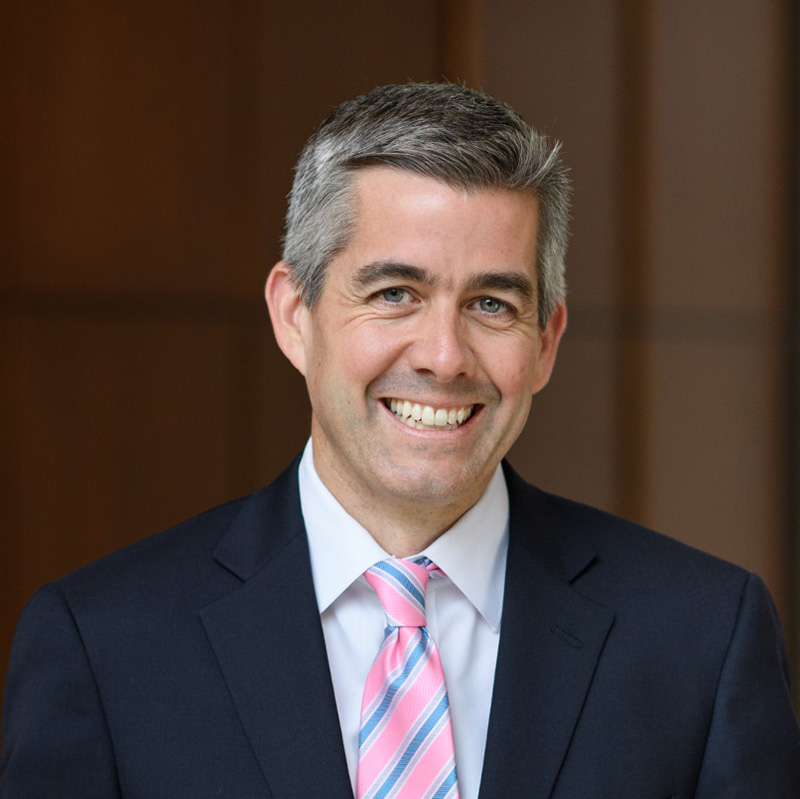
Mark Nevitt is an Associate Professor of Law at Emory University School of Law, specializing in environmental law with a focus on climate change's impact on legal frameworks and national security. He joined Emory Law faculty in summer 2022 after serving as an associate professor at Syracuse University College of Law and as the Distinguished Professor of Leadership and Law at the US Naval Academy in Annapolis, MD. His academic journey includes being a Sharswood Fellow and Lecturer-in-Law at the University of Pennsylvania Law School from 2017-2019, where he taught climate change law and policy, and a seminar on national security law and society. Before entering academia, Nevitt served as both a tactical jet aviator and attorney (JAG) in the United States Navy, achieving the rank of commander and serving as a White House Military Social Aide. Nevitt's research focuses on the intersection of environmental law, climate change, and national security. His work addresses how climate change destabilizes traditional legal frameworks and creates new security challenges, particularly examining legal issues associated with climate adaptation, managed retreat from coastlines, and constitutional dimensions of climate policy. His scholarly work has appeared in top journals including Stanford Law Review, Vanderbilt Law Review, Washington University Law Review, and Harvard Environmental Law Review. As a frequent contributor to NYU Law's Just Security blog, Lawfare, and Penn Law's Regulatory Review, Nevitt provides expert commentary on contemporary legal issues. He is a member of the Truman National Security Project and recently completed grant-funded research via the Kleinman Center at the University of Pennsylvania addressing legal issues associated with climate adaptation. Nevitt's military background informs his legal scholarship, having flown 1,000+ flight hours as a naval aviator and served as an environmental attorney, criminal defense attorney, and ethics attorney in the Navy JAG Corps. Notably, he served as the senior legal advisor for the U.S. investigation into the Iranian detention of U.S. sailors in Farsi Island, Iran. His military awards include the Air Medal and Meritorious Service Medal (four awards). He holds a J.D. and LL.M. (with distinction) from Georgetown University Law Center and a B.S.E. from the Wharton School, University of Pennsylvania. His expertise is frequently sought for commentary on legal issues at the intersection of environment, security, and constitutional law, as evidenced by recent media appearances discussing the Posse Comitatus Act and National Guard deployment issues.
Ifana Mahbub is an Associate Professor at the Erik Jonsson School of Engineering and Computer Science , University of Texas at Dallas, specializing in Electrical & Computer Engineering . Her research focuses on energy-efficient integrated circuits, wireless power transfer systems for biomedical sensors, and advanced antenna designs for UAV and mm-wave applications. She leads the Integrated Biomedical, RF Circuits and Systems Lab . Education: Ph.D. in Electrical Engineering (2017), University of Tennessee, Knoxville B.S. in Electrical Engineering (2012), Bangladesh University of Engineering and Technology Research interests include: Ultrawideband/mm-wave phased-array antennas Far-field wireless power beaming V2V communication for UAVs Energy harvesting via reverse electrowetting Implantable/wearable sensor systems Recent work highlights advancements in high-efficiency rectennas, beamforming algorithms, and AI-driven metasurface design. Her systems address critical challenges in biomedical telemetry and aerial communication.
James Dickens is a Professor at the Whitacre College of Engineering , Texas Tech University , where he also serves as the Charles Bates Thornton Professor and Co-Director of the Center for Pulsed Power and Power Electronics (P3E) . He holds a PhD (1995), MS (1993), and BS (1991) in Electrical Engineering from Texas Tech University, and is a registered Professional Engineer in Texas. Research Interests: Grounding & Shielding, Explosive Pulsed Power, High-Power Microwaves, Electric Space Propulsion, Aerospace Electronics Key Contributions: Development of semiconductor opening switches, investigation of gas insulation performance, optimization of nonlinear transmission lines, and analysis of multipactor phenomena in waveguides Awards: Fellow of the Japanese Society for the Promotion of Science (1996) His recent publications focus on solid-state switching technologies , high-voltage gas insulation , and multipactor suppression in microwave systems. His work bridges theoretical modeling (LTspice, ANSYS Maxwell) with experimental validation in extreme environments, including studies on explosive emission cathodes, nanocrystalline transformer cores, and vacuum insulator flashover physics.
Herbert Shea is a Professor at École polytechnique fédérale de Lausanne (EPFL), where he leads the Microsystems for Space Technologies Laboratory (LMTS) within the School of Engineering and Institute of Microengineering. His research spans soft robotics, electrostatic actuation, and haptic interfaces with significant contributions to wearable technologies and microfabrication techniques. Shea's research focuses on developing novel actuation mechanisms for soft robotics, particularly zipping electrostatic actuators, electroadhesion technology, and dielectric elastomer systems. His work emphasizes miniaturization, energy efficiency, and practical implementation in wearable haptic interfaces for virtual and augmented reality applications. Recent research explores wafer-level microfabrication techniques, stretchable electronics, and novel approaches to fluid manipulation through electrowetting. Analysis of his recent publications reveals a strong trend toward creating more efficient, compact, and versatile soft robotic systems. His research group has made significant advances in reducing actuation voltages while maintaining performance, developing novel fabrication methods for liquid-encapsulated actuators, and creating reliable sensing systems for robotic manipulation. The interdisciplinary nature of his work bridges materials science, electrical engineering, and mechanical design to solve practical challenges in human-robot interaction. Shea collaborates extensively with researchers across multiple institutions, particularly with Samuel Rosset, Vito Cacucciolo, and Florian Hartmann. His research is supported by organizations including the Swiss National Science Foundation and the European Union, reflecting the significance and potential impact of his work in soft robotics and wearable technologies.
Dr. Bernhard Lamel is a Professor at the Department of Mathematics , Faculty of Mathematics , University of Vienna . He specializes in Several Complex Variables , CR Geometry , and Differential Geometry , with a focus on CR maps, hypersurfaces, and geometric analysis. His work spans formal and analytic equivalence, jet determination, and convergence of normal forms. Key research areas: CR Geometry Differential Geometry Several Complex Variables Partial Differential Equations in CR Context Recent publications (2024–2018) analyze degenerate CR maps Borel mappings for compact sets regularity in CR vector bundles finite jet determination problems equivalence theory for infinite type hypersurfaces
van Khang Huynh is a Full Professor in Mechatronics and Energy Systems at the Department of Engineering Sciences , University of Agder , Norway. He is also a member of the Norwegian Academy of Technical Sciences (NTVA) and has served as an Associate Editor for IEEE Transactions on Transportation Electrification . Education: D.Sc. in Electromechanics & Electric Drives, Aalto University, Finland (2012) M.Sc. in Power Electronics and Motor Drives, Pusan National University, South Korea (2008) B.Sc. in Electrical Power Engineering, Ho Chi Minh City University of Technology, Vietnam (2002) Research Focus: His research spans applied AI in condition-based maintenance , electrical machines , power electronics , design optimization , finite element analysis , and smart energy systems . He leads the Intelligent monitoring research group and is a member of the Energy systems , Intelligent mechatronics (iTron) , and Machine design groups. Projects & Funding: Enhancing Capacity in Condition-based Maintenance of Wind Energy (ECO-WIND) Performance and Health Monitoring of Hydroelectric Power Plants Analytics for Asset Integrity Management of Windfarms Industrial Internet methods for electrical energy conversion systems monitoring and diagnostics Operational Management in Interconnected Renewable Resources with ICT Compact Electric Winches PhD Supervision: He has successfully supervised 8 PhD dissertations and mentored 2 additional PhD projects , all in areas related to mechatronics, renewable energy, and intelligent systems. Labs & Teams: He leads the Intelligent monitoring research group and collaborates closely with the Energy systems , Intelligent mechatronics (iTron) , and Machine design groups at the University of Agder.
Tim Schrabback is a Full Professor at the Institute for Astro- and Particle Physics , Faculty of Mathematics, Computer Science and Physics, University of Innsbruck . He leads research in extragalactic astrophysics, focusing on weak gravitational lensing, galaxy clusters, and cosmology through major international collaborations such as the Euclid Mission , eROSITA , DES , SPT , and HSC . His research interests include: Observational cosmology using galaxy clusters Weak and strong gravitational lensing Dark energy and large-scale structure X-ray and Sunyaev-Zel'dovich cluster surveys Machine learning applications in astrophysics Calibration of space-based instruments His recent publications (2023–2025) span high-impact journals including Astronomy & Astrophysics , Physical Review D , and Monthly Notices of the Royal Astronomical Society . The work emphasizes cosmological parameter estimation , cluster mass calibration , systematic error mitigation in weak lensing , and multi-messenger cosmology . A strong trend is the integration of data from optical, infrared, X-ray, and microwave surveys to constrain models of dark energy and modified gravity. Scientific contributions include: Leading roles in Euclid’s weak lensing and cluster science working groups Co-authorship on foundational Euclid mission papers Key contributions to eROSITA all-sky survey analysis Development of shear calibration techniques using deep learning Mass calibration of galaxy clusters via weak lensing He actively participates in advising and collaborative research, working closely with postdocs and early-career scientists such as Sebastian Grandis , Florian Kleinebreil , Henrik Jansen , and Lukas Linke . He has secured access to major datasets and leads analysis efforts in joint cluster cosmology programs. His public engagement includes frequent outreach lectures on astrophysics and telescope observation, particularly through the annual Astronacht events at the University of Innsbruck. He has also contributed to media interviews on cosmological tensions and galaxy cluster physics. He leads or participates in several research labs and teams: Euclid Weak Lensing Science Working Group eROSITA Cluster & Cosmology Working Group Institute for Astro- and Particle Physics Observing Team Alpine Cosmology Collaboration
Ali M. Niknejad is the Donald O. Pederson Distinguished Professor in the Department of Electrical Engineering and Computer Sciences (EECS) at UC Berkeley. He serves as Faculty Co-Director of the Berkeley Wireless Research Center (BWRC), Associate Director of the Center for Ubiquitous Connectivity (CUbiC), and former Associate Director of ComSenTer. His research spans wireless and broadband communications, biomedical imaging, integrated circuit design, device physics, and applied electromagnetics. Education : Ph.D. (2000), M.S. (1997) in Electrical Engineering from UC Berkeley; B.S. (1994) in Electrical Engineering from UCLA. Dr. Niknejad’s work focuses on mm-Wave/RF circuits, inductive power transfer, RFID systems, and digital beamforming arrays. He has pioneered advancements in 5G+ technologies, THz communication, and low-power biomedical sensors. Scientific Awards : 2024 IEEE SSCS Innovative Education Award, 2020 SRC/SIA University Research Award, 2017 IEEE CASS Darlington Best Paper Award, 2012 IEEE Fellow, and 2012 ASEE Frederick Emmons Terman Award.
Albi Mema is a researcher affiliated with the Chair of AI Processor Design (AI-Pro) at Technische Universität München (TUM). His work focuses on emerging technologies for AI applications, including neuromorphic hardware, reliability engineering, and quantum computing. University: Technische Universität München Department: Chair of AI Processor Design (AI-Pro) Key research areas include: Emerging Technologies for AI Neuromorphic Hardware Reliability in Semiconductor Devices Quantum Computing RISC-V Architecture Machine Learning Computer-Aided Design His recent publications address fault-tolerant hyperdimensional computing, analog computing for AI, FeFET-based neuromorphic systems, and compact majority gate design using FDSOI technology. No scientific awards are mentioned in the provided text.
Professor Mick Lennon is a distinguished academic at University College Dublin, where he serves as Professor in the School of Architecture, Planning and Environmental Policy. With a career spanning both academic and professional planning practice, Professor Lennon brings extensive experience to his role. His academic journey at UCD has progressed from Research Fellow (2013-2014) to Lecturer (2015-2021), Associate Professor (2021-2025), and currently Professor (since July 2025). Prior to UCD, he was a Lecturer in Spatial Planning at Cardiff University. His professional background includes significant experience as a town planner in both public and private sectors across Ireland, the UK, and New Zealand. Professor Lennon's academic foundation is robust and interdisciplinary: BA in Geography from University College Cork MA in Geography from University College Cork MSc in City & Regional Planning from University of Wales Cardiff PhD in Planning & Environmental Policy from University of Wales Cardiff Prof Cert in University Teaching & Learning from University College Dublin Professor Lennon's research sits at the dynamic intersection of planning theory, environmental policy, and socio-ecological systems. His work spans a spectrum from practical applications to philosophical inquiry, with current focus on four interrelated areas: Socio-Ecological Relationships, The Politics and Policy of Change, Planning Sustainable Environments, and Planning Theory & Practice. His scholarship demonstrates particular expertise in green infrastructure planning, environmental justice, and climate change adaptation strategies. A distinctive feature of his approach is the integration of theoretical frameworks from thinkers like Paul Ricoeur, Alasdair MacIntyre, and Charles Taylor into planning practice, offering novel perspectives on the concept of the "common good" in planning contexts. Analysis of Professor Lennon's recent publications reveals a strong thematic focus on the challenges of planning in the face of climate change and environmental degradation. His work consistently examines the tensions between theoretical planning frameworks and their practical implementation, with particular attention to issues of justice, equity, and community participation. A notable trend is his exploration of "managed retreat" as a climate adaptation strategy, examining its environmental justice implications across multiple contexts. His scholarship also demonstrates growing engagement with multispecies perspectives and the role of green infrastructure in addressing urban inequalities, particularly in marginalized communities and informal settlements. While specific awards are not prominently featured in the available information, Professor Lennon's professional standing is evidenced by: Corporate (Full) Membership in the Irish Planning Institute Chartered (Full) Membership in the Royal Town Planning Institute Though specific details of Professor Lennon's advising activities and grant funding are not extensively documented in the available materials, his research output suggests significant involvement in collaborative research projects focused on climate adaptation, environmental justice, and planning theory. His publications frequently appear with co-authors from multiple institutions, indicating active participation in research networks. His work on green infrastructure planning, managed retreat, and environmental assessment appears to be supported by research funding that enables international comparative studies, as evidenced by projects examining cases in Ireland, Germany, and Iran. His role as editor for special issues in prominent planning journals further suggests leadership in directing research agendas within his field. Professor Lennon appears to be actively engaged with multiple research networks and collaborative initiatives, though specific laboratory structures are not detailed in the available information. His work on the Citizens' Assembly on Biodiversity Loss suggests involvement with policy-focused research groups at UCD. The international scope of his collaborations, particularly with researchers in Germany examining coastal management, indicates participation in transnational research consortia. His focus on participatory approaches to planning and environmental assessment suggests alignment with community-engaged research frameworks that prioritize co-production of knowledge with stakeholders.
Elham Baladi is an Assistant Professor in the Department of Electrical Engineering at Polytechnique Montréal, where she conducts cutting-edge research in electromagnetics, antenna design, and microwave technologies. Her work focuses on metasurfaces, reconfigurable intelligent surfaces, and RF/microwave sensors with applications spanning satellite communications, medical diagnostics, and next-generation wireless systems. Dr. Baladi received her B.Sc. in Electrical Engineering with a focus on Communication Systems from the Iran University of Science and Technology in Tehran, Iran (2013), followed by a Ph.D. in Electrical Engineering specializing in Electromagnetics and Microwaves from the University of Alberta, Edmonton, Canada (2019). Prior to joining Polytechnique Montréal, she completed postdoctoral research at the University of Toronto's Reconfigurable Antenna Laboratory (2019-2021) and worked as an Antenna/Filter Design Engineer at Syntronic Research and Development Canada (2021-2022). Her research program explores metamaterials and metasurfaces for quantum applications, reconfigurable intelligent surfaces for communication systems, smart antennas for MIMO and satellite communications, and innovative RF/microwave sensors. Dr. Baladi's work bridges theoretical electromagnetics with practical engineering solutions, addressing challenges in wireless communications, sensing, and imaging technologies. She has published extensively in top-tier journals including IEEE Transactions on Antennas and Propagation, IEEE Transactions on Microwave Theory and Techniques, and Scientific Reports. Analysis of Dr. Baladi's recent publications reveals a strategic focus on metasurface applications across multiple domains, with increasing integration of AI techniques in electromagnetics. Her work spans antenna design for satellite communications, microwave sensors for material characterization, and innovative polarization control techniques. A notable trend is the practical implementation of theoretical concepts for real-world communication and sensing applications, with growing emphasis on healthcare applications like tumor detection. Dr. Baladi serves as a reviewer for multiple IEEE and OSA journals and is affiliated with the Advanced Research Centre in Microwaves and Space Electronics (POLY-GRAMES) and Astrolith. Her laboratory work focuses on experimental validation of theoretical concepts in metasurfaces and antenna design, with applications ranging from satellite communications to medical diagnostics. Her teaching portfolio includes Advanced Electromagnetics, Antennas and Propagation, and RF Filter Design.
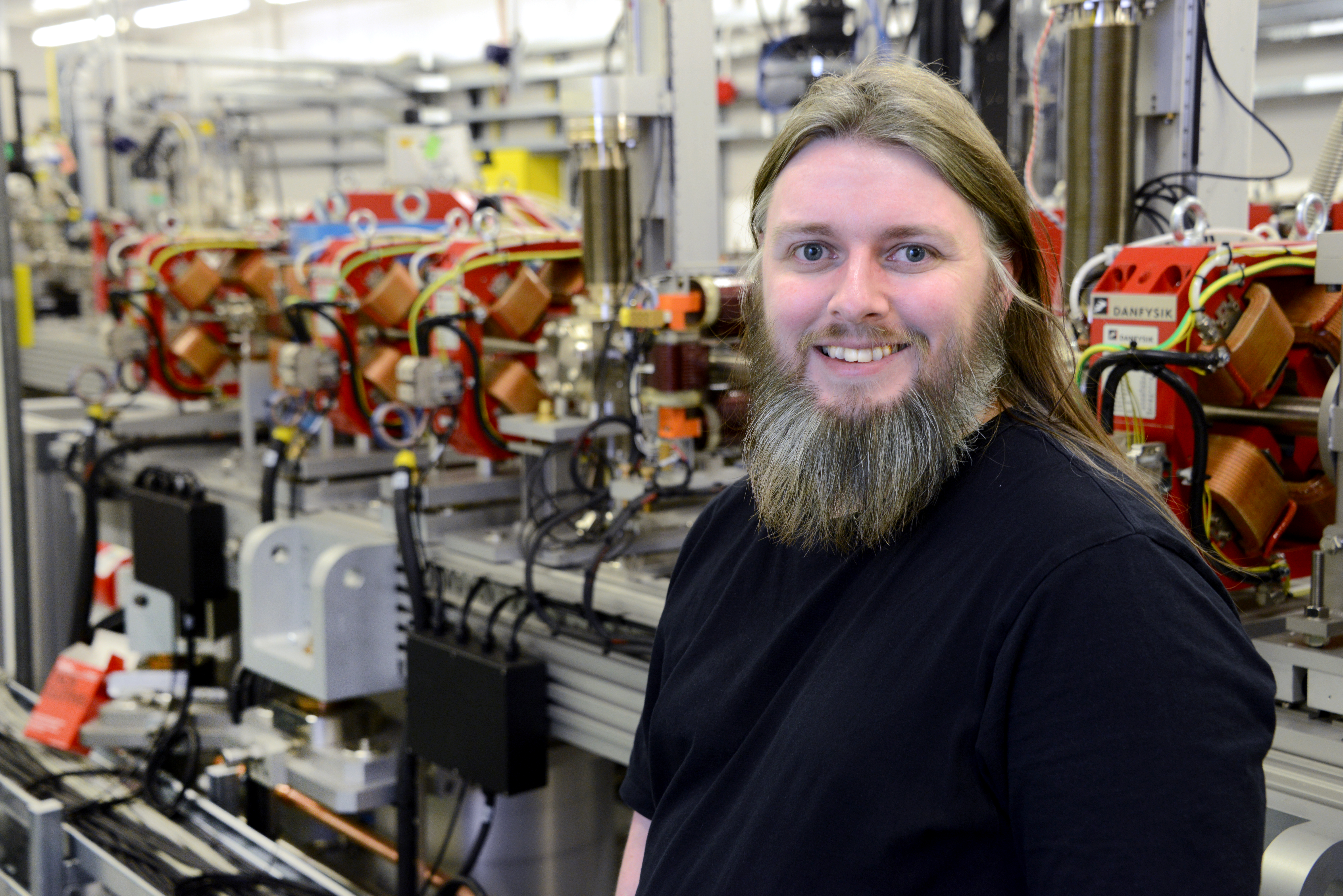
Graeme Burt is a Professor of Particle Accelerator Engineering at Lancaster University's School of Engineering, where he also serves as Associate Director. He is affiliated with the RF Engineering of Accelerators at Lancaster (REAL) group, the Cockcroft Institute, and Security Lancaster. His research spans multiple interdisciplinary areas connecting particle accelerator physics with medical applications and security technologies. Professor Burt's research interests focus on the development of novel particle accelerator technologies, with particular expertise in RF engineering for accelerators, terahertz technology applications in beam manipulation, superconducting materials for accelerator cavities, and beam physics. His work bridges fundamental accelerator research with practical applications in medical physics and security. He has made significant contributions to international accelerator projects including CompactLight, the High Luminosity LHC, and AWAKE (proton-driven plasma wakefield acceleration). His recent publications demonstrate a strong focus on terahertz-driven particle acceleration techniques, high-efficiency RF components like klystrons, and superconducting materials characterization. His research shows a clear trajectory toward compact accelerator technologies with applications in medicine and security, while maintaining strong connections to fundamental accelerator physics for high-energy physics applications. Professor Burt actively supervises postgraduate research, currently guiding 11 PhD students through their research projects. His leadership extends to major international collaborations, including contributions to the CompactLight Design Study and the AWAKE experiment at CERN. He leads the RF Engineering of Accelerators at Lancaster (REAL) group, which focuses on developing next-generation accelerator technologies. His team collaborates extensively with the Cockcroft Institute and international facilities including CERN, contributing to major global accelerator projects while developing novel approaches to accelerator design and implementation.