معرفی
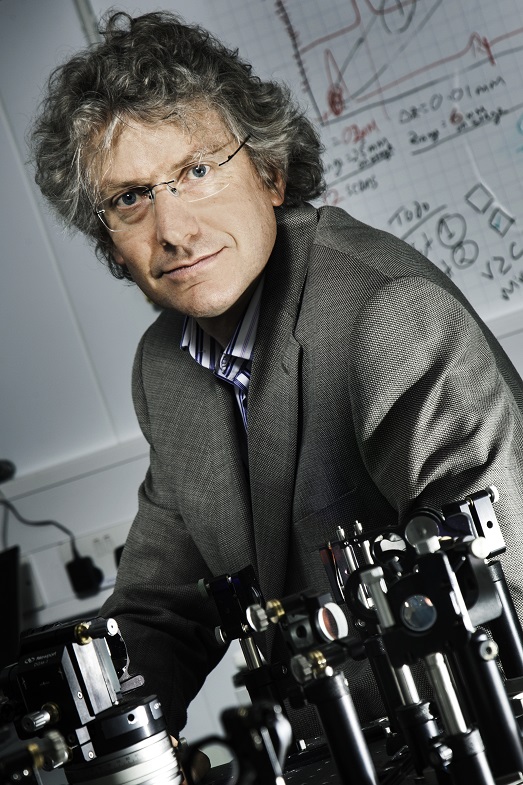
Graeme Burt is a Professor of Particle Accelerator Engineering at Lancaster University's School of Engineering, where he also serves as Associate Director. He is affiliated with the RF Engineering of Accelerators at Lancaster (REAL) group, the Cockcroft Institute, and Security Lancaster. His research spans multiple interdisciplinary areas connecting particle accelerator physics with medical applications and security technologies.
Professor Burt's research interests focus on the development of novel particle accelerator technologies, with particular expertise in RF engineering for accelerators, terahertz technology applications in beam manipulation, superconducting materials for accelerator cavities, and beam physics. His work bridges fundamental accelerator research with practical applications in medical physics and security. He has made significant contributions to international accelerator projects including CompactLight, the High Luminosity LHC, and AWAKE (proton-driven plasma wakefield acceleration).
His recent publications demonstrate a strong focus on terahertz-driven particle acceleration techniques, high-efficiency RF components like klystrons, and superconducting materials characterization. His research shows a clear trajectory toward compact accelerator technologies with applications in medicine and security, while maintaining strong connections to fundamental accelerator physics for high-energy physics applications.
Professor Burt actively supervises postgraduate research, currently guiding 11 PhD students through their research projects. His leadership extends to major international collaborations, including contributions to the CompactLight Design Study and the AWAKE experiment at CERN.
He leads the RF Engineering of Accelerators at Lancaster (REAL) group, which focuses on developing next-generation accelerator technologies. His team collaborates extensively with the Cockcroft Institute and international facilities including CERN, contributing to major global accelerator projects while developing novel approaches to accelerator design and implementation.