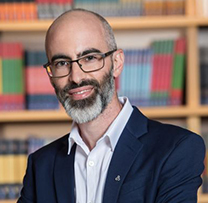
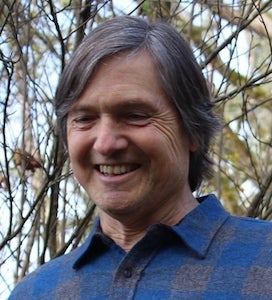
Maria Edvige Ravasio is a Researcher in Astrophysics at Radboud University, Nijmegen. Her work focuses on Gamma-Ray Bursts (GRBs) and emerging X-ray transient phenomena linked to compact binary systems. She combines observational data analysis with theoretical models to explore energy release mechanisms in extreme astrophysical events. Research interests include understanding the physical parameters governing GRB prompt emission, neutron star mergers, and black hole dynamics. Her current projects investigate new classes of X-ray transients potentially related to compact object mergers, contributing to high-energy astrophysics and gravitational wave astronomy. Contact: mariaedvige.ravasio@ru.nl
Frans Pretorius is a Professor of Physics at Princeton University, affiliated with the Department of Physics. He holds a Ph.D. in Physics from the University of British Columbia, Vancouver, Canada. His research focuses on Einstein's theory of general relativity, particularly black holes, gravitational waves from binary compact object mergers, and critical phenomena in gravitational collapse. He also explores higher-dimensional black hole dynamics and cosmological singularities. Key awards include the Dirac Medal (2021), Galileo Galilei Medal (2021), and New Horizons Prize in Physics (2016). He is a Fellow of the American Physical Society and the International Society on General Relativity and Gravitation. Pretorius advises three graduate students: Zack Gelles, Hengrui Zhu, and Josef Zimmerman. His work often involves numerical relativity and computational methods, as seen in his studies of black hole mergers and spacetime dynamics.
Josu Aurrekoetxea is a Beecroft Fellow and extraordinary Junior Research Fellow (eJRF) at The Queen's College, University of Oxford, working within the Astrophysics sub-department of the Department of Physics. He joined Oxford in October 2021 after completing his academic journey that began in the Basque Country. Originally from Sestao, a historically industrial city in Greater Bilbao, he attended Saturnino de la Peña high school before earning his undergraduate degree in Physics at the University of the Basque Country. In 2016, he moved to London to pursue an MSc in Quantum Fields and Fundamental Forces at Imperial College London, followed by a PhD in Theoretical Physics at King's College London. Dr. Aurrekoetxea's research centers on gravitational waves, black holes, and cosmology, with particular expertise in numerical relativity. His work involves using high-performance computing methods to solve Einstein's equations of general relativity, simulating extreme gravitational phenomena such as black hole collisions. He explores how gravitational waves from catastrophic cosmic events can address fundamental questions about the universe's origins and composition. His research spans strong-field gravity regimes, vacuum decay phenomena, dark matter interactions with black holes, and primordial black hole formation. His publications reflect a strong focus on computational approaches to theoretical physics problems, with numerous papers on numerical relativity techniques, gravitational wave analysis, and cosmological simulations. His work often involves collaboration with leading researchers in the field and contributes to major projects like GRChombo, an open-source numerical relativity code. At The Queen's College, Dr. Aurrekoetxea serves as a Physics Tutor, teaching relativity to third-year undergraduate students. His academic position combines research excellence with teaching responsibilities, positioning him at the forefront of gravitational physics research while contributing to the education of future physicists. His laboratory work centers around the GRChombo project, an adaptable numerical relativity code for fundamental physics that enables high-performance simulations of Einstein's equations. This computational framework supports his research into strong-field gravity phenomena and has become a valuable resource for the broader gravitational physics community.
Alexandre Sevrin is a Professor at the Faculty of Sciences, Department of Physics at Vrije Universiteit Brussel (VUB). His research focuses on theoretical particle physics, string theory, and quantum field theory, particularly exploring beyond the Standard Model physics. He has been actively involved in gravitational wave research, collaborating with major observatories like LIGO, Virgo, and KAGRA. Sevrin holds prestigious roles including membership in the Royal Flemish Academy and the International Union of Pure and Applied Physics (IUPAP). His research spans high-energy physics, with recent projects addressing gravitational wave detection, pulsar timing arrays, and axionic domain walls. Notable contributions include studies on neutron star mergers and FRB-GRB correlations. He leads initiatives like the Einstein Telescope technology development (ET-TECH) and ultra-low noise interferometry projects. Sevrin has received multiple awards, including Royal Flemish Academy membership (2012) and IUPAP election (2014). He organizes major conferences such as the CERN Winter School on Supergravity and the Solvay Conference on Physics, reflecting his leadership in the academic community. His 74 publications and 59 active projects highlight his prolific research output. Key collaborations involve LIGO-Virgo-KAGRA collaborations and investigations into stochastic gravitational wave backgrounds. Current grants include SRP72 (High-Energy Physics) and FWOTM1266 (cryogenic interferometry). Sevrin’s work bridges theoretical frameworks with experimental advancements, contributing to cutting-edge physics in Brussels and internationally.
Wenbin Lu is an Assistant Professor in the Department of Astronomy at the University of California, Berkeley. He specializes in theoretical astrophysics, focusing on energetic transient phenomena such as Fast Radio Bursts (FRBs), Tidal Disruption Events (TDEs), Gamma-Ray Bursts (GRBs), and compact object mergers. His research integrates plasma physics, relativity, and hydrodynamics to study relativistic jets, accretion disks, and stellar evolution. He holds a PhD in Astronomy from the University of Texas at Austin (2018) and a Bachelor's in Physics from Peking University (2013). Education: PhD in Astronomy (2018) - University of Texas at Austin Bachelor in Physics (2013) - Peking University Research interests include: FRB emission mechanisms and polarization studies TDE dynamics and accretion processes Relativistic jet formation in compact object mergers Stellar disruption events and black hole physics His recent work explores unified models for FRB sources, jet choked mechanisms in TDEs, and the formation of gravitational wave events like GW190814. He collaborates on projects involving plasma dynamics, radiative transfer, and multi-messenger astronomy.
Paz Beniamini is an Associate Professor at the Open University of Israel and Head of the Astrophysics Research Center of the Open University (ARCO). He holds a PhD in Astrophysics from the Hebrew University of Jerusalem (2016) and has held postdoctoral positions at Caltech, George Washington University, and the Institut d’Astrophysique de Paris. His research focuses on high-energy astrophysical phenomena, including Gamma Ray Bursts (GRBs), Fast Radio Bursts (FRBs), magnetars, and r-process nucleosynthesis in neutron star mergers. His theoretical work explores jet structures, radiation mechanisms, and connections between compact object mergers and cosmic transients. Key research areas include understanding GRB afterglows, FRB periodicity links to magnetars, and the role of neutron star mergers in heavy element production. He has received multiple grants including ISF computational resources funding (2023), a NASA ATP grant (2024), and led collaborative NSF-BSF projects (2021). His recent publications address ultra-long period magnetars, structured GRB jets, and FRB polarization effects. Grants: NASA ATP, ISF, NSF-BSF Teaching: Senior lecturer at Open University (2021–2024) Adjunct Roles: George Washington University (2023–present)
Raymond Frey is a Professor in the Department of Physics at the University of Oregon, part of the College of Arts and Sciences. He has been a key member of the UO faculty since 1989 and leads research in gravitational wave detection and astrophysics as part of the LIGO Scientific Collaboration. His group focuses on data analysis and characterizing non-astrophysical noise in LIGO detectors. Ph.D., University of California, Riverside, 1984 Joined University of Oregon: 1989 Former Head of Physics Department (2012–2018) Raymond Frey's research centers on experimental high energy physics and astrophysics, particularly the detection of gravitational waves from cataclysmic events such as black hole and neutron star mergers. His work contributes to opening the new field of gravitational wave astronomy. He specializes in identifying and mitigating environmental noise in LIGO data and in conducting triggered searches for gravitational wave signals associated with gamma-ray bursts and supernovae. The recent publications reflect a strong focus on multi-messenger astrophysics, especially the landmark detections of GW150914 and GW170817. These works span areas including signal detection, noise characterization, parameter estimation, and tests of general relativity, with a clear trajectory toward understanding compact object populations and the nature of dense matter. Scientific recognition includes being part of the LIGO team awarded Science Breakthrough of the Year in 2016 and 2017 . These honors celebrate the first direct detection of gravitational waves and the first observation of a binary neutron star merger with electromagnetic counterparts. Raymond Frey has advised numerous graduate students in physics, including Matthew Ball, Adrian Helmling-Cornell, Sudarshan Karki, Kara Merfeld, Philippe Nguyen, Jordan Palamos, Vinny Roma, and Paul Schale. His group has been supported by research grants from the National Science Foundation and other agencies funding LIGO-related work. He has taught a wide range of courses, from introductory physics and astronomy to advanced topics like mathematical methods and electronics. The UO LIGO group, which he co-leads, conducts research both at the LIGO Hanford Observatory and on campus, focusing on data analysis and detector characterization. The team regularly collaborates with international partners within the LIGO Scientific Collaboration and participates in major discovery efforts.
Duncan Galloway is an Associate Professor at the School of Physics and Astronomy, Monash University, with a focus on neutron star binaries and gravitational wave detection. His career spans oceanography, astrophysics research, and leadership in projects like the Gravitational-wave Optical Transient Observatory (GOTO). Education: University of Tasmania (Undergraduate) Massachusetts Institute of Technology (Postdoctoral) University of Melbourne (Fellowship) His research centers on observational studies of accretion-powered millisecond pulsars and thermonuclear bursts using NASA/ESA X-ray satellites (Rossi X-ray Timing Explorer, Chandra, NuSTAR). He also contributes to gravitational wave discovery via the GOTO project and collaborations with the ARC Centre of Excellence. Recent publications highlight trends in time-domain astrophysics , gravitational wave detection , and neutron star physics , with applications to compact object mergers and gamma-ray bursts. His work intersects with UN Sustainable Development Goals for scientific progress. Scientific Awards: ARC Discovery Project Grant DP180103140 ARC Fellowship at University of Melbourne He actively participates in advising through collaborations with institutions like MIT, University of Melbourne, and Siding Spring Observatory, and his grants include nuclear astrophysics and gravitational wave discovery initiatives. Projects under his leadership include the GOTO network for gravitational wave alerts, the ARC Centre of Excellence for Gravitational Wave Discovery, and nuclear reaction studies in superdense matter.
Professor Chiaki Kobayashi is a leading astrophysicist at the University of Hertfordshire, affiliated with the Centre for Astrophysics Research within the School of Physics, Engineering & Computer Science. Her research spans galactic chemical evolution, supernovae nucleosynthesis, and high-redshift galaxy formation. RAS Grant: Funded research on extragalactic universe studies with ALMA and JWST Collaborations: Active involvement with BRIDGCE Consortium (2021-2024) and CDMW project (2024-2027) Research interests focus on: Chemical evolution of galaxies across cosmic time Supernovae and nucleosynthesis processes Chemodynamical modeling of Milky Way evolution Elemental abundance analysis in distant galaxies Recent publications highlight her work on: Chemical signatures of dwarf satellite galaxies Direct determination of C, N, O abundances at high redshift Galaxy enrichment mechanisms using JWST data Supernova shock wave propagation models Her research combines theoretical modeling with multi-wavelength observations, particularly leveraging James Webb Space Telescope capabilities.
Dr. Paul Altin is a prominent researcher at the Australian National University's Centre for Gravitational Astrophysics within the Research School of Physics. His work focuses on gravitational wave physics, quantum optics, and dark matter detection, with significant contributions to major international collaborations including LIGO, Virgo, and KAGRA. His research interests span gravitational wave detection techniques, quantum measurement science, and dark matter searches. Altin has made substantial contributions to gravitational wave data analysis, particularly in continuous wave searches and compact binary coalescence studies. He is also deeply involved in the ORGAN experiment, which searches for axion-like dark matter particles using high-precision microwave cavity techniques. Analysis of his recent publications reveals a strong focus on gravitational wave astronomy across multiple observational runs (O3, O4), with particular emphasis on multi-messenger astronomy, continuous wave detection, and dark matter searches. His work bridges theoretical astrophysics with cutting-edge experimental techniques in quantum measurement. Altin is an active participant in numerous international collaborations, contributing to major gravitational wave discoveries including binary black hole mergers, neutron star-black hole coalescences, and dark matter constraints. His research spans both theoretical analysis and experimental instrumentation development. He is a key member of the Atom Laser group at ANU, working on advanced quantum measurement techniques for gravitational wave detection. His work on cryogenic systems and low-vibration environments supports the development of next-generation gravitational wave observatories with improved sensitivity.
Dr. David Rabeling is a Research Fellow at the Centre for Gravitational Astrophysics within the College of Science at the Australian National University. He is an active member of the LIGO Scientific Collaboration, contributing to numerous gravitational wave detection and analysis efforts. His work focuses on gravitational wave physics with emphasis on binary black hole and neutron star systems. Dr. Rabeling's research spans multiple areas of gravitational wave astronomy, including data analysis techniques for LIGO detectors, tests of general relativity using gravitational wave signals, and the study of binary compact object mergers. His work on the GW170817 event (the first observed binary neutron star merger) has been particularly significant, contributing to our understanding of neutron star properties, equation of state, and multi-messenger astronomy. He has developed expertise in gravitational wave signal processing, detector characterization, and the search for continuous and transient gravitational wave signals. His publication record demonstrates expertise in gravitational wave data analysis across multiple detector observing runs. A significant portion of his recent work focuses on the GW170817 event, examining it from multiple perspectives including tests of general relativity, neutron star equation of state constraints, and searches for electromagnetic counterparts. His research bridges theoretical predictions with observational gravitational wave data, contributing to our understanding of fundamental physics and astrophysical phenomena. As part of the Centre for Gravitational Astrophysics at ANU, Dr. Rabeling works within a team of researchers focused on gravitational wave detection and analysis. The Centre is part of the international LIGO Scientific Collaboration, giving him access to cutting-edge gravitational wave data and collaborative opportunities with researchers worldwide. His work contributes to Australia's growing role in gravitational wave astronomy and multi-messenger astrophysics.
Troels Harmark is an Associate Professor at the Niels Bohr Institute, University of Copenhagen, specializing in theoretical high-energy physics and gravitational physics. He leads the 'Theoretical Particle-Physics and Cosmology' section and teaches 'General Relativity and Cosmology' and 'Introduction to String Theory.' Research Interests: Spin Matrix theory (quantum mechanical models for emergent gravity), AdS/CFT correspondence, non-relativistic geometry, finite-temperature gauge/string theory, black hole magnetospheres, and astrophysical jets. Recent Articles (2025): Focused on non-relativistic string theory, gravitational solitons, and gravitational wave detection collaborations. Collaborations: Active in LIGO-Virgo-KAGRA and Virgo collaborations, contributing to gravitational wave astronomy and detector characterization.
Maarten van de Meent is an Associate Professor at the Niels Bohr Institute, University of Copenhagen, specializing in Theoretical High Energy, Astroparticle, and Gravitational Physics. His research focuses on gravitational wave astronomy, black hole dynamics, and waveform modeling for compact binary systems. Recent collaborative studies (2023–2025) highlight his work on Extreme Mass Ratio Inspirals (EMRIs) , Effective One-Body Formalism , Kerr Spacetime Perturbations , and Spin-Orbit Precession . His publications emphasize gravitational self-force calculations , orbital resonance treatments , and LISA/Einstein Telescope waveform models . Key collaborations include researchers like Alessandra Buonanno (Max Planck Institute), Niall Warburton (University College Dublin), and Guillaume Faggioli (University of Bern). His work addresses Gravitational wave detection Post-Newtonian theory Numerical relativity Space-based observatories
Gaia Fabj is a PhD Fellow at the Niels Bohr Institute (University of Copenhagen) within the Astrophysics and Planetary Science division. Her research focuses on black hole dynamics in active galactic nuclei (AGN) disks, gravitational wave astronomy, and numerical simulations of compact object interactions. Research Focus Hydrodynamic modeling of black hole evolution in AGN disks Environmental effects on gravitational wave signal interpretation Gas-assisted merger mechanisms for binary black holes Stellar remnant interactions in nuclear clusters Orbital alignment processes in retrograde systems Key Methodologies High-resolution hydrodynamic simulations Three-body dynamical scattering experiments Waveform modeling for space-based detectors
Pablo Martinez Mirave is a Postdoctoral Fellow at the Niels Bohr Institute , University of Copenhagen, specializing in theoretical high-energy physics, astroparticle physics, and gravitational physics. His research focuses on neutrino astronomy, dark matter interactions, and supernova-related neutrino backgrounds. His recent work explores: Neutrino signatures of Thorne–Żytkow objects and their detection potential Constraints on new physics from diffuse supernova neutrino studies Implications of magnetorotational stellar collapse for neutrino fluxes Neutrino-ultralight dark matter interactions Testing CPT invariance via solar neutrino observations His publications highlight interdisciplinary approaches bridging high-energy astrophysics with particle physics and cosmology.