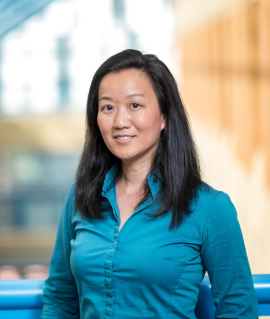
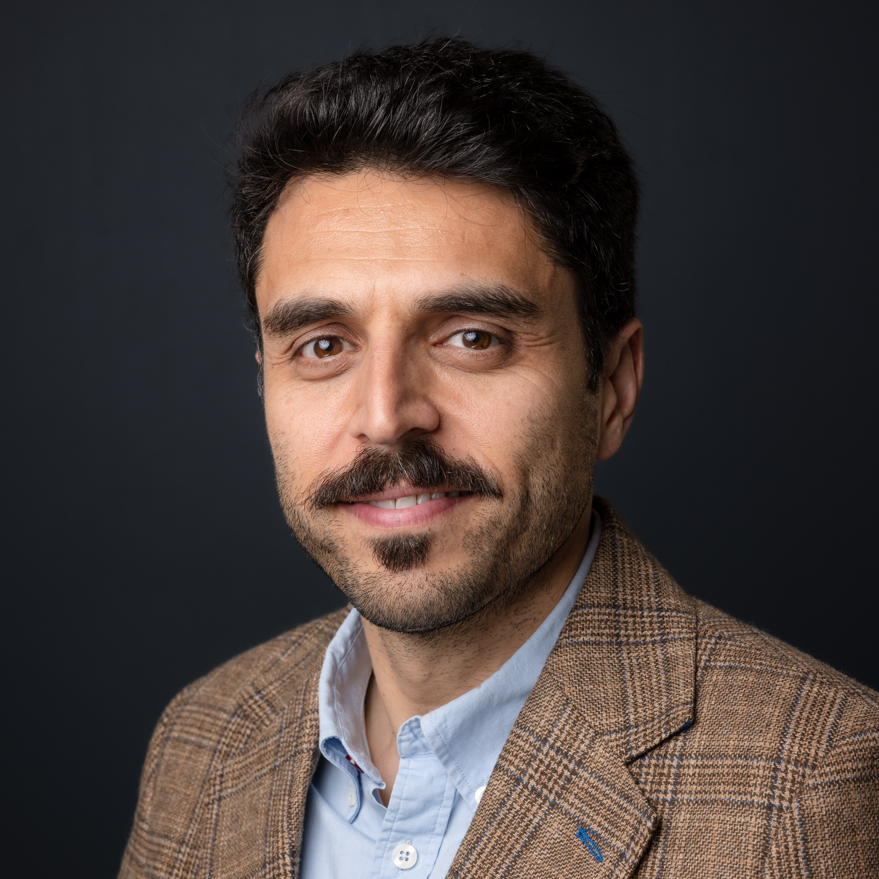
Darren Dahl is a Professor at the University of British Columbia (UBC) Sauder School of Business , holding the RBC Financial Group Professor of Entrepreneurship chair. His research focuses on new product development , creativity , consumer emotions , social influence , and social marketing . Education: BCom from the University of Alberta, PhD from UBC Leadership: Dean of the Sauder School of Business Research Trends: Recent work emphasizes innovation strategies , consumer identity dynamics , ethical marketing , and social impact . He explores how organizational structures influence perceptions, the role of identity in consumption, and the psychological drivers of prosocial behavior. Contact: Office HA 769, Tel: 604-822-8556, Email: darren.dahl@sauder.ubc.ca
Manex Aguirrezabal Zabaleta is an Associate Professor in the Department of Nordic Studies and Linguistics at the University of Copenhagen. He previously held positions as a Postdoc (2017-2019) and Assistant Professor at the same institution. His educational background includes: PhD in Natural Language Processing from the University of the Basque Country (UPV/EHU), conducted at the IXA NLP group. Master's degree in Natural Language Processing from UPV/EHU. Bachelor's degree in Computer Science (5 years) from UPV/EHU. Dr. Aguirrezabal's research focuses on the computational analysis of poetry , particularly stress patterns in English. He explores whether computers can effectively analyze poetic structures, a field with roots in the 1980s but revitalized by modern techniques. Additionally, he investigates language generation , computational morphology and phonology , and finite-state methods . His work bridges traditional linguistic inquiry with cutting-edge natural language processing. Recent publications (2023-2024) demonstrate a diverse engagement with computational linguistics, including poetry generation, multimodal corpus development, clickbait analysis, and fact-checking. His research often employs zero-shot learning and language models, reflecting current trends in AI-driven linguistic analysis. He has contributed to international collaborations such as ParlaMint (multilingual parliamentary corpora) and the GEHM Zoom corpus. While specific grant details are not provided, his active publication record indicates ongoing research support. Dr. Aguirrezabal maintains a strong connection to his Basque heritage, having pursued his early education in the Basque language.
Jennifer C. Dalton serves as Associate Professor and Undergraduate Program Director in the Department of Communication Sciences and Disorders within Appalachian State University's Beaver College of Health Sciences. With over 15 years of higher education experience, she provides strategic leadership in curriculum development, program assessment, and student success initiatives across the undergraduate program. Her educational foundation includes: Ph.D. in Speech and Hearing Sciences, UNC Chapel Hill (2012) M.A. in Communication Sciences and Disorders, Appalachian State University (1999) M.B.A., Appalachian State University B.S. in Speech Pathology and Audiology, Kent State University (1997) Dr. Dalton's research bridges clinical practice and educational innovation, focusing on pediatric speech disorders while advancing scholarship in teaching methodologies. Her work examines how experiential education builds graduate competencies and how employment prospects influence student retention, reflecting her commitment to evidence-based program development. Recent publications demonstrate consistent output in higher education scholarship, with three peer-reviewed articles published between 2023-2024 addressing pandemic-era pedagogy, graduate training, and student retention analytics. These works highlight her dual expertise in clinical communication sciences and educational leadership. Her academic recognition includes: 2021 Beaver College of Health Sciences Outstanding Teaching Award 2023 UNC System Academic Affairs Faculty Fellowship Dr. Dalton actively secures program development grants that enhance student learning outcomes through innovative curriculum design. As program director, she oversees clinical education pathways while maintaining her ASHA clinical certification and Quality Matters online teaching credentials. Her leadership emphasizes inclusive education practices that prepare diverse learners for professional success in dynamic healthcare environments. Though not leading a named laboratory, Dr. Dalton is central to departmental research through her scholarship of teaching and learning, influencing clinical education standards across the discipline.
Tom Veldkamp is a Professor and Rector Magnificus at the University of Twente. His research focuses on Quaternary geology, geomorphology, and coupled human-ecological systems. He has supervised 32 PhD theses and currently advises 2 ongoing projects. His fieldwork spans over 30 countries, including Indonesia, Turkey, and Rwanda. Editorial Roles: Editor-in-Chief of Agriculture Ecosystems and Environment , former editorial roles at Landscape Ecology , Ecosystems , and others. Research Themes: Land use change modeling, soil dynamics, and sustainable development. Key regions of study include Sundaland (Indonesia), Mediterranean landscapes, and Rwanda. Recent Contributions: Over 230 publications, including landmark studies on hominin fossils in Java and landscape evolution models. His work addresses global challenges like environmental sustainability and land-use transitions, with a focus on integrating natural and social sciences.
Zhiling Gu is a Research Fellow at Yale School of Public Health, having earned her Ph.D. in Statistics at Iowa State University. Her work integrates statistical theory with applications in public health and medicine. Her research spans Functional Data Analysis Network Analysis Spatiotemporal Modeling Statistical AI Foundations Nonparametric Learning applied to neuroimaging, electronic health records, and environmental health studies. Recent publications focus on Adaptive spatiotemporal models Neuroimaging data processing Pandemic forecasting frameworks Environmental exposure modeling with methodological rigor and practical implementation. Scientific achievements include Runner-up in SMI 2023 Student Paper Competition She has taught STAT 305: Engineering Statistics (ISU) STAT 226: Business Statistics Statistical Computing Statistical Learning and actively engages in academic presentations at conferences like SMI 2024 and CMStatistics 2022.
Dr. Frances Chen is a Professor and Area Coordinator in the Department of Psychology at the University of British Columbia (UBC), located on the traditional, ancestral, and unceded territory of the Musqueam People. She holds a PhD from Stanford University (2009). Her research integrates health psychology, social psychology, and neuroendocrinology to explore how social experiences influence mental and physical health. Key areas include the physiological impacts of loneliness, social support, and hormonal changes during puberty on adolescent development. Education: PhD, Psychology, Stanford University, 2009 Research Focus: Dr. Chen investigates how social interactions 'get under the skin' through studies on loneliness, stress, conflict negotiation, and hormonal mechanisms. Her work emphasizes interventions to enhance social connection and reduce health disparities. Recent Article Trends: Recent publications highlight interdisciplinary approaches, including genetic influences on depression, effects of near-infrared lighting on cognition, and longitudinal studies on adolescent hormonal contraceptive use. Her work bridges basic science and applied health outcomes. Awards & Grants: Michael Smith Health Research BC C2 Award (2022) Killam Faculty Research Fellowship (2019) Teaching & Learning Enhancement Fund Grant (2025) SSHRC Prosociality Project Funding (2023) Lab & Mentorship: Director of the Social Health Lab, she mentors graduate and undergraduate students, prioritizing equity and inclusion. Recent lab achievements include studies on teen health development and interventions to improve student success in psychology programs. Lab Initiatives: UBC Teen Health and Development Study (longitudinal hormonal/mental health tracking) NIR lighting health impact research (collaborative interdisciplinary project) Prosociality 'in the Wild' SSHRC project
Karoline Faust is an Associate Professor at KU Leuven, affiliated with the Laboratory of Molecular Bacteriology (Rega Institute) and the Faculty of Medicine . She contributes to the iSi Health and Leuven One Health institutes, and serves on senior academic councils. Her research spans microbial systems biology, focusing on community dynamics and network analysis. Education: PhD in bioinformatics (2010, KU Leuven) Affiliations: KU Leuven, ISME Journal editorial board, Belgian Society for Microbiology Her research investigates microbial community dynamics , systems biology approaches to microbiomes, and bioinformatics tool development . She specializes in modeling human gut microbiota , synthetic microbial communities , and environmental microbiomes (e.g., microplastic impacts on Daphnia microbiomes). Her work integrates metabolic modeling , network analysis , and experimental systems to understand microbial interactions. Recent publications highlight her contributions to microbial network inference , 16S rRNA sequencing protocols , microfluidics , and ecological modeling of microbiomes. She develops tools like manta , miaSim , and CoNet to analyze community structures. Teaching: Karoline co-teaches courses in microbiology, bioinformatics, and network analysis at KU Leuven, and has contributed to international workshops on microbial network inference. Scientific Engagement: She serves as Senior Editor at ISME Journal and Secretary of the Belgian Society for Microbiology .
Dr. Andrea R. English is a Senior Lecturer in Philosophy of Education at the Moray House School of Education and Sport, University of Edinburgh. She holds significant academic leadership roles, including President-Elect of the John Dewey Society and Editor-in-Chief of IMPACT: Philosophical Perspectives on Education Policy . Her research focuses on productive struggle in learning, dialogic pedagogy, and decolonizing education. She earned her doctorate from Humboldt University Berlin and has taught globally, including at Mount Saint Vincent University and Humboldt University Berlin. Dr. English leads the Productive Struggle Lab and the Listening Study Group, emphasizing anti-oppressive and democratic educational approaches. She coordinates teacher education initiatives and supervises PhD students exploring critical thinking, inclusive education, and decolonization. Her work bridges philosophy and practice, addressing how teachers foster student resilience through pedagogical listening, particularly in STEM education. She actively contributes to Scotland’s anti-racist curriculum project and collaborates internationally on transformative learning and ethical teaching practices. Dr. English’s teaching spans undergraduate and postgraduate programs, including courses on critical thinking, inclusive pedagogy, and John Dewey’s educational philosophy. Her funded research explores AI tools for identifying student struggle and the role of negativity in transformative learning. She frequently presents at global conferences, advocating for dialogic teaching and moral education reform.
Dr. Maud Borie is a Senior Lecturer in Environment, Science & Society at King’s College London’s Department of Geography, within the School of Global Affairs. Her work bridges Human Geography and Science and Technology Studies (STS), focusing on biodiversity governance, environmental policy, and green finance. She holds a PhD from the University of East Anglia and has held visiting fellowships at Harvard Kennedy School. Borie’s research explores the politics of environmental knowledge and its societal implications, including nature-based solutions and green finance mechanisms. She has contributed to global initiatives like the Intergovernmental Platform on Biodiversity and Ecosystem Services (IPBES) and co-founded the Mediterranean Alliance for Wetlands. Her recent projects include analyzing green finance’s reliance on scientific legitimacy and mapping resilience strategies in cities. She teaches courses on environmental policy, qualitative methods, and geographies of financialization. Borie has been awarded grants for interdisciplinary projects such as ‘deep listening with machines for equitable environmental futures’ and ‘forestscapes’ immersive soundscapes. Her research outputs span over 18 peer-reviewed articles, with topics ranging from climate change framing to urban resilience in the Global South. Awards: Planetary-scale interpretation (2023), Rethinking environmental policy (2022), Forestscapes collaboration (2023) Grants: Creative Collaboration Seed Fund (2023), EU/PEARL disaster resilience projects Labs/Teams: KingsCAT (Social Media Research), Political Ecology, Biodiversity & Ecosystem Services (PEBES) group
Dylan Hadfield-Menell is an Assistant Professor in the Department of Electrical Engineering and Computer Science at the Massachusetts Institute of Technology, holding the Bonnie and Marty (1964) Tenenbaum Career Development Professorship. His research focuses on AI alignment and human-AI interaction within MIT's School of Engineering. His research interests center on agent alignment problems in AI systems, particularly examining uncertainty in objective optimization for human-robot teams and societal oversight of machine learning systems. Key areas include the principal-agent alignment problem , assistance games frameworks , and robust preference learning that accounts for hidden contextual factors in reinforcement learning from human feedback. His recent publications reveal strong trends toward multi-agent cooperation , formal contract mechanisms for resolving social dilemmas, and advanced evaluation methodologies for AI safety. The research spans theoretical frameworks like open-universe assistance games while addressing practical challenges in language model alignment and cultural bias assessment. Scientific awards include: AI2050 Early Career Fellowship from Schmidt Futures Berkeley Fellowship NSF Graduate Research Fellowship C.V. Ramamoorthy Distinguished Research Award His work bridges theoretical computer science with real-world AI governance challenges, as demonstrated through MIT's participation in AI policy white papers. Current research directions include developing frameworks for transparent AI systems and addressing fundamental limitations in aligning recommender systems with human values through interdisciplinary synthesis.
Andrew D. White is an Associate Professor of Chemical Engineering at the Hajim School of Engineering & Applied Sciences, University of Rochester. He holds a PhD from the University of Washington (2013). His research focuses on automating scientific discovery through AI, particularly leveraging large language models (LLMs) and deep learning techniques in chemistry. His lab develops agents that integrate literature analysis, hypothesis generation, and experimental design to advance fields like molecular dynamics and drug discovery. Education: PhD in Chemical Engineering, University of Washington, 2013 BS/MS (not explicitly stated in text, inferred from career timeline) Research Interests: Large language models for scientific automation Deep learning applications in chemistry and materials science Molecular dynamics simulations Scientific agents and autonomous systems Publications: His work includes groundbreaking studies on closed-loop AI systems for chemistry, federated learning in molecular property prediction, and multi-agent systems for drug discovery. Recent highlights include the Robin system and ChemCrow tools. Awards: Recipient of the NSF Career Award (2018), NIH Outstanding Investigator Award (2020), and the Curtis Teaching Award (2019). He also advises biotech companies and serves on the National Academy of Sciences' Chemical Sciences Roundtable. Grants & Funding: Supported by DOE, NSF (multiple grants including CBET-1751471), NIH (R35GM137966), and LLNL projects. Collaborates with institutions like Argonne National Lab and Qubit Pharmaceuticals. Labs & Teams: Leads the White Lab at Rochester and co-founded FutureHouse, a nonprofit advancing AI-driven scientific discovery. Supervises a multidisciplinary team of PhD students and postdocs in computational chemistry, AI, and biophysics.
Professor Shani Orgad is a leading academic in the Department of Media and Communications at the London School of Economics (LSE), where she holds the rank of Professor. Her research focuses on gender, feminism, media representations, and globalization, with notable works exploring motherhood, work-life balance, and the intersection of media with contemporary cultural narratives. Education: Orgad earned a bachelor’s degree in Media and Communications from The Hebrew University in Jerusalem, followed by a Master's and PhD in Media and Communications at LSE. She is renowned for her interdisciplinary approach, blending media studies with ethnographic research and sociocultural analysis. Research Interests: Her work critically examines media discourses around gender, motherhood, and inequality. Key themes include the 'confidence culture' critique, menopause visibility, and the role of media in shaping public perceptions of marginalized groups. She has also explored humanitarian communication and the challenges faced by NGOs in engaging the public. Awards: Orgad has been recognized for her teaching excellence, including the 2019 LSE Teaching Excellence Prize and the 2018 LSE Excellence in Education Award. Her book Confidence Culture (2022), co-authored with Rosalind Gill, challenges neoliberal individualism in modern feminist discourse. Public Engagement: She frequently contributes to public discussions on media and gender through blogs, podcasts, and media commentaries. Her work bridges academic rigor with societal relevance, addressing issues like pandemic resilience, menopause discourse, and the impact of social media on self-perception. Current Projects: During the 2024/25 academic year, Orgad is on research leave, focusing on new projects that continue her exploration of media, gender, and cultural dynamics.
Associate Professor Mohsen Kalantari is a Geospatial Engineering academic at the University of New South Wales (UNSW) School of Civil and Environmental Engineering , with concurrent roles as co-founder of the startup Faramoon . His career spans roles at the University of Melbourne's Department of Infrastructure Engineering and Victorian government's land administration initiatives through DELWP. Education : PhD in Geomatics Engineering (2008, University of Melbourne), Master of GIS Engineering (2004), Bachelor of Surveying Engineering (2001) His research bridges geospatial engineering with construction automation , focusing on 3D cadastre , BIM-GIS integration , and smart cities . Recent publications show trends in underground land administration , digital twins , and LADM standard implementations . Scientific Awards : National educational recognition (2019), Victorian educational grants (2018), and prestigious fellowships (2012) As a supervisor , he guides PhD candidates in topics ranging from BIM for waste management to underground cadastral systems . His industry engagement includes partnerships with the United Nations , Open Geospatial Consortium , and Singapore Land Authority .
Chao Liu is an Associate Professor at the Department of Biomedical Engineering , Southern University of Science and Technology (2024.11–present). Previously, he served as an Assistant Professor at the same institution (2019–2024.11) and completed a Postdoctoral Fellowship at New York University (2016–2019) with joint appointments in the Department of Biomedical Engineering and Orthopedics at NYU Langone Health . He holds a PhD in Biomedical Engineering (2016) and MASc in Mechanical Engineering (2010) from University of Toronto , following a BASc in Engineering Science (2008). Education : PhD (IBBME, U of Toronto, 2016), MASc (Mechanical Engineering, U of Toronto, 2010), BASc (Engineering Science, U of Toronto, 2008) His research focuses on mechanobiology of stem cells , bone tissue engineering , and functional implants . He investigates how mechanical forces modulate osteogenic and angiogenic stem cells, designs implants with micro-geometry to enhance cellular activity, and develops 3D real-time imaging modalities for bone repair processes. His work spans biomechanics , regenerative medicine , and cellular mechanotransduction . The selected publications from 2022 to 2010 reveal trends in mechanical force applications for bone regeneration, pharmacological impairments in healing, nanostructured biomaterials for stem cell differentiation, and microfluidic platforms for osteocyte studies. These works are published in journals like Bone , FASEB Journal , and ACS Applied Materials & Interfaces . Scientific Awards : International Conference BME Young Investigator Award (2019), IFMRS Travel Grant (2017), ASBMR Young Investigator Grant (2016), CIHR Travel Awards (2010–2014), Ontario Graduate Scholarship (2011–2013), Barbara and Frank Milligan Fellowship (2008, 2010) Chao Liu mentors graduate students, including Zhang Jianing (2022 Master’s graduate). His lab ( https://abtrl.bme.sustech.edu.cn/ ) recruits postdocs and research assistants for projects in mechanical force applications , micro-geometric implants , and 3D imaging . He has contributed to 14 journal articles with 714 citations and presented at 6 international conferences in the past three years.
Prof. Dr. Nicole Ondrusch is a Professor at Heilbronn University (HHN) within the Faculty of Computer Science. She specializes in teaching methodological fundamentals of software engineering, including ERP systems, Design Thinking, Change Management, and digital transformation. Her research focuses on educational concepts for computer science technologies and future-relevant skills. Key Roles and Projects: Member of BW-CAR doctoral center Organizer of Barcamp Heilbronn, an unconference teaching project fostering student teamwork Principal investigator in funded projects like DigiTrans (digital transformation education) and DEV:GAMES (educational game development) SAP Academic Board DACH spokesperson since 2021 Research Interests: Her work emphasizes innovative teaching methods such as Design Thinking, agile project implementation, and digital experimentation. She explores ethical AI education, interdisciplinary collaboration, and the societal impact of digital transformation. Nicole also develops practical teaching tools like virtual escape rooms and game-based learning frameworks. Grants & Partnerships: Funded by DAAD (DigiTrans), Stiftung Innovation, and others Collaborates with industry partners like SAP and local IT organizations (ConnectIT) Labs & Teams: She leads the Lab:D initiative, developing digital teaching platforms, and co-organizes the Barcamp, a student-led event integrating real-world project management and community building.