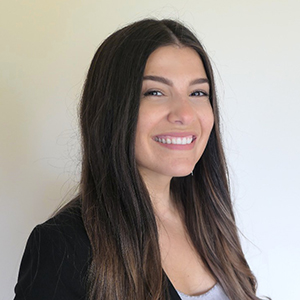
Jiyun Kang serves as an Associate Professor at Purdue University's White Lodging-J.W. Marriott, Jr. School of Hospitality and Tourism Management within the College of Health and Human Sciences. Her research examines consumer behavior, well-being, and sustainable practices across fashion, luxury, and retail sectors, with emphasis on artificial intelligence applications, crisis management, and corporate social responsibility initiatives. Her academic credentials include: PhD in Human Ecology from Louisiana State University (2010) MS in Business/Marketing from Seoul National University (2005) BA in English Language and Literature from Korea University (2002) Dr. Kang's research spans consumer psychology, sustainable consumption, and digital innovation in retail. She investigates decision fatigue in luxury contexts, AI-driven mitigation of purchase hesitation, and psychological ownership in fashion subscription models. Her work consistently employs quantitative methods including machine learning and causal modeling to analyze brand-consumer dynamics during ethical crises and sustainability transitions. Analysis of her 2022-2025 publications reveals three dominant trends: (1) blockchain/NFT applications for luxury authentication, (2) AI ethics in retail crisis management, and (3) intersectional approaches to sustainable fashion through psychological ownership frameworks. Methodologically, she increasingly integrates natural language processing with traditional consumer behavior models to examine corporate social responsibility perceptions. Scientific awards: No awards are documented in the provided materials. Advising and grants: The source text contains no information regarding graduate student mentorship or externally funded research projects.
Kumar Vaibhav Srivastava is a Professor in the Department of Electrical Engineering at the Indian Institute of Technology Kanpur (IIT Kanpur). His research focuses on electromagnetic theory, meta-materials, and antenna design, with significant contributions to the field of computational electromagnetics and microwave engineering. Dr. Srivastava received his B.Tech from Kamla Nehru Institute of Technology, Sultanpur U.P. in 2002, followed by an M.Tech from IIT Kanpur in 2004. He completed his PhD at IIT Kanpur in 2008 with a thesis titled "Studies on Inhomogeneous Dielectric Resonators for Improved Mode Separation in MIC Environment using Efficient FDTD Algorithm and its Application to Band-pass Filter" under the supervision of Prof. Animesh Biswas. His research interests span a wide range of topics in electromagnetics, with particular expertise in Meta-Materials , Microwave Antennas , Microwave Absorbers , Microwave Cloaking , and the Finite-Difference Time-Domain (FD-TD) Technique . Dr. Srivastava's work has significant applications in wireless communications, radar systems, and electromagnetic compatibility. His innovative approaches to meta-material absorbers and antenna design have garnered attention in both academic and industrial circles. Dr. Srivastava's recent publications demonstrate a strong focus on advancing meta-material absorber technology and antenna design. His work shows consistent innovation in bandwidth enhancement techniques, polarization independence, and compact antenna designs for ultra-wideband applications. His research bridges theoretical electromagnetic principles with practical engineering solutions. Cadence Gold Medal-2005 for Best M.Tech. Thesis Best Teaching Assistantship Award (2005-06) Appreciation Letter from GE Global Research Centre Young Research Fellowship (Class of 1979) Best Paper Award at ATMS Conference (2013) IEI Young Engineer Award 2014 Dr. Srivastava has supervised numerous research projects and students in the field of electromagnetics and antenna design. His work with industry partners, including GE Global Research Centre, demonstrates his ability to translate theoretical research into practical applications. He maintains active collaborations with researchers both within IIT Kanpur and internationally. Based in the Advanced Centre for Electronic Systems (ACES) at IIT Kanpur, Dr. Srivastava works within a vibrant research ecosystem that supports cutting-edge work in electronic systems and electromagnetic applications. His laboratory focuses on computational electromagnetic simulations and experimental validation of novel meta-material structures and antenna designs.
Dr. Aykut Koç is an Associate Professor at the Department of Electrical and Electronics Engineering and a faculty member of the National Magnetic Resonance Research Center (UMRAM) at Bilkent University, Turkey. He leads the AykutKoc Lab, focusing on interdisciplinary research at the intersection of machine learning, signal processing, natural language processing, and graph signal processing. Education: B.S. in Electrical and Electronics Engineering (2005, Bilkent University); M.S. in Electrical Engineering (2007), M.S. in Management Science and Engineering (2009), and Ph.D. in Electrical Engineering (2011) under Professor Lambertus Hesselink at Stanford University; LL.B. in Law (Ankara University). His research integrates mathematical signal processing techniques (e.g., fractional Fourier and linear canonical transforms) with modern machine learning architectures like transformers and graph neural networks. Recent work explores semantic communication systems, bias mitigation in legal language models, and cross-modal applications in biomedical imaging and radar technology. Dr. Koç has published extensively in IEEE and Springer journals, with recent articles analyzing Fourier-enhanced transformers, graph-based NLP methods, and time-vertex signal analysis. His work addresses both theoretical innovations and practical applications, including schizophrenia diagnosis, legal outcome prediction, and maritime surveillance. Scientific Awards: Science Academy Young Scientists Award (BAGEP), 2023. He has supervised numerous graduate and undergraduate researchers, many of whom have transitioned to top-tier institutions such as MIT, UCLA, and TU Darmstadt. Dr. Koç actively serves as Associate Editor for multiple IEEE journals and participates in conference program committees, including EMNLP's Natural Legal Language Processing (NLLP) workshop.
Mapuana Antonio is an Associate Professor and head of the Native Hawaiian and Indigenous Health Program at the University of Hawai'i at Manoa. A Native Hawaiian scholar, she conducts community-based participatory research with Native Hawaiian communities to improve holistic health and wellbeing through a focus on resilience and cultural alignment. Her educational background includes: DrPH in Community-Based and Translational Research from the University of Hawai‘i at Mānoa Certificate in Measurement and Statistics (EDEP) from the University of Hawai‘i at Mānoa MA in Counseling Psychology from Washington State University BS in Psychology from Washington State University Dr. Antonio's research takes a strengths-based approach to enhance the physical, mental, and spiritual health of Native Hawaiians. She redefines health and resilience through Native Hawaiian worldviews, addressing structural and socio-cultural determinants. Her work emphasizes community-based participatory research, cultural practices, and the role of 'Āina (land) connectedness in fostering resilience and optimal wellbeing (Mauli Ola). Her recent publications (2017-2024) demonstrate a consistent focus on developing culturally grounded measures for Native Hawaiian health and resilience. Key projects include the Ke Ola O Ka ‘Āina study on 'Āina connectedness and the adaptation of historical loss scales. Her research integrates qualitative and quantitative methods, often co-developed with community partners, to address health disparities and promote culturally relevant interventions. Dr. Antonio has not been mentioned to have received specific scientific awards in the provided information. She secures significant research funding, including as PI for the Ola HAWAII and PIKO pilot studies and co-PI for Project Mōkiha funded by the Robert Wood Johnson Foundation. Her grants support community-driven initiatives in Indigenous health, resilience, and environmental restoration. She mentors students and community members through the NHIH Summer Health Academy and collaborative research projects. Dr. Antonio leads the Native Hawaiian and Indigenous Health Program and collaborates with community research groups such as the Pono Research Hui and Limu Hui. Her work is deeply embedded in partnerships with Native Hawaiian communities, ensuring that research is conducted with and for the community to restore cultural practices and health sovereignty.
Dr. Wanju Huang is a Clinical Assistant Professor in the Learning Design and Technology program at Purdue University , where she focuses on enhancing online learning experiences through innovative instructional design and emerging technologies. Prior to joining Purdue in Fall 2016, she served as an instructional design manager at Teaching and Learning Technologies and spent six years as a lecturer and instructional designer at Eastern Kentucky University. Education: Ph.D. in Curriculum & Instruction (Technology concentration) from University of Illinois at Urbana-Champaign Her research interests center on technology-mediated online communities, instructor presence in digital learning, augmented reality applications, and faculty development programs. She has published extensively on these topics, including studies on multimedia interventions for teaching presence, immersive technologies in ESL education, and adaptive cyber training platforms. Dr. Huang's publications reflect a strong focus on EdTech innovation , with trends spanning AI integration in K-12 , model-based systems engineering , and microlearning strategies . Her work bridges theoretical frameworks like social constructivism with practical implementations in professional education. Professional memberships include the American Educational Research Association, Association for Educational Communications and Technology, and Quality Matters. She teaches courses on learning design foundations, e-learning systems, and professional competency demonstrations in LDT.
Rika Hanamitsu is a Professor at the School of Social Sciences, Waseda University, where she teaches courses related to intercultural communication studies. She holds a Doctor of Philosophy degree from Waseda University and is also affiliated with the Center for International Education and the Global Education Center at the university. Education: Doctor of Philosophy from Waseda University Affiliations: Center for International Education, Global Education Center Her research focuses on intercultural communication and applied linguistics, particularly examining how cultural stereotypes, identities, and communication styles are represented in media and literature. She has conducted extensive research on Allen Say's works and their cultural implications, analyzing how they depict multicultural experiences and identity formation. Professor Hanamitsu's educational activities include teaching various courses including 'Seminar III (Intercultural Communication Studies)', 'Exploring Cultures through Film', 'Inter-Cultural Communication', 'Freshman Seminar', and 'Intercultural Communication' in both fall and spring semesters of 2025. Her teaching emphasizes the use of films as educational tools for intercultural understanding and literacy development. She has participated in overseas activities such as attending the Summer Institute of Intercultural Communication at Hope College, University of Michigan in 2002. Her social activities include intercultural communication training using games to develop communication skills, which she has conducted since 2011. International Presentations: 35th IBBY World Congress (2016), Summer Institute of Intercultural Communication (2002) Domestic Conferences: Japan Association for Language Education & Technology, Japan Association of College English Teachers, Japan Society of English Usage and Style Research Projects: Cultural Comparison of Conflict Scenes in Movies and Their Treatment (2005)
Hayato Yamana serves as Professor at Waseda University's Faculty of Science and Engineering and concurrently holds the position of Vice President for IT Promotion and Chief Information Officer since October 2020. His academic journey began with a Dr. Eng. degree from Waseda University in 1993, followed by positions at the Electrotechnical Laboratory of MITI, before joining Waseda University as Associate Professor in 2000 and becoming full Professor in 2005. He has held significant leadership roles including Director of the Database Society of Japan and the Information Processing Society of Japan, as well as Vice Chair of IEICE's Information and Communication Society. Waseda University, Faculty of Science and Engineering (2005-Present) National Institute of Informatics, Visiting Professor (2005-Present) Waseda University, Vice President for IT Promotion (2020-Present) Deputy Chief Information Officer (2015-2020) His research spans homomorphic encryption, big data analysis, and computer architecture, with notable contributions in privacy-preserving computation, recommender systems, and secure data processing. His work bridges theoretical cryptography with practical applications in smart cities, healthcare, and e-commerce security. Recent publications demonstrate strong focus on accelerating homomorphic encryption operations, improving recommendation system diversity, and developing novel authentication mechanisms. Analysis of his 15 most recent publications reveals consistent emphasis on privacy-preserving technologies (particularly homomorphic encryption applications), innovative recommender system architectures, and biometric security solutions. His research group produces highly cited work at the intersection of cryptography, machine learning, and systems security, with practical implementations in real-world scenarios including smart grids, e-commerce, and healthcare. Fellow, Information Processing Society of Japan (IPSJ), 2020 Golden Core Award, IEEE Computer Society, 2018 Fellow, Institute of Electronics, Information and Communication Engineers (IEICE), 2018 IBM Faculty Award, 2009 Multiple Best Paper Awards from IEICE, IPSJ, and ITE Yamana has secured substantial research funding for projects in homomorphic encryption, smart city infrastructure, and privacy-preserving systems. His leadership extends to advising numerous doctoral students and directing major research initiatives including the Smart Systems and Services Innovative Professional Education Program. He maintains active collaborations with industry partners through projects involving secure computation and data analytics. His research group operates at the forefront of secure computing, with specialized laboratories focused on homomorphic encryption acceleration, privacy-preserving machine learning, and secure mobile authentication. The team actively develops practical implementations of cryptographic protocols for real-world applications in healthcare, finance, and smart city infrastructure, bridging theoretical cryptography with deployable security solutions.
Murielle Rivenet is a Professor in the Solid State Chemistry Department at Centrale Lille, specializing in actinide chemistry and materials for sustainable nuclear power. She is affiliated with the Catalysis and Solid State Chemistry Unit (UCCS), a CNRS research unit (UMR CNRS 8181). Her office is located in building C7, room 228 at the Scientific City campus in Villeneuve d'Ascq, France. Dr. Rivenet's research focuses on the solid-state chemistry of actinides and lanthanides, particularly exploring oxalate compounds and their applications in nuclear materials. Her work spans several key areas: Crystal growth and structural characterization of actinide compounds Nuclear waste immobilization materials Coordination chemistry of uranium, thorium, and plutonium Materials for sustainable nuclear power generation Synthesis and characterization of oxalate-based coordination polymers Her recent publications demonstrate a strong focus on developing materials for nuclear applications, with particular attention to crystal engineering of actinide compounds. She has made significant contributions to understanding the structural chemistry of oxalate-based materials containing uranium, thorium, and other actinides, which have implications for nuclear fuel cycles and waste management. Dr. Rivenet has received recognition for her work in actinide chemistry as evidenced by her extensive publication record in high-impact journals including Inorganic Chemistry, Journal of Solid State Chemistry, and Chemical Communications. She actively collaborates with researchers across France and internationally, working on projects related to nuclear materials science and sustainable nuclear power. Her research group develops advanced materials for nuclear applications, with a focus on understanding fundamental chemical behaviors of actinides in solid-state systems.
Ana Paulina Lee is an Assistant Professor of Writing and Digital Humanities in the Comparative Literature, English, and Creative Writing Department at the American University of Paris. She joined AUP in 2025 after teaching Latin American literature and culture at Columbia University for eight years and serving as a Mellon Postdoctoral Fellow at Tulane University. Her interdisciplinary scholarship bridges literature, history, law, and urban studies with particular focus on marginalized narratives in the Americas. Ph.D. from University of Southern California M.A. from New York University B.A. from Binghamton University Professor Lee's research examines how stories—archival, fictional, oral—shape legal imagination, social life, and urban experience in the Americas. She specializes in the intersections of magic, law, and literature in Latin America, with particular focus on Asian and African diasporas in Brazil. Her work traces how narrative functions as both historical record and catalyst for social transformation, exploring themes of slavery, emancipation, colonial legacies, and urban memory. She approaches these topics through interdisciplinary lenses combining literary analysis with histories of labor, migration, and performance. Lee's recent publications reveal a consistent focus on marginalized narratives and their impact on social structures. Her scholarship connects legal history with cultural production, showing how magical thinking and narrative practices shape urban spaces and social relations. Works like 'Urban Sorcery, Segregation, and Spectacle in Twentieth-Century Rio de Janeiro' and 'Black Magic City' demonstrate her innovative approach to understanding the relationship between occult logics and legal frameworks in Brazilian contexts. Her research on diasporic communities, particularly Chinese and Japanese experiences in Latin America, contributes significantly to transnational and comparative race studies. David B. Larson Fellowship in Health and Spirituality, Kluge Center, United States Library of Congress (2025-2026) National Endowment for the Humanities Fellowship (2025) Social Sciences Research Council, Inaugural Recipient of Interdisciplinary Projects in the Social Sciences (2020-2023) Institute for Ideas and Imagination Fellowship, Columbia University in Paris, France (2021-2022) Provost's Tsunoda Senior Fellowship, Visiting Scholar, Waseda University, Tokyo, Japan (2019) Heyman Center Fellow, The Heyman Center for the Humanities, Columbia University (2017-2018) Fulbright, Lisbon, Portugal (2013-2014) Professor Lee's scholarly activities have been generously supported by major research grants from the National Endowment for the Humanities, the Social Sciences Research Council, and the Library of Congress. Her work demonstrates a commitment to interdisciplinary approaches that bridge humanities and social sciences, particularly through projects examining intersections of race, migration, and cultural production in the Americas. Her publication 'Socially Engaged Oral History Pedagogy Amid the COVID-19 Pandemic' indicates a strong commitment to innovative teaching methods and community-based research. While specific details about current advisees aren't provided, her research program suggests engagement with graduate students interested in diaspora studies, urban history, and literary-cultural analysis. Though not explicitly mentioned in the available information, Professor Lee's research on urban spaces, magic, and law in Brazil likely involves collaborative work with scholars across disciplines. Her participation in centers like the Institute for Ideas and Imagination at Columbia University suggests engagement with interdisciplinary research communities focused on global cultural production and social transformation. Her work contributes to ongoing conversations about how narrative practices shape legal frameworks and social structures in the Americas, particularly regarding racial formation and diasporic experiences.
Danfeng Zhang is a faculty member at Duke University whose research sits at the intersection of programming languages and security. Active across the premier PL conferences since 2015, Zhang has served on more than two-dozen program committees and currently co-chairs the POPL Student Research Competition. Education & Affiliation: Home page: users.cs.duke.edu/~dz132 Affiliation: Duke University, United States Research Interests: Zhang’s work spans programming-language design, static and dynamic analysis, formal verification, and security. A recurring theme is developing language-based techniques that guarantee strong security and privacy properties—ranging from side-channel resistance and constant-time execution to differential-privacy proofs—while preserving performance and usability. His recent projects combine type systems, program logics, and automated reasoning to build practical verification tools for concurrent, speculative, and approximate software. Publication Trends: Across nine representative papers (2015-2024) Zhang has advanced static detection of cache side channels, automated proofs of differential privacy, and relaxed concurrency models. The trajectory shows deepening integration of security concerns into language infrastructure, with tool-building (CtChecker, SpecSafe, LightDP) that bridge formal guarantees and real-world systems. Service & Leadership: 2024 POPL Student Research Competition Co-Chair 2025 POPL Program Committee member Repeated reviewer/PC member: PLDI, SPLASH/OOPSLA, ISSTA, ECOOP, APLAS, PriSC, PASS Zhang regularly mentors student researchers through SRC sessions and workshop panels, fostering diversity and early-career participation in the programming-languages community.
Professor Brian C. Williams is a leading academic at the Massachusetts Institute of Technology (MIT) , holding the position of Professor of Aeronautics and Astronautics and directing the Autonomous Systems Laboratory (ASL) . He is also a member of the Computer Science and Artificial Intelligence Laboratory (CSAIL) and the Space Systems Laboratory (SSL) . His work focuses on advancing model-based autonomy, enabling robots to operate independently in extreme environments such as space, underwater, and urban traffic. His contact details include email williams@csail.mit.edu and phone 253-2739 . Education : S.B., S.M., and Ph.D. in Computer Science and Electrical Engineering from MIT (1989). Williams' research spans risk-bounded decision making , collaborative robotics , and neural-symbolic learning . He has pioneered systems like Remote Agent, which demonstrated autonomous self-repair in NASA's Deep Space One mission, and Geordi, a risk-aware driver assistant. His work integrates symbolic reasoning, probabilistic methods, and machine learning to create resilient robotic systems for space exploration, manufacturing, and transportation. The most recent publications highlight trends in risk-aware planning , multi-agent robotics , and stochastic control . Key innovations include tube-based trajectory optimization, conflict-directed task allocation, and theory-of-mind guided interventions, reflecting his focus on robustness in uncertain environments. Scientific Awards : NASA Space Act Award (1999), AAAI Fellow, and multiple best paper awards from AAAI, IJCAI, ICAPS, CDC, HRI, and ECAI. Williams leads the Model-Based Embedded and Robotics Systems Group at CSAIL, collaborating with institutions like NASA's Jet Propulsion Laboratory. His projects include ASIST (Artificial Social Intelligence for Teams), RADMAX (Risk and Deadline Aware Planning), and Uhura (risk-aware personal assistants), addressing challenges in health care, manufacturing, and defense applications.
Thomas Berger is a Professor at the University of Hohenheim , affiliated with the Faculty of Agricultural Sciences and leading the Department of Economics of Land Use . He also contributes to the Computational Science Hub and Hohenheim Tropics initiatives. Focus Areas: Climate change adaptation, land-use modeling, biodiversity-productivity trade-offs, agent-based simulation, and machine learning in agricultural systems. Key Projects: Simulation frameworks for smallholder resilience in Ethiopia, bioeconomic modeling in the Amazon, and hybrid intelligence applications in European agricultural policy. Recent Publications: 2025 study on climate change effects on insecticide reduction in Germany, 2024 work on reconciling biodiversity with productivity via hybrid models, and 2023 methodological contributions to surrogate modeling and seasonal forecast integration. Research Trends: Interdisciplinary integration of climate science, agricultural economics, and computational modeling, with increasing emphasis on AI-assisted decision support systems and sustainability policy validation. Teaching & Outreach: Offers Agricultural Economics seminars and Hohenheim Tropics discussions, requiring advance email registration for office hours.
Erik W. Willis is an Associate Professor in the Department of Spanish and Portuguese at Indiana University Bloomington, where he also serves as Director of Graduate Studies and Director of the Hispanic Linguistics Program. His work focuses on Spanish phonetics, phonology, and dialectal variation, particularly in Caribbean and Mexican Spanish varieties. He employs acoustic analysis and laboratory methods to study rhotic contrasts, intonational patterns, and sociolinguistic phenomena. Ph.D., University of Illinois at Urbana-Champaign (2003) M.A., Brigham Young University (1997) B.A., Brigham Young University (1994) His research spans multiple subfields including: Acoustic characterization of Spanish rhotics Intonational system analysis using Sp_ToBI Second language phonology acquisition Web-based language assessment tools Vowel system variations in Spanish dialects Contextual phonetic realizations in Caribbean Spanish Recent publications demonstrate systematic variation in coda liquids, tap-trill contrasts, and intonational patterns across Dominican, Puerto Rican, and Mexican Spanish. His work combines empirical acoustic analysis with sociolinguistic frameworks to document both phonetic realizations and their pragmatic functions in spoken language.
Femke van Horen is a Full Professor of Consumer Behavior at the Marketing Department of the School of Business and Economics, Vrije Universiteit Amsterdam. She serves as Scientific Director of the VU Behavioural Lab and Associate Editor for the International Journal of Research in Marketing . Her research focuses on product imitation strategies, environmental uncertainty's impact on consumer decisions, and nudging for sustainability. She co-chaired the 2023 EACR Conference and was a visiting scholar at Stanford University. Education: PhD from Tilburg University (2013), followed by postdoctoral research at the University of Cologne's Social Cognition Lab. Joined VU Amsterdam in 2013. Research Interests: Product Imitation: Effectiveness of copycat strategies and brand evaluation dynamics. Environmental Uncertainty: Consumer decision-making during crises or elections. Sustainability Nudging: Behavioral methods to promote eco-friendly actions. Awards & Grants: AMA Research in Practice Award 2019 (for Out-of-Category Brand Imitation ). IJRM Outstanding Reviewer Award 2023. Grants from ACR/Sheth Foundation, University of Cologne, and others. Advising: Co-supervises two PhD students on sustainability and product imitation, and a postdoc on plant-based meat adoption. Labs & Teams: Leads the VU Behavioural Lab, focusing on interdisciplinary consumer research.
Dr. Sheila Castilho is an Assistant Professor at the School of Applied Language & Intercultural Studies, Dublin City University (DCU). She holds a PhD from DCU (2016) and a Master's from the University of Wolverhampton and University of Algarve. Her expertise lies in machine translation (MT), post-editing, and translation technology evaluation. She co-leads the New Trends in Translation Technology (NeTTT’22) conference and chairs DCU's Master in Translation Studies and Master in Translation Technology programs. Education: Licenciatura em Letras Inglês/Português (UNIOESTE University, Brazil) Master in Natural Language Processing (University of Wolverhampton & University of Algarve) PhD in Translation Technologies (Dublin City University) Research: Focuses on document-level MT evaluation, post-editing strategies, and user-centric MT assessment. Leads the DELA project and contributed to TraMOOC/iADAATPA initiatives. Published over 40 articles and co-edited 'Translation Quality Assessment: From Principles to Practice' (Springer, 2018). Grants & Projects: DCU PI for DELA (Document-level Evaluation) PRINCIPLE project (EU Low-resource MT) ELE (European Language Equality) initiative Labs/Teams: Active in ADAPT Centre (DCU) and collaborates with international NLP/MT communities (ACL, EMNLP, WMT).