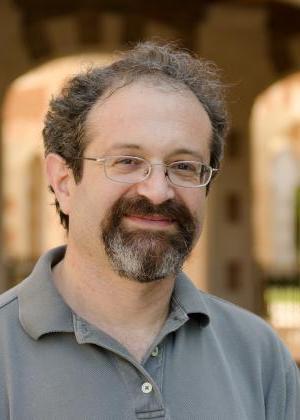
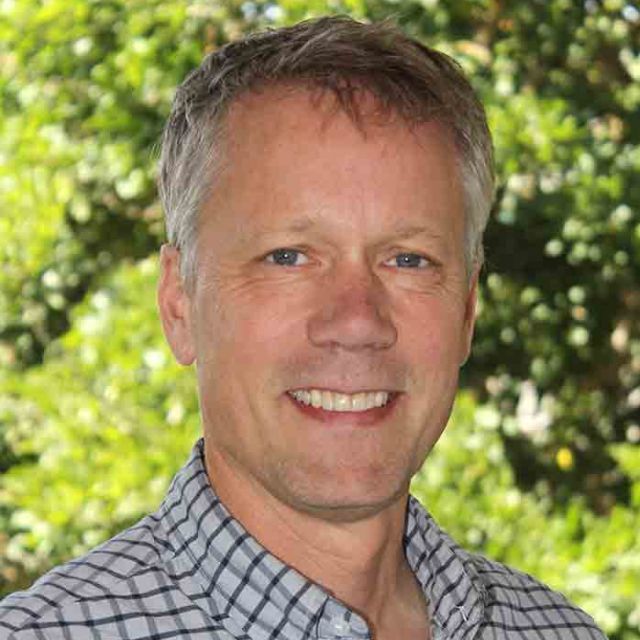
Lonny R. Levin is a Professor of Pharmacology at Weill Cornell Medical College , where he has worked since 2009. Collaborating extensively with Dr. Jochen Buck, he pioneered research on bicarbonate-regulated soluble adenylyl cyclase (sAC) , a critical enzyme in cAMP signaling. Education : B.S. from Cornell University (1983), Ph.D. from State University of New York at Stony Brook (1989) His research focuses on: cAMP signaling microdomains in mammalian cells Mitochondrial metabolism and pH sensing Sperm capacitation and energy regulation Nonhormonal contraceptive development via sAC inhibition Recent publications (2025-2023) highlight: Structural insights into sAC activation Metabolic adaptations during sperm capacitation Emerging role in corneal endothelium signaling Drug discovery for on-demand male contraception Grants from NIH (NIAID, NICHD) support his work on: Intravaginal rings for dual HIV/herpes prevention and contraception Metabolic communication in reproductive systems Signalosome regulation in mitochondria He maintains collaborations with institutions like EMD Millipore Corporation and co-founded Sacyl Pharmaceuticals, Inc. , holding proprietary interests in sAC-related intellectual property.
Cornelia Betsch serves as Director of the Institute for Planetary Health Behaviour (IPB) at the University of Erfurt, where she holds a professorship in Health Communication within the Faculty of Philosophy. She is responsible for the Master's program in Health Communication through the Department of Media and Communication Studies and leads the Health Communication Working Group at the Bernhard Nocht Institute for Tropical Medicine in Hamburg as an external position. Her interdisciplinary work bridges behavioral science, psychology, and public health to address critical global challenges. Habilitation (2006), University of Erfurt: 'The role of risk perception and risk communication in prevention decisions – the example of vaccination decisions' PhD (Dr. phil., summa cum laude, 2006), University of Heidelberg: 'Preference for intuition and deliberation– measurement and consequences of affect- and cognition based decision making' Diplom in Psychology (2002), University of Heidelberg Betsch's research focuses on understanding health and planetary health behaviors, particularly examining vaccination behavior, prudent antibiotic use, and climate-friendly actions. Her work extends globally, with investigations in various African countries on vaccination and antibiotic practices. She pioneered the influential COVID-19 Snapshot Monitoring (COSMO) and subsequently developed the Planetary Health Action Survey (PACE), large-scale studies that regularly track public knowledge, risk perception, protective behaviors, and trust during crises. Her research emphasizes applying behavioral and cultural insights to design effective policy frameworks and explanatory communication that promotes positive health behaviors. The 15 most recent articles showcase Betsch's research evolution toward integrating behavioral science with planetary health, climate action, and vaccine communication. Her work increasingly examines the psychological foundations of climate behavior while maintaining her established expertise in vaccine hesitancy and antimicrobial resistance. Recent publications demonstrate methodological diversity, including systematic reviews, meta-analyses, survey experiments, and large-scale monitoring datasets that bridge academic research with practical policy applications. German Psychology Prize (2021) Thuringian Research Prize (2022) Betsch has secured research funding from independent research organizations, ministries, and foundations to support her work on health communication and planetary health behavior. She serves as a scientific advisor to multiple organizations including the WHO Technical Advisory Group on Behavioral and Cultural Insights, Science Media Center Germany, and Museum für Naturkunde Berlin. At the Bernhard Nocht Institute for Tropical Medicine, she established the WHO Collaborating Center for Behavioral Research in Global Health, demonstrating her commitment to translating research into global health practice. Her engagement extends to policy advising, having served on the Corona Expert Council of the Federal Chancellery during the pandemic. As Director of the Institute for Planetary Health Behaviour, Betsch leads an interdisciplinary team applying social and behavioral science perspectives to planetary health and the climate crisis. The institute serves as a hub for research, education, and science communication at the intersection of human health and environmental sustainability. Her work through the IPB emphasizes Open Science principles and aims to understand the comprehensive factors influencing climate-friendly behavior to identify effective intervention points for policy development.
Joe Pitt-Francis is Associate Professor of Computer Science and Tutorial Fellow in Computer Science at St Edmund Hall, University of Oxford . Since 1999 he has tutored Oxford computer-science students and formally became a Tutorial Fellow of St Edmund Hall in 2024. His research lies at the intersection of computational biology and mathematical biology . Using sophisticated numerical techniques he constructs and analyses models of the heart , cancer and blood flow . A central strand of his work is software development for biological simulation; he is an active contributor to Chaste ( Cancer, Heart and Soft-Tissue Environment ), a large-scale C++ library that supports multiscale computational models in physiology and medicine. Across more than 60 peer-reviewed publications since 1998, his work has progressively advanced from foundational software-engineering papers describing Chaste’s architecture to highly-cited studies on cardiac electrophysiology , tumour-induced angiogenesis , microvascular haemodynamics and cell-cycle dynamics under hypoxia . The 2024-2025 corpus shows strong emphasis on multiscale frameworks , open benchmarking , and radiotherapy-induced vascular remodelling , positioning his group at the forefront of translational in-silico oncology. Contact: Email: Joe.Pitt-Francis@seh.ox.ac.uk
Mohsen Lesani is an Associate Professor in the Computer Science and Engineering Department at the University of California, Santa Cruz's Baskin School of Engineering. His research focuses on reliability and security of software systems, particularly concurrent and distributed systems, with recent emphasis on secure replicated systems and distributed machine learning. Dr. Lesani received his PhD from UCLA, MS in artificial intelligence from Sharif University of Technology, and BS in software engineering from University of Tehran. He was previously a postdoc at MIT. His educational background provides a strong foundation for his interdisciplinary research spanning programming languages, distributed systems, and security. His research interests center on creating reliable and secure distributed systems. Current projects include resilient and secure distributed systems, heterogeneous and reconfigurable secure distributed systems, automatic analysis and synthesis of replicated objects, verification of distributed systems, data analytics, secure exchange across blockchains, machine learning for performance models, domain-specific languages and type systems, and automatic fence insertion for concurrent systems. His work bridges theoretical foundations with practical implementations to address real-world challenges in distributed computing. Lesani's research has been recognized with several prestigious awards including the NSF CAREER award in 2020 and DARPA YFA award in 2022. His work has also received the SIGPLAN Research Highlight in 2019, a distinguished paper award at OOPSLA 2018, and a best paper award at ISSRE 2015. These accolades reflect the impact and quality of his contributions to the field. He actively mentors PhD students in the Safe and Secure Software (S3) lab, including Xiao Li, Eric Chan, Javad Saber-Latibari, and Tejas Mane. His research has been supported by multiple NSF grants, demonstrating sustained funding for his innovative work. Lesani serves on program committees for major conferences including POPL, PLDI, OOPSLA, and DISC, contributing to the academic community. Lesani leads the Safe and Secure Software (S3) lab at UC Santa Cruz, where his team works on cutting-edge research in distributed systems, programming languages, and security. The lab fosters a collaborative environment where theoretical insights are translated into practical systems that address real-world challenges in reliability and security of distributed applications.
Balázs Trencsenyi is Professor in the Department of Historical Studies at Central European University (CEU) and serves as Director of the CEU Institute for Advanced Study in Budapest. He is also Co-Director of Pasts Inc., Center for Historical Studies, and a Member of the 'Democracy in History' Working Group at the CEU Democracy Institute. His academic leadership includes directing the Erasmus Mundus+ Program 'History in the Public Sphere' (2019–2023) and heading the History Department (2017–2020). His educational background includes a PhD in Comparative History from CEU (2004), an MA in Nationalism Studies from CEU (1998), and an MA in Philosophy from Eötvös Loránd University (1997). Trencsenyi is a leading scholar in the intellectual and political history of East Central Europe, with a focus on transnational and comparative approaches. His research examines political modernity, crisis discourses, nationalism, national characterology, anti-modernism, and the conceptual history of identity and temporality. He has directed major collaborative projects such as the ERC-funded 'Negotiating Modernity' and 'European Regions and Boundaries: A Conceptual History.' His influential publications include the multi-volume A History of Modern Political Thought in East Central Europe (Oxford University Press) and Intellectuals and the Crisis of Politics in the Interwar Period and Beyond (2025). His recent articles reflect sustained engagement with crisis discourses, authoritarian regime-building, transnational intellectual history, and the politics of memory in East Central Europe. Themes across his work include the fragility of democracy, the legacy of state socialism, and the interplay between nationalism and modernity. CEU Community Service Excellence Award (2023) Fellow of Wissenschaftskolleg zu Berlin (2020) Member of Academia Europaea (2011) ERC Starting Grant (2008–2013) Trencsenyi has supervised numerous doctoral students in political thought, nationalism, and intellectual history. He has led research clusters such as 'Crises of Democratization' under the CIVICA project and co-organizes the 'Invisible University for Ukraine' initiative. He is Editor of East Central Europe (Brill) and has served on editorial boards and peer-review panels for major academic institutions and journals. His teaching covers comparative history, political modernity, crisis discourses, and counter-cultural movements under socialism.
Chiara Cannella serves as Interim Dean and Professor of Teacher Education at Fort Lewis College, where she has been faculty since 2010. Based in the Teacher Education Department, she is a leading scholar in culturally responsive and anti-bias education, with expertise spanning sociocultural research, American Indian education, and social justice frameworks. Her educational background includes: Ph.D. in Anthropology and Education, University of Arizona (2009) M.A. in Anthropology and Education, University of Arizona (2004) B.A. in English Language & Literature, University of Michigan (1996) Dr. Cannella's research centers on education for marginalized students and identity construction through critical sociocultural lenses. She investigates how teacher leadership programs shape professional identity, examines academic identity formation among marginalized youth, and develops counter-hegemonic research methodologies. Her work consistently connects classroom practice to broader social justice movements through community-based partnerships and humanizing pedagogical approaches. Analysis of her publications (2008-2015) reveals persistent focus on resistance-based educational frameworks, particularly in contexts of political pressure like Tucson's ethnic studies ban. Her scholarship bridges anthropology and education through qualitative methodologies that center student and teacher agency, with recurring themes of civic identity development, community resistance to disinvestment, and culturally sustaining pedagogy. Dr. Cannella actively translates research into practice through: Professional development for regional school districts on supporting marginalized students Co-founding the Southwest Colorado Culturally, Linguistically, and Economically Diverse Working Group Service on the Durango 9-R Achievement Gap Task Force Committee work for American Educational Research Association's Division G Consulting engagements with tribal education programs including presentations at Northeastern State University Her collaborative approach extends to research partnerships documented in co-authored works with scholars like Luis Moll and Julio Cammarota, emphasizing community cultural wealth models and sociocultural perspectives on educational relationships.
Dr. Sophie Adams serves as an ARC DECRA Fellow in the Department of Sociology at La Trobe University, where she conducts interdisciplinary research at the intersection of human geography and Science and Technology Studies. Her work critically examines the social dimensions of climate change mitigation and adaptation, with particular emphasis on renewable energy transitions and the societal implications of technological solutions to environmental crises. Adams' research program centers on the politics of environmental knowledge , investigating how climate science informs policy formation and the negotiation of social objectives in decarbonisation processes. She employs qualitative and participatory methodologies to analyze climate change adaptation in energy systems , social license for technological interventions , and the redistribution of expertise in public health and environmental governance. Her scholarship consistently addresses power dynamics in knowledge production and the democratic challenges of sustainability transitions. Analysis of her publication trajectory (2019-2025) reveals increasing focus on energy-social interfaces, with significant contributions to understanding virtual power plants, demand-side management, and the role of modeling in climate policy. Her work demonstrates methodological innovation through participatory approaches while maintaining critical engagement with resilience thinking and adaptation frameworks. Scientific recognition includes: Australian Research Council Discovery Early Career Researcher Award (ARC DECRA) Supported by her DECRA fellowship, Adams leads independent research projects examining the societal dimensions of energy transitions. Her collaborative work spans geography, public health, and energy engineering, as evidenced by interdisciplinary co-authorship patterns. Current projects investigate Australian householders' conditions for participating in virtual power plants and the social implications of climate modeling in adaptation planning, reflecting her commitment to socially relevant environmental research.
Frederick R. Dickinson is a Professor of Japanese History and Director of the Center for East Asian Studies at the University of Pennsylvania’s College of Arts & Sciences. He specializes in Modern Japan, East Asian diplomacy, and World History, with a focus on imperialism, nationalism, and transnational dynamics. Born in Tokyo, Dickinson holds a Ph.D. from Yale University and has authored seminal works including War and National Reinvention: Japan in the Great War, 1914–1919 and World War I and the Triumph of a New Japan, 1919–1930 . His research examines Japan’s global entanglements during WWI, postwar diplomacy, and the Meiji Restoration’s global implications. He has held visiting professorships at Kyoto University, Swarthmore College, and others. Dickinson’s work bridges cultural, diplomatic, and political histories, emphasizing Japan’s role in shaping 20th-century Asia-Pacific relations. His grants include support from the Japanese Ministry of Education, Fulbright Commission, and Japan Foundation, alongside fellowships at Stanford’s Hoover Institution and Kyoto’s International Research Center for Japanese Studies. His courses include Modern Japanese History, East Asian Diplomacy, and Global History frameworks. Education: Ph.D. and M.A. in History (Yale University), M.A. in International Politics (Kyoto University). His research interests span Japanese imperialism, transnational networks, and the interplay between domestic politics and international relations. Current projects include a global history of modern Japan. Professional service includes co-directing the Lauder Institute of Management and International Studies (2012–2019) and advising on East Asian studies initiatives. Professional contributions include over 50 peer-reviewed articles and book chapters, focusing on WWI’s impact on Japan, Meiji constitutionalism, and interwar diplomacy. His work highlights Japan’s contested path to modernity and its global connections. Office locations include College Hall and Williams Hall at Penn.
Dr. Sara Alidoust is a Senior Lecturer in Planning at the University of Queensland's School of Architecture, Design and Planning , with affiliations to the Centre for Community Health and Wellbeing and the Centre of Architecture, Theory, Criticism and History. Her research merges Urban Planning and Public Health , focusing on: Developing resilient and liveable cities through systems thinking Age-friendly urban planning for elderly populations Addressing housing vulnerability in the Global North Enhancing community engagement in policy-making Recent publications analyze topics like anti-gating policies in China , thermal comfort in vertical cities , and house-sitting practices among older Australians. Her work informs national and international planning frameworks with emphasis on health equity. As a principal advisor for PhD candidates, she supervises projects on climate-resilient urbanism , gender-focused housing models , and car-free urbanism in low-density contexts. Current initiatives include 1000 Cities Challenge health indicators development.
Mark S. Ackerman is the George Herbert Mead Collegiate Professor of Human-Computer Interaction at the University of Michigan, Ann Arbor. He holds dual appointments in the School of Information and the Department of Electrical Engineering and Computer Science. His research focuses on Human-Computer Interaction (HCI), particularly Computer-Supported Cooperative Work (CSCW), exploring expertise sharing, collaborative systems, online communities, and medical informatics. He is affiliated with the SocialWorlds research group, whose projects and publications detail his work. Education: Mark holds degrees from the University of Chicago, Ohio State University, and MIT. Prior to academia, he led development of the first home banking system, designed Billboard Top-10 Atari 2600 games, and contributed to the X Window System's user-interface toolkit. Recognition: He is a member of the CHI Academy and an ACM Fellow. Current roles include no student or postdoc recruitment for AY 25-26. He maintains physical offices in both the School of Information (North Quad) and EECS (Beyster Building). Research Themes: His work spans misinformation dynamics, collaborative environments, and pervasive technologies. The SocialWorlds group's projects emphasize real-world applications of CSCW principles.
Zoe Goldstein is an Amro Lecturer in Postcolonial and Environmental Literature at Stanford University. She holds a PhD in English from CUNY Graduate Center (2024), an MFA in Creative Writing from NYU (2016), and a BA in English from UCLA (2014). Her research focuses on intersections of waste, queerness, and post-1945 anti-colonial literature and practice, particularly in challenging capitalist hierarchies of matter through reclamation of discarded spaces. Her work spans academic criticism and creative projects including a poetry manuscript and short story collection. Key publications include Void Ecologies: Resistance, Commoning and Pleasure in the Discard Space (2024 dissertation) and articles in The Radical History Review and Digital China . Supported by the Futures Initiative and recipient of the Jane Marcus Award, her interdisciplinary research bridges environmental humanities, postcolonial studies, and queer theory. Goldstein's academic contributions emphasize activist interventions in marginalized geographies and the transformative potential of creative writing to confront ecological crises.
Orly Linovski is an Associate Professor in the Department of City Planning at the University of Manitoba’s Faculty of Architecture. Her work bridges professional planning practice, political processes, and urban space, emphasizing equity and justice. She holds a PhD from UCLA and advanced degrees from the University of Toronto and McGill University. Education: PhD (Urban Planning), University of California, Los Angeles M.Sc. (Urban Planning), University of Toronto B.A. (Geography/Urban Systems), McGill University Research focuses on transportation equity, private sector consulting roles, and municipal governance. Notable themes include equity in transit planning, professional practice dynamics in publicly traded firms, and participatory engagement strategies. Her work has been funded by SSHRC, MITACS, and the Centre for Professional and Applied Ethics. Teaching includes courses like Transportation and Urban Form (ARCG 7080) and Planning Research Methods (CITY 7020). She supervises students exploring transportation equity, professional planning practice, or privatization in planning, particularly with GIS or qualitative methods. Grants and Awards: Her research has been supported by SSHRC, MITACS, and other institutions. Collaborations include projects like the SSHRC-funded study on transit equity for marginalized groups in Canada. Labs/Teams: Active in the Manitoba Professional Planners Institute and as a Registered Professional Planner. Engaged in community-based research through partnerships highlighted in her SSHRC-funded projects.
David Peeters is an Associate Professor at Tilburg University's Department of Communication and Cognition, part of the Tilburg School of Humanities and Digital Sciences. His research focuses on multimodal communication, multilingualism, and digital communication, leveraging immersive virtual reality (VR) technologies combined with EEG, eye-tracking, and fMRI. He explores neurobiological underpinnings of language, including neuropragmatics, non-verbal communication, and multilingualism. His work is supported by grants such as the NWO Veni and Tilburg University Fund. Peeters teaches courses on virtual reality, language psychology, and digital literature integration in education. He is a Research Fellow at the Donders Institute and President of the Tilburg Young Academy. Key research interests include the role of gesture and iconicity in second language acquisition, bilingual language switching in immersive environments, and the impact of dataism on academic publishing. He collaborates with libraries and schools to integrate digital literature into curricula and public collections. His scientific awards include the NWO Veni Grant and a Fellowship from the International Max Planck Research School for Language Sciences. His research bridges cognitive science, linguistics, and technology, emphasizing ecologically valid experimental paradigms.
Andrew Plantinga is a Professor of Natural Resource Economics and Policy at the Bren School of Environmental Science and Management, UC Santa Barbara. He also serves as Director of the Productive Landscapes Group at the Environmental Markets Solution Lab (emLab). His academic journey includes faculty roles at Oregon State University and the University of Maine before joining UCSB in 2012. He holds a PhD in Agricultural and Resource Economics from UC Berkeley, an MS in Forestry from the University of Wisconsin, and a BA in English from Grinnell College. Plantinga’s research focuses on the economics of land use, climate change, and forests. Key areas include econometric modeling of land-use decisions, environmental policy analysis, and wildfire risk management. A current NSF-funded project examines how wildfire salience influences public agency decisions. He emphasizes tradable property rights for groundwater management and has authored/co-authored over 80 journal articles, including high-impact publications in Journal of Environmental Economics and Management and Proceedings of the National Academy of Sciences . His work frequently addresses policy implications of land-use changes, such as urban growth boundaries and agricultural intensification. Recent studies explore wildfire management effectiveness, stranded public lands’ economic impacts, and carbon sequestration costs. Plantinga advises PhD students focusing on economics, including Linus Blomqvist. Grants include NSF support for wildfire policy analysis. He teaches Bren School courses like Natural Resource Economics and Cost-Benefit Analysis. His labs and collaborations, such as emLab, aim to bridge economic and ecological approaches to environmental challenges.
Dr. Natalie Simpson is Professor and Associate Dean for Graduate Programs at the University at Buffalo's School of Management, Department of Operations Management and Strategy. She holds a PhD and MBA from the University of Florida, and a BFA from North Carolina School of the Arts. Her research explores emergency response systems , supply chain logistics , and educational technology , with particular focus on operational challenges in crisis management. She investigates hyper-project coordination in emergency contexts and resource allocation frameworks for incident commanders. Simpson's scholarly contributions show strong emphasis on: Modeling emergency response operations and supply chain vulnerabilities Developing pedagogical innovations for operations management education Analyzing healthcare workflow efficiency and disaster management systems Her extensive recognition includes: Decision Sciences Institute's Best Case Studies Award (2005) National Instructional Innovation Award (2004) SUNY Chancellor's Award for Excellence in Teaching (2002) Grinter Fellowship and Matherly Scholarship As Academic Director of Digital Access Education, she leads technology-enhanced learning initiatives and advises graduate programs. Administrative responsibilities include heading the Digital Access Working Group and serving on editorial boards for Decision Sciences.