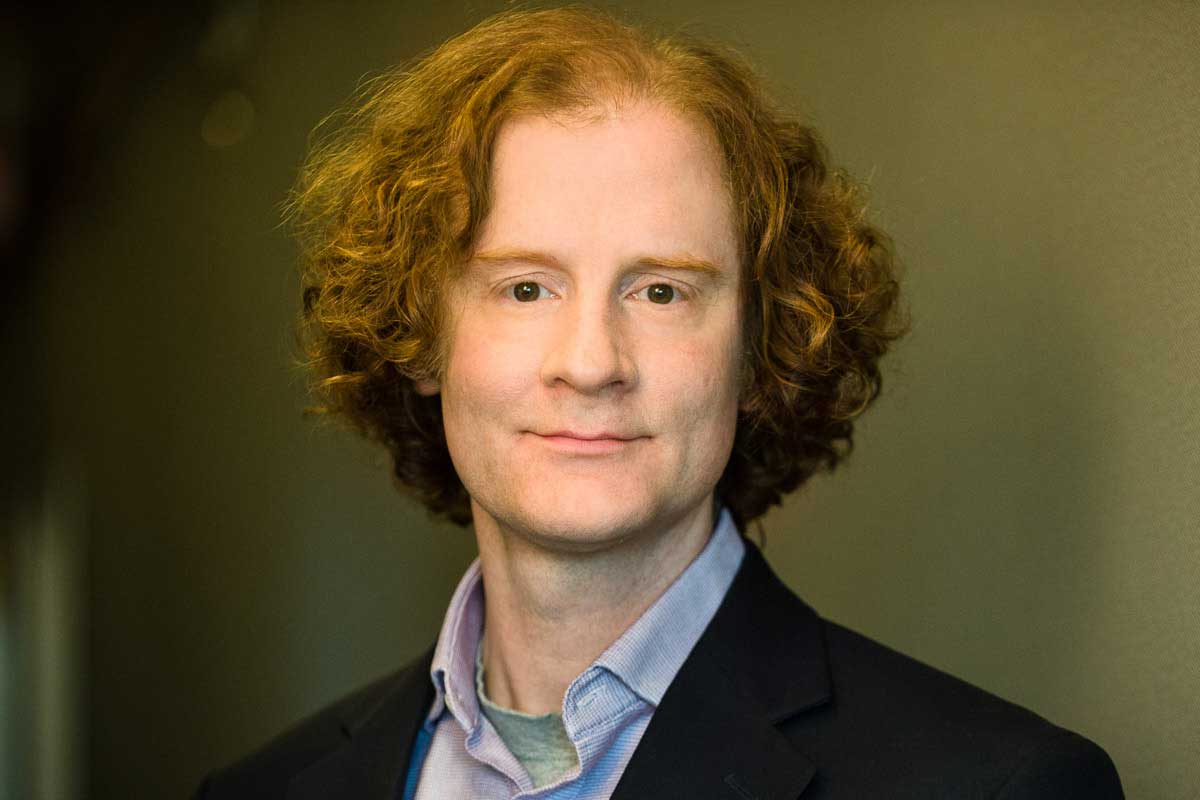
David A. Smith is an Associate Professor at the Khoury College of Computer Sciences, Northeastern University. His research focuses on Natural Language Processing (NLP) and computational linguistics, with applications in machine translation, information retrieval, digital humanities, and social sciences. He is a founding member of the NULab for Texts, Maps, and Networks, a research center focused on digital humanities and computational social sciences. Smith's work has been funded by grants from the Mellon Foundation, NEH, and IMLS, supporting projects such as the Viral Texts initiative analyzing 19th-century newspaper networks and the Oceanic Exchanges project tracking transnational information flows. He has contributed to advancements in OCR for historical texts, text reuse detection, and computational analysis of classical languages. He has advised numerous PhD students, including Shijia Liu, Si Wu, and Ryan Muther, and teaches courses like Natural Language Processing and Information Retrieval. His research has been featured in outlets like Wired and the Economist .
Andrew Zisserman is a Royal Society Research Professor at the University of Oxford's Department of Engineering Science, affiliated with the Visual Geometry Group (VGG). His research focuses on computer vision, artificial intelligence, and neural networks, with significant contributions to multimodal learning, video understanding, and 3D scene analysis. He leads projects exploring visual-language models, audio-visual synchronization, and clinical imaging applications. Key research areas include: Video analysis and temporal modeling Multimodal systems for sign language translation and action recognition 3D shape estimation and physical property inference Foundation models and cross-modal retrieval Recent work highlights: Developed Flamingo and Tapir models for video-language tasks Advancements in spinal MRI analysis and clinical imaging Leadership in EGO4D and VoxCeleb challenges Honors include Fellowship of the Royal Society (FRS) and the ISSLS Prize in Clinical Science 2023 for spinal analysis innovations. His lab collaborates globally, emphasizing real-world applications in healthcare and autonomous systems.
Laurie Shannon is the Franklyn Bliss Snyder Professor of English at Northwestern University, with a J.D. from Harvard Law School and a Ph.D. from the University of Chicago. She studies English literature and culture in the long sixteenth century, focusing on the history of ideas in language, stakeholdership, embodiment, and cross-species relations. She serves as convener of The Anne Lister Society and is collaborating with Oxford University Press on a scholarly edition of Anne Lister’s Journal. Education: J.D., Harvard Law School; Ph.D., University of Chicago Shannon’s research explores the political imagination in early modern literature, particularly through friendship (Sovereign Amity: Figures of Friendship in Shakespearean Contexts) and animal studies (The Accommodated Animal: Cosmopolity in Shakespearean Locales). Her current monograph, 'Frailty’s Name: Shakespeare and the Natural History of Human Being,' examines human negative exceptionalism in Renaissance thought and its implications for climate crisis ethics. Her publications span Shakespeare studies, queer theory, environmental humanities, and textual editing. Notable awards include the Elizabeth Dietz Memorial Award, Robert B. Cox Teaching Award, and Dean’s Award for Graduate Mentoring. She has held NEH, ACLS, and Guggenheim fellowships. Scientific Awards: Elizabeth Dietz Memorial Award, Robert B. Cox Distinguished Undergraduate Teaching Award, Dean's Award for Graduate Mentoring, NEH Fellowship, ACLS Fellowship, Guggenheim Fellowship Shannon contributes to the Anne Lister Diary Transcription Project and has served as English Department Chair at Northwestern. Her recent articles focus on Shakespeare’s engagement with natural history, queer cosmology, and animal sovereignty, reflecting her interdisciplinary approach.
Federico ZANETTIN is a Full Professor in the Department of Comparative Linguistic and Cultural Studies at Ca' Foscari University of Venice. His research focuses on translation studies with particular emphasis on corpus linguistics, graphic narrative translation, and journalistic translation. He maintains an active presence in the academic community through editorial work and research collaborations. Professor ZANETTIN's research interests span multiple areas of translation studies. He is particularly known for his work on corpus linguistics and its applications to translation analysis, with a focus on creating and using linguistic databases. His research on the translation of graphic narratives examines the verbal and visual aspects of translating comics and graphic novels across cultures. Additionally, he investigates journalistic translation , analyzing how information is translated and disseminated across media platforms. His scholarly work demonstrates consistent productivity, with numerous publications that explore the intersection of translation, culture, and media. Professor ZANETTIN's research shows particular strength in analyzing adaptation processes across linguistic, cultural, and modal boundaries, both synchronically and diachronically. Professor ZANETTIN serves on several important editorial boards: Co-editor of inTRAlinea Member of the international advisory board for The Translator Member of the international advisory board for Translang Member of the international advisory board for Entreculturas Member of the publications committee for Transletters. International Journal of Translators and Interpreters Member of the scientific committee for the Book series Interactio He is also frequently called upon as a referee for prestigious research projects, including those funded by The British Academy (UK), MIUR (Ministry of Education, University and Research), Italy, CSIC (Consejo Superior de Investigaciones Científicas), Spain, NRC (National Research Council), Canada, National and Kapodistrian University of Athens, Greece, and SNSF (Swiss National Science Foundation). Professor ZANETTIN teaches courses in English language and translation at both undergraduate and graduate levels, focusing on European, American, and postcolonial languages and literatures. His teaching reflects his research expertise in translation studies and cross-cultural communication.
Eytan Adar is a Professor of Information and Computer Science at the University of Michigan, holding dual appointments in the School of Information and the College of Engineering's Electrical Engineering and Computer Science department. His work sits at the intersection of human-computer interaction and artificial intelligence, focusing on large-scale systems analysis and novel interface design. Adar's research spans multiple domains including social media analysis (Twitter, Reddit), academic citation networks, meme propagation, information extraction, and political networks. His methodological expertise includes data mining, data visualization, and graph-based network analysis. His work often operates at internet scale, examining language, creativity, social network dynamics, and text production. His recent publications reveal a strong focus on AI-human collaboration, with particular attention to generative AI interfaces, visualization techniques for complex data, and ethical considerations in AI systems. His work shows a consistent pattern of bridging theoretical insights with practical system implementations. Best Paper Award at ProtoAI: Model-Informed Prototyping for AI-Powered Interfaces, IUI'21 Honorable Mention Award at CHI'24 for feminist interaction techniques research Best Paper Award at ICWSM'18 for Wikipedia language edition analysis Best Paper Award at ICML 2016 Workshop for neural language model visualization Best Student Paper at WSDM'09 for web dynamics research Best of CHI at CHI 2008 for web revisitation patterns analysis Adar has advised numerous PhD students who have gone on to prominent positions at organizations including Google, Apple, RAND, Northwestern University, and Stanford. His research is generously supported by the NSF, IARPA, NIH, the Education Department, and major technology companies including Adobe, Microsoft, Facebook, Google, and Yahoo. He is also a founder of the International Conference on Web and Social Media (ICWSM) and has served as Co-General Chair for WSDM and Co-Program Chair for UIST.
Professor Dorit Abusch is a faculty member in the Department of Linguistics and Philosophy at Cornell University's College of Arts & Sciences. Her research focuses on semantics, pragmatics, and their applications to visual narratives. She explores topics like tense semantics, presupposition triggering, modal logic, and the interplay between language and visual media. Current work extends linguistic methodologies to analyze art forms such as comics, cave paintings, and temple sculptures. Her research interests include formal semantics applied to visual narratives, dynamic semantics, possible world theory, and multimodal discourse representation. She investigates how visual elements like sequential art and pictorial sequences convey temporal progression, aspectual distinctions, and free perception constructions through semiotic frameworks. Recent presentations include talks on applying semantics to film and picturebooks at institutions like MIT and the University of Padua. Her publications emphasize cross-media analysis, with key works published in Linguistics & Philosophy and Sinn und Bedeutung . Abusch has received grants for projects studying visual narratives in Indian art and wall paintings of Rajasthan. These include a 2012-2013 Humanities Research Grant and a Cornell Institute for Social Sciences award. Her work bridges linguistics with philosophy and visual studies, offering innovative frameworks for understanding non-linguistic communication through formal semantic tools.
Andreas Stoehr is a renowned Austrian conductor and professor at the Music and Arts Private University of the City of Vienna, leading the conducting department and symphony orchestra since 2013. His career spans prestigious engagements including the Paris Opéra Comique, Deutsche Oper am Rhein, and St. Gallen Theatre, focusing on operatic repertoire from Monteverdi to modernism. He is celebrated for reviving neglected works like Meyerbeer’s Emma di Resburgo and Gluck’s Ezio , emphasizing historical performance practices. His research explores stylistic transitions in music history, blending baroque precision with modern innovation. Education: Trained at Vienna's former Conservatory (now University of Music and Performing Arts), studying piano under Alfred Kremela, conducting with Gennadij Rozhdestvenskij, and musicology at the University of Vienna. Key mentors included David Lutz (accompaniment) and Reinhard Schwarz (conducting). Research Interests: Explores interdisciplinary connections between diverse musical eras, such as Bach’s influence on Schoenberg, and advocates for vocal-orchestral balance in historical repertoires. Projects include CD recordings of Amanda Maier-Röntgen and Andrea Tarrodi’s works, nominated for Swedish Grammis. Awards: Grammy nomination (2016) for Amanda Maier-Röntgen’s Violin Concerto recording. Recognized for innovative stagings of operas like Berg’s Wozzeck and Debussy’s Pelléas et Mélisande . Teaching & Leadership: As professor and symphony orchestra director, Stoehr mentors young conductors. Notable collaborations include the Langenlois Castle Festival (2012–2019) and interdisciplinary projects like Heart and Mouth, and Deed and Life blending Bach with sociological texts. His teaching emphasizes 21st-century conductorship as collaborative architecture, prioritizing emotional engagement over technical authoritarianism. Labs/Ensembles: Leads the MUK Symphony Orchestra, collaborating with ensembles like the Aarhus Symphony Orchestra and Orchestre Philharmonique de Liège. His work bridges academic research with performance practice through projects like the Styriarte Festival’s Schubert revival.
Ju Hui Judy Han is an Associate Professor in Gender Studies at the University of California, Los Angeles, with additional affiliations at the Center for Korean Studies, Center for the Study of Women, and Asia Pacific Center. Her office is located in 1117 Rolfe Hall at UCLA. As a cultural geographer, Professor Han is committed to building critical and transnational conversations concerning gender, sexuality, and activism, regularly contributing to community-based projects and public events both on campus and beyond. Professor Han received her Ph.D. in Geography from UC Berkeley and her B.A. in English and Women's Studies from UC Berkeley. Her educational background bridges humanities and social sciences, providing a strong foundation for her interdisciplinary research. Her research interests span (Im)mobilities, Religion and difference, conservatism, LGBTQ/queer politics and activism, Comics and graphic novels, Korean studies, and Cultural geography. Professor Han approaches these topics through a critical lens that emphasizes transnational perspectives, particularly focusing on South Korea and the Korean diaspora. Her work often examines how power operates through spatial arrangements and how marginalized communities navigate and resist dominant structures. She has developed innovative approaches to studying activism through comics and graphic nonfiction, creating accessible yet theoretically rich analyses of complex social phenomena. Professor Han's publications reveal consistent engagement with queer politics in South Korea, religious movements, and transnational activism. Her work shows a progression from analyzing specific case studies to developing broader theoretical frameworks about resistance, solidarity, and spatial politics. The recurring themes across her publications include the intersection of religion and queer politics, the spatial dimensions of activism, and the transnational connections between social movements. UCLA Center for the Study of Women/Barbra Streisand Center, inaugural Barbra Streisand Fellowship on Truth in the Public Sphere Podcast Support Grant, University of California Humanities Research Institute (UCHRI), 2021-22 Society of Hellman Fellows Award, UCLA, 2021-22 UCLA Faculty Career Development Award, 2018-2019 Co-Applicant, 'Protesting Publics in South Korea,' SSHRC Insight Grant (PI: Jennifer Jihye Chun), 2015-2020 Co-Investigator, 'Urban Aspirations in Seoul: Religion and Megacities in Comparative Studies,' Max Planck Institute, 2011-2017 Professor Han actively contributes to public discourse through media appearances and community engagement. She has received significant research funding supporting her work on South Korean protest movements and urban religious dynamics. Her teaching portfolio is diverse, including the Gender Studies undergraduate core class on power (102), senior capstone seminars (187), elective courses on transnational feminist politics (131) and comics and graphic nonfiction (185), as well as graduate seminars on feminist geographies, queer temporalities, and research design.
Stephanie Wilson is a Professor of Human-Computer Interaction at City St George's, University of London, and Co-Director of the Centre for HCI Design (HCID). She co-founded the EPSRC Centre for Doctoral Training in Diversity in Data Visualization (DIVERSE CDT) and contributes to the Institute for Creativity and AI. Her research emphasizes inclusive interaction design, data visualization, co-design, and innovative digital technologies for healthcare, particularly for people with aphasia. She has supervised 17 PhD students to completion and led significant projects like EVA Park and INCA, which explore accessible virtual worlds and digital tools for aphasia. Her work has earned multiple awards, including ACM SIGCHI Honorable Mention Awards and the Tech4Good Accessibility Award Finalist. Stephanie has secured over £10 million in research funding, including grants from EPSRC and Innovate UK, and actively contributes to academic governance through roles like Chair of the Research Degrees Committee and establishing the Women++ group. She advocates for participatory design and ethical research practices in healthcare technology.
Dr Marion Kant is a Lecturer in the Department of German at the University of Cambridge's Faculty of Modern and Medieval Languages and Linguistics. Her work bridges musicology and dance history, focusing on body politics, the history and aesthetics of performance (theatre, opera, dance, ballet), German-Jewish relations, Nazi ideology, and anti-fascist exile. Her research explores the intersection of physical culture, nationalism, and avant-garde arts. She is currently editing a six-volume Cultural History of Dance for Bloomsbury, examining German nationalism and movement concepts from the 19th and 20th centuries. Her publications span German physical cultures, nationalist ideologies, and the role of dance in exile communities. Key Research Themes: Body aesthetics, German-Jewish assimilation, Nazi cultural policies, avant-garde movements, and transnational exile networks. Notable Projects: Analysis of Nazi-era dance policies, documentation of anti-fascist artists in Los Angeles, and historical studies of German physical cultures.
Aida Levy-Hussen is an Associate Professor in the Department of English Language and Literature at the University of Michigan's LSA (Literature, Science, and the Arts) College. Her research focuses on African American literature, trauma studies, gender and sexuality studies, and 20th-century American literature. She holds an A.B. from Harvard University (2003) and a Ph.D. from Emory University (2009). Levy-Hussen's work interrogates the intersections of race, memory, and cultural expression. She examines how African American writers engage with historical trauma, particularly slavery's legacies, and explores themes like boredom, affect, and narrative form in contemporary works. Her recent scholarship includes analyses of Ishmael Reed’s postmodern historiography and Spike Lee’s satirical film Bamboozled . She currently teaches courses on African American literature, Toni Morrison, and narrative theory. Her office is located in 3232 Angell Hall, with regular appointment-based office hours. No scientific awards are explicitly mentioned, but her prolific publication record reflects sustained academic impact in literary studies. Levy-Hussen’s writing emphasizes interdisciplinary approaches, blending literary criticism with cultural theory, psychoanalysis, and historical analysis. Her book How to Read African American Literature (2016) provides a transformative framework for interpreting post-civil rights fiction.
Sabine Süsstrunk is a Full Professor and Director of the Images and Visual Representation Laboratory (IVRL) at EPFL's School of Computer and Communication Sciences. She holds a BS in Scientific Photography from ETH Zürich, MS from Rochester Institute of Technology, and PhD from University of East Anglia. Her career includes positions at Hewlett-Packard Labs and Corbis Corporation. Her research explores computational imaging, computational photography, color processing, computer vision, and image quality. Key interests include near-infrared applications, multispectral imaging, and computational aesthetics. Her work bridges hardware and software solutions for imaging challenges. Publications demonstrate consistent focus on advancing generative models (diffusion models, neural cellular automata), 3D reconstruction (NeRF variants), and media integrity (DeepFake detection). Recent trends show increased emphasis on 3D vision, robustness in generative AI, and video analysis. Awards & Honors: IS&T/SPIE Electronic Imaging Scientist of the Year (2013) Raymond C. Bowman Teaching Award (2018) EPFL AGEPoly IC Polysphere Award (2020) 8 Best Paper/Demo Awards Fellowships: IEEE, IS&T, ELLIS, AIIA She leads the IVRL lab and advises PhD candidates while serving as President of the Swiss Science Council. Research is supported through competitive grants and industry collaborations.
Malcolm von Schantz is a Professor and Deputy Faculty Pro Vice-Chancellor at Northumbria University, affiliated with the HLS Faculty Management and Administration. Previously, he held leadership roles at the University of Surrey, including Associate Dean (International) and acting Pro-Vice Chancellor (International Relations). He is also an Honorary Professor at the University of the Witwatersrand, South Africa. He holds a PhD in Zoology from an unspecified institution (awarded 10 Dec 1994). His research focuses on human circadian rhythms and sleep, their molecular determinants, and links to physical/mental health. He has secured over £6.4M in research funding from bodies like the MRC, Wellcome Trust, and NIH. Key research areas include sleep architecture, chronotype variability, HIV-related sleep disruptions, and cardiometabolic health correlations. His work has been published in high-impact journals and widely featured in media. He actively participates in international conferences and public outreach, including translating sleep education materials into multiple languages. Notable collaborations include the BioClocks UK initiative and the Baependi Heart Study in Brazil. His recent articles address daylight saving policies, gender-specific sleep-cardiovascular links, and light sensitivity in bipolar disorder. He supervises PhD students and engages in editorial roles across journals. Public impacts include translating educational comics and participating in community health events. His research emphasizes global health equity, particularly in low-resource settings.
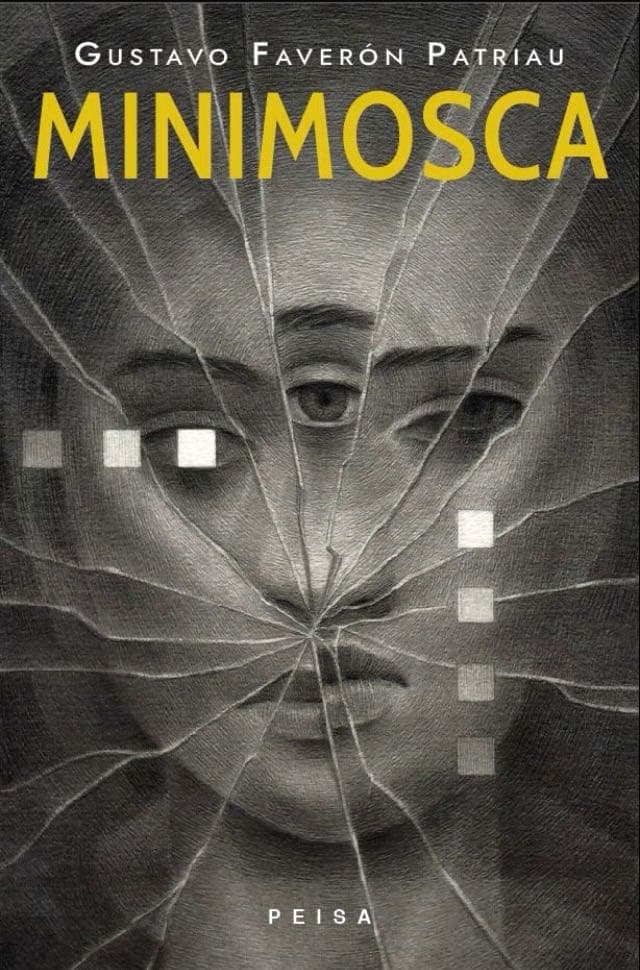
Gustavo Faverón Patriau is Professor and Chair of the Department of Romance Languages and Literatures at Bowdoin College, with affiliations in Latin American, Caribbean, and Latinx Studies and Hispanic Studies. He holds a PhD from Cornell University and has held visiting positions at Stanford University, Middlebury College, and Universidad Cayetano Heredia. His academic work centers on Latin American contemporary literature and political history, with a focus on the limits of visual and linguistic representation, the portrayal of mental illness in narrative, and the writings of Jorge Luis Borges. His research spans literary theory, cultural criticism, and journalistic inquiry, often bridging scholarly and public intellectual spheres. His recent publications reveal a consistent engagement with themes of abjection, memory, trauma, and the philosophical dimensions of narrative. He frequently analyzes canonical and marginal texts through interdisciplinary lenses, drawing on philosophy, visual culture, and historiography. His scholarship often intersects with his creative work, which includes novels and editorial projects that explore similar intellectual terrain. Among his scientific awards and recognitions are being a finalist for the III Vargas Llosa Biennial Novel Prize, receiving accolades from Letras Corsarias and Rockdelux, and being recognized by the Spanish newspaper ABC for his blog Puente Aéreo as one of the most influential in the Hispanic world. He has served on the board of Diacritics , directed literary journals such as Dissidences , La Vaca Multicolor , Somos , and Visto & Bueno , and co-edited major volumes like Bolaño salvaje and Toda la sangre . He regularly presents at international literary festivals and academic conferences, and has conducted numerous interviews and media appearances across Latin America and Europe. His creative and scholarly work has been translated into ten languages, underscoring his transnational impact. He continues to publish prolifically in both academic and literary venues, maintaining a dynamic presence in contemporary Hispanic intellectual life.
Jian Zhao is an Associate Professor at the University of Waterloo's School of Computer Science, specializing in Information Visualization (InfoVis), Human-Computer Interaction (HCI), and Data Science. With a Ph.D. from the University of Toronto (2016), his research emphasizes interactive visualization techniques, AI integration in design processes, and socio-technical systems. He explores how human-AI collaboration can enhance data analysis, presentation, and user experience in complex systems. Key research areas include: 1) AI-Driven Design (e.g., code generation via sketching, infographic creation), 2) Health Informatics (therapeutic AI tools for autism support), 3) Immersive Technologies (VR/AR interfaces for presentations and education), and 4) Social Computing (remote family communication, multi-modal emoticons). His work bridges technical innovation with human-centered design principles. His publications (2021–2025) reflect a focus on interactive visualization frameworks (e.g., iTrace for cross-view data analysis), AI-human collaboration (CoLadder for hierarchical code editing), and specialized applications like TherAIssist for art therapy and EMooly for autism support. Zhao frequently explores novel interaction modalities , including gesture-based VR interfaces and sketch-based programming tools. He leads projects in computational notebooks (EDAssistant, Slide4N), visual analytics (MissBin for bipartite networks), and neurofeedback training games (Eggly). His work often emphasizes systematic design considerations for missing data, cross-view analysis, and contextual visualization in spatial AR environments.