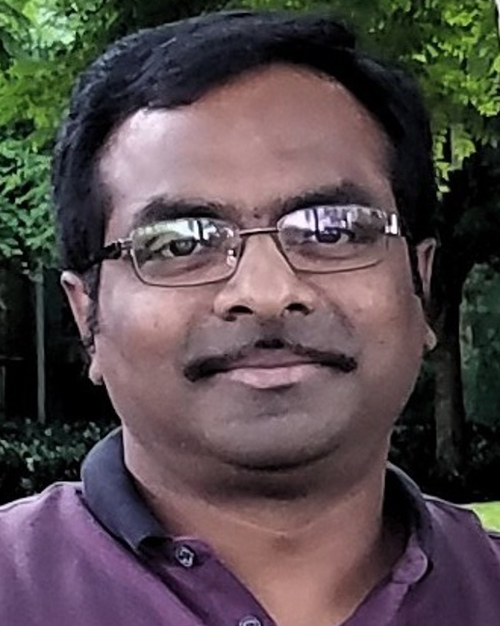
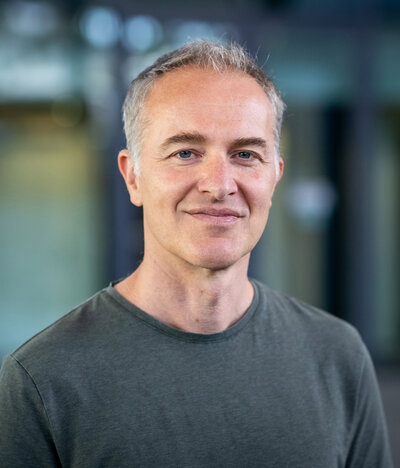
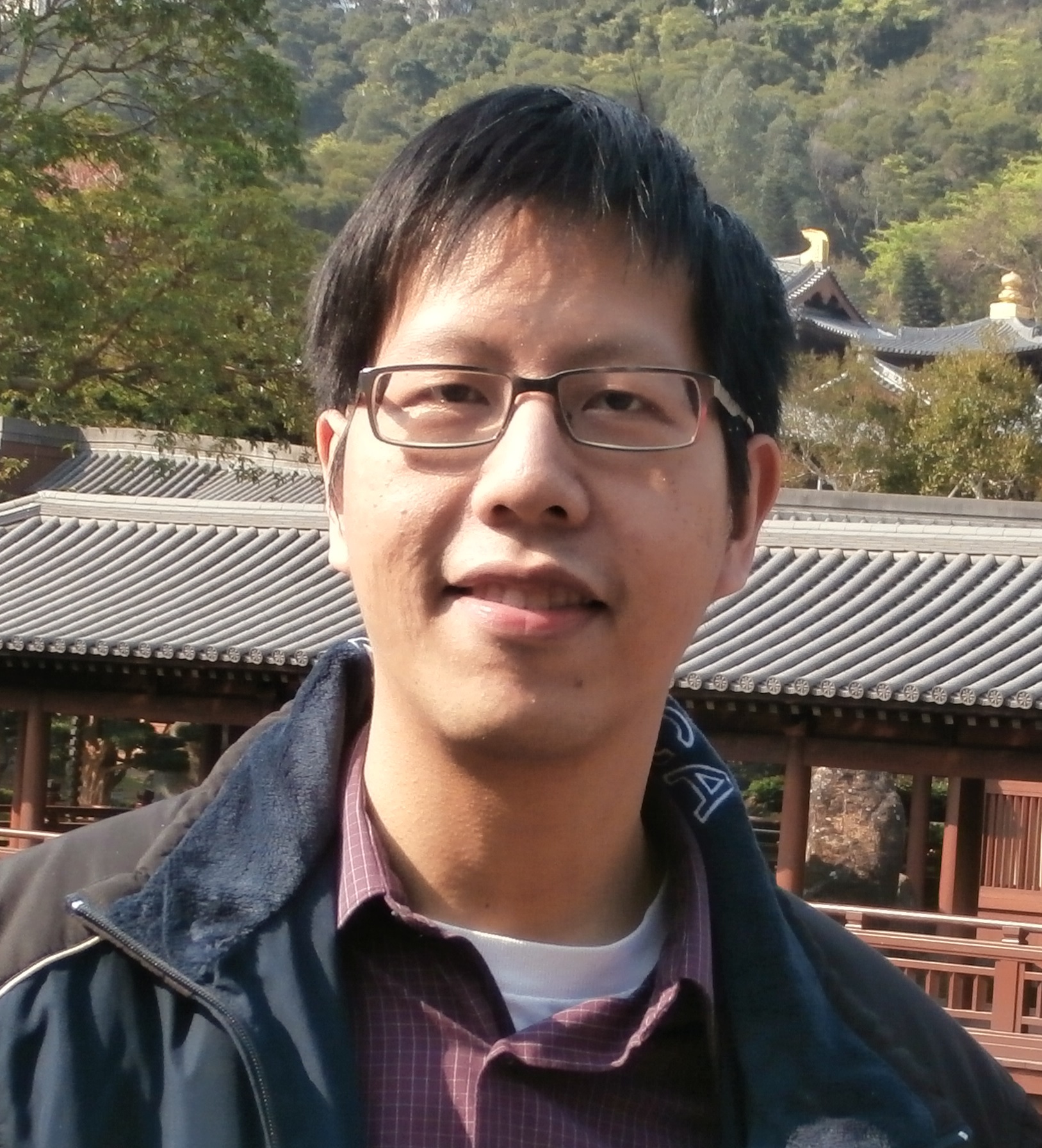
Mario Alviano is a Full Professor in Computer Science (INF/01) at the University of Calabria, Department of Mathematics and Computer Science. He leads the LAIA lab (Laboratorio di Applicazioni dell'Intelligenza Artificiale) and serves as co-PI in the PRIN project PRODE ('Probabilistic Declarative Process Mining'). Current projects: FAIR ('Future AI Research'), Tech4You ('Technologies for climate change adaptation'), SERICS ('SEcurity and RIghts in the CyberSpace'), CAL.HUB.RIA , RADIOAMICA , and STROKE 5.0 His research focuses on Answer Set Programming (ASP), particularly in optimization, nonmonotonic reasoning, and applications to logistics, healthcare, and cybersecurity. He has authored over 120 publications in top venues like AIJ, AAAI, and IJCAI. Recent academic contributions includes work on: Temporal Many-valued Conditional Logics Weighted Knowledge Bases with Typicality Explainable AI via xASP and ASP Chef Defeasible Reasoning Scalability Notable awards: Artificial Intelligence Award 'Marco Somalvico' (2017) ICLP Best Paper Awards (2015, 2016) LPNMR Best Paper Award (2022) CILC Best Paper Award (2023)
David Asher Levin is an Associate Professor in the Department of Mathematics at the University of Oregon. He has been with the university since September 2005, progressing from Assistant Professor to his current position as Associate Professor. His academic home is within the mathematics department, where he conducts research and teaches courses in probability theory and stochastic processes. Levin received his Ph.D. in Statistics from the University of California, Berkeley in 1999, following an M.A. in Statistics from the same institution in 1995. He earned his undergraduate degree, a B.S. in Mathematics with General Honors, from the University of Chicago in 1993. His research focuses on probability theory and stochastic processes, particularly Markov chains and mixing times. Levin has made significant contributions to understanding the rate of convergence of Markov chains to their stationary distributions. His work bridges theoretical mathematics with applications in statistical physics, theoretical computer science, and combinatorics. He has developed and refined important techniques for estimating convergence times, including coupling methods, strong stationary times, and spectral analysis. Levin's publication record is highlighted by his influential textbook "Markov Chains and Mixing Times," first published in 2008 and updated in a second edition in 2017, co-authored with Yuval Peres and Elizabeth Wilmer. This work has become a standard reference in the field. His research spans theoretical foundations as well as practical applications in areas including card shuffling, the Ising model from statistical physics, and random walks on networks. Among his honors, Levin received the Dora Garabaldi Fellowship from the University of California in 1994, and was elected to Phi Beta Kappa and Sigma Xi in 1993. He has organized significant academic events, including an AMS Short Course on Markov Chains and Mixing Times in January 2010. Levin maintains active research collaborations and has connections to interdisciplinary work through the Microbial Ecology and Theory of Animals Center for Systems Biology at the University of Oregon. His work continues to influence both theoretical developments and practical applications of Markov chain theory across multiple scientific disciplines.
Najmaddin Akhundov is an Assistant Professor in the Decision Sciences and Marketing Department at the Robert B. Willumstad School of Business, Adelphi University. His expertise lies in operations research, with a focus on integer programming, stochastic optimization, and simulation-based methods applied to scheduling, logistics, energy systems, and risk management. Education: Ph.D., Industrial and Systems Engineering, University of Tennessee (2022) M.S., Systems Design Engineering, University of Waterloo (2015) B.S., Industrial Engineering, Baku Engineering University (2011) Research Interests: Dr. Akhundov’s research spans both methodological and applied domains. Methodologically, he advances integer programming , algorithmic development , simulation-based optimization , and stochastic programming . Application-wise, he tackles complex scheduling problems (staff, maintenance, power generators, production), reverse and last-mile logistics, evacuation planning, sustainable port management, and risk-informed maintenance planning. Recent publications (2019-2024) reveal a consistent trajectory toward integrating advanced optimization techniques with real-world operational challenges. Studies range from exploiting symmetry in job sequencing to configuring last-mile distribution networks, pricing risk in energy markets, and optimizing surveillance strategies against invasive species. Collectively, these works highlight a commitment to bridging theory and practice in operations research. Awards & Honors: INFORMS ENRE Best Publication Award in Natural Resources (2022) Harvey J. Greenberg Research Award – Honorable Mention, INFORMS Computing Society (2022) Graduate Fellowship Award, University of Tennessee (2018-2022) Best Graduate Presentation, Dana Knox Student Research Showcase (2018) Study Abroad Fellowship, Ministry of Education of Azerbaijan (2013-2015) Merit-Based Scholarships from Azercell Telecom and Baku Engineering University Teaching & Mentoring: At Adelphi, Dr. Akhundov teaches courses such as Management of Production/Operations and Statistical Methods, having previously taught Applied Operations Research, Optimization Techniques, and Mathematical Programming with MATLAB. While no specific advisees are listed in the provided text, his active research program and course offerings indicate ongoing engagement with both undergraduate and graduate students. Laboratories & Teams: While no dedicated laboratory is explicitly mentioned, his collaborative work with researchers from the University of Tennessee, University of Waterloo, and multiple international partners suggests participation in interdisciplinary research teams focused on optimization and logistics.
Donald R. Sheehy is an Associate Professor of Computer Science in the College of Engineering at North Carolina State University. His research focuses on the intersection of geometric algorithms and topological data analysis, with significant contributions to computational geometry and persistent homology. Sheehy's research interests span geometric algorithms, topological data analysis, computational geometry, persistent homology, metric spaces, Voronoi diagrams, and Delaunay triangulations. His work bridges theoretical computer science with practical applications in data analysis, where he develops algorithms that extract meaningful topological information from complex datasets. His research has particular relevance for understanding the structure of high-dimensional data through geometric and topological lenses. Analysis of his recent publications reveals a strong focus on developing efficient algorithms for topological data analysis. His work on sparse filtrations, greedy permutations, and metric properties of persistence diagrams has advanced the field by providing computationally tractable methods for analyzing large datasets. Sheehy frequently explores how geometric structures like Voronoi diagrams and Delaunay triangulations can be adapted to topological contexts, creating bridges between classical computational geometry and modern data analysis techniques. Sheehy actively collaborates with researchers across multiple institutions, as evidenced by his extensive publication record in top venues like SOCG (Symposium on Computational Geometry) and SODA (Symposium on Discrete Algorithms). His work demonstrates a consistent trajectory of advancing both theoretical foundations and practical applications of geometric and topological methods in computer science.
Rui Zhang is an Associate Professor in the Strategy, Entrepreneurship, and Operations division at Leeds School of Business, University of Colorado Boulder. He currently serves as the Faculty Director of the Master's Program in Business Analytics and previously directed the Ph.D. Program in Operations. He is also an Associate Editor for INFORMS Journal on Computing and Networks . Dr. Zhang's research focuses on quantitative methods, particularly prescriptive analytics techniques. His work spans three main application areas: revenue management problems, last-mile delivery optimization, and influence maximization on social networks. Methodologically, he employs integer programming, network optimization, and approximate dynamic programming to develop innovative solutions to complex operational challenges. His research portfolio shows a clear progression from fundamental network optimization problems to increasingly complex applications in business analytics. Recent work emphasizes autonomous vehicle-assisted delivery systems and sophisticated influence maximization models with practical constraints like latency requirements. His publications consistently appear in top-tier operations research journals including Operations Research , Manufacturing & Service Operations Management , and multiple INFORMS publications. Runner-up for the 2022 INFORMS Computing Society (ICS) Prize Multiple Best Paper awards As Faculty Director of the MS in Business Analytics program, Dr. Zhang oversees curriculum development and student mentorship in this rapidly growing field. His Erdős number is 3 (Paul Erdős → Daniel J. Kleitman → Bruce L. Golden → Rui Zhang), reflecting connections to foundational mathematical research. His work bridges theoretical optimization with practical business applications across multiple domains including e-commerce logistics, social media marketing, and revenue management systems.
Junkai HE serves as an Assistant Professor in the Operations, Supply Chain and Information Management department at KEDGE Business School and is affiliated with the CESIT research center since September 2024. He earned his PhD in mathematics and computer science from Paris-Saclay University (France) in 2020, following which he conducted postdoctoral research at IRT SystemX and Télécom SudParis. His research specializes in decision making under uncertainty through advanced modeling and algorithm design , with primary applications in supply chain management , remanufacturing , and maintenance optimization . Key methodologies include stochastic programming, multi-objective optimization, and predictive maintenance modeling for complex industrial systems. Analysis of his 2019-2024 publications reveals a consistent trajectory in applying operations research to sustainable industrial practices. His work increasingly focuses on uncertainty integration in disassembly line balancing and remanufacturing systems, while maintaining strong foundations in classical scheduling problems for manufacturing and logistics. Publications predominantly appear in top-tier journals like the International Journal of Production Economics and Computers & Operations Research. He teaches core operations management courses including operations research, production planning, and logistics, demonstrating active educational engagement. His research at CESIT likely involves industry collaborations addressing real-world supply chain challenges, though specific grant details are unmentioned. As a CESIT researcher, he contributes to KEDGE's industrial technology research initiatives, bridging theoretical optimization methods with practical applications in manufacturing and logistics systems. Current work appears oriented toward sustainable supply chain innovations and digital transformation of maintenance practices.
Dr Hongyu Zhang is a Lecturer in Optimization for Machine Learning and AI at the School of Mathematical Sciences, University of Southampton. His expertise spans operational research and energy systems optimization, with a focus on stochastic programming and quantum computing applications. PhD Operational Research, NTNU MSc Operational Research with Data Science, University of Edinburgh BSc Mathematics and Applied Mathematics, Huaqiao University His research develops optimization models and algorithms for large-scale energy system planning, integrating machine learning, artificial intelligence, and quantum computing tools to address complexities in energy transition and policy-making. Key areas include multi-timescale uncertainty analysis, decomposition methods, and offshore energy hub modelling. Recent publications show strong trends in energy systems optimization (7 papers), algorithm development for stochastic programming (4 papers), and quantum computing applications (2 papers). His work addresses European energy security, hydrogen infrastructure development, and carbon capture technologies. Currently accepting PhD applications, Dr Zhang contributes to academic supervision and teaches optimization methods at the university. He is affiliated with the Operational Research group and CORMSIS center.
Gurunath Gurrala serves as an Associate Professor in the Department of Electrical Engineering at the Indian Institute of Science (IISc), Bangalore. His research focuses on power systems dynamics, high-performance computing applications, and renewable energy integration. He maintains active collaborations with international institutions including Oak Ridge National Lab and Texas A&M University. His research interests center on Power Systems Analysis and Control , with specialization in High Performance Computing Applications, Nonlinear and Intelligent Control, Weak Grid Integration of Renewables, Microgrid Protection, and Smart Grid Stability. His work bridges theoretical control systems with practical power grid challenges, particularly for renewable-rich grids. His recent publications demonstrate a strong interdisciplinary trend, spanning power systems (35%), control theory (25%), renewable integration (20%), and emerging applications in biomedical engineering and environmental systems (20%). Key recurring themes include grid stability under high renewable penetration, advanced protection schemes for microgrids, and computational methods for power system analysis. IEEE Power and Energy Society (PES) Outstanding Engineer Award 2018 Young Engineer Award 2015, Indian National Academy Engineers Best Conference Paper, IEEE PES General Meeting 2015 Best Ph.D Thesis Award (Prof.D.J.Badkas Medal) 2010 Elevated to Senior Member IEEE (2016) Professor Gurrala has secured competitive research funding including the Young Scientist Grant from DST (2015) and International Travel Support from SERB (2017). He actively mentors students through PhD and Master's programs while teaching advanced courses including Power System Dynamics and Control (E4 231), Computer Control of Power Systems (E4 233), and Selected Topics in Integrated Power Systems (E4 237). His research group collaborates with power utilities and international research labs on grid modernization challenges.
Rudi Pendavingh is an Assistant Professor at the Department of Mathematics and Computer Science at Eindhoven University of Technology. Affiliated since 1999, he specializes in matroid theory , combinatorics , and topological graph theory within the Combinatorial Optimization group. Research Interests include: Matroid theory with focus on excluded minors and representability over partial fields Topological graph theory, particularly Colin de Verdière invariants for surface-embedded graphs Discrete optimization modeling and algorithmic complexity Geometric combinatorics in polyhedral complexes like Dressians Recent Publications highlight his work on: Stable tournament formats using finite projective planes (2025) Bounding topological graph parameters via combinatorial methods (2024) Computational enumeration of matroid minors (2024) Asymptotic analysis of Dressian dimensions (2024) Contact : Email: r.a.pendavingh@tue.nl Phone: +31 40 247 4235 Office: MetaForum 4.105, TU/e Campus
Zongchen Chen is an Assistant Professor in the School of Computer Science at the Georgia Institute of Technology . He holds a PhD in Algorithms, Combinatorics and Optimization from Georgia Tech (2021) and a BS in Mathematics & Applied Mathematics from Shanghai Jiao Tong University (2016). Previously, he was an Assistant Professor at University at Buffalo and a postdoctoral instructor at MIT. His research spans randomized algorithms , discrete probability , and machine learning , with current focus on: Markov chain Monte Carlo (MCMC) methods Approximate counting and sampling algorithms Learning/testing of high-dimensional distributions Phase transitions in combinatorial structures His publication profile shows strong emphasis on: Mixing time analysis of Markov chains (13/15 papers) Combinatorial problems including k-SAT, graph colorings, and spin systems Theoretical computer science venues (STOC/FOCS/SODA/RANDOM) Awards & Honors 2021 Outstanding Doctoral Dissertation Award, College of Computing, Georgia Tech Teaching Spring 2025: CS 3510 Design and Analysis of Algorithms Fall 2024: CS 8803 Counting and Sampling Spring 2024: CSE 632 Analysis of Algorithms II (University at Buffalo) Office: KACB 2134 | Email: chenzongchen@gatech.edu
Manuel Ceballos González is a Researcher at the Universidad de Sevilla within the Department of Economics, Quantitative Methods, and Economic History. His academic work spans mathematics, computer science, and combinatorics, focusing on Lie algebras , Leibniz algebras , and evolution algebras . Education: PhD in Mathematics from Universidad de Sevilla (2012), with a thesis on abelian subalgebras and ideals in Lie algebras. His research explores the intersection of algebraic structures and combinatorial methods , particularly through matrix representations and graph-theoretic approaches. Key contributions include algorithms for computing abelian subalgebras, classifications of filiform Lie algebras, and studies on evolution algebras linked to (pseudo)digraphs. The 15 most recent publications highlight his work on solvable Leibniz algebras, Zinbiel algebras, and combinatorial structures in upper-triangular matrices. These articles reflect a blend of nonassociative ring theory , graph theory , and computational algebra , with applications in mathematical modeling and symbolic computation. Collaborations with prominent mathematicians like Juan Núñez-Valdés and Ángel F. Tenorio underscore his integration into the academic community. While no specific awards are listed, his extensive co-authorship network (35 joint publications) and contributions to zbMATH-indexed journals indicate significant scholarly impact.
Oleg Pikhurko is a Professor of Mathematics at the University of Warwick, affiliated with both the Mathematics Institute and DIMAP (the Centre for Discrete Mathematics and its Applications). His office is located in room B2.12 at the University of Warwick in Coventry, UK. Pikhurko has established himself as a prominent researcher in combinatorics with significant contributions to extremal combinatorics, graph theory, and related fields. His research interests span a wide range of topics in discrete mathematics including extremal combinatorics and graph theory, descriptive combinatorics, graph limits, random structures, and algebraic, analytic and probabilistic methods in discrete mathematics. Pikhurko's work bridges theoretical foundations with practical applications, often employing sophisticated mathematical techniques to solve challenging problems in combinatorial structures. The analysis of Pikhurko's recent publications reveals a consistent focus on extremal combinatorics, particularly Turan-type problems, hypergraph theory, and graph limits. His work demonstrates increasing sophistication in handling complex combinatorial structures, with recent papers exploring connections to measure theory, geometry, and coding theory. Notably, his research shows a progression from classical combinatorial problems toward more abstract and interdisciplinary approaches, including measurable versions of combinatorial theorems and applications to high-dimensional spaces. ERC Advanced Grant 'Finite and Descriptive Combinatorics' (2022-2026) Pikhurko has successfully supervised numerous PhD students including Teresa Sousa (2006), David Offner (2009), Zelealem Yilma (2011), Matthew Fitch (2019), and Matteo Mazzamurro (2023). He currently co-advises Irene Gil Fernández and Zhuo Wu, both expected to complete their PhDs in 2025. His research group focuses on 'Finite and Descriptive Combinatorics,' reflecting his dual interest in finite combinatorial structures and their descriptive (measurable) counterparts. The ERC Advanced Grant awarded in 2022 has provided significant funding to support this research program through 2026. Beyond traditional research, Pikhurko founded the Hedgehog Fund, which encourages innovative proofs of mathematical results presented in his lectures. He also maintains an Erdos Lap Number of 2, having sat on the lap of Barbie Freidin (Erdos Lap Number 1) who herself sat on Paul Erdos's lap.
Timothy Moon-Yew Chan is a Founder Professor in Computer Science at the Siebel School of Computing and Data Science, University of Illinois at Urbana-Champaign. Previously, he taught at the Cheriton School of Computer Science, University of Waterloo from 1999 to 2016. His distinguished career in theoretical computer science has earned him the prestigious Founder Professorship at UIUC. Chan's research focuses on algorithms and computational geometry, with particular expertise in geometric data structures, fine-grained complexity, and geometric optimization problems. His work bridges theoretical foundations with practical applications, exploring the limits of efficient computation for geometric problems. He has made significant contributions to problems involving convex polygons, geometric set cover, shortest paths in geometric graphs, and computational geometry in moderate dimensions. His extensive publication record demonstrates a consistent research trajectory in computational geometry, with recent work advancing techniques like the shrink-and-bifurcate method, improving algorithms for geometric problems, and exploring connections between fine-grained complexity and geometric computation. His publications appear regularly in top venues including SoCG, SODA, STOC, and FOCS, as well as leading journals like Discrete and Computational Geometry and SIAM Journal on Computing. Chan serves on editorial boards for Algorithmica, Discrete and Computational Geometry, and Computational Geometry: Theory and Applications. He has been active in program committees for major conferences including STOC'25 (as chair for ESA'24), SODA'24, STOC'23, SoCG'22, and many others across the theoretical computer science landscape. He teaches advanced courses in algorithms, computational geometry, and data structures at UIUC, including CS 374 (Algorithms and Models of Computation), CS 473 (Algorithms), and specialized 498/598 courses on computational geometry, advanced data structures, and fine-grained algorithms. His teaching has been recognized with multiple honors, including being named on the CITL List of Teachers Ranked as Excellent By Their Students.
Andreas M. Hinz is a full Professor at Ludwig Maximilian University of Munich (LMU) with a secondary affiliation as redni profesor at the University of Maribor. His academic home is the Mathematical Institute at LMU, where he specializes in analysis, discrete mathematics, and mathematical modeling. His research focuses on partial differential equations, spectral theory of differential operators, and discrete mathematics—particularly the Tower of Hanoi theory and Sierpiński graphs. He employs classical analytic, functional analytic, and numerical methods, with significant cross-disciplinary applications in neuropsychology and cranio-maxillofacial surgery modeling. Recent publications (2016-2022) demonstrate strong emphasis on combinatorial graph theory, with 80% focusing on Hanoi/Sierpiński graphs, metric properties, and puzzle mathematics. Interdisciplinary themes connect discrete structures with neuropsychology applications and historical analysis of mathematical puzzles. Scientific Awards: Second Prize, Poster Competition, International Congress of Mathematicians (2006) for "From London to Hanoi and back—graphs for neuropsychology" He leads collaborations with neuropsychology researchers on tower puzzle modeling and previously secured international grants (DAAD/British Council) for spectral theory projects. Though no longer teaching at LMU, he maintains active research groups in discrete mathematics.
Yong Kiam Tan is a research scientist at the Institute for Infocomm Research (A*STAR, Singapore) and holds a joint appointment as a Nanyang Assistant Professor at the College of Computing and Data Science, Nanyang Technological University (NTU, Singapore). He earned his PhD in Computer Science (Pure and Applied Logic) from Carnegie Mellon University, supported by a National Science Scholarship (BS-PhD) from A*STAR, Singapore. His research focuses on Deductive verification and interactive theorem proving Applications in automated reasoning, compilers, formalized mathematics, hybrid systems, and cybersecurity (cryptography) Development of verified tools like the CakeML compiler and KeYmaera X for hybrid systems His recent work spans formal verification of machine learning models, cryptographic protocols, and hybrid systems, with a strong emphasis on tool development and practical applications. Notable trends include integrating theorem proving with SAT solving and model-counting techniques for security verification. Scientific awards include: CMU SCS Distinguished Dissertation Award 2022 Distinguished Paper Award at CAV 2024 Best Paper and Best Repeatability Evaluation Awards at HSCC 2022 Peter Landin Prize at IFL'15 Best Tool Paper Award at FM'19 He actively recruits students and postdocs for fully funded positions at NTU and A*STAR, and collaborates with researchers such as Wei-Lin Wu (A*STAR) Joe Watt (A*STAR) Ciaran McCreesh (University of Glasgow) Magnus Myreen (Chalmers University)