معرفی
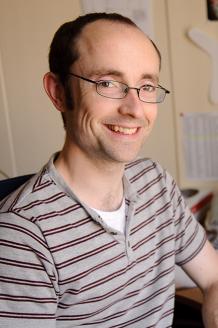
David Asher Levin is an Associate Professor in the Department of Mathematics at the University of Oregon. He has been with the university since September 2005, progressing from Assistant Professor to his current position as Associate Professor. His academic home is within the mathematics department, where he conducts research and teaches courses in probability theory and stochastic processes.
Levin received his Ph.D. in Statistics from the University of California, Berkeley in 1999, following an M.A. in Statistics from the same institution in 1995. He earned his undergraduate degree, a B.S. in Mathematics with General Honors, from the University of Chicago in 1993.
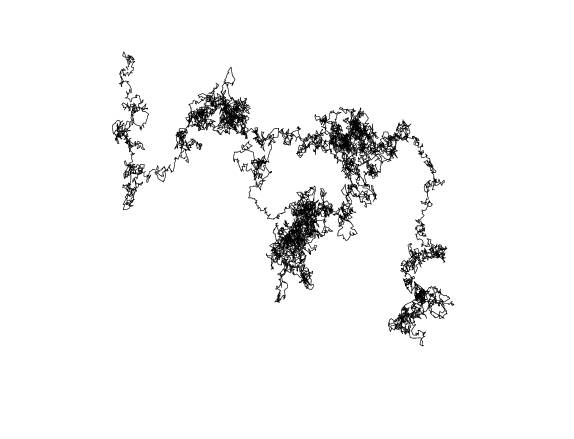
His research focuses on probability theory and stochastic processes, particularly Markov chains and mixing times. Levin has made significant contributions to understanding the rate of convergence of Markov chains to their stationary distributions. His work bridges theoretical mathematics with applications in statistical physics, theoretical computer science, and combinatorics. He has developed and refined important techniques for estimating convergence times, including coupling methods, strong stationary times, and spectral analysis.
Levin's publication record is highlighted by his influential textbook "Markov Chains and Mixing Times," first published in 2008 and updated in a second edition in 2017, co-authored with Yuval Peres and Elizabeth Wilmer. This work has become a standard reference in the field. His research spans theoretical foundations as well as practical applications in areas including card shuffling, the Ising model from statistical physics, and random walks on networks.
Among his honors, Levin received the Dora Garabaldi Fellowship from the University of California in 1994, and was elected to Phi Beta Kappa and Sigma Xi in 1993. He has organized significant academic events, including an AMS Short Course on Markov Chains and Mixing Times in January 2010.
Levin maintains active research collaborations and has connections to interdisciplinary work through the Microbial Ecology and Theory of Animals Center for Systems Biology at the University of Oregon. His work continues to influence both theoretical developments and practical applications of Markov chain theory across multiple scientific disciplines.