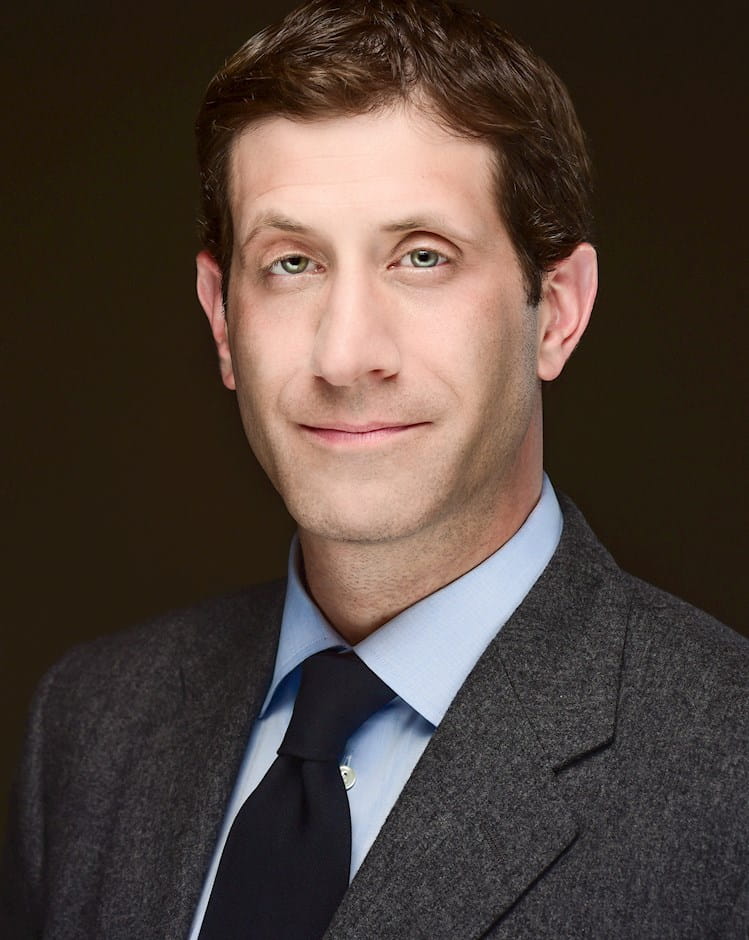
David M. Dodson is a Lecturer in Management at Stanford University’s Graduate School of Business (GSB), where he teaches courses on managing growing enterprises and entrepreneurial acquisition. His career spans over 30 years in business management, including founding three search funds and serving as CEO of a technology manufacturer and Executive Chairman of a telecommunications firm. He co-founded Sanku (formerly Project Healthy Children), a nonprofit addressing micronutrient deficiencies in Africa through fortified grains, recognized for its life-saving impact. Dodson holds an MBA from Stanford GSB (1987) and a BA in Economics from Stanford University (1983). His research focuses on entrepreneurial acquisition strategies and managing small-to-medium enterprises. Notable awards include the MSx Teaching Excellence Award (2023, 2021) and recognition as a top lecturer by Stanford GSB students. Beyond academia, he invests in over 40 businesses and serves on 21 corporate boards. In 2020, he founded StudentVotes.org to empower student voting during the pandemic. His media contributions include columns for The Boston Globe and frequent TV commentary on CNBC and Fox Business.
Michael Baldea is an Associate Professor in the Department of Chemical Engineering at the University of Texas at Austin . He holds a Ph.D. in Chemical Engineering from the University of Minnesota (2006), with prior degrees from 'Babeş-Bolyai' University in Romania (M.Sc. 2001, Diploma 2000). His research group develops theoretical and computational methods for Process and Energy Systems Engineering , focusing on integrated decision-making, performance optimization, and process intensification with industrial validation. Education: Ph.D., Chemical Engineering, University of Minnesota (2006) M.Sc., Interface Process Engineering, 'Babeş-Bolyai' University (2001) Diploma, Chemical Engineering, 'Babeş-Bolyai' University (2000) Research Thrusts: Integrated decision-making in chemical/energy supply chains Process performance monitoring and optimization Process integration and intensification Key applications include grid-responsive chemical plants, intensified distillation/column designs, and renewable energy integration for building systems. Scientific Awards: Frank A. Liddell, Jr. Fellowship NSF CAREER Award (2015-2020) Moncrief Grand Challenges Faculty Award (2014) AIChE Outstanding Young Researcher Award (2017) Implementation : His group has translated research into commercial tools through partnerships with industrial test beds and is working to integrate methods into commercial simulators. They explore predictive approaches for building energy management and strategic capital investment analysis in next-generation energy systems.
Jeffrey Frankel is the James W. Harpel Professor of Capital Formation and Growth at Harvard University's Kennedy School and a Research Associate at the National Bureau of Economic Research (NBER). He previously served as a Professor of Economics at the University of California at Berkeley and as a Member of the US President's Council of Economic Advisers during the Clinton Administration (1996-99), where his responsibilities included international economics, macroeconomics, and the environment. Dr. Frankel was born in San Francisco and earned his undergraduate degree from Swarthmore College before completing his PhD in economics at MIT. He has held visiting appointments at prestigious institutions including the Federal Reserve, International Monetary Fund (IMF), and Peterson Institute for International Economics. He also co-directs the NBER International Seminar on Macroeconomics (ISoM) and Harvard Project on Emerging Financial Markets (PEIF) conferences annually. Professor Frankel's research spans multiple critical areas of international economics. His work focuses on commodities, financial crises, currency dynamics, fiscal and monetary policy, regional economic blocs, and international environmental issues. He has been ranked among the 40 most-cited economists globally, reflecting the significant impact of his scholarly contributions. His recent publications reveal a growing emphasis on the intersection of politics and economic policy, particularly regarding US trade policy, presidential influence on monetary policy, and the international role of major currencies. His commentary appears regularly in major international publications including Project Syndicate, where he writes a syndicated monthly column. He also maintains an active blog at jeffrey-frankel.com, where he discusses current economic issues. In 2025, he transitioned from Twitter/X to Bluesky, continuing to share his economic analysis with a global audience. Ranked among the 40 most-cited economists Regular columnist for Project Syndicate Co-director of NBER ISoM and Harvard PEIF conferences Expert on international monetary systems and currency dynamics As an educator and mentor, Professor Frankel has influenced generations of economists and policymakers through his teaching at Harvard Kennedy School. His expertise in international economics has made him a sought-after commentator on global economic developments, particularly regarding currency markets, trade policy, and macroeconomic management. He continues to actively engage with current economic challenges, including analyzing the economic implications of political developments and policy proposals.
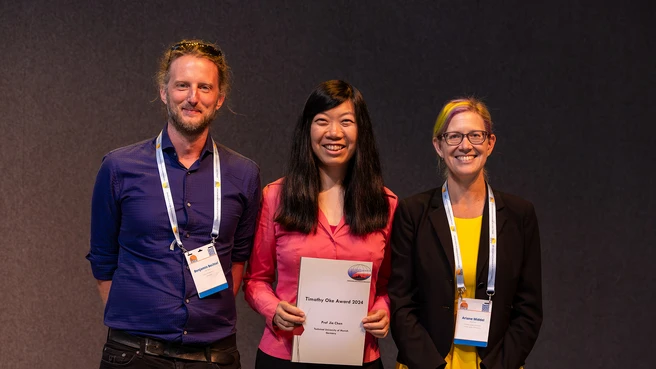
Professor Jia Chen is a Professor of Environmental Sensing and Modeling at the Technical University of Munich (TUM), holding positions in both the TUM School of Computation, Information and Technology (CIT) and the Department of Electrical and Computer Engineering, as well as the Department of Civil, Geo and Environmental Engineering. She also maintains an affiliation as an Associate at Harvard University. Her pioneering work focuses on developing novel optical sensors and atmospheric models to monitor and quantify greenhouse gas emissions in urban environments. Professor Chen's most significant contribution is the development of the differential column measurement method and the establishment of MUCCnet, the world's first permanent urban column sensor network. This groundbreaking work enables continuous, city-wide monitoring of greenhouse gases. Her research team has made notable discoveries, including quantifying methane emissions from events like the Munich Oktoberfest and identifying previously underestimated urban emission sources. Her research spans atmospheric science, environmental engineering, and climate change mitigation, with particular emphasis on: Urban greenhouse gas monitoring systems Advanced atmospheric modeling techniques Sensor network development for environmental monitoring Integration of machine learning with emission quantification Urban air quality assessment methodologies Professor Chen has received numerous prestigious awards including: Timothy Oke Award (2024) for original research in urban climatology ERC Consolidator Grant (2022) Arnold Sommerfeld-Award (2021) Germany's "Top 40 under 40" recognition by Capital Magazine (2020) Membership in the Global Young Academy (2021) She leads an extensive research group with numerous PhD students and postdoctoral researchers, and her work is supported by major funding from ERC, EU Horizon 2020, United Nations Environment Programme, NASA, ESA, German Federal Ministry of Education and Research, and German Research Foundation. Professor Chen has authored over 180 publications and 12 patents, with an h-index of 35.
PD Dr. Philipp Niewöhner is a distinguished Visiting Professor at the University of Vienna and Privatdozent at Göttingen University. His work focuses on Late Antique and Byzantine archaeology , particularly in Constantinople, Anatolia, and the Mediterranean . He has held significant roles including Associate Member at the Sapienza Centre for Late Antiquity, Director of Excavations at Miletus (Turkey) for the German Archaeological Institute, and Fellow at Dumbarton Oaks and Forschungskolleg Humanwissenschaften. His research spans architectural history, iconography, and provincial cultural diversity in early Christianity. Education: Doctorate (2004) and Master’s (2001) from Mainz University University studies at Heidelberg, Mainz, and Thessaloniki (Erasmus, 1997–2001) Research Themes: Byzantine architectural ornamentation and aniconism Iconoclast controversy and imperial symbolism Provincial vs. metropolitan Christian traditions Byzantine-Ottoman continuity and cultural exchange Article Trends: Analysis of Hagia Sophia ’s minimalist design Reinterpretation of the Trier Ivory as historical documentation Study of regional diversity in church architecture Examination of marble provenance and spolia practices Scientific Awards: DFG Project Funding for iconoclasm studies Gerda Henkel Foundation Scholarship (2006) William Golding Fellowship (2012–2014) Grants and Collaborations: Co-authored works with Anthony Cutler on Byzantine ivory carving Leadership roles in excavations and academic institutions Contributions to journals like Travaux et Mémoires and Dumbarton Oaks Papers
Prof. Coen Teulings is a Professor of Economics at Utrecht University's Department of Economics, part of the Law, Economics, Governance and Organisation faculty. He holds concurrent roles as a Fellow at CEPR, IZA, and CES-Ifo. Previously, he served as Professor of Economics at the University of Cambridge (2013–2017) and part-time Professor at the University of Amsterdam (2004–2017). His professional history includes seven years as President of the Netherlands Bureau for Economic Policy Analysis (CPB), CEO of SEO Economic Research (2004–2006), and Director of the Tinbergen Institute (1998–2004). Teulings earned a Master's degree in Economics (cum laude, 1985) and a PhD (1990) from the University of Amsterdam. He has advised governmental and international bodies, including the Dutch House of Commons Economic Advisors and the UK's Office for Budget Responsibility. His research focuses on labor economics, macroeconomics, urban economics, and policy analysis, with notable work on minimum wages, income inequality, and secular stagnation. He co-edited the 2014 E-book on Secular Stagnation with Richard Baldwin. Teulings' recent publications address topics like agglomeration effects, urban retail dynamics, and wealth distribution. He contributes to policy debates through roles on the AFM Capital Markets Committee and supervisory boards of institutions like the Boekmanstichting. His ancillary activities include a biweekly column in the Financial Daily (FD) and academic governance roles in the Netherlands and Europe.
Özge Öner serves as Associate Professor in Spatial Economics and Real Estate at the University of Cambridge's Department of Land Economy and holds a Fellowship at Sidney Sussex College, where she additionally serves as Vice Master and Director of Studies. Her institutional affiliations extend to research fellowships at Stockholm's Institute of Retail Economics and Jönköping's Centre for Entrepreneurship and Spatial Economics (CEnSE). Her academic foundation includes a 2014 PhD in Economics with specialization in Urban and Regional Economics from Jönköping International Business School, complemented by doctoral research at the University of Illinois' Regional Economics Applications Laboratory (REAL). Prior academic appointments include Assistant Professor at Jönköping International Business School and Researcher at Stockholm's Research Institute of Industrial Economics (IFN). Research Interests: Öner's scholarly work critically examines migration dynamics, labor mobility patterns, micro-geographic segregation mechanisms, ethnic enclave formation, retail/service geography, urban amenity distribution, entrepreneurial geography, and political spatial organization. Her methodological approach heavily leverages geocoded register data and spatial econometric techniques to investigate how geographic context shapes economic behavior, with particular emphasis on Swedish and European urban systems. This interdisciplinary framework bridges spatial economics, economic geography, and migration studies through rigorous quantitative analysis of neighborhood-level phenomena. Publication Trends: Her recent output (2023-2025) demonstrates evolving focus toward infrastructure-impact analysis (tramway effects on commercial vitality), refugee labor market integration pathways, and micro-scale retail/ethnic enclave dynamics. Methodologically, she increasingly employs synthetic control approaches and granular geospatial data to isolate causal mechanisms in urban economic processes, while maintaining strong connections to policy-relevant questions about segregation, integration, and commercial geography. Scientific Awards: Handelsbanken Wallander postdoctoral scholarship (2015) Young Investigator Award in Italy (2018) Young Researcher Award in Sweden (2019) from the Swedish Entrepreneurship Forum Advising and Public Engagement: As Director of Studies at Sidney Sussex College, Öner oversees academic progression for undergraduate students. She actively translates research into public discourse through monthly columns in Svenska Dagbladet (The Swedish Daily News), where she analyzes contemporary socioeconomic issues through her spatial economics lens. While specific doctoral advisees aren't documented in source materials, her leadership roles indicate significant mentoring responsibilities. Research Networks: Öner maintains active collaboration through dual research fellowships: at Stockholm's Handelns Forskninginstitut (Institute of Retail Economics) where she examines commercial geography, and at Jönköping's CEnSE focusing on spatial entrepreneurship patterns. These positions facilitate cross-institutional research on retail dynamics, migration geography, and urban economic structures using Scandinavian longitudinal datasets.
Professor Michael J. Hutter is a distinguished faculty member at Albany Law School, where he has served since 1976 and is recognized as the senior member of the faculty. He holds the rank of Professor of Law and teaches core subjects including Evidence, Antitrust, Business Torts, and Trade Regulation. His expertise is nationally recognized, particularly in New York evidence law, where he serves as a legal columnist and advisor to the state judiciary. His educational background includes an A.B. from Brown University and a J.D. from Boston College Law School, where he was Editor-in-Chief of the law review and elected to the Order of the Coif. After clerking for Judge Matthew J. Jasen of the New York Court of Appeals, he practiced litigation before transitioning to academia. Professor Hutter’s research focuses on evidence, antitrust, trade secrets, and business torts. His scholarship is widely cited by courts across New York and federal circuits, and has influenced state legislation. He has authored a major reference work, Model Jury Charges in Business Torts Cases , and published over 75 bi-monthly columns in the New York Law Journal on evidence developments. The 15 most recent publications reflect a consistent focus on evidence law, judicial procedure, and torts, with recurring themes in hearsay, business records, and appellate decisions in New York. His work bridges academic scholarship and practical legal application, particularly for judges and trial attorneys. Teaching Award, Albany Law School Teaching Award, Western New England Law School Highly Qualified Rating, New York State Bar Association Elected Member, American Law Institute Fellow, American Bar Association Fellow, New York State Bar Association Professor Hutter has advised and argued in numerous appellate cases, including landmark decisions in the New York Court of Appeals. He has served on multiple state commissions, including the Commission on Judicial Nomination and the Judicial Advisory Committee on Evidence, where he was appointed Reporter. He has delivered over 200 presentations to bar associations and legal education programs. He has also held leadership roles such as President of the Albany County Bar Association and Director of the Office of Capital Defenders. He is actively involved in judicial education, regularly presenting at programs for newly appointed judges and legal staff through the New York State Judicial Institute. He was appointed by the Chief Judge to compile a comprehensive Guide to New York’s evidence law, enhancing judicial access to consolidated legal rules.
Peter Bofinger is Professor for Monetary Policy and International Economics at the University of Würzburg and Research Fellow at the Center for Economic Policy Research (CEPR), London. His career includes positions as Economist at the Deutsche Bundesbank, Visiting Scholar at the Federal Reserve Bank of St. Louis and the IMF, and professorships at the Universities of Kaiserslautern and Konstanz. From 2004 to 2019 he served as a member of the German Council of Economic Experts. Research Focus Monetary policy theory and practice, including the concept of the natural rate of interest (r*) International macroeconomics and exchange-rate regimes Digital currencies, stablecoins, and central-bank digital currencies (CBDC) Finance–growth nexus through a Schumpeterian lens, emphasizing banks’ role in liquidity creation Financial stability and the macroeconomic consequences of banking regulation Recent publications (2020-2025) reveal a consistent emphasis on how modern monetary systems—especially private digital monies and CBDC—affect macroeconomic stability and growth. Collaborative work with Thomas Haas, Fabian Mayer, and Lisa Geißendörfer applies both theoretical and empirical methods to test Schumpeterian hypotheses, reassess the finance–growth relationship, and evaluate policy implications of new monetary technologies. Scientific Contributions Textbooks: Monetary Policy: Goals, Institutions, Strategies, and Instruments Policy columns on VoxEU addressing central-bank independence, bank capital regulation, and European recovery strategies CEPR Discussion Papers spanning stablecoins, r* estimation, cryptocurrency competition, and Schumpeterian finance theory Advising & Grants During his 15-year tenure on the German Council of Economic Experts, Bofinger shaped national and European macroeconomic policy debates. No specific doctoral students or funded projects are named in the supplied material.
Bob Turner is an active Associate Professor of Political Science at Skidmore College in Saratoga Springs, NY, with dual affiliation in the Environmental Studies program. He maintains an office in Ladd Hall (Room 316) and teaches courses including State and Local Politics, where he guides students through intensive case studies of policy issues across different states. His research focuses primarily on State and Local Politics in the American context, with special emphasis on polling methodology and regional political analysis. In 2021, he founded the SPI Polling Institute at Skidmore College, which conducts educational surveys on political and social issues in Saratoga Springs and New York's Capital District. Through this institute, students gain hands-on experience designing surveys and analyzing data, with findings published in regional media outlets including the Times Union, Daily Gazette, Saratoga Today, and Saratogian. Professor Turner demonstrates strong community engagement through both his academic work and personal interests. His "Fishing Professor" column for the Saratoga Lake Association Newsletter, active from April 2022 through July 2023, showcases his knowledge of local waterways and fishing techniques across numerous Adirondack lakes including Saratoga Lake, Lower Saranac, and Loon Lake. The SPI Polling Institute operates as a non-profit academic institution with primary educational goals, providing students with practical research experience while generating valuable data on local political dynamics. Turner's State and Local Politics course materials reveal his methodological approach emphasizing qualitative case study analysis of policy issues across different jurisdictions.
Anne Hannusch is an Associate Professor (tenure-track) of Economics at the University of Bonn. She is affiliated with the Collaborative Research Center Transregio 224 and serves as a research affiliate at both CEPR and IZA. Her academic focus lies at the intersection of macroeconomics, family economics, and economic growth. Education: Ph.D. in Economics from Emory University, with research visits at the University of Pennsylvania, Federal Reserve Bank of Atlanta, and European Central Bank. Research Interests: Her work explores how family dynamics (e.g., cohabitation, childcare, time-use allocation) interact with macroeconomic outcomes like economic growth, income inequality, and labor market trends. She also investigates the political economy of protective labor laws for women and the fiscal impact of family-related tax policies. Publications: Recent articles address fertility trends, gender equity, maternal labor supply, and time-use patterns, often in collaboration with leading economists like Michèle Tertilt and Matthias Doepke. Her work appears in discussion papers and VoxEU columns. Scientific Awards: CEPR Research Affiliate IZA Research Affiliate (since May 2023) Advising & Collaboration: Co-authored studies with prominent researchers and institutions, contributing to debates on family economics, women's rights, and growth models. She is actively involved in the CRC TR224 consortium.
Cem Çakmaklı serves as Associate Professor of Economics at Durham University Business School and Koç University's College of Administrative Sciences and Economics (currently on leave). Previously, he held Assistant Professor positions at Koç University (2015-2023) and the University of Amsterdam (2011-2013), following an AXA Postdoctoral Fellowship at Koç University (2013-2015). His academic credentials include: Ph.D. in Economics/Econometrics, Tinbergen Institute, Erasmus University Rotterdam (2012) M.Phil in Economics (Cum Laude), Tinbergen Institute (2007) MA in Economics (with distinction), Istanbul Technical University (2005) B.Sc. in Management Engineering, Istanbul Technical University (2002) His research integrates advanced econometric methodologies with macroeconomic policy analysis, specializing in time series modeling for economic forecasting, pandemic impact assessment, and financial market dynamics. Recent work demonstrates innovative applications of Bayesian semiparametric techniques to yield curve modeling, GDP nowcasting, and vaccination economics, with particular emphasis on emerging market contexts. His methodological contributions bridge theoretical econometrics with real-world policy challenges. Publication trends reveal a strategic pivot toward pandemic economics since 2020, producing high-impact studies on global vaccination strategies and lockdown effectiveness, while maintaining core expertise in time-varying parameter models and financial econometrics. His work consistently addresses policy-relevant questions through rigorous quantitative frameworks. Scientific recognition includes: AXA Research Fund Post-Doctoral Fellowship (2013-2015) Fellowships at Economic Research Forum (ERF), Centre for Macroeconomic Policy, and Rimini Center for Economic Analysis (RCEA) Research funding comprises multiple TUBITAK grants totaling over 400,000 TL for projects on central bank credibility (2019-2020), large time-varying parameter VARs (2019-2020), and emerging market business cycle indicators (2017-2019). As an educator, he has developed and taught advanced econometrics curricula at PhD and graduate levels across multiple institutions, while his Capital magazine columns translate complex economic concepts for public discourse. His professional ecosystem integrates academic research through Ethos Economics Consulting with policy engagement via media commentary.
Fanni Faegersten is an affiliated researcher at Lund University's Department of Archaeology and Ancient History under the Joint Faculties of Humanities and Theology. She serves as International Coordinator and Health and Safety Representative at the Faculty Office. Her research focuses on: Phoenician and Punic material culture Egyptianizing votive sculpture from Cyprus Cross-cultural artistic exchanges in the Eastern Mediterranean Phoenician column capitals and symbolic motifs Ancient woodcraft and ivory inlay techniques Selected publications (2003-2023) examine: Phoenician volute capitals across Mediterranean cultures Egyptianizing limestone statuary typology Cypro-Egyptian dress adaptations Eastern Mediterranean ivory/wood craftsmanship She collaborates with international scholars like Carolina López-Ruiz and participates in Mediterranean archaeology workshops. Recent activities include: 2025 - Phoenician Poetics lecture series 2025 - Eternity: Phoenician Legacy presentation 2022 - Phoenician Religion workshop at Haifa University
Anna-Sophie Schönfelder is a doctoral candidate and research assistant at Justus Liebig University Giessen in the CRC/TRR 138 'Dynamics of Security', focusing on Subproject C10. She serves as Deputy Spokesperson for doctoral students. Her academic career includes roles as Lecturer in political theory at Universities of Hamburg, Lüneburg, and Osnabrück (2014–2021), and Research Associate in DFG projects on Marx’s social critique (2012–2019). Schönfelder holds an M.A. in Democratic Governance and Civil Society from the University of Osnabrück (2012), with research on Marx and Arendt’s theories of political action. Her research focuses on critique of political economy , Marx studies , Arendtian political theory , and critique of antiziganism . Notable works include co-authored monographs like Truth and Revolution in Marx's Critique of Society (2023) and edited volumes like Kritik im Handgemenge (2018). She received the 2017 David Ryazanov Prize for contributions to Marx research. Teaching highlights include courses on State Theories (Leuphana Universität Lüneburg), Political Philosophy (Universities of Hamburg and Osnabrück), and Democratization Theories . Her articles span Marx’s journalistic work, revolutionary dynamics, and feminist critiques of gender norms, published in venues like Marx-Engels-Jahrbuch , Zeitschrift für politische Theorie , and public platforms like taz nord .
John Paul Rollert serves as an Adjunct Associate Professor of Behavioral Science at the University of Chicago Booth School of Business, teaching courses including Ethics in the Workplace and Ethics of Business for Spring 2025–2026 and Winter 2025–2026 terms. He concurrently teaches ethics, politics, and leadership courses at Harvard University since 2005. His educational background includes: Undergraduate degree from Harvard College Juris Doctor (JD) from Yale Law School PhD from The John U. Nef Committee on Social Thought at the University of Chicago Rollert's research centers on the intellectual history of capitalism and the ethics of leadership , with pioneering work on Adam Smith's moral philosophy and political economy. His scholarship critically examines greed as a historical concept, empathy applications in business law, and the moral psychology underpinning organizational leadership. His publications reveal consistent thematic threads across academic and popular outlets: historical critiques of capitalist ethics, reinterpretations of Adam Smith's legacy, and analyses of corporate responsibility through philosophical frameworks. Articles in The Atlantic and The New York Times demonstrate his ability to translate complex ethical theories into contemporary business discourse. His recognition includes: 2017 Best in Business Award from the Society of American Business Editors and Writers for The Atlantic article 'Greed Is Good' As author of the 'In-House Ethicist' column for Chicago Booth Review, Rollert bridges academic theory and practical business ethics. While his teaching impacts numerous students through structured courses, the available documentation doesn't specify formal PhD advisees or externally funded research grants. No laboratory affiliations or dedicated research teams are referenced in his professional profile, reflecting his focus on theoretical scholarship and classroom instruction within the Behavioral Science department.