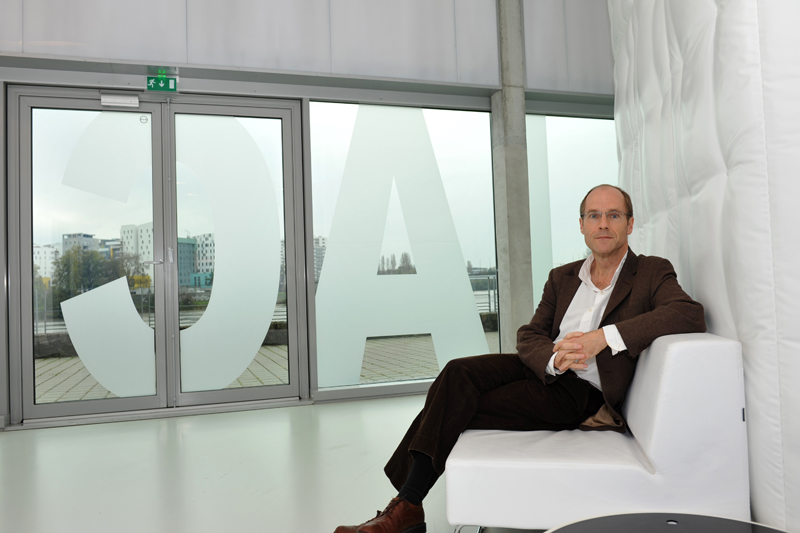
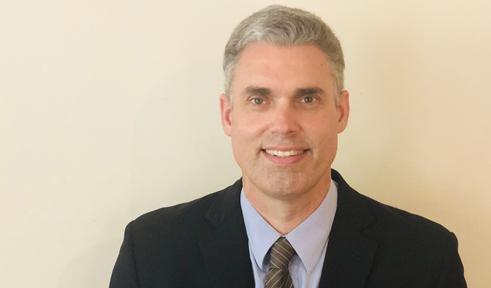
John Tolan is a Professor of Medieval History at the Université de Nantes since 2002, specializing in Islamic-European cultural relations and religious minorities. He has held leadership roles at the Maison des Sciences de l'Homme Ange Guépin and the RELMIN research project. His work spans comparative religious studies, legal history, and interfaith dynamics. PhD in History, University of Chicago (1990) Habilitation, École des Hautes Études en Sciences Sociales (2001) His research focuses on Medieval Mediterranean societies, examining legal frameworks for dhimmis , Crusades , and Quranic translations . Recent projects include the European Qur’an initiative and analysis of St. Francis-Sultan encounters. Publications since 2013 include comparative studies on Abrahamic historiographies , expulsion histories , and religious cohabitation in medieval towns. His work bridges academic research with public discourse through Radio France appearances and 20+ edited volumes . Académie Europæa member Reial Acadèmia de Bones Lletres de Barcelona fellow Professional activities include editorial board memberships for Medieval Encounters and Medieval Voyaging , alongside 80+ international conference participations. Current affiliations: Academia.edu profile .
Professor Oyeronke Oyewumi is a renowned sociologist at Stony Brook University's Department of Sociology within the College of Arts and Sciences. She specializes in African gender studies, postcolonial epistemologies, and decolonial thought. A Nigerian-born scholar with degrees from the University of Ibadan and UC Berkeley, she challenges Eurocentric gender frameworks through works like The Invention of Women , which won the 1998 ASA Distinguished Book Award. Her research spans Yoruba naming practices, colonial discourses, and African feminist thought. Awards include the 2021 ASA Distinguished Africanist Award and a Rockefeller Humanities Fellowship. She has authored/co-edited influential books on gender in Africa and global systems. Her work critiques Western knowledge systems while centering African epistemologies. Education: Bachelor's/Master's: University of Ibadan, Nigeria PhD: University of California, Berkeley Key Research: Decolonizing gender theory Yoruba cultural systems Postcolonial feminist methodologies Her recent scholarship explores naming practices and epistemic decolonization, with publications spanning Portuguese and Spanish translations to global audiences. She has held fellowships from the Ford Foundation and National Council for Research on Women.
Reakeeta Smallwood is a proud Gamilaroi woman and Senior Lecturer at the Susan Wakil Nursing and Midwifery School, University of Sydney. With a background in nursing through the NSW Health Aboriginal Cadetship program, she focuses on Indigenous research paradigms, historical trauma, and community-led health initiatives for Aboriginal and Torres Strait Islander peoples. PhD from University of Technology Sydney (UTS) on historical trauma and resilience in Aboriginal youth Recipient of Jumbunna Indigenous Postgraduate Scholarship (UTS) Advocate for Aboriginal knowledge systems in healthcare and research Her research spans Indigenous health equity, strength-based approaches, cultural safety, and cardiovascular disease prevention. Recent projects include the Strait from the Heart cardiovascular initiative and the Fishheart river restoration collaboration with Barkindji Elders. She employs yarning, poetic inquiry, and arts-informed methods to center community voices. Her 15 most recent publications (2025-2019) address historical trauma, stroke recovery, cultural safety, and cardiovascular health. Themes include qualitative research, Indigenous health equity, and decolonizing methodologies, with sub-fields focusing on Aboriginal youth, community-led interventions, and land-based healing. Jumbunna Postgraduate Research Scholarship (2020-2023) UTS Student Research Intensive Scheme (2023) She mentors Aboriginal researchers and emphasizes co-learning, cultural determinants of health, and ethical practices. Her work intersects nursing, midwifery, and Indigenous policy, aiming to transform healthcare systems through Aboriginal-led praxis.
Roles and Affiliations Michael Reiss holds the position of Chair of Science Education at the IOE - Curriculum, Pedagogy & Assessment, part of University College London (UCL). He is also a Visiting Professor at the Royal Veterinary College and a member of the Nuffield Council on Bioethics. His roles include teaching on UCL's Education MA and Education (Science) MA programs, alongside extensive research and publication activities. Educational Background BA, MA (University of Cambridge, 1975-1978) PhD (University of Cambridge, 1978-1982) PGCE (University of Cambridge, 1982-1983) MBA (Open University, 1999-2002) Research Interests Reiss focuses on science education, bioethics, and sex education, with particular attention to curriculum design, ethical dilemmas in classrooms, and the intersection of faith and science. His work explores how schools can better integrate out-of-school science learning and address controversies such as creationism in curricula. Publications and Awards He has authored over 20 books, including The New Biology: A Battle between Mechanism and Organicism (2023) and Human Flourishing: Scientific Insight and Spiritual Wisdom in Uncertain Times (2021). His awards include fellowships from the Royal Society of Biology, Royal Society of Arts, and Academy of Social Sciences. Additional Contributions Served as Director of Education at the Royal Society (2007-2009) Advises on policy for science education and bioethics globally Explores ethical implications of space colonization, AI, and climate change Labs and Collaborations Collaborates with institutions like the Nuffield Council on Bioethics and the Royal Veterinary College on interdisciplinary projects. His research network spans bioethics, science education policy, and global health initiatives.
Professor Joanna Lewis is a historian of Africa, empire, and world history at the London School of Economics , focusing on imperialism, colonialism, and inequality from precolonial to contemporary periods. Her research combines interdisciplinary approaches, applying historical analysis to current issues like the impact of colonialism on human rights diplomacy and post-conflict reconstruction. She currently serves as Director of the Centre for Women, Peace and Security and has won multiple teaching awards, including the LSE Teaching Prize and recognition as a runner-up for LSE's Most Dynamic Lecturer in 2016. Education : First-class BA in Social and Political Science with History and Philosophy from the University of Bath; Master’s in History of International Relations from University of Cambridge; PhD in Colonial Kenya from Cambridge with ESRC Doctoral Fellowship Research Interests : Colonial governance in Africa, emotional history of British Empire, resilience in post-conflict states, Somali diaspora studies, and interdisciplinary approaches to women's history and peacebuilding Publications : Author of Empire of Sentiment (2018) and Women of the Somali Diaspora (2021), with articles on topics ranging from Livingstone's legacy to Mau Mau narratives and contemporary issues in post-colonial Africa Scientific Awards : British Academy 2020 Special Research Award Grant, LSE Teaching Prize, and multiple student-nominated teaching excellence recognitions Supervision : Has supervised PhD students on diverse topics including European Scramble for Africa, African soldiers in WWII, French Algerian rap, and youth guerrilla cycles in Uganda-Congo borderlands Current Projects : 2025 PhD Writing Workshop on well-being and neuro-diversity, research on Robert Mugabe and Britain's post-colonial legacy, and community responses to Somali diaspora challenges during the pandemic
Dr. Britta Timm Knudsen is affiliated with Aarhus University and participates in Critical Heritage Studies. She presented a paper titled "Disseminating Disgust: De-colonizing Monuments through Affective Strategies" at the ACHS 2016 conference, focusing on the emotional dynamics of decolonizing public monuments. Research Interests: Her work centers on Critical Heritage Studies Decolonization of cultural symbols Affect theory in heritage contexts Urban memory and monuments
Dip Kapoor is a Professor in the Department of Educational Policy Studies at the University of Alberta, Canada. His primary research focuses on colonial/racial capitalist development, globalization, and resistance in Indigenous, peasant, and migrant labor movements across Asia, Africa, and the Americas. He has held roles including tenure-track positions at McGill University and voluntary Research Associate at the Center for Research and Development Solidarity (CRDS) in India since 2006. Education: PhD in Education from the University of Alberta. Key Roles: Editor of major works like Contesting Colonial Capitalism (2025) and Against Colonization & Rural Dispossession (2017). Principal Investigator on SSHRC grants addressing casteism in Indian schools and learning in migrant worker struggles. Research Interests: Kapoor explores intersections of education, anti-colonial movements, and resistance to development-led dispossession. His work critiques neoliberal globalization’s impact on marginalized communities and emphasizes participatory action research (PAR) methodologies. Publications: Over 50 peer-reviewed articles and edited volumes, including seminal works analyzing Indigenous land struggles, peasant mobilizations, and migrant labor advocacy. His 2025 book Contesting Colonial Capitalism highlights global anti-colonial resistance strategies. Awards/Recognition: His 2017 volume was selected as a top resource by the Bretton Woods Project. Recipient of SSHRC grants (2006–2027) totaling over $600k. Advising & Grants: Supervised 13 PhDs, 16 M.Ed theses, and served as committee member for 26 candidates. Active in funding initiatives linking academic research to grassroots movements. Labs/Teams: Collaborates with CRDS in India and global networks like the Oakland Institute to amplify marginalized voices in anti-dispossession struggles.
Toma Muteba Luntumbue is a Congolese-born artist, curator, and lecturer currently based in Brussels. He is affiliated with the École de Recherche Graphique (ERG) , where he contributes to art education. His work explores themes of cultural identity, colonization, decolonization, nationalism, racism, and migration through sculpture, installation, drawing, sound, and video. Using inexpensive or recycled materials, Luntumbue interrogates codified cultural representations and ideological phenomena linked to identity and its transformations.
Astri Dankertsen is an Associate Professor in Sociology at the Faculty of Social Sciences, Nord University. She leads the MINS Research Group and specializes in Sámi and Indigenous studies, focusing on identity, urbanization, colonization, and gender. Her work addresses decolonization, Indigenous policymaking, and Nordic social dynamics. She has held a faculty position since 2010 and earned her PhD in Sociology from Nord University in 2014. Education : PhD in Sociology (2014), University of Nordland (now Nord University). Teaching : Courses on gender, ethnicity, Indigeneity, and gender equality. Research Projects : Leads the NFR-funded Indhome project on Indigenous homemaking and contributes to initiatives on gender balance and Nordic truth commissions. Research Interests : Sámi urbanization, colonialism, gender perspectives in Nordic contexts, and Indigenous methodologies. Her recent work explores Sámi resistance through haunting narratives and urban Indigenous identity formation. Collaborates with the Læra Institute for Circumpolar Education and serves on Nord University’s PhD committees. Grants & Projects : Norwegian Research Council grants for Indhome and urban Sámi studies. Engaged in truth and reconciliation processes in the Nordic region. Local Role : City council member in Bodø, advocating for Indigenous and cultural issues. Labs/Teams : MINS Research Group, Nord University’s Arctic Vulnerabilities specialization, and partnerships with international Indigenous networks. Her interdisciplinary approach bridges sociology, gender studies, and decolonial theory.
Dr. Diya Gupta is a Senior Lecturer in Public History at City St George's, University of London , where she explores intersections between visual culture, life-writing, and literature during wartime. Educated at Jadavpur University, University of Cambridge, and King’s College London, she previously held the Past & Present Postdoctoral Fellow: Race, Ethnicity and Equality in History at the Royal Historical Society and Institute of Historical Research (2020–2022), followed by a Postdoctoral Visiting Research Fellowship at the School of Advanced Study (2019–2020). Her first monograph, India in the Second World War: An Emotional History (2023), examines undivided India's emotional responses to WWII through letters, memoirs, and colonial photographs, shortlisted for the Royal Historical Society's 2024 Gladstone Prize. Her current project investigates wartime violence targeting colonized civilians, focusing on the 1943 Bengal Famine as a lens for understanding modern food inequalities. Dr. Gupta's recent publications span literary and visual analyses of WWII-era food deprivation, colonial photography, and marginalized narratives in academic and public history. She contributes to BBC Radio 4 programs, BBC dramas, and WWII computer games, and co-convenes the Teaching Empire and War workshop series. Her scientific awards include a HEA Fellowship and Fellowship of the Royal Historical Society (FRHistS). She supervises AHRC-funded PhD research with the Imperial War Museums and has secured grants from HEIF and Clore Leadership.
Pia Marit Johanne Lane is Professor of Multilingualism at the Department of Linguistics and Nordic Studies, Faculty of Humanities, University of Oslo, and serves as Academic Chair for the Circle U. Multilingualism, Interculturality and Language Lab. She gained national prominence as a member of the Norwegian Truth and Reconciliation Commission, which investigated historical Norwegianization policies against Sami, Kven/Norwegian Finns, and Forest Finns, submitting its report to the Storting in June 2023. Professor Lane's research focuses on language revitalization, language policy, and the standardization of minority languages, with particular expertise in Kven and Sami communities in Northern Norway. Her scholarly approach integrates nexus analysis with indigenous, decolonial, and southern theoretical perspectives, examining language as part of a larger semiotic system. She has extensively documented how material objects function as identity markers during language shift, as evidenced in her influential works including 'Identities in action: A nexus analysis of identity construction and language shift' (2009) and 'We did what we thought was best for our children' (2010). Analysis of Lane's recent publications reveals a strong trajectory toward decolonial frameworks and the application of southern theory to northern contexts. Her work increasingly examines the psychological dimensions of linguistic colonization and the pathways to mental decolonization. The recurring themes across her scholarship include the tension between language standardization and community participation, the role of new speakers in language revitalization movements, and the complex relationship between historical trauma and contemporary language identity. Project leader for 'Standardising Minority Languages,' funded by Norges Forskningsråd Co-editor of 'Standardizing Minority Languages. Competing Ideologies of Authority and Authenticity in the Global Periphery' (Routledge, 2017) Member of the EU-funded COST Action IS1306 'New Speakers in a Multilingual Europe' Co-leader of the work group 'Indigenous minority languages' and current leader of 'New speakers: Subjectivities, trajectories, spaces' Member of AILA-network 'Home Language Maintenance and Development' Lane's fieldwork extends beyond traditional academic boundaries, including collaboration with Lightsource Productions on the documentary film 'Det hemmelige språket' (The Secret Language), which explores contemporary Kven language users. Her personal connection to the subject matter is profound—growing up in Bugøynes, Finnmark, she was the first generation in her family to be spoken to exclusively in Norwegian, only reclaiming her heritage Kven language as an adult researcher returning to her community.
John Fousek is a Clinical Professor in NYU’s MA Program in International Relations since 2013. He holds affiliations with the Faculty of Arts and Science and teaches courses on global history, U.S. foreign policy, and international relations. His research focuses on Cold War cultural roots, U.S. foreign policy dynamics, and ethical dimensions of global governance. Fousek has held administrative roles at Rutgers University and Yeshiva University, and directed non-profit initiatives like the World Order Models Project. Education: Cornell University: Ph.D. & M.A. in History Columbia College, Columbia University: B.A. in History-Sociology Research Interests: Re-examining 'American Century' narratives via African-American cultural influence U.S. nationalism in the 1984 Los Angeles Olympics context Debates on 'American exceptionalism' in foreign policy Awards: Senior Fellow, Center for Global Change and Governance (2002-2006) Allan Nevins Prize Nominee (1994) Daughters of the American Revolution Fellowship (1993-1994) Advising & Grants: Advises master's theses and has secured grants for projects linking culture and foreign policy. Current projects explore Louis Armstrong's global impact and post-Soviet world order dynamics. Labs/Teams: Collaborates with NYU's International Studies Working Group and Rutgers' Center for Global Change and Governance on interdisciplinary research initiatives.
Dr. Sunil Kumar is a Professor in the Department of Social Policy at the London School of Economics (LSE). He holds a PhD from University College London and specializes in urbanization, housing, migration, and poverty in the Global South, particularly India. His research critiques urban policies and proposes inclusive alternatives. He served as Dean of Graduate Studies from 2011 to 2017 and is affiliated with the LSE India Observatory and Appropriate Technology Asia. Dr. Kumar's research focuses on urbanization-construction-migration linkages, informal labor markets, and rental housing dynamics. He has led major DFID-funded projects, including studies on South Asian urbanization and housing policies. His work appears in journals like International Journal of Urban and Regional Research and Urban Studies . He is committed to pedagogy, mentoring students, and fostering discussions on race and decolonization in social policy through initiatives like the 'Race Matters' program. His consultancy work includes projects for DFID, UN-Habitat, and the World Bank.
Alec G. Holcombe is Associate Professor in the Department of History and Director of the Contemporary History Institute at Ohio University’s College of Arts and Sciences. He is based in Bentley Annex 405 and is actively involved in teaching and research related to Southeast Asian history, particularly modern Vietnam. Education: Ph.D. in Southeast Asian History, University of California, Berkeley His research centers on Vietnamese Communism, colonialism, socialist construction, and constitutionalism, with a strong regional focus on Southeast Asia. Broader themes in his work include pre-colonial legacies, Western colonization, nationalism, decolonization, and post-colonial nation-building, as well as Marxist ideology, the Cold War, and the historical influences of the Soviet Union and China. His recent publications span from 2010 to 2024, showing a sustained scholarly engagement with Vietnamese political and cultural history. The works reflect a deep engagement with archival materials, ideological development, and state-society relations in 20th-century Vietnam. Scientific Awards: No awards listed in the provided text. Dr. Holcombe teaches a range of courses including Introduction to World History, Vietnamese History, and Southeast Asian history from 1750 to the present. He also leads a seminar on the historiography of Southeast Asia. While no students or grants are explicitly mentioned, his role as Director of the Contemporary History Institute suggests leadership in academic programming and research initiatives. There is no mention of lab affiliations or research teams in the provided content.
Gertrude Gonzales de Allen, Ph.D. is an Associate Professor in the Department of Philosophy and Religious Studies at Spelman College, where she has served since 2001. Her work bridges Africana philosophy, existential phenomenology, and postcolonial theory. Education: Ph.D. and M.A. from Binghamton University; B.A. from Susquehanna University Her research examines identity formation in the U.S. Virgin Islands through sedimented historical consciousness, U.S. colonization impacts, and intersections of philosophy with film and literature. She has taught courses spanning practical reasoning to Latin American philosophy. Dr. González de Allen's publications analyze epistemic freedom in Afro-Caribbean thought, de-colonial trans-modern selves, and the political dimensions of identity. Her work engages interdisciplinary methodologies across philosophy, cultural studies, and critical race theory. Scientific Awards Franklin Humanities Institute HBCU Fellow, Duke University (2011/2012) Sheila Biddle Ford Foundation Fellow, Harvard University (2007/2008) UNCF Mellon Faculty Research Fellow (2007/2008) Ford Foundation Diversity Grant, Rutgers University (2005/2006) Her research has influenced diversity discourse in higher education, particularly at HBCUs, and she contributes to critical conversations about colonialism, postcolonialism, and the de-colonial turn.