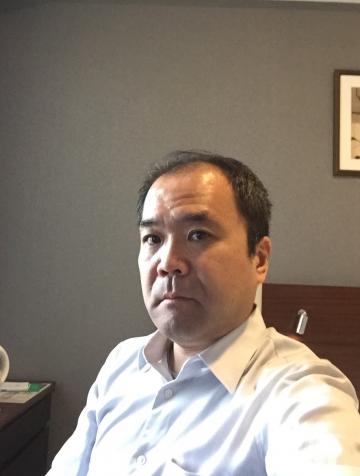
Eiichiro Azuma is the Roy F. and Jeannette P. Nichols Professor of American History at the University of Pennsylvania, specializing in Asian American history and transpacific studies. He has been at Penn since 2001 and held the Alan Charles Kors Endowed Term Chair (2009–2019). His research focuses on Japanese American experiences, migration, settler colonialism, and U.S.-Japan imperial relations. Education: Ph.D. in History (2000), M.A. in Asian American Studies (1992), both from UCLA. Research interests include transpacific diaspora, colonial Taiwan, and the intersection of race, migration, and imperialism. His work bridges Asian American studies with global and imperial history. Recent publications include In Search of Our Frontier (2019) and Japanese America on the Eve of the Pacific War (2024). Awards include the John K. Fairbank Prize and Theodore Saloutos Award. He has served on editorial boards for journals like Journal of Asian American Studies and Pacific Historical Review . Azuma co-edits the Between Asias and Americas series at the University of Pittsburgh Press and chairs the Asian American Studies Program at Penn.
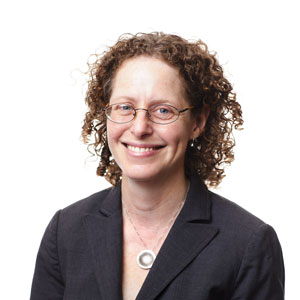
Megan J. Elias is an Associate Professor of the Practice and Director of the Food Studies Program at Boston University. She holds a PhD from the City University of New York (CUNY), an MA from San Francisco State University, and a BA from Cornell University. Her research explores the intersection of food, culture, and history, with a focus on food writing, markets, home economics, and gender. Dr. Elias is the author of seven books, including *Food on the Page: Cookbooks and American Culture* (2017) and *Food in the United States, 1890–1945* (2009), which received the American Library Association’s Outstanding Academic Text award. She serves as editor-in-chief of *Food, Culture & Society* and has been a co-recipient of multiple National Endowment for the Humanities grants. Elias teaches courses such as *History of Food*, *Introduction to Gastronomy*, and *Food and Gender*, emphasizing interdisciplinary approaches. Her work bridges historical analysis with public engagement, including contributions to Sundance Channel’s *Love/Lust* series and collaborations on museum podcasts like the *Making Objects Speech* project. Her research interests span business history, cultural history, food technology, and the scholarship of teaching and learning. In grants and fellowships, she secured $350,000 as Lead Faculty Mentor for the *Bridging Historias* program and a $74,937 NEH grant for the *Foodways and Humanities Project*. Her awards include the CUNY Chancellor’s Fellowship (2014) and the Culinary Historians of New York Amelia Scholars Grant (2007). She actively mentors faculty and curricular development, reflecting her commitment to academic innovation and educational equity.
Univ.-Prof. Karl Crailsheim is a Professor at the University of Graz, affiliated with the Institute of Zoology within the Faculty of Natural Sciences. His research focuses on honeybee behavior, physiology, and health, particularly investigating the honeybee superorganism and threats to their colonies. He explores swarm systems, robotics, and swarm intelligence, with recent emphasis on colony losses and environmental threats. His work bridges biology and robotics, applying insights from honeybee behavior to algorithm design. Research interests include honeybee nutrition, immune responses, pathogen impacts, and the application of citizen science in ecological studies. Key projects involve tracking honeybee behavior, analyzing pollen diversity, and developing robotic systems inspired by swarm dynamics. Collaborative efforts with citizen scientists enhance ecological data collection. Publications highlight advancements in understanding bee health, pesticide effects, and swarm robotics. His interdisciplinary approach addresses both biological and technological challenges in apiculture and robotics.
Virginia Page Fortna is the Harold Brown Professor of U.S. Foreign and Security Policy and Chair of the Department of Political Science at Columbia University. She is a leading scholar in international relations with expertise in conflict resolution, peacekeeping operations, and civil war dynamics. Professor Fortna earned her BA from Wesleyan University and completed her Ph.D. at Harvard University in 1998. Her academic career has been centered at Columbia where she has established herself as a prominent figure in international security studies through rigorous research and scholarly leadership. Fortna's research focuses on terrorism in civil conflicts, international climate politics, peace durability after wars, and war termination processes. Her work integrates quantitative and qualitative methodologies while addressing policy-relevant questions. She is particularly renowned for her groundbreaking studies on peacekeeping effectiveness that have reshaped academic understanding of post-conflict stabilization. Her scholarship consistently challenges conventional wisdom, as evidenced by recent work questioning whether terrorism is truly 'a weapon of the weak.' Her publication record shows an evolution from foundational work on peace agreements and ceasefire durability to more recent investigations of terrorist tactics in civil wars. Throughout her career, Fortna has maintained methodological innovation, often developing new datasets to address critical questions in international security. Her research combines theoretical diversity with empirical rigor, making significant contributions to both academic debates and policy discussions. Elected to the American Academy of Arts and Sciences (2021) Lenfest Distinguished Columbia Faculty Award (2014) Karl Deutsch Award from International Studies Association (2010) Fellowships at multiple prestigious research institutions Professor Fortna mentors graduate students through Columbia's Ph.D. program and teaches courses on international politics, climate change, war termination, terrorism, cooperation and security, and research methods. Her research has received substantial support through fellowships from leading academic institutions, reflecting the significance and policy relevance of her work in international relations. Based in New York with connections to Portland, Oregon, Fortna continues active research on terrorism in civil wars and international power dynamics in the anthropocene. Her scholarship remains highly influential in both academic and policy circles, particularly regarding effective conflict resolution strategies and international security frameworks.
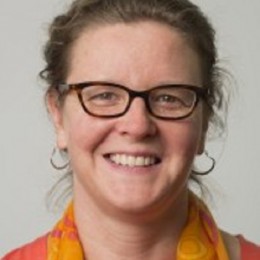
Angie Chau is an Associate Professor in Pacific and Asian Studies at the University of Victoria (on study leave until July 2025). She specializes in modern and contemporary Chinese literature, film, and visual culture, with a focus on transnational contexts, new media, and science fiction. Her research bridges cultural studies, gender analysis, and translation studies, exploring themes such as identity, globalization, and artistic innovation. Educational Background: PhD, University of California, San Diego MA, New York University BA, University of California, Berkeley Research Interests: Transnational Chinese literature and film New media and digital culture Science fiction as world literature GENDER AND MEDIA REPRESENTATIONS Visual art and cultural translation Key Publications: Dr. Chau’s work includes the book Paris and the Art of Transposition (2023), analyzing Sino-French cultural exchanges, and peer-reviewed articles in Modern Chinese Literature and Culture , Concentric , and Feminist Media Studies . Her research explores topics ranging from modern Chinese women’s imagery to the global reception of Chinese science fiction. Teaching and Engagement: She teaches courses on Chinese literature, film, and cultural theory, including Gender and Marriage in Chinese Popular Media and Chinese Literature as World Literature . Her academic contributions reflect a commitment to interdisciplinary approaches to Asian studies.
Vincent Joos is an Associate Professor in the Department of Modern Languages and Linguistics at Florida State University, affiliated with the College of Arts and Sciences. He holds a Ph.D. from the University of North Carolina Chapel Hill and specializes in cultural anthropology with a focus on post-disaster reconstruction, Haitian citizenship dynamics, and migration studies. His research examines the intersections of state policies, international aid, and grassroots resilience in the Caribbean, particularly in Haiti and France. Joos’ work critically engages with disaster capitalism, documenting how marginalized communities creatively transform urban spaces despite exclusion from formal aid systems. His book *Urban Dwellings, Haitian Citizenships* (2021) analyzes vernacular architectures in post-earthquake Port-au-Prince, while his co-edited volume *Migrants Shaping Europe* (2022) explores historical and contemporary migration impacts. He also researches Calais’ border infrastructure and the literary intersections of ethnography. Teaching includes advanced courses like *Caribbean Music and Politics* and *Graduate Seminar in Cultural Anthropology*, emphasizing interdisciplinary approaches. His scholarship spans articles in *Vibrant: Virtual Brazilian Anthropology*, *The Conversation*, and *Southern Quarterly*, addressing topics from Haitian political crises to African American cultural memory in Mississippi. Vincent Joos actively contributes to public discourse through op-eds in *World Politics Review* and *The Globe Post*, critiquing foreign intervention in Haiti and analyzing systemic governance failures. His research bridges academic rigor with urgent social commentary on migration, disaster, and postcolonial identity.
Dr. Ian Hesketh is an Associate Professor of History at the University of Queensland within the School of Historical and Philosophical Inquiry . With over 50 publications including books and journal articles, his work focuses on intersections between history, science, and religion in 19th-century Britain. Education: Bachelor of Arts, Okanagan University College Masters (Coursework), York University Doctor of Philosophy, York University His research explores Darwinian Revolution narratives, Victorian physics through figures like John Tyndall, and Big History epistemology. Recent work examines how scientific concepts permeate cultural consciousness through media like The Conversation and academic monographs. Key publications include the 2023 book A History of Big History and 2022 edited collection Imagining the Darwinian Revolution . His 2025 article in British Journal for the History of Science analyzes character assessment in Victorian botany through John Scott's experiments. Scientific Awards: Australian Research Council Future Fellowship As HDR Coordinator , he supervises projects like John Tyndall: Science and the State and has served as advisor for works on evolutionary ethics and medical history. Current research receives funding from international collaborations including the University of Birmingham's science-religion project.
prof. dr. Irene Stengs is an Endowed Professor at Vrije Universiteit Amsterdam's Faculty of Social Sciences, specializing in Social and Cultural Anthropology. She holds a joint appointment with the Mobilities, Beliefs and Belonging (MOBB) research unit and is a senior researcher at the Meertens Instituut (KNAW). Her work focuses on popular religiosity, heritage formation, Dutch cultural identity, and Thai society. Key research topics include the cultural politics of 'Dutchness,' the heritagization of religion (HERILIGION project), and high-density events' role in shaping national identity. She has contributed to projects like ‘The Dutch Passion for the Passion,’ examining the popularity of religious performances in the Netherlands. Education: PhD in Cultural Anthropology from Universiteit van Amsterdam (thesis on Thai monarchy veneration) Research Interests: Irene explores how cultural heritage is commodified and politicized, particularly in the Netherlands and Thailand. Her work analyzes the interplay between secularization, colonial history, and contemporary rituals. She investigates how events like passion performances or cultural festivals act as 'high-density events,' intensifying national identity discourses and heritage formation. Research Projects: HERILIGION (HERA-funded): Examines religion's transformation into heritage in Europe. ‘Dutchness’: Studies cultural heritage's resurgence in the Netherlands, including its colonial legacy. Labs/Teams: Collaborates with the Meertens Instituut's Ethnology Department and leads the MOBB research unit at VU.
Associate Professor Fiona R Cameron is an academic and museum practitioner at Western Sydney University's Institute for Culture and Society. Her work focuses on critical museum studies, digital cultural heritage, and environmental posthumanities, with a strong emphasis on climate action and societal engagement. She holds a PhD in Social Anthropology and Museum Studies from Massey University and a BA Honours in Archaeology from the University of Otago. Her research explores museums' roles in addressing climate change and controversial societal issues, pioneering digital heritage frameworks, and shifting museum practices toward ecological and materialist principles. Key projects include the ARC-funded 'Curating Museum Collections for Climate Change Mitigation' and international collaborations like Norway's 'Lifetimes: A Natural History of the Present.' Education: PhD (Social Anthropology, Massey University, 2002), BA Honours (Archaeology, University of Otago, 1985). Research Focus: Museum agency, climate action, digital heritage, posthuman curating. Dr. Cameron has received acclaim for her leadership in engaged research, securing 8 Australian Research Council grants and 13 international fellowships. Her work impacts policy and practice globally, with translations into multiple languages. Awards include the Western Sydney University Achievement Award (2021) and the BMW Foundation's Responsible Leader appointment (2023). Grants & Projects: Over $1.7 million in ARC funding, including climate mitigation initiatives and transdisciplinary research on museum collections. Labs/Teams: Leads the Institute's climate-focused projects and collaborates with institutions like the Powerhouse Museum and Utrecht University.
Professor Anna Snaith is a leading scholar in Twentieth-Century Literature, specializing in Modernism, postcolonial studies, and sound studies at King's College London's Department of English. She holds a BA from the University of Toronto and a PhD from University College London. Her research focuses on Virginia Woolf, colonial women writers, and literary soundscapes, with a Leverhulme Trust-funded project on Interwar Britain's 'Noisescapes.' Key research interests include Modernist women writers, the intersection of modernism and colonialism, and the role of sound in literature. She has edited Sound and Literature (2020) and co-organized major conferences like 'Sounding Modernism' (2023). Awards include a Leverhulme Fellowship (2022) and a shortlist for the Modernist Studies Association Book Prize (2014). Her work spans academic editing (e.g., Woolf's The Years and Jean Rhys studies), public engagement through radio contributions and keynote lectures, and digital humanities projects like WoolfNotes, a Virginia Woolf archive. She has supervised numerous doctoral students in modernism and related fields.
Marc D. Abrams is the Nancy and John Steimer Professor of Ecosystem Science and Management at Pennsylvania State University's College of Agricultural Sciences. His research focuses on forest dynamics, particularly the impact of fire exclusion, climate change, and human activity on forest composition and biodiversity. He has conducted extensive studies on oak and pine ecosystems, historical fire regimes, and the role of indigenous burning practices in shaping eastern US forests. Key research interests include dendroecology, paleoecological reconstruction, and vegetation classification. His work frequently integrates historical data, such as witness tree records and colonial land-use patterns, to understand long-term ecological changes. Recent studies have explored deer population impacts, wind damage probability modeling, and the effects of precipitation trends on forest health. His publications highlight interdisciplinary approaches to assess climate change impacts and advocate for adaptive forest management strategies. Abrams retired after 35 years at Penn State in 2022 but continues contributing to scholarly discussions on forest conservation and ecological resilience.
Federico Demaria is a Researcher at the Environmental Science and Technology Institute, Universitat Autònoma de Barcelona. He focuses on ecological economics, political ecology, and environmental justice, advocating for socio-ecological transformation beyond economic growth. As a founding member of Research & Degrowth and a board member of the European Society for Ecological Economics, he bridges academic research with activism. His current role includes deputy coordination of the ERC-funded EnvJustice project, studying global environmental justice movements. Research emphasizes waste management conflicts, informal recyclers' roles, and degrowth alternatives. Key publications include Decrecimiento: Vocabulario para una nueva era and Pluriverse: A Post-Development Dictionary , translated into multiple languages. Research interests coalesce around dismantling growth-based paradigms, centering marginalized groups in environmental struggles, and redefining sustainability beyond capitalist modernity. His work critiques extractive systems while proposing pluriversal alternatives grounded in indigenous and communal knowledge. Key Projects: EnvJustice (ERC), Degrowth initiative Key Themes: Waste politics, environmental conflicts, post-development, degrowth economics
Helle Rydström is a Professor at Lund University's Department of Gender Studies, specializing in the anthropology of gender in Asia with a focus on Vietnam. She holds a MA in International Development Studies from Roskilde University and a Ph.D. from Linköping University. Her research explores crisis, precariousness, and resilience through a gendered lens, particularly in contexts of climate disasters, colonialism, and conflict. Affiliations: Lund University: Department of Gender Studies LU Profile Area: Human Rights Visiting Research Fellow at Social Anthropology departments globally Research Interests: Rydström’s work examines gender hierarchies, power dynamics, and violence in Asia. Her studies include: Gendered impacts of climate disasters in Vietnam, Pakistan, and the Philippines Colonial violence legacies in Vietnam LGBTQ+ activism and resistance in urban Vietnam Resilience strategies in crisis-affected communities Awards: Riksbankens Jubileumsfond Research Award Nominated for the Harry J. Benda Prize (AAS) Research Prize in Memoriam of Tamara K. Hareven Grants & Projects: Swedish Research Council-funded studies on precarious labor in Asia Pufendorf Institute CRISIS Theme (2019) Sida-funded rural family studies in Vietnam (8-year project) Teaching: Courses include Gender & Global Development, Feminist Theory, and Crisis Studies.
Florence Hachez-Leroy is a Lecturer at the University of Artois and an Associate Member of the Centre de Recherches Historiques (CRH) at EHESS-CNRS in Paris. She is affiliated with the GrHEco research team and the CRH laboratory, where she contributes to research in economic and industrial history. Her work spans business history, heritage studies, and the history of technology, with a focus on aluminum and industrial materials. Her research interests include the history of new materials and their uses, corporate history, consumption, technological innovation, health and food history, and industrial heritage. She has led significant research projects such as the ANR Créalu on aluminum as heritage and participated in EU-funded initiatives like EUWOL. She is actively involved in heritage networks, serving as President of CILAC and a board member of TICCIH. Her recent publications explore themes in industrial heritage, aluminum’s global impact, and corporate archival practices. She has authored and edited several books, including works on aluminum’s cultural and industrial significance. Her research bridges academic history with public heritage and policy engagement. Scientific Awards: Special mention, 10th Crédit Agricole Prize for Business History Prix Roberval 2004, grand public category Juvenile honorary member, Institut Universitaire de France (2009–2013) She teaches courses at both the University of Artois and EHESS on industrial and scientific heritage, business history, and 19th–20th century European industrial history. She supervises research and has directed master’s theses on corporate museums and heritage valorization. She is based at the CRH in Paris and collaborates with national and international research teams and heritage organizations.
Ga Young Chung is an Assistant Professor of Asian American Studies at the University of California, Davis, with affiliations in Cultural Studies, Human Rights Studies, East Asian Studies, and the School of Education. Her interdisciplinary scholarship critically examines racial capitalism, Asian settler colonialism, militarism, and social movements. Ph.D. in Global Studies in Education, University of Illinois at Urbana-Champaign M.A. and B.A. in Sociology, Yonsei University, South Korea Her research centers on the precarity and resistance of marginalized communities, particularly undocumented Korean immigrants and transnational agrocolonial histories. Chung employs ethnographic, archival, and community-engaged methods to explore how race, migration, and empire shape lives and futures. She is completing her first book, Unexpired: Race, Undocumented Youth Time, and Imperial Futurity (under contract with NYU Press), and developing a second on Korean soybeans and decolonial imaginations. Her recent publications span topics such as anti-racist elder education, militarized citizenship, and undocumented youth activism. The articles reflect a consistent focus on liberation, resistance, and the intersection of race, law, and education. She co-founded the Asian American Seed Stewards and leads transnational research on academic resilience and racialization in Korea. Faculty Development Award, UC Davis (2025) Emerging Scholar Award, Global Studies Research Network (2024) Ewha Global Fellow (2024) Hellman Fellows Award (2023) DHI Network-Collaboration Award (2022) Outstanding Achievement in Public Scholarship, UC Davis (2021) Diversity Scholar, University of Michigan (2020) Chung is a dedicated mentor and public scholar, having taught ethnic studies in community settings and advised numerous research initiatives. She serves as Chair of the Board at NAKASEC and on the board of the Friends of Education Justice Project, supporting immigrant justice and incarcerated people's access to education. Her work is supported by grants from the Social Science Research Council, National Research Foundation of Korea, and Academy of Korean Studies. She founded the interdisciplinary Asian American Seed Stewards collective and is co-investigator on two major transnational research projects: Resilient Academics: Re-imagining Academic Horizons and Race and Gender: Theorizing the New Racialization of the Asian Migrants in South Korea .