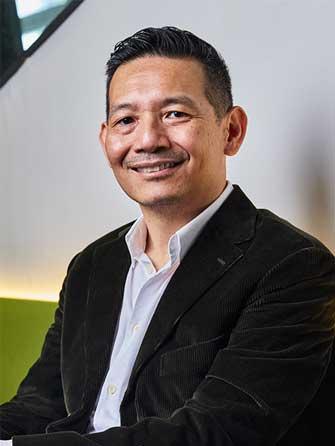
David Arbesú is Professor of Spanish at the University of South Florida, serving as Head of the Spanish Section and Graduate Program Director for the MA in Spanish within the Department of World Languages. He has presented at over 70 national and international conferences on medieval and Golden Age Spanish literature. His research specializes in manuscript studies, codicology, and palaeography, with significant contributions to Golden Age textual scholarship and Florida colonial history. Arbesú has discovered key historical manuscripts including Pedro Menéndez de Avilés' conquest records and legal proceedings concerning colonial Florida, demonstrating interdisciplinary expertise in literary analysis and historical documentation. Recent publications (2018-2023) reveal sustained focus on critical editions of medieval Spanish texts like Sendebar and Libro de los gatos , alongside colonial Florida manuscripts. His work consistently bridges philological precision with historical context, producing authoritative editions that illuminate textual transmission and cultural frameworks of Iberian literature. Arbesú serves on the Editorial Board of Harvard UP’s Dumbarton Oaks’ Medieval Library Spanish Series and as Book Review Editor for La corónica: A Journal of Medieval Hispanic Languages, Literatures, and Cultures , maintaining active leadership in scholarly publication standards.
Leo J. Garofalo is the Virginia Eason Weinmann '51 Professor of History at Connecticut College, where he joined in 2002. He coordinates the Social Justice and Sustainability Pathway and co-directs the Mellon Mays Undergraduate Fellowship program. His scholarship focuses on colonial Latin America with emphasis on racial dynamics and cultural exchange. Education: B.A. in History and Hispanic Studies from Brown University M.A. from Boston College Ph.D. from University of Wisconsin at Madison Research Focus: Garofalo investigates the intersection of African and Indigenous cultures in colonial Peru, examining how marketplaces, taverns, and religious practices shaped Afro-Andean identities. His current work traces West African diaspora routes to the Andes and analyzes Afro-Iberian influences on witchcraft traditions. He utilizes Inquisition records and Spanish imperial archives to reconstruct transatlantic cultural networks. Awards: Virginia Eason Weinmann '51 Professorship (endowed chair) Social Science Research Council Grant Fulbright-Hays Research Grant Academic Leadership: Garofalo has organized campus events featuring Afro-Peruvian performers (Negrura Peruana) and activists like former Colombian Governor Luis Murillo. In 2010, he co-led a Study Away Teach Away program in Oaxaca, Mexico, examining immigration and indigenous rights movements.
Prof. Dr. Barbara Mittler is Professor of Sinology at Heidelberg University and founding co-director of the Heidelberg Centre for Transcultural Studies (CATS) and the Cluster of Excellence 'Asia and Europe in a Global Context.' Her research explores Chinese cultural policy, print media, musicology, visual culture, and transcultural studies. Mittler's scholarly contributions include groundbreaking work on Cultural Revolution culture, early Chinese print media (particularly women's magazines), and the transcultural flows of cultural production. Her current projects examine Mao as a global icon and comparative studies of Asian 'fathers of the nation.' Her publication record demonstrates consistent focus on cultural transmission mechanisms, with recent research developing transcultural frameworks for understanding cultural exchange and historical analysis. Publications reflect an interdisciplinary approach combining visual analysis, media studies, and historical methodology. Mittler has received numerous honors including the Fairbank Prize, Heinz-Maier-Leibnitz Prize, and memberships in the Leopoldina and Heidelberg Academy of Sciences. She leads major initiatives like the China-Schul-Akademie developing educational materials about China for German schools.
Professor Nguyen Van Chinh is a distinguished scholar in anthropology at the University of Social Sciences and Humanities, Vietnam National University (VNU-USSH), specializing in the Department of Anthropology and Religious Studies. With a PhD from the University of Amsterdam and extensive international research experience including a postdoctoral fellowship at the National University of Singapore, he has established himself as a leading expert in Southeast Asian anthropology, migration studies, and ethnic relations. His academic career spanning over four decades includes numerous visiting professorships at prestigious institutions worldwide. Professor Chinh's research interests encompass Anthropology Research Methods , History of Anthropology , Migration and Poverty Studies , Ethnic Identity , and Cross-border Ethnic Groups in Southeast Asia. His scholarly work demonstrates a particular focus on the intersection of economic development, cultural preservation, and social transformation in Vietnamese and Southeast Asian contexts. Through extensive fieldwork and theoretical contributions, he has shaped contemporary understanding of ethnic minorities, migration patterns, and socio-economic changes in the region. His extensive publication record shows a clear evolution toward contemporary issues including China's growing influence in the Mekong region, ethnic Chinese migration, and the challenges of poverty reduction in Vietnam. The research demonstrates increasing engagement with transnational phenomena, border studies, and the impact of China's economic expansion on Southeast Asian societies. His most recent work addresses pressing contemporary issues such as disability rights, academic publishing challenges, and urban migration dynamics. Distinguished PhD dissertation awarded by NVMC (Netherlands Association of Social Sciences and Cultural Sciences), 2000 Certificate of Merit from the President of National University for outstanding achievements, 2007 Asian Leadership Fellow (ALFP) awarded by the Japan Foundation, 2004 Asian Public Intellectual Fellow (API) awarded by the Nippon Foundation, 2010 Multiple research grants from prestigious foundations including Toyota, Rockefeller, and Japan Foundation Professor Chinh has served as an independent consultant for numerous national and international development projects implemented in Vietnam. His advisory work spans multiple sectors including labor, health, agriculture, and ethnic minority affairs, working with organizations such as WHO, World Bank, Asian Development Bank, UNDP, DFID, IUCN, UNICEF, and UNESCO. His expertise in ethnographic research methods and understanding of Vietnamese society has made him a valuable resource for policy development and implementation across multiple domains.
Ayesha Jalal is a distinguished Professor of History at Tufts University's School of Arts and Sciences and holds a joint appointment at The Fletcher School of Law and Diplomacy. She currently serves as the Mary Richardson Professor and directs the Center for South Asian and Indian Ocean Studies. With a career spanning over three decades, Professor Jalal has established herself as a leading scholar in South Asian history, particularly focusing on Pakistan studies, the partition of India, and Muslim political thought in the region. Professor Jalal's academic journey began with a double major in History and Political Science from Wellesley College in 1978. She then pursued doctoral studies at the University of Cambridge, earning her PhD in History in 1983. Her early career included prestigious fellowships at Trinity College, Cambridge (1980-84), the Centre of South Asian Studies (1984-87), the Woodrow Wilson Center for International Scholars (1985-86), and the Harvard Academy for International and Area Studies (1988-90). Professor Jalal's research primarily centers on South Asian history with special emphasis on Pakistan, the partition of India, and Muslim political thought. Her work explores the complex interplay between religious identity, nationalism, and state formation in the region. She has made significant contributions to understanding democratic development in Pakistan, sectarian dynamics in South Asia, and the historical connections between the Indian subcontinent and the wider Indian Ocean world. Her recent scholarship has focused on 'Oceanic Islam,' examining transregional Muslim networks and universalist aspirations that transcended colonial boundaries. Professor Jalal's extensive publication record demonstrates a consistent focus on South Asian political history, with particular attention to Pakistan's formation and development. Her recent works show a progression from studies of partition and state formation toward broader examinations of Muslim intellectual history and transregional connections. The 2020-2024 publications reveal a sophisticated engagement with themes of democratic erosion, sectarianism, and the historical roots of contemporary political challenges in South Asia, while also exploring more cultural and religious dimensions through works on Muslim enlightened thought and oceanic connections. Patrus Bukhari Award for the best English language book, The Pity of Partition , Academy of Letters, Government of Pakistan (2015) Britannica Book of the Year recognition (2015) MacArthur Fellowship (1998-2003) As an educator, Professor Jalal has mentored numerous graduate students through thesis supervision and directed research projects. Her teaching portfolio includes courses on Modern South Asia, Contemporary South Asia, Islam and the West, and specialized seminars on South Asian history. She has taught at several prestigious institutions including the University of Wisconsin-Madison, Columbia University, and Harvard University before joining Tufts in 1999. In her role as Director of the Center for South Asian and Indian Ocean Studies, she has fostered interdisciplinary research and provided guidance to emerging scholars in the field. Professor Jalal directs the Center for South Asian and Indian Ocean Studies at Tufts University, which serves as a hub for interdisciplinary research on South Asia and its connections to the wider Indian Ocean world. The center facilitates collaborative projects, hosts visiting scholars, and organizes events that bridge historical, political, and cultural perspectives on the region. Under her leadership, the center has become a prominent institution for South Asian studies, promoting dialogue between academic research and contemporary policy issues.
Claire Battershill is an Assistant Professor jointly appointed in the Faculty of Information and the Department of English at the University of Toronto. She holds a PhD from the University of Toronto and a BA (Hons) from the University of Oxford. Her research focuses on the history and future of the book, with a particular emphasis on feminist experimental publishing, literary aesthetics, and 20th/21st-century publishing practices. She is Co-Director of the Modernist Archives Publishing Project (MAPP), a critical digital archive of early 20th-century publishers’ records, and Co-Creator of the SSHRC-funded 'Make Believe' research-creation project. Her publications include Women and Letterpress Printing: Gendered Impressions (2022) and Using Digital Humanities in the Classroom (2022). Dr. Battershill has held prestigious roles such as Wendy M. Cecil Professor in VicOne at Victoria College and Fellow of the Royal Historical Society. She has secured grants including the SSHRC Impact Award (2017) and funding from the Canada Council for the Arts. Her teaching spans courses like INF2228H (The Future of Things: Digitization and Remediation) and BKS1002H (Book History in Practice), blending theory with hands-on engagement in digital humanities and book studies. Her research interests span digital humanities pedagogy, collaborative publishing projects, and the intersection of feminist theory with material book culture. She actively contributes to interdisciplinary initiatives like the Critical Digital Humanities Initiative (CDHI) at the University of Toronto.
Thomas Piketty is a Professor of Economics and Economic History at the École des Hautes Études en Sciences Sociales (EHESS) and the Paris School of Economics. He is co-director of the World Inequality Lab and the World Inequality Database, and a leading scholar on economic inequality and historical political economy. Born on May 7, 1971, in Clichy, France. PhD in Economics from EHESS and LSE (1990–1993). Professor at MIT (1993–1995), Research Fellow at CNRS (1995–2000), and Director of Studies at EHESS since 2000. His research focuses on the interplay between economic development, wealth distribution, and political institutions. Key works include Capital in the 21st Century (2014), Capital and Ideology (2020), and A Brief History of Equality (2022). Piketty has pioneered methods to measure long-term inequality using historical data. Publications span articles in top journals like the Quarterly Journal of Economics, Journal of Political Economy, and American Economic Review. His work emphasizes fiscal policies, wealth taxation, and global inequality trends. He co-founded the World Inequality Database (WID.world) to track income and wealth disparities worldwide. Distinctions include the Yrjö Jahnsson Prize (2013), CNRS Bronze Medal (2001), and Best Young Economist Award (2002). He has advised governments and contributed to policy debates on tax reform, climate justice, and European democratization.
Michael R. Dove is the Margaret K. Musser Professor of Social Ecology and Professor of Anthropology at Yale University, where he also serves as Curator of Anthropology at the Peabody Museum and Co-Coordinator of the Combined YSE/Anthropology Doctoral Program. With over forty years of research experience, his work focuses on environmental anthropology, particularly the environmental relations of local communities in South and Southeast Asia. Dove earned his B.A. from Northwestern University and his M.A. and Ph.D. from Stanford University. His academic journey has spanned decades of field research in Asia, including more than a dozen years conducting long-term studies on human ecology in Borneo and Java, developing government research capacity in Indonesia, and advising the Pakistan Forest Service on social forestry policies. Professor Dove's research interests encompass the anthropology of climate change, cultural and political aspects of natural hazards and disasters, indigenous environmental knowledge and practice, environmental institutions and movements, history of environment-related sciences, and multispecies ethnography. His work often examines how local environmental systems interact with national and global markets, politics, and ideologies, with a focus on problematizing orthodox approaches to conservation and development. He has made significant contributions to understanding human-environment relations through both theoretical frameworks and practical applications. Dove's recent scholarly output demonstrates a progression toward more integrated approaches to environmental challenges, blending historical perspectives with contemporary issues. His publications increasingly focus on the intersections of climate change, social justice, and indigenous knowledge systems, while maintaining his longstanding interest in Southeast Asian environmental relations. The work shows a growing emphasis on post-humanist approaches and multispecies ethnography, reflecting broader trends in environmental anthropology while maintaining his distinctive focus on political ecology and institutional analysis. As an educator, Professor Dove has supervised numerous doctoral and master's students, many of whom have gone on to win research awards and secure prestigious positions. He organizes separate research labs for doctoral students from Yale School of the Environment and other departments, as well as for joint YSE/Anthropology doctoral students. His advisees typically conduct international research and have excellent records of obtaining research support both within and beyond Yale. The Dove Lab at Yale School of the Environment serves as a hub for environmental anthropology research, focusing on topics including natural resource management, property rights, power struggles, household energy transitions, and human-wildlife interactions. The lab fosters a collaborative environment with 30-50 students working on related issues each year, characterized by supportive peer dynamics rather than competition. It also contributes to policy and social change through its research and the work of its alumni.
Andreas Eckert is Professor and Chair of African History at Humboldt University Berlin, where he also serves as Director of the International Research Centre "Work and Human Life Cycle in Global History" since 2009. Previously, he was Head of Department at the Institute of Asian and African Studies (2008-2009) and Dean of the Faculty of History and Philosophy at the University of Hamburg (2004-2006). His academic career includes visiting professorships at Harvard University, Maison des Sciences de l'Homme in Paris, and Indiana University. Professor Eckert's research focuses on African history in the 19th and 20th century , with particular emphasis on the history of the state, urbanization, and historiography. His scholarly work extends to comparative history of colonialism , history of work/labour history , and global history . His approach combines deep regional expertise in African contexts with transnational and comparative perspectives that challenge traditional historical narratives. Eckert's publication record demonstrates a consistent engagement with themes of state formation, labor relations, urban development, and historical methodology in African contexts. His work spans from detailed case studies of specific regions like Douala and Tanzania to broader conceptual explorations of how Africa fits into world historical narratives. A notable trend in his scholarship is the examination of entangled histories that connect local African experiences with global processes of colonialism, decolonization, and postcolonial state formation. His notable achievements include: 2012 Guest Fellowship at Freiburg Institute of Advanced Study Election as chairperson of "Forum Transregionale Studien" (2011) Major Grant from the German Ministry for Research and Education for the Institute "Work and Human Life Cycle in Global History" (2009) Election as chairperson of "Arbeitskreis für Moderne Sozialgeschichte" (2007) Managing Editor of the Journal of African History (2004-2011) Fellowship in the Royal Historical Society (2000) As Director of the International Research Centre "Work and Human Life Cycle in Global History," Eckert has secured significant funding including a major grant from the German Ministry for Research and Education (2009-2015). He has also served on the Board of the International African Institute in London and has been actively involved in scholarly organizations including the "Forum Transregionale Studien" and "Arbeitskreis für Moderne Sozialgeschichte." Under Eckert's leadership, the International Research Centre "Work and Human Life Cycle in Global History" brings together scholars from multiple disciplines and countries to examine the historical dimensions of work and human life cycles from a global perspective. The center serves as a hub for innovative research that transcends traditional geographic and disciplinary boundaries.
Tracey Galloway is an Associate Professor in the Department of Anthropology at the University of Toronto Mississauga (UTM), where she conducts critical research on Indigenous health disparities and policy interventions in northern Canada. Her work bridges medical anthropology, public health, and community-based participatory research to address systemic inequities affecting circumpolar populations. Education: PhD, McMaster University, 2008 MA (institution unspecified) BA (institution unspecified) BScN (institution unspecified) Dr. Galloway's research program centers on chronic disease risk assessment and health system improvement in Indigenous communities, with specific expertise in nutrition transition, food security, child growth patterns, and public health policy evaluation. She examines the impact of federal programs like Nutrition North Canada while developing community-led solutions for health equity. Her methodological approach combines quantitative analysis of health outcomes with qualitative community engagement, emphasizing Indigenous research sovereignty and decolonizing methodologies. Her publication record reveals consistent thematic focus across 15 recent articles, demonstrating interdisciplinary collaboration between anthropology, epidemiology, and health economics. Key trends include rigorous evaluation of colonial impacts on Indigenous food systems, innovative analysis of subsidy program effectiveness, and centering Indigenous patient experiences in healthcare design. Her work consistently prioritizes community-defined research questions and actionable policy recommendations. Dr. Galloway actively mentors graduate students including Darci Belmore, Carly Checholik, Neda Maki, and Hiliary Monteith, guiding research on Indigenous health determinants and policy interventions. While specific grant details aren't publicly enumerated, her collaborative projects involve partnerships with Indigenous communities across Northern Canada and interdisciplinary teams addressing complex health system challenges. She maintains strong community partnerships for her applied research, particularly in Nunavut and Northwestern Ontario, working directly with Anishinabeck and Inuit communities to translate findings into culturally safe health initiatives and policy reforms that address the root causes of health inequities.
Sarah Curtis is a Professor and Graduate Coordinator in the Department of History at San Francisco State University. She specializes in 19th-century France, focusing on social, cultural, religious, and gender history, including the French empire. Her work explores the roles of religious orders and women in education and mission work, emphasizing their agency within societal structures. She currently researches the 'culture of childhood' in 19th-century France. Her research has been recognized with prestigious awards, including the National Endowment for the Humanities Summer Stipend (2018) and the Frances Richardson Keller-Sierra Prize (2011). She has published extensively, including Civilizing Habits (2010) and Educating the Faithful (2000), which highlight the transformative role of religious institutions in education and colonial contexts. Awards: National Endowment for the Humanities Summer Stipend (2018) Frances Richardson Keller-Sierra Prize (2011) Fulbright Research Fellowship (2001-02) As Graduate Coordinator, Dr. Curtis oversees the History M.A. program. Her courses cover European social history, gender studies, and imperialism. She has contributed to academic service, including editorial roles and conference leadership in French and colonial history.
Eric Wilkinson is a Research Fellow in the Department of Philosophy at the University of British Columbia and previously served as a Visiting Assistant Professor at the University of Wisconsin-Milwaukee. He holds a PhD from McGill University and earned MAs in Political Science (York University) and Philosophy (University of Toronto). His research focuses on meta-ethics, normative ethics, political philosophy, and the history of philosophy, with notable work on Indigenous philosophy, multicultural nationhood, and logical rationalism. He is a Vanier Scholar and has contributed to debates on Canadian national identity, public policy, and the intersection of gender and historical philosophy. His teaching interests align with his research, emphasizing ethics, meta-ethics, and political philosophy. Education: PhD in Philosophy, McGill University MA in Political Science, York University MA in Philosophy, University of Toronto BA/BSc, University of Ottawa Research Highlights: Reconstructing Indigenous philosophical thought through oral traditions and European records. Advocating for multicultural nationhood as a cohesive framework for diverse societies. Exploring logical rationalism as a foundational theory in epistemology. Awards: Vanier Scholar (McGill University). Publications: Featured articles include work on Mersenne’s music theory, Anscombe’s philosophy of law, and the pragmatics of art ontology. Wilkinson’s work bridges academic philosophy with public engagement, as seen in his advocacy for accessible philosophy and potential interest in public office.
Craig M. Koslofsky is a Professor of History at the University of Illinois at Urbana-Champaign, with additional affiliations in Germanic Languages and Literatures, the European Union Center, and the Program in Medieval Studies. His research focuses on early modern Europe, particularly the history of everyday life and human skin in the early modern era (1400–1800). He explores topics such as medical practices, slavery’s impact on indigenous populations, and supernatural beliefs in colonial contexts. His research interests span the Atlantic World, British Empire, and medieval Europe, reflecting interdisciplinary approaches to historical analysis. Recent publications address the intersection of skin studies and colonialism, the cultural history of ghosts in Enlightenment America, and the Reformation’s local manifestations. He has edited works on transatlantic slave trade surgeons and early modern religious debates. Koslofsky holds a Ph.D. and is based in Gregory Hall. His work bridges global and local histories, emphasizing the material and cultural dimensions of early modern life. He collaborates across disciplines, engaging with medical history, literary studies, and colonial studies.
Tong Lam is an Associate Professor in the Department of Historical Studies and the Graduate Department of History at the University of Toronto, where he also directs the Dr. David Chu Program in Asia-Pacific Studies at the Asian Institute. His research sits at the intersection of media studies, environmental history, and science and technology studies (STS), focusing on the politics and aesthetics of mobilization in China’s special zones across socialist and postsocialist eras. Employing interdisciplinary methodologies, his work explores themes such as state-precipitated violence, industrial ruination, and the socio-political implications of technology. He is a visual artist whose lens-based projects interrogate military violence, surveillance, and postindustrial landscapes. His recent scholarship analyzes postsocialist urbanism, digital governance, and the temporalities of infrastructure. While the absence of explicit scientific awards or student advisement records in the provided text precludes their inclusion here, his publications and creative practice reflect a sustained engagement with critical historical inquiry and contemporary socio-technological challenges.
Dr Francis Maravillas is a Senior Lecturer and Programme Leader of the BA (Hons) Art Histories and Curatorial Practices: Asia and the World at LASALLE College of the Arts, Singapore. His academic work bridges art historical research, curatorial practice, and interdisciplinary teaching with a focus on contemporary Asian art contexts. His educational background includes a PhD in Humanities and Social Sciences from the University of Technology Sydney and a First Class Honours BA in Politics from Macquarie University, Australia. Maravillas' research centers on modern and contemporary Asian art, with particular expertise in curatorial practices, exhibition histories, and socially engaged/performatory art forms. His current projects investigate the aesthetics and politics of food in contemporary Asian art, examining how food functions in performance, installation, and community-based practices within post-colonial and global contexts. This research explores intersections between alimentary practices, political economies of survival, and post-colonial histories across Asia. His publication record reveals consistent engagement with Southeast Asian contemporary art worlds, food-art practices, and diasporic visual cultures. Key projects include the co-edited World Art special issue on Southeast Asian art publics (2020) and the forthcoming Routledge anthology 'Tastes of Justice' (2025), which examines food, art, and justice politics in Asian-Australian contexts. Maravillas has secured significant research funding including a SGD 20,000 LASALLE College of the Arts grant for 'Tastes of Justice' (2024) and an AUD 49,526 Creative Australia grant for related art, performance, and symposia activities in Sydney and Singapore (2024). He actively collaborates internationally through co-curated exhibitions like 'Bruised Food: A Living Laboratory' (2019) and the symposium 'Shifting Grounds, New Horizons' (2022), demonstrating commitment to building transnational networks in contemporary Southeast Asian art.