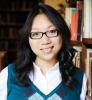
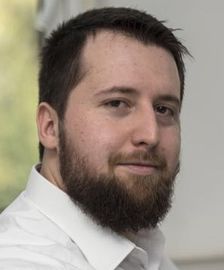
Emilio Frazzoli is a Full Professor at ETH Zurich’s Department of Mechanical and Process Engineering. He leads the Institute for Dynamic Systems and Control and the Center for Sustainable Future Mobility, focusing on autonomous systems, robotics, and socio-technical control frameworks. Current affiliations: ETH Zurich (Dynamic Systems and Control, Sustainable Future Mobility) Research: Autonomous mobility-on-demand, game theory for resource allocation, and safety verification in multi-agent systems His work bridges robotics, control theory, and economics, with projects like the open-source AMoDeus simulation framework for autonomous taxis and karma-based resource allocation systems. Recent publications emphasize trustworthy AI, reproducibility in autonomous vehicle control, and human-robot interaction challenges. Notable projects include nuReality (VR-based pedestrian interaction studies) and CARSI II (context-driven vehicle interfaces).
Calin Belta is the Brendan Iribe Endowed Professor of Electrical and Computer Engineering and Computer Science at the University of Maryland, College Park. He is affiliated with the Institute of Systems Research (ISR) and the Maryland Robotics Center (MRC), and holds a Research Professor position at Boston University's College of Engineering. His work bridges control theory, formal methods, and machine learning to ensure safety in cyber-physical and data-driven systems, with applications in robotics, autonomous driving, and systems biology. Research Interests: Focus on dynamics and control theory, formal methods for verification and control synthesis, robotics, autonomous systems, and synthetic biology. Recent projects include PROGENIC (collaborating with MIT, UChicago, and UDelaware) and safety-critical control for heterogeneous robotic teams. Key Achievements: General Chair of the 2025 MRC Symposium, recipient of AFOSR Young Investigator Award (2008), NSF CAREER Award (2005), and IEEE Fellow. His work on formal methods for autonomous systems has led to impactful tools for safety assurance in robotics and AI. Grants: NSF EFRI PROGENIC grant (2024), multiple industry partnerships. Advising: Mentored students like Wenliang Liu (PhD 2024, now at Amazon), and collaborator Marius Kloetzer (shared HSCC Test of Time Award 2025). Labs/Teams: Maryland Robotics Center, Institute for Systems Research, and Boston University collaborations.
Florian Muijres is an Associate Professor and Chairholder at the Experimental Zoology Group, Wageningen University & Research, where he leads the Animal Flight Lab. His research focuses on the biomechanics, aerodynamics, and flight control of natural flyers such as insects, birds, and bats, with applications in bio-inspired robotics and ecological solutions like mosquito traps and flapping-wing drones. He holds a PhD from Lund University (Sweden) and conducted postdoctoral research at the Dickinson Lab, University of Washington (USA). Research Interests: Merging experimental and computational methods, his work explores primary research on flight mechanics (e.g., mosquito evasion, butterfly gliding) and applied studies (e.g., drone design, pollinator behavior in greenhouses). His lab uses advanced videography and robotic models to study flight dynamics under real-world conditions. Labs & Teams: The Animal Flight Lab collaborates with biologists, physicists, and engineers to investigate flight adaptations in mosquitoes, bumblebees, and pied flycatchers. Projects include developing high-efficiency traps and analyzing flight performance in complex environments.
Dr. Tingkai Wang is a Senior Lecturer in the School of Computing and Digital Media at London Metropolitan University. His research focuses on mobile robots, intelligent systems, artificial intelligence, control systems, image/signal processing, and virtual reality. He teaches the Programming for Computer Science module and has led projects like the Virtual Environment and Simulation System (2000-2002) and Navigation and Control of Mobile Robots (1995-1998). His work emphasizes interdisciplinary approaches, combining expert systems, neural networks, and fuzzy logic to address challenges in autonomous systems. Notable contributions include AGV navigation algorithms, hybrid control systems, and predictive modeling. Over 30 publications span robotics, control engineering, and AI applications. He collaborates internationally and has presented at venues like the International Conference on Intelligent Systems Engineering and the IEEE Conference on Engineering in Medicine and Biology. Dr. Wang’s expertise bridges theoretical modeling and practical implementation, with applications in manufacturing automation, environmental monitoring, and industrial management systems. His current research continues exploring adaptive control mechanisms and AI-driven robotics solutions.
Ahmad BahooToroody is an Academy Research Fellow at Aalto University’s Department of Energy and Mechanical Engineering, specializing in Bayesian statistics, reliability engineering, and risk analysis for autonomous maritime systems. He is actively involved with the Marine and Arctic Technology research group and leads projects that integrate machine learning with safety-critical applications in the maritime and offshore sectors. Research Interests Bayesian statistical methods for reliability and risk modeling Machine learning and deep learning for anomaly detection in autonomous systems Safety assessment of offshore installations and maritime operations Prognostic health management of marine renewable energy systems Human factors and expert judgment in sociotechnical maritime systems His work often incorporates advanced techniques such as Gaussian processes, LSTM-based neural networks, and dynamic Bayesian networks to address uncertainties in complex engineering systems operating in harsh marine environments. Publication Trends Across 2022–2025, BahooToroody’s publications reveal a strong trajectory toward integrating data-driven models with physics-based simulations. Dominant themes include real-time risk monitoring of autonomous ships, failure prognosis for unattended machinery, and safety assessment frameworks for offshore structures. His collaborative outputs span high-impact journals such as Reliability Engineering & System Safety and Safety Science , underscoring his leadership in maritime safety analytics. Research Groups & Labs Marine and Arctic Technology Research Group, Aalto University Academy Research Fellow network within the Department of Energy and Mechanical Engineering Doctoral Supervision & Grants While specific grant details are not listed, his role as Doctoral Candidate Supervisor since 2020 indicates active mentorship of PhD researchers. He is also the Principal Investigator on projects funded under the Academy of Finland Fellowship scheme, supporting next-generation maritime risk analytics.
Rakotonirainy Andry is a Professor at Queensland University of Technology (QUT), affiliated with the Centre for Accident Research & Road Safety - Queensland (CARRS-Q). His research focuses on transportation safety, automated vehicles, human factors, and intelligent transportation systems (ITS). He leads interdisciplinary projects exploring driver behavior, connected vehicle technologies, and the societal impacts of automation. Key areas include accident prevention, human-vehicle interaction, and equity in transport systems. His work integrates machine learning, simulation studies, and behavioral analysis to address challenges in road safety. Notable contributions include studies on driver stress detection, automated vehicle acceptance, and the Australian Naturalistic Driving Study (ANDS). He collaborates with institutions globally, advancing innovations like connected vehicle pilots and multimodal AI for traffic safety. Research interests span automated driving systems, vulnerable road user protection, and policy implications of emerging technologies. His findings contribute to safer transportation policies and technologies, emphasizing both technical and human-centric perspectives.
Mingyang Zhang is a Postdoctoral Researcher at the Department of Energy and Mechanical Engineering , Aalto University, Finland. His research focuses on the intersection of Maritime Engineering and Artificial Intelligence , particularly in Digital Twin Technology , Ship Motion Prediction , and Risk Analysis for Arctic and inland waterway operations. Awarded Best Paper at G-NAOE 2024 Honored with 5 Highly Cited Paper Awards (2021-2024) Active in Marine and Arctic Technology research group His machine learning work addresses ship fuel consumption prediction , collision avoidance , and grounding risk assessment , with applications in autonomous shipping and offshore wind farm monitoring . Key publications span Reliability Engineering , Ocean Engineering , and Marine Hydrodynamics journals. Recent article trends include: Digital Twin applications for shipping decarbonization (2024) Deep learning models for 6-DoF ship motions and focused wave prediction (2023) Big Data Analytics for Arctic navigation risks and inland waterways (2022-2021) Integration of HFACS and fault tree analysis in risk modeling (2019) Scientific achievements include: 2024: Best Paper, G-NAOE Conference 2023: 2 Highly Cited Paper Awards 2022: 2 Highly Cited Paper Awards 2021: Highly Cited Paper Award 2019: Best Paper, 5th International Conference on Transportation Information and Safety Current research at the Marine and Arctic Technology group emphasizes AI-driven maritime safety , real-time risk monitoring , and data-intensive shipping decarbonization projects. Collaborations include Spyros Hirdaris , Pentti Kujala , and Jakub Montewka .
Antonio Tota serves as an Associate Professor at the Department of Mechanical and Aerospace Engineering (DIMEAS) at Polytechnic University of Turin. His academic career spans multiple prestigious institutions including research positions at University of Surrey and Ohio State University. His primary appointment focuses on automotive engineering with particular expertise in vehicle dynamics and control systems. Associate Professor at DIMEAS, Politecnico di Torino Researcher at University of Surrey (2018) Visiting Researcher at Ohio State University (2016) Visiting Researcher at University of Surrey (2014-2015) Dr. Tota's research focuses on automated and autonomous vehicle systems , with particular emphasis on vehicle dynamics control and electric powertrain optimization . His work bridges theoretical control algorithms with practical implementation in automotive applications. His research interests span automated vehicle systems , automotive powertrains , hybrid and electric vehicle technologies , and advanced control and optimization techniques for enhancing vehicle performance and safety. His publication record demonstrates consistent contributions to the field of vehicle dynamics and control, with recent work focusing on anti-rollover prevention for heavy vehicles, advanced suspension control techniques, and energy management for hybrid electric vehicles. His research shows a clear trajectory toward increasingly sophisticated control systems for next-generation automotive applications, particularly in the areas of autonomous driving and electrified powertrains. Gold Best Research Paper Award 2020 (IFIT 2020, IFToMM Italy) PhD Research Quality Award 2016 (awarded by Politecnico di Torino) Dr. Tota currently supervises three PhD students (Gianluca Frison, Davide Lazzarini, and Luca Zerbato) working on advanced automotive control systems. His research is supported by competitive EU funding, including the GEN1200 project (2024-2027) focused on climate, energy and mobility challenges, and the OWHEEL project investigating wheel corner concepts for automated driving comfort. His collaborative approach is evident through numerous co-authored publications with international researchers. Dr. Tota leads research activities within the Vehicle Mechanics research group at DIMEAS, focusing on experimental validation of advanced control algorithms for both conventional and electrified vehicles. His work combines theoretical development with rigorous experimental testing, maintaining strong connections with automotive industry partners.
Raphael Zaccone serves as an Associate Professor in the Department of Naval, Electrical, Electronic and Telecommunications Engineering at the University of Genoa, where he is an active member of the department board. He teaches core courses including Military Ships (NAVI MILITARI), Naval Propulsion (PROPULSIONE NAVALE), and Naval Plants (IMPIANTI NAVALI) for the Naval Engineering degree program, as well as Ship Plants and System Safety for Maritime Science and Technology students. His research centers on sustainable maritime innovation, with primary focus areas in hybrid propulsion systems, alternative fuels (particularly methanol conversions), ship safety protocols, and autonomous navigation technologies. Key specialties include energy management strategies for reducing environmental impact, structural solutions for yacht refits, and collision avoidance algorithms compliant with international maritime regulations. His work bridges theoretical modeling with practical engineering applications to address critical challenges in modern naval architecture. Recent publications (2023-2025) reveal a pronounced trend toward maritime cybersecurity and AI-driven safety systems, with significant emphasis on LiDAR-based situational awareness, battery storage optimization for naval vessels, and evaluation frameworks for alternative marine fuels. Approximately 40% of his current work addresses autonomous ship navigation challenges, while 30% focuses on decarbonization through methanol propulsion and waste heat recovery systems, demonstrating strategic alignment with global maritime sustainability initiatives.
Jingen Zhou serves as an Assistant Professor in the Department of Operations, Supply Chain and Information Management at KEDGE Business School, bringing international expertise from academic and professional experiences across the United States, Japan, China, and Australia. His doctoral research at the Australian Maritime College (University of Tasmania) established his specialization in maritime supply chain systems. Dr. Zhou's scholarly foundation includes a PhD in Management Science and Commerce with explicit focus on Maritime Supply Chain, reflecting his deep engagement with global maritime systems. His research portfolio demonstrates consistent thematic alignment with operational challenges in maritime contexts. His primary research thrust centers on maritime supply chain risk management, where he integrates collision avoidance technologies, ship AIS data analytics, and climate change risk assessment. This work frequently examines cruise industry dynamics through empirical studies in Shanghai and China, addressing pandemic impacts and supply chain resilience. His methodological approach combines Bayesian networks, deep learning, and complex network analysis to solve real-world navigation and logistics problems in coastal and riverine environments. Recent publications reveal a clear trajectory toward data-driven maritime solutions, with 14 articles published between 2023-2025 spanning marine traffic prediction, cruise network analysis, and multimodal hub optimization. His work consistently employs empirical methodologies focused on Asian maritime contexts, particularly China's evolving port and cruise ecosystems, while leveraging cutting-edge computational techniques for risk assessment. Dr. Zhou actively contributes to academic discourse as a reviewer for multiple journals and maintains collaborative research ties with industry partners and international scholars. His pre-KEDGE research involvement in Australian and Chinese projects demonstrates sustained engagement with maritime logistics challenges across different regulatory and operational environments.
Professor Mahdi Mahfouf holds the Chair in Intelligent Systems at the University of Sheffield's School of Electrical and Electronic Engineering . He obtained his MPhil (1988) and PhD (1991) in Control Systems from the same institution. After postdoctoral research (1992-1996) on Leverhulme-funded projects in Model-Predictive Control and Fuzzy Logic, he progressed through academic ranks at Sheffield to Full Professor (2005). Recipient of the IEE Hartree Premium Award (1992) and MEDIPEX Innovation Award (for ICU Decision Support Systems) Over 370 publications, including 130+ journal papers Head of the Intelligent Systems Research Laboratory Research Themes His work spans fundamental research in Fuzzy Logic (modelling, control), Neural-Fuzzy Systems, Self-Organising Control, and Evolutionary Optimization, alongside applied domains in pharmaceutical manufacturing, aerospace systems, biomedical engineering (ICU monitoring), and intelligent transportation. Recent publications focus on hybrid AI for pharmaceutical processes , type-2 fuzzy control systems , and machine learning in manufacturing metrology . Lab initiatives include multistage process monitoring and human-machine interaction systems for stress management.
Victor Bolbot serves as a Postdoctoral Researcher in the Department of Energy and Mechanical Engineering at Aalto University, Finland, affiliated with the Marine and Arctic Technology research group. His work focuses on advancing safety, reliability, and cybersecurity frameworks for autonomous maritime systems through rigorous systems engineering approaches and data-driven methodologies. He maintains active collaborations with international researchers and institutions, evidenced by extensive co-authorship across high-impact publications. Dr. Bolbot's research centers on autonomous ships, marine systems safety, ship propulsion cybersecurity, and risk modeling. He employs systems-theoretic process analysis (STPA), Bayesian networks, and association rule mining to address critical challenges including maritime accident causation, cybersecurity vulnerabilities in dual-fuel engines, safety acceptance criteria for autonomous vessels, and socio-technical implications of maritime automation. His methodological innovations bridge theoretical safety engineering with practical applications in Arctic navigation, inland waterways, and regulatory compliance, emphasizing the integration of cyber-physical risk assessment. Analysis of his 2023-2025 publications reveals three dominant research trajectories: (1) Development of cyber-physical risk frameworks like STPA-Cyber for maritime cybersecurity; (2) Real-time Bayesian modeling for dynamic operations including remote pilotage and ice navigation; and (3) Socio-technical investigations into regulatory frameworks, educational needs, and workforce skill transformations for autonomous shipping. His work consistently addresses the interplay between technological innovation and safety assurance, with growing emphasis on cybersecurity as a critical maritime safety component. As an active member of Aalto University's Marine and Arctic Technology research group, Dr. Bolbot contributes to interdisciplinary projects tackling complex challenges in marine safety engineering, Arctic operations, and sustainable maritime technologies. The group's collaborative environment supports the development of safer, more efficient, and environmentally conscious maritime systems through experimental validation, computational modeling, and industry partnerships.
Lu Feng is an Associate Professor of Computer Science at the University of Virginia, affiliated with the Link Lab, a center specializing in Cyber-Physical Systems (CPS). She holds a Ph.D. in Computer Science from the University of Oxford. Her research focuses on ensuring safety and trustworthiness in CPS, with applications in medical devices, autonomous robotics, and smart cities. She has received prestigious awards including the NSF CRII Award (2018) and NSF CAREER Award (2020). Her work integrates formal methods, AI, and robotics to address challenges in CPS assurance and human-machine collaboration. Notable contributions include developing risk-assessment tools for heart failure patients, predictive monitoring frameworks for CPS, and trust-aware planning algorithms for autonomous systems. She has pioneered frameworks like DP-RuL for clinical decision support systems and IrrMap for precision agriculture. Her research bridges theoretical foundations (e.g., model checking, reinforcement learning) with practical applications in healthcare, transportation, and urban systems. She collaborates across disciplines, contributing to initiatives like the Link Lab’s smart city simulations and safety-critical medical CPS assurance. Education: Ph.D., Computer Science, University of Oxford Awards: NSF CRII (2018), NSF CAREER (2020) Labs: Link Lab (Cyber-Physical Systems Center) Focus Areas: Runtime safety, human-AI trust, medical device assurance, smart city systems
Dr. Hasan Kivrak is an Assistant Professor in the Department of Computer and Information Science at Northumbria University, UK, since 2023. He holds a B.Sc. in Computer Engineering from Selcuk University, Turkey, and M.Sc. and Ph.D. degrees from Istanbul Technical University. Before joining Northumbria, he served as a Research Associate at the University of Manchester's Department of Electrical and Electronic Engineering (2021–2023). His research focuses on cyber-physical systems, autonomous robotics for extreme environments, and indoor wireless positioning. Key areas include developing socially-aware robots, digital twin approaches for industrial inspection, and navigation frameworks for human-robot interaction. His work addresses challenges in nuclear environments, assistive robotics, and 3D environmental modeling. Dr. Kivrak’s interdisciplinary projects bridge robotics, AI, and wireless networks. Notable contributions include the Cyber-WISE positioning system, symbiotic autonomous ecosystems for nuclear applications, and adaptive social navigation models. His research emphasizes practical solutions for industrial automation, human-robot collaboration, and extreme environment robotics. He currently resides at Northumbria University’s Ellison Building, Room ELB120, contributing to academic and applied research in computer science and robotics.
Andrei Popescu is a Senior Lecturer (Associate Professor level) in the Department of Computer Science at the University of Sheffield, where he conducts research in formal methods, proof assistants, and information flow security. He previously held academic positions at Middlesex University and TU Munich. University: University of Sheffield Department: Department of Computer Science Previous Affiliations: Middlesex University, TU Munich His research focuses on the logical foundations and practical applications of proof assistants, particularly Isabelle/HOL. He has made foundational contributions to inductive and coinductive datatypes, syntax with bindings, higher-order logic, and the formal verification of secure systems. His work bridges theoretical logic with real-world systems such as conference management (CoCon) and social media platforms (CoSMeDis). The recent publications highlight a strong trend in formalizing deep logical results (e.g., Gödel’s incompleteness theorems), advancing datatype theory, verifying complex security properties, and applying formal methods to practical systems. His work consistently appears in top-tier venues such as POPL, CAV, ITP, and CSF. Distinguished Paper Award at POPL 2025 Distinguished Paper Award at POPL 2024 Distinguished Paper Award at POPL 2023 RS 3 Best Paper Award for 2012–2013 He has advised PhD students including Lorenzo Gheri and has been actively involved in organizing major academic events such as the Midlands Graduate School, CPP, ITP, and TABLEAUX conferences. He has served on numerous program committees including POPL, ITP, CSF, and CAV, and has led research projects funded by VeTSS and industrial partners. He is a key contributor to the Isabelle proof assistant ecosystem, particularly in the development of the (co)datatype package and foundational consistency results. His work combines deep theoretical insight with practical implementation, making significant impacts in both academia and applied security.