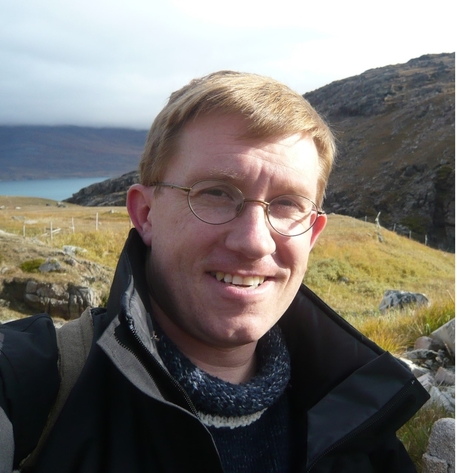
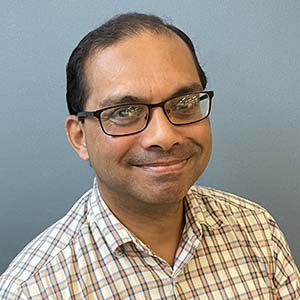
John Gigg is Senior Lecturer in Neuroscience at University of Manchester with PhD from Open University. Research focuses on hippocampal neural circuitry using electrophysiology and behavioral analysis. Current projects investigate information flow in medial temporal lobe structures in normal and Alzheimer's model mice. Research Focus: Hippocampal-subicular-entorhinal interactions with emphasis on parallel processing pathways. Examines neural basis of cognitive deficits in Alzheimer's using transgenic models (3xTg, TgF344-AD). Collaborations: Neural processing with Stefano Panzeri, circadian influences with Hugh Piggins, epilepsy networks with Jon Turner, and Alzheimer's mechanisms with Stuart Allan. Funded by BBSRC and Royal Society.
Florian Madison is an Assistant Professor of Economics at the Robert Day School of Economics and Finance . He joined the institution in 2019 following postdoctoral studies at the University of California, Irvine and the Federal Reserve Bank of St. Louis. He holds a Ph.D. in Economics from the University of Basel. Education: Ph.D. in Economics, University of Basel Postdoctoral Research: University of California, Irvine and Federal Reserve Bank of St. Louis Research Interests: Dr. Madison focuses on Game Theory , Macroeconomics , and Money and Finance , with expertise in markets with frictions, search and matching, asset pricing, liquidity, and asymmetric information. His work bridges theoretical and applied economics, examining how information asymmetries and market imperfections shape economic outcomes. Recent Publications: His 2024 articles explore currency substitution policies and liquidity dynamics in frictional markets. Earlier work includes analyses of entrepreneurial finance and the European sovereign debt crisis. His 2017 doctoral dissertation advanced theories on monetary liquidity. Grants & Advising: No specific grants or advisees are listed, though his research collaborations are evident in co-authored works like the 2022 paper on entrepreneurial finance.
Wenqian Yu, MD, is a Research Assistant Professor in the Department of Neurobiology & Anatomy at Drexel University College of Medicine. She serves as the chief cell biologist in Peter Baas's laboratory, focusing on microtubule dynamics in neuronal development. Her work involves axonal growth, microtubule severing proteins (e.g., spastin, katanin), and therapeutic strategies for nerve regeneration. Education: MD from Shanghai Medical University Affiliations: Drexel University College of Medicine Research Interests: Yu's studies center on the role of microtubules in neuronal polarity, axonal branching, and axonal regeneration. Key topics include the regulation of microtubule arrays by motors and severing proteins, as well as the mechanisms underlying axonal injury and repair. Publications highlight her contributions to understanding how microtubule-severing proteins like fidgetin and katanin influence axonal growth and branching. Recent work explores nanoparticle-based siRNA therapies to enhance nerve regeneration. Labs/Teams: Peter Baas's Laboratory Training: Supervises graduate students and postdoctoral fellows Contact: wyu@drexelmed.edu | Department of Neurobiology & Anatomy, Philadelphia, PA
Christoph Henkel is a Professor of Law at Drake University's Drake Law School since 2023. His expertise spans Contract Law, Corporate Law, Fintech, and Bankruptcy Law. Previously, he served as a Professor at Mississippi College School of Law (2009–2022), Visiting Professor at Chicago-Kent College of Law and University of Illinois Chicago School of Law, and held arbitration roles with the European Commission and FINRA. He holds an SJD and LLM from the University of Wisconsin Law School, and a JD from Justus-Liebig University Law School (Germany). His research focuses on cross-border bankruptcy, AI's impact on legal practice, and fintech regulation. He was honored as the Richard M. and Anita Calkins Distinguished Professor of Law in 2025. His publications address topics such as cannabis industry banking, AI in insolvency processes, and comparative bankruptcy frameworks. His work bridges legal theory and practical regulation in transnational contexts.
Dr. Kristi Angelopoulou is an Associate Professor in the Department of Physical Therapy at Emory & Henry College’s School of Health Sciences, where she has served since 2015. She holds advanced clinical certifications including Board Certification in Orthopedics (ABPTS), Mastery in Manual Therapy, and Musculoskeletal Ultrasound Imaging. Her academic roles include faculty advisor for the Physical Therapy Club and research projects, committee membership in curriculum and simulation lab affairs, and course mastery for key musculoskeletal and kinesiology courses. Dr. Angelopoulou’s education includes a Doctor of Physical Therapy (Northeastern University, 2011), Master’s in Exercise Physiology (University of Central Florida, 1999), and a Bachelor’s in Athletic Training (Minnesota State University, 1997). Her 18+ years of clinical experience spans sports medicine, outpatient orthopedics, and leadership roles in athletic training and rehabilitation practices. Her research focuses on medical screening, differential diagnosis, and musculoskeletal ultrasound imaging applications. Notable work includes studies on hypertension management in physical therapy patients and dynamic ultrasound assessment of ligament injuries. She has contributed to peer-reviewed journals and book chapters on orthopedic physical therapy, emphasizing clinical decision-making and evidence-based practice. Professional contributions include item writing for the American Board of Physical Therapy Specialties’ Orthopedic Certification and active membership in the APTA’s Imaging Special Interest Group. Her commitment to education is reflected in her dual roles as clinician and academic leader, bridging clinical practice with educational innovation.
Hasan Syed, MD is an Associate Professor in the Department of Orthopedic Surgery at Loma Linda University School of Medicine. His academic role includes clinical practice, research, and teaching. He specializes in orthopedic surgery with a focus on joint reconstruction, sports medicine, and musculoskeletal disorders. Dr. Syed’s research emphasizes surgical techniques for shoulder, hip, and knee conditions, including capsular reconstruction, tendon tears, and chondrocyte biology. His research interests span a range of topics, including: Shoulder and hip reconstruction techniques Management of anterior cruciate ligament (ACL) injuries Chondrotoxicity of surgical anesthetics Pediatric orthopedic injuries and custom bracing Plantar fasciitis treatment and rehabilitation Diagnostic arthroscopy advancements Dr. Syed’s publications highlight a focus on case studies, surgical outcomes, and translational research. His work on superior capsular reconstruction and spinal anesthesia techniques for hip dislocation demonstrates innovation in clinical practice. He has contributed to peer-reviewed journals and textbook chapters in orthopedic surgery and sports medicine. In grants and advising, he has led or collaborated on studies such as the Subchrondroplasty procedure trial, superior capsule reconstruction outcomes research, and investigations into posterolateral bundle tears of the ACL. His involvement in educational initiatives includes workshops on orthopedic surgery for pre-medical students and contributions to the Pocket Orthopaedic Surgery textbook series. While no specific lab or team is explicitly mentioned, his collaborative work with colleagues across orthopedics, physical therapy, and radiology underscores his integrative approach to musculoskeletal care.
Mrithyunjayan (MJ) Nilayamgode is an Assistant Professor of Economics at James Madison University's College of Business. His research focuses on theoretical financial economics, macroeconomic theory, finance, and experimental economics, with an emphasis on asset pricing and the implications of financial innovation. He holds a Ph.D. in Economics from the University of Virginia (2024), an M.A. from the same institution (2019), an M.A. from Delhi School of Economics (2017), and an M.Sc. in Physics from IIT Kanpur (2012). His research explores interactions between financial instruments and their macroeconomic implications, including collateralized debt and unsecured credit. Recent work includes analyzing the Bihar alcohol ban's impact on crime reduction and studying leakage reduction in welfare programs via technological interventions. He has contributed to journals like Economic Development and Cultural Change and Journal of Development Economics . Dr. Nilayamgode's teaching portfolio includes graduate macroeconomic theory, global financial markets, and corporate finance. He received the 2019 Teaching Excellence Award from ASU's Graduate & Professional Student Association. His current research agenda bridges financial innovation's theoretical foundations and development economics applications, with ongoing projects on general equilibrium models and financial market spillovers. He advises no formal students but collaborates with institutions like the Indian School of Business on applied projects. His work often combines theoretical rigor with empirical validation, addressing practical challenges in public policy and financial systems.
Prof. Hato Schmeiser is a Full Professor of Risk Management and Insurance Economics at the University of St. Gallen, serving as Chairholder of the Chair for Risk Management and Insurance since 2005. He also serves as Managing Director of the Institute of Insurance Economics (IVW-HSG) and was Dean of the School of Management (2017-2023). His academic journey includes a doctoral degree from the University of Passau (1997), a postdoctoral qualification (Habilitation) from Humboldt University Berlin (2003), and professorships at the Universities of Münster and Frankfurt. Education: Doctorate in Business Administration (Dr. rerum politicarum), University of Passau (1997) Habilitation in Business Administration, Humboldt University Berlin (2003) Studies in Business Administration at the University of Mannheim (1987-1993) Research focuses on Risk Management, Insurance Regulation, Behavioral Insurance, and Strategic Management of Insurance Companies. Key themes include optimal risk pooling, capital allocation under Solvency II/SST, and consumer preferences for insurance products. His work bridges theoretical models and practical regulatory challenges. Publications emphasize innovative reinsurance solutions, pandemic risk insurability, and digital monitoring in insurance. Recent work explores big data's impact on risk classification and privacy. Awards highlight contributions to insurance economics, including multiple recognitions from the American Risk and Insurance Association and Emerald Literati Network. He has held leadership roles in professional organizations like the European Group of Risk and Insurance Economists (EGRIE, President 2015-2016). Grants include Swiss National Science Foundation funding for studies on investment guarantees and regulatory impacts. Active in editorial roles for journals like Geneva Risk and Insurance Review and The Journal of Insurance Issues. Oversees the IVW's research on insurance trends and policy implications. Labs/Teams: Leads the IVW-HSG, a leading research hub in insurance economics, collaborating with industry and academia on projects like pandemic risk modeling and digital insurance transformation.
Neil Price is a Distinguished Professor of Archaeology at the University of Uppsala, Sweden. He previously held the Sixth Century Chair of Archaeology at the University of Aberdeen (2007-2014), where he established the Department of Archaeology. He specializes in the Viking Age, pre-Christian Northern religions, and historical archaeology of the Indo-Pacific. His research spans over 40 countries, and he leads Sweden's major archaeological project, The Viking Phenomenon , exploring the origins of this transformative era. Price holds advanced degrees including a BA and PhD, alongside prestigious fellowships such as FSA, FRSA, and FRGS. His research interests include early medieval archaeology (400-1100 CE), social archaeology of conflict (e.g., WWII Pacific Theatre), shamanism, and post-colonial material culture studies. He integrates archaeology with textual scholarship and advocates for ethical archaeological practices. His publications include seminal works like The Viking Way (2002), The Viking World (2008), and forthcoming titles such as The Children of Ash and Elm (2020). Over 100 academic papers further enrich his contributions, translated into 15 languages. His work bridges scholarly and public audiences through exhibitions, consultancy, and public lectures. Awards: FSA, FRSA, FSA SCOT, CORRFRSE, FRGS. Projects: Leading The Viking Phenomenon (2020s), a multidisciplinary global initiative. Price’s advising and grant activities are extensive, though specific details are not detailed here. He collaborates internationally, fostering archaeological research frameworks such as the Scottish Medieval Scotland: a Future for its Past (2013). His work emphasizes global connectivity and interdisciplinary approaches to understanding material culture and human history.
Dr. Lloyd Brown is a Lecturer in Law at the Hillary Rodham Clinton School of Law, Swansea University, since August 2021. He holds an LLB (2011) and PhD in Law (2016) from Cardiff University. As Director of the Equity and Trusts 1 and 2 modules, he teaches courses on legal systems and skills, focusing on trusts, property law, and environmental regulation. Prior to Swansea, he served as a full-time Lecturer in Law at the University of Birmingham (2017–2020) and held a Visiting Lecturer position at Beijing Normal University, China (2018). His research integrates environmental law, financial markets, and real estate regulation, with a focus on how environmental policies impact financial institutions. Key areas include the Environmental Protection Act 1990’s Part IIA, ESG compliance, contaminated land regimes, and fiduciary obligations in trust law. His work has been published in journals like Environmental Law Review and Trusts & Trustees . Dr. Brown’s teaching drives research into decolonizing Equity and Trusts through historical legal analysis, exploring pre-Judicature legal pluralism. He also examines the role of ESG factors in pension fund governance and cryptocurrency’s challenges to traditional trust frameworks.
İnci Gümüş is an Associate Professor of Economics at Sabanci University, affiliated with the Faculty of Arts and Social Sciences. Her research focuses on macroeconomic dynamics, emerging market economies, credit markets, and real estate economics. She has contributed to understanding credit transmission mechanisms, fiscal policy impacts during crises, and cross-country analyses of housing markets. Her work explores how household and business credit shocks influence sectoral output, the role of real estate in economic policy, and behavioral aspects of decision-making in educational settings. She has published in journals like Economics Letters , Journal of Corporate Finance , and Journal of International Money and Finance . No scientific awards are explicitly listed in the provided information. Details on advising students or grants are not available in the current data.
Ricardo Sousa is an Associate Professor with Habilitation at the Department of Economics, University of Minho, where he also serves as a Researcher at the Centre for Research in Economics and Management (NIPE) and as Associate Editor of the Economic Modelling journal. His academic career spans multiple institutions with a strong foundation at the University of Minho. His educational background includes: PhD in Economics from the London School of Economics and Political Science MPhil in Economic Policy from the University of Minho BSc in Economics from the University of Minho Ricardo Sousa's research spans a comprehensive range of topics in economics and finance, with particular expertise in Macroeconomics, Monetary and Fiscal Policy, Empirical Finance and Asset Pricing Models. His work demonstrates deep engagement with Housing Economics, Emerging Market Economies, and sophisticated quantitative methods including Bayesian Econometrics. His research consistently addresses the interplay between wealth composition, asset returns, and economic policy, with increasing attention to contemporary challenges like cryptocurrency markets and pandemic impacts on financial systems. An analysis of his recent publications reveals an evolving research trajectory from foundational macroeconomic analysis toward complex financial systems. His work increasingly addresses financial stability in the face of multiple simultaneous shocks (pandemics, oil price volatility, geopolitical tensions), with notable contributions to understanding cryptocurrency markets, sovereign debt dynamics, and the interconnections between traditional financial markets and emerging digital assets. The methodological sophistication of his research has grown, incorporating advanced econometric techniques and machine learning approaches. Ricardo Sousa has led significant research projects including 'The Linkages Between Wealth, Stock Returns, Government Bond Yields, Housing Risk Premium and Systemic Crisis Episodes,' funded by the Europlace Institute of Finance (2012-2014). His teaching portfolio demonstrates academic leadership across multiple levels: Macroeconomia Avançada II at the doctoral level, Macroeconomia II at the bachelor's level, and Tópicos de Economia Financeira at the master's level. His extensive collaborative network includes prominent researchers across Europe and North America, reflecting his standing in the international economics community.
Shailesh Naire is a Senior Lecturer in the School of Computer Science and Mathematics at Keele University , UK. He earned his PhD in Applied Mathematics from the University of Delaware (2000), with research on thin-film fluid dynamics in foam drainage. His career includes postdoctoral work at the University of Nottingham (2001–2004) and lectureships at Worcester Polytechnic Institute (2000–2001), Heriot-Watt University (2004–2006), and the University of Nottingham (2006). Education : PhD in Applied Mathematics (University of Delaware, 2000) His research spans fluid mechanics and biomedical engineering , focusing on fluid-structure interactions, free boundaries, and mathematical modeling. Current projects include thermocapillary and thermoviscous effects in thin-film flows, fingering instabilities in lava flows, and Computational Fluid Dynamics (CFD) simulations for mechanical thrombectomy and tissue engineering . Collaborations involve Keele's School of Pharmacy and Bioengineering and the Royal Stoke University Hospital. Recent publications highlight his work on signaling molecule-mediated cartilage regeneration, thermo-viscous instabilities in spreading liquid domes, and adaptive mesh methods for thin-film equations. He supervises PhD student Jatinder Pannu (2023) and has mentored several former students, including Kelly Campbell (2020) and Hani Alahmadi (2021). Administratively, he serves as the Health and Safety Liaison Officer in his school and has held leadership roles such as Postgraduate Research Director and Programme Director for the Data Scientist Apprenticeship. His research themes include Fluid Dynamics and Biomechanics .
Dr. Anna Hillingdon is an Associate Professor at Bournemouth University's Executive Business Centre, specializing in strategic interactions within conflict and competition contexts. She holds a PhD in Finance and Management and an MSc in Quantitative Finance. Her research focuses on game theory, network analysis, and sanctions' economic impacts, with contributions to the UN, World Bank, NATO, and UK Parliament. She advises on hybrid warfare, energy sanctions, and post-conflict resilience strategies. Education: PhD in The Economic Consequences of Sanctions (SOAS, 2025 - pending) MSc in Finance (Quantitative Finance), University of London (2019) PhD in Tourism, Travel Risk, and Perceptions (Bournemouth University, 2007) MSc in Tourism Management and Marketing (Bournemouth University, 2004) Research Interests: Dr. Hillingdon analyzes strategic integration in conflict scenarios, sanctions' collateral effects, and energy market dynamics. Her work combines formal modeling with real-world policy advice, particularly regarding Middle Eastern political economies and hybrid threats. Recent studies investigate duopolistic rivalry in energy markets and social welfare impacts of sanctions. Grants & Engagement: Lead UNWTO crisis management project (2012) World Bank post-conflict resilience initiative (2018) NATO hybrid threats research (2017) UK Parliament testimony on Iran sanctions (2020) Labs/Teams: External Associate in King’s College London’s Economic Conflict & Competition Research Group (2024–present). Adjunct Professor at SWISS UMEF, Kabul (2015–present).
Dzintars Ozols serves as an Assistant Professor within the Department of Paediatric Surgery at Riga Stradins University, specializing in advanced reconstructive microsurgery for pediatric patients. His clinical practice is centered at Riga East University Hospital, focusing on complex hand and upper extremity reconstruction, congenital limb anomalies, and vascularized bone transfer procedures. His research program emphasizes innovative surgical techniques for challenging pediatric conditions, including: Thumb hypoplasia reconstruction using extensor indicis proprius transposition Double vascularized fibula growth plate transfer for tibial defects Novel reinnervation methods for nipple reconstruction post-mastectomy Management of recurrent osteomyelitis in genetically complex cases Multidisciplinary approaches to arteriovenous malformations Analysis of his 2020-2025 publications reveals consistent focus on clinical case reports documenting rare conditions and technical innovations in pediatric orthopedic and plastic surgery, with particular attention to growth plate preservation, nerve regeneration, and functional outcomes in children. Scientific awards and honors are not documented in the available profile information. As an active research supervisor, Ozols mentors PhD candidate L. Kalniņa on the project "Complex vascularised fibula growth zone transplant" (2021-2025) and maintains expert appointments with the Latvian Council of Science for Clinical Medicine (2021-2024, 2024-2027). His grant activity demonstrates national recognition of his clinical expertise. Ozols collaborates within a multidisciplinary surgical network at Riga East University Hospital, working closely with orthopedic, plastic, and oncology specialists to advance complex pediatric case management through innovative surgical approaches and biomechanical analysis of reconstruction techniques.