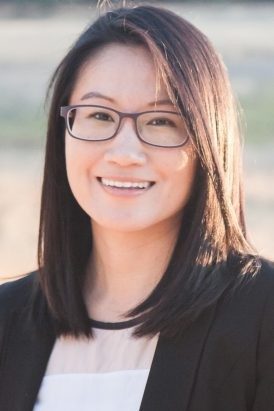
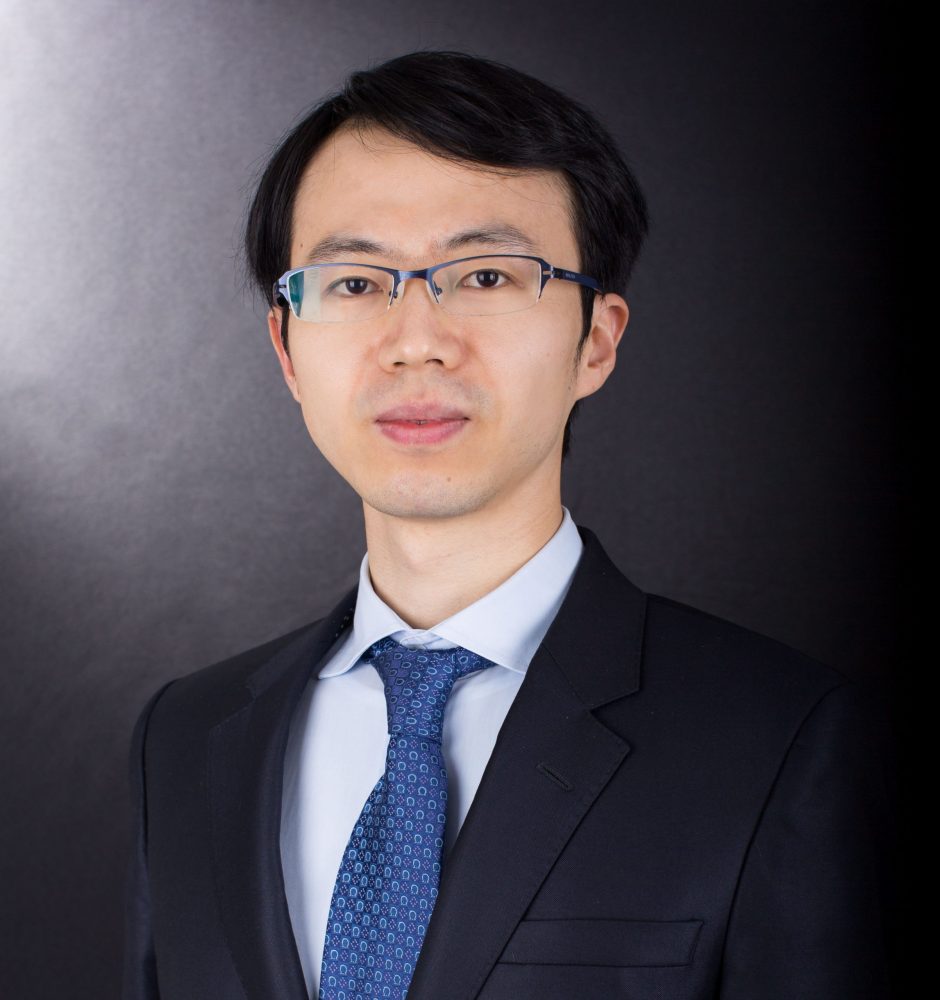
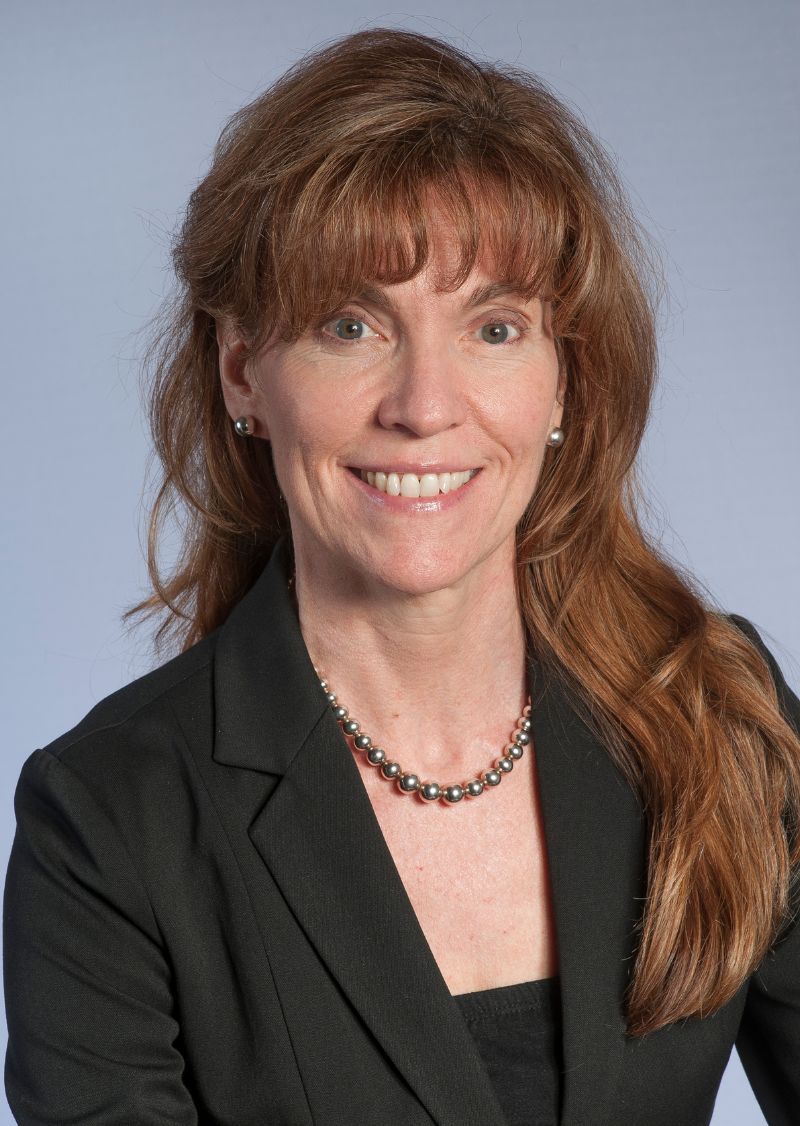
Jennifer C. Hsieh is an Assistant Professor of Anthropology at the University of Michigan, affiliated with the Lieberthal-Rogel Center for Chinese Studies. Her research investigates sensory practices in institutional and technological settings, focusing on urban East Asia. She holds a PhD from Stanford University (2017), MA from Columbia University (2009), and BA from Harvard College (2007, magna cum laude). Her interdisciplinary work combines ethnography, history, and experimental methods (e.g., audio recordings, GIS) to explore multisensory social configurations. Her current book project, From Festival to Decibel: Making Noise in Urban Taiwan , examines how noise becomes a regulatory object entangled with citizenship and geopolitical belonging. She has held fellowships at institutions including the Max Planck Institute for the History of Science and Harvard’s Fairbank Center. Research interests include sensory studies, science/technology studies, urban environments, and East Asian cultural politics. She founded the Sensory & Technology Lab to explore creative anthropological methods, hosting events like the Voices of the Rainforest cinema concert with Steven Feld. Awards: SSRC International Dissertation Fellowship, Wenner-Gren Fieldwork Award Teaching: Courses on sound, music, and noise; emphasizes experimental methods and sensory ethnography. Lab: Sensory & Technology Lab fosters collaborative research in film, music, and media.
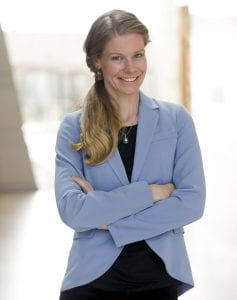
Agnes Horvat is an Associate Professor of Communication (with a courtesy appointment in Computer Science) at Northwestern University. She directs the Technology and Social Behavior (TSB) joint doctoral program between the McCormick School of Engineering and the School of Communication, and leads the Lab on Innovation, Networks, and Knowledge (LINK). Her research focuses on human-centered computing, network science, and AI's impact on information production/sharing in digital platforms. She has received NSF CAREER, CRII, and collaborative awards as PI. Her work examines algorithmic bias in online spaces, AI-assisted creativity (e.g., LLMs in biomedical writing and music), and collective intelligence dynamics. Media coverage includes Nature , Washington Post , and Le Monde . Her advisees have won prestigious fellowships like the Northwestern Presidential Fellowship and best paper awards at top conferences. Research interests include: (1) algorithmic bias in social media and crowdfunding, (2) AI-driven creativity expansion, (3) network structures of scientific attention, and (4) opinion dynamics in online discussions. Current projects explore LLMs' role in scientific writing and music composition, while past work analyzed gender disparities in scholarly self-promotion and retraction paper attention patterns. Grants: NSF CAREER Award (202?), NSF CRII (202?), Collaborative Grant (202?) Labs/Teams: LINK Lab (focusing on innovation networks), TSB Program (interdisciplinary engineering/communication PhD)
Salome Voegelin is a Professor of Sound Art at the London College of Communication, University of the Arts London. She is a leading figure in sound studies, focusing on listening as a socio-political practice and the transversal potential of sound across disciplines. Her research explores the intersections of sound with politics, feminism, and pedagogy, and she leads projects like Listening across Disciplines II (LxDII), funded by the AHRC, which investigates listening as a research methodology. Education: PhD in Sound Art, Goldsmiths, University of London (2000–2004) BA (Hons) Fine Art Film and Video, Central Saint Martins (1994–1997) PGCertHE, Middlesex University Research Interests: Sound Studies, Sonic Pedagogy, Feminism, Interdisciplinary Knowledge Production, Sonic Methodologies Her work bridges artistic practice and theory, including collaborations with David Mollin and co-convening Points of Listening . Key books include Listening to Noise and Silence (2010), The Political Possibility of Sound (2018), and Sonic Possible Worlds (2021). She is a member of the Creative Research into Sound Arts Practice (CRiSAP) and leads the Sounding Knowledge Network. Recent articles and presentations highlight themes like transversal sound studies, the ethics of listening, and curatorial practices. Her projects emphasize participatory engagement and the socio-political dimensions of sound.
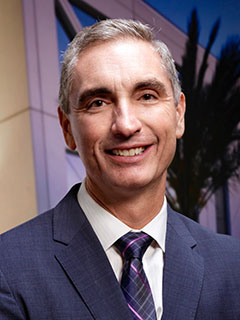
Ari Y. Kelman is an Associate Professor of Education at Stanford University’s Graduate School of Education (GSE), with a courtesy appointment in Religious Studies. He holds the Jim Joseph Chair in Education and Jewish Studies. His research focuses on religious knowledge transmission, particularly within American Jewish communities, and intersects sociocultural learning theory with critical religious studies. Education: BA in Sociology from UC Santa Cruz (1994), PhD in American Studies from New York University (2003). Kelman’s work spans books such as Shout to the Lord: Making Worship Music in Evangelical America (2018) and Station Identification: A Cultural History of Yiddish Radio (2009), as well as edited volumes on Jewish identity and education. Teaching includes courses like “Understanding Jews” and “Religion and Education in America.” Administrative roles include directing the Undergraduate Honors Thesis Program, the Concentration in Education and Jewish Studies, and the Taube Center for Jewish Studies. His current projects explore AI’s impact on religion, Google’s algorithmic definitions of religion, and post-war religious education trends. Affiliations include the Center for Jewish Studies, American Studies Program, and Center for Comparative Studies in Race and Ethnicity. Kelman advises numerous doctoral and master’s students and collaborates on initiatives like the BJPA@Stanford research network.
Helle Hochscheid is a University Lecturer in antiquity and heritage at University College Roosevelt, a Liberal Arts & Sciences college within Utrecht University in Middelburg. She holds an affiliation with the Humanities Research Institute for History and Art History and the Department of Ancient History and Classical Civilization. Her academic roles include coordinating the Archaeology in the Classroom project and serving on the Scientific Advisory Board of the Netherlands Institute in Athens, the Editorial Board of PHAROS: Journal of the Netherlands Institute at Athens , and the Advisory Board of Theran Press. Her research expertise spans Greek archaeology, ancient history, cultural heritage, and women’s history, with a focus on craft production (particularly sculpture and musical instruments like auloi) in ancient Greek societies. She investigates social contexts of craftsmanship, including the roles of non-elite groups and women in Athenian artistic networks. Key themes include gender diversity, migration’s societal impact, and the intersection of craft labor with early knowledge economies. Hochscheid regularly collaborates with undergraduate students, co-editing volumes such as The World on Walcheren (2024). She teaches courses including Academic Internship , Greek Art & Archaeology , and Making Society in Archaeology , emphasizing interdisciplinary education and community-engaged learning. Her work bridges academic research and public heritage through projects like Archaeology in the Classroom , which introduces transferable skills via archaeology to primary school children. Her professional contributions include organizing sessions at the EAA Annual Conference (2024) and presenting on topics like women’s work in ancient Athens. She is a member of the Engendering Ancient Economies Network (EAEN) and the TEXNH research collaboration, exploring economic and social dimensions of ancient Mediterranean crafts.
Dr. Robert Lieck is an Assistant Professor in the Department of Computer Science at Durham University. His research focuses on interdisciplinary applications of machine learning (ML) and artificial intelligence (AI), emphasizing interpretability, robustness, and ethical considerations. He explores computational models in music cognition, communication dynamics, and medical image analysis, aiming to bridge theory and practical tools for domain experts. Before Durham, he was a postdoctoral researcher at EPFL's Digital and Cognitive Musicology Lab (2018–2021) and earned his PhD from the Learning and Intelligent Systems Lab in Stuttgart/Berlin (2012–2017). His work combines probabilistic modelling, neuro-symbolic systems, and reinforcement learning to address challenges in music analysis, autonomous decision-making, and medical robotics. Key research themes include: Music structure and perception modelling Symbol emergence in multi-agent communication Ethical AI and autonomous systems governance Medical imaging applications (CT/MRI analysis) Recent projects involve developing patient-agnostic diabetes management systems using deep reinforcement learning and surgical workflow anticipation through graph learning algorithms. He actively contributes to conferences such as NeurIPS, ISMIR, and AAAI, with publications spanning music informatics, robotics, and biomedical engineering. Current supervision includes four postgraduate students focusing on AI applications in healthcare, music technology, and autonomous systems. His work bridges technical innovation with societal impact, addressing challenges in policy, legislation, and interdisciplinary collaboration.
Josep Marco Pallares is a Professor at the University of Barcelona's Faculty of Psychology, affiliated with the Department of Cognition, Development and Educational Psychology. He leads the Brain Dynamics and Structure of Human Cognition (BraCo) research group and holds an ICREA Academia Fellowship (2018-2023). His work focuses on neural mechanisms underlying reward processing, music perception, and social cognition using neuroimaging techniques. Education: Licenciatura in Psychology (University of Barcelona, 2000), Doctorate in Neuroscience (2012), and Doctorat (University of Barcelona, 2005) Research interests include brain oscillations in reward systems, music-evoked emotions, and decision-making. His recent studies explore how theta and gamma oscillations underpin pleasantness responses to music and social information. Ongoing projects investigate neural correlates of gambling behaviors and white matter correlates of music reward sensitivity. Awards: ICREA Academia Fellowship (2018) Has supervised doctoral theses on music reward processing and atypical reinforcer anticipation mechanisms. Active in teaching courses on neuroimaging techniques and music psychology at the University of Barcelona. Labs/Teams: Principal Investigator of the BraCo group, collaborating with AGAUR and Ministerio de Ciencia-funded projects.
Gauthier Gidel is an Associate Professor at the Department of Computer Science and Operations Research (DIRO) within the Faculty of Arts and Science at Université de Montréal, where he also holds the prestigious Canada CIFAR AI Chair position. He is a core faculty member of Mila, Quebec's AI research institute, and maintains active research collaborations with leading institutions. His academic journey includes a PhD in Computer Science under the supervision of Simon Lacoste-Julien, with internships at Sierra, ElementAI, and DeepMind during his doctoral studies. Dr. Gidel's research spans multiple critical areas in machine learning, with particular emphasis on generative modeling , adversarial machine learning , and variational inequalities for machine learning. His work explores the intersection of optimization theory and practical AI systems, focusing on challenges like LLM safety alignment, multi-agent cooperation, and robustness against adversarial attacks. He is particularly known for his contributions to understanding the theoretical foundations of generative adversarial networks through variational inequality frameworks. His recent publications reveal a strong trend toward addressing critical challenges in large language model safety and alignment, with numerous 2024-2025 papers focusing on adversarial robustness, safety evaluation methodologies, and alignment techniques for LLMs. Simultaneously, his foundational work continues in optimization theory, particularly in variational inequalities and performative prediction, demonstrating his dual focus on practical AI safety concerns and theoretical machine learning foundations. Canada CIFAR AI Chair Core member of Mila Organizer of popular NeurIPS workshops on smooth games Co-founder of the ICLR blog post track Dr. Gidel actively supervises an extensive research group with approximately 10 current graduate students and numerous alumni who have secured positions at leading institutions including Inria Lyon, Oxford, and industry research labs. His research is supported by multiple substantial grants from CRSNG, MITACS, and IVADO, including the prestigious CRSNG Discovery Grant program and MITACS Acceleration Québec projects focused on fraud detection in music streaming and conditional generation. His laboratory maintains strong connections with both academic and industry partners, fostering a collaborative environment focused on advancing AI safety and theoretical understanding.
R. Edward Freeman is Stephen E. Bachand University Professor of Business Administration and Olsson Professor of Business Administration at the University of Virginia Darden School of Business. He serves as academic director of the Institute for Business in Society and previously directed Darden's Olsson Center for Applied Ethics from 1986 to 2009. Freeman maintains additional academic appointments as adjunct professor of stakeholder management at Copenhagen Business School, visiting professor at Nyenrode Business School, and adjunct professor of management at Monash University. Freeman's research focuses on stakeholder management, business ethics, and business strategy. His work explores how businesses can create value for multiple stakeholders without tradeoffs. He has developed innovative teaching methods incorporating theater, music, and philosophy into business education, including the popular 'Leadership and Theater' course. His publications reveal a consistent focus on stakeholder theory applications across diverse contexts, from sports ethics and gender equality to sustainable business practices and organizational decision-making. Recent work examines contemporary issues like transgender athletes in sports, sustainable food systems, and ethical leadership in crisis situations. His scientific achievements have been recognized through numerous awards: Seven honorary doctorates from institutions across Europe and Canada Lifetime Achievement Awards from World Resources Institute, Aspen Institute, Humboldt University, Academy of Management, and Society for Business Ethics Multiple teaching awards from Wharton, Carlson School, Darden, and Virginia State Council Freeman has advised numerous global corporations and has served as Co-editor in Chief of the Journal of Business Ethics. His stakeholder theory framework has influenced business practice worldwide and been translated into multiple languages. Beyond academia, he co-founded Stakeholder Media LLC, hosts The Stakeholder Podcast, and is active in music as a co-founder of Red Goat Records.
Hailiang Chen serves as Professor in Innovation and Information Management, Assistant Dean (Taught Postgraduate), and Director of the Artificial Intelligence Research Institute at HKU Business School, The University of Hong Kong. His academic journey includes a PhD and MS from Purdue University and a BM from Tsinghua University. Doctoral Degree: Management Information Systems, Purdue University Master Degree: Economics, Purdue University Bachelor Degree: Information Management and Information Systems, Tsinghua University Professor Chen's research spans artificial intelligence, FinTech, social media analytics, and platform economics, with significant contributions to understanding how digital interactions shape financial markets and consumer behavior. His work frequently examines the intersection of technology adoption and economic outcomes, particularly in cryptocurrency markets, live-stream commerce, and venture capital decision-making. His research methodology combines large-scale data analysis with experimental designs to uncover causal relationships in digital ecosystems. His publications in elite journals like Journal of Financial Economics and Management Science demonstrate consistent impact, with multiple ESI Highly Cited Papers. Current projects include Gov-RAG for e-government services and comparative studies of AI search tools. His research has received continuous funding from Hong Kong's Research Grants Council for five consecutive years (2019-2023). Faculty Outstanding Researcher Award, HKU Business School (2022-23) INFORMS ISS Sandra A. Slaughter Early Career Award (2022) Association for Information Systems Early Career Award (2019) Three ESI Highly Cited Papers (Top 1% in field) Professor Chen actively contributes to academic service as Associate Editor for Journal of Management Information Systems and MIS Quarterly , and serves as Program Chair for the International Conference on Smart Finance. His industry collaborations include Alibaba, HSBC, and China Construction Bank, bridging academic research with real-world business applications in AI implementation and digital transformation.
Wolfgang Mayer is a Professor for Performative Practice at the State Academy of Fine Arts Stuttgart , teaching collaborative artistic processes. He co-founded the art group Discoteca Flaming Star (DFS) in 1998 with Cristina Gómez Barrio, focusing on performative works that challenge memory and institutional frameworks. 1990–1995: Studied at Academy of Fine Arts Munich 1996–1997: DAAD scholarship at School of Visual Arts NYC 2005–2006: Whitney ISP participant Mayer’s research integrates performative practice , body theory , and collaborative art . His works interrogate memory , feminist narratives , and public space dynamics through sculptures , performances , and experimental music . Recent projects like Momentum:synthesize.r (2024) and Love Any Out of (90 Seconds) End (2023) explore temporal structures and emotional labor . Scientific honors include: 2013 Fundacion Estrenos Grant 2006–2007 Pollock-Krasner Scholarship 1993 Salzburg Summer Academy scholarship He emphasizes non-formalized artistic development through Sound & Body modules, public space interventions , and critical response protocols . Mayer’s DFS collective has shown globally at institutions like The Kitchen , Whitney Museum , and Tate Modern , often collaborating with figures like Rita McBride and Jeremiah Day.
Dmitri Tymoczko is a Professor of Music at Princeton University, where he has taught composition and theory since 2002. His work bridges the gap between academic music theory and contemporary composition, creating a unique interdisciplinary approach that has earned him recognition as a leading figure in modern music scholarship and creation. Tymoczko's research interests focus on the geometric modeling of musical structures, polystylistic composition that draws from genres spanning Renaissance to rock, and the mathematical foundations of tonality. His theoretical work explores how harmonic structures can be represented geometrically, revealing fundamental patterns that connect diverse musical traditions. He approaches composition as 'a logical deduction from absurd premises,' blending rigorous structural thinking with playful musical exploration. His scholarly publications and compositions reveal a consistent interest in the intersection of mathematical precision and expressive freedom. The articles demonstrate expertise across music theory, composition, and the cognitive aspects of musical perception, with recurring themes of geometric modeling, tonal structure, and genre hybridization. His work often challenges traditional boundaries between academic and popular music forms. Guggenheim fellowship Rhodes Scholarship Leonard Bernstein fellowship from Tanglewood Fellowship from the Radcliffe Institute for Advanced Study Block lectureship from the Society for Industrial and Applied Mathematics First music-theory article published in Science magazine Tymoczko maintains an active performance career alongside his academic work, with his compositions performed by leading ensembles including the Brentano Quartet, Newspeak, and Roomful of Teeth. His teaching integrates theoretical insights with practical composition, fostering a generation of musicians who understand music's structural foundations while embracing creative freedom. He has developed innovative tools like the musical programming language 'arca' to explore new compositional possibilities.
Carlos R. Abril is a Professor and Associate Dean for Research at the University of Miami's Frost School of Music, specifically within the Music Education Department. With a distinguished career in music education research and leadership, Abril has made significant contributions to understanding music education practices, policy, and equity issues. His research focuses on several key areas in music education: Music education policy and advocacy Demographics and equity in music education Culturally responsive teaching practices High school music enrollment patterns Feminist perspectives in music education General music education approaches Abril's research portfolio demonstrates a strong commitment to understanding who participates in music education and how to make music education more inclusive and effective. His work often employs rigorous quantitative and qualitative methodologies to examine national patterns while also addressing specific classroom practices. Recent research has focused on the voices of marginalized music educators, persistence in high school music programs, and holistic approaches to music education that emphasize human connections. Among his notable achievements is receiving the Senior Researcher Award, recognizing his significant contributions to the field of music education research. Professor Abril has been actively involved in shaping policy in music education, examining how teachers can become collaborative change agents in educational policy development and implementation. His work connects research to practical applications for music educators working in diverse educational settings.
Maria Luisa Merolla is an Associate Professor in Contemporary History (M-STO/04) at the Department of Social and Economic Sciences, Faculty of Sociology, Sapienza University of Rome, where she has held a tenured position since October 1, 2015. She previously served as a Confirmed Researcher starting from March 1, 2009, and as a Researcher from March 1, 2006. Her academic journey began with a Doctoral Degree in History of Political Parties and Movements from the University of Urbino 'Carlo Bo' in 2002, following her Political Science degree with honors from the University of Naples 'Federico II' in 1994. Professor Merolla's research focuses on the intersection of cultural history, media studies, and music as historical sources, particularly examining American cultural influence in Italy during the Cold War era. Her work explores how music, radio, and television shaped Italian society and national identity during critical historical periods, including the post-WWII reconstruction, the economic boom years, and the cultural transformations of the 1960s-1980s. She has developed a distinctive approach to using sound as a historical source, pioneering the integration of audio materials into historical research methodology. Her publication record reveals a consistent scholarly trajectory examining the cultural Cold War, American cultural diplomacy through music, and the transformation of Italian society through media. Her most recent work extends into sustainability studies and contemporary global processes, while maintaining her core interest in how music and media shape historical consciousness. Her research has increasingly focused on Bruce Springsteen's cultural impact in Italy, reflecting her innovative approach to using popular music as a lens for historical analysis. GRAMMY Museum Affiliate recognition (2017) for founding and directing the Music Making History research unit Direction of the SPRINGSTEEN AS HISTORY PROJECT (2020-2024) with Sapienza University, The New School, and Monmouth University Winner of the PROGETTO GIOVANI RICERCATORI (2000) for research on political parties and national identity Professor Merolla has directed numerous research projects on topics including American cultural diplomacy in Italy, the role of music in the Cold War, and the historical significance of sound sources. She founded and directs the Music Making History research unit (2015-2024) and has served as Erasmus coordinator for multiple European universities. Her international collaborations include work with institutions in France, Spain, Portugal, and the United States, reflecting her transnational approach to historical research. As founder and director of the Music Making History research unit, Merolla has established a significant scholarly ecosystem focused on using sound sources for historical research. Her collaboration with the GRAMMY Museum and the Bruce Springsteen Archives has created unique opportunities for integrating popular music archives into academic historical research, establishing Sapienza University as a leading center for innovative historical methodology that bridges academic research and cultural institutions.
Margaret Greenwald serves as Associate Professor and Ph.D. Coordinator in the Department of Communication Sciences and Disorders (CSD) within Wayne State University's College of Liberal Arts and Sciences. Previously department chair (2014-2020), she is a Licensed and Certified Speech-Language Pathologist (CCC-SLP) recognized in 2022 as Wayne State's Outstanding Graduate Mentor in the health sciences. Her academic credentials include: M.A. in Speech-Language Pathology (University of Florida) Ph.D. in Communicative Sciences and Disorders (University of Florida) Post Doctoral Research Training in Cognitive Neuropsychology (University of Maryland, Department of Neurology) Dr. Greenwald's research centers on adult neurogenic communication disorders , specializing in aphasia, traumatic brain injury, and stroke rehabilitation through cognitive neuropsychology. Her work employs Magnetoencephalography (MEG) to map brain-behavior relationships during language and musical processing tasks, revealing critical insights for rehabilitation. She actively bridges clinical practice with neuroscience to develop evidence-based interventions. Analysis of her recent publications shows consistent focus on neuroimaging applications for understanding language disorders, with growing emphasis on telepractice implementation and the cognitive effects of musical training. Her work demonstrates strong translational value, connecting basic neuroscience to clinical rehabilitation protocols while maintaining rigorous methodological standards. Her scientific recognition includes: Outstanding Graduate Mentor in the Health Sciences, Wayne State University (2022) As an educator, Dr. Greenwald teaches graduate courses in aphasia, neuromuscular speech disorders, research methods, and doctoral seminars, plus undergraduate speech-language pathology instruction. She supervises doctoral research as Ph.D. coordinator and mentors students through clinical research projects. Her teaching integrates current neuroscience findings with clinical practice standards. She maintains active professional engagement through memberships in the American Speech-Language Hearing Association (ASHA), Academy of Aphasia, and International Neuropsychological Society, contributing to both clinical guidelines development and research community advancement.