Dr. rer. nat. Thomas Hermann is a faculty member at Bielefeld University's Faculty of Engineering, leading the Ambient Intelligence Group and coordinating the Computer Science program. He specializes in sonification, auditory data science, and smart environments. Head of Ambient Intelligence Working Group Computer Science Program Coordinator Member of multiple academic advisory boards His research focuses on interactive sonification for biomedical applications, quantum systems, and smart environments. Key projects include ECG sonification for cardiac diagnosis, real-time auditory feedback in swimming, and sonic interfaces for AR cooperation. Recent publications span 2025 with Python-based sonification tools ( pya AGen ), quantum system sonification, and ST-elevation myocardial infarction monitoring. He contributes to open-access supplementary materials and interdisciplinary workshops. As a researcher , Hermann develops practical sonification frameworks like Panson for facial behavior analysis, CardioScope for portable ECG monitoring, and Base Cube One for smart environments. His work bridges academic research with industry applications.
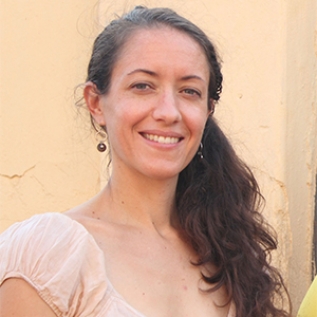
Siri Lamoureaux is an anthropologist and Assistant Professor in the Sociology Department (Workplace Studies) at the University of Siegen, Germany. She is affiliated with the SFB 1187 project "Media of Cooperation" and participates in the "Technoscapes in Africa" project with Richard Rottenburg and other members of the Law, Organisation, Science and Technology (LOST) network. She is also an associate of the Max Planck Institute for Social Anthropology and the Centre d'études et de documentation économiques, juridiques et sociales (CEDEJ Khartoum) based in Sudan, and an active member of AOEN, the Africa Off-Earth Network. Her educational background includes: PhD in Social Anthropology (2017), Martin Luther University / Max Planck Institute for Social Anthropology, with dissertation titled "Virtuous language: gendered morality and ethnonational politics among Moro Christians in Khartoum" MPhil in African Studies (2009), Leiden University, with thesis "Message in a Mobile: mixed messages, tales of missing and mobile communities at the University of Khartoum" Master of Arts in Linguistics (2004), University of Oregon, with thesis "Applicative Constructions in Maasai" Bachelor of Arts in Linguistics (1999), University of California, Santa Barbara Lamoureaux is an anthropologist drawing inspiration from pragmatist approaches in linguistic and semiotic anthropology, Science and Technology Studies (STS), and moral and feminist philosophy. Since 2008, she has conducted extensive fieldwork in Sudan, particularly in the Nuba Mountains, focusing on digital technologies and activism, gender, social and religious movements, morality, language and literacy, sexual violence, and ethnic identity. Her current research extends these interests into the field of space science, studying how spatial and terrestrial scientific objects are identified, documented, categorized, and made actionable through sensory media technology. She examines satellite assemblages in desertification projects in the Africa Sahel and the Square Kilometer Array, a radio telescope observatory spanning Africa and Australia. Her publication record shows a clear trajectory from early work on mobile phone communication in Khartoum to sophisticated analyses of complex technoscientific assemblages in space science projects. While maintaining a consistent theoretical grounding in linguistic anthropology and STS, her research has expanded to address how values, norms, chronotopes, spirituality, emotions, and cognitive models figure in knowledge construction across diverse contexts—from the streets of Khartoum to astronomical observatories spanning continents. Dr. Lamoureaux is actively involved in multiple research projects: Technoscapes in Africa : Examines the coproduction of technicisation and spatial orders across Africa by focusing on datafication and remote sensing in health and environment domains Visualizing the electromagnetic spectrum : Explores how spatial and terrestrial scientific objects are identified, categorized and made actionable by scholars, technicians, and sensory media technology Nuba Mountains Studies : Provides a platform for research on the Nuba Mountain region Adaptation and Creativity in Africa (Completed): Examined how technologies and significations are entwined while traveling Virtuous Language (Completed): Explored identity and gendered moral enactment through Christianity among the Moro Nuba in Sudan Her teaching portfolio reflects her interdisciplinary approach, including courses such as "Artificial Intelligence: promises and practices," "Language, Media and Technology," "Telescopes, satellites, drones and the sociology of 'seeing'," and "Black Lives Matter," demonstrating her commitment to connecting anthropological theory with contemporary technological and social justice issues.
Anne Nassauer is a Professor of Sociology, especially Political Sociology, at the Faculty of Economics, Law and Social Sciences of the University of Erfurt. She is a member of the diversity advisory board in the university's presidium and specializes in situational dynamics of violence, collective behavior, and video data analysis. Key Research Areas : Protest violence, school shootings, police use of force, video-based methodology, racial biases in policing, and ethical consumption tactics. Recent Publications : Focused on gun culture in school shootings (2025), dehumanization in police shootings (2024), and video data analysis challenges (2023). Awards : 2021: Outstanding Recent Contribution in Social Psychology Award (American Sociological Association) 2020: Charles Horton Cooley Book Award (Society for the Study of Symbolic Interaction) 2020: Honourable Mention, Outstanding Contribution to Political Sociology (American Sociological Association) Media Engagement : Regularly appears in podcasts (e.g., Back to School Shootings, 2025), documentaries (Terra X, 2023), and international media (Wall Street Journal, FiveThirtyEight, WIRED).
Jochen Schiewe is a Researcher specializing in geovisualization, GIS, and spatial uncertainty analysis, with a career spanning over two decades. His work bridges cartography, urban planning, and computational methods. Key Affiliations: University of Hanover (PhD), ISPRS community, EuroVA workshop Research Focus: Geovisualization techniques, uncertainty quantification, smart cities, and historical map analysis His 2024 publication introduces agent-based approaches for preserving spatial patterns in urban data. Earlier works examine sound maps for data representation, land cover change analysis, and interactive GIS for public participation. Schiewe's scholarly contributions emphasize human-computer interaction and cognitive aspects of mapping . He has served as editor for special issues on smart city solutions and collaborated with leading experts in GIS and visualization.
Dr. Stefan Fuest is a Researcher at the Institute of Cartography and Geoinformatics, Leibniz University Hannover. He holds a Dr.-Ing. in Geoinformatics and has been affiliated with the university since 2018. His career includes roles as a Research Associate, Scientific Coordinator of the Leibniz Research Center GEO (2023-2024), and currently leads research projects in cartography and geoinformatics. Education: Abitur, Kopernikus-Gymnasium, Beckum (2009) M.Sc. in Geoinformatics, Westfälische Wilhelms-University Münster (2017) Research Interests: Focus on cartographic symbolization, cognitive aspects of map visualization, route choice behavior, and uncertainty visualization. His work bridges theoretical cartography with practical applications in urban mobility and environmental science. Publications Trends: Recent work emphasizes route optimization for cyclists, visual communication of risk, and historical spatial data analysis. He actively publishes in journals like International Journal of Cartography and Transportation Research Interdisciplinary Perspectives , with a focus on applying cartographic methods to societal challenges. Advising & Grants: Supervised theses on environmentally balanced routing algorithms (2019) and historical sea voyage visualization (2024). Collaborates on projects like DiViAS (digitization of colonial collections) and urban mobility safety assessments. Lab/Team Affiliation: Part of the Institute of Cartography and Geoinformatics, contributing to interdisciplinary projects at the Leibniz Research Center GEO.
Achim Rettinger is a full professor at Trier University, leading the research group krAil (Knowledge Representation Learning). He specializes in machine learning, natural language understanding, and human-centered AI. His work focuses on expressive knowledge representations and their applications in semantic technologies. Education: Studied Computer Science at Universität Koblenz (Germany), University of Georgia (USA), and University of Alberta (Canada). PhD in machine learning at TU Munich/Siemens AG, followed by habilitation at KIT (2016). Served as interim professor at Karlsruhe Institute of Technology (2018/19). Research interests include knowledge graphs, cross-lingual semantic annotation, and data-driven analysis in political and medical domains. Notable contributions include the X-LiSA framework and work on semantic web technologies. Awards include best paper and challenge awards at ISWC and ESWC conferences. Leadership roles include senior PC member at ISWC, track chair at ESWC, and membership in AI for Good Foundation. Active in EU projects, DFG grants, and large-scale collaborative initiatives. Key projects: BreXearch (cross-lingual Brexit analysis), xLiMe System (semantic search), and medical decision support systems for liver surgery. Collaborates with interdisciplinary teams on cognition-guided surgery and data integration. Publications span top venues like ISWC, NeurIPS, ICLR, and CVPR, with a focus on semantic web, machine learning, and applied AI solutions.
Fulvio Corno is a Professor in the Department of Control and Computer Engineering at the Polytechnic University of Turin, Italy. With a research career spanning over three decades since 1992, he has established himself as a prominent researcher in Internet of Things, Human-Computer Interaction, and Ambient Intelligence. His research focuses on making technology accessible to end-users, particularly through work on End-User Development in IoT systems, assistive technologies for people with disabilities, and security challenges in IoT environments. Corno's work bridges the gap between technical complexity and user needs, developing tools that simplify interaction with smart environments. His publication trends show a consistent focus on IoT systems, with recent work emphasizing security issues for novice programmers, computational notebooks for prototyping, and natural language interfaces for configuring smart environments. His research has evolved from foundational work on semantic approaches to IoT to practical tools addressing real-world implementation challenges. Corno has collaborated extensively with researchers including Luigi De Russis, Alberto Monge Roffarello, and Dario Bonino, producing significant contributions to the field of smart environments and end-user programming. He has contributed to education in Ambient Intelligence, developing courses that prepare engineers for the challenges of intelligent environments, and has supervised numerous students in this emerging field. His laboratory work centers on practical implementations of IoT systems, with projects spanning healthcare support systems, notification management across devices, and accessibility solutions for people with motor disabilities.
Frank Nack is a researcher at the University of Amsterdam's Informatics Institute, where he leads the INDE Lab. His work bridges digital narrative systems with human communication and creativity. Research Focus: Interactive digital narratives, computational applications of media theory, AI in film, semiotics-driven hypermedia systems, and context-aware storytelling environments. His projects explore how technology can represent complex social issues through narrative frameworks. Project Highlights: Current work on Interactive Digital Storytelling (IDN) and Interactive Discourse Environments (IDE) authoring systems Projects like UBUZZ connecting cultural heritage with public spaces Earlier research on ambient intelligence (ACCOMPANY robotic companion) and location-based storytelling (SmartInside, MOCATOUR) Technical Contributions: Developed emotion editors for VRML (TINKY), narrative architecture for virtual reality (VirtuOsi), and semiotic tagging systems for media metadata.
Brooke Foucault Welles is a Professor of Communication Studies and the Senior Associate Dean for Research and Partnerships at Northeastern University's College of Arts, Media and Design. She founded the Communication, Media, and Marginalization (CoMMLab) and co-authored the award-winning book #HashtagActivism: Networks of Race and Gender Justice (MIT Press, 2020). Her research focuses on computational social science, digital activism, and communication power dynamics. PhD in Media, Technology and Society from Northwestern University MS and BS in Communication from Cornell University Her work examines: Network structures in social movements like #MeToo and #Ferguson Racial and gender justice in digital spaces Open source community leadership Health information diffusion Civic engagement in youth digital activism Recent publications address: Computational methods for analyzing social dynamics Political polarization in health discourse Harmful content detection models Information loss in communication networks Scientific recognition includes: Excellence in Teaching Award (2017) Best Paper Honorable Mention (CSCW 2019) Best Reviewer Award (ASIS&T 2023) Finalist, 2021 Research Prize in Public Interest Communications She mentors a diverse lab team and collaborates across disciplines to address: Structural inequities in digital platforms Community resilience through network analysis Open source software governance
Laurentius (Renzo) Huber is a researcher at the National Institute of Mental Health (NIH), USA, working as a Staff Scientist in the Functional Magnetic Resonance Facility. Previously, he was an Assistant Professor and VENI-Fellow at Maastricht University's Faculty of Psychology and Neuroscience (2019-2022). His expertise lies in high-resolution fMRI method development, particularly layer-fMRI, and advancing ultra-high field MRI techniques. Huber completed his PhD in Physics at the Max Planck Institute for Human Cognitive and Brain Sciences (2015), followed by postdoctoral work at NIH on sub-millimeter MRI methods. Research Interests: High-resolution fMRI, layer-fMRI applications, advanced imaging protocols (multi-echo, 3D-EPI), open science initiatives (software like LAYNII), and validation of layer-specific signals. Current projects include whole-brain layer-fMRI protocols, clinical applications of layer-fMRI, and software development for neuroimaging analysis. Publications & Projects: Over 40 peer-reviewed articles on laminar fMRI, artifact correction, and MRI method validation. Key contributions include the LAYNII software suite and collaborative work on layer-fMRI in auditory cortex and connectivity analysis. Online Presence: Active on Twitter (@layerfMRI), GitHub (LAYNII repository), and a dedicated blog (layerfMRI.com), focusing on sharing methodological advancements and educational content in neuroimaging.
Prof. Dr. Stephan Schwan is the head of the Realistic Representations research group at the Institute for Knowledge Media (IWM) at the University of Tübingen. He holds a professorship in psychology and has extensive experience in cognitive and educational research, particularly focusing on how dynamic audiovisual media and digital representations influence human learning and perception in informal settings like museums. His career includes a professorship for e-learning at Johannes Kepler University Linz (2002–2004) and a tenure as Deputy Director of the IWM (2017–2024). He earned his doctorate and habilitation in psychology from the University of Tübingen. His research explores the cognitive processing of realistic media, including haptic exploration of museum artifacts, AI-generated language effects, and spatial-temporal data visualization. Projects such as 'Digital Materialities' and 'Historical Sounds' investigate how digital tools and authentic objects enhance learning in museums. Key interests include museum visitor behavior, media authenticity, and the role of sensory engagement in knowledge acquisition. Publications span cognitive psychology, educational technology, and museum studies, with a focus on multimedia learning principles and their application in real-world settings. His work bridges theoretical insights with practical applications, emphasizing the interplay between digital media and human cognition. Current projects include studying the cognitive impact of AI-generated narratives, immersive digital environments, and spatiotemporal data representation. Prof. Schwan collaborates across disciplines, integrating psychology, education, and digital humanities to advance understanding of media-driven learning processes.
Albrecht Johannes-Friedrich holds the position of Research Professor in Systematic Theology at the Faculty of Protestant Theology, Eberhard Karls University of Tübingen. He serves as a pastor in Oberaspach and as deputy dean of the Kirchenbezirk Schwäbisch Hall. His academic career bridges theology and natural sciences, with a PhD (Dr. sc. hum.) from Tübingen/Heidelberg (2005) and earlier studies in physics/diplom (1994) at Tübingen/FU Berlin. His research focuses on Lutheran theology’s engagement with contemporary issues, recognition theory, and interdisciplinary dialogue between theology and neurosciences. Key theological interests include liturgical theory, ethics of justice, and reformation studies. Education: Physics Diplom (1994), Theology PhD (2005) Key positions: Pastor (2007–present), Deputy Dean (2014–present), Researcher at FEST Heidelberg (2006–2007) His publications span systematic theology monographs (e.g., Person und Freiheit , 2010) and peer-reviewed articles in theology and neuroscience journals. Recent theological work explores recognition theory’s implications for justice, while earlier neuroscientific contributions analyzed cone photoreceptor function via electrophysiological methods. Grants/Stipends: Evangelical Landeskirche Württemberg scholarship (1995–1999). No formal advisees listed but actively contributes to interdisciplinary theological research networks. His theological writings address contemporary challenges through a Lutheran framework, integrating insights from communication theory and social ethics.
Prof. Dr. Maike Vollstedt is a Professor at the Faculty of Mathematics and Computer Science at the University of Bremen. Her research focuses on mathematics education, emphasizing student motivation, cognitive processes in learning, and the integration of qualitative and quantitative research methods. She leads studies on contextual graph interpretation using eye-tracking technology, teacher beliefs analysis through Q methodology, and student identity formation in STEM fields. Her work bridges educational theory and practice, addressing both classroom dynamics and digital learning material effectiveness. Key research areas include: Mathematics learning processes and student cognition Teacher belief systems and professional development Design and analysis of explainer videos in mathematics education Personal meaning construction in geometry and functions Mixed-methods research frameworks Her recent publications explore eye-tracking applications in graph interpretation, Q methodology for belief studies, and cross-cultural comparisons of student motivation. She has contributed to international projects like the EU MaP initiative and organized academic events such as the GDM Nachwuchstag. Her research consistently highlights the importance of meaningful learning experiences and contextual relevance in mathematics education.