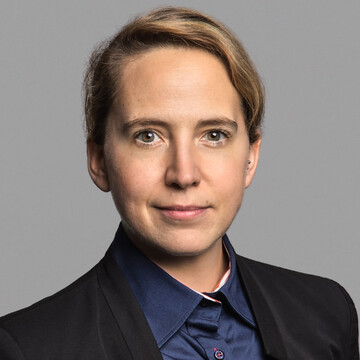
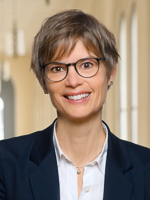
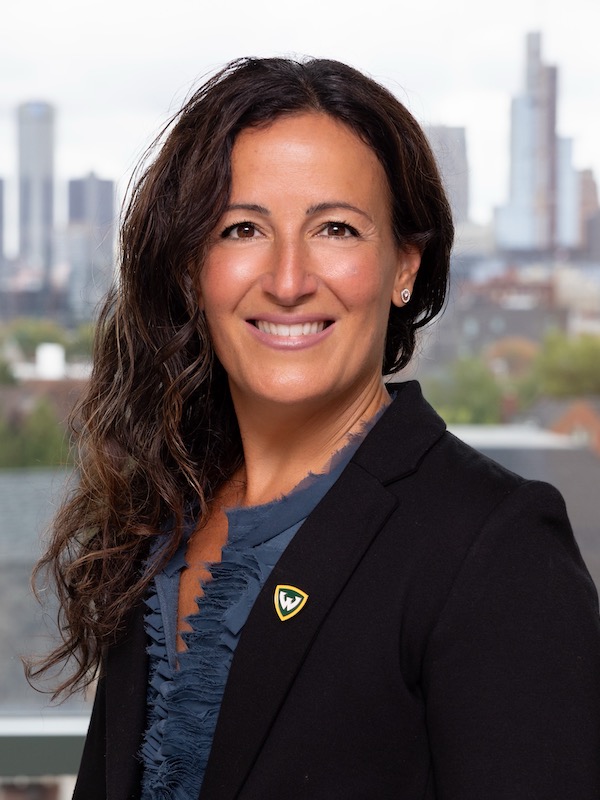
Anna Leiler is a Lecturer in the Department of Psychology and Social Work at Mid Sweden University in Östersund. Her research focuses on refugee mental health, trauma psychology, and cross-cultural psychiatry, particularly examining suicidal ideation, cognitive load during traumatic memory reconsolidation, and psychoeducational interventions. Current Projects : AMIR-Intervention, CoRe (Cognitive load during Reconsolidation), RooT (Refugee mental health over Time), Feeling in your own words Finished Projects : Refugee Health Screener, Teaching Recovery Techniques (TRT) Her recent publications explore prolonged grief in refugee populations, pandemic-related mental health trends, validation of screening tools, and the feasibility of trauma interventions. She also presented work on linguistic insecurity in clinical settings and Sámi cultural idioms of distress. Anna is actively involved in developing scalable mental health solutions for displaced populations, integrating epidemiological data with clinical practice.
Mag. phil. Mag. art. Dr. phil. Stephan Hametner is a Professor at PH-OÖ (University College of Teacher Education Upper Austria) since 2014, specializing in Subject Didactics for General Music Education across elementary and secondary levels. His expertise spans Systemic-constructivist didactics Empirical research in music education Curriculum development Academic supervision Organizational development Academic background highlights include: PhD in Music Education/Pedagogy (2004, magna cum laude ) Diploma in Music Education (University of Music and Performing Arts Vienna & University of Vienna, 2000 magna cum laude ) Diploma in Rhythmics (1996 magna cum laude ) Research focuses on systemic-constructivist music pedagogy , with key contributions in Didactic frameworks for music interpretation Empirical validation of teaching methods Integration of movement and music Subject-oriented educational theory His publications analyze music's role in cognitive development and pedagogical innovation, emphasizing experiential learning. He also contributes to media education through 50 ethnomusicological radio programs (Radio Orange 94.0, 2000-2005) Interactive educational CD-ROMs Academic case studies Active in international collaborations, he serves as expert for Bern University of the Arts and contributes to the Rhythmic Expositur Biel project. Current projects include reception-aesthetic film analysis for teacher training and music identity development in educational settings.
Matthias Barth serves as President of Eberswalde University of Sustainable Development (HNEE), a specialized German institution focused on sustainability education and research. Holding the academic rank of Professor, he leads institutional development while maintaining active research engagement in sustainability science and education. His research interests focus on Education for Sustainable Development (ESD), higher education transformation, transdisciplinary learning approaches, and sustainability competencies development. Barth has pioneered institutional frameworks for embedding sustainability in university curricula and has significantly contributed to national and international ESD policy development. Barth's publication record demonstrates consistent focus on sustainability education methodologies, teacher training for ESD, curriculum transformation, and institutional change processes. His work spans theoretical frameworks, empirical studies on educational effectiveness, and practical implementation guides for universities seeking to integrate sustainability principles across academic programs. Stellvertretender Vorsitzender der Brandenburgischen Landeskonferenz der Hochschulpräsidentinnen und -präsidenten (BLHP) since 2024 Mitglied im wissenschaftlichen Ausschuss „Zukunftsperspektiven akademischer Mobilität" at DAAD since 2024 Mitglied der ständigen Kommission "Hochschulsystem und Organisation" of HRK since 2024 Mitglied in der Präsidiums-AG Nachhaltigkeit of HRK since 2024 Mitglied im wissenschaftlichen Beirat des Promotionskollegs Sustainability Science at HS Darmstadt since 2023 Mitglied des Advisory Boards Copernicus Alliance since 2016 As an influential figure in sustainability education, Barth regularly delivers keynote addresses at major international conferences on sustainability, digital transformation, and educational innovation. His leadership extends to shaping national policy through committee memberships and advisory roles with German federal ministries and international organizations.
Dr. Nele Groß is Professor for Educational Science, especially Educational Management and Quality Development at Leuphana University of Lüneburg. Her research focuses on educational leadership, empirical educational research, and university science management with special emphasis on inclusion, evaluation, resilience, student health, and transfer research. Her research interests span across educational management and quality development, with particular focus on school leadership challenges, burnout prevention among educators, and the integration of artificial intelligence in educational settings. She has conducted significant research on the relationship between effort-reward imbalance and burnout among school leaders, as well as on AI implementation in both school and higher education contexts. Her recent publications and presentations reveal a strong focus on contemporary educational challenges, particularly the mental health of school leaders and the transformative potential of artificial intelligence in education. Her work demonstrates a consistent pattern of addressing critical issues in educational leadership and exploring innovative approaches to teaching and learning through technology. Dr. Groß actively collaborates with researchers like Dana-Kristin Mah and Marcus Pietsch on projects related to AI in education and school leadership challenges. Her work has received media attention, particularly regarding burnout risks among school principals and the potential of AI to create more equal educational opportunities.
Patrick Blumschein serves as Academic Director and Head of ZELF (Center for Teacher Training) at the Freiburg University of Teacher Education, where he also leads the Department of Educational Research and School Pedagogy within Faculty 1 (Institute of Educational Science). He holds a doctorate from the University of Freiburg (2003) and has been with the PH Freiburg since 2011, serving as Head of ZELF since 2015. His research focuses on educational science, instructional design, blended learning, and teacher training. Blumschein designs continuing education courses for teachers in Baden-Württemberg, making new research findings accessible through ZELF's quality framework-based courses that offer ECTS credits and can contribute to Master of Arts degrees through the MAPLE concept. His recent publications demonstrate a strong focus on hybrid learning environments, model-based instructional approaches, and the integration of technology in education. His work spans theoretical foundations of instructional design to practical applications in teacher training and corporate education settings. Blumschein actively collaborates with external partners, including Daimler AG since 2016, conducting educational needs analyses and developing prototype learning environments, particularly exploring virtual reality applications for continuing education. Since 2015: Head of Centre for Teacher Training at PH Freiburg Since 2011: Institute of Educational Science at PH Freiburg 1998-2011: Research Associate at University of Freiburg 2003: Doctorate at University of Freiburg 1997: Master's degree in Sociology, History and Educational Science His work on projects like MUSE (Master for Teaching and School Development) and MAPLE demonstrates his commitment to flexible, research-based teacher education that accommodates working professionals while maintaining academic rigor.
Joke Torbeyns is a Senior Lecturer at the Faculty of Psychology and Educational Sciences, KU Leuven, within the department of Instructional Psychology and Technology. She serves as Head of the Instructional Psychology and Technology unit and contributes to research and education in early childhood mathematics and language development. Chair of Educational Sciences (OE) Member of LC&Y (KU Leuven Institute for Child and Youth) Member of LILI (Interdisciplinary Language Institute) Member of LIVO (Institute for Educational Research) Her research focuses on shaping educational environments for young children using educational technology, teacher competencies in early mathematics, and multilingual development. She leads projects such as Stimulating the mathematical development of Ecuadorian preschool teachers and Interactive book reading for mathematical development . Her recent work explores patterning competences, problem-solving behaviors, and math-language links in preschoolers. Torbeyns has published extensively in 2025, including studies on the PROSPER instrument for problem-solving assessment and longitudinal analyses of patterning errors. She frequently presents at the European Association for Research on Learning and Instruction (EARLI) and Onderwijsresearchdagen (ORD) conferences. She holds memberships in the PPW Faculty Council (ZAP representative), POC Bachelor Onderwijskunde, and other academic networks. Her teaching roles include courses like Designing Learning Environments and Mathematics and Language Education .
Dr. Christian Rauschenberg serves as a Researcher and Postdoctoral Fellow at the Zentralinstitut für Seelische Gesundheit (ZI) in Mannheim, Germany, within the Department of Public Mental Health and the Research Group Ecological Translation in Public Mental Health Provision (E.T.) . His work focuses on translating mental health research into equitable clinical practice through ecological approaches. His research spans critical areas in contemporary psychiatry: Investigating cognitive mechanisms like "jumping to conclusions" biases in psychosis progression Developing digital mental health interventions for vulnerable populations during crises Analyzing additive impacts of environmental and familial risk factors on subthreshold psychosis Advancing health equity frameworks for public mental health interventions His publication record demonstrates strong engagement with high-impact journals including JAMA Psychiatry , Psychological Medicine , and Schizophrenia Bulletin , with recent work emphasizing pandemic-responsive mental healthcare solutions and digital therapeutics. Current research trajectories indicate growing focus on scalable interventions for marginalized populations and ecological validity in mental health service delivery. Rauschenberg maintains active collaborations with international research consortia including NEMESIS-2, with methodological strengths in longitudinal epidemiological analysis and rapid evidence synthesis. His work consistently bridges clinical psychiatry, public health implementation science, and digital innovation.
Ari Huhta is a Professor at the Centre for Applied Language Studies at the University of Jyväskylä. His research focuses on applied linguistics , language assessment , and second language acquisition , with particular emphasis on diagnostic and dynamic assessment frameworks in foreign language education. Active member of the Applied Language Studies and Language Campus follow-up groups Collaborates with institutions like the Finnish National Agency for Education and Research Council of Finland His work integrates language technology and educational evaluation to innovate assessments for L2 writing , reading , and speaking . Recent projects include AI-driven diagnostic tools and automatic speaking evaluation systems. Key collaborations span projects such as Dynamic Diagnostic Language Assessment and ‘Broken Finnish’ , examining societal gatekeeping in language proficiency. His publications address assessment validity , stakeholder involvement , and technological mediation in learning processes.
James McCracken is a tenured Professor of Psychiatry and Biobehavioral Sciences at UCLA's David Geffen School of Medicine. As Director of the Division of Child and Adolescent Psychiatry at the Semel Institute for Neuroscience and Human Behavior, he leads the NIMH-funded Research Center 'Translational Research to Enhance Cognitive Control' focusing on novel treatments for cognitive deficits in child psychiatry. His research spans pharmacogenomics, neurodevelopmental disorders (ASD, ADHD, OCD), and autonomic neurophysiology. Key affiliations: Center for Autism Research and Treatment (CART), ADHD Brain Research Institute, Society for Neuroscience Research themes: Pharmacologic interventions for neurodevelopmental disorders, white matter sex differences, EEG biomarkers, and genome-wide association studies Leadership roles: Principal Investigator for multiple NIMH grants, editorial board member for the Journal of Child and Adolescent Psychopharmacology His recent publications (2023-2025) emphasize precision medicine in ASD, OCD genetics, and pupillary response as a neurophysiological marker. Awards include the APA Young Psychiatrist Research Award and listings in Best Doctors and Top Doctors databases. Scientific Awards American Psychiatric Association Young Psychiatrist Research Award Best Doctors in America America's Top Doctors Publications Over 150 peer-reviewed articles across child psychiatry Leading research in pharmacogenomics and neuroimaging
Prof. Dr. Katrin Lohrmann holds the Chair of Primary School Education and Didactics at the Department of Education and Rehabilitation within LMU Munich's Faculty of Psychology and Education. Her work spans pedagogical theory, empirical classroom research, and instructional design for primary education. PhD from University of Bayreuth (2007) W3 Professor at Freiburg University of Education (2010-2019) Research at Northwestern University (2017) Her research focuses on learning emotions (particularly boredom), conceptual development in science education , and comparative pedagogical methods . She investigates how contextual and decontextualization processes affect knowledge transfer, with recent work examining pandemic impacts on self-regulated learning and student well-being . Key trends in her 15 most recent publications include: analogical reasoning in physics education, gender-specific learning patterns , needs-support frameworks in classrooms, and collaborative lesson planning strategies. Her work bridges empirical research with practical didactic implementations. Teaching Award 2010/2011 (Freiburg University of Education) Bayreuth City Prize for Young Scientists (2007) Democratic Action Program Award for 'Children Have Rights!' (2003) Primary School Working Group Award for Democracy Learning (2002) As academic chairholder, she leads research initiatives on basic education and instructional quality , while serving on editorial boards and scientific advisory committees. Her methodological expertise combines classroom observations with person-centered approaches to student profiling.
Eric Mounier is a Lecturer in Mathematics Teaching at Université Paris-Est Créteil Val de Marne (UPEC), affiliated with the André Revuz Didactics Laboratory (LDAR-EA 4434). His academic work focuses on mathematics education research, particularly in primary school settings and teacher training. Dr. Mounier's research interests include: Understanding factors in resource adoption by primary mathematics teachers Studying teacher practices, particularly in the closing phase of teaching activities Investigating knowledge of cycle 2 pupils (6-9 years) concerning numeration Developing assessments for number knowledge (numeration, calculations, problems) Analyzing mathematics textbooks for primary schools, with special focus on the "Singapore Method" His publication record from 2015-2020 reveals a consistent research trajectory examining the relationship between spoken and written numeration systems, assessment design for early mathematical learning, and the complex relationship between teachers and educational resources. Mounier frequently collaborates with researchers including Nadine Grapin, Maryvonne Priolet, and Nathalie Pfaff, producing studies that bridge theoretical research with practical classroom applications in French primary schools. Mounier has led significant research projects including: "Appel d'offre ESPE" (2008-2014): Study of the viability of a new teaching approach for written numerical notation in CP (first grade) LéA EvalNumC2 (2016-2019): Evaluation of numerical knowledge of cycle 2 students, conducted in REP and REP+ schools in Montreuil with 20 primary school teachers and 4 researchers He served as responsible for the national seminar of mathematics didactics ARDM from 2013-2015, organizing 3 national seminars annually in Paris and other regions. Mounier also contributes to academic discourse as a scientific reviewer for journals including "Spirale" (research journal in education) and "Rmé" (mathematics journal for school).
Tarja Tuononen is a University Lecturer at the Department of Education, Faculty of Education, University of Helsinki, and a Docent in her field. She serves as a Supervisor for the Doctoral Programme in Cognition, Learning, Instruction and Communication and is affiliated with The Centre for University Teaching and Learning (HYPE). Faculty of Education, University of Helsinki Department of Education The Centre for University Teaching and Learning (HYPE) Her research focuses on students' employability, transitions from university to working life, working during studies, and the teaching of generic academic skills. She investigates teachers' conceptions of these skills and their alignment with pedagogical practices, informed by collaborations in educational sciences and psychology. Recent publications highlight her work in educational assessment, critical thinking, sustainability, and equity. She has contributed to 45 peer-reviewed outputs and led 8 research projects, including studies on distance learning during the pandemic and skill transfer to the labor market. Alfred Kordelin Foundation (2016) Emil Aaltonen Foundation (2014) Emil Aaltonen Foundation (2013) Tarja supervises doctoral and master’s theses and engages in international academic visits. Her projects address employability, learning outcomes, and inclusive education, reflecting her commitment to advancing pedagogical practices and institutional change.
Victoria Ledford is an Assistant Professor in the School of Communication and Journalism at Auburn University, where she teaches courses in health communication, stigma, quantitative research methods, and argumentation. Her research centers around health communication, persuasion, and quantitative research methods, with a specific focus on creating health messages that persuade people to enact healthy behaviors without stigmatizing them. Dr. Ledford's educational background includes: Ph.D. from University of Maryland, College Park M.A. from Marshall University B.A. from Marshall University Her primary research interests focus on how communication can reduce stigma while promoting health behaviors, particularly examining opioid use disorders, autism spectrum disorders, and LGBTQ+ health issues. She investigates the cognitive and affective processes involved in persuasion and decision-making, with special attention to how stigmatizing messages influence public perceptions and behaviors. Dr. Ledford employs primarily survey and experimental methods in her research, often collaborating with qualitative researchers to develop comprehensive understandings of communication phenomena. Analysis of Dr. Ledford's publication record reveals a consistent trajectory focused on stigma reduction across multiple health contexts. Her work spans opioid crisis communication, autism inclusion in educational settings, and LGBTQ+ health during public health emergencies like the COVID-19 pandemic. A notable pattern is her application of the Model of Stigma Communication across diverse contexts, demonstrating theoretical innovation and practical relevance. Her research consistently bridges theoretical communication frameworks with real-world health challenges, particularly those affecting marginalized communities. Dr. Ledford has published her research in prominent communication journals including Health Communication , Communication Education , Communication Teacher , and the Basic Course Communication Annual . Her work appears in both specialized communication outlets and interdisciplinary health journals, demonstrating the cross-disciplinary impact of her research. As an educator, Dr. Ledford teaches COMM 3510: Research in Human Communication, COMM 4480: Health Promotion Message and Design, COMM 5470: Health Communication, COMM 7020: Quantitative Methods of Communication Research, and COMM 7970: Stigma, Communication and Identity. She previously served as Director of K-12 Research and Professional Services at Hanover Research and taught communication courses at both the University of Maryland and Marshall University before joining Auburn University.
Rosanne DiZazzo-Miller, Ph.D., OTRL, BCG, CDP, FMiOTA, FAOTA, is a Professor in the Department of Occupational Therapy at Wayne State University's Eugene Applebaum College of Pharmacy and Health Sciences. She holds a Ph.D. and Dr.OT from Nova Southeastern University, an MOT from Eastern Michigan University, and a BS in Exercise Science from Adrian College. Dr. DiZazzo-Miller directs the DevOTed Lab, which focuses on inclusive training for dementia caregivers and patient advocacy. Her research centers on dementia care, family caregiver training, quality of life improvements, and innovative educational methods like human patient simulation. With expertise spanning gerontology, instructional design, and occupational therapy education, she develops interventions to support caregivers and patients through evidence-based resources. Her publications show strong trends in gerontology, caregiver interventions, and occupational therapy pedagogy. Recent work emphasizes technology-assisted therapies, cross-cultural health barriers, and animal-assisted interventions in education. She consistently explores dyadic (patient-caregiver) health outcomes and sustainable rehabilitation models. Awards & Honors: Board Certification in Gerontology (2024) AOTA Fellow for Outstanding Clinician, Scholar, Mentor (2023) Excellence in Teaching Award (2023, 2008) Academic Leadership Academy Fellowship (2019) President's Award for Excellence in Teaching (2015-2016) She has secured over $3M in grants, including NIH funding for smart-home assistive robotics in dementia care and Michigan Health Fund support for African American dementia caregivers. As Director of the DevOTed Lab, she oversees pro-bono clinics and research initiatives focused on ADL training and caregiver injury prevention.
Susan G. Campbell is a Senior Lecturer at the University of Maryland, splitting her time between the College of Information Studies (iSchool) and the Applied Research Laboratory for Intelligence and Security (ARLIS). Her work focuses on cognitive skills for cybersecurity performance, human-technology interaction, and data privacy. She designs assessments for cyber aptitude and talent, with notable contributions to frameworks like Cyber Aptitude and Talent Assessment (CATA) for U.S. Special Operations Command (SOCOM). Her expertise spans cybersecurity education, cognitive engineering, and human-centered technology design. She leads projects such as Augmenting selection exercises for SOCOM and There is no “AI” in teams , exploring AI-human collaboration. Dr. Campbell’s research also addresses language aptitude measurement through tools like DLAB2 and Hi-LAB, emphasizing cognitive factors in second language acquisition. She is affiliated with the Organizational Teams & Technology Society (OTTRS) and Human-Computer Interaction Lab (HCIL), where she investigates sociotechnical systems and team cognition. Her work bridges cognitive science, information science, and applied research for real-world security challenges.