Karl Fryxell is an Associate Professor at George Mason University, affiliated with the School of Systems Biology (Research Faculty), School of Systems Biology (Instructional Faculty), and the Neuroscience Program (Research Faculty). His research spans genetics, neuroscience, and evolutionary biology. His work includes studies on nicotine addiction mechanisms using animal models, dopamine receptor evolution, cognitive aging, and genetic disorders like CADASIL. He has contributed to genome assembly projects for endangered species and explored molecular pathways in neurodevelopmental processes. Key affiliations include the Institute for Biohealth Innovation and the Krasnow Institute for Advanced Study. His publications reflect expertise in neurochemistry, gene regulation, and evolutionary genetics.
Dr. Scott Tenenbaum is a Professor at the University at Albany's College of Nanotechnology, Science, and Engineering, with joint appointments in the Department of Nanoscale Science & Engineering and The RNA Institute. His research focuses on RNA biology and nanotechnology, particularly post-transcriptional gene regulation and development of RNA-based therapeutics. He holds a PhD in Microbiology and Immunology from Tulane University and completed postdoctoral training at Duke University Medical Center. Research interests span: RNA-binding protein networks and regulatory codes Nanoscale immunoassay platforms Antiviral therapeutic technologies Bioinformatics approaches for genomics Cancer diagnostics and therapeutics Publication analysis reveals strong emphasis on RNA structural biology, single-molecule biophysics, and computational approaches to gene regulation. Recent work demonstrates increasing focus on clinical applications including cancer metastasis diagnostics and engineered RNA therapeutics. Awards include: Excellence in Research Award (UAlbany) Rising Star Award (SUNY Research Foundation) Golden Apple Teaching Award Robert & Barbara Bell Science of Cancer Award James A. Wilson Fellow Award Leads research on nano-based technology development and collaborates with biotechnology startup HocusLocus Inc. to commercialize sxRNA platform technology.
Anouk Willemsen is Assistant Professor of Microbial Ecology at the University of Vienna, leading research on the evolutionary genetics of giant viruses (Nucleocytoviricota) through ERC Starting Grant support. Her group investigates viral adaptation mechanisms, codon usage evolution, and host-virus coevolution using genomics, experimental approaches, and fluorescence in situ hybridization techniques. Key publications describe defensive symbioses protecting amoebae from viral infection, the discovery of Naegleria-infecting giant viruses, and widespread codon usage mismatches between viruses and hosts. Current projects explore viral gene transfer dynamics and the role of mobile genetic elements in viral ecology. Willemsen holds editorial roles in virology journals and coordinates research partnerships with Japanese and European laboratories studying viral diversity. She received the Humboldt Research Fellowship and Berlin Prize for her work on viral evolution and serves on advisory boards for academic book series in microbiology.
Bin Wu is an Associate Professor in the Department of Biophysics at the Johns Hopkins University School of Medicine. His research focuses on visualizing and quantifying biological processes in real time using single-molecule imaging and spectroscopy technologies in live cells, combined with theoretical modeling. He leads an active lab studying gene expression regulation, particularly the dynamics of RNA molecules during transcription, translation, trafficking, and decay. Research Interests: Single-molecule imaging of RNA and protein dynamics Real-time visualization of translation using SINAPS (Single molecule imaging of nascent peptides) Regulation of gene expression in neurons, including dendritic and axonal translation Development of optical tools to manipulate gene expression spatially and temporally Understanding translational bursting, ribosome stalling, and mRNA decay mechanisms His recent publications reveal a strong trend in probing fundamental questions in gene expression using cutting-edge imaging techniques. Work spans from basic biophysical principles of translation to disease-relevant models such as ALS/FTD involving C9ORF72 repeat expansions. A key innovation is the development of SINAPS, enabling direct observation of translation dynamics at the single mRNA level. Scientific Awards: No formal awards listed in the provided text. Advising and Grants: Actively mentors multiple graduate students, master’s students, undergraduates, and research specialists. Lab members include Leslie Watkins, Blake Nelson, Mulin Li, and others working on RNA biology and imaging. Given the high-impact publications in journals like Science , Nature Communications , and Molecular Cell , it is likely that Dr. Wu holds external research funding, though specific grants are not mentioned. Labs and Teams: Dr. Wu leads a multidisciplinary team integrating physics, biology, and computational modeling. The lab is based at the Rangos Building, Room 454, and collaborates with experts in neuroscience, genomics, and biophysics. The team develops and applies novel optical methods to address previously intractable biological questions in live systems.
Tomas Strucko is a researcher in the Department of Biotechnology and Biomedicine at the Technical University of Denmark (DTU), specializing in synthetic biology and metabolic engineering with a focus on yeast species including Saccharomyces cerevisiae and Komagataella phaffii . He develops advanced genetic tools for efficient strain engineering, particularly CRISPR-Cas systems. Academic employee at DTU Member of Synthetic Biology section Research Interests: Design and optimization of microbial cell factories Development of CRISPR-based genome editing platforms Metabolic pathway engineering for chemical production High-throughput strain construction techniques Comparative yeast genetics Laboratory evolution for metabolic adaptation Notable Contributions: Co-developed CRI-SPA (CRISPR-based strain production automation), created oligonucleotide-mediated editing systems for Komagataella phaffii, and pioneered gene amplification techniques through DNA repair mechanisms. His work has been cited 15 times across 5 publications in 2023-2024. Students: Supervised PhD candidate Porcayo Loza in yeast-based algal biomass conversion projects. Project Affiliations: Engineered yeast strains for bulk chemicals from algal biomass (2015-2022) Designer yeast library for metabolic engineering (2014-2016) Vanillin production cell factory development (2010-2014)
Zemer Gitai is the Edwin Grant Conklin Professor of Biology and Professor of Molecular Biology at Princeton University, where he leads the Gitai Lab in the Department of Molecular Biology. His research focuses on the fundamental mechanisms of bacterial cell biology, including cytoskeletal dynamics, cellular polarity, and morphogenesis. Institution: Princeton University Department: Department of Molecular Biology Lab: Gitai Lab Contact: zgitai@princeton.edu Gitai’s research explores how bacteria achieve complex subcellular organization and how these processes contribute to pathogenesis and antibiotic resistance. His lab uses interdisciplinary methods including genetics, biochemistry, live-cell imaging, genomics, and computational modeling to study bacterial self-organization, microbe-host interactions, and novel antibiotic discovery. A central theme is understanding how bacterial cytoskeletal proteins like MreB regulate cell shape and chromosome segregation. His recent publications (2022–2024) reveal trends in mechanosensing , trans-kingdom signaling , and transgenerational epigenetic inheritance mediated by bacterial small RNAs. His work spans model organisms like Caulobacter crescentus , Pseudomonas aeruginosa , and C. elegans , uncovering how bacteria sense surface stiffness, regulate nitrogen metabolism to influence host behavior, and dynamically control pilus-based motility. Scientific honors include: NIH Pioneer Award (2015) Gitai actively mentors students and postdoctoral researchers, with several advisees contributing to high-impact publications. His lab has developed innovative tools such as MitoRiboSeq for monitoring mitochondrial translation and M3-Seq for single-cell microbial transcriptomics. He also investigates how antibiotics can be used to probe bacterial cell biology and combat resistance through anti-virulence strategies. The Gitai Lab fosters collaborative research with Princeton colleagues across disciplines.
Kristian Baker, PhD is an Associate Professor in the Department of Genetics and Genome Sciences at Case Western Reserve University School of Medicine. She is also a Member of the Center for RNA Science and Therapeutics at the university. Dr. Baker serves the greater RNA scientific community as CEO of the international RNA Society. Dr. Baker received her PhD in Genetics from the University of British Columbia (UBC) in Vancouver, Canada in 2002. She completed post-doctoral training at the Howard Hughes Medical Institute at the University of Arizona under the mentorship of Dr. Roy Parker, a pioneer in the study of RNA regulation and metabolism. Dr. Baker's research focuses on the molecular mechanisms that regulate the interplay between mRNA translation and degradation, and how RNA quality control is maintained in the cell. She is particularly interested in understanding the mechanisms underlying nonsense-mediated mRNA decay (NMD) and how the cell recognizes and rapidly destroys aberrant transcripts. Her lab also investigates the identification and function of long noncoding RNAs. More recently, her work has expanded into transgender health research, exploring topics such as hormone therapy, mental health, and healthcare access for sexual and gender minority populations. Dr. Baker's publication record demonstrates a significant evolution from fundamental RNA biology to applied research in transgender health. Her early work established her expertise in RNA quality control mechanisms, particularly nonsense-mediated mRNA decay, while her more recent publications reflect a growing focus on health equity, transgender medicine, and inclusive research practices. This interdisciplinary trajectory highlights her ability to bridge basic science with pressing clinical and societal issues. CEO of the international RNA Society Outside of the lab, Dr. Baker is an engaged mentor and enthusiastic educator. She has made significant contributions to both basic RNA biology and transgender health research, demonstrating a commitment to advancing scientific knowledge while addressing important health disparities. Her leadership in the RNA Society indicates her active role in shaping the direction of RNA research globally. Dr. Baker leads a research laboratory that investigates fundamental mechanisms of RNA regulation while also contributing to the growing field of transgender health research. Her dual focus demonstrates an interdisciplinary approach that bridges basic molecular biology with clinical and public health applications.
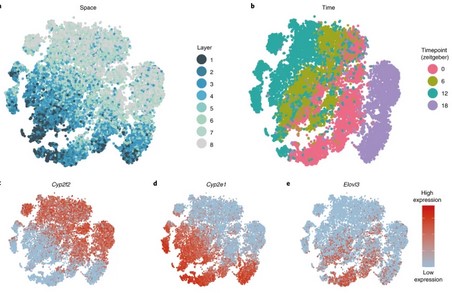
Prof. Felix Naef is a Full Professor at EPFL's School of Life Sciences (SV), leading the Laboratory of Computational and Systems Biology within the Institute of Bioengineering (IBI). His research focuses on quantitative systems biology, integrating theoretical, computational, and experimental approaches to study circadian rhythms, gene regulation, and cellular dynamics. He holds additional roles in teaching and administration, including membership in the Doctoral Program Committee for Computational and Quantitative Biology and the CDS Office. Education: PhD in Physics, EPFL (2000) Postdoctoral training at Rockefeller University (2000-2004) Research Interests: Circadian gene regulatory networks and liver chronobiology Single-cell analysis of transcriptional bursting and noise Systems biology of developmental patterning and metabolic pathways Integration of multi-omics data to model biological oscillators Key Contributions: Pioneered methods to infer circadian time from omics data Discovered space-time interactions in liver zonation and gene expression Advanced understanding of ribosome dynamics and translation elongation Awards: EMBO Member (2020) SNSF Sinergia Grant (2022) Advising & Grants: Supervised over 30 PhD students and postdocs Funded by SNSF, EU Horizon 2020, and industry collaborations Laboratory: The Naef Lab is part of EPFL's IBI, collaborating globally to address fundamental questions in systems biology and chronobiology.
Dr. Lara Herrero is an Associate Professor at Griffith University's Institute for Biomedicine and Glycomics and NHMRC Research Fellow, specializing in glycobiology of vector-borne diseases. Medically and scientifically trained, her research focuses on alphavirus-induced arthritis and immunomodulatory therapies, including the repurposing of pentosan polysulfate for viral arthritis treatment. Research examines: Carbohydrate-virus-cell interactions in pathogenesis Mouse models of alphaviral disease Glycotherapeutic strategies for musculoskeletal infections TRIF-dependent antiviral responses Long COVID immune dysregulation Notably developed the first treatment for alphaviral arthritis through drug repurposing, now in clinical use via Paradigm Biopharmaceuticals. Awarded the 2023 Prime Minister's Prize for Science (New Innovators) and named Griffith University's top contributor to The Conversation with 5.4M+ article reads. Leads projects on ME/CFS/Long COVID immunology funded by Stafford Fox Foundation ($6.4M) and NHMRC synergy grants. Mentors doctoral candidates in virology and immunology.
Professor Adam Eyre-Walker is a distinguished evolutionary geneticist at the University of Sussex's School of Life Sciences. His academic rank is Professor of Evolutionary Genetics (Ecology and Evolution), and he has been affiliated with the university since 1997 as a Royal Society University Research Fellow. His research focuses on mutation rates, molecular evolution, and the interplay between natural selection and genetic drift. Notably, he has contributed groundbreaking work on the distribution of fitness effects of mutations, the rate of adaptive evolution, and mitochondrial genetics. Eyre-Walker holds a PhD from the University of Edinburgh (1992) and completed postdoctoral research at Rutgers University. His accolades include the Genetics Society’s Balfour Prize (2002), the European Society of Evolutionary Biology President’s Prize (2012), and election as a Fellow of the Royal Society (2020). He currently leads a research group with two PhD students (Lillith Zijmers and Loveday Lewin) and one postdoc (Ying Chen Eyre-Walker). His research interests span adaptive evolution, deleterious mutations, variation in mutation rates, base composition evolution, and the sociology of science. He has published over 193 peer-reviewed articles, including influential studies on mutation rate dynamics, mitochondrial diversity, and transposable element evolution. Eyre-Walker also serves as Editor-in-Chief of Genome Biology and Evolution and has secured grants from the BBSRC, European Union, and Swiss National Science Foundation, focusing on topics like bacterial evolution and genomic analysis methods. His work bridges theoretical and empirical approaches, addressing fundamental questions in evolutionary biology, such as the balance between adaptive and neutral evolution and the implications of mutation load in humans. The Eyre-Walker Lab collaborates widely, emphasizing interdisciplinary approaches to understanding genetic mechanisms and their evolutionary consequences.
Julio Cesar Ignacio Espinoza is an Assistant Professor of Bioinformatics and Data Analytics at the Riggs School of Life Sciences, Keck Graduate Institute (KGI), part of the Claremont Colleges. He holds a PhD in Molecular and Cellular Biology from the University of Arizona, where he was supported by a Fulbright Fellowship. His research focuses on microbial and viral genomics, leveraging 'omics technologies and data science to study virus-host interactions in marine and environmental contexts. Before academia, he worked in startups, including Curative (establishing bioinformatics infrastructure for SARS-CoV-2 sequencing) and FormBio (developing NGS analysis software). His postdoctoral training at USC utilized the USC-Provost Fellowship to study marine viral evolution. His work spans bioinformatics, genomics, and virology, with notable contributions to viral discovery, evolutionary dynamics, and cloud computing applications in biology. Key awards include the Fulbright Fellowship and USC-Provost Fellowship. His lab at KGI integrates metagenomics, proteomics, and deep learning to model viral ecosystems.
Carl Marcus Torbjörn Wäneskog is a Postdoctoral Researcher at the Novo Nordisk Foundation Center for Biosustainability, Technical University of Denmark (DTU), specializing in synthetic biology tools for yeast engineering. His research bridges computational and experimental approaches to solve challenges in microbial cell factory development. His primary research domains include: Synthetic Biology and Genetic Engineering Yeast and Bacterial Cell Factory Development Non-optimal Codon Usage and tRNA Optimization High-Throughput Screening Methodologies Dual-Species Protein Expression Systems Dr. Wäneskog's work demonstrates strong interdisciplinary integration between computer science and molecular biology, particularly in developing AI-assisted high-throughput methods for genetic analysis. His research addresses critical bottlenecks in industrial biotechnology related to protein expression across different microbial hosts. His scientific contributions have been published in leading journals including mBio and Biotechnology Progress, with his work showing significant interdisciplinary reach across synthetic biology, computer science, and immunology/microbiology domains as reflected in his research fingerprint metrics. Dr. Wäneskog actively collaborates with researchers across multiple institutions, as evidenced by his co-authorship with scientists including Hoch-Schneider, Garg, Kronborg Cantalapiedra, and Jensen. His work has garnered attention from both academic researchers and industry professionals in the synthetic biology field.
Laurence Hurst is a Professor in the Department of Life Sciences at the University of Bath , where he leads research at the Milner Centre for Evolution and Centre for Mathematical Biology . His work bridges mathematical, bioinformatic, and experimental approaches to evolutionary genetics. Research Focus : Selection on synonymous mutations, gene order evolution, genomic redundancy, codon usage bias, and long non-coding RNA dynamics. Key Collaborations : Projects funded by The Evolution Education Trust, The Royal Society, MRC, and Biotechnology and Biological Sciences Research Council (BBSRC). Methodologies : Integrates systems biology, computational genomics, and experimental validation. SDG Contributions : Work indirectly supports UN Sustainable Development Goals through advancing genetic understanding for health and environmental applications. Notable Trends in Publications : Recent articles examine protein evolution mechanisms, retroviral co-option in human embryogenesis, transgene design optimization, and bacterial adaptation via epistasis. These studies highlight interdisciplinary applications of genetics, molecular biology, and computational methods. Laboratory & Affiliations : Affiliated with the Milner Centre for Evolution and Centre for Mathematical Biology, focusing on evolutionary dynamics and genomic systems biology.
PD Dr. Jürgen Lassak is an active faculty member at Ludwig Maximilian University of Munich (LMU), affiliated with the Department of Microbiology within the Graduate School Life Science Munich (LSM). His research program focuses on fundamental mechanisms of bacterial physiology, with particular emphasis on protein translation regulation and specialized metabolic pathways. Dr. Lassak's primary research interests center on bacterial translation mechanisms , especially the role of elongation factor EF-P in resolving ribosome stalling at polyproline sequences, and the metabolism of non-canonical compounds such as Maillard reaction products (e.g., Nε-carboxymethyllysine). His work integrates molecular genetics , biochemical analysis , and structural biology to investigate post-translational modifications, ribosome function, and bacterial adaptation to metabolic stressors. Key themes include proline codon usage, enzyme catalysis in detoxification pathways, and regulatory networks controlling specialized metabolism. Analysis of his 15 most recent publications (2020-2024) reveals consistent focus on translation elongation mechanisms and bacterial metabolism of advanced glycation end-products. His research demonstrates how bacteria exploit unconventional nutrient sources through specialized enzymes like decarboxylases and transaminases, while his work on EF-P and paralogs provides fundamental insights into translational regulation. The publications span high-impact journals covering molecular microbiology, biochemistry, and bacterial genetics. As a core faculty member of LSM, Dr. Lassak contributes to doctoral education in life sciences at LMU. His laboratory employs genetic, biochemical, and structural approaches to address questions in bacterial physiology, with implications for understanding microbial adaptation and potential biotechnological applications. Current research directions include characterization of novel protein modifications and metabolic pathways in Escherichia coli and Pseudomonas species.
Metodi Traykov is an Associate Professor at the Department of Informatics, New Bulgarian University (NBU). He holds a PhD in Informatics and Computer Science, having completed his doctoral thesis on Mathematical Models and Algorithms for Predicting the Spatial Structure of Proteins at South-West University 'Neofit Rilski'. He has been a faculty member at NBU since 2019 and previously served as an Assistant at South-West University from 2013 to 2018. Education: Bachelor's and Master's in Informatics, South-West University 'Neofit Rilski' (2012–2013) PhD in Informatics, South-West University 'Neofit Rilski' (2017) Teaching: Leads courses in Programming, Object-Oriented Programming, Data Structures, Java, and Algorithms at NBU Guest lectures at American University in Bulgaria on Website Development, C# Programming, and Python Research: Focuses on Bioinformatics, protein structure prediction, optimization algorithms, and genetic code properties Developed mathematical models for protein folding and virtual reality applications Collaborates with researchers like Ivan Trenchev, Rossen Mavrevski, and Nikolina Pencheva Recent Publications: Explores computational methods in protein structure analysis and optimization algorithms Interdisciplinary work in virtual reality, cultural heritage preservation, and biostatistics