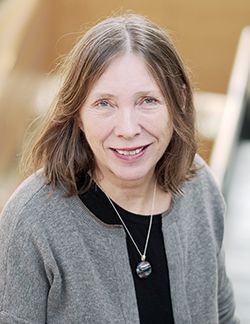
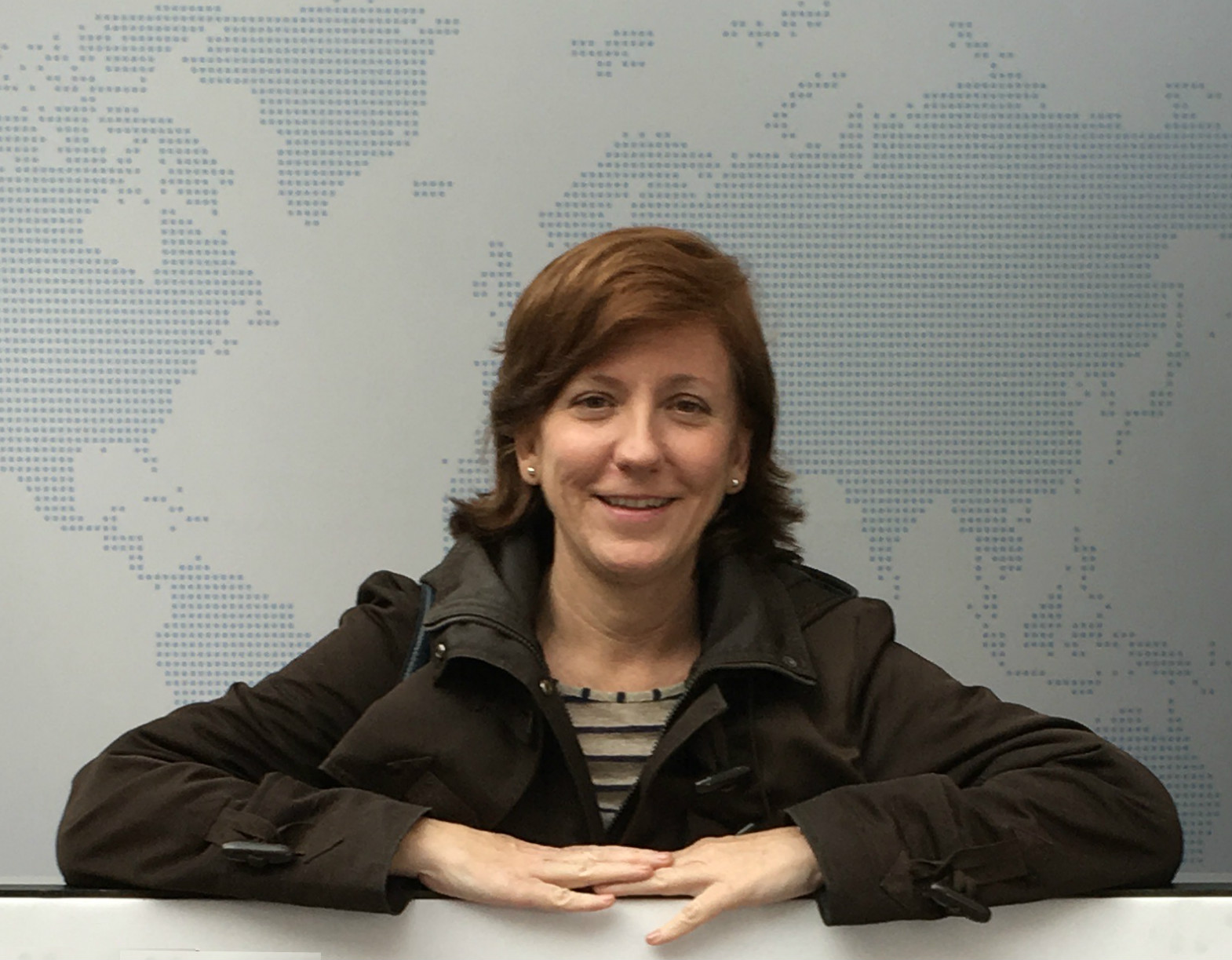
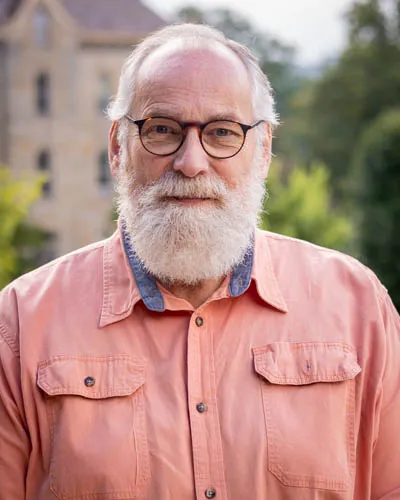
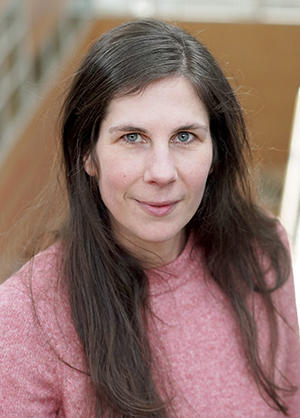
Pádraig de Paor is an Assistant Professor at Trinity College Dublin, specializing in Modern Irish Literature and Literary Criticism. He teaches courses on contemporary Irish literature, drama, poetry, and translation in the Department of Irish and Celtic Languages. His research focuses on 18th-century to contemporary Irish literary history, with particular emphasis on critical theory and cultural identity. De Paor’s notable works include analyses of Cathal Ó Searcaigh’s poetry, Nuala Ní Dhomhnaill’s poetic evolution, and ironic elements in modern Irish prose. He offers modules in English on modern Irish literature in translation and its sociohistorical context, accessible to Irish Studies students and visiting scholars. Though no specific grants or labs are mentioned, his teaching and research bridge linguistic and cultural studies, emphasizing translation and postcolonial perspectives. Students may contact him regarding coursework or absences related to Irish language modules.
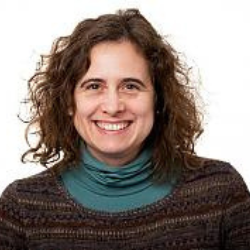
Gigliana Melzi is a Professor of Applied Psychology at New York University’s Steinhardt School of Culture, Education, and Human Development. She holds affiliations with the Center for Latin American and Caribbean Studies and the Latinx Project. As Director of the Culture, Families, and Early Development Lab, her research emphasizes culturally responsive practices in early childhood education, focusing on bilingual and immigrant Latine/x families. Dr. Melzi earned her undergraduate degree in Spanish Literature and Psychology from Clark University and her PhD in Developmental Psychology from Boston University. Her work investigates how cultural and linguistic practices in families influence children’s learning, particularly in STEM and literacy domains. She collaborates closely with Latine/x communities and educational institutions to bridge home and school contexts, advocating for systemic equity in education. Her research highlights family engagement strategies, spatial language in bilingual households, and the role of storytelling in science learning. Funded by organizations like the National Science Foundation and the Spencer Foundation, her projects address disparities faced by marginalized communities. Key areas of exploration include family math talk, code-switching in narratives, and culturally grounded teacher practices. Dr. Melzi’s contributions span over 50 peer-reviewed articles and collaborative grants. Her work is published in journals like Child Development and Developmental Psychology , emphasizing both theoretical advancements and practical applications for early childhood educators.
Chr. Kavousianos is an Assistant Professor in the Department of Informatics at the University of Ioannina, Greece. He is actively engaged in research and teaching in the fields of VLSI design, testability, and low-power testing. He has been involved in major national and international research programs such as Heracleitus II, Pythagoras, and NSF-SRC (USA). Research Interests: His research focuses on advanced techniques in built-in self-test (BIST), test data compression, scan-based testing, fault tolerance, and embedded control architectures. He explores methods to reduce test data volume, power consumption during testing, and improve defect coverage in integrated circuits. Publication Trends: His recent publications (2004–2011) show a strong trend toward defect-aware testing, power-efficient test compression, and multicore SoC testing. He frequently collaborates with leading researchers, including Prof. Krishnendu Chakrabarty (Duke University). His work on multilevel Huffman coding and reseeding techniques has been highly influential, with one paper among the most accessed in 2004. Special Distinction for Excellent Academic Performance from TEE, 1996 Doctoral Scholarship 'In Memory of Professor Maritsa', 1999 Postdoctoral Scholarship from IKY, 2002 Advising and Grants: He has supervised multiple postdoctoral researchers, PhD candidates (e.g., Vasilis Tenentes, Emmanouil Kalligeros), and master’s students. He has led research projects such as 'Embedded Control Architectures' (Heracleitus II) and 'Design Techniques for Embedded Self-Control Circuits' (Pythagoras II). His international collaboration with Duke University included a postdoctoral research role in 2009. Labs and Teams: He leads a research group at the University of Ioannina with postdocs, PhD students, and visiting professors, including Prof. Krishnendu Chakrabarty. His team works on cutting-edge VLSI testing and design methodologies.
Vibeke Grøver is a Professor at the Department of Pedagogical Research, University of Oslo. Her work focuses on language and reading comprehension development for language minority children, with a emphasis on bilingual education, shared book reading interventions, and sociolinguistic factors influencing literacy. Education: Dr.polit., University of Oslo (1992) Master in Educational Psychology, University of Oslo (1982) Elementary School Teacher, University of Oslo (1977) Research Interests include second-language acquisition, early literacy for dual-language learners, home literacy environments, and teacher talk features in preschool settings. She leads projects like Teaching for text comprehension and has contributed to the DEAL (Development, Equality, and Literacy in Learning Contexts) research group. Article Trends show longitudinal studies on bilingual profiles, shared reading interventions, code-switching dynamics, and neighborhood demographic impacts on vocabulary. Key themes include scaffolding language minority students, cross-cultural comparisons (e.g., Chinese-Norwegian families), and teacher-student interaction patterns in multilingual preschools. Leadership Roles include Dean of the Faculty of Educational Sciences (2009–2012) and advisory positions for the Peder Sather Center at UC Berkeley (2012–2014). Research visits span Harvard, UC Berkeley, NYU, and East China Normal University.
Katrin Vogt is a Group Leader at the University of Konstanz and an Affiliated Scientist at the Max Planck Institute of Animal Behavior. She serves on the IMPRS Board and Faculty, focusing on behavioral neuroscience in Drosophila larvae. Her research explores how social context and internal states (e.g., hunger) modulate neural circuits and behavior, utilizing genetic tools like optogenetics, RNAi, and CRISPR. Key Research Areas: Behavioral flexibility under internal state changes Neural integration of sensory and state signals in the antennal lobe Role of serotonin (CSD neuron) in modulating output pathways Computational modeling of state-dependent circuit dynamics Notable Achievements: Discovered state-dependent olfactory valence switching (e.g., geranyl acetate shifts from aversion to attraction under food deprivation) Elucidated glutamatergic inhibition mechanisms in picky local interneurons Identified 5-HT7 receptor's role in upregulating uniglomerular projection neuron activity Recent Publications: 2025: PLoS Biology on multimodal sensory neurons 2024: Current Biology commentary on behavioral neuroscience 2023: Current Biology on multisensory memory merging Academic Affiliations: University of Konstanz (Group Leader, Department of Collective Behavior) Max Planck Institute of Animal Behavior (Affiliated Scientist) IMPRS for Organismal Biology (Faculty Member) Scientific Awards: DFG Research Fellowship (Project No. 345729665) Students & Collaborators: PhD students: Hari P. Narayanan, Akhila Mudunuri Research assistants: Nora Tutas, Julius Klein, Constantin Dyroff DAAD summer student: Élyse Zadigue-Dubé Recent graduates: Amelie Edmaier (BSc 2023), Constantin Dyroff (BSc 2023)
Agneszka Kiełkiewicz-Janowiak is a University Professor at Adam Mickiewicz University's Faculty of English in Poznań, Poland, with over 40 years of academic leadership. Holding a D.Litt. in English linguistics (2002), she directs research at the intersection of sociolinguistics, healthcare communication, and language policy reform. Educational Background: MA in English, Adam Mickiewicz University (1984) Ph.D. in English, Adam Mickiewicz University (1990) D.Litt. in English linguistics, Adam Mickiewicz University (2002) Research Focus: Her work critically examines language variation across social strata , specializing in gender dynamics in Polish , age-related communication patterns , and cross-cultural healthcare discourse . Recent projects analyze euphemisms in aging narratives, linguistic adaptation of Polish migrants in the UK, and feminist language reforms. She employs discourse analysis to expose power structures in medical consultations and public debates. Scholarly Evolution: Publications from 2015-2024 reveal a strategic pivot toward medical sociolinguistics (doctor-patient communication in migration contexts) and language policy activism (gender-neutral language advocacy). This trajectory demonstrates applied linguistics addressing healthcare disparities and sociopolitical change, particularly through analysis of online medical forums and institutional communication. Honors: National Ministerial Research Award (1997) Dual Rector's Prizes for Administrative Leadership (2010, 2012) National Board of Education Medal (2013) University Gold Service Medal (2017) Project Leadership: She secured €500k+ in international funding (Norwegian Financial Instrument) for the ADOPOLNOR Media project studying adolescent health communication. As principal organizer of the Erasmus Summer School (2014) and COMET 2025 conference, she builds global networks bridging linguistics and medical humanities. Academic Citizenship: Serving on editorial boards of Poznań Studies in Contemporary Linguistics and Advances in Historical Sociolinguistics since 2005/2013, she has shaped discourse through guest-edited special issues (2012) and co-organization of 12+ Poznań Linguistic Meetings. Her conference leadership creates platforms for emerging scholars in medical communication research.
Professor Anne Ferguson-Smith is a leading mammalian developmental geneticist and epigeneticist at the University of Cambridge, holding the Arthur Balfour Professorship of Genetics. As Pro-Vice-Chancellor for Research, she oversees the university's research strategy while maintaining her laboratory's focus on genomic imprinting and epigenetic inheritance . Her work bridges experimental and computational approaches through affiliations with the Cambridge Stem Cell Institute, Cambridge Neuroscience, and the Centre for Trophoblast Research. Research in her lab investigates epigenetic mechanisms in developmental processes , particularly through the lens of Dlk1-Dio3 imprinted domain studies. Current themes include: Stem cell epigenetic programming Environmental modulation of epigenetic states Role of repetitive elements in genomic regulation Her group integrates mouse and zebrafish models with high-throughput genomics and mathematical modeling . Key collaborations include: Wellcome Trust UKRI Medical Research Council BBSRC NIH Scientific honors include: Elected EMBO Member (2006) Academy of Medical Sciences (2012) Fellow of the Royal Society (2017) Commander of the Order of the British Empire (CBE) The lab maintains family-friendly research practices and actively participates in interdisciplinary collaborations across Cambridge and internationally.
Emma Dafouz Milne is a Full Professor of English Linguistics at the Department of English Studies , Complutense University of Madrid. Her work focuses on English-medium instruction (EMI) and language policies in internationalized higher education, with a particular emphasis on Content and Language Integrated Learning (CLIL) and multilingual university settings (EMEMUS). She has led two Spanish Ministry-funded projects (INTER-LICA, SHIFT) and directed the UCM research group EnGHINE since 2006. Her ROAD-MAPPING framework (developed with Ute Smit) has become a cornerstone for analyzing EMI contexts globally. She serves as Secretary of the ICLHE Executive Board and participates in the COST European Action CLILNetLE network. Her scientific output spans over 90 international journal articles and book chapters, covering topics like academic discourse , disciplinary literacies , and language integration . Recent books include Researching English-Medium Higher Education (Routledge, 2023) and the forthcoming Disciplinary Literacies in English-Medium Higher Education (Routledge, 2025). Awards and recognition include: Stanford University Top 2% Scientists Ranking (2024) 20 Most Relevant Academics at Complutense University (2023) Salvador de Madariaga Research Fellowship (2022) As a visiting researcher and scientific advisor to international projects like ELEMENTAL (UK), Towards a New Model of Communicative Competence (Denmark), and CoRe (Netherlands), she bridges European research initiatives. Her work informs institutions navigating globalization challenges in language policy and academic practice.
Dr. Kim Potowski is a Professor of Spanish Linguistics at the University of Illinois at Chicago (UIC), specializing in heritage language development, Spanish in the U.S., language and identity, and dual immersion education. She directs UIC's Spanish Heritage Language Program and the summer study abroad program in Oaxaca, Mexico. Her research emphasizes sociolinguistic aspects of Spanish in the U.S., including dialect contact, language maintenance/shift, and bilingual education advocacy. She earned her PhD in Linguistics from the University of Illinois at Urbana-Champaign. Her notable honors include a 2016 CUNY Advanced Research Collaborative Fellowship, a 2013-2014 UIC Institute for the Humanities Fellowship, and a 2011-2012 Fulbright Research Fellowship in Oaxaca. She has authored/edited over 12 books, including El español de los Estados Unidos and Heritage Language Teaching: Research and Practice . Her TEDx talk No Child Left Monolingual advocates for multilingual education equity. She has held editorial roles at Spanish in Context and Heritage Language Journal , and her work bridges sociolinguistic research with pedagogical practice in bilingual settings.
Rui Ponte Costa is an Associate Professor at the University of Oxford's Department of Physiology, Anatomy & Genetics (DPAG). He leads the Neural & Machine Learning group, focusing on computational models of learning in the brain by integrating AI principles. His research emphasizes cortical circuits, neuromodulation, and subcortical regions to understand credit assignment mechanisms. He holds a PhD in Computational Neuroscience and Machine Learning from the University of Edinburgh and has held postdoctoral positions at the University of Oxford, University of Bern, and McGill University. His group's work bridges theoretical and experimental neuroscience, collaborating with institutions like MILA and Google DeepMind. Education: Bachelor's in Computer Science, University of Coimbra (Portugal) PhD in Computational Neuroscience, University of Edinburgh (UK) Research Interests: Neural mechanisms of learning and plasticity Machine learning inspired by biological systems Cerebro-cerebellar interactions Neuromodulatory systems' role in reinforcement learning Collaborators include Christopher Summerfield, Timothy Behrens, and Yarin Gal. His lab's work has been published in Nature Communications , Cell Reports , and top machine learning venues. He co-organizes the Oxford NeuroTheory Forum and has pioneered models explaining cortical dynamics in task acquisition and consolidation. Advising and Grants: No specific grants listed, but active in collaborative research networks. Advising focuses on PhD students in computational neuroscience and AI. Labs/Teams: Neural & Machine Learning Group at DPAG, part of Oxford's broader neuroscience and AI ecosystem.
Janet van Hell is Professor of Psychology and Linguistics at Pennsylvania State University , where she also serves as Co-Director of the Social, Life, and Engineering Sciences Imaging Center (SLEIC) and Co-Director of the Center for Language Science . She leads the Bilingualism and Language Development (BiLD) Lab , investigating neurocognitive aspects of bilingual language use. Education: Ph.D., University of Amsterdam, 1998 Research Interests: Her work centers on bilingualism , second language acquisition , and the neurocognitive mechanisms underlying language development. Using EEG/ERP , behavioral, and linguistic techniques, her lab explores cross-language interaction, code-switching, and foreign-accented speech comprehension. The ‘brain bus’ , a mobile EEG lab, extends her research into schools and public outreach. Publications Overview: Her recent publications span bilingual phonetics , syntax processing , memory consolidation , and executive control , with a focus on EEG/ERP methodologies and experimental behavioral paradigms . Studies often involve heritage speakers , child bilinguals , and late L2 learners . Advising & Collaborations: Advises numerous PhD students and postdocs, many co-authoring papers (marked with *). Collaborates across Psychology, Linguistics, and Neuroscience departments. Leads outreach via the ‘brain bus’ for public engagement in science. Labs & Centers: BiLD Lab – Bilingualism and Language Development Lab SLEIC – Co-Director, Social, Life, and Engineering Sciences Imaging Center Center for Language Science – Co-Director
Dr. Jonathan M. Watt is a Professor of Biblical Studies at Geneva College, Beaver Falls, PA. He holds a Ph.D. and M.A. in Linguistics from the University of Pittsburgh, an M.Div. from Reformed Presbyterian Theological Seminary, and a B.S. in Magazine Journalism from Syracuse University. Expertise in Linguistics, Biblical Languages, Archaeology, and Middle Eastern Studies. Teaches courses in Biblical Studies, Greek, Linguistics, and Religious Ministry Studies. Co-editor of the Baker Encyclopedia of Biblical Greek Language and Linguistics and the Linguistic Biblical Studies Series . His research bridges Linguistics and Biblical Studies , focusing on language policy , sociolinguistics , bilingualism in early Christianity , and language ideology in ancient cultures . Recent publications analyze Greek diminutives , anti-language in James , and appraisal theory in Hebrews . Selected publications include Colossians and Philemon commentaries (2024), Greek Phonology and Morphology (2022), and chapters on Pauline ecclesiology (2021). He has presented globally, including conferences in Canada, China, and Austria. Scientific Awards: Excellence in Scholarship Award, Geneva College (2005) Moderator of the 174th Synod of the Reformed Presbyterian Church (2005) Affiliated with the Society of Biblical Literature and Evangelical Theological Society , Dr. Watt integrates language theory with religious studies , emphasizing intercultural communication and biblical hermeneutics.
Simone Ferlin is an Adjunct Senior Lecturer at Karlstad University working with 5G and Internet evolution. She completed her PhD in computer science in 2017 at the Simula Research Lab and Universitetet i Oslo under the supervision of Dr. Ozgu Alay and Prof. Michael Welzl. Her PhD dissertation focused on increasing robustness in multipath transport with MPTCP. Dr. Ferlin's educational background includes a PhD in Computer Science from the Simula Research Lab and Universitetet i Oslo (2017). Her doctoral research centered on enhancing robustness in multipath transport protocols, specifically focusing on MPTCP (Multipath TCP). She also completed undergraduate work that contributed to a book project with Prof. Friedrich Oehme on electronics and circuit technology. Dr. Ferlin's research spans multiple domains at the intersection of networking, systems, and performance engineering. Her primary interests include network and system measurements, performance analysis, security, and congestion control. She investigates how networks like the Internet evolve, examining technology development, adoption patterns, and their impacts on various entities. Additionally, she explores ways to harmonize security and privacy while making them more usable and assessable. Her work particularly focuses on transport layer and multipath transport protocols, examining their performance and security aspects. She also investigates application and transport layer performance, automation, and monitoring. Her research extends to network programming in both Linux kernel and user space, mobile broadband networks from 2G to 5G, and their intersection with the Internet. She is deeply engaged in observability, distributed and system performance monitoring, and automation. Analysis of Dr. Ferlin's recent publications reveals a strong focus on next-generation networking technologies. Her work spans multiple domains including 5G/6G networks, transport protocols (particularly QUIC and MPTCP), network virtualization, container orchestration, and the application of machine learning to networking problems. She has increasingly incorporated large language models into network configuration and automation research. Her publications demonstrate a consistent emphasis on performance measurement, optimization, and security across diverse networking environments from the edge to the cloud. Dr. Ferlin has received notable recognition for her research contributions: Best paper award at IEEE ICIN'21 for 'Learning-based Incast Performance Inference in Software-Defined Data Centers' Applied Networking Research Prize (ANRP)'25 winner for 'NetConfEval: Can LLMs Facilitate Network Configuration?' Dr. Ferlin is actively involved in mentoring the next generation of networking researchers. She has co-supervised numerous Master's and PhD students across multiple institutions including Karlstad University, KTH, TU Berlin, University of Oslo, and universities in Brazil. Her students have worked on diverse topics including NAT64 performance comparison, system tracing visualization, network observability, ML applications to multipath transport, FEC integration with QUIC, high-performance networking for 5G, congestion control, shared bottleneck detection, multipath IoT applications, and container runtime performance. She is also involved in several significant research projects including Vinnova's SEMLA (Securing Enterprises via Machine-Learning-based Automation), Horizon Europe's CODECO (Cognitive Decentralised Edge Cloud Orchestration), and the Knowledge Foundation of Sweden's DRIVE (Data-driven Latency-Sensitive Mobile Services for a Digitized Society). Dr. Ferlin serves as Workshop Chair for ACM SIGCOMM '25, is a member of the ACM/IRTF Applied Networking Research Workshop (ANRW) steering committee, and co-chairs the Internet Congestion Control Research Group (ICCRG) at the IRTF. She previously served as Associate Technical Editor for IEEE Communications Magazine and has been active on numerous program committees for major networking conferences including SIGCOMM, CoNEXT, IMC, and PAM.
Ulrikke Rindal is an Associate Professor at the Institute for Teacher Education and School Research, Faculty of Educational Sciences, University of Oslo. Her work focuses on English didactics, particularly oral communication, language identity, and perceptions of language learning in the Norwegian context. She conducts qualitative research using interviews and video observation to understand how English is used and perceived among students in and outside schools. PhD in English Didactics, University of Oslo (2013) Master in Applied Linguistics, University of York (2006) Bachelor in English Literature, University of Oslo (2004) Her research interests include sociolinguistics, language attitudes, English teaching practices, and sociolinguistic variation in Norway. She explores how media, identity, and classroom dynamics influence language use and learning. Her instructional roles include courses on English phonetics, language attitudes, and didactic research methods. The 15 most recent publications reflect a consistent focus on English in Norway, classroom language use, pronunciation, and teacher education. These works appear in journals such as The Modern Language Journal , TESOL Quarterly , and Journal of Sociolinguistics , as well as in edited volumes on English didactics and teacher education. They emphasize qualitative analysis, identity construction, and pedagogical implications. Ulrikke Rindal has supervised multiple PhD and Master’s students, contributing significantly to the next generation of educational researchers. She is involved in key research projects such as Linking Instruction and Student Experiences (LISE) and STAGE (STArtAlder and extramural ENGLISH), which examine language learning in and beyond school settings. Research Group: Studies of Instruction across Subjects and Competences (SISCO) Projects: LISE, STAGE
Dr. George Fitzmaurice is a Research Fellow at Autodesk, leading the Human Computer Interaction and Visualization Research group. With over 120 publications and 95 patents, his work spans 25 years of innovation in interactive systems, focusing on technology-assisted learning , 3D visualization , and novel input techniques . His notable contributions include the Maya 1.0 UI and SketchBook Pro design, as well as pioneering Graspable UIs and Spatially-Aware Displays . Education : MIT (B.Sc. Math/CS), Brown (M.Sc. CS), Toronto (Ph.D. CS) His research explores immersive visualization and generative AI applications in design workflows, with recent work focusing on VR/AR tools like TimeTunnel for motion editing and WhatIF for AI-assisted narrative design. Current projects examine the intersection of large language models , 3D design systems , and collaborative environments . Key article themes include: Generative AI integration (3DALL-E, WorldSmith) Immersive motion analysis (AvatAR, VideoPoseVR) Creative workflow optimization (MoodCubes, Immersive Sampling) Privacy-aware VR systems (Vice VRsa) Scientific Recognition: 2019 - Inducted into ACM CHI Academy 2024 - Awarded ACM Fellow for computing contributions He has developed foundational interaction techniques like ViewCube™ and SteeringWheels™ , and his work continues to shape modern 3D UI paradigms and spatial computing approaches through projects like DreamSketch and Tesseract.