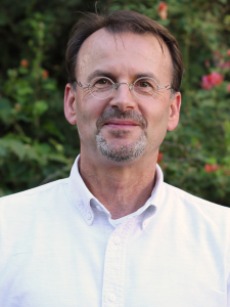
Peter Ecke is Professor of Second Language Acquisition and German at the University of Arizona's Department of German Studies. He teaches courses on applied linguistics, multilingualism, and German language/culture. Research focuses on: Vocabulary acquisition and lexical production in multilingual speakers Language attrition and forgetting mechanisms Study abroad program impacts on language and intercultural competence Assessment methodologies in language education His work investigates lexical retrieval problems, cross-linguistic influence, and the development of assessment tools for language programs. Recent publications examine grammatical gender acquisition in beginners and bilingual lexical processing models.
Anne Karine Kleveland is an Associate Professor at the Department of Language and Literature, Faculty of Humanities, NTNU. Her expertise spans Latin American contemporary literature, multilingual literature, and ecocritical approaches to Hispanic prose. She holds degrees from Universidad de Salamanca (Spain) and UNAM (Mexico), completing her 2017 doctoral thesis on multilingual literature through Kjartan Fløgstad's work. Education: PhD in Literature, NTNU (2017) Studies at Universidad de Salamanca (Spain) Studies at UNAM (Mexico) Research Interests: Explores human-nature relationships in modern Hispanic texts, the Mexican contemporary essay, and multilingualism in Norwegian author Kjartan Fløgstad's works. Investigates hybrid genres, self-translation, and authors like Hugo Hiriart and Augusto Monterroso. Moderates the multilingual_literature research mailing list focusing on translingual literature and cultural translation. Teaching: Offers courses on Hispanic literature, Latin American culture, and Spanish language instruction (ELE). Special topics include the War on Drugs, Venezuela's political trajectory, and multilingual literature. Collaboration: Maintains the multilingual_literature@hf.ntnu.no mailing list to connect researchers in translingual studies. Subscribers explore bilingualism, code-switching, and hybrid literary forms through this platform.
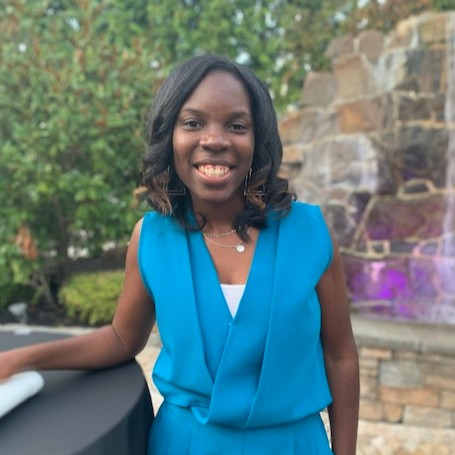
Dr. Jessica Jocelyn is an Assistant Professor and Director of Graduate Studies at George Washington University's Columbian College of Arts and Sciences. She holds a Ph.D. in Communication Sciences and Disorders from Howard University (2022), an M.Ed. from Valdosta State (2015), and a B.A. from the University of Florida (2010). Her research focuses on bilingual language development, sociolinguistics, and global engagement, with a specialization in Haitian Creole speakers. She has conducted interprofessional service-learning projects in Haiti, Ecuador, and Guadeloupe, emphasizing culturally responsive practices. Dr. Jocelyn serves on the executive board of the Haitian Caucus of ASHA and chairs the Global Issues and Practices committee for ASHA's Convention. She teaches courses including Cultural Responsive Practices in Human Communications and Pediatric Language Disorders. Her work bridges clinical practice, education, and global advocacy, addressing language equity for diverse populations.
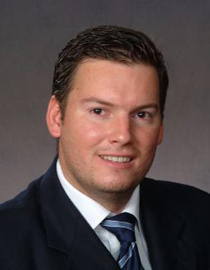
Sebastian Hoyos is a Professor in the Department of Electrical and Computer Engineering at Texas A&M University, part of the College of Engineering. He leads the Advanced Mixed-Signal Interfaces Laboratory (AMSI Lab), focusing on analog and mixed-signal systems for communication and biomedical applications. Education: Ph.D., Electrical Engineering, University of Delaware (2004) M.S., Electrical Engineering, University of Delaware (2002) B.S., Electrical Engineering, Pontificia Universidad Javeriana (2000) Research Interests: Wireless/wireline communication systems Biomedical sensing and imaging Compressive sensing and ADC architectures Multi-channel filter-bank receivers Recent Trends in Articles: Articles emphasize high-speed serial links, compressive sensing for medical imaging, and ADC-based transceivers. Recent work includes 56Gbps transceivers, mmWave beamforming, and machine learning-driven nonlinearity mitigation. Awards: 2012 SRC TECHCON Best Paper Award 2009 IEEE Colombian Chapter STSIVA Best Paper Award Multiple fellowships and academic accolades Advising & Labs: Mentored over 20 graduate students. AMSILab focuses on low-power mixed-signal systems for biomedical and communication applications. Collaborates with industry partners like Qualcomm and Texas Instruments.
Jiarong Xing is an Assistant Professor of Computer Science at Rice University, starting Fall 2025. Currently a Postdoctoral Scholar at UC Berkeley's Sky Computing Lab under Prof. Ion Stoica, his research focuses on secure, efficient, and scalable networked systems for cloud data centers, ML infrastructure, and 5G networks. He earned his Ph.D. from Rice University in 2024 under Prof. Ang Chen. His expertise spans computer systems, networking, and security. Key contributions include Occam (EuroSys'24), Pipeleon (SIGCOMM'23), and FlexCore (NSDI'22), addressing challenges in network management, SmartNIC optimization, and runtime programmability. His work on NetWarden (USENIX Security'20) mitigates covert channels without performance loss. Education : Ph.D. in Computer Science (Rice University, 2024); B.Sc. in Software Engineering (Shandong University, 2017) Awards : USENIX Security Distinguished Paper (2023), Google PhD Fellowship (2022), Meta Fellowship Finalist (2022), Multiple Rice University Fellowships He has served on program committees for NSDI, EuroSys, ACM SIGCOMM, and USENIX Security, and reviewed for top journals like IEEE Transactions on Networking. His GitHub repositories showcase open-source contributions to systems research, including Occam, Pipeleon, and Ripple.
Reed Cartwright is an Associate Professor in the School of Life Sciences at Arizona State University. His research focuses on evolutionary biology, population genetics, genomics, and bioinformatics. He contributes to developing computational tools for genetic analysis and simulations, with applications in primate evolution, microbiome studies, and conservation genomics.
Jesús Rosales is an Associate Professor of Spanish at Arizona State University (ASU), affiliated with the School of International Letters and Cultures. Born in Durango, Mexico, and raised in Santa Barbara, California, he has extensive academic experience across high school, community college, and university levels. His research focuses on Chicano literature and culture, emphasizing Chicano literary history, narratives in Spanish, and the impact of Mexican popular culture on Chicano identity. He co-edits the journal Puentes: Revista México-chicana de literatura, cultura y arte , established in 2003, and founded the Premio Nacional de Narrativa Chicana Escrita en Español to promote Spanish-language Chicano literature. Rosales also engages in creative writing, with a forthcoming collection of short stories titled Play In Dreams and Other testimonios . Education : Ph.D., Stanford University (1995) M.A., Stanford University (1981) B.A., University of California, Los Angeles (1980) Research Interests : Rosales explores Chicano literature's transnational dimensions, including its reception outside the U.S., and collaborates with students on international critical essays. Key themes include Chicano-Mexico cultural intersections, Mexican folk traditions influencing literature, and contemporary narrative forms. Upcoming projects analyze global perspectives on Chicano literature (e.g., Spanish, European, Latin American critiques) and the role of Spanish-language narratives in preserving cultural memory. Grants & Advising : As a mentor, Rosales has guided over 25 Ph.D. and MA students, many of whom pursue academic careers. His current projects include editing volumes on international Chicano literary perspectives and advancing creative scholarship through Puentes . Labs/Teams : Founder and editor of Puentes , a peer-reviewed journal fostering cross-border dialogue through essays, poetry, and art. Also oversees the Premio Nacional literary award to recognize emerging Chicano writers in Spanish.
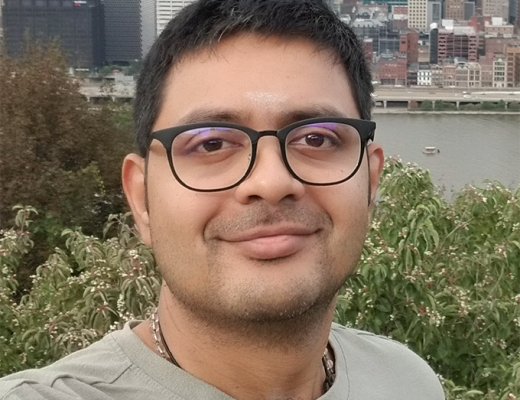
Kaushik Seshadreesan is an Assistant Professor in the Department of Informatics and Networked Systems at the University of Pittsburgh’s School of Computing and Information, with a secondary appointment in the Department of Physics and Astronomy. His research focuses on quantum information science, particularly quantum communication networks, quantum repeaters, and photonic systems. He earned a PhD in Physics from Louisiana State University and completed postdoctoral work at the Max Planck Institute for the Science of Light and the University of Arizona. His expertise spans quantum networks, entanglement distribution, and quantum-limited classical communications. His work addresses challenges in quantum networking stack design, aiming to realize the future quantum internet. Education: Ph.D. in Physics (Louisiana State University), M.Sc. in Physics, B.E. in Electrical and Electronics Engineering (Birla Institute of Technology and Science). Research Interests: Quantum communication networks, quantum repeaters, quantum sensing, quantum computation, and hybrid quantum-classical systems. His current focus includes optimizing quantum networking architectures and developing protocols for entanglement distribution across quantum networks. Grants & Collaborations: Involved in NSF-funded projects on quantum joint-detection receivers and photonic NISQ-era processors. His research bridges quantum optics and information theory, with applications in both theoretical and experimental quantum systems. Labs & Teams: Leads a research group advancing photonic quantum technologies and collaborates with institutions globally to develop scalable quantum network solutions.
Dr. Emily Finer is a Senior Lecturer in the Department of Russian at the University of St Andrews. She specializes in transnational and multilingual interactions between Russian, Ukrainian, Polish, Yiddish, and English cultures. As founder of the Comparative Literature degree program, she bridges language studies across the School of Modern Languages. Her research spans multilingual children’s literature (focused on Ukraine), science fiction’s intersection with exoplanet science, and space policy ethics. She leads a STAIRS grant exploring ethical communication in space colonization and co-directs the St Andrews Centre for Exoplanet Science. Finer’s work appears in journals like Journal of Science Communication and Modern Languages Open . She teaches Honours modules on Russian children’s literature, modernist prose, and Pushkin studies. Notable roles include convening the School Ethics Committee and serving on the British Comparative Literature Association’s executive committee. Research highlights include a collaborative grant with Emory University on Ukrainian multilingual print culture and the Ostroh Academy partnership. Media contributions include BBC Radio features on cultural history and science fiction. Her translation of Bulgakov’s Kiev-town (2023) critically examines colonial attitudes toward Ukrainian identity.
Professor Jeanine Treffers-Daller is a faculty member at the University of Reading, where she specializes in bilingualism, code-switching, and language acquisition. Her research focuses on multilingualism, translanguaging, heritage language attrition, and cognitive effects of bilingualism. She has contributed to studies on motion event construal, language dominance, and educational challenges faced by multilingual learners. Her work includes examining translanguaging practices, the cognitive benefits of bilingualism, and the impact of language education policies in multilingual contexts like India. She has published extensively in journals such as Bilingualism: Language and Cognition and Linguistic Approaches to Bilingualism . Recent research interests include exploring translanguaging beyond theoretical debates, analyzing code-switching dynamics, and investigating how bilingual experiences influence brain structure through neuroplasticity studies involving interpreters and translators. Edited volumes include Language Dominance in Bilinguals (2016) and Lost in Transmission (2020), addressing heritage language development and attrition. Contributions to interdisciplinary projects on multilingual education in India, focusing on reading skills and cognitive development.
Julia Hofweber is a linguist specializing in bilingualism, cognitive linguistics, and language acquisition. She holds a PhD from the University of Reading (2017) and has published extensively on code-switching effects, executive functions in multilingual contexts, and innovative language teaching methods. Her research bridges sociolinguistics, cognitive psychology, and educational practice, with notable contributions to understanding how language use patterns influence cognitive processes. Key Affiliation: University of Reading (PhD institution) Her work examines the interplay between language structure and cognitive mechanisms, particularly in bilingual populations. Recent studies investigate how code-switching modulates executive control and how sociocultural factors influence linguistic behavior in professional settings like corporate communication. She also explores creative pedagogical approaches to enhance second language learning. Hofweber's research spans experimental psychology, corpus linguistics, and educational methodology, making significant contributions to both theoretical and applied linguistics.
Desirée Martín is an Associate Professor in the Department of English at the University of California, Davis, where she has been a faculty member since 2004. Her academic work bridges literary, cultural, and transnational studies with a focus on U.S.-Mexico border dynamics and Chicana/o and Latina/o identities. Education: Ph.D., Duke University, 2004 Graduate Certificate in Latin American Cultural Studies, 2001 B.A., University of California, Berkeley, 1994 Her research centers on U.S.-Mexico border studies, Chicana/o and Latina/o cultural production, transnational American studies, and 19th–20th century Mexican literature. She explores themes of secular sanctity, identity formation, multilingual aesthetics, and cultural translation, often interrogating how marginalized identities are represented and negotiated across borders. The recent publications reflect a strong engagement with religious symbolism, revolutionary rhetoric, multilingual literature, and archival media. Her work spans academic journals, edited volumes, and public-facing media commentary, demonstrating interdisciplinary reach and cultural relevance. Scientific Awards: Outstanding Book Award for 'Borderlands Saints', LASA Latino/a Studies Section, 2014 Ford Foundation Dissertation Fellowship (2001-2002) Ford Foundation Predoctoral Fellowship (1997) Dr. Martín has supervised graduate research through her role in the English Department and continues to mentor emerging scholars in Chicana/o and transnational studies. She is currently developing a book project titled 'Untranslatable,' examining cultural translation and the refusal of fixed identity. Her work is supported by recognition from leading foundations and academic associations. She contributes to academic discourse through publications and media engagement, particularly in reinterpreting historical and cultural narratives from Latinx perspectives. While no formal lab or research team is mentioned, her interdisciplinary approach suggests collaboration across departments and institutions.
Araceli San Martín is a faculty member in the Spanish Department at Saint Louis University-Madrid. She holds degrees in Classical Philology, Italian Philology, German Language and Culture, and a Master's in Literature and Linguistics. She specializes in Spanish as a Foreign Language (ELE) and Spanish for Specific Purposes (EFE), and serves as Coordinator and Head of SIELE exams at SLU-Madrid. Graduate in Classical Philology, Complutense University of Madrid, 1987 Diploma in Italian Philology, Complutense University of Madrid, 1990 Grundstudien in German Language and Culture, University of Heidelberg, Germany, 1996 Master's in Literature and Linguistics, Andrés Bello Seminar, Caro y Cuervo Institute, Bogotá, 1997 Her research interests include Spanish linguistics, syntax, language teaching methodology, cultural representation in literature, and language contact. She has contributed extensively to pedagogical materials and academic discourse on Spanish language education. Her work bridges theoretical linguistics with practical classroom applications, especially in the areas of grammar instruction and cultural integration in language learning. The analysis of her publications reveals a strong focus on the structural and pedagogical dimensions of the Spanish language. Her work spans historical syntax, modern language teaching, and sociolinguistic variation, particularly in Hispanic and transnational contexts. A recurring theme is the interplay between linguistic structure and cultural expression, evident in her studies on Havana’s literary representation and language use in digital environments. She has not been listed with any formal scientific awards in the provided text. She has contributed to national-level research projects funded by Spain’s Ministry of Education and Science, including studies on syntactic evolution in classical Spanish and language contact around the Strait of Gibraltar. She is affiliated with the Bernardo Aldrete Research Group at the University of Cádiz. While no students are listed, her development of official syllabi for secondary education suggests a significant role in curriculum design and academic leadership. She is affiliated with the Bernardo Aldrete Research Group (HUM-195) at the University of Cádiz and has collaborated on large-scale linguistic research projects, indicating active participation in academic networks beyond her primary institution.
Tiffane Levick is a Lecturer in Translation Studies at the University of Toulouse-Jean Jaurès, affiliated with the Center for Anglophone Studies (CAS). She teaches translation (theme and version) at undergraduate and master’s levels and specializes in the translation of urban youth speech, sociolinguistics, gender, and pedagogy. She co-founded the research network 'Translating Minority Voices' and holds a doctorate from Sorbonne Nouvelle University-Paris 3. Education: Doctorate (2018): 'Orality and Universality, in Search of a Global Youth Speech in Translation', Sorbonne Nouvelle University-Paris 3, supervised by Clíona Ní Ríordáin. Research Interests: Her work centers on the translation of non-standard language, particularly urban youth speech, creole, and gender-inclusive forms. She explores how sociolinguistic variation, cultural references, and multimodal elements (such as music and audiovisual media) are rendered across languages. Her research also addresses pedagogical approaches to teaching sensitive topics like non-binary language and marginalized voices in translation. Publications Trends: Her recent scholarly output spans book chapters, journal articles, and conference papers, with a strong focus on the intersection of translation, identity, and cultural representation. Key themes include the translation of slang, creole, rap, and inclusive language, often analyzing contemporary French and Anglophone literature and media. Scientific Awards: 2021 Gulf Coast Prize in Translation (for an excerpt from Sofia Aouine's Rhapsodie des oubliés ) Advising and Grants: While no specific students or grants are listed, she actively mentors through her teaching and co-supervises collaborative translation projects. She has co-edited a volume on teaching translation in Francophone contexts and leads experimental bilingual writing workshops that integrate translation and creative writing. Labs and Teams: She is a core member of the Center for Anglophone Studies (CAS) and co-founded the research network 'Translating Minority Voices' (in collaboration with PRISMES, Sorbonne Nouvelle). She also organizes and participates in interdisciplinary research seminars and conferences on translation, sociolinguistics, and minority representation.
Catherine Douillard is a Professor in the Department of Mathematical and Electrical Engineering at IMT Atlantique. She holds an engineering degree from École Nationale Supérieure des Télécommunications de Bretagne (1988), a doctorate in electronics from the University of Western Brittany (1992), and accreditation to supervise research from the University of Southern Brittany (2004). Her research focuses on digital communications, error-correcting coding, iterative decoding, and coded modulations for multi-antenna and NOMA systems. She led the 'Coding, Constellations and Interleaving' group in DVB-NGH standardization (2010–2012) and received the IEEE/SEE Glavieux Award (2009) for industrial impact in coding. She chairs major coding symposiums like ISTC and leads projects such as NF-PERSEUS (5G networks) and AI4CODE (AI-driven FEC design). Her work emphasizes resource allocation in IoT, NOMA, and full-duplex systems. Key contributions include optimizing non-binary turbo codes for IoT, applying machine learning to interleaver design, and exploring full-duplex relay architectures. She supervises interdisciplinary teams across IMT Atlantique, Lebanese University, and international partners. Current projects address 6G challenges like low-latency decoding and coexistence of eMBB/URLLC services. Research awards include the Glavieux Prize and leadership in European initiatives (EPIC, FANTASTIC-5G). She contributes to standardization bodies (DVB) and chairs conferences, bridging academia and industry through projects like Beyond5G (sovereign 5G networks) and QCSP (NB-code for IoT).