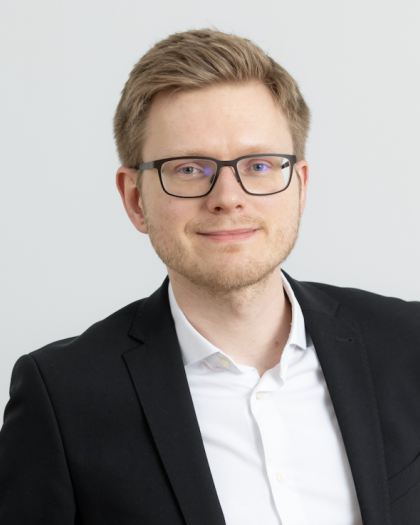
Raimondas Ibenskas is a Professor at the Department of Comparative Politics, University of Bergen. He leads the Norwegian Research Council-funded project INSTAPARTY: Party Instability in Parliaments (2021-2025), focusing on parliamentary party switching across eight European countries. His work examines how party instability affects electoral outcomes, policy dynamics, and democratic representation. Research Focus : Party instability, interest group-legislator ties, and responsiveness in multi-dimensional policy spaces. Methodology : Quantitative analysis of parliamentary switching cases, network analysis of EU lobbying, and content analysis of policy positions. Collaborations : Co-PI with Sona Golder (Pennsylvania State University) and Allan Sikk (University College London) in INSTAPARTY. Regular collaboration with Adriana Bunea, Nicole Bolleyer, and Paulina Salek-Lipcean. His recent publications explore whether independents in parliaments seek temporary or permanent status, the electoral impact of party switching, and the role of interest group networks in EU policy-making. The Observatory of Parliamentary Party Switches (OPPS) provides ongoing data tracking parliamentary party instability globally.
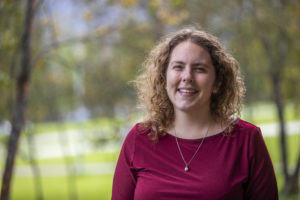
Rachel Klassen is a Researcher in Second Language Acquisition and Psycholinguistics at UiT The Arctic University of Norway , leading the GenBiLex Project within the LAVA Group . She holds a Ph.D. in Hispanic Linguistics (2016) and M.A. (2011) from the University of Ottawa , and an Honours B.A. in Languages (2008) from Wilfrid Laurier University . Research Focus : Asymmetric grammatical gender systems, bilingual lexicon structure, L1/L2 processing of morphology, code-switching agreement strategies, and L2 vocabulary variation. Methodologies : Eye-tracking, EEG/ERPs, experimental design, corpus analysis (e.g., TenTen, OpenSubtitles). Her recent publications (2013–2019) span topics like derivation/compounding affixes , gender representation in bilinguals, and code-switching constraints . She collaborates with scholars like Juana M. Liceras, analyzing bilingual grammars through morphosyntactic and psycholinguistic lenses. Contact : rachel.klassen@uit.no | @klassen_rachel
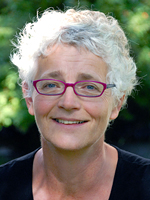
Annjo Klungervik Greenall is a Professor of English Language and Translation Studies at the Department of Language and Literature, Norwegian University of Science and Technology (NTNU). Her research focuses on translation studies, sociolinguistics, and the translation of expressive language such as humor, politeness, and swearing. She has led projects on risk management in translation processes and internationalization of mobile apps. Her work includes co-editing Song Translation: Lyrics in Contexts and producing translated song CDs like Eg vandrar langs kaiane . She supervises MA and PhD students in translation studies and is an editor of the Nordisk tidsskrift for oversettelses- og tolkeforskning . Education: Defended her 2002 PhD thesis on Paul Grice's Cooperative Principle. Active in international associations like IATIS and Norsk forening for oversettelses- og tolkeforskning. Engages in popular dissemination through media appearances, blogs, and content for educational platforms like Salaby. Research highlights include studies on song translation, audiovisual translation norms, and the role of translation technology. Notable projects include the 'Voices of Translation' research initiative and analyses of risk perception in localization processes. Her work bridges academic research with practical applications in multilingual communication.
Irmelin Kjelaas is an Associate Professor at the Department of Teacher Education, Norwegian University of Science and Technology (NTNU), within the Faculty of Social and Educational Sciences. Her research focuses on language and power dynamics in second language learning, particularly for newly arrived adolescents and refugees. She holds a PhD in Applied Linguistics from NTNU (2017) and has led projects like Coming of Age in Exile and the Linguistic Diversity in Schools and Society research group. Her work combines linguistic ethnography with sociolinguistic theory, addressing topics such as language curricula, assessment practices, and inclusive pedagogy. She currently supervises three doctoral students researching areas like literacy transitions and citizenship education for immigrant youth. Key publications include analyses of Norwegian vocational education’s language policies, teacher narratives on refugee integration, and critiques of native-speakerism in teacher training programs. She collaborates with educators to develop pedagogical practices that empower multilingual learners, emphasizing learner voice and translingual approaches.
Anja Katrine Angelsen serves as Associate Professor and Deputy Head of Education in the Department of Language and Literature at the Norwegian University of Science and Technology (NTNU). Her academic work focuses on language education, translation studies, and linguistic research, with particular attention to practical applications in educational settings. Angelsen has established herself as a key researcher in language policy and practices within Norwegian higher education, especially regarding the experiences of international staff with Norwegian and English language use. Her research interests span translation studies, language education, sociolinguistics, and digital assessment methods. Angelsen has made significant contributions to understanding cultural translation, particularly in areas such as hymn translation, song adaptation (notably Leonard Cohen's works), and literary translation of Norwegian authors like Jo Nesbø. She is deeply engaged with practical applications of language education, developing innovative assessment methods for language teachers and investigating the use of translation tools in ESL classrooms. Analysis of Angelsen's recent publications reveals a clear trajectory toward examining language practices in academic settings, particularly focusing on the experiences of international staff at Norwegian universities. Her work demonstrates increasing attention to multilingualism in higher education, language policy implementation, and the practical challenges of language learning in professional academic contexts. This research direction combines sociolinguistic analysis with practical educational applications, reflecting her dual role as both researcher and educational leader. Angelsen has supervised numerous Master's students whose theses reflect her research interests, including studies on hymn translation, fake news perceptions, translation tools in ESL classrooms, and subtitling practices in video game localization. Her collaborative approach is evident in her frequent partnerships with colleagues such as Nicole Busby, Anne Dahl, and Helene Hauge on projects related to language awareness and educational development. Her departmental leadership role as Deputy Head of Education complements her research activities, allowing her to directly influence language education practices at NTNU. Angelsen's work bridges theoretical linguistic research with practical educational applications, making significant contributions to both academic discourse and educational practice in language teaching and translation studies.
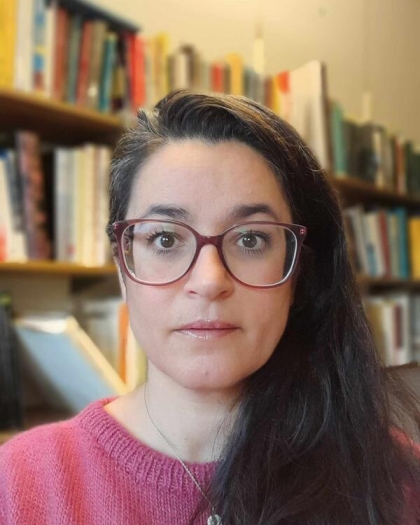
Elisabet Garcia Gonzalez is a temporary academic staff member at the University of Oslo, affiliated with the Faculty of Humanities and the Clinical Linguistics and Language Acquisition department. Her research focuses on bilingualism and cognitive development, particularly the interplay between executive functions and language acquisition in multilingual children. She holds a BA in Spanish Language and Literature from the Autonomous University of Madrid (2014), an MA in General Linguistics (2015), and a research MA in Linguistics (2017) from the University of Amsterdam. Her work has explored the impact of the COVID-19 pandemic on minority language use in Norway, with findings highlighted in a New York Times article. Coordinated the forum for clinical linguistics and language acquisition (2019–2021) Organized the international event 'Intersectional Experiences in Academia' (2022) Member of the Society for Spanish Researchers in Norway Her research trends emphasize bilingualism and cognition , code-switching dynamics , and language policy during crises . She also manages a book club for international women in Oslo and contributes to science dissemination through various platforms.
Karen Gammelgaard is a Professor of Czech at the Department of Literature, Area Studies and European Languages (ILOS) at the University of Oslo. Her research focuses on Czech language, literature, and culture within Central Europe, with specialized interests in discourse analysis, standard language theory, diglossia, Prague School linguistics, language and texts in totalitarian states, semiotics, and symbolic nation-building. Completed research projects: KULTRANS (Constitutive texts in cultural transitions) Textualizing Democracy Red-Letter Days in Transition The Upheaval in Czech Textual Culture 1948-1953 Leadership roles: Head of ILOS (2013-2020) Research leader for ILOS (2005-2008) Membership panels: HERA Joint Research Programme review panel (2017-2019) Academic Council for Philology at Charles University, Prague (2014-2024) Programme Board for Norway-Estonia research cooperation (2013-2016) Committee for Humanities (FRIHUM) at the Research Council of Norway (2010-2013) Her publications span topics in Czech political discourse, language policy, and totalitarian textual analysis, with recent work examining Ukrainian standardization (2023) and post-1993 Slovak-Czech language policies (2022). Collaborative works include studies on post-communist national holiday discourses and comparative constitutional analysis. Key keywords: Czech, Czech Republic, Central Europe, Slavic, Semiotics, Discourse analysis, Standard language, Political language, Czech literature.
Marit Westergaard is a Professor of English Linguistics at UiT The Arctic University of Norway, affiliated with the Department of Language and Culture within the Faculty of Humanities, Social Sciences and Education. She also serves as Secretary General of The Norwegian Academy of Science and Letters. Her research focuses on multilingualism, bilingualism, and language acquisition, with special emphasis on syntactic variation, grammatical gender, and heritage languages. She leads the Center for Language, Brain & Learning (C-LaBL), funded by the Trond Mohn Foundation, which explores multilingualism through experimental methods like eye-tracking and EEG/ERP. Key projects include AcqVA (Acquisition, Variation & Attrition), the Psycholinguistics of Language Representation (PoLaR) lab, and international networks such as MultiGender and MuMin. She develops theoretical frameworks like the Micro-cue Model and Linguistic Proximity Model, explaining language acquisition and cross-linguistic influence. Her work engages with Norwegian dialects, Russian, German, and English, addressing topics like word order variation, attrition, and diachronic change. She collaborates with Bilingualism Matters to provide evidence-based advice for multilingual families through the initiative "Flere språk til flere." Recent research highlights include investigating CLI in L3 acquisition, syntactic variation in heritage languages, and the role of structural similarity in bilingual cognition. She supervises interdisciplinary projects funded by the RCN and EU, contributing to both theoretical and applied linguistics domains.
Assoc. Prof. Constanza Riera is affiliated with the Department of Computing, Mathematics, and Physics at the University of South-East Norway. Her research focuses on cryptography, finite fields, Boolean functions, quantum computing, algebraic combinatorics, and coding theory. She has published extensively on topics including differential spectra, cryptographic function design, quantum states, and algebraic structures. Her work bridges theoretical mathematics with applications in cryptography and information security. Recent articles explore properties of APN functions, c-differentials, quantum state characterization, and combinatorial designs rooted in finite fields. Notable contributions include advancements in c-differential uniformity and the application of Dillon's switching method to construct secure functions. Riera's research also delves into quantum computing, analyzing graph-based quantum states and their algebraic properties. Her interdisciplinary approach addresses both foundational mathematical problems and practical cryptographic challenges.
Øystein Alexander Vangsnes is a Professor of Nordic Linguistics at UiT The Arctic University of Norway and holds a part-time professorship (Professor II) at Høgskulen på Vestlandet. His research focuses on multilingualism, linguistic revitalization (especially Sami languages), bilingualism, syntax, dialectology, and cognitive aspects of language processing. He directs the C-LaBL Centre for Language, Brain and Learning, funded by the Trond Mohn Foundation (2024–2029), and leads the Research Council-supported Multilectal Literacy in Education project (2020–2026). His work bridges theoretical linguistics with applied research, emphasizing sociolinguistic variation, language policy, and revitalization efforts for endangered languages. Notable projects include the Nordic Dialect Corpus and studies on dialect representation in social media. Recent publications explore neurophysiological correlates of language change, bidialectal processing, and multilectal literacy in Norway. Vangsnes has authored/co-authored over 50 peer-reviewed articles and book chapters, with a focus on Nordic languages, Sami revitalization, and cognitive linguistics. He actively engages in public discourse on language issues, emphasizing the societal role of linguistic diversity.
Magdalena Solarek-Gliniewicz is a researcher at the University of Oslo's Department of Linguistics and Scandinavian Studies, affiliated with the Faculty of Humanities. She completed her PhD in 2024 with a dissertation analyzing communication challenges faced by Polish doctors working in Norwegian hospitals. Her current role includes teaching courses such as NOAS1100 and LING4140 in Fall 2024. Education: Master's in Norwegian Language Studies from Adam Mickiewicz University, Poland Specialized training in Polish-Norwegian Interpretation at Oslo Metropolitan University Research Interests: Medical communication in multilingual settings Conversation analysis of doctor-patient interactions Linguistic adaptation of healthcare professionals Norwegian dialect variation and comprehension challenges Key Projects: Co-investigator in the Nor-Pol project (2020-2024) on Polish migrants' L2 communication Member of the Conversation Analysis and Interactional Linguistics research group Teaching Experience: Developed intensive Norwegian courses for healthcare personnel Lector of Norwegian at Warsaw University of Social Sciences Professional interpreter at Oslo University Hospital
Anne Karine Kleveland is an Associate Professor at the Department of Language and Literature, Faculty of Humanities, NTNU. Her expertise spans Latin American contemporary literature, multilingual literature, and ecocritical approaches to Hispanic prose. She holds degrees from Universidad de Salamanca (Spain) and UNAM (Mexico), completing her 2017 doctoral thesis on multilingual literature through Kjartan Fløgstad's work. Education: PhD in Literature, NTNU (2017) Studies at Universidad de Salamanca (Spain) Studies at UNAM (Mexico) Research Interests: Explores human-nature relationships in modern Hispanic texts, the Mexican contemporary essay, and multilingualism in Norwegian author Kjartan Fløgstad's works. Investigates hybrid genres, self-translation, and authors like Hugo Hiriart and Augusto Monterroso. Moderates the multilingual_literature research mailing list focusing on translingual literature and cultural translation. Teaching: Offers courses on Hispanic literature, Latin American culture, and Spanish language instruction (ELE). Special topics include the War on Drugs, Venezuela's political trajectory, and multilingual literature. Collaboration: Maintains the multilingual_literature@hf.ntnu.no mailing list to connect researchers in translingual studies. Subscribers explore bilingualism, code-switching, and hybrid literary forms through this platform.
Veslemøy Rydland is a Professor at the Department of Education, University of Oslo. Her research focuses on minority language children , language and communication , reading comprehension , bilingual development , and socio-emotional development . She leads the ongoing project Teaching for text comprehension: Supporting young second-language learners' text comprehension in urban multiethnic preschools in Norway (PreComp) . PhD (2007), Faculty of Education, University of Oslo Cand. Paed. (2001), Institute for Educational Research, University of Oslo Her recent work examines emotion socialization strategies , language interventions , and parent-teacher collaboration in multilingual settings. Publications emphasize shared reading , code-switching , and teacher-child interactions . Current projects include the Språksterk 1–6 initiative funded by the Research Council of Norway and Oslo Municipality.
Emel Türker-Van der Heiden is a Senior Lecturer in Turkish at the University of Oslo's Middle East Studies department, teaching Modern Turkish language and literature at all levels, including courses like TUR1010 - Turkish A and MES4110 – Readings of Middle Eastern Texts in Turkish . Her academic career spans roles in research, teaching, and collaboration on multilingualism and Turkish linguistics. Education: Bachelor of Arts (1984) from TED Ankara College BA in Linguistics (1989) from Hacettepe University MA in Linguistics (1993) from the University of Oslo Dr. Art. in Linguistics (2000) from the University of Oslo Her research focuses on Turkish linguistics , sociolinguistics , bilingualism , and code-switching , particularly in the context of Turkish immigrants in Norway and Turkish as a heritage language. She has explored topics such as grammatical change in bilingual settings and language acquisition dynamics. Recent publications highlight her work on Turkish possessive structures in second language acquisition, code-switching patterns in Turkish-Norwegian bilinguals, and the representation of Turkish literature and identity in Norway. These contributions align with broader themes in linguistics , sociolinguistics , and multilingualism . Key Research Affiliations: Core Group Member at MultiLing (2013-2018) Researcher at Skådalen and Bredtvet Competence Centers (2008-2018) Postdoctoral Fellow at the University of Oslo (2002-2006)
Camilla Erichsen Skalle is an Associate Professor in the Department of Foreign Languages at the University of Bergen (UiB). Her academic work bridges Italian literature, migration studies, and gender research with a particular focus on translingual practices and intercultural competence in foreign language education. Her research interests span Italian literature, migration narratives, gender studies, translingual practices, mythological narratives, and multilingualism in foreign language teaching. Skalle explores how language, identity, and cultural boundaries intersect in contemporary literature, particularly examining representations of migration, gender transformation, and postcolonial perspectives in Italian and Scandinavian contexts. Analysis of her recent publications reveals a strong thematic focus on gender representation in educational materials, translingual practices in migration narratives, and the intersection of language with identity formation. Her work consistently addresses how multilingualism functions as both a literary device and pedagogical tool, with increasing attention to visual representations in textbooks and the Mediterranean migration context. Skalle actively collaborates with researchers including Anje Müller Gjesdal and Liv Eide on projects related to migration narratives as tools for intercultural competence. Her research has practical applications in foreign language teaching methodology and curriculum development. She is affiliated with two research groups at UiB: the Research Group Literature and Science and the Research group Antiquity and the Classical Tradition, where she contributes expertise on mythological narratives and their contemporary reinterpretations.