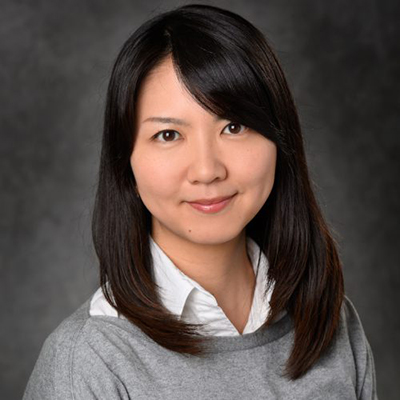
Michael Pucher is an External Lecturer in the Department of Logic and Computation at Technische Universität Wien. His research focuses on applying machine learning techniques to identify obfuscated function clones in binary code, with notable work published in 2021. He teaches courses such as 'Attacks and Defenses in Computer Security' (Course ID: 192.111). Education details are not explicitly provided, but his diploma thesis indicates academic engagement in computer security. No scientific awards or grants are mentioned in the text. He is affiliated with the university's informatics department and maintains a TISS profile (ID: 281901).
Dr. Hai Dong is a Senior Lecturer at the School of Computing Technologies, RMIT University, Melbourne, Australia. He leads the Smart Sensing and Services Research Area and directs the GreenCryptoLab, a joint laboratory with CloudTech. He chairs the IEEE Task Force on Deep Edge Intelligence and has held roles including Research Fellow at Curtin University and RMIT. Education: PhD (Curtin University), BEng (Northeastern University, China), Graduate Certificate in Learning & Teaching (Distinction) His research focuses on Edge Intelligence, Blockchain, AI Security, and Cyber Security. He has published 150+ articles in top venues like TIFS, ICML, and ICSOC, securing over $5M in research funding from ARC, CRC, and industry partners. Recent work emphasizes Green Cryptocurrency systems and federated learning applications. His awards include the 2023 RMIT Industry Engagement Award and Best Paper recognitions in ICSOC and IEEE ICBC. Supervision: Active in guiding PhD/Master students in AI Security, Edge Computing, and Blockchain. Grants: Major projects include Green Bitcoin platforms and secure crypto payment systems. Labs: GreenCryptoLab collaborates on sustainable blockchain tech and secure edge systems.
Masako Harada is an Assistant Professor in the Department of Biomedical Engineering at Michigan State University (MSU), affiliated with the Institute for Quantitative Health Science & Engineering. Her research focuses on engineering extracellular vesicles (EVs) for targeted drug delivery of oligonucleotides and small molecules, with applications in oncology and regenerative medicine. Dr. Harada holds a Ph.D. in experimental oncology from the Karolinska Institute (Sweden) and completed postdoctoral training at Stanford University. Her work integrates EV biology, molecular engineering, and nanomedicine to develop diagnostic and therapeutic tools. Key research areas include EV surface modification, in vivo targeting strategies, and scalable bioprocessing techniques. Her lab investigates EV-based systems for non-coding RNA delivery (e.g., miRNAs, CRISPR-Cas9) and imaging agents, with a focus on overcoming biological barriers for clinical translation. Recent advancements include the VesicleVoyager platform for tissue-specific targeting and TFF-SEC purification methods for EV isolation. Notable contributions span EV standardization guidelines (MISEV2023), DNA library cloning innovations (RecombiCraft), and biomarker discovery in pulmonary hypertension. Her interdisciplinary approach bridges engineering, biology, and medicine to address unmet clinical needs in cancer therapy and diagnostic imaging.
Dr. Alfonso Urbanucci is a Senior Research Fellow at the Tampere Institute for Advanced Study and Group Leader at the Faculty of Medicine and Health Technology, Tampere University, Finland. He is also Project Group Leader at the Institute for Cancer Research, Oslo University Hospital, Norway, and Associate Investigator at the Norwegian Centre for Molecular Medicine (NCMM)-EMBL partnership. His research spans prostate cancer biology, chromatin dynamics, gene regulation, and precision medicine, with a focus on single-cell analysis and tumor microenvironment. PhD in Cancer Genetics and Molecular Biology of Cancer, University of Tampere (2012) Biology with specialization in Pathophysiology, University of Perugia, Italy Dr. Urbanucci's research focuses on the transcriptional and chromatin drivers of prostate cancer progression, particularly centered on the androgen receptor. His lab investigates bromodomain inhibitors, epigenetic mechanisms of drug resistance, and develops RNA-based tools for patient stratification. The group employs single-cell and spatial transcriptomics to dissect tumor heterogeneity and identify prognostic signatures. They also explore radiosensitizers and the impact of post-androgen signaling inhibition. His recent publications reflect a strong trend in epigenetics, chromatin accessibility, tumor microenvironment interactions, and precision oncology. Key themes include endocrine resistance in metastatic prostate cancer, club-like cell immunosuppression, and signaling pathways in ovarian cancer chemoresistance. His work bridges computational and experimental oncology to develop clinically relevant biomarkers. Dr. Urbanucci leads a dual-site research group in Oslo and Tampere, supported by grants such as those from the Norwegian Cancer Society. He mentors students and collaborates internationally, particularly through the Prostate Cancer Research Centre and EMBL partnerships. Principal Investigator, Urbanucci Lab (Oslo and Tampere) Project Group Leader, Institute for Cancer Research, Oslo University Hospital Group Leader, Prostate Cancer Research Centre (PCRC), Tampere University
Bernard Zygelman is a Professor in the Department of Physics at the University of Nevada, Las Vegas (UNLV). He teaches advanced courses such as Engineering Physics I–III, Mathematical Physics, Quantum Theory I–II, and specialized topics in Quantum Computing and Information. Email: bernard@physics.unlv.edu Office: Room BPB 227, Phone: (702) 895-1321 Teaching: Courses in quantum theory, electromagnetic theory, and atomic/molecular physics His research interests span quantum computing, atomic/molecular collisions, and geometric phases in quantum systems. Recent work includes adiabatic quantum computing, ion trap qubits, and error correction frameworks. Analysis of his 15 most recent publications shows trends in quantum information theory (quantum teleportation, no-cloning theorem), quantum hardware (ion traps, cQED), and fundamental quantum phenomena (topological behavior, Aharonov–Bohm effect). The scientific awards section is currently empty due to no explicit mentions in the provided texts. He mentors graduate courses (Phy 721, 722) and undergraduate sequences (Phy 180–182), emphasizing mathematical rigor and quantum technologies .
Rajiv Parvathaneni is a Research Fellow at the University of Georgia within the College of Agricultural & Environmental Sciences , specifically affiliated with the Crop & Soil Sciences department. His research focuses on plant genetics and pathology, with a particular emphasis on turfgrass diseases and genomic mechanisms in crops. Current position: Post Doctoral Candidate Institution: University of Georgia Contact: rajiv555@uga.edu Dr. Parvathaneni's research spans genomics of fungal pathogens affecting turfgrass, gene regulation in stress-resilient crops like sorghum and maize, and molecular characterization of agronomic traits in pearl millet. His recent work includes genome assembly of Clarireedia monteithiana (2024) and analysis of drought response mechanisms in Sorghum bicolor (2020). Publications highlight his expertise in plant-microbe interactions , gene structure evolution , and non-coding RNA regulation . Active in the Turfgrass Research and Education Center , he contributes to understanding pathogenesis factors and improving crop resilience through genetic studies.
Karl Meinke is a Professor at KTH Royal Institute of Technology, where he serves as Head of the Computer Science Department and Head of the Division of Theoretical Computer Science within the School of Electrical Engineering and Computer Science. His research focuses on applying machine learning techniques to software testing, particularly for safety-critical systems like autonomous vehicles and embedded systems. His research interests span machine learning, software testing, safety critical systems, embedded systems, autonomous driving, digital pathology, and graph neural networks. Meinke has developed innovative approaches like Learning-Based Testing that combine machine learning with formal methods for system validation. His work bridges theoretical computer science with practical applications in automotive systems and medical diagnostics. His recent publications show a strong trend toward applying graph neural networks to diverse domains including program analysis, digital pathology, and autonomous vehicle testing. His research demonstrates a consistent focus on solving the test oracle problem and generating meaningful test cases for complex systems where traditional testing approaches fall short. Meinke actively collaborates with Karolinska Institutet (KI), indicating interdisciplinary work between computer science and medical research. He is responsible for Masters level education in software testing at KTH and serves as examiner for several advanced courses including Degree Projects in Computer Science and Software Reliability. His research group has developed tools like LBTest for learning-based testing of reactive systems, and he has secured funding for projects such as the ITEA3 Testomat Project focused on next-level test automation. His work has significant implications for validating autonomous systems where safety is paramount. Meinke leads research in using machine learning to address fundamental challenges in software testing, particularly for systems where traditional test oracles are unavailable or impractical. His approach of combining active learning with formal specifications has created new pathways for validating complex cyber-physical systems.
Nicole Borth is Associate Professor (associate Univ.Prof.) at the University of Natural Resources and Life Sciences, Vienna (BOKU) and Deputy Head of the Institute of Animal Cell Technology and Systems Biology . Her work sits at the intersection of cell engineering, systems biology and biopharmaceutical manufacturing, with CHO and HEK293 cells as primary platforms. Research in a nutshell: Genome-wide CRISPR/Cas deletion and activation screens to map essential loci and boost recombinant protein titres. Epigenetic and synthetic-biology toolboxes (dCas9-DNMT, synthetic promoters, RNA devices) for multiplexed gene-control. Glyco-engineering and biomarker discovery to optimise critical quality attributes of monoclonal antibodies. Low-cost, animal-component-free media design and microfluidic single-cell cloning to shorten development timelines. Between 2022-2025 her group released a rapid succession of papers exploiting nanopore Cas9-targeted sequencing to pinpoint transgene integration sites, unveiled novel stress-biomarkers for difficult-to-express mAbs, and provided public-domain glyco-analytics for the NIST CHO reference line. Parallel projects apply similar tool-chains to AAV production in HEK293 and characterise human diamine oxidase biopharmaceuticals. Awards & funding: Specific prizes not enumerated in supplied text; however, the volume and recency of high-impact publications indicate sustained competitive funding. Contact: nicole.borth@boku.ac.at | Tel +43 1 47654-79064 | Muthgasse 11, 1190 Vienna, Austria.
Jim Buckley is a Professor in the Computer Science and Information Systems Department at the University of Limerick, Ireland, and a Principal Investigator in Lero. He leads the ARC research group focused on software evolution and legacy system modernization, with significant industry collaborations including Huawei, IBM, and Fidelity. Education: BSc in Biochemistry, University of Galway (1989) MSc in Computer Science, University of Limerick (1994) PhD in Computer Science, University of Limerick (2002) Research Focus: His work centers on AI-enhanced software engineering (AI4SE/SE4AI), featuring breakthroughs in clone detection, software architecture evaluation, and feature location. He has developed industry-adopted tools for software comprehension and evolution, with recent emphasis on explainable AI (XAI) and scalable neural network applications for industrial codebases. His research consistently bridges academic rigor with industrial implementation. Publication Trends: Recent articles (2022-2025) reveal a dominant shift toward AI-driven software engineering solutions, particularly in clone detection and architecture recovery. Key themes include industrial scalability, developer experience optimization, and responsible AI integration, with strong representation in top-tier venues like IEEE Transactions and ACM Computing Surveys. Scientific Awards: No awards specified in source material. Grants & Industry Impact: Leads the Huawei-funded TREES Programme and maintains active partnerships with 9+ companies. His research has yielded licensed tools (e.g., for legacy system evolution), two IP assignments from LLM-based clone detection work, and practical frameworks adopted by seven Irish enterprises. Research Infrastructure: Directs the ARC group within Lero, which combines academic researchers and industry practitioners to address real-world software maintenance challenges through empirical studies and tool prototyping.
Philippe Ravassard is a Project Leader and CNRS Researcher (CR1) leading Team MPP+ (Molecular Pathophysiology of Parkinson's Disease) at the Brain Institute (ICM), affiliated with Sorbonne University. His academic background includes biochemistry training at École Normale Supérieure de Cachan, a doctorate in nervous system developmental biology under Jacques Mallet, and a postdoctoral fellowship at McGill University with Jean Pierre Julien. He obtained accreditation to supervise research (HDR) in 2014. Ravassard pioneered the cloning of Neurogenin 3 (ngn3) in rats—a master regulator of pancreatic endocrine differentiation—and developed the first human pancreatic β-cell line secreting insulin in response to glucose, now the global reference for diabetes research. His current work applies next-generation sequencing and chromatin analysis to study long non-coding RNAs in both pancreatic β-cells and Parkinson's disease pathogenesis. As scientific coordinator of PhenoParc and iVector platforms, he drives research on genomic regulation in cell differentiation. His NIH-funded projects investigate long non-coding RNA functions, bridging pancreatic development and neurodegenerative mechanisms. Through his HDR accreditation, Ravassard mentors researchers in Team MPP+, co-led with Jean-Christophe Corvol. His lab focuses on molecular pathways in Parkinson's disease using advanced genomic platforms integrated within the Brain Institute's neuroscience ecosystem.
Dejan Gjorgjevikj is a Full Professor at the Faculty of Computer Science and Engineering, Ss. Cyril and Methodius University in Skopje. He joined the Department of Computer Science and Engineering in 1992, progressing from Assistant Professor (2004) to Associate Professor (2009) before attaining full professorship in 2014. His international academic engagements include research visits to institutions in Austria, Bulgaria, the Czech Republic, and the UK. Education: Bachelor's and Master's degrees from the Faculty of Electrical Engineering, Skopje (1992, 1997); PhD from the same institution (2004). Research Focus: His primary research explores pattern recognition, machine learning, and software engineering. Recent work emphasizes applications in industrial diagnostics (fault detection in machinery), blockchain security (Ponzi scheme detection), environmental monitoring (air pollution prediction), and human-computer interaction (sensor-based activity recognition). Methodologies frequently involve deep learning architectures like autoencoders, LSTMs, and adversarial networks. Publication Trends: Gjorgjevikj has authored over 90 publications, with recent works demonstrating increased focus on neural network applications in cross-domain problems (mechanical engineering, finance, IoT) and NLP tasks like sarcasm detection. His articles frequently appear in IEEE, Springer, and Elsevier journals. Awards: AAIA’15 Data Mining Competition Award (2015) Projects & Service: Involved in 10+ international/domestic research projects IEEE member since 1991, ACM member since 1997 Program committee member for multiple international conferences
Felix Heide is a Professor of Computer Science at Princeton University , where he leads the Princeton Computational Imaging Lab . He also serves as Head of AI at Torc Robotics , focusing on full autonomy stacks for self-driving trucks. His research sits at the intersection of optics , machine learning , and computer vision , addressing imaging challenges in harsh environments like dense fog, ultra-low/high illumination, and scattering media. Ph.D. in Computer Science from the University of British Columbia Postdoctoral research at Stanford University His work on computational imaging spans physics-based vision, non-line-of-sight imaging , end-to-end camera design , and robust sensor fusion . He has pioneered techniques for inverse neural rendering , nanophotonic optics , and light-speed AI through optical computing. His recent papers in Nature Machine Intelligence , Science Advances , and top conferences ( SIGGRAPH , CVPR , ICCV ) focus on: Adverse weather imaging (fog, snow, rain) Multi-sensor fusion (LiDAR, radar, gated cameras) Light transport through scattering media Optical metasurfaces and diffractive optics End-to-end optimization of imaging pipelines Event-based vision and polarization cues He has received prestigious awards including the SIGGRAPH Significant New Researcher Award , Sloan Research Fellowship , and Packard Fellowship . His lab's open-source code and datasets enable real-world applications in autonomous driving, microscopy, and augmented reality.
Dr. Kebin Peng is an Assistant Professor in the Department of Computer Science at East Carolina University's College of Engineering and Technology. He joined ECU in 2024 after working as a Senior Software Engineer at MathWorks (2023-2024) and completing his Ph.D. at the University of Texas at San Antonio (2019-2023). Dr. Peng's research focuses on Computer Vision and Machine Learning, with particular expertise in 3D Computer Vision, Depth Estimation, Point Cloud Detection/Segmentation, and 3D Reconstruction. His work often explores unsupervised learning approaches to solve complex vision problems. He teaches graduate and undergraduate courses including Artificial Intelligence, Software Engineering, and Principles of Programming Languages. His publication record shows consistent contributions to top computer vision venues, with recent papers on monocular depth estimation in dynamic scenes, multi-view 3D reconstruction using transformers, and code clone analysis in VR software. Dr. Peng actively contributes to the research community as a reviewer for major conferences including NeurIPS, CVPR, ICCV, and AAAI. Dr. Peng serves on program committees for multiple prestigious conferences and journals, demonstrating his growing recognition in the computer vision and AI research community. His professional service includes reviewing for Neural Information Processing Systems (NeurIPS) 2024, AAAI Conference on Artificial Intelligence 2024, and multiple CVPR conferences. With his blend of academic research experience from UT San Antonio and industry experience at MathWorks and Samsung Research America, Dr. Peng brings a practical perspective to his teaching and research, connecting theoretical concepts with real-world applications in computer vision and artificial intelligence.
Ettore Merlo is a Full Professor in the Department of Computer Engineering and Software Engineering at Polytechnique Montréal, where he leads research in cybersecurity, artificial intelligence, and software systems. He holds an M.Sc. from the University of Turin and a Ph.D. from McGill University. His affiliations include membership in the Institute for Data Valorization (IVADO), focusing on data science and AI innovation. His research integrates software engineering with AI, emphasizing: Software artifact analysis (static/dynamic/symbolic) AI-driven security solutions for clone detection, malware analysis, and access control Fairness and robustness in machine learning systems Evolutionary analysis of software vulnerabilities Recent publications (2022-2025) demonstrate a strong focus on ethical AI, including bias mitigation in neural networks, automated anomaly detection, and certification of safety-critical ML systems. His work frequently applies graph neural networks, unsupervised learning, and formal verification methods to industrial and cybersecurity challenges. Professor Merlo has supervised 25 graduate students (10 PhD, 15 Master's), with projects ranging from avionics software to phishing kit analysis. While no scientific awards are listed, his extensive publication record includes 136 works spanning journals, conferences, and technical reports. Collaborations include partnerships with industrial telecommunication firms and international academia. No dedicated lab is specified, but his research aligns with Polytechnique Montréal's 'New Frontiers in Information and Communications Technologies' center.
Baishakhi Ray is an Associate Professor of Computer Science at Columbia University's School of Engineering and Applied Science. Her work focuses on the intersection of AI, Software Engineering, and Security. She received her Ph.D. from the University of Texas, Austin and has established herself as a leading researcher in software engineering with AI applications. Dr. Ray's educational background includes a Ph.D. from the University of Texas, Austin. Her academic journey has led to a prominent position at Columbia University where she continues to advance research in software engineering. Dr. Ray's research spans several critical areas at the intersection of software engineering and artificial intelligence. Her work explores how machine learning techniques can improve software development processes, enhance security practices, and address challenges in program analysis. She has made significant contributions to understanding how large language models can be effectively applied to code generation, vulnerability detection, and software testing. Her research has practical implications for improving software reliability and security in real-world applications, particularly in safety-critical domains like autonomous systems. Analysis of Dr. Ray's recent publications reveals a clear trajectory toward leveraging AI for practical software engineering challenges. Her work has evolved from foundational program analysis techniques to cutting-edge applications of large language models in code understanding and generation. A notable trend is her focus on making AI-assisted software development more reliable, secure, and energy-efficient. Her research increasingly addresses the practical limitations of current AI approaches while developing novel methodologies to overcome them. IEEE TCSE Rising Star Award NSF CAREER Award IBM Faculty Award VMWare Faculty Award ICSME Most Influential Paper Award (2023) FSE'17 Distinguished Paper ASE'22 Distinguished Paper ISSTA'23 Distinguished Paper CACM Research Highlights Dr. Ray actively mentors graduate students and has built a productive research group focused on AI-driven software engineering solutions. Her research has been supported by prestigious grants including the NSF CAREER award. She has successfully guided numerous students through their research projects, with several of her advisees making significant contributions to publications in top-tier conferences. Dr. Ray also serves as an Amazon Visiting Academic, bridging academia and industry to address real-world software engineering challenges. Through her leadership in various research projects and collaborations, Dr. Ray has established a dynamic research environment that combines theoretical rigor with practical applications. Her work often involves interdisciplinary collaboration across computer science subfields, particularly connecting software engineering with security and AI research communities.