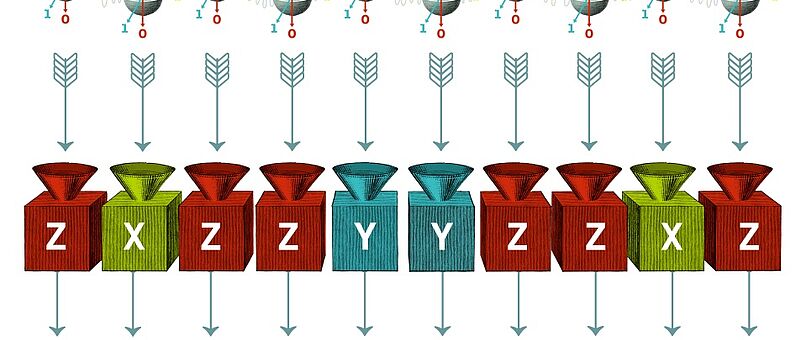
Dr. Borivoje Dakic is an Associate Professor at the University of Vienna , affiliated with the Faculty of Physics and the Quantum Optics, Quantum Nanophysics and Quantum Information department. His research spans foundational and applied aspects of quantum theory. Operational reconstruction of quantum formalism Quantum interference as a resource for communication Tomography of large-scale quantum systems Macroscopic quantum phenomena His work includes scalable verification techniques for quantum devices and collaborations with experimental teams like Philip Walther’s and Markus Aspelmeyer’s groups. He received the Marko Jarić Prize (2025) for his contributions. Recent projects focus on diagnostics of quantum devices (FWF BeyondC SFB), information-theoretic foundations of quantum interference (FWF P36994), and local operations in quantum field theory (Cluster of Excellence QuantA). His research on quantum coherence in networks and macroscopic entanglement challenges traditional assumptions about quantum-classical boundaries. Publications emphasize resource-efficient tomography, device-independent verification, and foundational frameworks for quantum statistics and field theory. Teaching: Quantum Information (2025W), Theory in Quantum Optics (2025S), VCQ Summerschool Labs: Dakić Group at University of Vienna
Terese Løvås serves as Vice Dean of Research and Innovation at the Faculty of Engineering, Norwegian University of Science and Technology (NTNU), where she leads strategic development of research and innovation activities. She concurrently holds the position of Professor of Combustion and Thermodynamics within the Department of Energy and Process Engineering. Her leadership responsibilities include oversight of Centers of Excellence, Horizon Europe projects, and PhD researcher training. Her research focuses on combustion engineering and alternative fuel technologies , particularly investigating ammonia and hydrogen combustion for zero-emission engines, biomass gasification processes, and reactive multiphase flow modeling. She heads the Engine Lab at NTNU and teaches Thermodynamics, Heat, and Combustion courses. Her work bridges theoretical modeling with experimental validation in sustainable energy systems. Løvås actively contributes to major research initiatives including LowEmission (SFI center), ACTIVATE (ammonia-powered agricultural vehicles), AMAZE (ammonia zero-emission), and CAHEMA (marine ammonia/hydrogen engines). Her publications reveal strong trends in ammonia combustion chemistry , emissions reduction , and advanced computational modeling for sustainable fuel systems, with increasing focus on nitrogen oxide formation mechanisms and dual-fuel strategies. Member of the Board of Directors, Combustion Institute (2022–present) Joint Editor, Proceedings of the Combustion Institute (2019–present) Alumni Fellow in Engineering, Churchill College, Cambridge University As Vice Dean, she manages NTNU's Research and Innovation Committee and represents the faculty in NTNU's Research and Innovation Committee. She supervises multiple PhD candidates and leads international collaborations through projects funded by the Norwegian Research Council, Nordic Energy Research, and EU programs. Her laboratory work focuses on optical engine diagnostics and advanced combustion testing. Løvås maintains active industry engagement through her leadership in the ComKin Research Group and membership in the Institute of Physics and Scandinavian-Nordic Section of the Combustion Institute. Her current work emphasizes practical implementation of ammonia-fueled engine technologies for marine and agricultural applications.
Aviral Shrivastava is a Professor at the School of Computing and Augmented Intelligence, Arizona State University, leading the Make Programming Simple Lab. He holds a Ph.D. and M.S. from the University of California-Irvine (2006, 2002) and a Bachelor’s from IIT Delhi (1999). His research focuses on making programming simple for embedded and cyber-physical systems, with a particular interest in manycore and accelerated computing, software for CPS, and resilient/fault-tolerant computing. He has co-authored over 120 publications in top venues like DAC, ESWEEK, and ACM TECS, with more than 3000 citations and 5 granted patents. His work has been recognized with multiple awards, including the 2010 NSF CAREER award and best paper nominations. Research Areas: Embedded and Cyber-Physical Systems Compiler Design for Modern Architectures Resilient and Fault-Tolerant Computing Scientific Awards: 2010 NSF CAREER award DAC 2017 Best Paper Award Candidate VLSI 2016 Best Student Paper Award LCTES 2010 Second Highest Ranked Paper ASPDAC 2008 Best Paper Candidate Advising & Grants: He has mentored 9 Ph.D. and over 20 Masters students. His research has been funded by NSF, DOE, NIST, SFAZ, and industry partners, totaling $3.5M. He teaches courses on computer organization, architecture, and embedded systems, with student evaluations averaging over 4/5. He also serves as General Chair of Embedded Systems Week (ESWEEK) and holds editorial roles in IEEE ESL, ACM TCPS, and ACM TECS.
Michael Feig serves as Professor in the Department of Biochemistry & Molecular Biology at Michigan State University, leading the Feig Lab within the BioMolecular Science Gateway initiative. His research bridges computational modeling and molecular biology to investigate protein behavior in cellular contexts, with particular emphasis on molecular dynamics simulations and machine learning applications. His academic background includes: Ph.D. (1999) from the University of Houston M.S. (1994) from Technical University of Berlin Feig's research program focuses on computational biophysics of protein systems, specializing in molecular dynamics simulations of crowded cellular environments, bacterial microcompartments, and intrinsically disordered proteins. His lab develops advanced modeling techniques including coarse-grained approaches (COCOMO2) and machine learning frameworks to predict protein properties and conformational landscapes. Current work explores temperature-dependent structural ensembles, enzyme cargo loading mechanisms in engineered microcompartments, and biomolecular condensate physics under shear flow. Analysis of his 15 most recent publications (2024-2025) reveals three dominant research thrusts: (1) integration of deep learning with molecular dynamics for protein structure prediction, (2) engineering of bacterial microcompartments for synthetic biology applications, and (3) fundamental studies of macromolecular crowding effects on diffusion and phase separation. His work consistently emphasizes methodological innovation with biological relevance, notably through enhancements to the CHARMM simulation platform. His scientific recognition includes: Alfred P. Sloan Fellowship (2005) As principal investigator of the Feig Lab, he directs research teams in computational biophysics projects supported by active funding mechanisms. While specific grant details aren't provided, his continuous publication pipeline and lab infrastructure indicate sustained research support. His mentorship spans graduate students in the Cell & Molecular Biology Program, with recent work involving multi-institutional collaborations on bacterial microcompartment engineering and protein phase separation. The Feig Lab operates at the intersection of high-performance computing and molecular biology, maintaining strong connections with experimental groups for method validation. Current initiatives include developing generative models for temperature-dependent protein conformations and investigating cytoplasmic protein capture mechanisms in microcompartments, with potential applications in metabolic engineering and nanobiotechnology.
Ronald G. Larson serves as the George Granger Brown Professor of Chemical Engineering and A. H. White Distinguished University Professor at the University of Michigan's College of Engineering, with additional appointments in Mechanical Engineering and Macromolecular Science & Engineering. His research leadership spans multiple departments within the Chemical Engineering Division, where he directs the Larson Lab focused on fundamental and applied soft matter physics. His research program investigates complex fluids through computational and theoretical frameworks, emphasizing polymer physics, rheology, and molecular simulations. Key thrusts include polymer melt processing, biomembrane dynamics, colloidal systems, and polyelectrolyte coacervation. The group employs advanced techniques like Brownian dynamics, coarse-grained modeling, and multiscale simulation to address challenges ranging from industrial polymer processing to biomedical applications. Recent publications (2023-2025) reveal strong momentum in rheological modeling of complex fluids, with particular emphasis on self-healing materials, wax deposition in pipelines, and crystallization mechanisms. The work bridges fundamental molecular insights with industrial applications, demonstrating consistent high-impact output across polymer science, soft matter physics, and chemical engineering domains. The Larson Lab operates as a collaborative hub within the Chemical Engineering Department, leveraging computational resources to advance understanding of fluid mechanics and material properties. Current projects integrate machine learning with traditional modeling approaches, reflecting the group's commitment to methodological innovation while maintaining strong connections to experimental validation and real-world engineering problems.
Indrani Bhattacharya, PhD, is an Assistant Professor in the Department of Biomedical Data Science and the Center for Precision Health and Artificial Intelligence (CPHAI) at Dartmouth College's Geisel School of Medicine. Her research focuses on developing human-centered AI systems for healthcare, particularly in multimodal medical imaging and behavioral health analytics. She holds a BS in Electrical Engineering from Jadavpur University (India), and MS/PhD from Rensselaer Polytechnic Institute (USA). Postdoctoral training at Stanford University's Department of Radiology further specialized her in biomedical imaging informatics. Research interests include: Integrating imaging and non-imaging data for precision medicine AI-driven prostate cancer detection/classification Multimodal behavior estimation for doctor-patient interactions Privacy-preserving sensor systems for group interaction analysis Her work bridges computer vision, medicine, and social science, with recent breakthroughs in MRI-ultrasound fusion AI outperforming radiologist interpretations in multi-center studies. Active in AI ethics and translational research, she leads teams developing clinical decision support tools for oncology and behavioral health. Key career milestones include: Postdoctoral scholar at Stanford University School of Medicine (2016-2021) Academic research staff at Stanford Radiology (2021-2022) Founding member of Dartmouth CPHAI precision health initiatives Labs/Teams: Leads the Biomedical AI for Healthcare group at Dartmouth, collaborating with Stanford and industry partners on AI-driven diagnostic systems.
Jeff Zhang is an Assistant Professor in the School of Electrical, Computer and Energy Engineering at Arizona State University. He joined ASU in January 2023 after completing a postdoctoral fellowship at Harvard University. His research spans deep learning, computer architecture, embedded systems, and EDA, with particular emphasis on energy-efficient and fault-tolerant design for AI/ML systems and hardware accelerators. Education: Ph.D., New York University M.Eng., B.Eng., Hunan University Dr. Zhang's research bridges theoretical machine learning with practical hardware implementation, developing novel architectures that optimize performance, power consumption, and reliability. He has pioneered approaches for hardware acceleration of large language models, efficient sparse matrix operations, and novel memory technologies for AI workloads. His work has received multiple awards including IEEE Top Picks in Test and Reliability (2023) and IEEE Micro Best Paper Award (2022). His recent publications demonstrate a strong trend toward heterogeneous computing, with significant work in chiplet-based AI accelerators, photonic computing for AI, and 2.5D/3D integration techniques. The research spans from high-level compiler frameworks to circuit-level innovations, with a consistent theme of co-designing algorithms and hardware for optimal AI performance. His work on the SODA toolchain has been particularly influential in bridging Python to silicon. Scientific Awards: IEEE Top Picks in Test and Reliability, IEEE ITC, 2023 Best Paper Award, IEEE Micro, 2022 Best Paper Award Candidate, IEEE DATE, 2022 Best Presentation Award Nomination, ACM SIGDA DATE PhD Forum, 2020 Best Paper Award Nomination, IEEE VLSI Test Symposium, 2018 Ernst Weber Ph.D. Fellowship, New York University, 2015, 2016 Dr. Zhang actively mentors a diverse group of graduate and undergraduate students, with several alumni now working at leading technology companies including Apple, TSMC, and Ansys. His research is supported by prestigious grants from NSF, Sandia National Labs, and industry partners. He serves on technical program committees of numerous top conferences and has organized special sessions on emerging topics like Gen AI for Chip Design and LLM-Aided Design. Dr. Zhang leads a vibrant research group that collaborates extensively with industry partners and national laboratories. Current projects focus on next-generation AI hardware, including chiplet-based systems, photonic accelerators, and novel memory technologies for large language models. His group has developed several open-source tools and frameworks, including the SODA toolchain for bridging Python to silicon.
Professor Matthew Simpson is a leading figure in applied mathematics at the School of Mathematical Sciences, Faculty of Science, Queensland University of Technology (QUT). He holds the position of Professor of Applied Mathematics and is an Australian Research Council (ARC) Future Fellow, reflecting his sustained research excellence. His work bridges mathematical theory and biological applications, particularly in cell migration, tissue invasion, and multiscale modeling. BE (Environmental) Honours 1, University of Newcastle (1995–1998) PhD (with Distinction), Environmental Engineering, University of Western Australia (2000–2003) Research Fellow, Department of Mathematics and Statistics, University of Melbourne (2003–2006) ARC Postdoctoral Fellow, University of Melbourne (2006–2009) Lecturer (2010–2011) and Senior Lecturer (2011–2013), QUT Associate Professor (2013–2014), QUT Professor and ARC Future Fellow (2014–present), QUT Matthew Simpson’s research focuses on mathematical and computational modeling of biological systems , particularly collective cell motion, diffusion processes, and reaction-diffusion dynamics. His interests span multiscale modeling , random walk processes , cell biology , and numerical and computational mathematics . He develops and analyzes models to understand phenomena such as wound healing, cancer progression, and tissue engineering. His recent publications (2023–2025) demonstrate a strong trend toward integrating data-driven modeling , likelihood-based inference , and equation learning with traditional mechanistic models. These works emphasize parameter identifiability , uncertainty quantification , and prediction robustness in biological contexts. Themes include sharp-fronted wave propagation, mechanical cell interactions, tumor spheroid formation, and generalized diffusivity in food drying, showcasing the breadth and depth of his modeling expertise. Among his key accolades are: J.H. Michell Medal (2012) – Awarded by ANZIAM for distinguished research by an early-career applied mathematician in Australia and New Zealand. ARC Future Fellowship (2013–2017) – For the project 'New data-driven mathematical models of collective cell motion' (FT130100148). Professor Simpson has also played significant editorial and leadership roles, including: Executive Associate Editor, Journal of Engineering Mathematics Academic Editor, PLoS ONE Editorial Board Member, ANZIAM Journal Co-chair of the 2015 ANZIAM meeting He has supervised PhD students on topics such as moving boundary problems, first-passage times, stochastic simulations, and curvature-dependent growth in biological systems. His research projects have been funded by competitive Australian grants (ARC DP and FT schemes), including studies on 3D cell migration, ghrelin’s role in cell invasion, and epithelial-to-mesenchymal transition in cancer and wound healing. He is actively involved in developing computational tools for biological modeling and promoting best practices in scientific publishing.
Dr. Rosana Collepardo is a Winton Advanced Research Fellow at the Cavendish Laboratory, University of Cambridge, where she leads a research group within the Theory of Condensed Matter (TCM) Group and is also affiliated with the Biological and Soft Systems group. Her research focuses on developing multi-scale computational models to investigate chromatin nanostructure, epigenetic regulation, and biomolecular condensates, with applications in understanding genome organization and sustainable data storage. Her primary research interests include: Computational biophysics of chromatin and epigenetics Mechanisms of biomolecular condensates and phase separation Nanoscale structure of the genome and DNA accessibility Multi-scale modeling from atomistic to mesoscale Design principles for chromatin-inspired data storage Analysis of her recent publications (2023-2025) reveals a dominant focus on chromatin organization, epigenetic mechanisms, and biomolecular condensates. Key trends include the role of nucleosome spacing, linker histones, and epigenetic modifications in chromatin phase separation, alongside investigations into condensate aging, material properties, and the physical principles of phase transitions in RNA-protein systems. Her work consistently integrates computational modeling with experimental validation. Notable scientific awards include: Winton Advanced Research Fellowship ERC Starting Grant Dr. Collepardo actively mentors PhD and MPhil students, including Sivapalan Chelvaniththilan (MPhil in Physics, recipient of Gates and Winton Scholarships), Miguel Garcia Ortegon (MPhil in Scientific Computing), Stephen Farr (PhD in Computational Methods for Materials Science), Akshay Sridhar (MPhil in Scientific Computing), and Adiran Garaizar (PhD with EPSRC scholarship). Her group secures competitive funding through ERC grants and student scholarships. The Collepardo group, established in 2016 at the Maxwell Centre, Cavendish Laboratory, comprises postdoctoral researchers, PhD students, and MPhil candidates. They collaborate with experimental groups to study chromatin dynamics and biomolecular condensates using advanced computational techniques, contributing to fundamental biological understanding and potential biotechnological applications.
Dr. Andreas Zöttl is a physicist affiliated with the University of Vienna , currently serving as an Assistant Professor in the Computational and Soft Matter Physics department. His research focuses on computational modeling of active matter, microswimmers, and polymer dynamics, with applications in biophysics and soft materials. He teaches courses such as Computational Statistical Mechanics and Biological Physics , emphasizing theoretical and computational methods. His recent work explores reinforcement learning in microswimmer locomotion, chiral particle dynamics, and polymer behavior under shear flow. Research keywords include Machine Learning , Fluid Dynamics , and Soft Matter Physics . Themes span hydrodynamic interactions , active colloids , mesoscale simulations , and non-equilibrium systems . Contact: andreas.zoettl@univie.ac.at
Prof. Jian Zhang is a Professor in the School of Electrical and Data Engineering at the University of Technology Sydney (UTS), specializing in computer vision, pattern recognition, and multimedia signal processing. He leads the Multimedia Data Analytics Lab at the Global Big Data Technologies Centre, focusing on agri-food sector applications such as livestock monitoring and AI-driven solutions for agricultural efficiency. Education : PhD, School of Information Technology and Electrical Engineering, University of New South Wales, 1999 MSc, The Flinders University of South Australia, 1994 BSc, East China Normal University, 1982 Research Interests : His work spans 2D/3D computer vision, large-scale image/video analytics, and cross-disciplinary projects in agriculture and remote sensing. He has pioneered AI systems for livestock counting, poultry welfare monitoring, and fish quality assessment, funded by organizations like Meat & Livestock Australia and Australian Eggs. Grants & Projects : Current projects include AI-based hen health monitoring ($5M+ funding since 2011) Collaborations with industry partners like Sydney Fish Market and Fremantle Port Students & Academic Leadership : Supervised 19 PhD graduates and 5 research fellows Recruiting new PhD candidates in computer vision and data analytics Labs & Teams : Director of the Multimedia Data Analytics Lab, collaborating with global experts through UTS's Distinguished Visiting Scholars program.
Harrison Steel is an Associate Professor of Engineering Science at the University of Oxford and Tutorial Fellow at Harris Manchester College. He holds a BEng in Mechanical Engineering and BSc in Physics and Mathematics from the University of Sydney, followed by a DPhil at Oxford as a Monash Scholar. His research focuses on synthetic biology, control engineering, and bioprocess optimization, with a particular emphasis on microbial systems and genetic circuit design. Dr. Steel’s work integrates computational modeling, experimental biology, and control theory to engineer robust biological systems. His contributions include advancements in genome editing via SIBR-Cas systems, cybernetic control of microbial co-cultures, and the development of open-source platforms like Chi. Bio for automated biological experimentation. His recent publications highlight innovations in directed evolution strategies, modular biomolecular control architectures, and the application of machine learning to fitness landscape analysis. He has pioneered approaches for stabilizing genetically engineered cell populations and enhancing bioprocess efficiency through adaptive control systems. Dr. Steel’s research is supported by collaborations across engineering, biology, and computational disciplines. He actively contributes to academic leadership through his role at Harris Manchester College and maintains an experimental focus on bridging theoretical models with practical biological implementations.
Ian C. Bourg is an Associate Professor at Princeton University with dual appointments in the Department of Civil and Environmental Engineering and High Meadows Environmental Institute . He directs undergraduate studies in CEE and leads the Interfacial Water Group , focusing on atomistic-level simulations and macroscopic modeling of environmental systems. His concurrent affiliations include the Princeton Institute for the Science and Technology of Materials and Chemical and Biological Engineering department. Education Ph.D. in Civil and Environmental Engineering, University of California-Berkeley (2004) MSc in Chemical Engineering, INSA Toulouse (1999) B.Eng. in Chemical Engineering, INSA Toulouse (1999) Research Interests span clay mineral surface geochemistry, geologic CO 2 sequestration, kinetic isotope effects, water behavior at interfaces, and coupling geochemistry with geomechanics in porous media. His work integrates molecular simulations with experimental validation to study environmental phenomena like contaminant transport, soil carbon storage, and water dynamics in clays. Publications from 2023-2025 reveal expertise in molecular dynamics of clay-water systems, organic contaminant partitioning, cement hydration, and isotope fractionation. Key themes include Environmental Nanoscience , Geochemical Modeling , and Soft Matter Physics applications to environmental systems. Scientific Recognition NSF CAREER Awardee (2018) Advising includes mentoring 12 current and former PhD/postdoc researchers, with notable alumni at institutions like Cornell, University of Poitiers, and Oak Ridge National Laboratory. His group has produced 20+ undergraduate advisees now in academia and industry. Laboratory develops multiscale simulation tools like HybridBiotInterFoam and HybridPorousInterFoam, with active collaborations in nuclear waste management, soil remediation, and sustainable construction materials.
John E. Straub is a Professor in the Department of Chemistry at Boston University (BU), where he leads the Straub Lab. His work focuses on molecular dynamics and thermodynamics of complex biomolecular systems, particularly protein aggregation and amyloid formation. He has authored influential books, including Proteins: Energy, Heat and Signal Flow and Mathematical Methods for Molecular Science , and has held leadership roles such as Chair of the Department of Chemistry at BU (2007-2012) and President of the Telluride Science Research Center (2006-2008). Education: BS in Chemistry (University of Maryland, 1982, advisor: Millard Alexander) MA (Columbia University, 1984) MPhil (Columbia University, 1986) PhD in Chemical Physics (Columbia University, 1987, advisor: Bruce Berne) NIH Postdoctoral Fellow in Chemistry (Harvard University, 1987-1990, advisor: Martin Karplus) His research interests span computational methods for enhanced sampling, reaction dynamics, and the interplay between protein structure and aggregation. He has pioneered studies on amyloid precursor proteins and cholesterol interactions in lipid bilayers, emphasizing the role of monomer structural ensembles in aggregation mechanisms. Articles from his lab highlight advancements in understanding lipid phase separation, amyloid fibril formation, and computational techniques like machine learning-derived variables and replica exchange methods. His work bridges theory and experiment, with collaborations across institutions globally. Scientific Awards: NIH Postdoctoral Fellowship (Harvard University, 1987-1990). Professor Straub has advised numerous students, many of whom hold academic positions at leading institutions, including Jianpeng Ma (Rice University) and Nicolae-Viorel Buchete (University College Dublin). His lab actively explores projects in computational biophysics, with ongoing work on lipid mixtures, sterol-derived Raman tags, and membrane protein interactions.
Giovanni Petri is a Professor in the Network Science Institute at Northeastern University London, where he joined in June 2023. Previously, he held positions at CENTAI as a Principal Researcher and at IMT Lucca as a Guest Scholar, with earlier affiliations at ISI Foundation and Imperial College London. His educational background includes a PhD in Complex Networks from Imperial College London (2012), an MSc in Theoretical Physics from the University of Pisa (2008), and a BSc in Physics from the University of Pisa (2005). Petri's research spans the analysis of neuroimaging data and AI systems with topological techniques, the formalization of cognitive control models with tools of statistical mechanics and network theory, and the study of the predictability of socio-technical systems. His work in Topological Neuroscience explores brain architecture using algebraic topology, while his research in Cognitive Neuroscience focuses on neural mechanisms underlying human cognition. He is particularly known for his work on higher-order networks, using mathematical frameworks like hypergraphs and simplicial complexes to model systems with multi-way interactions. His recent publications (2023-2025) demonstrate a strong focus on higher-order network theory applied to neuroscience, with particular emphasis on topological approaches to brain connectivity, social contagion models, and the physics of complex systems. These works reveal consistent themes in understanding how multi-body interactions shape system dynamics across biological, social, and technological domains. European Research Council Consolidator Grant (RUNES: Reconstruction and unification of neural and ecological systems, 2024) As Principal Investigator of the NPLab, Petri advises numerous PhD and postdoctoral researchers including Marilyn Gatica, Andrea Santoro, and Simone Poetto. His RUNES project, funded by the ERC Consolidator Grant, represents a significant research initiative. The lab maintains active collaborations with CENTAI, Project CETI (Cetacean Translation Initiative), and various international institutions. The NPLab investigates the role of topology and geometry in the collective dynamics of complex systems, ranging from neuroscience to society, using statistical mechanics, algebraic topology, and innovative computational approaches. Current projects include Topological Neuroscience, Cognitive Neuroscience, Higher-order Networks, Project CETI, and RUNES.